
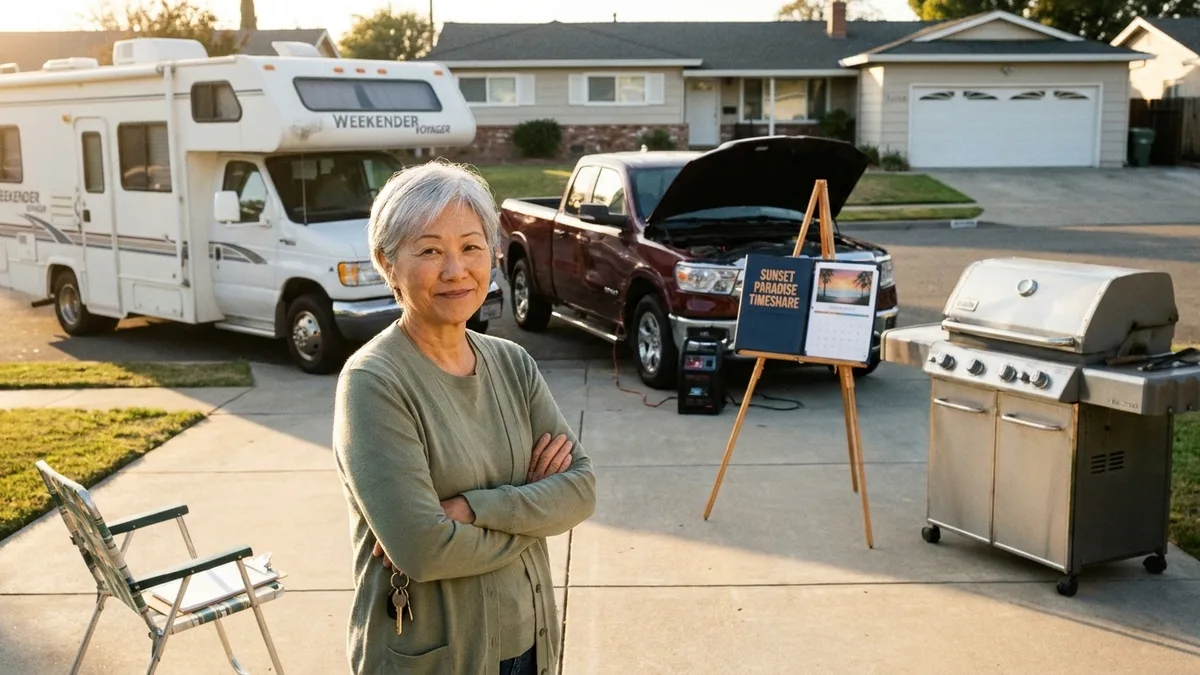
What do retirees wish they had never bought? Ask around and the same handful of big-ticket items come up again and again: a house that got too big, a timeshare that would not sell, a new car every couple of years, an RV that sat in the driveway. If a purchase is affordable and brings you real joy, go ahead and make it. Nobody should tell you how to spend your money.
But there is a difference between a small impulse buy and a large one. A $40 gadget you regret is a shrug. A $40,000 decision you regret can eat years of retirement. The pattern is not about being foolish. It is about buying for the life you imagine instead of the one you will actually be living five years from now.
The six purchases below are the ones people most often mention. Each one has a specific way it turns on you, and each one has a simple check you can run before you sign. Here is what to watch for.
Quick Tips Before You Start
Sleep on it
For any purchase over a set dollar amount, wait one night before signing anything.
Add the ongoing costs
Price the first year of taxes, insurance, maintenance and storage, not just the sticker.
Think 5–10 years out
Ask what this item will demand of your health, time and budget a decade from now.
Protect the reserve
If the purchase drains your emergency fund or needs a loan, that is your answer.
Rent before you buy
For RVs and boats, rent the same model for a week and track how much you actually use it.
1. Big Impulse Buys Deserve a Pause

Small impulse buys are a part of life. The decorative bowl, the gadget, the third pair of shoes – harmless, mostly forgotten, not worth a second thought. Large impulse buys are a different animal entirely.
The distinction that matters is not small versus large, it is the size of the hit. A novelty kitchen gadget you use twice is annoying. A jet ski, a boat, a vacation club membership or a new vehicle bought in a good mood can change what your retirement looks like for a decade.
Both spouses in a household can be guilty of this – each one quietly buying what they wanted, neither saying a word, until finally they sat down and got on the same page. That conversation is not a lecture. It is just two people agreeing on how the money works.
So set one rule while you are calm: any purchase over a number that feels meaningful to you gets a night's sleep and a second look at the numbers. Retirees who want to stay rich often stop buying certain things altogether, and the habits wealthy retirees dropped shows what they cut. Compare it with your guaranteed monthly income and your emergency reserve, and name what joy it actually buys – then ask whether that joy lasts past the first month.
If the purchase is affordable and brings you real happiness, it is not the target here. The target is the mood-driven big buy, the one that feels like a reward in the moment and like a weight a year later.
💡 Tip: Write the number down before you go shopping. A price threshold agreed on in advance is much easier to honor than one you invent at the counter.
| Purchase | What goes wrong | Check before buying |
|---|---|---|
| Oversized dream home | Maintenance gets physically harder; taxes, utilities and insurance keep climbing | Compare the first-year ongoing costs with guaranteed income, and picture yourself at 75 in the same house |
| Timeshare | Getting out often means bringing money to the table; resale can be nearly impossible | Price a rental at the same resort; read official consumer-protection warnings before paying an exit company |
| New car every year or two | About 20% of value is gone as it leaves the lot; payments never stop | Set aside a monthly replacement fund and keep the current car well maintained |
| RV, fifth wheel or boat | It sits unused when health or enthusiasm fades | Rent the same type for a week, try setup and backing, and price storage, insurance and fuel |
| Social Security claimed early | You may wish you had waited, or wish you had started sooner — you cannot know in advance | Compare your health, family history, cash needs and your official statement, not someone else's choice |
2. Oversized Dream Homes Turn Into Work

That is exactly how the dream home gets bought – in a good mood, on a good day, with the view in mind. And buying a big house at or near retirement is a perfectly reasonable choice if you can afford it. The problem is not the house on day one. It is the house in year eight, when the maintenance that felt manageable at 65 becomes genuinely hard at 73.
Picture four bedrooms with two essentially empty. That is common. Now add the costs that do not sit still: property taxes, utilities and insurance are all higher on a larger home, and they keep climbing while your energy for the upkeep is going the other way. The dream home slowly turns into a job with a mortgage.
There is a friend-of-the-family example that sticks. Owners in poor health who now pay someone for just about every property task, from mowing to small repairs. They can afford it, which is the only reason it works.
Staying put and upgrading the home you already have is often the better move. Add the grab bars, widen a doorway, make the rooms you actually use comfortable, and skip the five-to-ten-year squeeze entirely. The warning does not apply to owners who can afford help and still love the house. It applies to the ones quietly tired of it.
⚠️ COMMON MISTAKE
Don't count on selling later
A big house is easy to buy and slow to sell. If the plan is to downsize in ten years, remember that the sale depends on a buyer, a market and your health all lining up at once.
3. Timeshares Are Hard to Exit and Resell

A big house at least has a market when you want out. A timeshare may not, and that is where the trouble starts.
One couple bought in Florida near Sanibel Island when timeshares were new, with one small child and a sales pitch that looked like a good deal. They held it 12 to 15 years. When they needed cash to start a painting and drywall business, they sold it for exactly what they had paid and counted themselves lucky. Most owners are not.
The proceeds from that sale carried the business through the gap while it waited on accounts receivable, which is the real point: the timeshare was only useful because it could be turned back into money. Getting out often means bringing money to the table instead, and an entire advertising industry exists to help people do exactly that. Check official state consumer-protection sources and scam warnings before you pay any exit company a dime.
A timeshare makes sense for someone who loves the same resort and goes every year. That is a use decision, not an investment.
💡 Tip: Before buying, ask the sales desk for the resale process in writing and price a week at the same resort as a cash renter. If renting is cheaper and easier, rent.
4. Repeated New-Car Buying Costs More Than Repairs

Cars are where that bites hardest, because the buying never really stops. About 20% of a new car's value disappears as it leaves the lot. Do that every couple of years and the losses stack up faster than any repair bill.
There is a family friend who bought a brand-new van every single year, trading in the old one because she never wanted to deal with repairs or maintenance. Money was no object for her, so it was a lifestyle choice, not a mistake. Most households cannot fund that habit.
The alternative is boring and effective: a 12-year-old van and an 11-year-old car, both well maintained, with a replacement plan already in place before either one fails. That last part is the bit people skip. Know which vehicle goes first, know roughly what you will spend, and the breakdown stops being an emergency and becomes a scheduled event.
Set aside a monthly replacement fund, and settle repair versus replace with a mechanic you trust. Say the van needs a $900 transmission job and the car is worth $2,400 – that is a repair. Say the same van needs $3,000 of work and is worth $1,800 – that is the fund doing its job.
If you can afford new and want it, that is allowed. Just make the choice on purpose, not every time the lot has a sale.
New Car vs. Keep and Repair
Buy new
- Trade cycle every 2-3 years stacks the drop
- Warranty covers defects, not wear items
- Skip it if the payment crowds guaranteed income
- Higher insurance and registration every year
Keep and repair
- Repair when cost is under resale value
- Replace when repair tops resale value
- Schedule the next vehicle before this one fails
- Fund monthly, then let the fund decide
5. Big Toys Go Unused Before the Travel Does
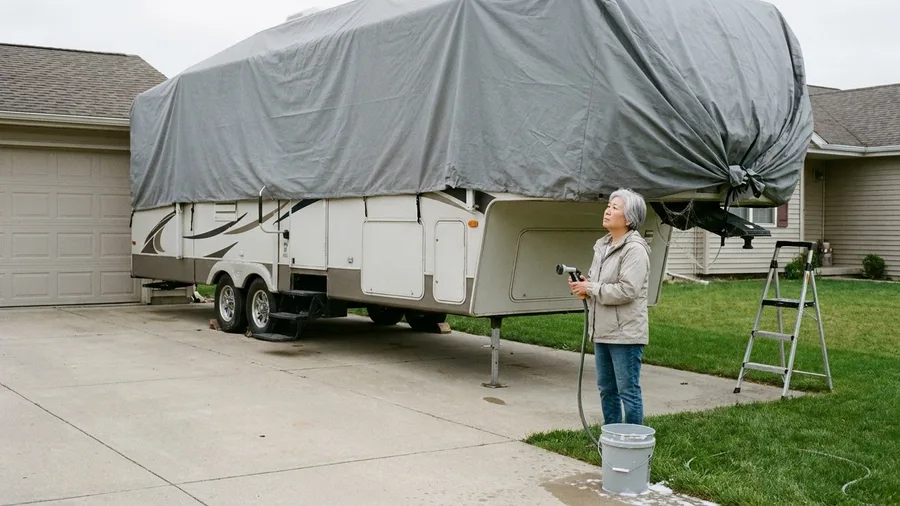
That is the RV question, and the answer is use, not dreams.
One couple bought a towable fifth wheel and used it a handful of times because the husband could never master backing it up. They traded it for a motorhome that worked better, but that one was barely used and practically new when they let it go after an out-of-state move.
The pattern is common: people plan to travel the country, then reach 60, 65 or 70 in poor health and cannot do it. Friends with a fifth wheel who winter down south love theirs, and boats are great for people who actually get on the water. The old line about boats, break out another thousand, is a warning about the costs, not the joy.
Rent the same type of RV for a week or charter a boat before you buy. Try the setup and the backing. Then price storage, insurance, maintenance and fuel against the number of trips you realistically take, and skip the purchase if the trial sits idle.
💡 Tip: Keep a simple log during the rental week: hours used, fuel, setup time and what you disliked. That log is the cheapest buyer's guide you will ever get.
🚐 The rent-first test for any big toy
Pick the exact type
Choose the same class of RV or boat you are considering, not a smaller stand-in.
Rent for a full week
A weekend hides the hassles; a week shows you the real rhythm of using it.
Try the hard parts
Back it up, set it up, launch it and pack it down yourself before you commit.
Price the hidden costs
Add storage, insurance, maintenance, fuel and any slip or campground fees.
Compare to the purchase
Set the rental cost against the purchase price plus the first year of ownership.
Decide on real use
If the trial week sat idle or felt like work, skip the purchase and rent again next year.
6. Social Security Timing Has No Universal Age

You are sitting at the kitchen table with the Social Security statement in front of you, and the only question that matters is whether to take it now or wait. There is no perfect claiming time, and anyone who tells you otherwise is selling something. It is an individual decision, and the regrets run in both directions: some people wish they had waited longer, and some wish they had started sooner.
Take the friend who claimed at 62 even though money was not the issue. He had already had a heart attack, and his father had died around 68. His reasoning was plain: collect as much as possible while he could. That was a reasonable answer for his health and his family history, even if it would look wrong on someone else's spreadsheet.
Claiming at full retirement age is another workable answer, and it is the one plenty of people land on. The point is not to copy the neighbor who retired at 66 or the cousin who held out to 70. Compare your own health, your family history, your cash needs and your official Social Security statement, then decide. If the numbers still feel tight, going back to work later covers what nobody warns you about.
If you are still unsure, talk to a fee-only planner or use the official benefit source rather than a story from the barbecue. The right age for someone else may be exactly the wrong one for you.
The Affordability Check Before You Sign

Before the pen touches the contract, run four numbers on a single sheet of paper: your guaranteed monthly income, your essential monthly expenses, your emergency reserve and any debt. If the purchase needs a loan or drains that reserve, stop right there. That is the whole test, and it takes maybe twenty minutes.
Then add the costs that outlive the sale. Property taxes, insurance, utilities, maintenance, storage, slip fees, club dues, and the travel that comes with the toy. A boat or an RV can cost more in year one than the sticker price suggests, and those costs do not vanish when the excitement does.
Watch for the warning signs: borrowing for something that loses value, counting on investment gains that may not arrive, or telling yourself you will sell it later if money gets tight. If it still fits after all that, you have your permission slip. Go and enjoy it.
For tax and benefit questions, talk to a fee-only planner or the official source, not a rule you heard at a barbecue.
Frequently Asked Questions
Is it ever worth buying a timeshare?
It can be, if you love the same resort and go every year without fail. Treat it as a prepaid vacation, not an investment, and read the exit terms in writing before you sign.
Should I sell my big house and downsize?
Only if the house is becoming work you no longer want to do. If you can afford help and still love it, staying is fine. If the maintenance is wearing you down, downsizing early is easier than downsizing in a hurry.
How often should I replace my car in retirement?
There is no fixed schedule. Keep the current car well maintained, set aside a monthly replacement fund, and decide repair versus replace with a mechanic you trust. Many well-kept cars run 12 years or more.
What is the best age to claim Social Security?
There is no universal best age. Compare your health, family history, cash needs and your official statement. Claiming at 62 and claiming at full retirement age can both be right, depending on the person.
How do I get rid of a timeshare I no longer want?
Start with the resort and the official resale process, and check state consumer-protection sources for scam warnings before paying any exit company. Expect that getting out may cost money rather than return it.
Rent the Dream First, Then Decide
If there is one move to make before any big-toy purchase, it is this: rent the same type of RV or charter a boat for a week. Track how much you actually use it, and if the trial sits idle, skip the purchase. That single test saves more regret than any advice column.
The wider permission slip is simple. A purchase that fits your numbers and actually gets used is allowed to be enjoyed. The regrets in this article are not about joy — they are about buying for a life you will not be living in ten years. Run the check, then go and have a good time.
Run the numbers before you sign
Use the affordability check in this article — guaranteed income, essential expenses, reserve, debt — and rent before you buy the big toy. Your future self will thank you.

Hello there! I’m Jesse Joe, the author and editor behind SolganGenius. I’m thrilled you’ve stopped by, and I can’t wait to share with you the essence of what this platform is all about.
I’m a writer, social media enthusiast, and a firm believer in the power of words. I’ve always been fascinated by how a simple phrase or slogan can capture an emotion, convey a message, and even change perspectives. Learn More