
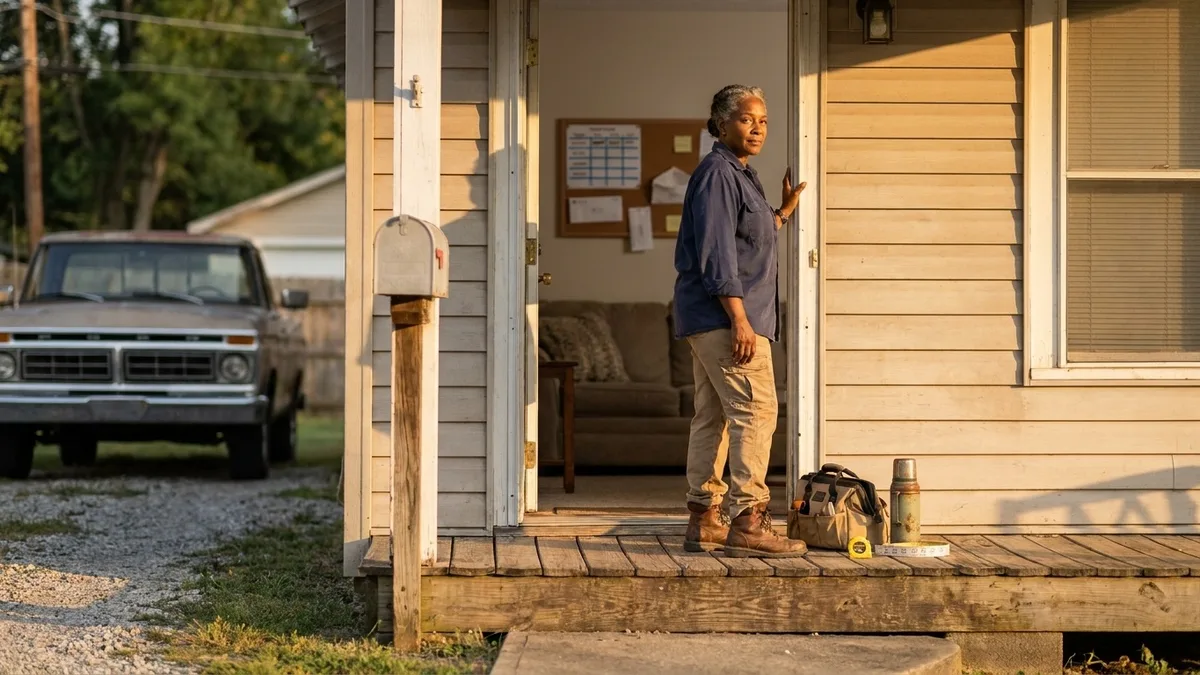
I've reached the age of 71, and there's no retirement waiting for me. I sat with that sentence for a long time before I decided to say it out loud.
There's no pension waiting on me, no 401(k), no savings account I can reach into when the truck needs brakes. There's a Social Security check and there's work, and that's the whole plan. It's not easy to talk about how you got to a place like this, mostly because you know exactly who's to blame for it.
Maybe this is your story too. You worked your whole life, you never had a retirement plan, and now you've got a check that doesn't cover the month. If that's you, you're not alone in it — and I'm going to walk you through the honest arithmetic of how a man gets here, so you can see the road while there's still time to take a different one.
| Self-employed contractor | 37-year factory job |
|---|---|
| Worked for himself roughly 45 years | Same factory, one employer, 37 years |
| Two boats, two campers, a new truck about every four years, nearly all financed | Everything owned outright, house paid off |
| No pension, no 401(k), no employer match | Defined-benefit pension for life |
| Retirement income: Social Security, about $1,950 a month | Pension plus Social Security |
| Still working several days a week at 71 | Retired at 62 |
| Traded security for no boss and no schedule | Traded variety for a defined benefit |
Only Social Security at 71, and It Isn't Enough
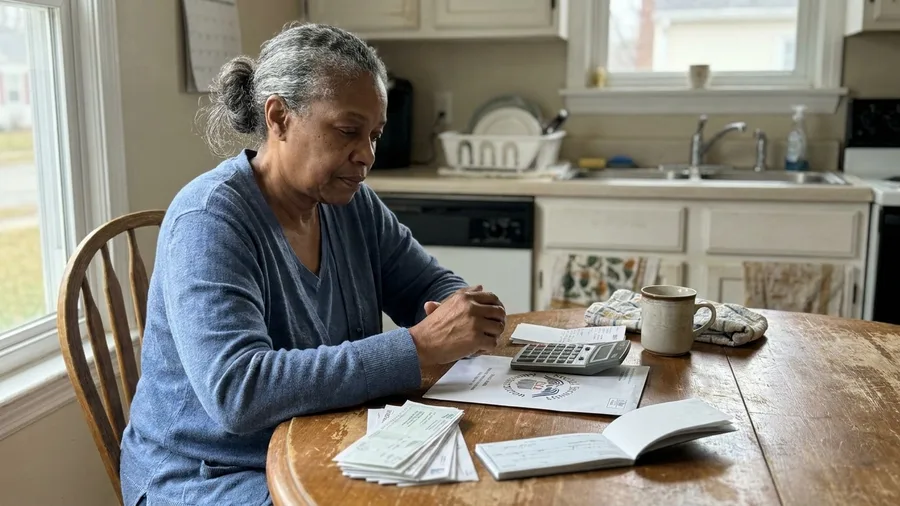
Because I worked the whole time and still never built anything behind me. That's the part that's hard to say out loud.
I'm 71. My entire retirement income is a Social Security check. No pension, no 401(k), no savings account sitting quietly in the background growing while I slept. Just the check.
In a good month it comes to about $1,950.
The other side of the ledger is about $2,900. The house, the insurance, the truck, the food, the electric bill – that's the number the month actually costs. So there's a gap of roughly $950, and that gap has to be earned again every single month. It doesn't shrink. It doesn't take a month off because my back is sore.
It isn't one big crisis. It's a smaller hole you fill over and over.
My check is a small amount compared with what plenty of people get, and I know it. So I have to create extra income almost every day, and I do – small remodels, repairs, whatever the phone brings in. That's what no retirement at 71 actually feels like in practice: not a dramatic collapse, just a small gap with my name on it, every month.
I hesitated a long time before sharing any of this, and that hesitation is the point. This isn't a rare road. It's a common one, and most of the people walking it are quiet about it.
Good Years, No Savings, and a Lifetime of 'Tomorrow'

By believing that tomorrow would take care of itself, for thirty straight years.
I've been a self-employed contractor my whole working life, and some of those years were genuinely strong. I made real money. But my thinking was always the same: next year I'll put a bunch away. Next year I'll get serious about it. Then I was in my 40s. Then my 50s. Then my 60s, and next year still hadn't come.
Part of it was that nobody was doing it for me. Working for yourself means no employer plan, no automatic deduction off a paycheck, no HR person handing you a form to sign. Every dollar that could have gone into an account hit my hand first, and my hand had other ideas.
And part of it was my health. I felt good, so I threw caution to the wind. Without ever saying it out loud, I was treating my body as the retirement plan – as long as I could work, I figured I was fine.
That's a comfortable thing to believe in your forties. It gets less comfortable every year after that.
The mechanism is boring, and that's what makes it dangerous. A missing deduction is invisible. Nobody mails you a bill for the account you never opened. So the habit compounds quietly in the background for three decades, and then one day it isn't a habit anymore. It's the whole story.
Payments on Boats, Campers and Trucks Ate the Income
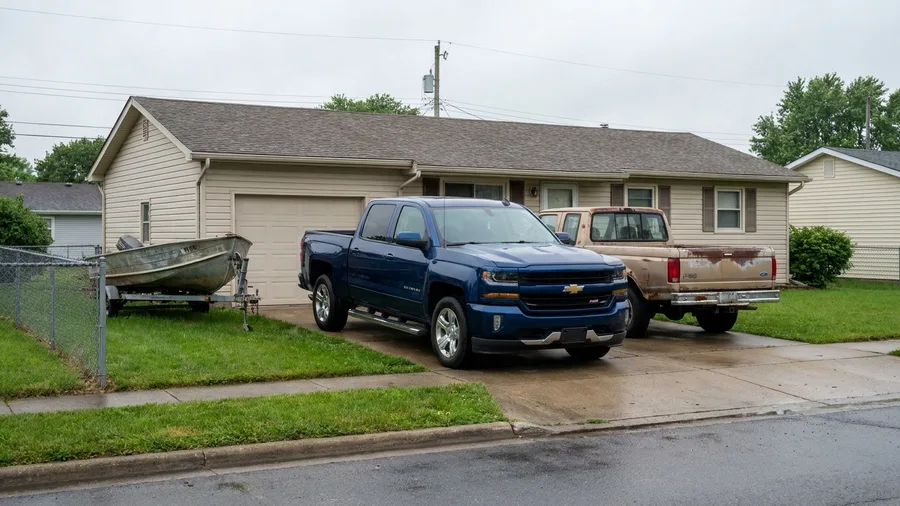
Into payments – into things I enjoyed and still didn't own.
In my life I've had a couple of boats and a camper or two, and I almost always had the nicest, newest truck. I liked nice things and I'm not going to pretend otherwise. What I didn't see at the time was that I never really had the truck. The bank had it, and I made its payment every month.
Do the arithmetic and it stops being funny. A $700 truck payment carried for fifteen years is about $126,000, and that's before a single boat or camper is counted. That money wasn't lost down a hole. It bought real things I honestly enjoyed. It just bought things that lose value instead of gaining it.
Here's the catch in a payment life: the payment doesn't end when a fund gets built. It ends when you trade the vehicle in, and then the debt rolls over into the next one and the savings account never even opens.
One quick test for anyone carrying a payment right now: take the monthly figure, multiply it by twelve, and ask what it would have become sitting somewhere for fifteen years instead. If the answer stings, that's the point of the exercise.
Thirty years of that and you're 71 with a nice driveway and nothing behind it.
My Brother's 37-Year Job Paid Off; My Freedom Didn't

I'd probably have a pension and a paid-off house and a lot less of the other stuff.
I come from a family of four siblings, and one of my brothers took the opposite road from me. He worked the same factory job for 37 years. Retired at 62 with a very good pension, and everything he owns is paid for.
There's no jealousy in me about that. It's just the clearest picture I know of how two people from the same house can land in completely different places. He traded variety and autonomy for a defined benefit and a paid-off house. I traded security for no boss. Both of us got what we picked.
Which road suits you comes down to one honest question: can you walk through the same gate every morning for decades? If you can, steady pay and a pension is a hard combination to beat, and that brother of mine is the proof. If you can't – and I never could – contracting is the honest answer, but you have to pay for the freedom yourself.
I didn't. He did. Seventy-one shows you the difference.
No Boss, No Schedule — and That Choice Cost Me
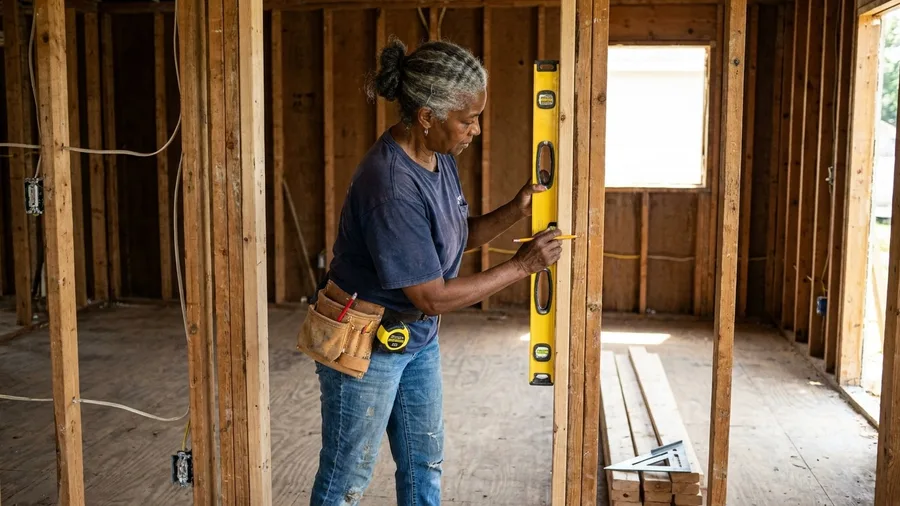
Because I didn't want the same place every day, and I didn't want somebody telling me where to be and when for the rest of my life. That's it. That's the whole reason.
I'm not bitter about it, and I don't blame the economy or an employer for where I am. I made a choice and I lived in it, and the man at 71 is the same man who made that choice at 31.
What I want you to hear, though, is that contracting wasn't the mistake. Contractors can retire very nicely. The mistake was that I never paid myself like an employee.
If I had pulled a fixed percentage off every check – even a small one, say 5 percent – and put it somewhere I couldn't easily reach, self-employment would have funded a retirement just fine. A $60,000 year with $3,000 set aside and left alone is a very different 71 than the one I've got.
Autonomy is real. So is the price of funding it entirely out of your own discipline, and that price is what I'm still paying now.
The choice was never the problem. The missing account was.
⚠️ COMMON MISTAKE
The Account You Never Open Can't Grow
I kept telling myself I'd start saving in a better year. There was always a better year coming and it never arrived. An account opened with $50 a month beats a perfect plan you start next spring — because next spring is how you get to 71.
I Get By Only Because I Can Still Work

I'm not destitute. I have a roof, I eat, and I'm not asking anybody for help. But I have to do something most days to bring in extra money, and so I do.
That's the honest shape of it. The Social Security check is about $1,950 and my expenses run closer to $2,900, so the difference has to come from somewhere. In a good month the work brings in roughly $900 to $1,200, which is right about what the gap needs. In a slow month it's less, and a slow month means the truck payment comes out of somewhere else. That's the whole reason I'm still out there at 71. Not because I love it. Because the numbers don't close without it.
Here's what I'm grateful for. I can still count on my legs, my knees, and my back, and I mean that in a way I couldn't have understood at 50.
But notice what my plan is actually built on. My income floor is my body. Every dollar above that check comes out of a knee or a shoulder or a lower back, and my body has an expiry date I don't get to see in advance. If you're reading this and you're younger than me, ask yourself what your floor is made of. If the answer is your own labor, you have a plan that works right up until it doesn't.
When the Work Stops, Men Lose Their Self-Worth Too

There's a day coming when I can't do this anymore, and I've watched other men go through it. I'm not looking forward to mine.
For a lot of us, and I think men especially, a good chunk of self-worth comes from being able to work and make a living. When that stops, it isn't just the check that changes. The routine goes. The reason to be up and dressed by seven goes. I've seen men go quiet after they stopped working, and it wasn't the money that did it.
That's the part nobody warns you about when you're young and self-employed. The job is also your social world, your sense of usefulness, and most of your conversations. Take it away and you can be fine on paper and lost in the house.
The people this hits hardest are the ones whose whole social circle was the job. The crew, the guys on the site, the ones who called you because they needed something built. When the phone stops ringing, the silence is personal.
So the fix has to be partly social, not just financial. You need somewhere to be and someone expecting you before the work runs out, not after. A shop, a church, a men's group, a regular coffee at the same diner with the same two guys. It sounds small. It's the part that keeps you from going quiet.
What a Working Week Looks Like at 71
Based on my own week; your hours will depend on the work you can still do.
At 71 I Tire Faster and Work Shorter Days
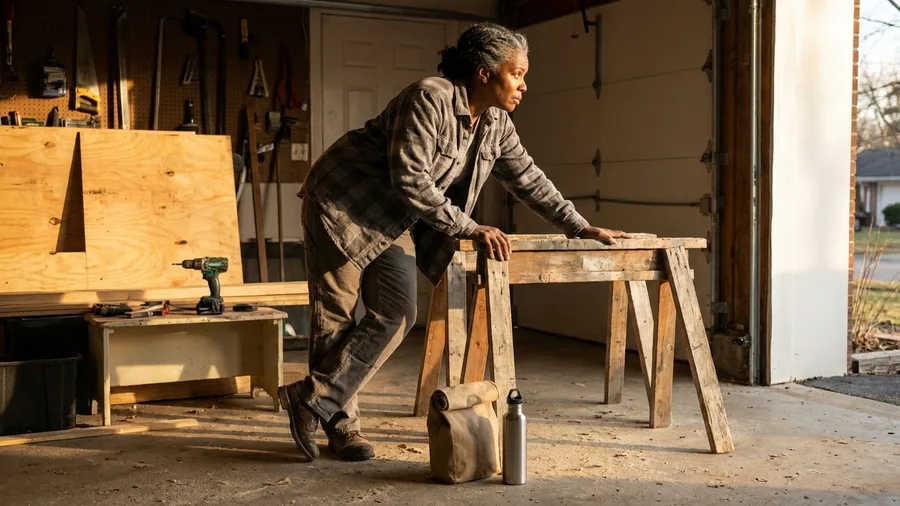
The answer to whether I can just keep working as long as I need the money is no. At 71, even in good health, I can't work like I used to.
I'd like to tell people I'm just as good as I ever was, but I'm not, and pretending otherwise would be a lie I'd pay for later. A long day now is about six hours. It used to be ten.
What changed is practical. Fewer hours, lighter jobs, no more climbing and no more carrying a full sheet of plywood by myself. I build in recovery time between job days because I've learned what happens when I don't. Last spring I took a two-day job and turned it into a four-day backache. That's the trade now.
The planning consequence is the thing I want you to take away. Any income plan built on your own labor shrinks every year, whether you like it or not. The body sets a ceiling, and it doesn't ask your permission first.
So the floor has to get built before that happens. Before the ceiling comes down. If you're 55 and counting on working into your seventies, plan for the version of you that works six hours instead of ten. That version is closer than you think.
Two Roads, One Decision
The steady job
- Same employer for 37 years, one pension at the end
- Employer plan and automatic deductions you never see
- House paid off before you stop working
- Suits someone who can stay put for decades
Working for yourself
- No boss, no schedule, different job every week
- Every dollar of retirement comes out of your own discipline
- You must pay yourself like an employee, every check
- Suits someone who can't stand the same gate every morning
Start in Your 40s or 50s — Work Won't Last

If you're in your 40s, your 50s, or even your 60s and you still have your health, start planning. That's my advice, and it isn't investing advice. It's planning advice.
There are two risks I want you to take seriously. One is losing the ability to work, which happens to everybody eventually and often sooner than expected. The other is that when you go looking for a job at 60-something, people don't want to hire you. I've seen it. Age isn't a protected thing in a hiring conversation the way we'd all like it to be.
So what does start actually mean? Open a retirement account this month. An IRA, or a solo 401(k) if you're self-employed like me. Automate a fixed amount out of every check so it leaves before you can spend it, the way the factory job did for my brother. Then look up the catch-up contribution rules for your age yourself, either on the IRS site or by calling the plan provider. Don't guess at the number and don't take mine. It changes, and it depends on the account.
The goal is not to pick winners in the market. The goal is to have something standing before work stops.
Something beats nothing. And nothing is exactly where 'next year' gets you.
One in Five Have Only Social Security, Including Me

You're not the only one in this situation. One figure I came across is that roughly 20 percent of people in America count on Social Security for every dollar of their income. That's a lot of us, and I'm one of them.
As a contractor, I'm inside a Home Depot or a Lowe's nearly every day, and I see plenty of seniors working the aisles. I always wonder whether they need the job, and I suspect some of them do, for exactly the reason that figure describes. A side hustle or an extra job on top of Social Security is the third income in my own picture. It's probably the third in theirs too.
One caution, though. That figure counts people with no other income at all, not people with a small pension or a little savings. So before you apply it to yourself, find out where the number comes from and what it's actually counting. Numbers like that get passed around with the source cut off.
Still, it tells you something worth knowing. This road is crowded. If you're on it, you're not the odd one out.
You're just alone in it, which isn't the same thing. There's a difference between being the only one and feeling like it, and most of us are doing the second one.
Frequently Asked Questions
Can you retire at 71 with only Social Security?
You can, but the check has to cover the month, and for many people it doesn't. My check is about $1,950 against about $2,900 in expenses, so I work to close the gap. Before you decide, add up your real monthly costs and compare them honestly with your benefit amount.
How much does Social Security pay someone who worked self-employed for decades?
It depends on your reported earnings over the years, not on how hard you worked. Self-employed people pay both halves of Social Security tax, so the record matters. Pull your statement at ssa.gov to see your actual benefit before you plan around a guess.
Is it too late to start saving in my 50s?
No. Open an IRA or a solo 401(k) this month and automate a fixed amount from every check. Catch-up contributions let people over 50 put in more than the standard limit, so check the current IRS rules or ask the plan provider for the exact number.
What can I do at 71 if Social Security isn't enough?
Earn what your health allows and stay within the Social Security earnings limits, then attack the two levers that still move a budget: housing cost and any benefits you haven't claimed. A smaller place or a reverse mortgage conversation can change the monthly math more than saving pennies on groceries.
Where do I start if I want to check my own numbers?
Make one phone call to the Social Security Administration at 1-800-772-1213 or log in at ssa.gov. Get your benefit estimate and your earnings record in front of you, then build your expense list against it. Everything else follows from those two numbers.
If You're 71 With Only a Check, These Are the Two Levers Left

If you're already where I am, the first lever is earning what you still can without tripping the Social Security earnings limit. Check the current figure before you take on steady work, because a few months of regular wages can cost you part of your check.
I'm not talking about hiding it. I'm talking about knowing the number so you don't take a job in March that cuts your benefit in September. Ask the Social Security Administration for the number in writing for this year before you say yes to anybody. It changes, and the last thing you need is to guess wrong at 71.
When earning is done, only two levers really move a budget this tight: what your housing costs, and what you haven't claimed yet. A smaller place, a paid-off place, or a real conversation about your home's equity changes the monthly number more than any grocery coupon will. I've clipped enough coupons to know.
The Road I Took, and the One Still Open to You
If you're in your 40s or 50s, the first move is not a clever one. Open a retirement account this month and automate a fixed amount out of every check, before you research anything, before you pick a fund, before you decide it's a good year. The account you never open can't grow, and my 71 is what waiting looks like.
If you're already at 71 with only a check, the moves are smaller but real: earn within the health and earnings limits you actually have, then work the two levers still attached — housing cost and Social Security claiming choices you haven't claimed. Start with one phone call to the Social Security Administration.
I made my choices and I live in them, and I'm grateful my knees still let me. You get to make yours from where you're standing right now, and that's more than I had at your age.
One Phone Call Before You Decide Anything
Pull your benefit estimate at ssa.gov or call 1-800-772-1213 and put the real number next to your real bills. That gap is the only figure worth planning around.

Hello there! I’m Jesse Joe, the author and editor behind SolganGenius. I’m thrilled you’ve stopped by, and I can’t wait to share with you the essence of what this platform is all about.
I’m a writer, social media enthusiast, and a firm believer in the power of words. I’ve always been fascinated by how a simple phrase or slogan can capture an emotion, convey a message, and even change perspectives. Learn More