
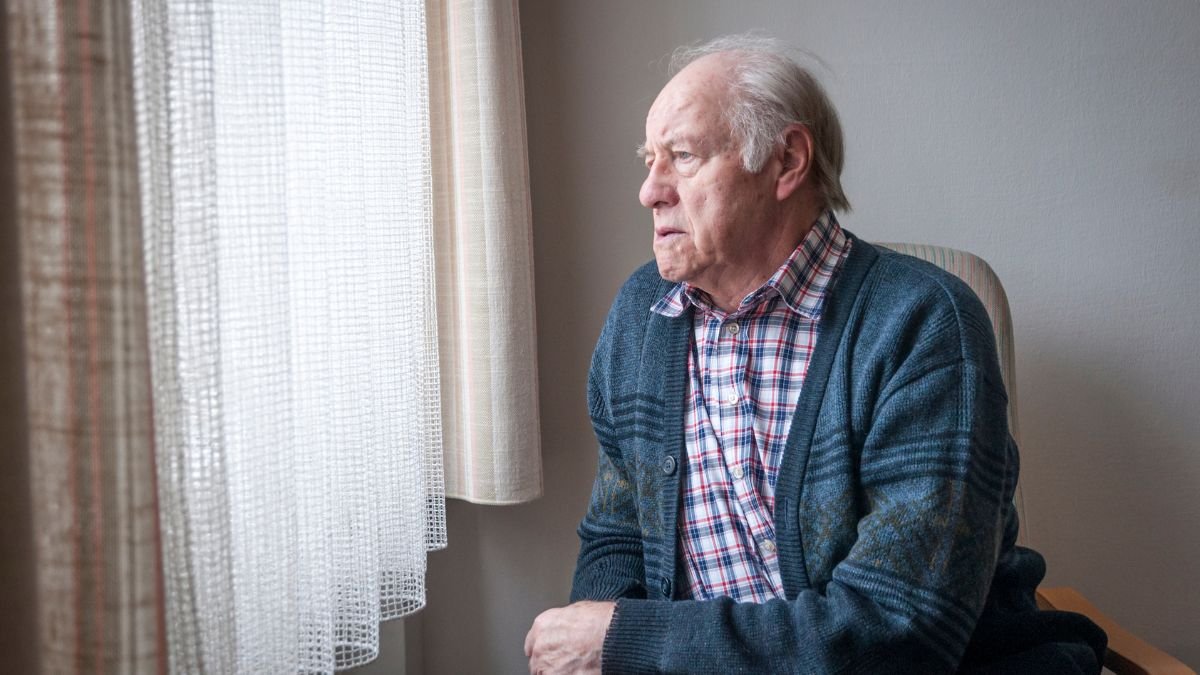
You retired to get your time back. So why can a free Tuesday afternoon suddenly feel much heavier than a packed Tuesday ever did?
Maybe you still talk to your children. You may have a spouse, neighbors, old coworkers, and people you could call. Yet the house feels too quiet, weekends have lost their shape, and you sometimes wonder why seeing more people has not fixed the feeling.
That is because retirement loneliness is not always a shortage of people. The CDC defines loneliness as feeling alone, disconnected, or lacking closeness, while social isolation refers to having too little contact or support. You can experience one without the other.
Research also commonly separates loneliness into social, emotional, and existential forms. For retirement, those feelings can show up through several different losses, including daily contact, close relationships, purpose, identity, and access to other people.
A Quick Check Before You Call Yourself Lonely
Being alone is not automatically a problem. Some retirees enjoy long periods of solitude and feel completely content, while someone surrounded by family can still feel painfully disconnected.
That distinction matters because the wrong solution can leave you even more frustrated. Adding another club will not necessarily help if what you actually miss is one person who knows you deeply.
| If you keep thinking… | You may be missing… | Start by trying… |
|---|---|---|
| I barely talk to anyone all day | Regular social contact | A recurring weekly group |
| I know people, but nobody really knows me | Emotional closeness | More one to one time |
| Nobody needs me anymore | Purpose and contribution | A role with responsibility |
| I miss one person more than everything else | A close bond | Grief support and deeper relationships |
| I do not know who I am now | Identity and meaning | A new role built around your values |
| I want company but cannot easily get out | Access to people | Removing the practical barrier |
Use the table as a starting point rather than a diagnosis. Several forms can happen at the same time, especially during the first years after a major life change.
1. How to Tell When You Miss Everyday Contact

For years, your workday may have supplied social contact without you arranging any of it. Someone said good morning, another person asked about your weekend, and somebody stopped by your desk with a question.
Retirement can remove dozens of those tiny interactions almost overnight. You may not miss the job itself, but you can still miss the steady stream of people around it.
The National Institute on Aging notes that older adults can become more vulnerable to loneliness and social isolation as circumstances change. Living alone, losing family or friends, health changes, and reduced opportunities for contact can all matter.
The clue to watch for
Ask yourself what happens after you spend an hour talking with someone. If your mood lifts quickly after a coffee, class, phone call, or neighborhood conversation, lack of social contact may be a major part of your problem.
The goal is not to pack every day with events. You need predictable contact that happens often enough to become part of ordinary life.
Try giving your week three social anchors.
- One activity where the same people meet regularly
- One scheduled call or coffee with someone you already like
- One place where casual conversation happens naturally
A library program, walking group, recreation class, faith community, community garden, or volunteer shift can work. The specific activity matters less than showing up often enough for familiar faces to become familiar people.
The CDC says small acts such as checking in and reaching out can help build supportive relationships. Regularity matters because relationships rarely become close after one event.
2. How to Recognize Loneliness When You Have Plenty of People

This kind can be confusing because your calendar may look fine. You attend dinners, see relatives, chat with neighbors, and still come home feeling strangely alone.
Researchers often describe this as emotional loneliness. It appears when a person lacks the close bond or trusted relationship they want, even if plenty of other people are nearby.
That explains why simply meeting more people can fail.
You could attend five social events this week and still never tell anyone what you are worried about. You could have twenty acquaintances and nobody you would call after receiving frightening news.
Ask a harder question than “How many friends do I have?”
Try asking yourself:
- Who knows what I am worried about right now?
- Who could I call when I have genuinely good news?
- Who would notice if I disappeared from my routine for two weeks?
- Who can I talk to without performing or pretending?
- Which relationship do I want to make deeper?
You do not need ten intimate friends. For many people, one or two dependable relationships provide something a large circle of acquaintances cannot.
Building that depth takes repetition and some openness. Instead of always meeting in a group, invite one person for coffee, take a walk together, or call them regularly.
Start small. Share something slightly more personal than usual and see if the other person meets you there.
3. What to Do When You Miss Being Needed

Work gives people much more than income. It can provide deadlines, responsibility, status, problems to solve, and people who rely on you.
Then retirement arrives and everyone tells you to relax.
Relaxing can feel wonderful at first. But after months of having no real responsibilities, some retirees begin wondering if anything they do matters to anyone besides themselves.
That is a different form of retirement loneliness. You may be missing contribution more than company.
Being busy is not the same as being useful
Golf, television, travel, gardening, and hobbies can make retirement enjoyable. Yet they may not fully replace the feeling that another person counts on you.
That is why contribution can be powerful.
A 2025 longitudinal study using data from the German Ageing Survey found that older adults who took up volunteering could experience decreases in self reported loneliness, though researchers also noted that further study is needed.
The useful part of volunteering may go beyond simply being around people. A good role gives you a reason to arrive, something to contribute, and people who recognize your absence.
Consider roles such as:
- Mentoring someone entering your former profession
- Tutoring children or adults
- Helping at a food pantry
- Coaching a community group
- Serving on a neighborhood committee
- Helping a nonprofit with skills from your career
- Caring for a community garden
- Organizing a weekly club
Do not fill your calendar just to prove you are active. Choose something where your effort has a visible result.
Your next move: Finish this sentence: “Someone would benefit if I used my experience to help with _____.” Then find one small place to do it regularly.
4. Why Losing One Person Can Make Everyone Else Feel Far Away

Sometimes retirement loneliness begins with retirement but becomes much worse after the loss of a spouse, sibling, best friend, or other close companion.
People may respond by telling you to get out more. They mean well, but the advice can feel almost insulting.
Ten casual conversations cannot simply replace the person who knew your history, habits, jokes, fears, and morning routine.
This is about attachment, not headcount
Emotional loneliness can become especially strong when an important bond disappears. Research on loneliness makes a clear distinction between lacking a social network and lacking a close emotional attachment.
You can therefore have supportive children and good neighbors while still feeling the absence of one specific person.
The goal is not to replace that person. It is to slowly make room for meaningful bonds alongside the loss.
That may include:
- Spending more time with one trusted friend
- Joining a grief support group
- Accepting invitations you would normally decline
- Creating regular family rituals
- Reconnecting with someone from your past
- Speaking with a counselor if grief continues to disrupt daily life
You also do not need to rush.
Grief has its own pace, and loneliness after loss does not mean you are handling retirement badly. It means a relationship that occupied a major place in your life is gone.
That answer gives you a more useful place to begin.
5. How to Spot Loneliness Caused by Losing Your Place in Life

You may still have friends. Your finances may be stable, and your family may visit often.
Yet something keeps bothering you.
People once asked for your opinion because of your job. Your name was on schedules, reports, projects, or a door. Then one day you became “retired,” and a large part of your public identity disappeared.
This can overlap with what researchers call existential loneliness, which involves a deeper feeling of separation, emptiness, or disconnection from meaning rather than simply lacking company.
The question may be “Who am I now?”
Retirement can expose how tightly identity became tied to a career.
If you spent 35 years saying, “I am a teacher,” “I am an engineer,” or “I run a business,” replacing that sentence with “I used to be” can feel surprisingly painful.
The answer is not to recreate your former job exactly. It is to decide which parts of that identity deserve to continue.
A teacher may still love helping people learn. A manager may still enjoy organizing people around a goal. A nurse may value caring for others, while a tradesperson may still enjoy teaching practical skills.
Your title can disappear while those qualities remain.
Try building your next role from three questions:
- What am I still good at?
- What do I still care about?
- Who could benefit from it?
The overlap gives you somewhere to begin.
6. How to Fix the Loneliness That Comes From Being Cut Off
This is the most practical form of the problem.
You want to see people. You know who you would like to see. You might even know where you want to go, but something keeps you home.
Maybe you no longer drive at night. Walking has become harder. Public transportation is poor. Hearing loss makes group conversation tiring. Money is tight, or you are caring for a spouse and cannot easily leave.
In this case, telling you to “be more social” misses the point.
Fix access before fixing your social life
The CDC notes that health problems, financial difficulties, and living circumstances can make building social connections harder. Federal resources therefore include approaches such as phone programs, video communication, online programs, and other ways to help older adults connect.
The National Institute on Aging also provides current resources aimed specifically at reducing social isolation among older adults.
Start by naming the barrier.
| The barrier | A practical first response |
| You stopped driving | Check local senior transportation or arrange shared rides |
| Walking is difficult | Choose accessible venues or activities close to home |
| Friends live far away | Schedule regular video or phone calls |
| Group settings are tiring | Meet one person at a time |
| Money is tight | Use libraries, parks, community centers, or free programs |
| You care for someone | Look for caregiver groups, respite options, or activities you can join from home |
| Technology feels difficult | Take a basic device or video calling class |
Senior Planet, libraries, aging agencies, community centers, and local nonprofits may offer programs depending on where you live. The exact options vary widely, so local resources matter.
This form of loneliness has the clearest direct fix because there may be a visible obstacle between you and people you already want in your life.
Remove that obstacle first.
Your next move: Complete this sentence: “I would see people more often if _____ were easier.” Whatever fills that blank deserves your attention before you sign up for another club.
So Which Kind of Retirement Loneliness Do You Have?
You may see yourself in more than one category. That is normal because retirement can change your schedule, identity, relationships, and daily environment at the same time.
Use this quick comparison to decide where to begin.
| Type | What it feels like | What probably will not be enough | Better first move |
| Everyday contact loss | My days are too quiet | Rare big social events | Recurring weekly contact |
| Emotional loneliness | Nobody really knows me | Collecting acquaintances | Deepen one relationship |
| Purpose loneliness | Nobody needs me | Staying busy all day | Take responsibility for something |
| Loss based loneliness | I miss one specific person | Trying to replace them quickly | Build connection alongside grief |
| Identity loneliness | I do not know my place anymore | More entertainment | Create meaningful new roles |
| Access loneliness | I want people but cannot reach them | Telling yourself to try harder | Remove the access barrier |
There is an important reason to take persistent loneliness seriously. The National Institute on Aging says loneliness and social isolation are associated with greater risks for several physical, mental, and cognitive health problems, while recent NIA funded work has continued examining links between loneliness and dementia risk.
That does not mean feeling lonely automatically causes a disease. These studies show associations, and health outcomes are affected by many factors.
What Is the One Real Fix?

The headline needs one important qualification.
There is no single activity proven to cure every form of retirement loneliness. Retirement itself does not automatically cause loneliness either.
A 2025 study examining retirement, isolation, and loneliness found no simple increase in loneliness among newly retired people compared with people who had not retired, which shows how much personal circumstances matter.
Still, the six patterns share one useful principle.
Build repeated, meaningful connection that matches what you are actually missing.
If you miss people, create regular contact. If you miss closeness, deepen a relationship. If you miss being useful, contribute somewhere. If you lost someone important, allow grief and new bonds to exist together.
If you lost your identity, build a new role around values you still carry. If access is stopping you, remove the barrier that keeps connection out of reach.
The CDC emphasizes that even small acts of connection can help develop supportive relationships. The key is turning occasional contact into something dependable enough to become part of your life.
A Simple 30 Day Retirement Loneliness Reset
Do not redesign your entire retirement this weekend. Pick one missing form of connection and work on that for the next month.
- Week one: Track when you feel lonely and what happened just before it.
- Week two: Identify the type of connection that seems to be missing.
- Week three: Add one activity, person, role, or practical change that addresses it.
- Week four: Repeat it instead of constantly searching for something new.
Pay attention to how you feel before and after each contact. The goal is to discover which relationships and activities actually leave you feeling more connected.

I’m Austin Becker, an advocate for living life with intention and resilience. I write for men who are actively navigating life’s major transitions, tackling the realities of reinvention and finding renewed purpose with grit and honesty. I believe that personal growth doesn’t have a deadline it’s about continuously gearing up for the chapters that matter most.
Through my work, I aim to strip away the clichés of modern manhood, offering practical, no-nonsense insights on health, mindset, and legacy for those who want to move forward with strength and clarity.