
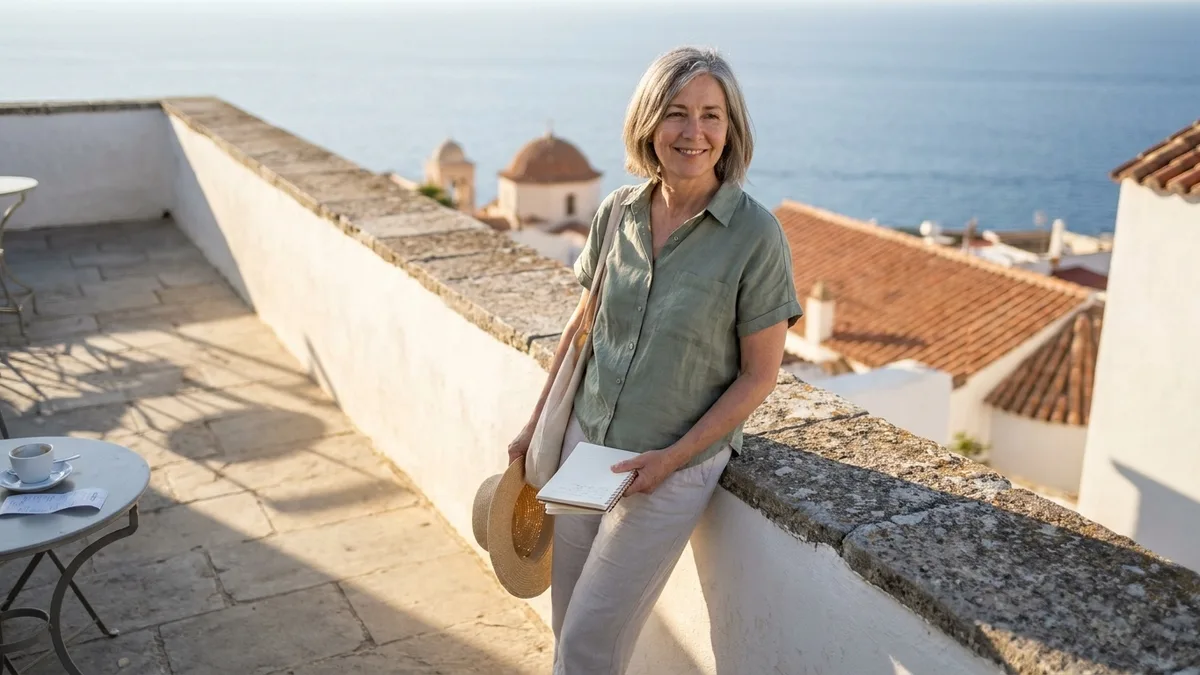
What if the retirement math you've been sold is upside down? A modest US retirement runs about $4,800 a month, while the average Social Security check is about $1,900. That's a $2,900 monthly gap, and it's not closing.
Thousands of retirees have already answered that gap by leaving. They're living on ocean views and sunshine, often on a single check, for $1,500 a month.
Here are five English-speaking islands where $1,500 isn't survival money. It buys a real life. You'll get the numbers, the catches, and a clear look at which one fits you.
| Island | Typical single monthly budget | Furnished 1BR rent | Visa / income test | Healthcare | Main catch |
|---|---|---|---|---|---|
| Gozo, Malta | $1,300–$1,500 | $400–$600 | Residency visa; verify current terms | WHO top-10 European; public for residents | Tiny island, rising rents, no direct US flights |
| Dominica | $1,100–$1,300 | $300–$500 | Long-term residency available | New hospital; affordable private care | Hurricanes, outages, hilly terrain |
| Roatan, Honduras | $1,000–$1,400 | $300–$500 | $1,500/mo income for retirement visa | Private clinics; serious cases go to mainland | Petty theft; rough roads; rising prices |
| Cebu/Palawan, Philippines | $900–$1,300 | $300–$500 | SRRV: indefinite stay, multiple entry | Private hospitals, English-speaking | Typhoons, traffic, slow bureaucracy |
| Penang, Malaysia | Under $1,500 | $400–$650 | MM2H; 2021 overhaul raised requirements | Internationally accredited; low costs | Heat and humidity; alcohol taxed |
1. Gozo, Malta: Mediterranean Retirement on $1,300–$1,500
Start with the math nobody wants to do. A modest retirement in the US runs about $4,800 a month, and the average Social Security check lands around $1,900. That's nearly $3,000 short, every single month, for the rest of your life.
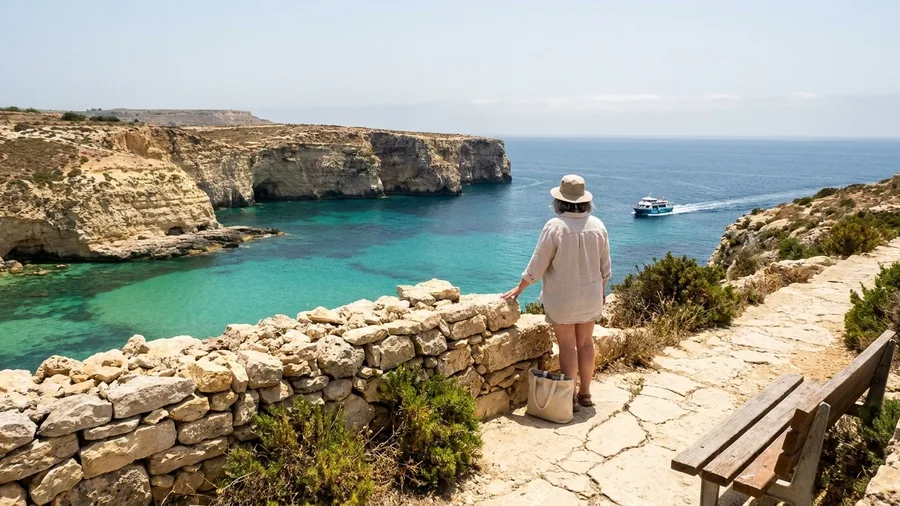
Moving abroad isn't a fantasy escape from that gap. It's the practical answer, and Gozo is where a lot of people find it. Malta's quieter sister island sits a 25-minute ferry from the mainland, gets over 300 days of sunshine, and runs on English, which is official here. Street signage, official paperwork, medical visits, rental agreements: all handled in English. A single retiree can live on $1,300-$1,500 a month, with a furnished one-bedroom at $400-$600, groceries around $40-$50 a week, and a restaurant meal with wine at $10-$15.
Then there's the part that sounds almost too kind. Malta charges a flat 15% tax on foreign-sourced income, and that includes your pension, your IRA and your Social Security abroad. Healthcare ranks in the WHO's top 10 in Europe. Both of those depend on your residency status, not on wishful thinking, so confirm the current residency, tax and public-care eligibility rules with Maltese officials before you sell anything.
Here's the catch, and it's a real one. Malta is 26 square miles, and European expats are finding it fast, so rents are climbing quicker than almost anywhere else in the Mediterranean. Residency paperwork can be slow and bureaucratic, and direct US flights are limited, which makes frequent family visits expensive. For European living, English ease and a genuine healthcare system inside $1,500, Gozo is quietly extraordinary.
💡 Tip: Book your residency appointment before you sign a lease; the paperwork timeline, not the rent, is what trips people up.
💡 PRO TIP
Run the $1,500 test on your own numbers
Take your actual monthly income, subtract $600 for rent and $250 for health insurance, and see what's left. If that remainder covers food, transport and a buffer, the island on your shortlist is probably viable. If not, cross it off before you fall in love with the view.
2. Dominica: The Cheap Nature Island
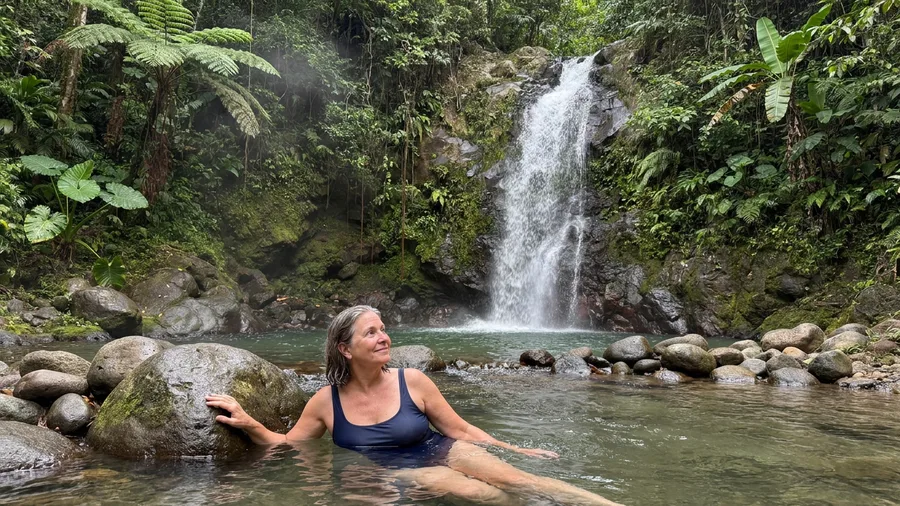
Picture the moment you tell a friend you're moving to Dominica and they say, "Oh, the Dominican Republic!" Don't mix those up. Dominica is a different country entirely, a small island in the Lesser Antilles between Guadeloupe and Martinique, and it earned the nickname "the nature island" honestly: over 60% rainforest, nine active volcanoes, hot springs, waterfalls you can swim under, and whale watching from shore.
Daily life is in English, and the costs are startling. Living runs about 50% below the US. A one-bedroom in Roseau goes for $300-$500 a month, a local meal costs $5-$8, and a single retiree can live comfortably on $1,100-$1,300 a month, with a new hospital and affordable private care. The government actively courts foreign retirees, and long-term residency is accessible.
The catches are real, though. Power outages happen, rural internet can be unreliable, and Hurricane Maria in 2017 was a Category 5 that destroyed an estimated 90% of buildings. Insure seriously and budget for it, because that premium is part of your monthly number, not an afterthought. There are no direct flights from the continental US either; plan on 12-18 hours through connecting hubs. The island is mountainous, too, which matters more with every passing year. If you're a nature lover on a very tight budget, this is your island. If stairs are already a negotiation, weigh that honestly.
💡 Tip: Ask your insurer for a named-storm deductible quote, not just a premium. The difference after a bad season is thousands.
3. Roatan, Honduras: Reef Diving With a $1,500 Visa
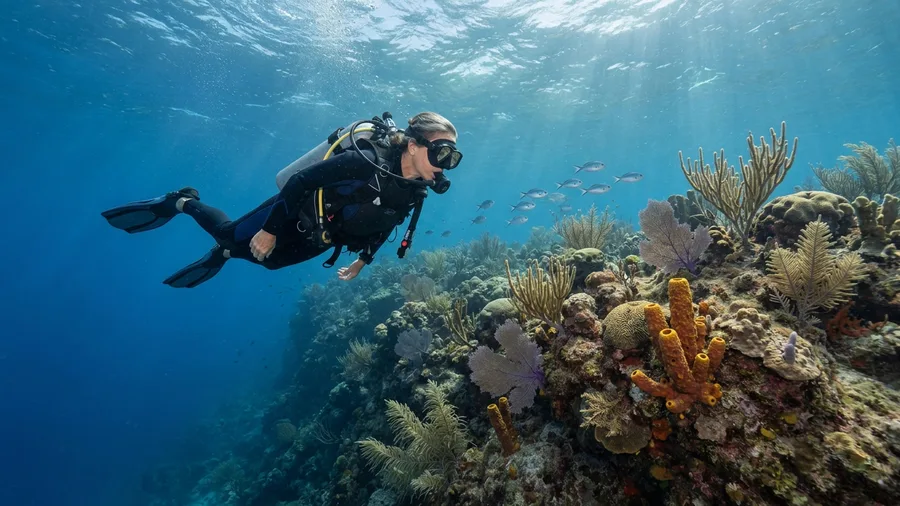
That tension you just felt at the word Honduras is worth addressing head-on. Roatan is a 31-mile-long, 5-mile-wide island off the northern coast, sitting on the Mesoamerican Barrier Reef, which ranks as the planet's second-biggest coral reef network. English dominates in expat areas, tourist zones and service industries, so you won't struggle to communicate.
For the retirement visa, you only need to show $1,500 in monthly income. That buys indefinite legal residency plus exemptions on import duties for your car, furniture and belongings. Note the distinction: $1,500 is the income test, not the typical spend. Most single retirees live on $1,000-$1,400 a month, with beach-area rent at $300-$500 and dining at $8-$12. Private clinics and English-speaking doctors are on the island, but serious cases go to the mainland or the US, so international health insurance is not optional.
On safety, be honest with yourself. Mainland Honduras has one of Latin America's highest violent crime rates, but Roatan sits apart geographically, is shaped by its expat community, and violent crime targeting expats is uncommon. Petty theft still happens, so choose gated housing and stay alert at night. Roads range from fine to rough, storms knock out power, internet is patchy, and prices are creeping up as the island gets discovered.
Roatan: worth it or not?
Worth it if you…
- Dive or snorkel most weeks
- Want a small, real expat community
- Can live on $1,000–$1,400 a month
- Accept gated housing and basic security
Skip it if you…
- Need fast, reliable internet daily
- Want walkable streets and no car
- Require specialist medical care nearby
- Can't tolerate storm-season outages
4. The Philippines: Cebu and Palawan on a Retiree Visa

The Philippines, specifically Cebu and Palawan. The country has over 7,600 islands and a history that makes it unusually easy for Americans: it was a US territory from 1898 to 1946, and English is one of two official languages, used in government documents, schools and hospital forms.
The SRRV (Special Resident Retiree's Visa) is the standout. It grants indefinite stay, no annual renewal, multiple entry, and government-mandated discounts for holders on lodging, dining, transit, leisure and healthcare. You are formally rewarded for retiring there, which is a sentence you can't write about most countries.
Cebu City is the practical choice: excellent hospitals, international restaurants, a big expat community, and a monthly budget of $900-$1,300. A contemporary one-bedroom in a secure area runs $300-$500, and meals at good local restaurants cost $3-$6. Run the math and a couple on two checks has room left over for travel. Palawan is the opposite: quieter, more rural, with limestone karsts, an underground river and lagoons that look painted.
Both are less exposed to typhoons than the Eastern Visayas, though about 20 typhoons pass through the country each year and eight or nine make landfall. Haiyan in 2013 showed how catastrophic a direct hit can be, so look at elevation and construction, not just the view.
The other catches: urban traffic and air pollution, bureaucracy that moves slowly with PRA rules that can change on short notice, poor rural internet, and US State Department advisories in parts of Mindanao and the southern islands. None of that changes the core offer: English, warmth, and a visa that actually works for you.
💡 Tip: Ask the Philippine Retirement Authority for the current SRRV requirement sheet in writing before you wire any deposit.
🧭 Your pre-move sequence, in order
Pick two islands, not five
Narrow your shortlist using the budget table, then commit to researching only those two.
Price the one-time costs
Get current quotes for airfare, temporary housing, deposits, shipping, visa fees and international health insurance.
Verify the visa on the official site
Check income proof, background check, medical exam and renewal terms on the government program page, not a forum.
Book an off-season trial stay
Two to four weeks in the neighborhood you're considering, at the time of year nobody advertises.
Vet the rental from home
Video walk-through, local agent reference, day and night neighborhood visit, then sign nothing until you've seen it.
5. Penang, Malaysia: First-World Retirement Under $1,500

Unlike the smaller islands on this list, Penang delivers first-world infrastructure at a price that barely makes sense. Malaysia was a British colony until 1957, English is the second official language, and in Penang it's everywhere: menus, shop signs, conversations between strangers who use it as a common tongue. A furnished one-bedroom runs $400-$650, a two-bedroom with a view $800-$1,000, groceries $100-$150 a month, and hawker dishes $1-$3. Char kway teow, Penang laksa, nasi lemak, Hokkien mee, perfected across generations and served after dark. Transport runs $40-$80 a month using Grab, walking or a scooter.
Healthcare is the real headline. Gleneagles, Penang Adventist and Island Hospital are internationally accredited, with physicians who trained in Britain, Australia and America. Seeing a specialist sets you back $25-$40, an MRI $150-$250, and common procedures run 70-80% less than in the US. Waits are measured in hours, not weeks.
The honest downsides: it's 85-92°F with high humidity virtually every day, which is a genuine consideration if you have heart or respiratory conditions. The MM2H visa overhaul in 2021 raised financial requirements substantially, alcohol is heavily taxed, and immigration can be slow and inconsistent, so a local agent or lawyer is worth the fee. Rents in expat neighborhoods are creeping up, and the window where $1,500 buys true luxury may not stay open forever. Weigh the tradeoffs: Gozo for Europe and 15% tax, Dominica for 50% lower costs and nature, Roatan for diving and community, the Philippines for visa and warmth, Penang for infrastructure, food and healthcare. Some destinations have become unsafe or unwelcoming, so check current advisories and take a trial visit before you commit.
💡 Tip: Use a licensed MM2H agent and get the fee in writing. The process is legitimate; the timeline is the variable.
The True Cost of Moving Before the Budget
The monthly number was always the easy part. Picture $1,500 and you can see yourself there, coffee on a balcony, sun on your shoulders.
What sinks moves is the cash you need before month one, when no paycheck is coming in yet. Airfare for a one-way ticket and a couple of checked bags, temporary housing for the first month while you hunt, a rental deposit, shipping whatever you refuse to leave behind, visa and agent fees, international health insurance paid up front, plus furniture and utility hookups for a place that starts out empty.
Add it up honestly and that list runs several thousand dollars before you have paid a single month's rent.
Get current quotes for each line instead of trusting a blog post from three years ago, because airfares and agent fees move with the season and the exchange rate.
Then stress-test the monthly figure itself. If you are part of a couple, add a second person's food, transport and insurance on top of the same rent, and watch how fast a good exchange-rate year turns into a tight bad one. A fixed dollar income buys less when the local currency climbs, and a few years of hidden costs quietly eats the rest.
Before you commit, go straight to the official sources for the visa: the Maltese residency portal, the Philippine Retirement Authority, the Malaysian MM2H program, Honduran immigration, Dominica's residency office. Ask for current savings-proof, background-check and approval-time requirements in writing, not a forum thread.
Then work backward from your checklist. If the one-time cost looks like six months of your monthly budget, build that cushion first and use the island math as the reward.
Visas, Taxes, Medicare and Health Cover
The numbers on the island are one thing. The paperwork that lets you stay there, and the safety net underneath you, is the part that can quietly undo the whole plan.
Every place on this list runs its own process: proof of income, a savings threshold, a criminal background check, a medical exam, renewal terms and approval timing that can run weeks or months. Check them on the official program page, not in a Facebook group, because a friendly post from two years ago can cost you a deposit when the rules have moved.
On the US side, be careful. Social Security can generally be received abroad, but confirm the country-specific rules and set up direct deposit before you move so the check does not get held up. Medicare usually does not cover routine care overseas, so read your plan's exceptions rather than assuming. US citizens still have filing and reporting duties on foreign accounts and income, which makes a cross-border tax adviser a necessity, not a luxury.
Health cover deserves its own quote before you pick an island. Price international insurance by your age and any pre-existing conditions, because local public systems may not be open to new residents even where the care is excellent.
Get the quotes first, not after you have signed a lease and shipped the furniture. And keep every approval and requirement in writing, so the terms you budgeted for are the ones you actually get.
How to Vet a Rental From Home
Once the money and the visa line up, the last thing standing between you and the move is a place to live, and you will be choosing it from thousands of miles away.
Short-term tourist rents and long-term leases are different animals. A long-term lease needs you to verify the deposit, what utilities are included, the furnished condition, the internet speed, the air-conditioning, and whether the quoted rent is current or a leftover from last season.
Run a remote sequence and do not skip steps. Ask for a live video walk-through, get a reference from a local agent or an expat group, and have someone visit the neighborhood at both day and night, because a street can feel very different after dark.
Then take a short off-season trial stay before you sign anything longer than a month. A few weeks in the rainy or quiet season tells you more than any listing photo.
For safety, check current US State Department advisories, local police reports and expat accounts, and weigh the island-specific worries against the life you pictured. Petty theft is a real concern in parts of Roatan, Mindanao carries travel advisories in the Philippines, and Dominica's storm exposure is not small.
None of that rules a place out. It just means you go in knowing what you are signing up for.
Frequently Asked Questions
Can I really live on $1,500 a month on these islands?
Yes, on most of them, if you rent a modest furnished one-bedroom and cook at home sometimes. Gozo and Penang sit at the top of that budget; Dominica, Roatan and Cebu come in well below it. Your actual number depends on rent, health insurance and how often you fly home.
Do I need to speak another language?
Not on any island on this list. English is an official language in Malta, Dominica and the Philippines, and the dominant language in Roatan's expat areas and throughout Penang. Government forms, doctors and landlords can all be dealt with in English.
Will my Social Security follow me abroad?
Generally yes, but verify country-specific rules and set up direct deposit before you move. Medicare usually won't cover routine care overseas, so budget for international health insurance separately.
Which island is cheapest?
Dominica and Cebu are the cheapest overall, with single budgets starting around $900–$1,100 a month. Roatan is close behind. Gozo and Penang cost more, but you get stronger infrastructure and healthcare in return.
What's the biggest mistake people make?
Moving before running the one-time costs. Airfare, deposits, shipping, visa fees and insurance add up fast, and a budget that works on paper can collapse in month one. Get quotes first, then book a trial stay.
Which island fits your $1,500 life?
Match the island to the person. Gozo is for the reader who wants Europe, English and a 15% flat tax on foreign income. Dominica is for the lowest budget and raw nature. Roatan is for divers and anyone who wants a small, real community. The Philippines is for the retiree visa and the warmth of a country that actively wants you there. Penang is for healthcare, food and infrastructure that feels first-world at a price that doesn't.
Before you put down a deposit anywhere, book a two-to-four-week off-season trial visit. Collect current visa, insurance and rental quotes while you're there. And check current advisories: some destinations that looked perfect two years ago have become less safe or less welcoming. The research is the move.

Hello there! I’m Jesse Joe, the author and editor behind SolganGenius. I’m thrilled you’ve stopped by, and I can’t wait to share with you the essence of what this platform is all about.
I’m a writer, social media enthusiast, and a firm believer in the power of words. I’ve always been fascinated by how a simple phrase or slogan can capture an emotion, convey a message, and even change perspectives. Learn More