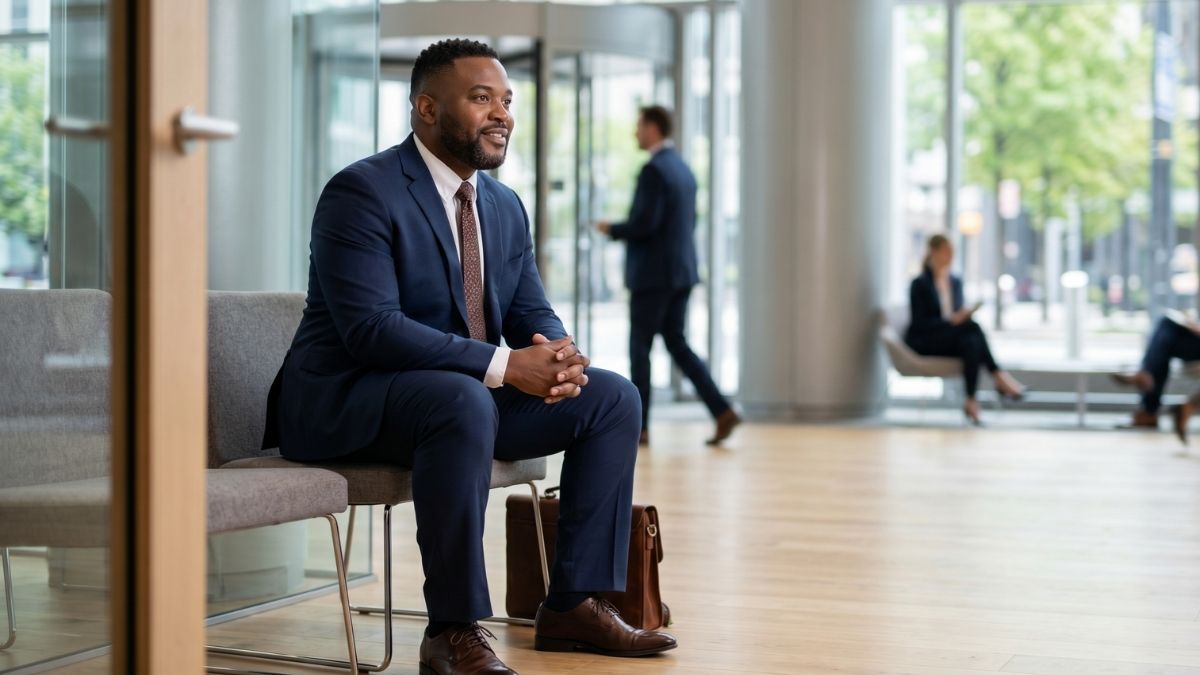
Getting dressed for a job interview is stressful for most men. For plus size men, it comes with an extra layer because almost every piece of advice out there was written for someone built differently than you.
That’s not a personal failing. It’s a gap in the information.
Most “interview outfit” guides assume slim fits, standard proportions, and bodies that slide easily into off-the-rack clothing. Following that advice often leaves plus size men feeling like the outfit is working against them before they’ve said a word.
It doesn’t have to go that way. Looking sharp in an interview comes down to fit, not size and once you know the specific rules for your frame, the whole thing gets a lot simpler.
Here’s exactly what to wear, what to avoid, and how to walk in feeling ready.
The Interview Outfit Problem Is a Fit Problem, Not a Size Problem
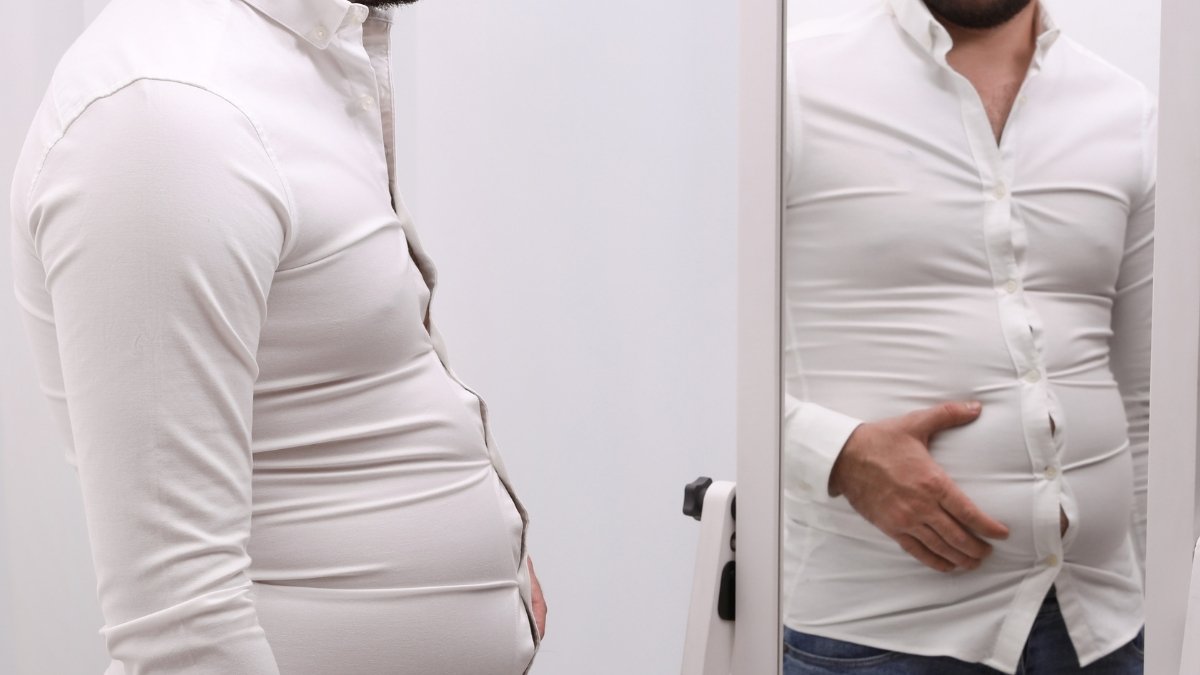
Most advice about interview outfits was written for one body type and it wasn’t yours. That’s not a complaint. It’s just the truth. When every “what to wear” article shows slim-fit suits on slim men, the advice stops applying the moment your body is different.
Here’s what actually matters: fit. Not size, not brand, not price tag. A $150 suit that fits well will always beat a $500 suit that doesn’t.
The problem most plus size men run into isn’t their body — it’s that they’re trying to follow instructions that were never meant for them.
What this means for you:
Standard “fitted” advice (slim lapels, tapered trousers, tight silhouettes) is written for a different frame following it often makes things worse, not better
Sizing up to “hide” the body usually backfires excess fabric adds visual bulk, not coverage
Fit rules for plus size frames are specific and learnable shoulder seam placement, jacket length, trouser rise these are checkpoints, not guesswork
One tailor visit can do more than an entire shopping trip small adjustments to an off-the-rack piece change everything
Know the Dress Code Before You Pick a Single Item
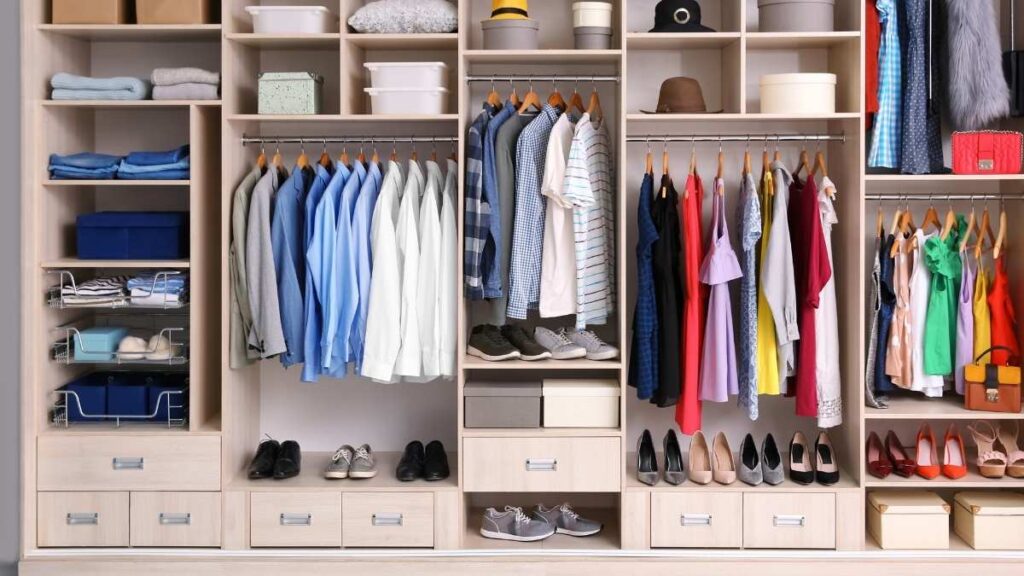
Showing up overdressed is a mistake. So is showing up underdressed. Both send the wrong signal before you’ve said a single word.
Before you think about suits or shirts or shoes, figure out which dress tier the job actually calls for. There are three.
The three interview dress tiers:
Business Formal Full suit, dress shirt, tie, leather shoes. Think finance, law, banking, government, or any company with a traditional corporate culture
Business Casual Blazer with dress trousers or chinos, collared shirt, no tie required. Covers most mid-size companies, healthcare administration, sales roles, and corporate retail management
Smart Casual Dark well-fitted jeans or chinos, a clean button-down or polo, neat shoes. Works for tech startups, creative agencies, and casual office environments
How to figure out which one applies to you:
Check the company’s website and social media office photos tell you almost everything
Look at how employees dress in any LinkedIn photos from that company
When genuinely unsure, go one tier up slightly overdressed reads as respectful, slightly underdressed rarely does
If the job listing says “casual environment,” that still means smart casual for the interview itself, not the dress code you’ll wear once hired
What “Good Fit” Actually Means on a Plus Size Frame (This Is Where Most Men Go Wrong)
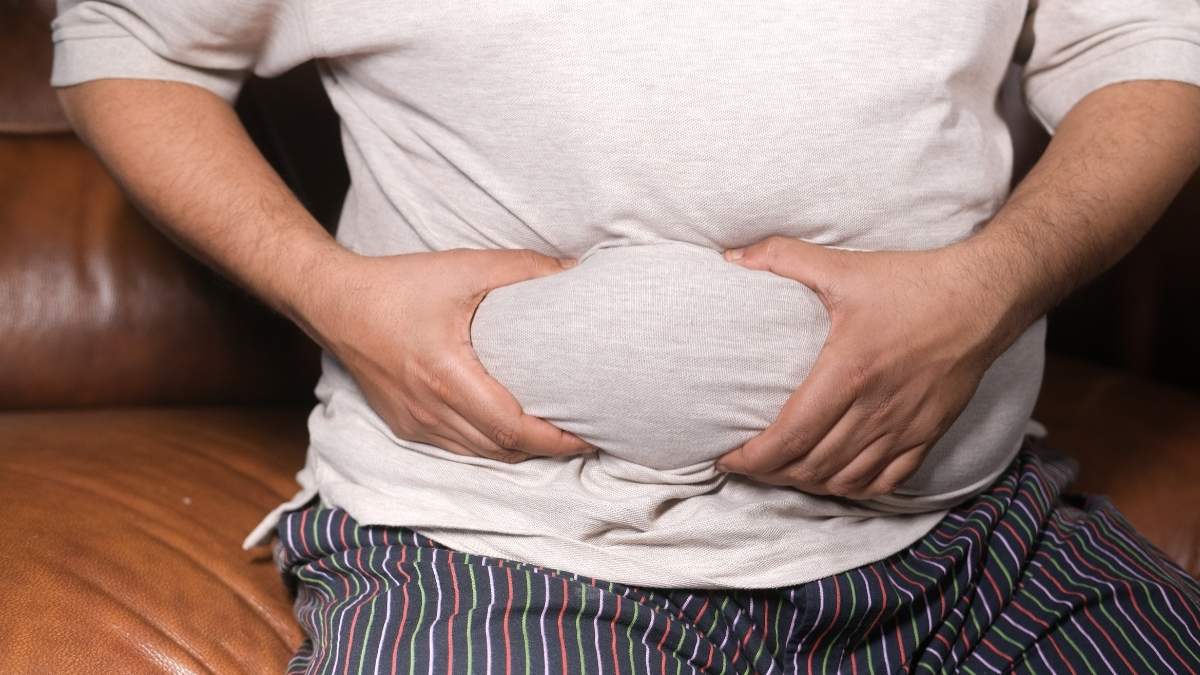
Buying bigger to look smaller doesn’t work. Extra fabric doesn’t hide your body it just adds shapeless bulk that makes everything look less intentional. Most plus size men size up to get comfortable across the chest, then end up swimming in fabric everywhere else. That trade-off isn’t worth it.
Fit has specific, checkable rules. Here’s what to actually look for:
Your fit checklist point by point:
Shoulder seam Should sit exactly at the edge of your shoulder bone. If it droops down your arm, the jacket is too big. This single checkpoint matters more than any other
Chest and shirt fabric No pulling, no horizontal creases across the buttons. If the fabric strains when you stand still, it will look worse when you move
Jacket closure A suit jacket should close without resistance. If you have to tug it shut, go up a size and have the waist taken in by a tailor
Trouser rise Mid to high rise trousers sit at the natural waist and stay put when you sit down. Low rise trousers gap at the back and shift constantly a distraction you don’t need
Trouser break Fabric should touch the top of your shoe with a slight fold. Too much pooling at the ankle makes trousers look oversized even when they aren’t
The tailor point nobody talks about:
Off-the-rack clothing is cut for an average body that doesn’t exist. Getting trousers hemmed and a jacket waist taken in costs around $30–$50 total. That small investment turns a decent outfit into one that looks like it was made for you because after the alterations, it essentially was.
The Suit That Actually Works — What to Look For and What to Skip
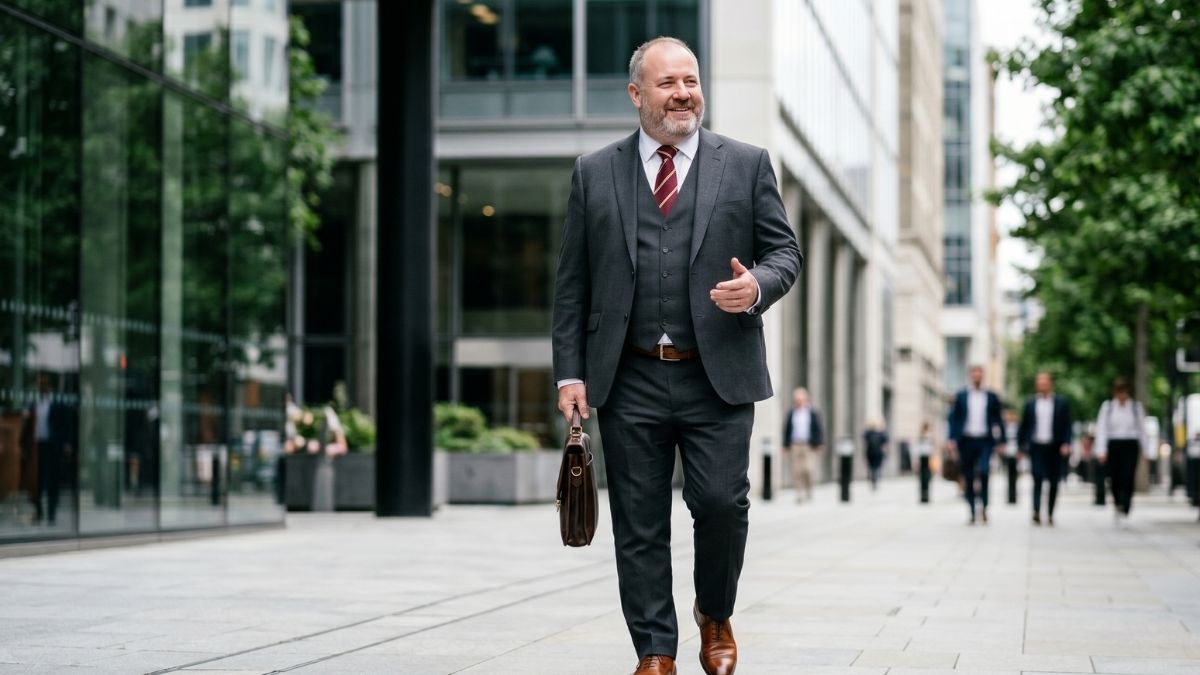
Black seems like the safe choice. It isn’t. Black suits read as funeral or formal event navy and charcoal are what interviewers actually expect, and both are more forgiving on a wider range of skin tones. Start there.
Beyond color, the cut decisions matter more than the brand.
What to look for:
Single-breasted jacket Double-breasted adds horizontal visual weight across the chest and stomach. Single-breasted with a two-button closure creates a clean vertical line instead
Longer jacket hem The jacket should cover your seat fully. Longer hem elongates the torso and creates a leaner overall silhouette without trying to hide anything
Subtle or no pattern Thin vertical stripes work well because they draw the eye up and down. Wide checks or bold horizontal patterns do the opposite avoid them
Blazer plus trousers over a mismatched suit A well-fitted blazer with matching dress trousers often looks sharper than a matched suit that fits poorly. Perfect fit beats perfect matching every time
What to skip:
Double-breasted jackets
Strong plaid or wide check patterns
Black suits for interviews
Any jacket where the chest fits but the shoulders don’t that’s not fixable without expensive tailoring
Where to actually shop:
DXL (Destination XL) Widest range of plus size suits in physical stores, good for trying before buying
SuitSupply Higher quality, in-store tailoring available, worth it if budget allows
ASOS Plus More affordable, good for blazer and trouser separates
Made-to-measure Services like Indochino start around $400 and remove the fit guesswork entirely
Shirts, Trousers, and Shoes — The Supporting Cast That Makes or Breaks the Look
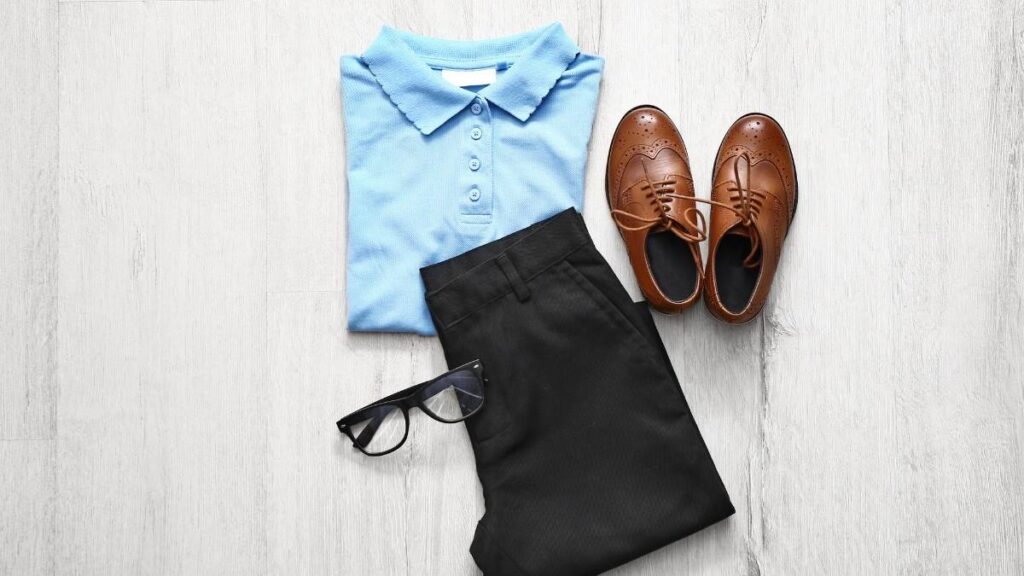
Getting the suit right and then ignoring everything else is where most men lose points. Each piece either supports the outfit or quietly works against it. Here’s what to get right.
Shirts:
Collar fit comes first Most plus size men size up the shirt to get the chest right, then end up with a collar that gaps or swims around the neck. If the chest fits but the collar doesn’t, a tailor can take in the collar for very little cost
Spread collar over point collar Rounder faces look better with a spread collar because it widens horizontally at the neck, balancing the face shape. Point collars draw attention upward and can look pinched on a wider neck
Solid or subtle White, light blue, or pale grey are clean and professional. Busy prints or bold stripes pull focus away from you and toward the shirt
Trousers:
Flat front, not pleated Pleats add fabric volume at the front of the thigh, which most plus size frames don’t need. Flat front trousers create a cleaner line
Mid to high rise Sits at the natural waist, stays comfortable when seated, and doesn’t gap at the back
Waist alterations are almost always needed Trousers sized for your seat will usually be too wide at the waist. A tailor fixes this in one visit for under $20
Shoes:
Clean leather oxfords or derby shoes in black or dark brown
Condition matters as much as style scuffed shoes undermine an otherwise sharp outfit instantly
Match belt leather to shoe leather, always
The Outfit That Works at Every Interview Level (A Starting Point, Not a Formula)
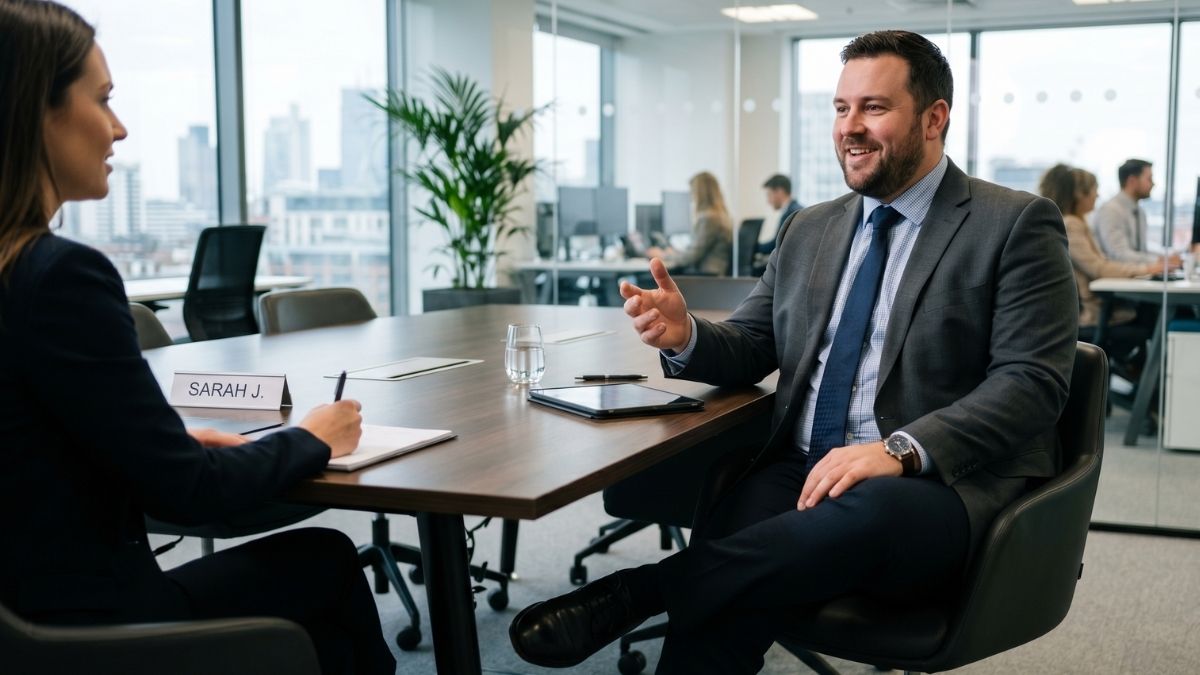
Rules are useful. Rigid formulas are not. Use these three outfits as a starting point something concrete to build from, not a checklist you have to follow exactly.
Business Formal:
Charcoal or navy single-breasted suit, two-button closure, longer jacket hem that covers the seat fully
White or pale blue dress shirt, spread collar, fitted at the chest without pulling
Dark leather oxford shoes, black belt to match
No tie is required, but a simple solid or subtle pattern tie adds polish if the role is traditional
Business Casual:
Well-fitted navy or grey blazer paired with flat-front charcoal or dark khaki trousers not a matched suit
White or light blue spread collar shirt, tucked, no tie needed
Dark brown or black derby shoes, clean and polished
This combination works because the blazer and trouser contrast creates a vertical line that a matched suit sometimes doesn’t
Smart Casual:
Dark indigo or black slim-straight fit chinos not jeans with distressing or fading
Fitted solid-color button-down shirt in white, navy, or grey, tucked or half-tucked
Clean leather loafers or simple white leather sneakers if the company culture supports it
Screenshot this. Take it shopping. Adjust for what fits your body best because that will always matter more than matching this list perfectly.
The Night Before: How to Make Sure Everything Is Actually Ready
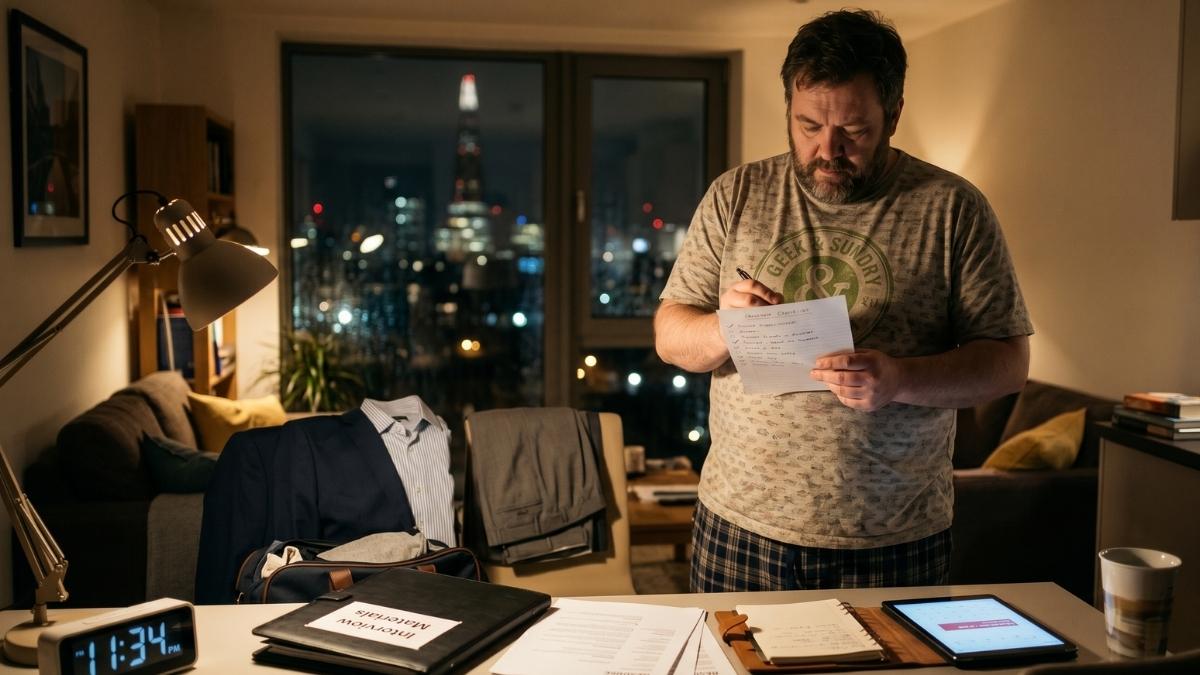
Morning-of outfit checks are how things go wrong. Something doesn’t fit right, a shirt needs ironing, a shoe has a scuff you didn’t notice and now you’re rushing and stressed before the interview even starts. Do this the night before instead.
The night-before checklist:
Put the full outfit on Not just lay it out. Wear it. Walk around. Sit down in a chair, stand back up, reach forward like you’re shaking someone’s hand. If anything pulls, gaps, or restricts movement, you still have time to fix it or swap it
Check movement specifically Plus size frames put more pressure on seams during movement than at rest. A shirt that looks fine standing up can pull across the back the moment you reach across a table. Find that out now, not mid-interview
Iron or steam everything Wrinkled trousers and a creased shirt signal carelessness. Takes ten minutes. Worth every second
Check your shoes Wipe them down, check for scuffs, make sure the soles aren’t worn through. Scuffed shoes are the detail interviewers notice more than most men expect
Lay everything out in one place Shirt, trousers, jacket, belt, shoes, socks. Nothing gets forgotten in the morning rush
Tomorrow morning, you get dressed and you leave. No decisions, no second-guessing, no last-minute panic.
Your outfit is handled. Now focus on the interview.

Hello there! I’m Jesse Joe, the author and editor behind SolganGenius. I’m thrilled you’ve stopped by, and I can’t wait to share with you the essence of what this platform is all about.
I’m a writer, social media enthusiast, and a firm believer in the power of words. I’ve always been fascinated by how a simple phrase or slogan can capture an emotion, convey a message, and even change perspectives. Learn More