
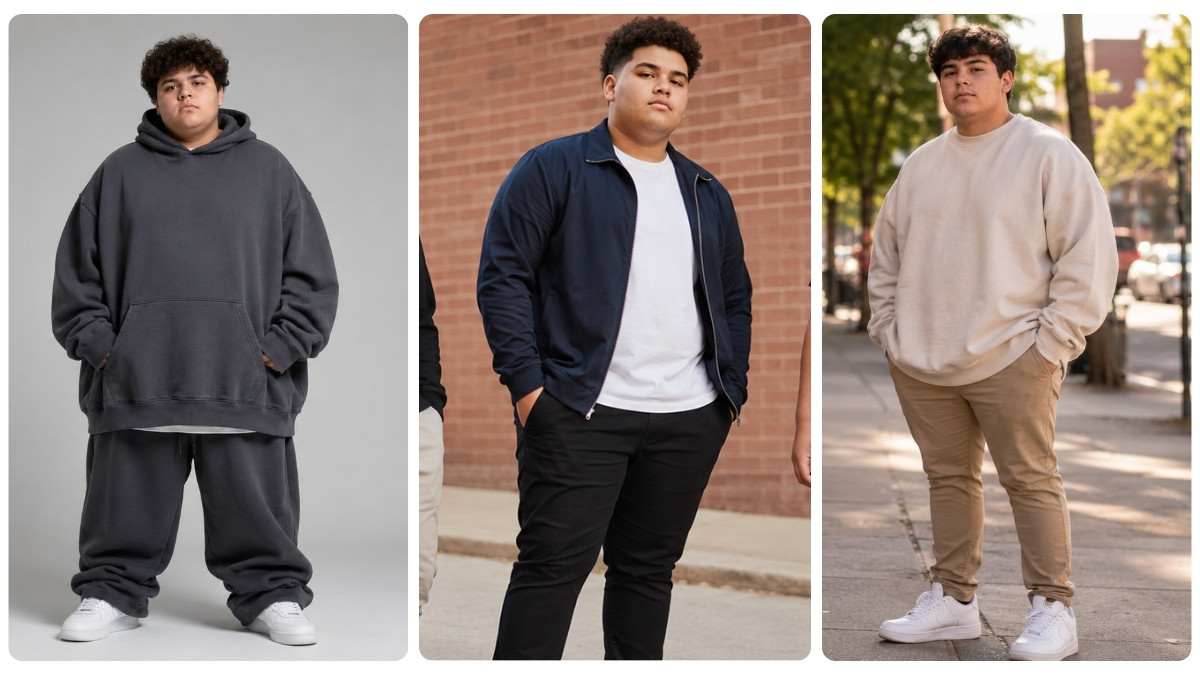
Pulling on the same dark hoodie for the third time this week feels easier than figuring out something better. Nothing in your closet looks right, and everything that fits feels like it was designed to make you disappear. So you go with what’s safe and spend the whole day feeling invisible anyway.
Dressing bigger does not make you look smaller. Most guys find that out the hard way. What actually works is learning how clothes sit on your body and using that knowledge to build outfits that look like choices, not like you ran out of options.
This covers the real stuff: why baggy clothes work against you, what fit actually means in plus sizing, and which styles translate well when you are shopping in the larger end of the rack. No filler. Just what you need to start dressing like you mean it.
The Real Reason Baggy Clothes Are Making You Look Bigger, Not Better
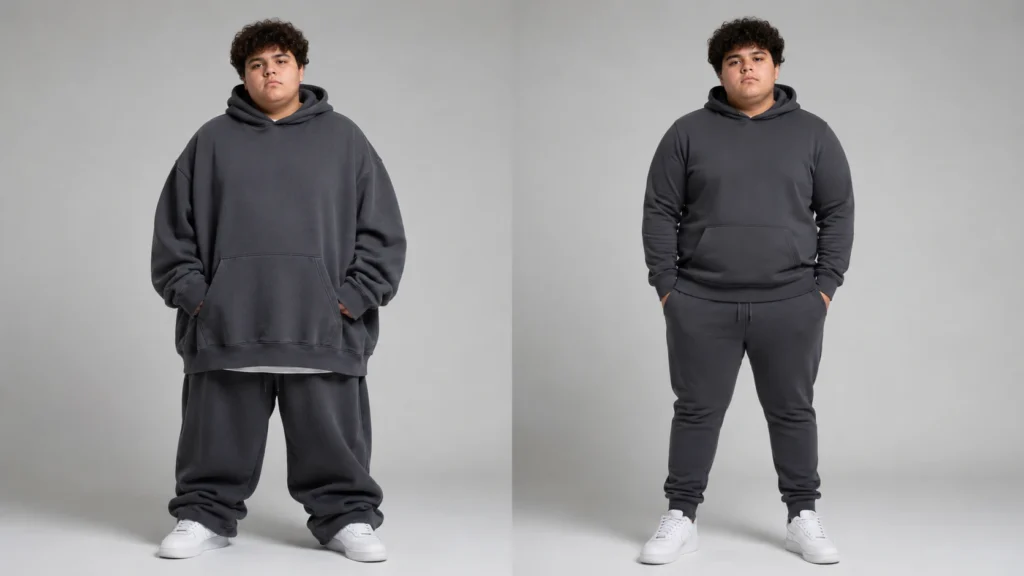
Wearing bigger clothes to look smaller actually does the opposite. When your whole outfit is oversized, your body has no breaks, no contrast, no visual stops. Your eyes, and everyone else’s, read the entire shape as one continuous block. That block looks larger, not smaller.
This is called the proportion principle. Clothing creates shapes. Shapes tell the eye where to start, where to stop, and how much space something takes up. Stack a baggy tee on baggy joggers on oversized shoes and there is nothing to interrupt that read. The whole silhouette merges into one wide, shapeless mass.
Fit changes that. Even one fitted piece breaks the block. Your body stops reading as a single large shape and starts reading as a person wearing clothes. That shift matters more than color, brand, or price.
You do not need to wear tight clothes. Tight is not the goal. Structure is. A shirt that skims your chest and shoulders without clinging tells a completely different visual story than one hanging four inches past your waist.
Most guys your size were taught that volume is protection. It is not. Volume without contrast is just more visual weight added to the same silhouette.
| Section | Core Tip | Why It Works |
|---|---|---|
| The Real Reason Baggy Clothes Are Making You Look Bigger, Not Better | One fitted piece breaks the silhouette into readable shapes instead of one large mass | The eye needs contrast to stop reading your outline as a single wide block |
| Intentional Oversized vs. Hiding: There’s a Real Difference | Pair one loose piece with one fitted anchor to make relaxed fits look deliberate | Without a structured piece to ground it, loose clothing reads as shapeless, not stylish |
Baggy Clothes Are Not the Safe Option You Think They Are
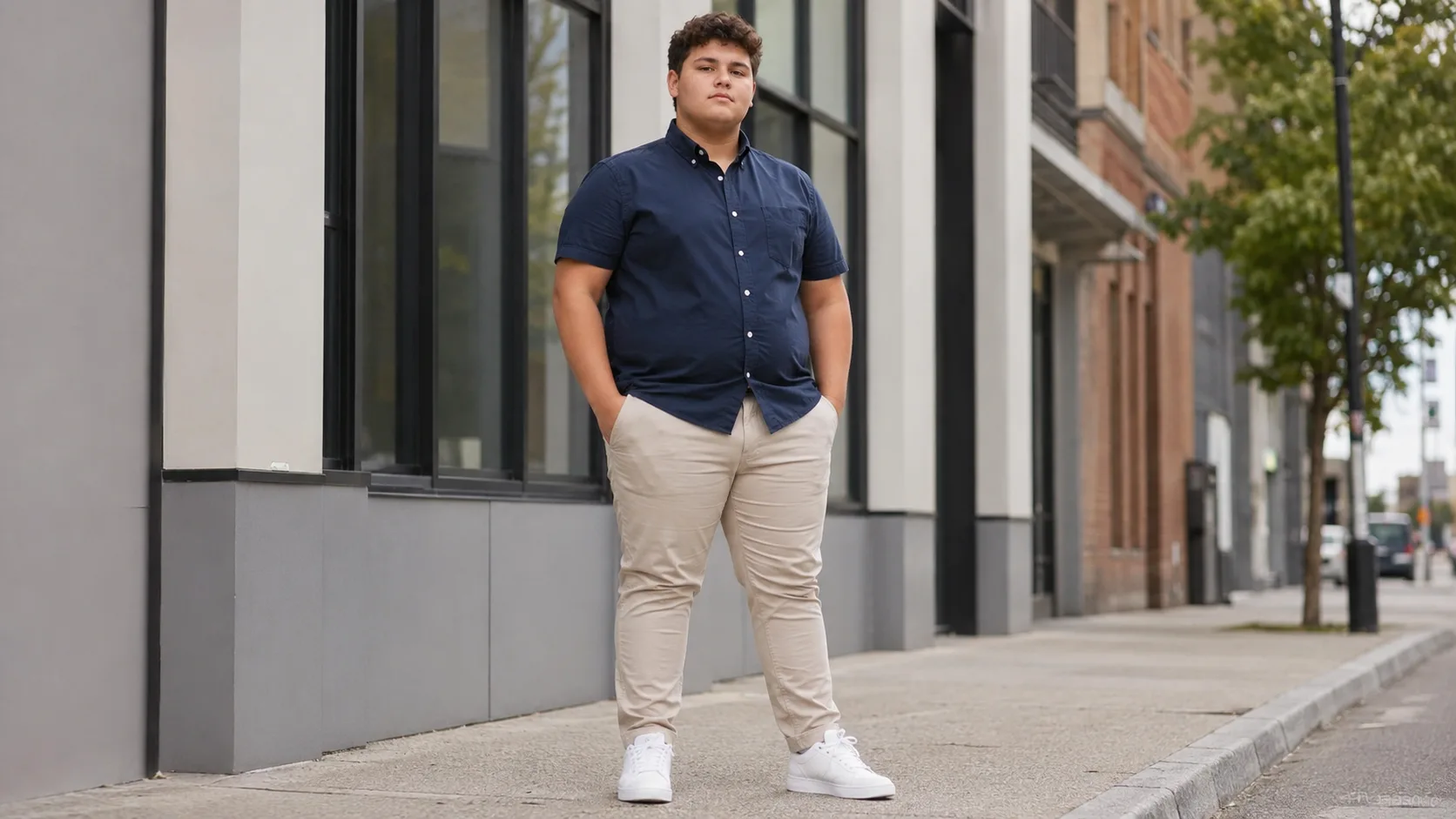
Oversized shirts and baggy pants won’t hide your body the way you think. They actually add bulk, making you look wider and shapeless instead of “covered.” Every extra inch of fabric hangs awkwardly, creating a silhouette that feels undefined.
Layering huge pieces only compounds the problem, drawing attention to your size rather than disguising it. Slimmer fits contour naturally to your frame, giving a structured, confident appearance without squeezing or restricting movement.
Shirts that skim the shoulders and torso, paired with pants that follow your leg shape, instantly sharpen your profile. Fabric matters too. Heavy, stiff materials can balloon and exaggerate width, while softer, mid-weight fabrics drape without exaggeration.
Color and pattern can help, but fit is the foundation. Your goal is to look intentional and stylish, not hidden under layers. People notice shape first. Choosing the right cut transforms your presence from overlooked to composed and modern. Confidence grows when your clothes feel purposeful, not like a makeshift shield.
The One Fit Rule That Changes Everything: Your Shoulder Seam
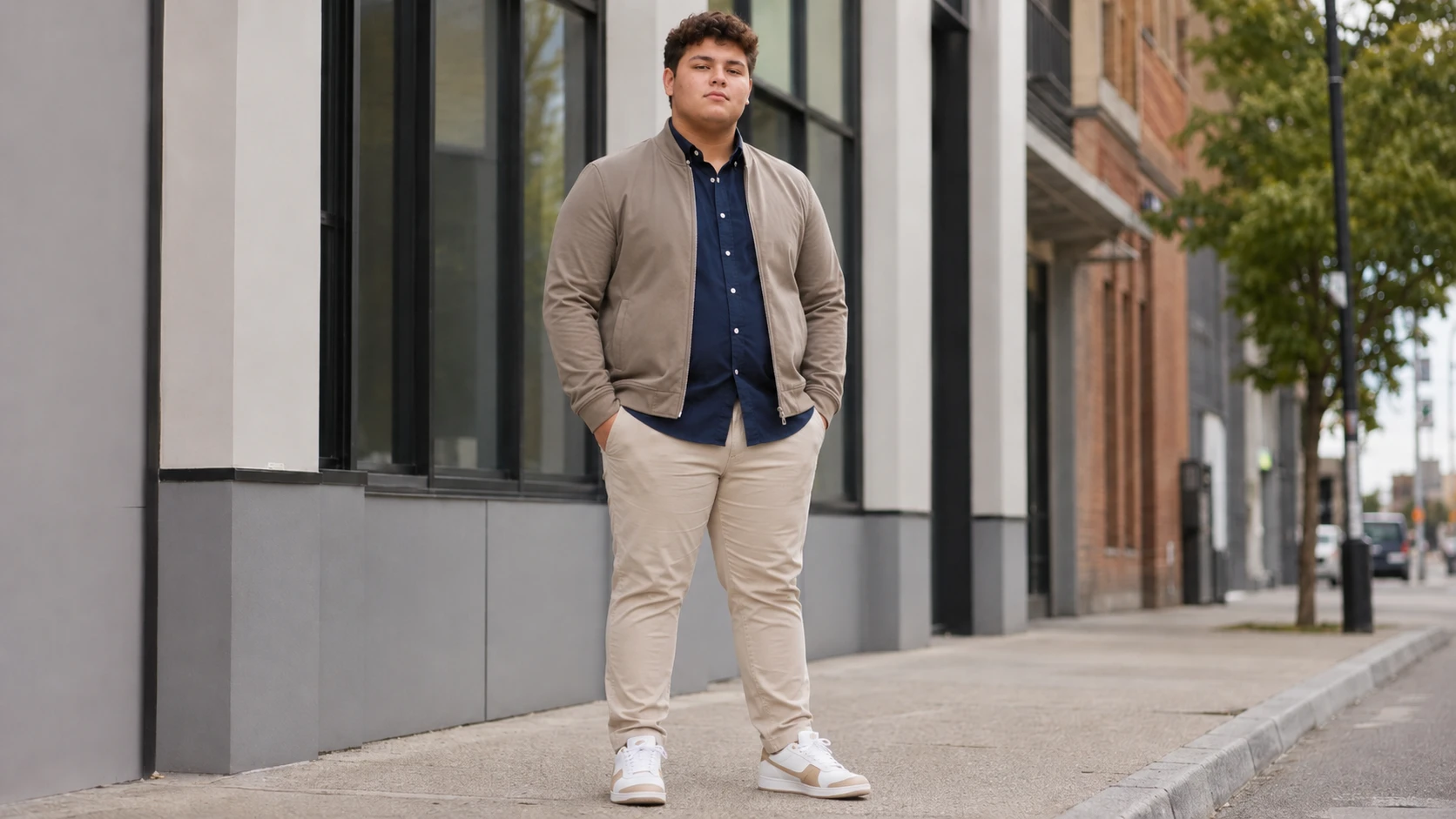
1. Shoulder Seam Check: The shoulder seam should sit exactly at your natural shoulder edge. Seams that drop past your shoulder make your torso look wider and sloppy. Seams that sit too high create tension, pulling fabric awkwardly across your chest and back. Every jacket, hoodie, or button-up you try should pass this single visual test before anything else.
2. Instant Fit Diagnostic: You can spot-fit problems in seconds. Hold the garment on your shoulders without buttoning it. Look in a mirror. If the seam extends beyond your shoulder bone, the shirt or jacket is too large. If it digs in or wrinkles, it is too small. Correct seam alignment immediately improves how your entire top half appears.
3. Universal Application: Every top follows this rule. T-shirts, hoodies, polos, and blazers all rely on proper shoulder seam placement for structure. Aligning seams correctly naturally lifts your posture and balances proportions, making even simple, casual outfits look sharp.
4. Shopping Shortcut: Before checking sleeve length, torso width, or pattern, inspect the shoulder seam first. This single check saves time and ensures that everything else you try on will fit closer to ideal.
The One Fit Principle That Changes How Every Outfit Looks on You
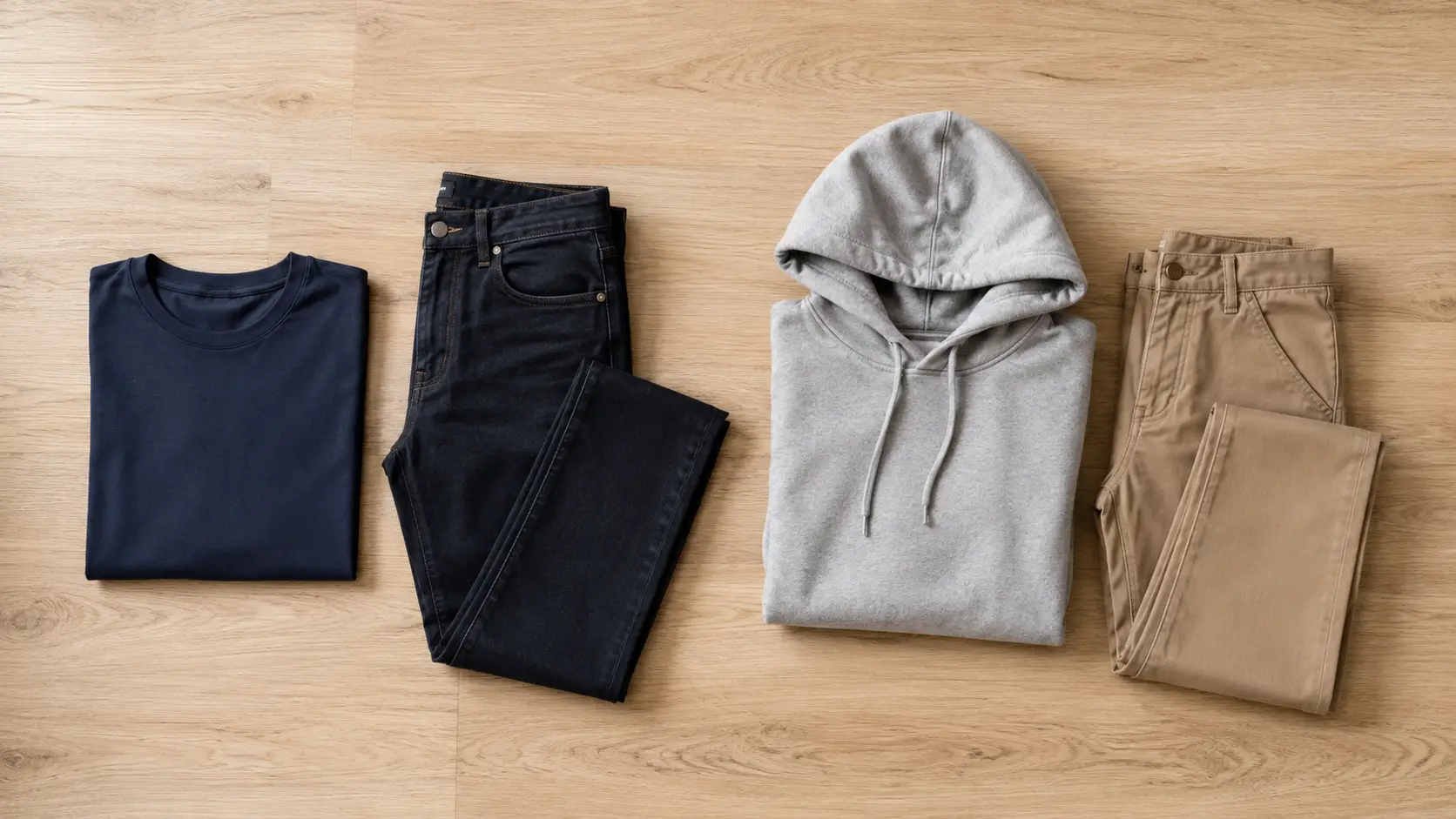
Every outfit you put on follows one simple rule: fitted on top, relaxed on bottom. Or relaxed on top, fitted on bottom. Pick one direction. That’s it.
This is not about dressing for your body type or following some complicated style formula. It is one decision made before you get dressed that makes every combination work better than it would otherwise.
Fitted on top means your shirt or hoodie sits close to your shoulders and chest without pulling or stretching. Relaxed on bottom means joggers, wide-leg pants, or loose jeans with a clean drape. That combination works because the top half gives the outfit shape while the bottom half stays comfortable.
Flip it the other way and it works just as well. Wear a relaxed crewneck or an oversized hoodie on top with slim-fit jeans or straight chinos on the bottom. The fitted bottom half anchors the whole look and keeps it from going shapeless.
Try this with what you already own. A fitted tee with your favorite joggers. An oversized hoodie with straight dark jeans. Both are outfits you probably already wear, just with one side more intentional than the other.
Breaking this rule is what creates the problem. Two loose pieces with no anchor point turns a casual outfit into something that reads as unplanned. One direction per outfit keeps your proportions clean without requiring anything new in your closet.
| Fit Checkpoint | What to Look For | Red Flag |
|---|---|---|
| Shoulder seam | Sits right at the edge of the shoulder bone | Hangs down the arm or sits too close to the neck |
| Chest | Fabric lies flat with no pulling when arms are raised | Shirt pulls, bunches, or rides up and stays up |
| Sleeve length | Tee ends mid-upper arm, long sleeves reach the wrist bone | Sleeves reach the elbow or squeeze the bicep |
| Waistband | Fastens without digging in and holds up without a belt | Needs sucking in to close or sags when fastened |
Where to Actually Buy This Stuff Without Spending Everything You Have
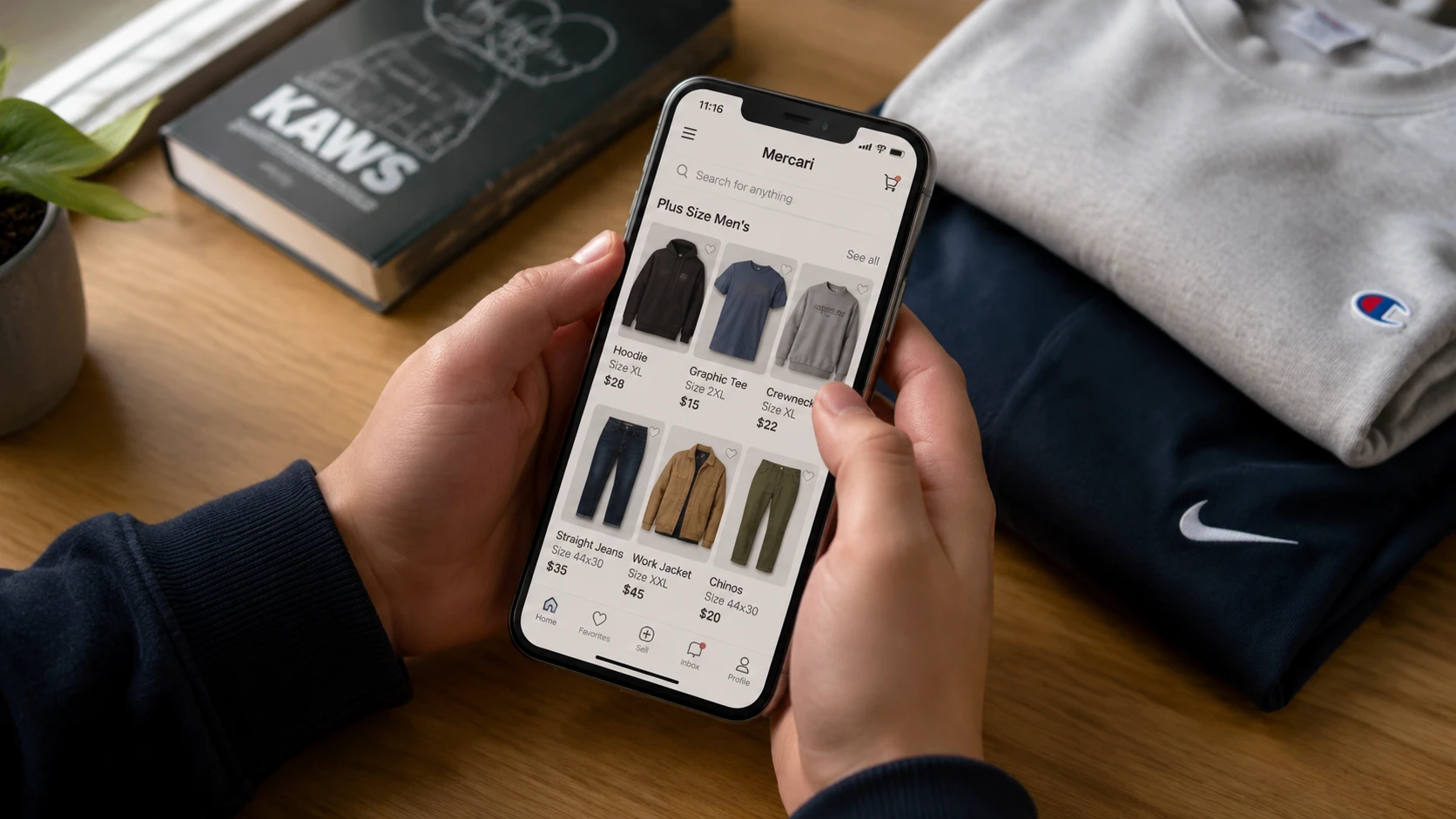
Most guys in plus sizing waste money on brands that simply print a bigger number on the tag without changing how the shirt is actually cut. The shoulders still sit wrong. The chest pulls. The proportions are off from the start.
A few brands actually adjust the pattern, not just the size. ASOS has one of the more reliable extended size ranges for teen-relevant styles, with cuts that account for a broader chest and shoulders rather than just scaling everything up uniformly.
Their own-brand basics in 3X and 4X hold up reasonably well for the price. Target’s All in Motion athletic line and their Original Use range both extend into plus sizing with cuts that work for the styles covered in this article.
Resale apps are underused for this. Poshmark and Depop both have large inventories of plus size men’s clothing, and filtering by size brings up name-brand pieces at a fraction of retail. Condition varies, so check photos carefully before buying.
Old Navy is worth knowing about specifically for chinos and straight-leg pants in extended sizes. Their plus range adjusts the rise and thigh proportions, which makes a visible difference in how the pants sit.
Budget does not have to mean bad fit. Knowing which brands cut their plus sizes properly is what separates a $25 shirt that looks right from one that does not.
Build One Outfit That Feels Like You, Not Like You’re Trying to Hide
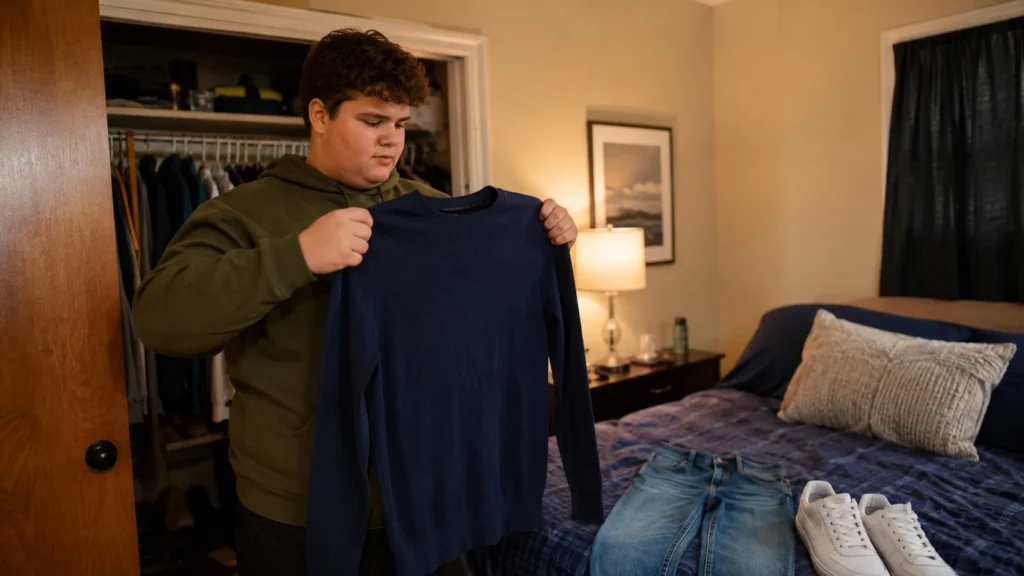
You already have enough to build something good. Start with what you actually like wearing, not what you think you should wear.
Pick your style direction first. Streetwear, clean casual, or sport-influenced: choose the one that already pulls at you when you see it on someone else.
Now apply the one rule. Fitted on top or fitted on bottom. One direction, one outfit. Grab one piece from your closet that fits your shoulders and chest properly, then build around it.
Choose your bottom half next. Straight-leg jeans, tapered joggers, or chinos depending on which style direction you picked. The bottom should contrast the top in terms of how fitted it is.
Finish with footwear that does not fight the rest. Clean sneakers in white, black, or a neutral tone work with all three style categories without adding visual noise.
Wear that outfit this week. Not for anyone else, just to see how it feels when your clothes have intention behind them. One good outfit changes how you carry yourself more than a full wardrobe overhaul ever could.
How Plus Size Teen Boys Can Dress With Style — Without Hiding Behind Baggy Clothes
Most style advice for bigger guys is built around hiding. Wear dark colors. Go loose. Stay covered. That advice keeps you dressed, but it does not get you anywhere close to looking like yourself.
Hiding is not a style. It is a strategy for getting through the day without drawing attention, and there is a real difference between the two.
Your size is not the problem the internet has made it out to be. Plenty of plus size guys dress with genuine style, not despite their size, but without making their size the whole conversation. The difference between them and everyone else is not a different body. It is a different set of decisions about fit, proportion, and intention.
This article is built around those decisions. Each section gives you one clear idea you can use immediately, starting with the biggest misconception most guys your size are carrying around right now.
No complicated rules. No body type charts. Just a practical way to look at your clothes differently so that what you wear starts working for you instead of against you.

Hello there! I’m Jesse Joe, the author and editor behind SolganGenius. I’m thrilled you’ve stopped by, and I can’t wait to share with you the essence of what this platform is all about.
I’m a writer, social media enthusiast, and a firm believer in the power of words. I’ve always been fascinated by how a simple phrase or slogan can capture an emotion, convey a message, and even change perspectives. Learn More