
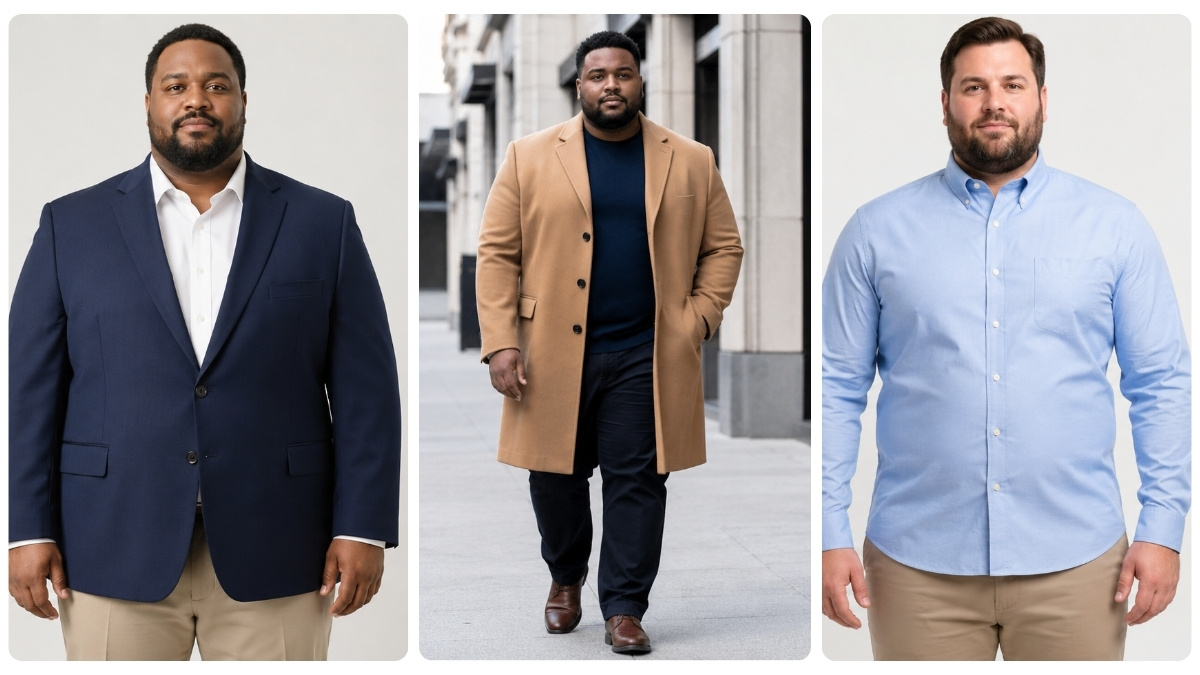
Standing in front of a full closet and feeling like you have nothing to wear is one of the worst feelings. Most of the clothes fit technically. But nothing goes together, nothing looks right, and you end up grabbing the same two outfits on repeat. That is not a shopping problem. It is a foundational problem.
Building a wardrobe that actually works starts with the right pieces, not more pieces. Twelve items, chosen carefully and sized for how you actually look, give you more outfit combinations than a closet stuffed with the wrong things ever could.
Each one on this list was picked because it connects to everything else. Pull one out, and it works. Stack two or three together, and the outfit builds itself.
Why Most “Essentials” Lists Fail Bigger Guys Before You Even Buy Anything
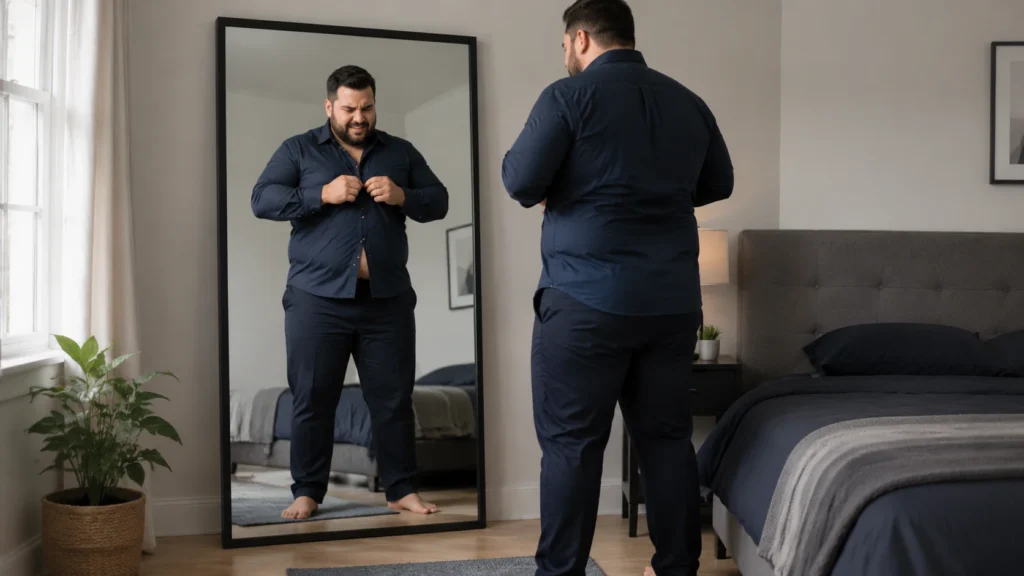
Generic capsule wardrobe lists were written for a 170-pound man with a 32-inch waist. That body is not yours, and those lists were never meant for you.
The cuts recommended in most guides create problems on a bigger frame. Slim-fit shirts pull across the chest. Straight-leg trousers cut off at the widest point of your thigh. Proportions that look balanced on a slim body read as boxy or tight on yours.
Fit is not a secondary concern you sort out later. It determines whether a piece works at all. Every item on a real essentials list needs to pass one test: does it actually work for your body? Not in theory. Not with heavy tailoring. Not “if you size up.”
Built right, a small wardrobe of true essentials lets you get dressed without thinking. Built on the wrong frame, it just fills your closet with things you never reach for.
The Rule That Makes These 12 Items Actually Work Together

Before you buy a single piece, ask one question: does this work with at least three other things I already own or plan to own? If the answer is no, it does not belong in your wardrobe.
That test is what separates a real capsule from a closet full of single-use purchases. Most guys buy items they like individually, then wonder why nothing seems to go together. The problem is not taste. Buying without a connection plan creates the chaos.
Each of the 12 items on this list was chosen because it links outward. A well-fitted Oxford shirt pairs with dark chinos, dark jeans, and chino shorts. Pull one piece and at least three combinations follow.
Think in outfits, not items. That shift alone changes how you shop. Once your brain defaults to “what does this connect to,” impulse buys that don’t belong stop making it into your cart. Your wardrobe works when every piece earns its place through multiple connections, not just one good look.
1. A Structured Polo That Holds Its Shape at the Shoulders
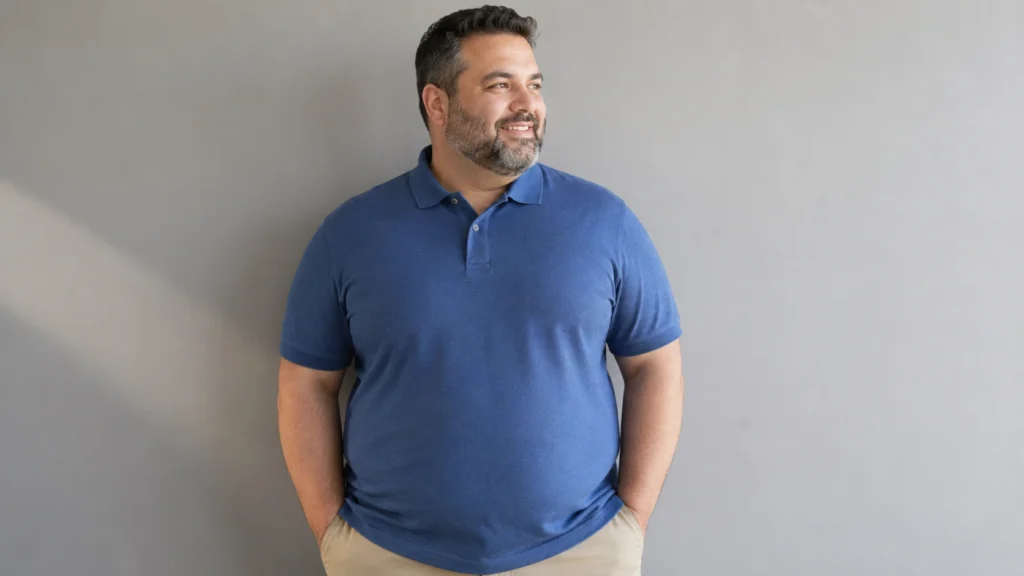
No other top does as much work with as little effort. A well-fitted polo takes you from a casual lunch to a smart-casual dinner without adding a blazer or changing your shoes.
The collar is doing real work here. It creates a defined neckline on a bigger frame, which breaks up the visual mass in a way a crewneck cannot. That single detail makes an outfit look intentional.
Shoulder seams matter more than most men realise. When a polo’s seam sits at the edge of your actual shoulder, the shirt holds its shape through the chest and torso. Seams that slide down the arm create a shapeless, drooping silhouette that no other styling trick can fix.
Look for medium-weight pique or interlock cotton. Thin fabric clings and shows every contour. Heavy fabric adds bulk. Medium weight holds structure without adding visual weight.
“Structured” on a label means the fabric has enough body to keep its shape when worn, not just when folded on a shelf. Check the shoulder seam placement and give the fabric a squeeze. If it bounces back with shape, it will hold on your body.
- Shoulder seam should sit at the edge of your actual shoulder, not droop past it
- Chest should have room to move without pulling at the buttons
- Avoid polos with thick contrast trim or large logos — they add visual noise at the chest
- Solid colors or subtle textures only: navy, white, black, olive, burgundy
2. Dark Straight-Leg Chinos in a Neutral You Can Wear Three Ways
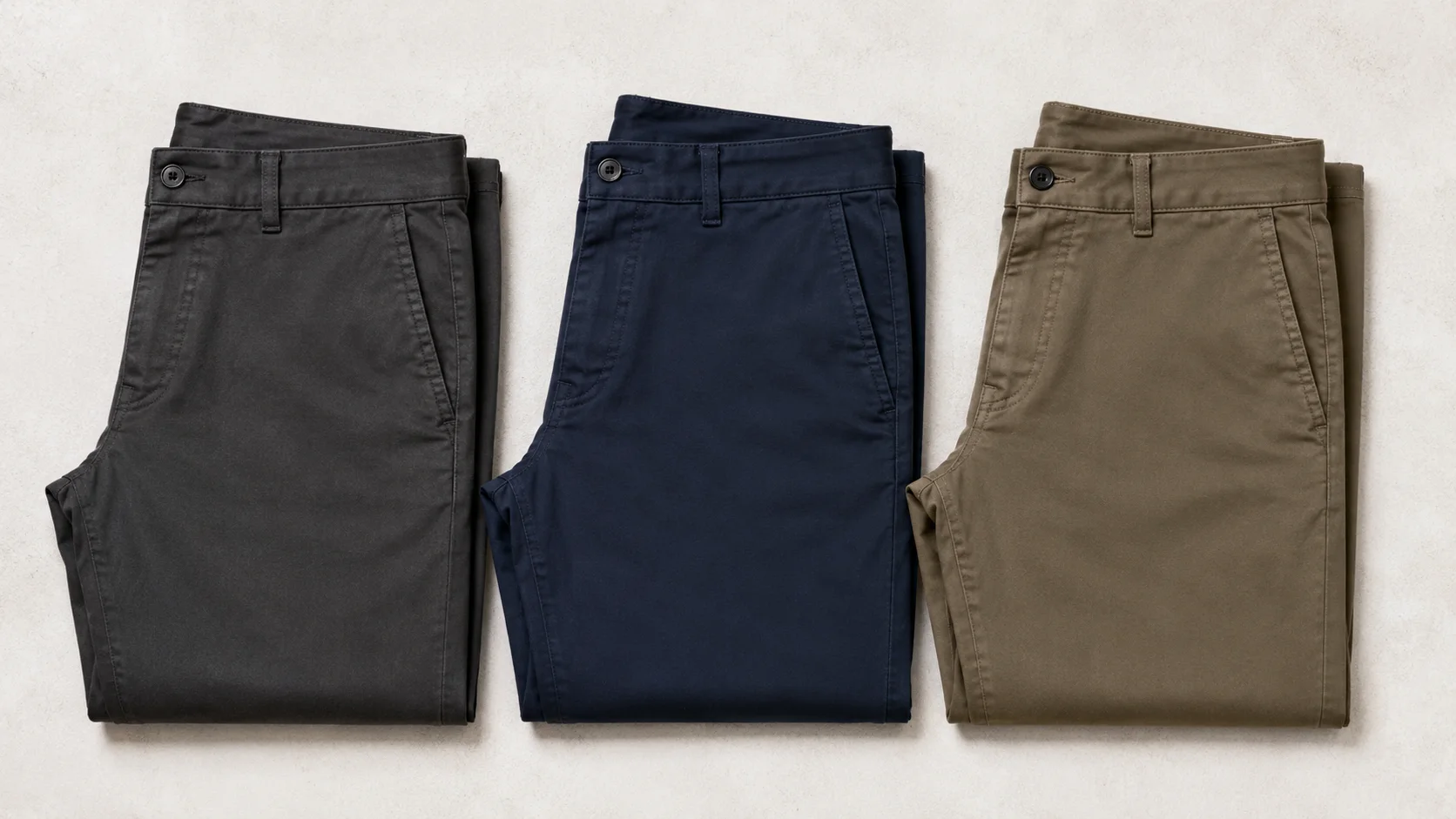
Straight-leg is the cut that actually works. Slim pulls across your thighs and seat before you even sit down. Relaxed adds visual bulk right where you do not want it. Straight legs give you room to move while keeping a clean line from hip to ankle.
Color choice narrows it down fast. Charcoal, navy, and dark khaki each pair with almost every top in this list without any mental effort. Buy your first pair in whichever neutral you reach for most, then add a second before you consider any other trouser.
Rise is the detail most men skip. A mid-to-high rise sits at your natural waist, stops the waistband from digging in, and keeps a tucked shirt looking clean all day. Low-rise chinos on a bigger frame shift down constantly and create bulk at the front.
Your inseam length should land with a slight break at the shoe. Not stacking on the ground. Not floating above the ankle. One small fold of fabric at the front is exactly right.
Avoid cargo pockets, elastic waistbands, and anything marketed as relaxed fit. Each of those features adds visual weight or removes the clean structure that makes this cut work.
| Element | What to Know | Tip |
|---|---|---|
| Best cut | Straight-leg sits between slim and relaxed | Try on before buying, sizing varies widely across brands |
| Neutral colors to start | Charcoal, navy, dark khaki | Buy two different neutrals before adding any other trouser |
| Rise | Mid-to-high rise prevents digging and keeps tuck clean | Avoid low-rise, it shifts down and creates front bulk |
| Inseam length | Slight break at the shoe is correct | Too long stacks fabric, too short reads as cropped |
| What to avoid | Cargo pockets, elastic waistbands, relaxed fit labels | These features add bulk or remove the structure you need |
3. A Mid-Weight Crewneck Tee That Drapes Without Clinging
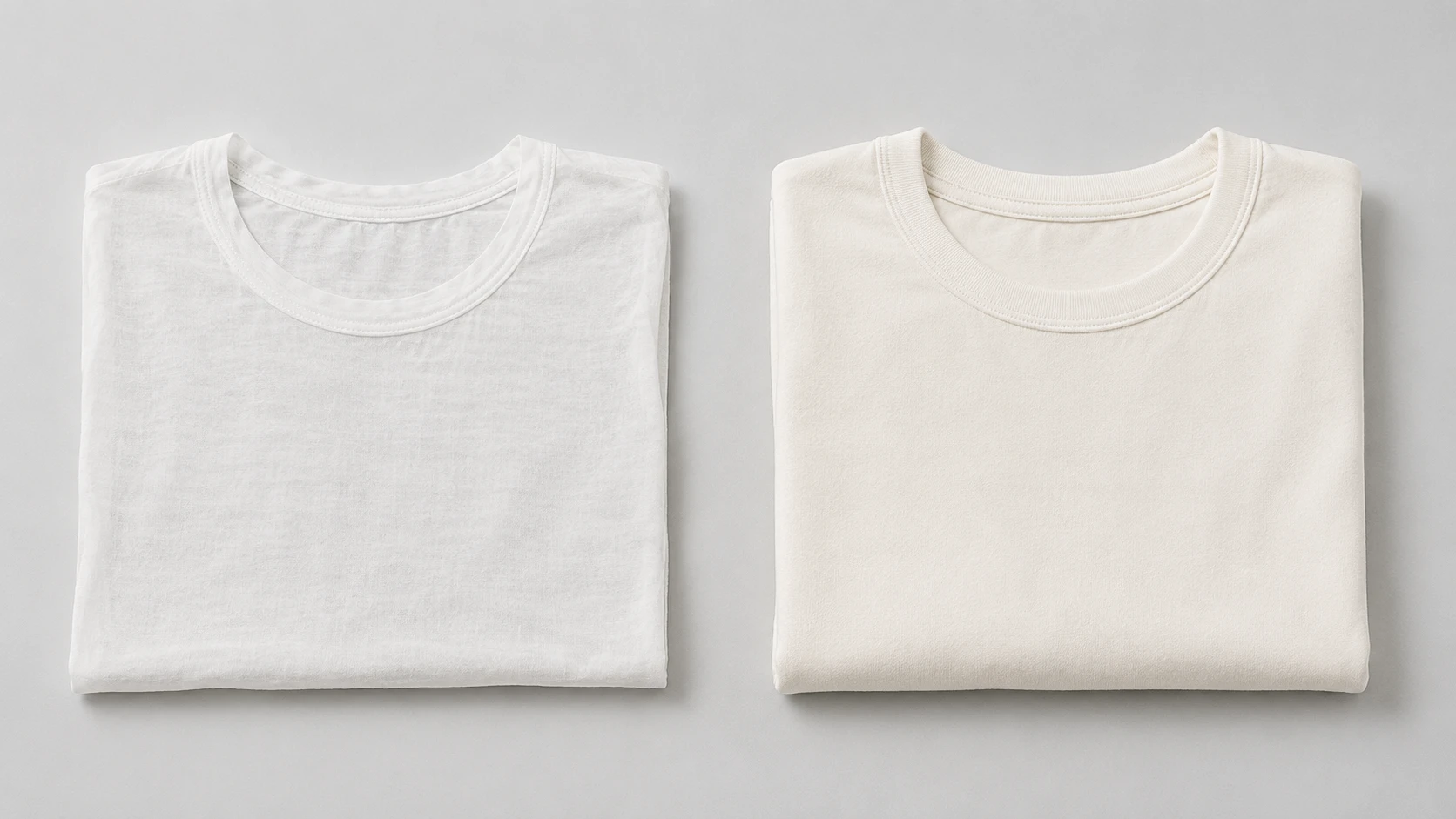
Fabric weight is the detail most men never check, and it is the reason their tees look cheap even when they are not. Anything under 160 gsm goes thin under direct light and clings to every contour by midday. Mid-weight cotton, roughly 180 to 200 gsm, sits differently on a bigger frame. It drapes instead of gripping.
Crewneck beats V-neck here for a specific reason. On a plus size frame, a V-neck stretches open at the chest and pulls the eye straight down. A crewneck sits flat, holds its shape through the day, and creates a clean horizontal line across the chest that works with your proportions rather than against them.
Shoulders are non-negotiable. Check that the seam sits at the very edge of your shoulder, not sliding down your arm. Once that seam drops, the whole shirt reads shapeless regardless of how well everything else fits.
Length matters too. Your tee should cover your waistband fully when untucked without dropping so low it reads like a tunic. Two to three inches below the waistband is the right range.
4. Dark Jeans With a Clean Wash and Real Seat Room
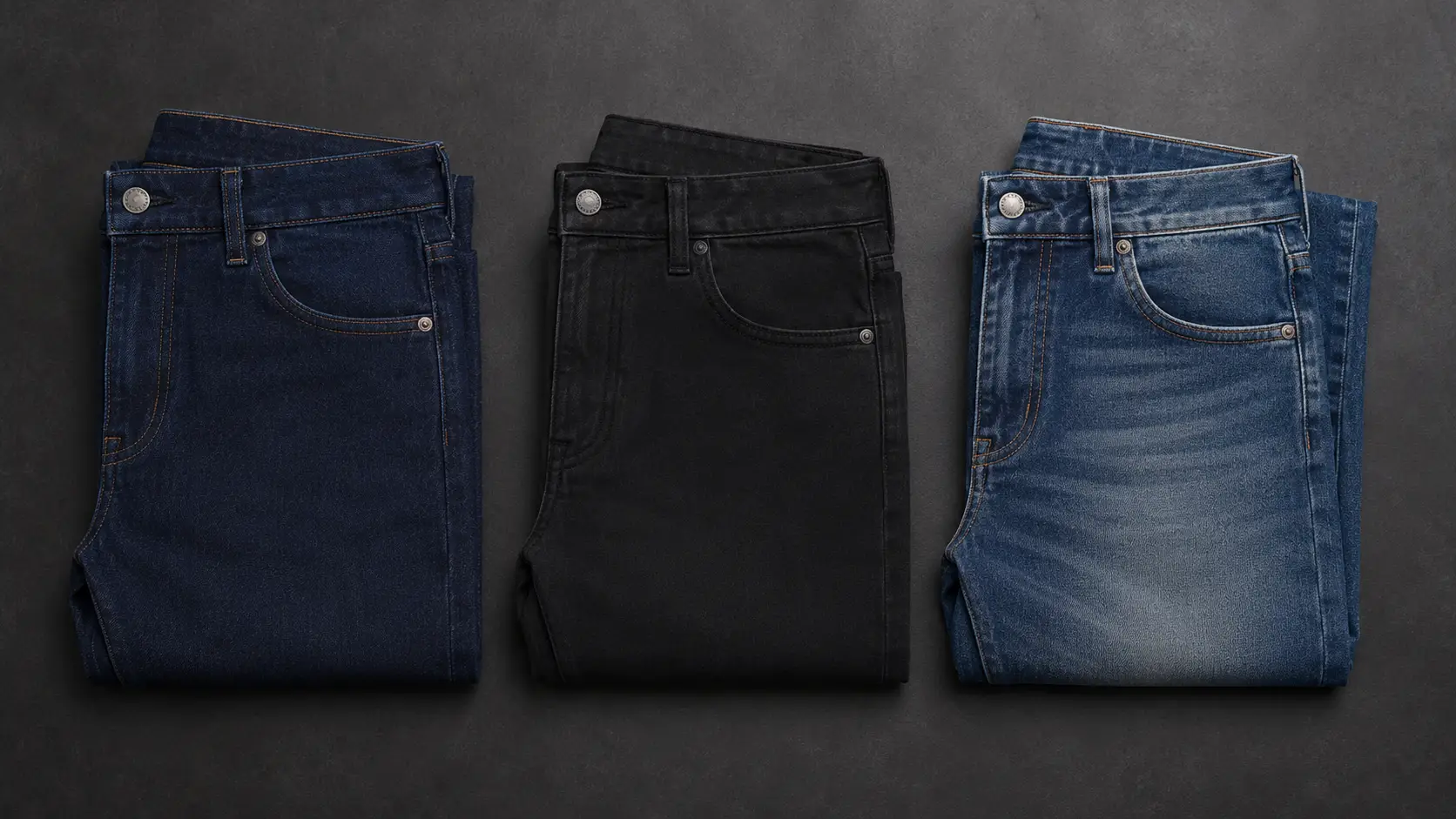
A clean dark wash does something no other denim finish can: it reads as dressier than it actually is. Wear these to run errands on Saturday, then wear them again to a casual dinner that night without a second thought. No other bottom in this list crosses that line as easily.
Surface treatments kill versatility. Fading, distressing, and whiskering all push jeans firmly into casual-only territory and draw attention to the thigh and seat area. Stick to solid indigo, dark blue, or black with no finish at all.
Seat room is not a style compromise. Most bigger guys size down or choose a slimmer cut chasing a leaner look, then spend the whole day pulling their jeans up or shifting in their seat. Comfort through the seat and thigh is what makes a pair of jeans something you actually reach for.
Waistband placement matters. Sitting below your natural waist creates a roll above the waistband and pulls the seat of the jeans down constantly. Natural waist fit solves both problems without any tailoring.
Stretch denim is a practical choice on a bigger frame, but check recovery before you buy. Bend, squat, and sit in the fitting room. Good stretch denim bounces back. Poor stretch denim goes baggy at the knees and seat by early afternoon and stays that way.
- Stick to indigo, dark blue, or black with no surface treatment
- Avoid tapered ankle cuts unless you have tried them and know they work on your proportions
- The waistband should sit at your natural waist, not below it
- Stretch denim is fine — just make sure it recovers and does not go baggy by the afternoon
5. A Flat-Front Trouser in a Neutral That Is Not Black
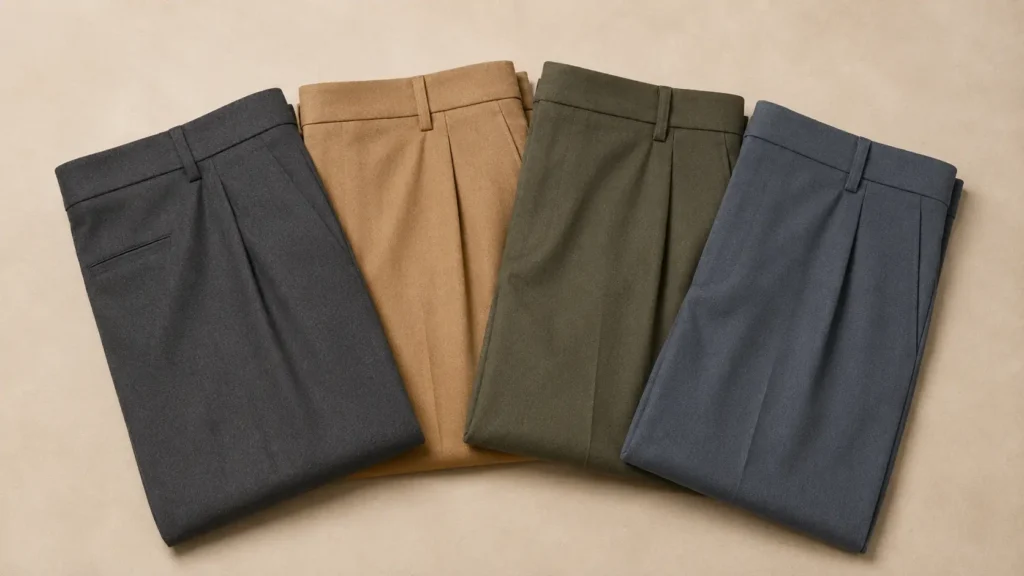
Skipping this piece is the single choice that keeps most plus size wardrobes stuck at casual. One pair of flat-front trousers in a non-black neutral unlocks dressed-up combinations that your jeans and chinos simply cannot cover.
Black trousers feel like the safe default. The problem is they duplicate the energy of your dark jeans without adding anything new. Charcoal, camel, olive, and slate each create contrast with your existing tops and give your outfits a completely different register.
Flat-front construction is not optional here. Pleats fold inward and then release outward when you move or sit, adding volume at exactly the widest point of your midsection. Flat-front panels lie smooth against your body all day and do not create that visual bulge.
Fabric should have some weight and drape. Wool blends, ponte, and heavier poly-viscose fabrics all hold their shape through the seat and thigh without clinging. Avoid lightweight fabric that goes thin under light or creases heavily by midday.
These trousers work harder than any other piece at this end of the wardrobe. Pair them with your Oxford shirt for a smart-casual meeting, with your blazer for anything that requires more effort, or with a clean crewneck tee when you want the trousers to do all the talking. Three combinations, one piece.
| Element | What to Know | Tip |
|---|---|---|
| Why not black | Duplicates dark jeans energy without adding range | Choose charcoal, camel, olive, or slate as your first pair |
| Flat-front vs pleated | Pleats add volume at the midsection when you move | Always choose flat-front construction on a plus size frame |
| Fabric to look for | Wool blend, ponte, or heavier poly-viscose | Check that fabric holds shape when sitting, not just standing |
| Styling range | Works with Oxford shirt, blazer, or crewneck tee | Three distinct outfit levels from one trouser |
| What to avoid | Lightweight fabrics that crease or go sheer | Press the fabric between fingers, if it crushes easily, skip it |
6. A Solid Oxford Shirt That Does Not Balloon at the Torso
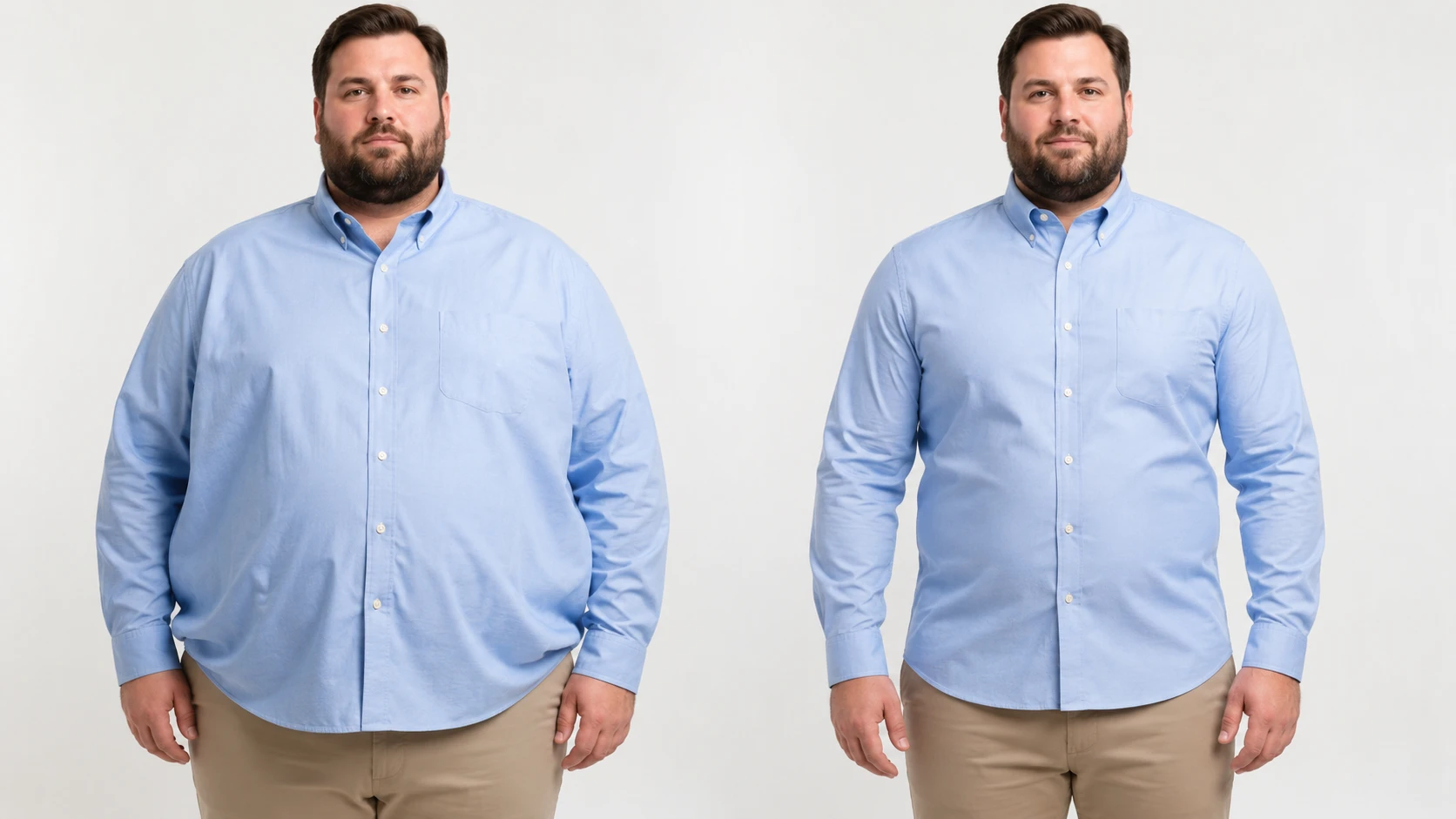
Excess fabric at the sides of a shirt adds more visual bulk than the actual size of your body does. That is worth reading twice. A shirt that fits the chest but billows four inches on each side at the torso makes you look significantly larger than a shirt cut closer to your actual shape.
Oxford cloth has enough weight and texture to hold its form without clinging. That fabric quality is what makes this shirt work across so many different combinations. Wear it tucked into your flat-front trousers for a smart meeting, half-tucked over chinos for a weekend lunch, or open over a crewneck tee when you want an extra layer without the weight of a jacket.
Torso fit is where most plus size men get this wrong. Brands that carry extended sizing often cut the body of the shirt very wide to accommodate the chest measurement, leaving a tent of fabric at the waist and hips. Finding a tapered or fitted body option fixes this, and if you cannot find one, a tailor can take the sides in for a small cost and quick turnaround.
Button-down collar only. A collar that buttons to the chest stays flat all day without a tie and looks deliberate rather than sloppy.
Start with solid white and solid light blue. Both connect to every bottom in this list. Sleeve length should end right at the wrist bone, not past it.
7. A Medium-Weight Zip-Up or Quarter-Zip Layer
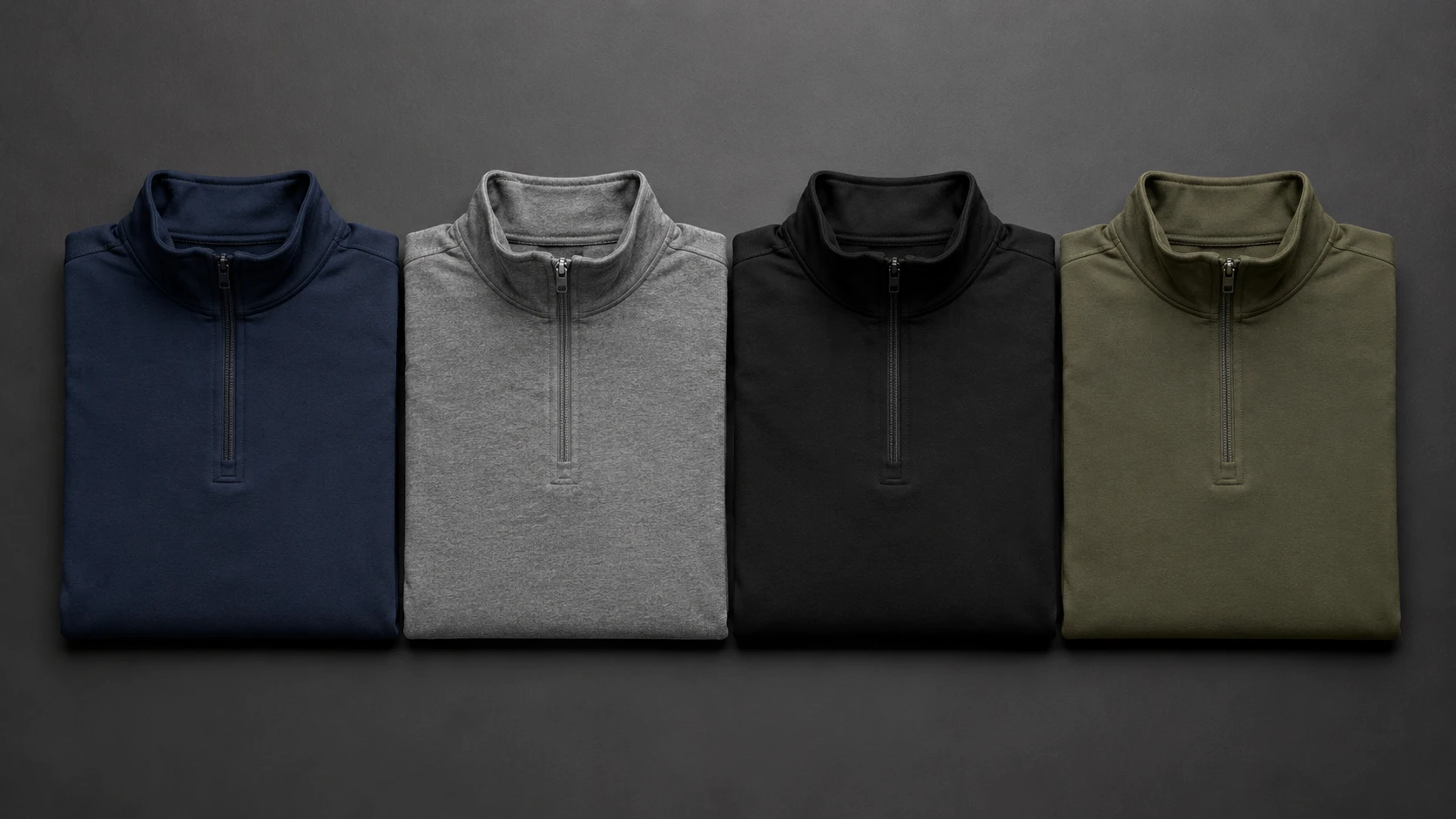
Most wardrobe gaps are not about missing a key piece. They are about missing a layer. One medium-weight zip-up or quarter-zip in a solid neutral closes more daily outfit problems than almost any other single purchase.
Temperature is the obvious use case. Beyond that, this layer solves a subtler problem: a tee alone often reads too casual for where you are going, but a jacket feels like too much. The zip-up sits exactly in that gap.
Fabric weight matters here. Too light and it adds nothing visually or physically. Too heavy and it creates bulk under a jacket or coat. Mid-weight fleece, French terry, or a cotton-poly blend at a medium weight layers cleanly in both directions without adding size to your silhouette.
Fit through the shoulders and chest is the checkpoint. A zip-up that fits correctly across the chest and sits at the shoulder seam will layer smoothly under a jacket without bunching at the back or pulling at the front. Too large and the extra fabric stacks when you add an outer layer.
Avoid thick chest branding and drawstring hems. Both widen the silhouette and push the piece into strictly casual territory. A clean solid with a plain hem stays versatile across more situations.
Navy, grey, black, and olive all connect directly to the tops and bottoms already on this list. Any one of those four works as your first pick.
8. A Leather or Leather-Look Belt in Both Brown and Black
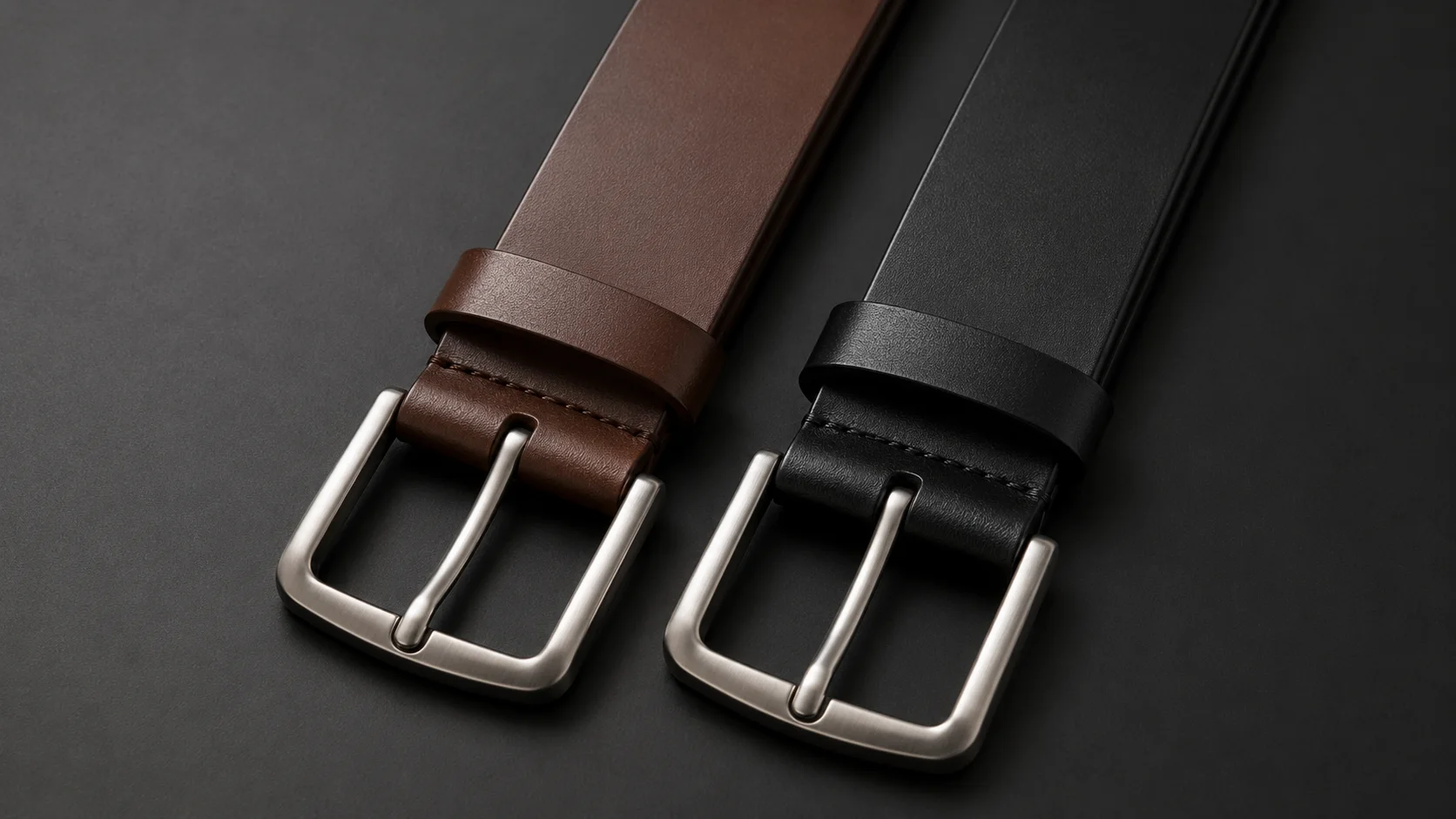
One wrong belt can undo an outfit that took real thought to put together. Most men treat the belt as a functional strap that holds their trousers up. What it actually does is draw a visual line straight across the widest part of your midsection, and the width, color, and hardware of that belt determine whether that line helps or hurts.
Width is the first decision. Anything wider than 1.5 inches creates a thick horizontal band at your waist that emphasizes the midsection rather than framing it. Stick to 1.25 to 1.5 inches across both belts. That range works from casual chinos to dress trousers without looking out of place.
Brown and black are not interchangeable. Brown shoes require a brown belt and black shoes require a black belt. Breaking that match pulls the eye and signals that the outfit was not thought through, regardless of how well everything else fits.
Buckle size matters more than most men realise. Oversized or decorative hardware sits directly at your midsection and draws attention to it. A simple, proportional buckle in a matching metal tone does its job without announcing itself.
Condition tells the full story. A cracked, stretched, or creased belt reads as neglect even when the rest of your outfit is solid. Check yours now. If the holes have stretched or the surface is flaking, replace it before it undermines everything you have built around it.
- Match belt to shoes: brown shoes, brown belt — black shoes, black belt
- Avoid braided, perforated, or canvas belts with anything above casual
- The buckle should be simple and proportional — oversized buckles draw the eye to your waist
- Replace your belt before it creases, cracks, or the holes stretch out
9. A Clean Low-Top Sneaker With Minimal Branding
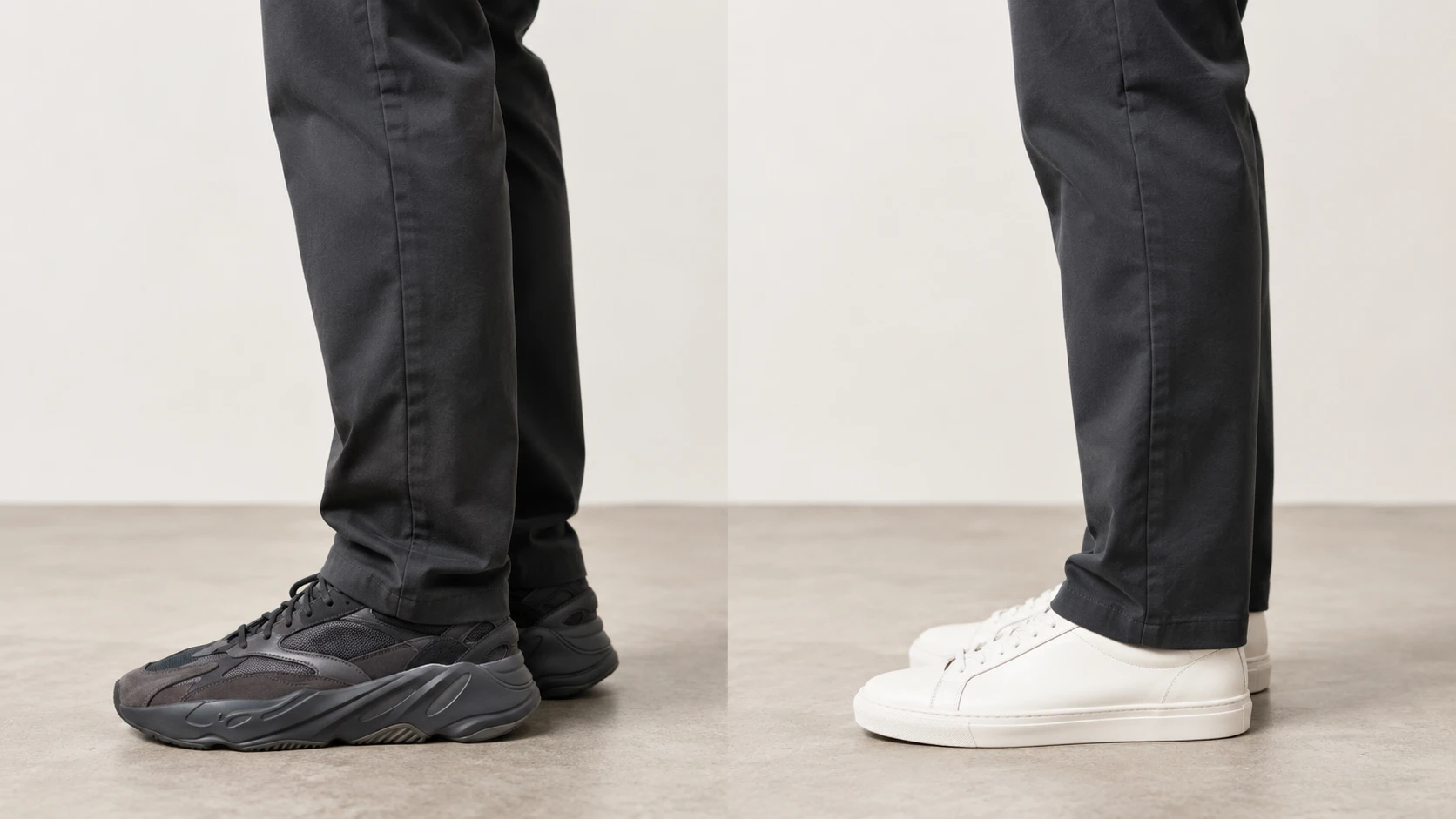
Shoe sole thickness does more to break an outfit than most men expect. A chunky athletic sole interrupts the visual line running from your trouser hem to the ground, shortening the appearance of your leg and grounding the whole outfit in gym-casual regardless of what you are wearing above it.
Low-top and low-profile solves this. A clean sneaker with a flat or minimal sole continues the line of your leg rather than cutting it. That small difference makes your trousers and jeans look like they were styled with intention.
Branding is the next filter. Large logos, bold side stripes, and aggressive colorblocking all push a sneaker into statement territory. Minimal or no branding keeps the shoe neutral enough to work across every casual combination in your wardrobe without competing with the rest of the outfit.
White is the most versatile starting color. Grey and tan are close seconds. Black works but shows scuffs and dust more visibly than the other three.
Leather holds its shape longer than canvas, resists creasing around the toe box, and cleans up more easily after daily wear. Canvas is lighter and more relaxed in feel. Both work here, but if you are buying one pair to cover the most ground, leather is the better investment.
10. A Chelsea Boot or Clean Lace-Up for Everything Else
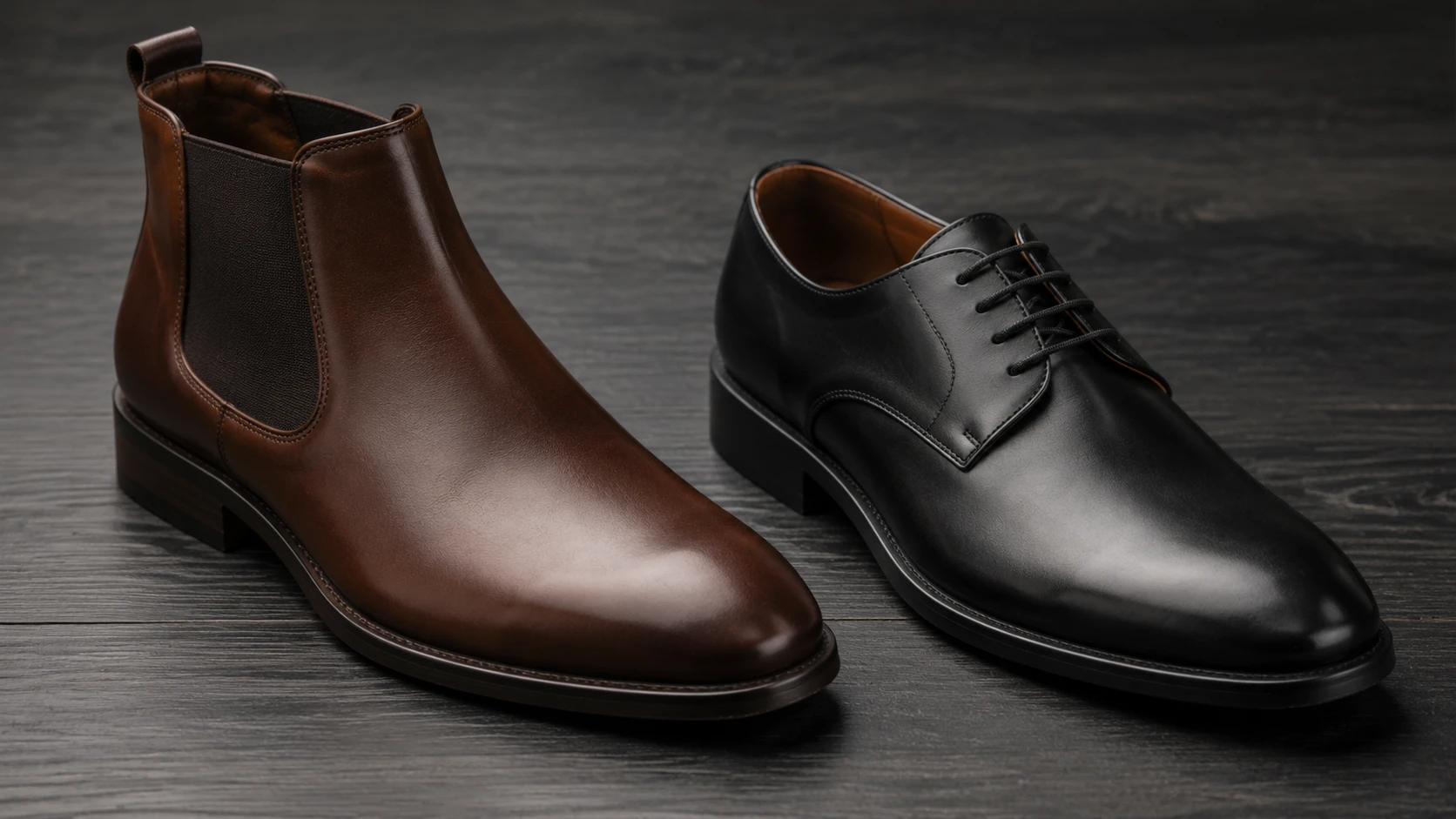
Chelsea boots do something specific for a bigger frame that most men never think about. The elastic side panel and clean unbroken line at the ankle create a continuous silhouette from trouser hem to sole, which visually lengthens the leg in a way that lace-up detailing or a chunky toe box simply cannot.
That ankle silhouette is the reason this boot earns its place on this list ahead of other dress-casual options. No buckles, no broguing, no lace hardware interrupting the line. Just a clean profile that makes your trousers look like they have somewhere to land.
Brown is your starting color. Pair a brown Chelsea with dark chinos, dark jeans, and your flat-front trouser and you have three distinct outfits covered before you think about anything else. Black handles the smarter end of the range, from smart-casual to business casual, and pairs cleanly with your Oxford shirt and flat-front trousers.
Prefer lace-ups? A clean leather derby or Oxford in brown or black covers the same dress-casual territory if you want a more traditional silhouette. The rules are the same: low to moderate heel, no bulky toe box, no square toe, no excessive decorative stitching.
- Brown Chelsea boot pairs with chinos, dark jeans, and the flat-front trouser
- Black lace-up handles anything from smart casual to business casual
- Avoid square toes, thick platform soles, or excessive decorative detailing
- Leather care matters: polish and condition these regularly so they stay sharp
11. A Blazer That Fits the Shoulder — Not Just One That Closes
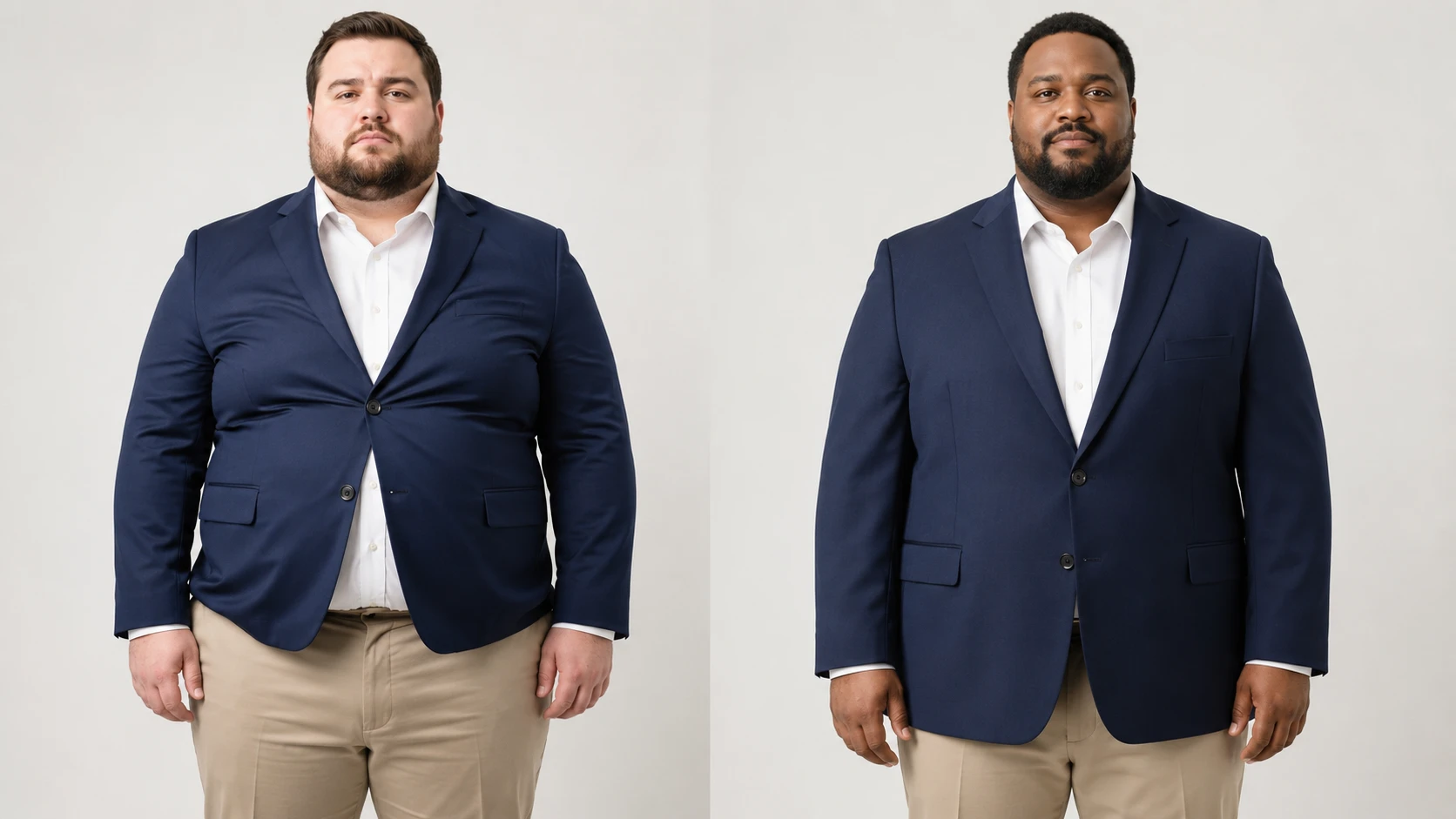
Closing across the chest is not fit. It is the most common blazer mistake plus size men make, and it costs them every time. A blazer that closes but pulls at the shoulders, rides up at the back, or shortens your torso is doing more visual damage than wearing no blazer at all.
Shoulder seam placement is the only measurement you cannot fix after purchase. Every other issue, a chest that is too wide, a waist that needs taking in, sleeves that run too long, can be corrected by a tailor for a small amount of money and a short wait. A shoulder seam that sits halfway down your upper arm requires restructuring the entire jacket.
Stand in the fitting room and check the seam first. It must sit exactly at the point where your shoulder ends and your arm begins. Once that placement is confirmed, everything else becomes adjustable.
Unstructured blazers work better as a starting point for most bigger frames. Heavy shoulder padding adds artificial width at a point where you likely do not need more. An unstructured or lightly structured blazer drapes with your natural shape instead of imposing one on top of it.
Navy and charcoal are the two colors that connect to everything else on this list. Either one pairs with your Oxford shirt, your flat-front trousers, your chinos, and your dark jeans without effort. Start with navy, then add charcoal when you are ready to extend the wardrobe further.
12. A Heavyweight Outer Layer That Works as a Statement
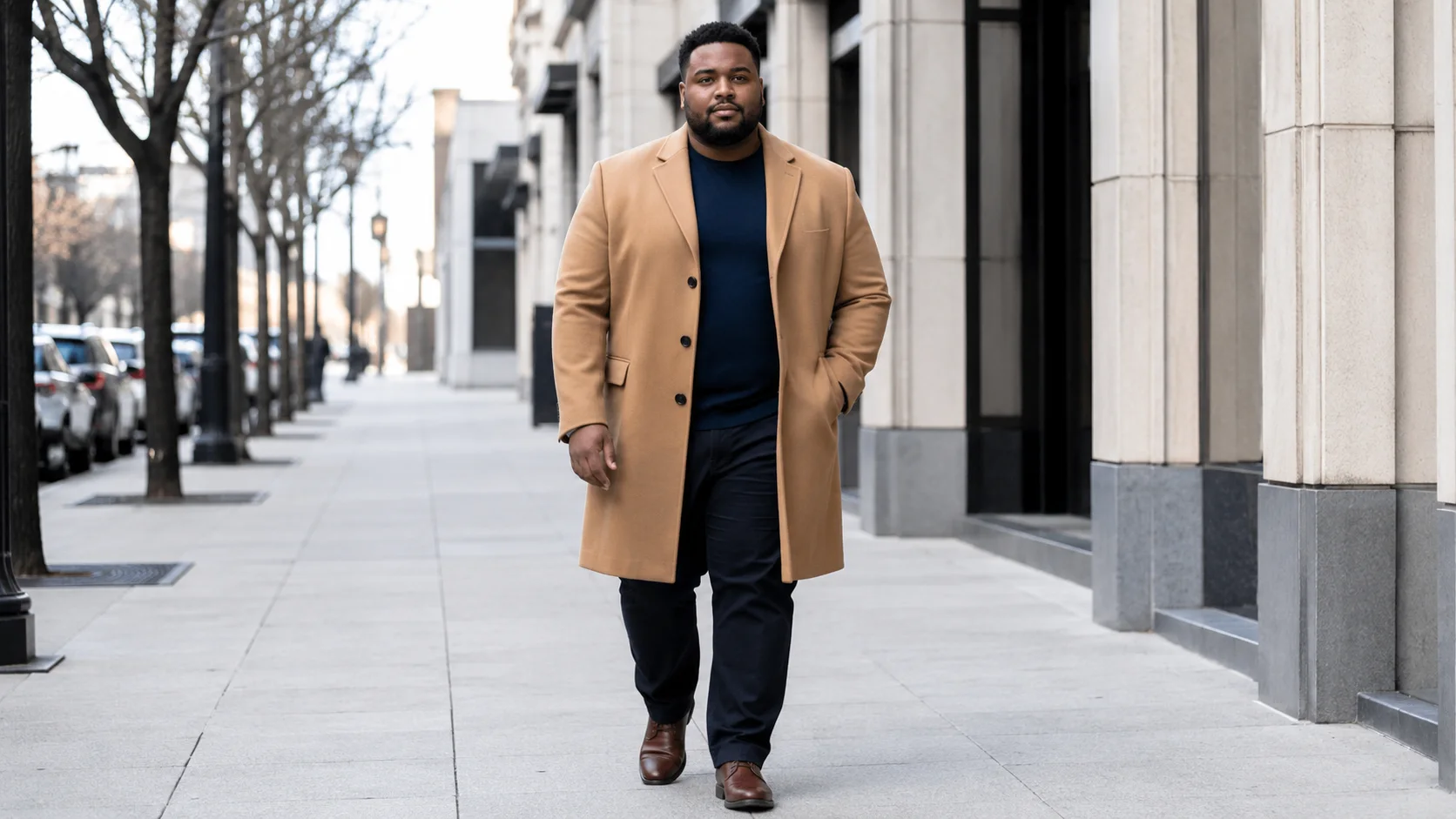
Outerwear is the first impression. Before anyone sees your shirt, your trousers, or your shoes, they see your coat. Underinvesting here undermines every other decision you have made about your wardrobe.
A well-fitted outer layer does not just keep you warm. It frames your entire silhouette from the outside in, which means it either pulls the whole outfit together or it works against it. Getting this piece right makes everything underneath read as more intentional, even on days when the outfit itself is simple.
Shoulder and chest fit follow the same rule as the blazer. Start there. A coat that fits correctly across the shoulders and chest can be adjusted elsewhere by a tailor if needed. One that pulls at the shoulders or strains across the back cannot be fixed without significant cost.
Length is the next decision. An overcoat that hits at mid-thigh or just above the knee creates a long vertical line that works well on a bigger frame. Shorter jackets cut that line at the widest point of your hip, which draws attention rather than directing it.
Structured bombers in wool or heavy cotton sit shorter but work when the fit is clean through the chest and the shoulder seam sits correctly. Avoid puffer styles with horizontal quilting across the chest, as that pattern widens the silhouette at exactly the wrong point.
Camel, charcoal, navy, and olive are the outer layer colors that connect to everything already in your wardrobe. Pick the one that fills the biggest gap in your current rotation.
| Element | What to Know | Tip |
|---|---|---|
| Why outerwear matters | First thing seen, frames the whole silhouette | Underinvesting here undermines every other wardrobe decision |
| Shoulder and chest fit | Same rule as the blazer, start here | A tailor can adjust length and body, not shoulder structure |
| Best length | Mid-thigh to just above the knee for overcoats | Shorter cuts interrupt the silhouette at the hip |
| Styles that work | Overcoat, structured bomber, wool-blend jacket | Avoid horizontal quilted puffers, they widen the chest visually |
| Colors to choose | Camel, charcoal, navy, olive | Pick the color that connects to the most pieces you already own |

Hello there! I’m Jesse Joe, the author and editor behind SolganGenius. I’m thrilled you’ve stopped by, and I can’t wait to share with you the essence of what this platform is all about.
I’m a writer, social media enthusiast, and a firm believer in the power of words. I’ve always been fascinated by how a simple phrase or slogan can capture an emotion, convey a message, and even change perspectives. Learn More