
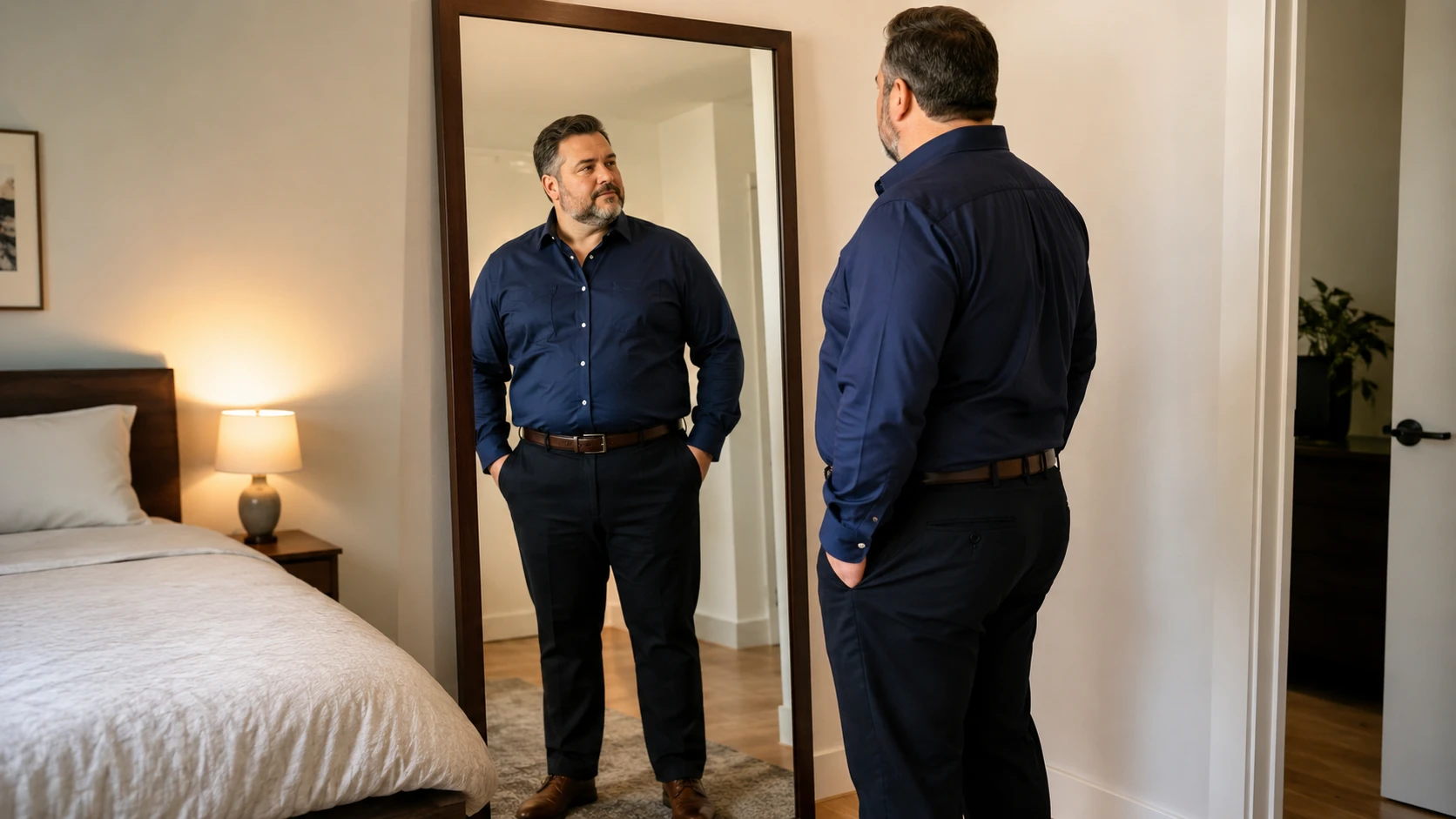
Standing in a fitting room with three shirts that all technically fit and hating every single one is a specific kind of frustration. Nothing looks wrong, exactly. Nothing looks right either.
Most style advice for bigger men stops at fit. Wear your size. Avoid tight. Stick to dark colors. That advice keeps you covered, not confident. There is a real difference between dressing to disappear and dressing like yourself.
Finding your personal style is not about copying a guy you saw on Instagram who happens to share your body type. What works on him is built on his proportions, his life, his comfort level in his own skin. Yours has to be built on yours.
This article walks you through exactly how to do that — starting not with clothes, but with something most style guides skip entirely.
You Already Know What You Don’t Like
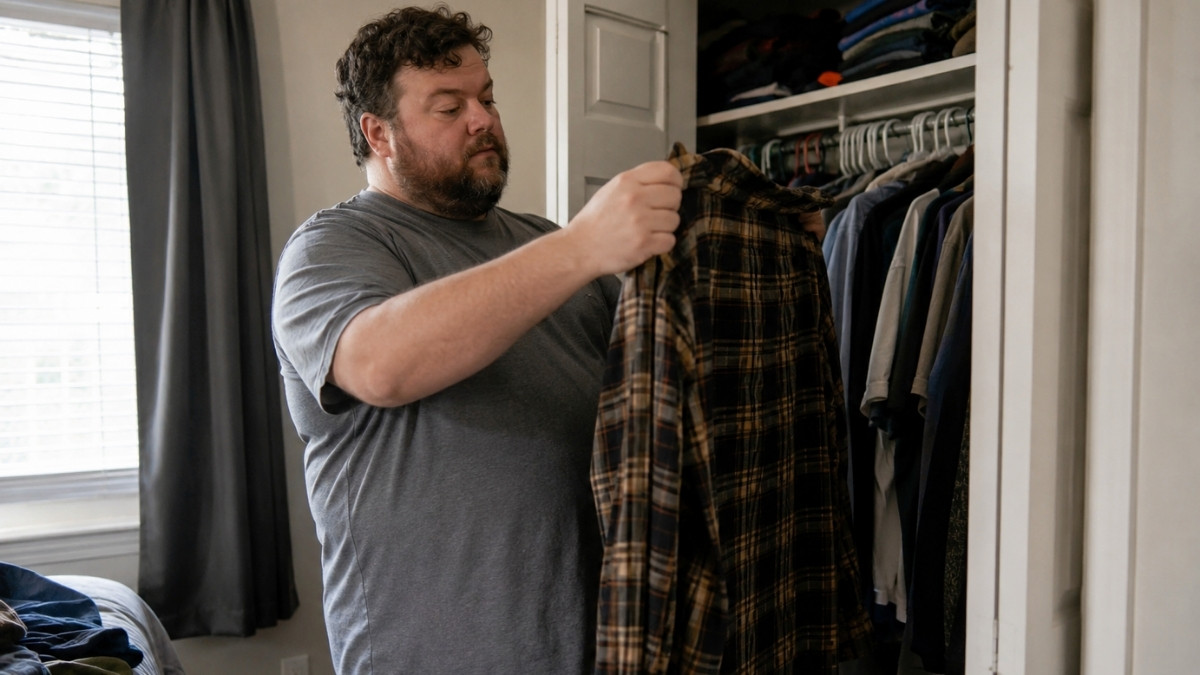
Most men treat it as proof they have bad taste, or that finding clothes is just hard for them. Neither is true. What you actually have is a trained eye for what does not work on your body. That is not nothing. That is the beginning of a real style system.
Think about what you have rejected. Shirts that pull across the chest. Pants that bunch at the thighs. Colors that drain your face. Fabrics that look cheap the moment you move. Write them down if you have not already. Your list of “no” items tells you exactly where your discomfort lives, which means you are already halfway to knowing what the opposite looks like.
Clothes that make you feel bad usually do one of three things: they fight your proportions, they signal a version of you that you are not, or they were simply designed for a different body type. None of those are personal failures. Fit is a geometry problem, not a character flaw.
Negative feedback from your own wardrobe is cleaner signal than almost anything a style guide can give you. Other people’s rules are built around other people’s bodies and other people’s lives. Your discomfort is specific to you, which makes it more useful than generic advice.
Start there. Before you add anything new to your closet, spend ten minutes with what you already own and ask one question: does this feel like me, or does it feel like a compromise? Compromises are where most men’s style gets stuck.
The Reason Copying Other Men’s Style Never Works for You
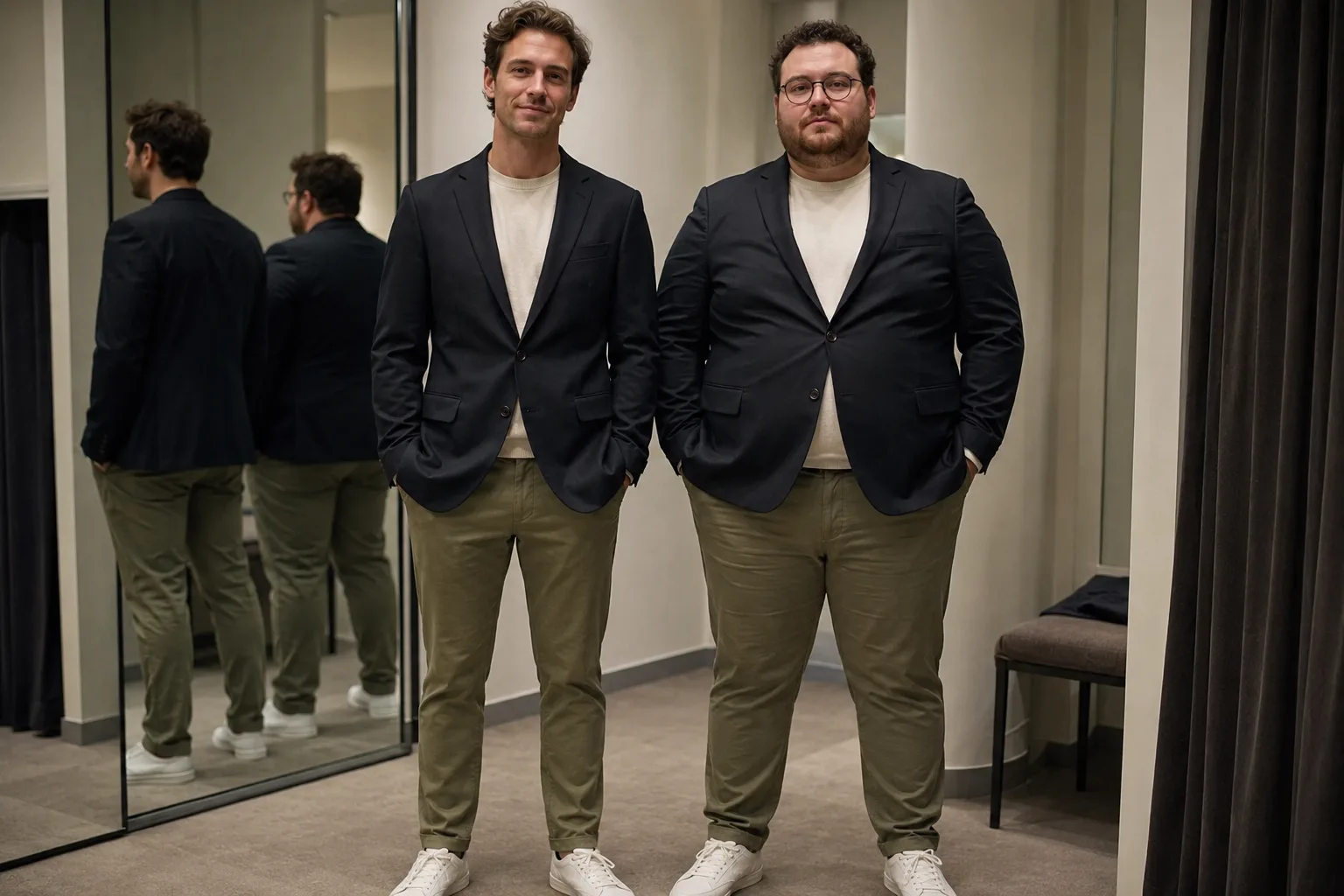
Two men can wear the exact same shirt and look completely different. That is not opinion. That is geometry.
When you see a well-dressed guy online or in a magazine, his body is doing a lot of quiet work that you cannot see. His shoulder width relative to his hips creates a natural taper. His torso length affects where his hem falls. His chest-to-waist ratio determines whether a jacket looks structured or shapeless.
Buying the same pieces he wears does not transfer any of that. What you get instead is the garment, without the geometry behind it.
Why the Same Outfit Looks Different on a Different Body
| Factor | What It Affects |
|---|---|
| Shoulder-to-hip ratio | Whether a jacket tapers or boxes out |
| Torso length | Where a hem sits — too high, too low, or right |
| Chest-to-waist difference | If a shirt drapes cleanly or pulls |
| Where you carry weight | Which silhouettes slim vs. add bulk |
| Neck length | How a collar frames your face |
| Leg length and trouser break | Whether trousers look sharp or sloppy |
| Pattern scale vs. chest size | If a print works or overwhelms |
Plus-size bodies carry weight differently from one another too. Some men carry more in the midsection. Others carry it across the back, the chest, or the thighs. A medium-build guy and a large-build guy can both be “plus size” and still need completely different fits, silhouettes, and proportions.
There is also a confidence layer nobody talks about. The men whose style gets copied online have usually been dressing intentionally for years. What looks effortless in a photo is built on a lot of small decisions, trial and error, and comfort in their own skin. You are not just looking at clothes. You are seeing the result of a process you have not gone through yet.
Proportion is everything in menswear, and proportion is personal. A collar height that works on a long neck looks different on a shorter one. A trouser break that reads as clean on one leg length reads as sloppy on another. A pattern that sits well on a 44-inch chest can overwhelm a 50-inch one. These are not style opinions. They are the physics of cloth on a body.
Before Clothes: What Kind of Man Do You Actually Want to Come Across As

Pick two or three words that describe how you want other people to feel when they see you walk into a room. Not words about clothes. That decision, made before you open a single browser tab or step into any store, is what separates men who develop a real style from men who just accumulate outfits.
Most style guides skip this step entirely. They go straight to fit guides, color palettes, and brand lists, as if the clothes themselves will figure out who you are. They won’t.
Here is what actually happens when you skip this step: you buy things you like in the moment, individually, and then stand in front of a full wardrobe wondering why nothing feels like yours. Each piece made sense at the time. Together, they say nothing.
Two or three words fix this. Call them your identity anchors. Every purchase, every combination, every decision you make later gets filtered through them. Does this say what I want to say? If yes, it stays in the running. If no, it goes.
Choosing yours takes about ten minutes and some honest thinking. Start by asking who in your life gets the reaction you want from other people. Not their specific clothes. The feeling they give off. Write down what that feeling is. Narrow it to the two or three words that keep coming up.
Then test them against your actual life. A man who works from home three days a week and coaches his kid’s soccer team on weekends needs different anchors than a man in client meetings every day. Your words should fit the life you actually live, not a fantasy version of it.
Sharp and relaxed can coexist. Serious and warm can coexist. What cannot coexist is having no direction at all.
Once your words are locked, the rest of this becomes much easier. You stop shopping aimlessly and start making choices. You stop second-guessing things at checkout. Everything you add to your wardrobe from this point forward has a job: to back up the man you decided to be.
How Fit Interacts With Your Body to Create (or Kill) a Personal Style

Fit is not a single setting you dial in and forget. Two men can wear the same “well-fitted” shirt and look completely different because the shirt is reacting to two different sets of proportions. That reaction is where personal style either gets built or quietly falls apart.
Your torso length changes everything about where a shirt ends. A longer torso pushes hemlines lower, which can flatten silhouette if the shirt is already boxy. Short hemlines on a long torso create visual balance. Long hemlines on a short torso bury it. Neither is wrong by default. Both become wrong when you are not accounting for them.
Shoulder width is the most overlooked measurement in plus-size dressing. Clothes are cut wider at the chest to accommodate size, but not always wider at the shoulder seam. When the seam drops past your actual shoulder point, your upper body loses its definition regardless of how well everything else fits.
Here is the part most guides skip: fit needs to serve your identity words, not override them. If your style direction is relaxed and unfussy, a tight-fitting shirt does not make you look more stylish. It creates a conflict between what you want to project and what the clothes are projecting. Fit should reinforce the feeling you are going for, not fight it.
Men with broader shoulders relative to their waist can use more structured fit at the shoulder to amplify that proportion. Men with a rounder midsection often do better with tops that skim rather than cling, keeping the line clean without squeezing. These are not rules about hiding your body. They are choices about which parts of your proportions you want the eye to follow.
Silhouette is the overall shape your outfit creates from a distance. Most people dress for the close-up view. Silhouette is what someone reads before they are close enough to see the fabric or the cut.
The Three Wardrobe Anchors Every Plus-Size Man Needs Before Anything Else
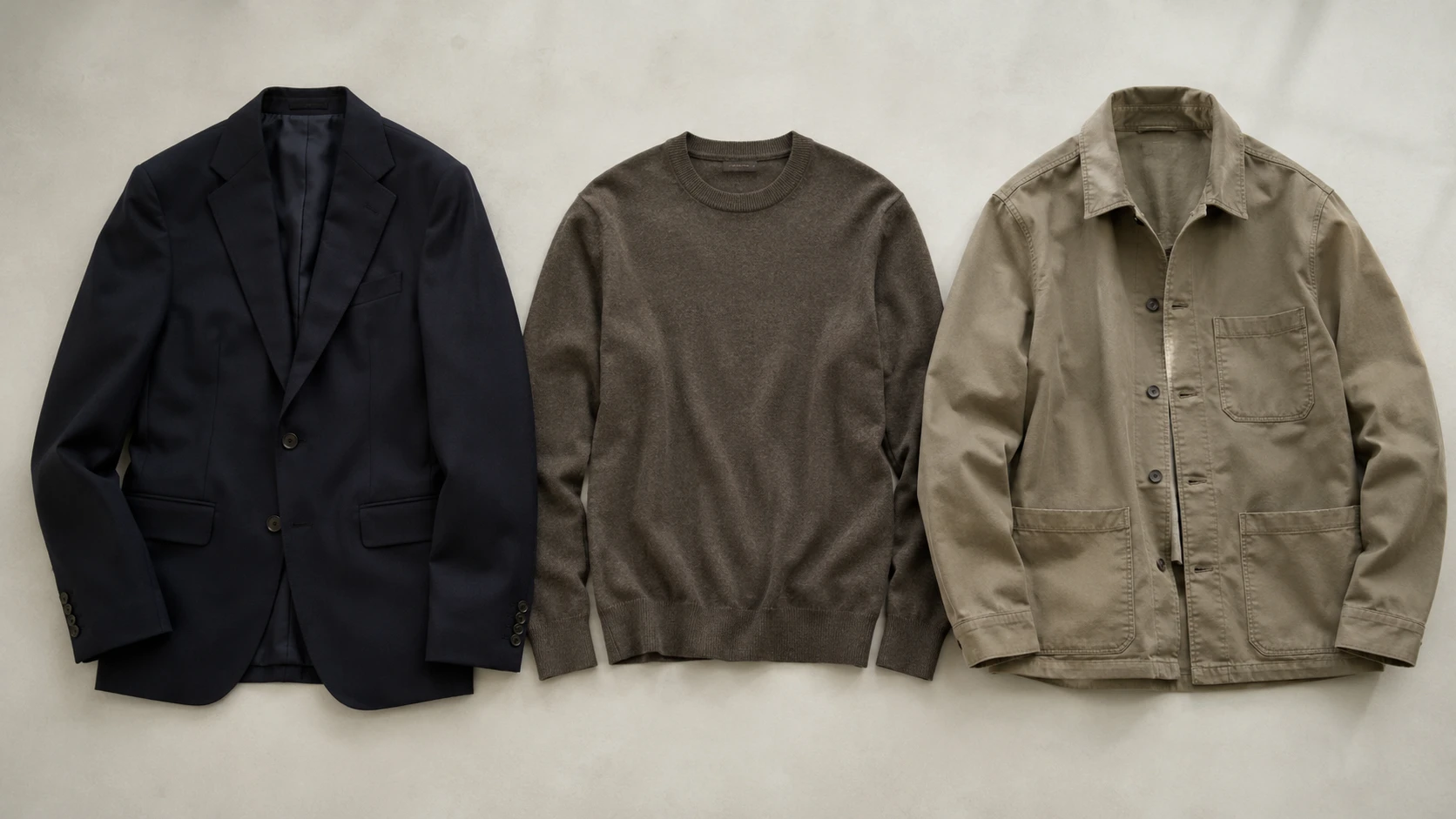
Before you buy anything, three category roles need to exist in your wardrobe. Not twenty pieces. Not a color palette. Three roles that work together — and each one connects directly to the identity words you chose earlier.
The first is your sharp anchor. This is the one item that signals your version of put-together. For some men, that’s a well-fitted blazer in a dark neutral. For others, it’s a structured Oxford shirt that sits clean at the shoulder.
Your sharp anchor does not have to be formal. It just has to reflect the identity word you chose. If your word was “calm,” a clean navy piece carries that. If your word was “bold,” texture or contrast does the job.
| Anchor Role | What It Does | Example Pieces |
|---|---|---|
| Sharp Anchor | Signals your version of put-together | Blazer, structured Oxford shirt |
| Casual Anchor | Your go-to for ordinary days | Crewneck, polo, dark jeans |
| Layering Piece | Bridges the two anchors in one outfit | Overshirt, bomber, unstructured jacket |
Your casual anchor is what you reach for on ordinary days. It should feel like you, not like compromise. A well-cut crewneck, a solid polo that fits through the chest, a dark jean that doesn’t pull at the thigh. Whatever it is, it needs to match your lifestyle, not your aspirations.
Layering pieces do the translation work between the two. A lightweight overshirt, an open bomber, an unstructured jacket. These pieces let your sharp anchor and casual anchor coexist in the same outfit without looking forced.
How to Test Whether a Piece Is Actually Yours or Just Something You Talked Yourself Into
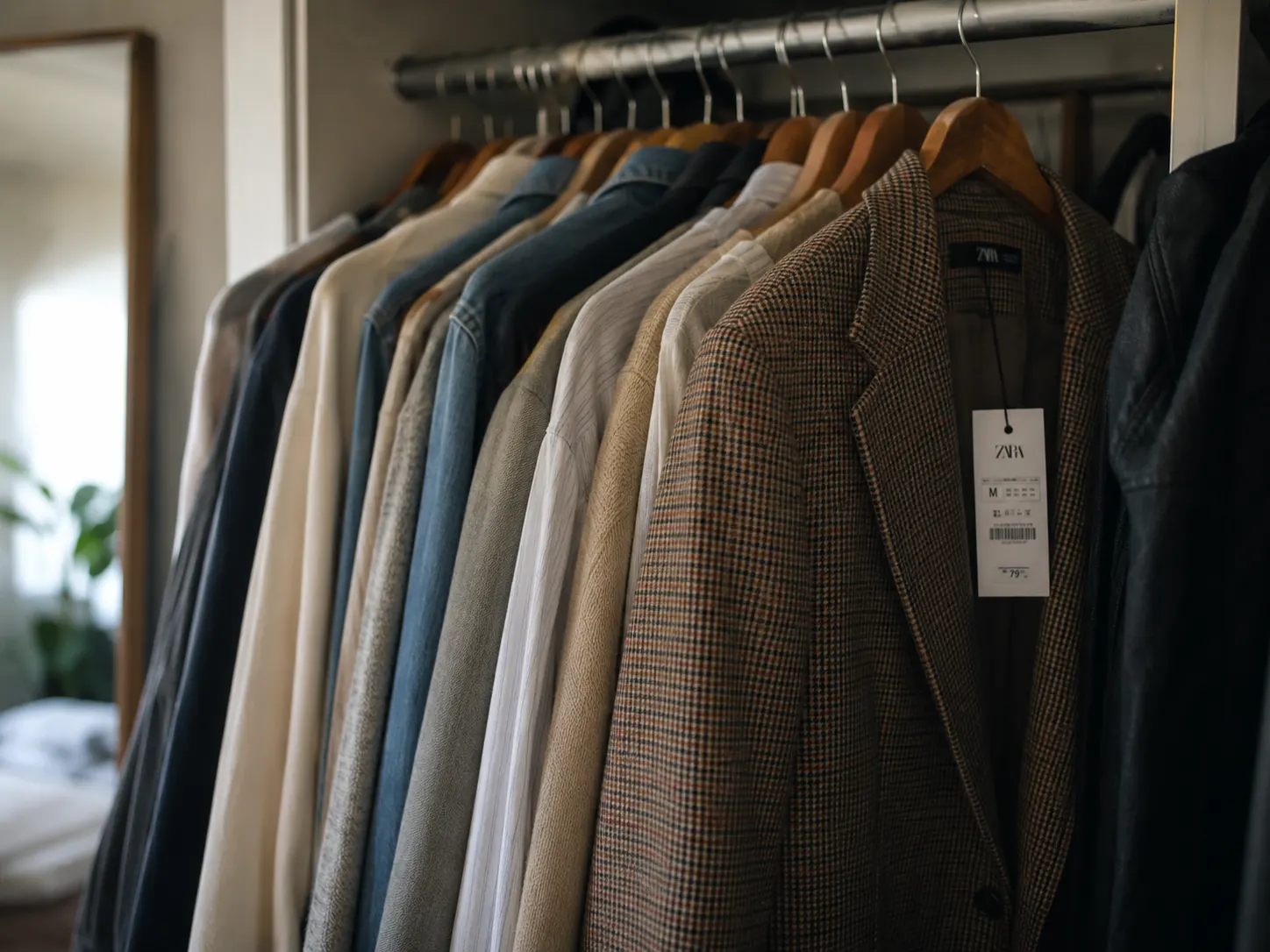
That jacket in your closet with the tags still on? That’s not a style mistake. That’s an aspirational purchase — and almost every man has a drawer or a rail full of them.
The test is simple. Hold the item up and ask: does this fit into three outfits I already wear and feel good in? Not outfits you plan to build. Not looks you saved on your phone. Actual combinations you reach for right now.
Aspirational pieces feel exciting in the store because they represent a version of you — sharper, bolder, more put-together. The problem is that version does not yet exist in your wardrobe. So the piece lands in your closet with nothing to pair with, nothing to anchor it, and it quietly gets buried.
Style that actually works is built on extension, not reinvention. Each new piece should connect to something real you already own and wear.
One more check: have you worn something similar before and liked how it felt? Not liked how it looked in theory — liked how it felt on your body, in public, across a full day. That answer tells you more than any mirror in a changing room.
The One Style Mistake That Keeps Plus-Size Men Stuck in Someone Else’s Wardrobe
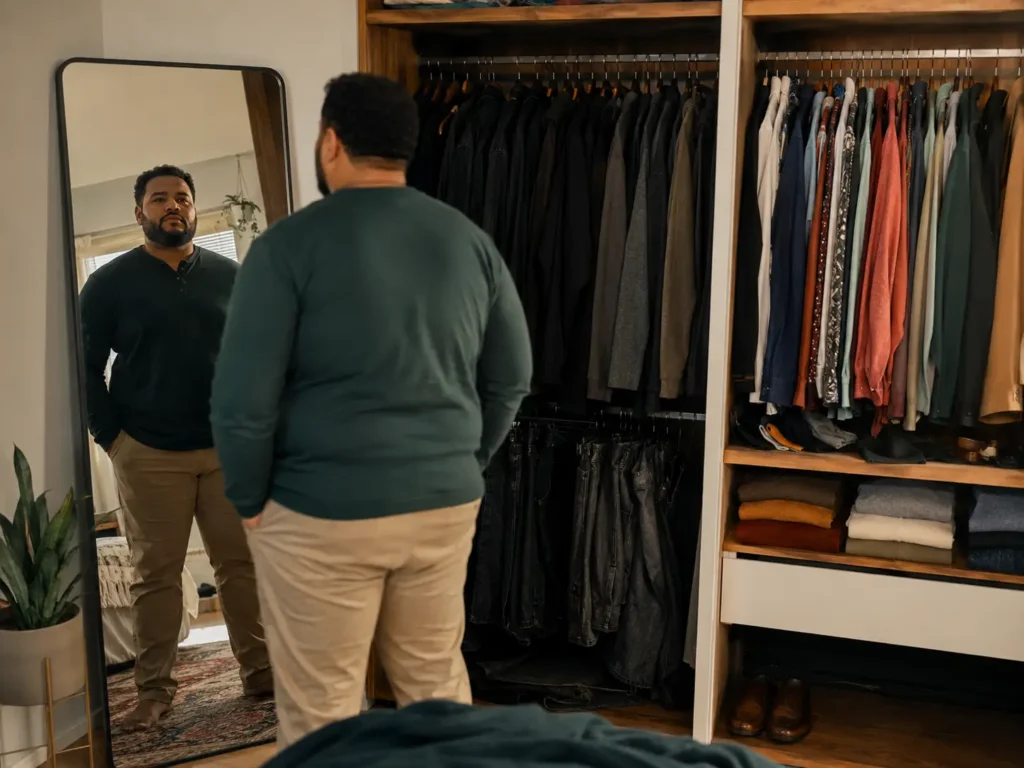
When you reach for the dark, baggy shirt because nobody will notice it, that is not neutral. That is you deciding to disappear. The wardrobe built around invisibility still defines you — it just defines you as someone who does not want to be seen.
Most plus-size men fall into this pattern not because they lack taste but because they were never told their taste was worth acting on. Every “just wear black, it’s slimming” comment quietly trained you to dress for damage control instead of self-expression.
Here is the real problem: safe dressing never stops feeling safe. You keep doing it because it never blows up in your face. But it also never does anything for you.
Finding your style is not about copying a celebrity or following a trend. It is about making one honest choice that reflects something true about who you are. Pick one piece this week that you actually like, not one that hides you.
Three cross-column patterns worth noting before you write:
The belief shift arc runs from passive (“I just wear what fits”) in section one to active and deliberate (“I know who I am dressing as and why”) by section seven. Every section should push that arc forward — no section resets it.
The action column is the article’s real deliverable. Each action is specific, singular, and doable within 24 hours. If a section does not produce a clear action, it is probably a padding section in disguise.
The missing layer most competitors skip sits in sections three and six together. Section three names identity before garments. Section six names the psychological trap that undoes everything section three builds. Most plus size style articles have neither. Together they are what makes this article un-copyable.

Hello there! I’m Jesse Joe, the author and editor behind SolganGenius. I’m thrilled you’ve stopped by, and I can’t wait to share with you the essence of what this platform is all about.
I’m a writer, social media enthusiast, and a firm believer in the power of words. I’ve always been fascinated by how a simple phrase or slogan can capture an emotion, convey a message, and even change perspectives. Learn More