

Three days into a new program, your knees are shot. Every article said start with bodyweight. Nobody mentioned that a squat at 270 lbs loads your joints differently than one at 170. So you stop not because you quit, but because the advice was never built for your body.
This routine is. Each exercise is chosen for how a heavier frame actually moves, not scaled down from a template designed for someone half your size. Start here.
Why Most “Beginner” Programs Quietly Fail Heavier Men

Most beginner workout programs were built around a 170 lb body. Not yours. That gap matters more than anything else in this article.
Three ways standard programs silently assume a different body:
- Programs label push-ups and burpees as “bodyweight basics” but at 260+ lbs, a push-up is a heavy compound lift, not a warm-up
- Rest periods are set for average recovery rates heavier men carry more load per rep and need longer rest to avoid form breakdown
- Flexibility benchmarks assume neutral fat distribution belly size physically changes squat depth, hip hinge angle, and plank position
The phrase “beginner-friendly” in most fitness content means beginner-friendly for someone already close to average weight. That is not dishonesty it is a blind spot. Program designers test on themselves and people around them. Heavier men are rarely in that room.
Here is what breaks down in practice: a 280 lb man follows a “Week 1” program, hits joint pain by Day 3, and concludes he pushed too hard or is too out of shape to train. Neither is true. The program gave him volume and intensity calibrated for a body carrying 100 fewer pounds. The program failed. He blamed himself.
The Real Reason Your Joints Hurt (It’s Not Just Your Weight)

Weight is a factor. Not the whole story. Most joint pain in heavier men traces back to three specific problems and only one of them is load.
The three real causes:
- Weak stabilizer muscles around the knee, hip, and shoulder these muscles never had to work hard if you’ve been sedentary, so when exercise starts, the joint takes the impact instead of the muscle
- Poor joint angles from tight hips and limited range of motion this forces your knee to track inward on squats and lunges, grinding cartilage with every rep
- Too much volume too soon connective tissue (tendons, ligaments) adapts 3–4× slower than muscle, so when a heavier man ramps up fast, the joint falls behind before the surrounding tissue can protect it
Standard advice says “go low-impact.” Walking instead of running. Swimming instead of lifting. That reduces load but it does nothing to fix weak stabilizers or bad joint angles. You can walk every day for a year and still have the same knee pain, because the problem was never just impact.
Fixing joint pain means strengthening the muscles that guard each joint, training through a range of motion your body can control, and building volume slowly enough that tendons keep pace with muscle.
Strength Training First — Not After You Lose Weight

Start lifting now. Not after you drop 30 lbs. Not after you “get in shape first.” Muscle built early becomes the joint protection system your body never had and cardio alone won’t build it.
Common advice says: walk, swim, and cycle until the weight comes off then add weights. That sequence feels logical. It is backwards. Cardio burns calories during the session and stops. Muscle raises your resting metabolism around the clock, meaning a 280 lb man who lifts burns more fat at rest than the same man who only walks.
Three reasons strength training works better first:
- Muscle wraps around joints like a brace every pound of quad muscle you build reduces direct compressive load on the knee during daily movement, not just during exercise
- Lifting improves insulin sensitivity faster than steady-state cardio, which directly drives fat loss without requiring you to be lighter first
- Tendons and ligaments only get stronger under load 6 months of walking leaves them exactly as weak as before, which is why joint pain often persists even after significant weight loss from cardio alone
One exception exists: if a doctor has flagged a specific structural joint problem torn meniscus, bone-on-bone arthritis get clearance before loading that joint. That is a medical situation, not a fitness one.
Strength vs. cardio-first — what each approach actually builds:
| What you’re building | Cardio first | Strength first |
|---|---|---|
| Joint protection | Low no muscle wraps joints | High muscle acts as a brace |
| Resting metabolism boost | Minimal | Significant muscle burns at rest |
| Insulin sensitivity | Moderate improvement | Faster, stronger improvement |
| Tendon/ligament strength | None | Builds under load over time |
| Fat loss mechanism | Burns during exercise only | Burns during + between sessions |
| Joint pain risk long-term | Unchanged without muscle | Reduces as stabilizers strengthen |
Build the structure first. The weight follows.
How Your Body Geometry Changes the Exercises You Should Actually Do
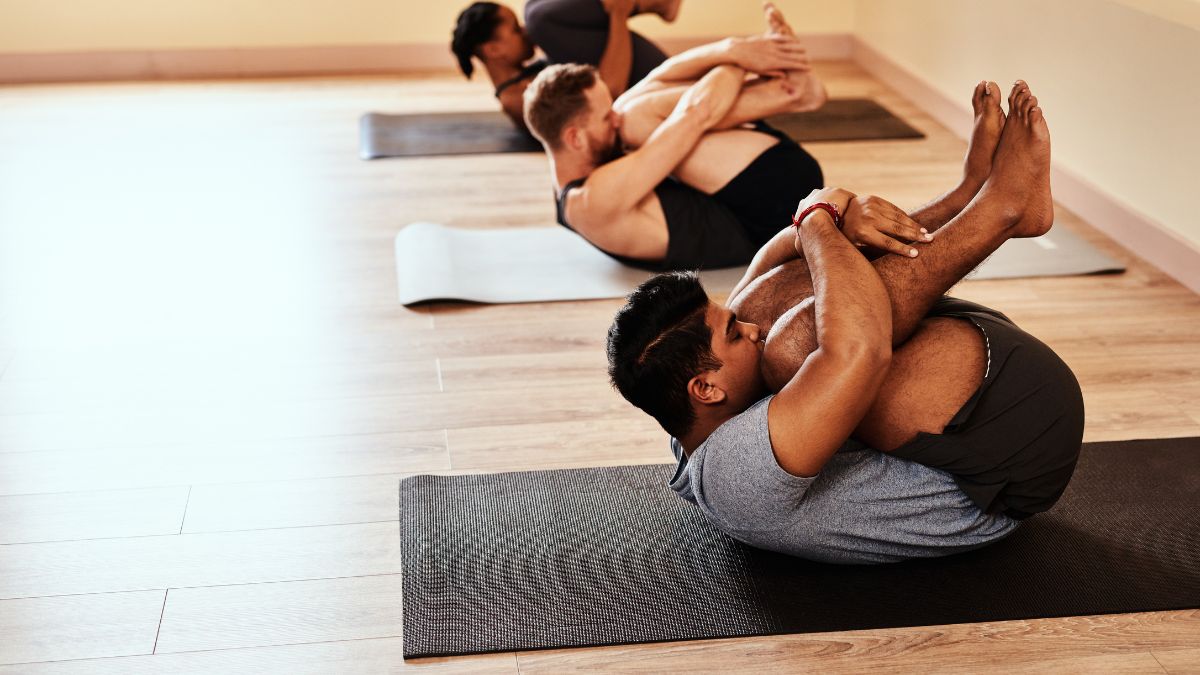
Your belly is not a problem to work around. It is a physical object that changes where your center of gravity sits, how deep you can hinge, and which joint angles are safe. Ignoring that produces injury, not fitness.
Most modification advice just makes exercises “easier” lighter weight, fewer reps, shorter range. That misses the point. A wide-stance squat is not easier than a narrow one. It is mechanically correct for a body with more hip and belly mass, because it creates clearance for the torso to stay upright without the spine rounding forward under load.
Three ways body geometry changes your exercise mechanics:
- A larger belly shifts your center of gravity forward, which forces your lower back to compensate on deadlifts and rows the fix is a hip hinge with a wider base, not a lighter weight
- More hip and thigh mass limits how close your feet can be on squats forcing a narrow stance creates knee cave and compressed hip flexors, both of which produce pain within weeks
- Belly size physically blocks a standard plank position the lower back hyperextends to compensate, loading the spine instead of the core, which is the opposite of the exercise’s goal
Standard exercise vs. geometry-correct version:
| Exercise | Standard version | Body-geometry modification | Why it works |
|---|---|---|---|
| Squat | Feet shoulder-width, toes forward | Feet wider, toes turned 30–45° out | Creates hip clearance, keeps torso upright |
| Deadlift | Narrow hip-width stance | Sumo stance, hands inside legs | Shorter pull distance, belly clears bar path |
| Plank | Toes and forearms, flat back | Elevated hands on bench or box | Removes belly-to-floor compression, spine stays neutral |
| Push-up | Chest to floor | Hands on bench or low surface | Correct chest-to-hand distance without spinal compensation |
| Hip hinge / row | Bent-over, feet together | Wide stance, chest supported on incline | Takes lower back out of the load, isolates target muscle |
None of these are easier. Every single one is more mechanically correct for the body doing the work.
The Actual Beginner Routine — Built for Your Body, Not a 170 lb Template
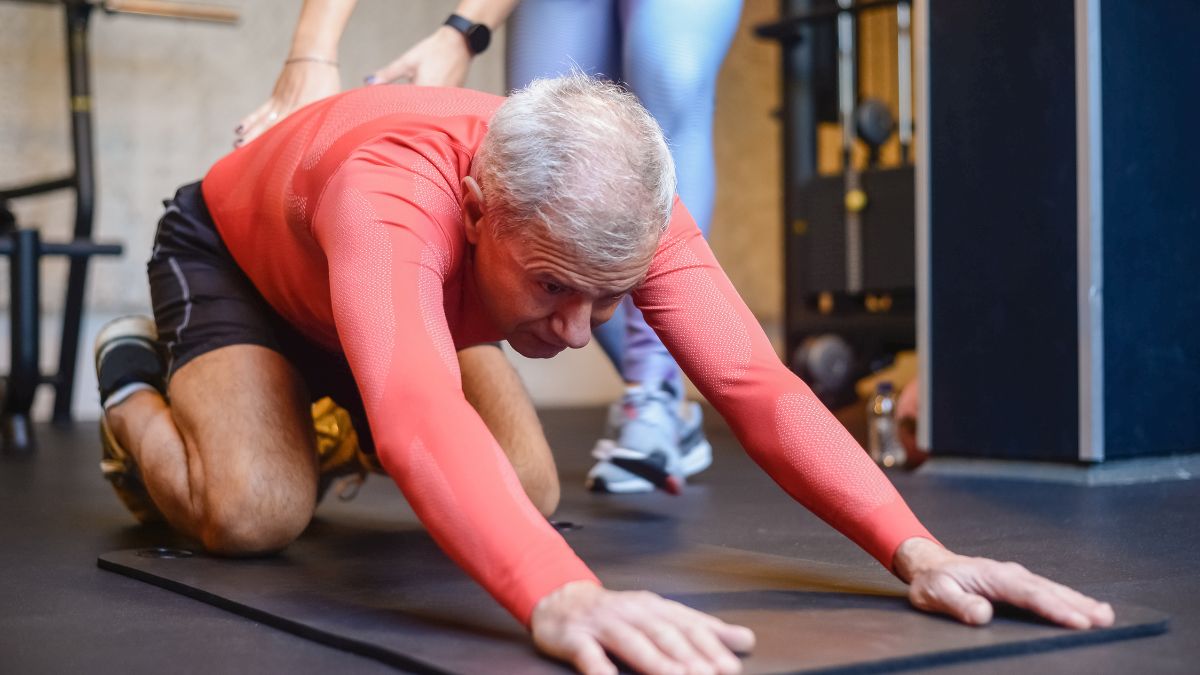
Three days a week. Not five. Connective tissue in a heavier body needs 48 hours minimum between sessions to catch up with muscle recovery and that gap is where joint protection is built, not lost.
Each session follows the same pattern: one lower body push, one lower body pull, one upper body push, one upper body pull, one core movement. Five movements. Done. Standard beginner programs stack 8–10 exercises because they were built for bodies that recover faster and carry less load per rep.
How this routine is structured:
- Rest 90 seconds between sets minimum at higher body weight, cardiovascular demand per set is greater, and cutting rest short causes form to break down before muscles do
- Sets stay at 2–3, never 4+ in the first 8 weeks tendons need time to adapt, and more sets accelerate muscle gain without giving connective tissue the same signal
- Every exercise uses the geometry-correct form from the previous section not the textbook version
The 3-day program:
| Day | Exercise | Sets × Reps | Plus-size form note |
|---|---|---|---|
| A | Box squat (wide stance, sit to bench) | 3 × 10 | Toes 30–45° out, sit fully before standing removes knee loading at bottom |
| A | Romanian deadlift (sumo stance) | 3 × 10 | Feet wide, hands inside legs, push hips back until hamstrings pull not lower |
| A | Incline push-up (hands on bench) | 3 × 10 | Body forms a straight line from heel to ear belly should not sag toward bench |
| A | Seated cable row or resistance band row | 3 × 12 | Chest tall, pull elbows to ribs not shoulders to ears |
| A | Dead bug (slow, controlled) | 3 × 8 each side | Lower back stays pressed to floor if it lifts, the movement is too large |
| B | Goblet squat (wide stance, weight at chest) | 3 × 10 | Weight counterbalances torso, makes upright position easier to hold |
| B | Hip thrust (back on bench, feet flat) | 3 × 12 | Drives glutes the largest stabilizer of the knee and lower back |
| B | Dumbbell floor press | 3 × 10 | Floor limits range where shoulder impingement occurs at higher body weight |
| B | Single-arm dumbbell row (knee on bench) | 3 × 10 each | Chest supported takes lower back entirely out of the movement |
| B | Pallof press (resistance band, standing) | 3 × 10 each side | Trains core to resist rotation the job it does all day, not just in crunches |
| C | Repeat Day A with +5% load if all sets felt controlled | — | Progress only when form holds, not on a fixed weekly schedule |
Eight weeks on this structure. Then reassess. Progress is adding load with the same form — not adding exercises.
Knowing Which Signals to Stop For and Which to Push Through
Not every signal means stop. Muscle burn during a set is not damage it is adaptation. Sharp joint pain during a movement is not effort it is warning. Treating both the same way is why most beginners either quit too early or get hurt.
“Listen to your body” is the most repeated and least useful advice in fitness. It assumes you already know what each signal means. Most people don’t especially men returning to exercise after years of inactivity, where even mild exertion feels alarming.
Three signals and what each one means:
- Muscle burn during a set burning quads on a squat, burning chest on a push-up is lactic acid building in the muscle fiber, not tissue damage. Push through this. It is the signal that the muscle is being asked to work harder than it is used to, which is exactly the stimulus you need.
- Joint pain during a movement sharp, pinching, or grinding sensation inside the knee, shoulder, or hip means the joint is under load it cannot handle in that position. Stop the set immediately. Do not push through. This signal does not get better with more reps.
- General discomfort from effort elevated heart rate, heavy breathing, feeling worked is cardiovascular and muscular stress, not injury. Heavier men often experience this more intensely than lighter men on the same exercise, because the cardiovascular demand per rep is genuinely higher. Rest longer. Continue the workout.
One rule covers all three: pain inside a joint is a stop signal. Burning or fatigue in a muscle is a continue signal. Everything else breathlessness, feeling awkward, being tired is discomfort, not damage.
Quitting a workout because of muscle burn costs you the adaptation. Pushing through joint pain costs you weeks of recovery. Knowing the difference is the skill that keeps this program working long-term.
How to Build Consistency When the Gym Feels Like It Wasn’t Built for You
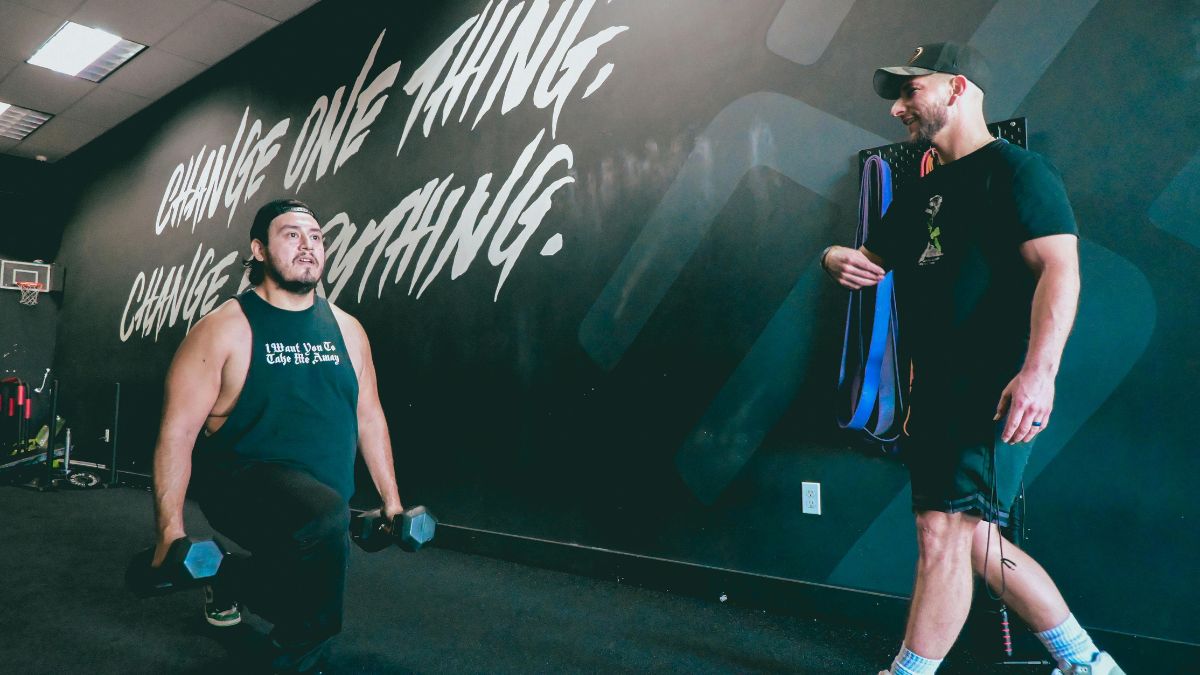
The program fails if you stop showing up. Environment kills consistency faster than effort does. Fixing the environment is a practical problem not a motivation problem and it has practical solutions.
Most fitness advice treats dropout as a willpower issue. “Stay committed.” “Remember your why.” That framing puts the problem inside you. For heavier men, a large part of the dropout cause is external equipment that feels unstable at higher weight, mirrors everywhere, equipment racks crowded with people who look like they belong there. Those are real friction points, not excuses.
Four friction points and how to remove them:
- Unfamiliar equipment creates hesitation that turns into avoidance solve this with one orientation session, either with a trainer or a single YouTube walkthrough of the specific machines in your gym, before your first real workout
- Peak hours mean maximum visibility and maximum wait time for the equipment this program uses train between 10am and 2pm or after 8pm where possible, when floors are quieter and equipment is free
- Bench and equipment weight limits are a genuine concern at higher body weight check the listed limits before your first session, most commercial gym benches hold 600–1000 lbs, but cable machines and some benches vary
- Getting changed at the gym adds a barrier that compounds over time remove it by driving there already dressed, which eliminates one decision and one moment of friction between you and the workout
Motivation gets you to the gym once. Removing friction gets you there fifty times. Every barrier between you and the door is a place where a hard week beats your good intentions. Make the path shorter. The work is already hard enough.

Hello there! I’m Jesse Joe, the author and editor behind SolganGenius. I’m thrilled you’ve stopped by, and I can’t wait to share with you the essence of what this platform is all about.
I’m a writer, social media enthusiast, and a firm believer in the power of words. I’ve always been fascinated by how a simple phrase or slogan can capture an emotion, convey a message, and even change perspectives. Learn More