
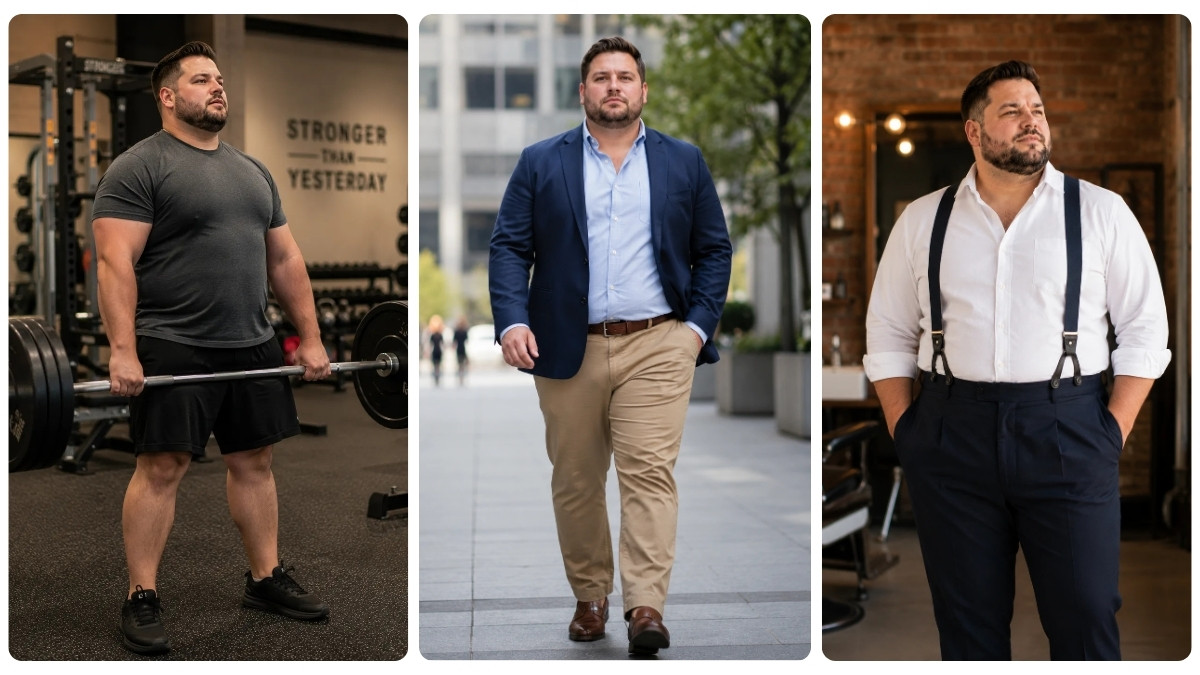
Somewhere along the way, someone told you that confidence starts with loving yourself. Good advice on paper. Hard to use when you’re standing in a dressing room under fluorescent lights, holding a shirt that fits everywhere except where it matters.
Most content aimed at bigger guys either skips the real stuff or wraps everything in motivational language that sounds great but changes nothing. Getting dressed, walking into a room, and actually feeling good in your body takes more than a mindset shift.
Real confidence is built through small, specific actions. Wearing clothes that actually fit your body today. Knowing what works for your frame. Choosing to take up space instead of shrinking into the corner.
Mindset & Self-Care
1. Prioritize fit over size

Baggy clothes do not hide your body. They hide your shape, and there is a difference. When fabric bunches, pools, or hangs off your frame, it adds visual bulk rather than removing it. Clothes that fit well follow your natural lines, and that actually makes you look more put together and more confident.
The problem most plus size men run into:
- Buying two sizes up because it feels safer
- Choosing oversized tees to cover the midsection
- Picking pants with too much room in the thigh and seat
- Avoiding fitted shirts out of fear they will cling
A better approach: Shop for clothes that skim your body, not squeeze it. There is a middle ground between tight and baggy. Fabric should rest lightly against your frame without pulling at the buttons or puckering at the seams.
Shirts that taper slightly at the waist create shape without showing every curve. Trousers with a straight or tailored leg look sharp without feeling restrictive. Even off-the-rack pieces can be taken to a tailor for minor adjustments.
2. Own your space

Posture changes how people read you before you say a word. Standing tall with your chest up and shoulders pulled back makes your body take up space with intention, not apology. That shift alone can make you look 10 pounds lighter and years more assured.
Most plus size men unconsciously collapse inward. Rounded shoulders and a dropped chin signal self-consciousness even when you feel fine on the inside.
Practice matters. Try standing against a wall for 60 seconds each morning so your body starts to learn the position.
Walking is where the real signal gets sent. Slow your pace slightly, keep your gaze forward, and let your arms swing naturally. Quick, hunched walking reads as anxious. Deliberate, upright movement reads as someone who belongs in the room.
Your clothes will also fit and hang better when you stand straight. A well-fitted shirt on a man with good posture looks completely different from the same shirt on slouched shoulders.
3. Master your grooming
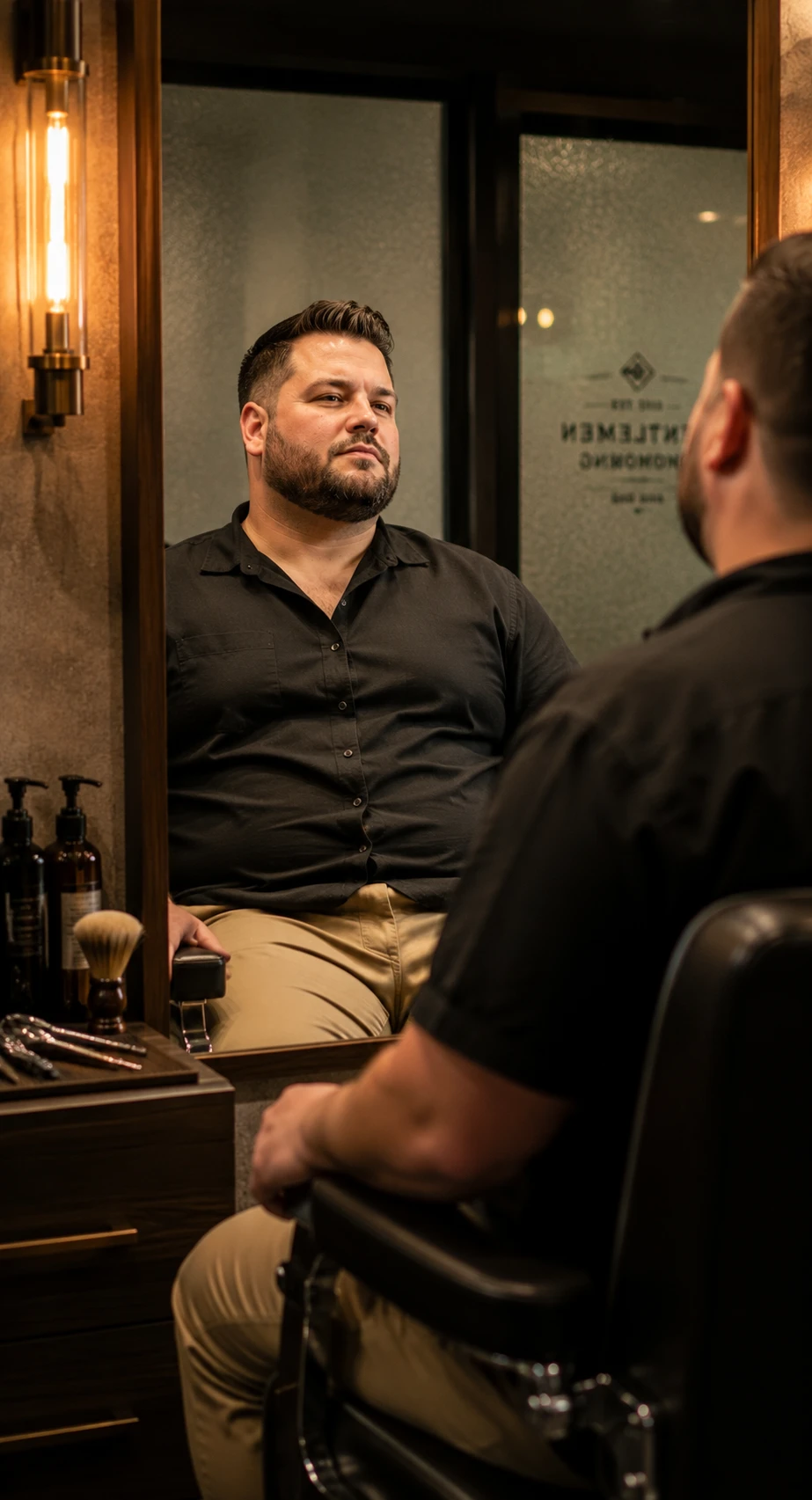
A fresh haircut communicates that you take care of yourself before you even say a word. People notice. And when you’re a bigger guy, a sharp, well-maintained look adds a level of put-together polish that changes how others see you and, more importantly, how you see yourself.
Your haircut should work with your face shape, not against it. A good barber will know exactly what flatters a rounder or wider face. Visit one regularly — every 3 to 4 weeks keeps your shape clean.
Smelling clean ties everything together. Deodorant and a light, quality fragrance round out the full picture without needing anything complicated.
For your beard, consistency is everything:
- Trim it every few days to keep lines sharp
- Use beard oil to reduce patchiness and add softness
- Shape the neckline just above the Adam’s apple — not too high
- Match your beard style to your face shape (a fuller beard can lengthen a round face)
A basic skincare routine takes under five minutes:
- Wash your face morning and night with a gentle cleanser
- Moisturize daily — dry skin looks dull and tired
- Apply SPF in the morning to prevent uneven tone over time
4. Focus on non-scale victories
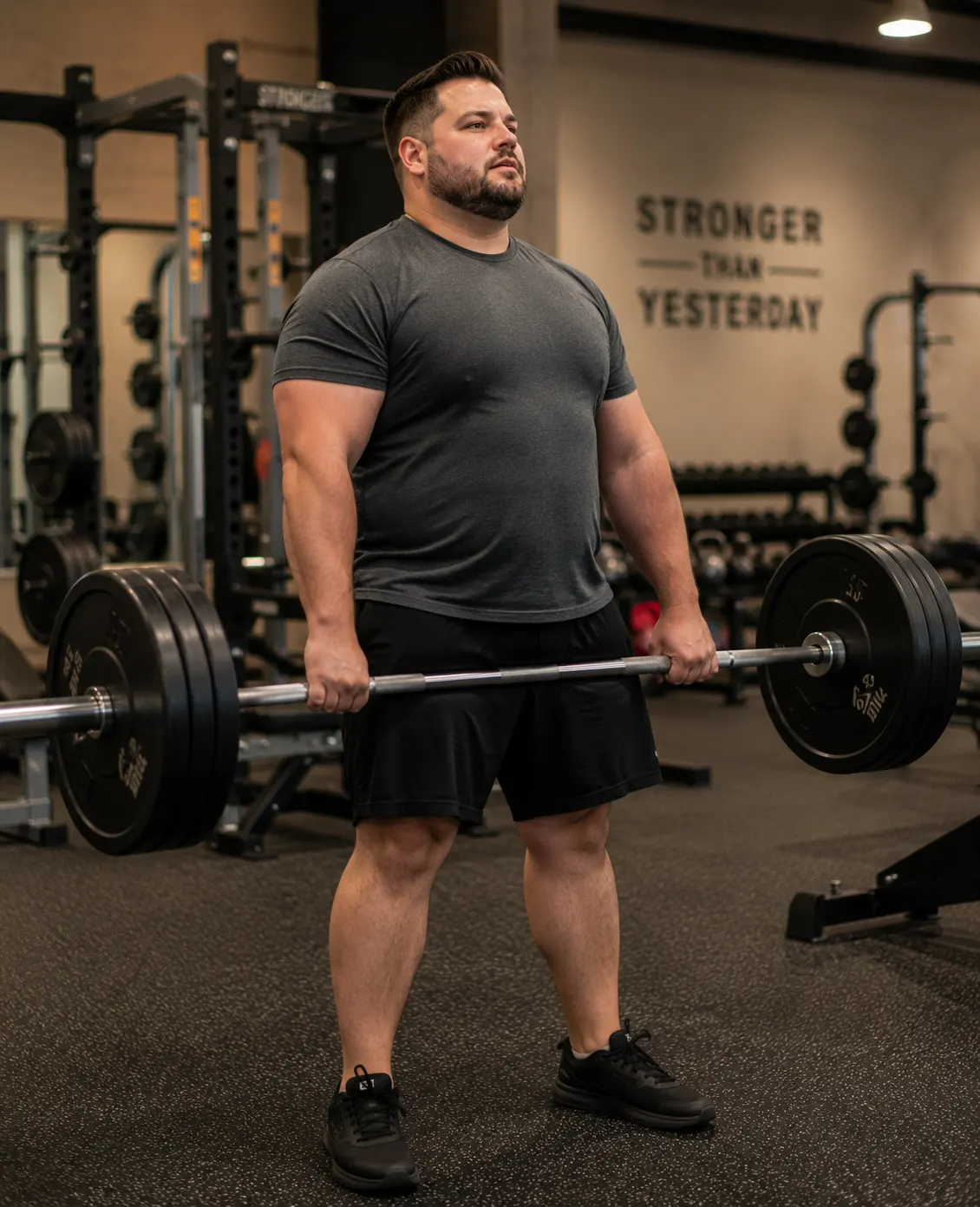
Your body is doing more for you right now than a scale will ever measure. That number on the floor tells you nothing about strength, endurance, stamina, or how far you have come since you started showing up consistently.
Non-scale victories are the wins that actually change how you feel about yourself. Some men notice them early. Others take weeks to recognize them.
Better option: Keep a simple notes app on your phone labeled “Wins.” Every Sunday, add one physical thing your body did that week that felt good. Over time, that list becomes proof that you are stronger, more capable, and more consistent than you give yourself credit for.
| Non-Scale Victory | What It Means for You | How to Track It |
|---|---|---|
| Lifting heavier weight | Your muscles are getting stronger | Log sets and reps weekly |
| Less winded on stairs | Cardiovascular health is improving | Note how many flights feel easy |
| Better sleep quality | Your body is recovering well | Rate sleep 1–10 each morning |
| Less morning stiffness | Joints and muscles are adapting | Track days you wake up pain-free |
| Keeping up with family | Functional fitness is building | Notice activities that feel easier |
| Clothes fitting differently | Body composition is shifting | Pick one item of clothing to test monthly |
5. Practice positive self-talk
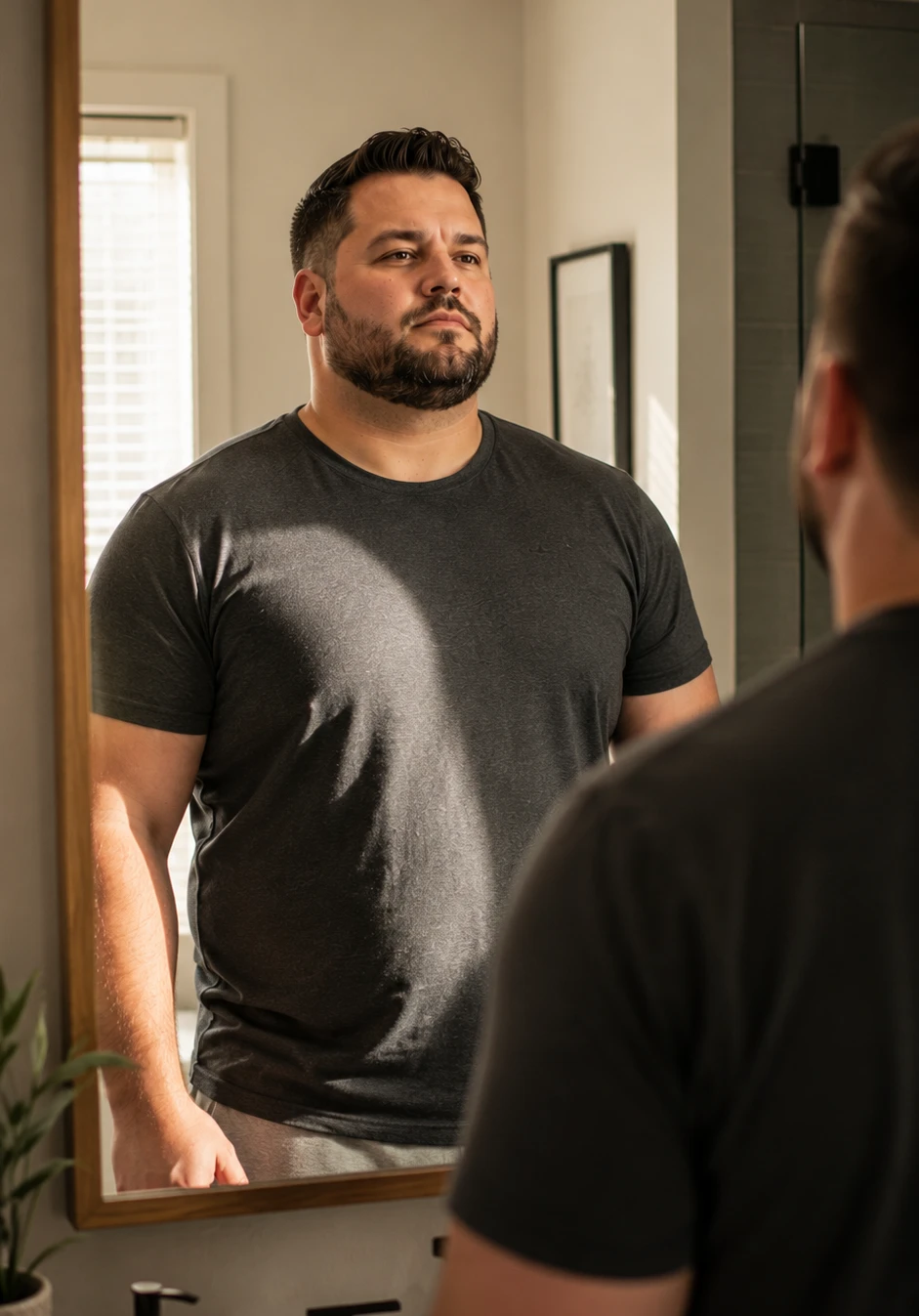
Your inner voice shapes how you carry yourself more than any outfit ever will. Most plus size men don’t realize how often they talk to themselves in ways they’d never talk to a friend. That gap is worth closing.
Negative self-talk tends to run on autopilot. You spot yourself in a mirror and the criticism fires before you’ve even registered the reflection. Catching that moment is the first real skill to build.
Try replacing the automatic critic with something specific and true:
- Swap “I look terrible in this” with “This shirt fits my shoulders well”
- Replace “Nobody wants to see me in shorts” with “My comfort matters more than strangers’ opinions”
- Change “I’ll dress better when I lose weight” with “I deserve to look good right now”
Wardrobe & Styling
6. Wear shapewear or compression shirts
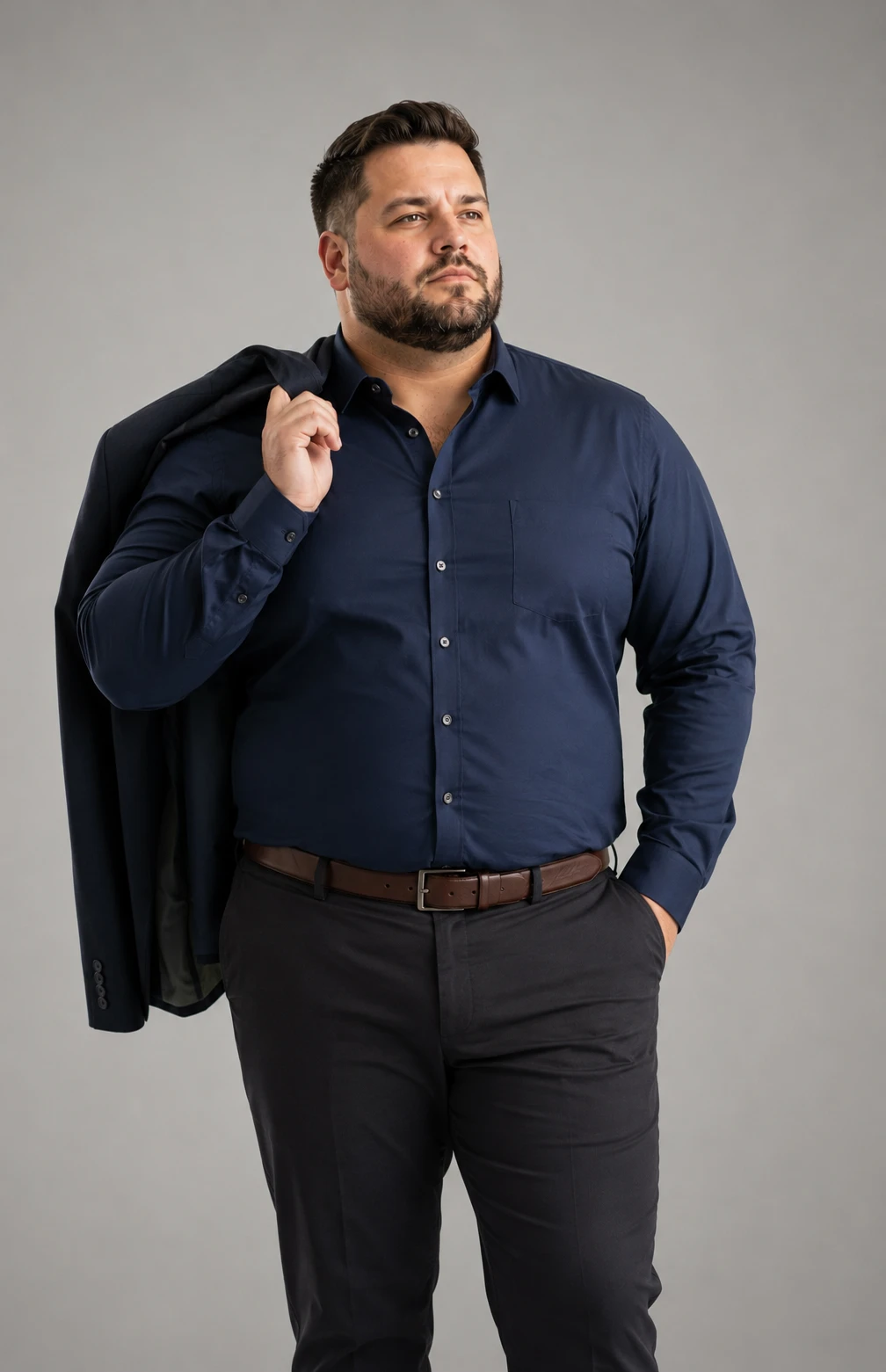
Most men skip this layer entirely and wonder why their shirts bunch, pull, or show every ripple underneath. A compression undershirt fixes that before you even button up.
The right one does more than smooth. It holds your midsection, improves your posture slightly, and gives your outer layer something flat to lay against. That matters most with dress shirts, suits, and fitted polos where the fabric is thinner and clings more.
Brands like Rounderbum, Spanx for Men, and Body Wrap carry plus size options built for bigger frames, not just stretched out from a medium.
One honest note: compression is not a solution for discomfort. If a shirt still pulls or strains after wearing one, the shirt is the wrong size. Shapewear works best when the outer layer already fits reasonably well.
7. Choose high-quality, structured fabrics
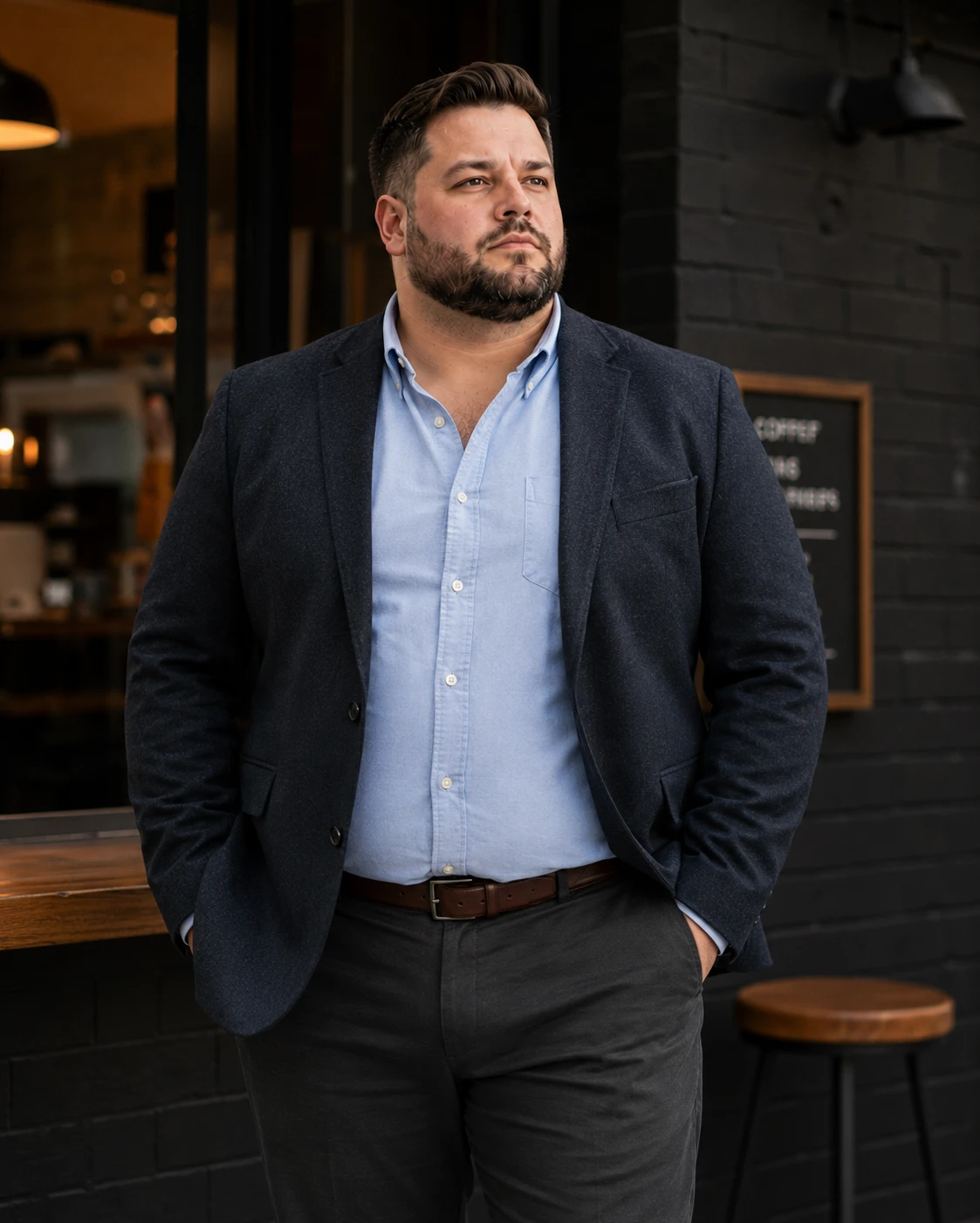
Fabric matters more than most men realize. Thin, stretchy materials pull across the chest and belly, drawing attention to exactly the places you’d rather not highlight. Structured fabrics, on the other hand, skim your frame without gripping it.
Heavy cotton, wool, and tweed are your best options. These materials hold their shape throughout the day, so your shirt or blazer looks as good at 6pm as it did at 8am. Flimsy polyester blends lose their structure fast, especially around the midsection.
Avoid anything labeled “moisture-wicking athletic fit” for dress occasions. Those fabrics are designed to compress, not to flatter a relaxed silhouette.
A well-structured polo in heavy pique cotton, a wool-blend chino, or a lined sport coat will outlast cheap fast-fashion alternatives and photograph far better too.
Here’s what to look for when you’re shopping:
- Weight: Hold the fabric up. Lightweight materials drape poorly on larger frames. Heavier fabric falls cleaner.
- Weave: Tighter weaves like Oxford cloth or twill resist pulling and bunching.
- Stretch: A small amount of stretch (around 2–5%) helps with movement, but avoid anything that feels tight at rest.
- Lining: Lined blazers and trousers keep panels flat and reduce visible creasing.
8. Layer like a pro
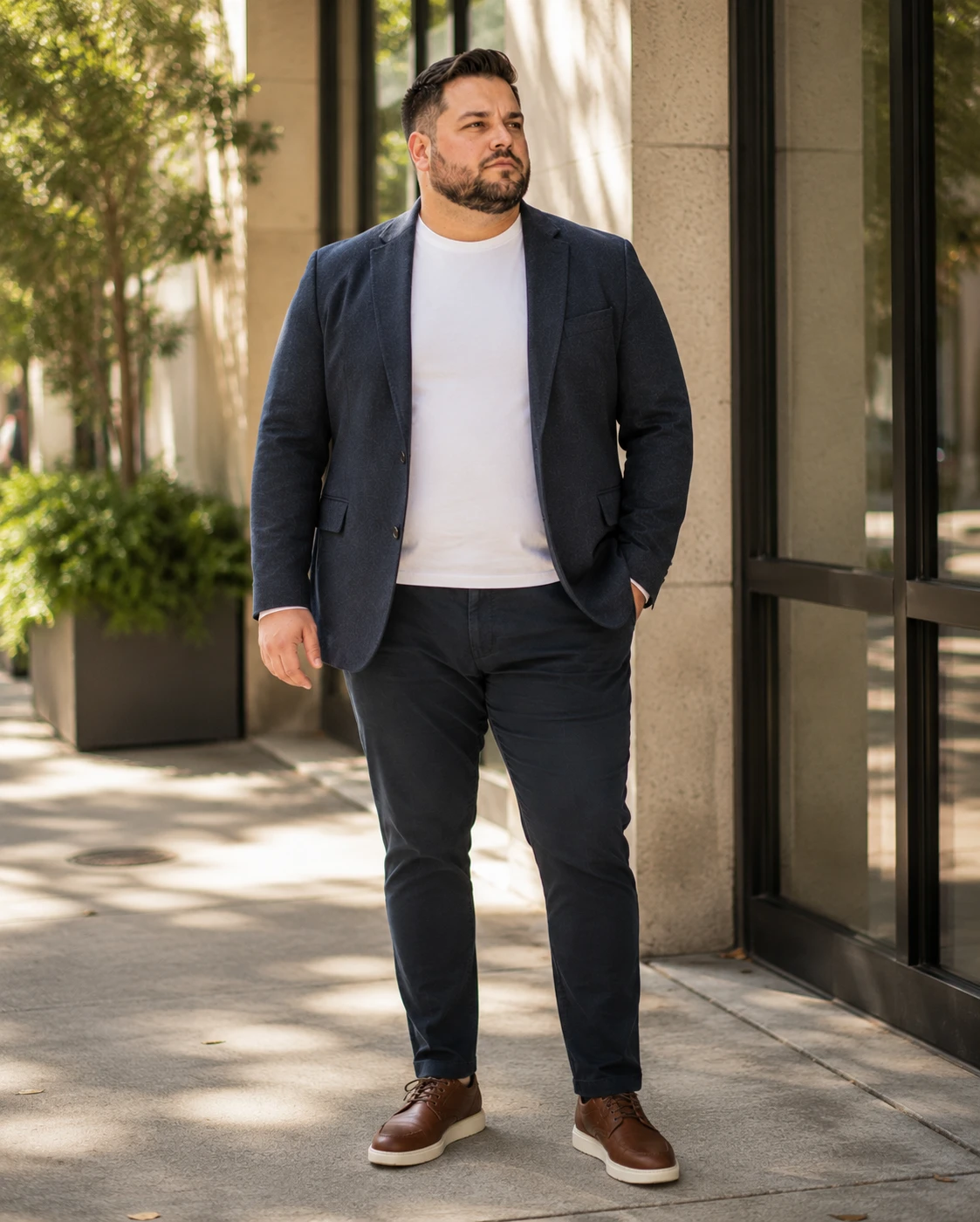
An unbuttoned flannel overshirt worn over a plain tee creates length without bulk. Choose one that hits at the hip or just below anything shorter breaks the vertical line you’re trying to build. Darker plaids or solid earth tones work better than bright patterns here.
A structured blazer left open adds instant polish and frames your torso. Look for one with a single button at the waist that construction naturally pulls the eye inward. Stretch-blend fabrics give you comfort and shape at the same time.
A denim or bomber jacket unzipped gives a relaxed look that still reads sharp. Wear it over a solid fitted tee, not a baggy one underneath the base layer matters as much as the outer piece. Dark wash denim jackets are the most versatile option for plus size men.
A longline cardigan works on casual days and layers well over solid shirts. Pick one that falls past the hips for maximum vertical effect. Chunky knits add bulk, so stick to lighter-weight fabrics like cotton or fine merino.
9. Embrace vertical patterns
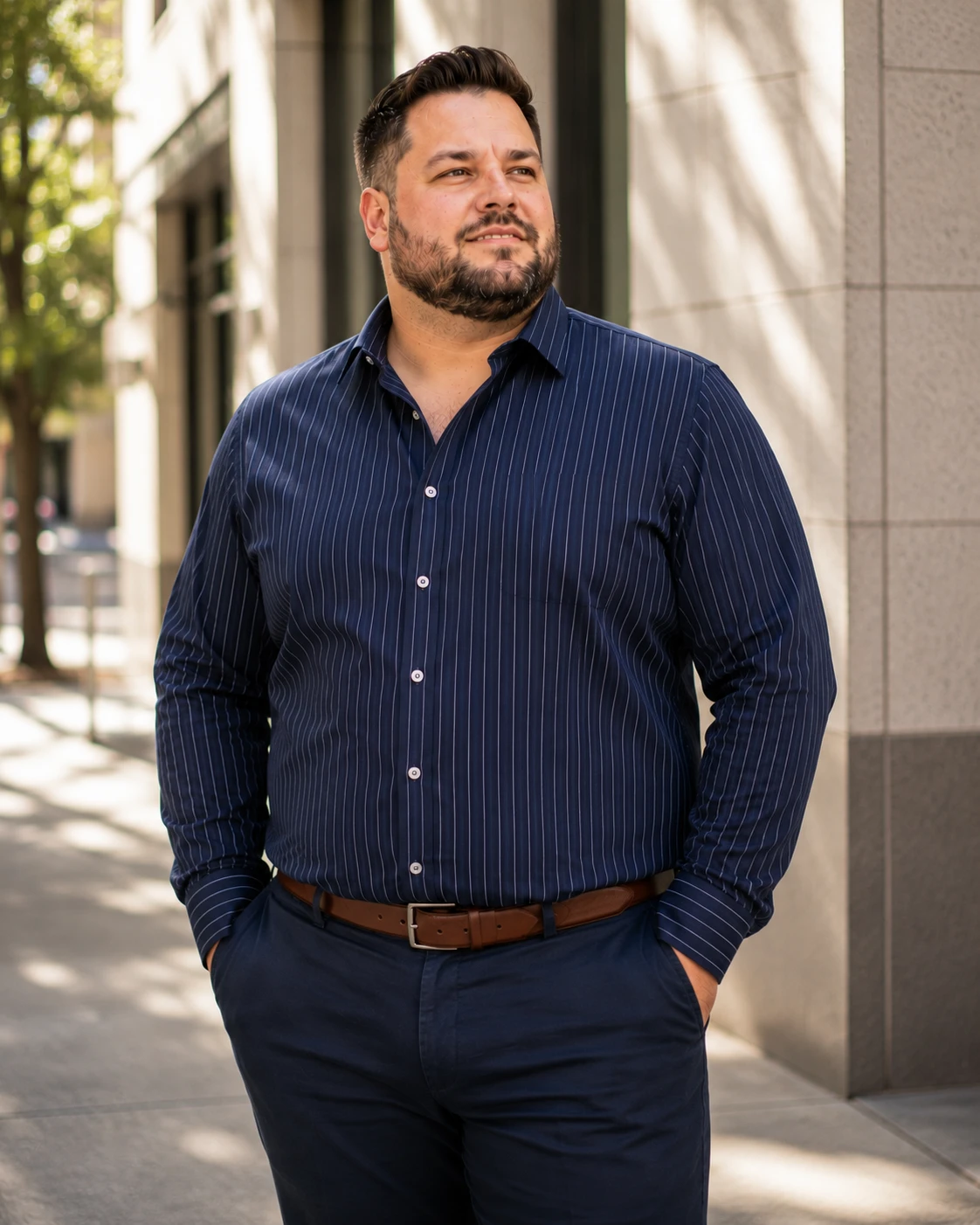
Vertical stripes create an optical illusion that draws the eye up and down instead of side to side. That single shift in how a pattern moves can make a real difference in how your silhouette reads to others.
Thin, evenly spaced stripes work especially well on dress shirts, polos, and casual button-downs. Darker base colors with lighter stripes tend to slim more than lighter bases.
A navy shirt with white pinstripes, for example, gives you structure and sharpness without trying too hard. Subtle always wins over loud when your goal is a clean, confident look.
| Pattern Type | Works For You | Skip This |
|---|---|---|
| Stripes | Thin vertical, two-tone | Wide horizontal |
| Prints | Subtle tone-on-tone | Large floral or abstract blocks |
| Geometric | Small, evenly spaced, vertical repeat | Busy, high-contrast patterns |
10. Wear high-waisted pants
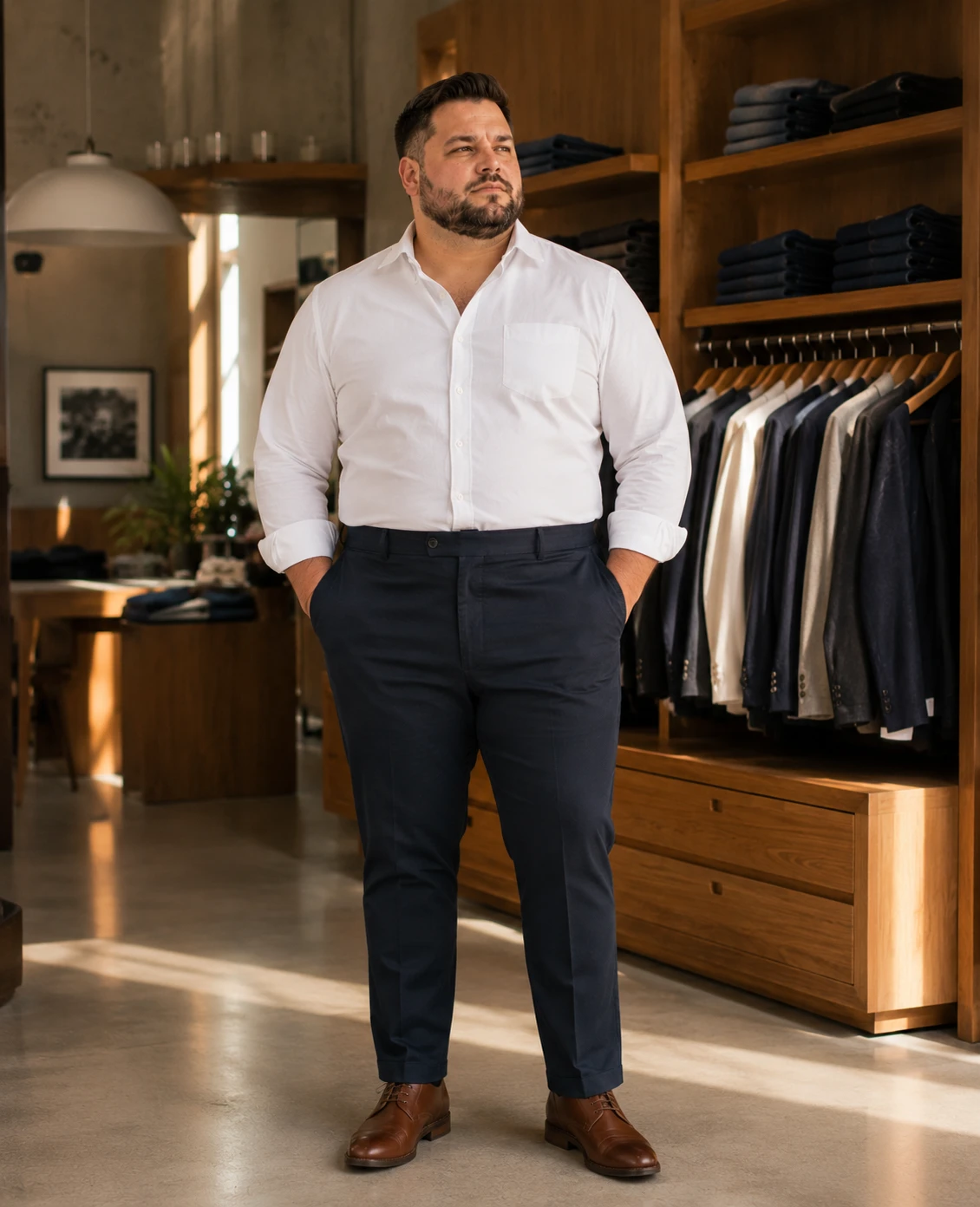
High-waisted pants solve two problems at once. Pulling your waistband up just an inch or two stops fabric from digging into your belly and it makes your legs look noticeably longer without any effort.
Most plus size men wear their pants low because that’s what feels natural. Sitting lower, though, creates a thick band of fabric right at your widest point and cuts your silhouette in half.
Brands like Torrid, DXL, and Destination XL carry high-rise options specifically cut for plus size men. Standard retailers often label these as “comfort rise” or “relaxed rise” check the rise measurement before buying, not just the label.
Tucking in a shirt becomes much easier with higher-waisted pants. That simple move adds even more length to your silhouette and pulls the whole outfit together.
Here’s what to look for when shopping:
- Rise: Aim for a rise of 12 inches or higher. Mid-rise jeans usually sit at 10 to 11 inches — that’s often too low.
- Waistband width: Wider waistbands (1.5 inches or more) distribute pressure evenly and stay put better.
- Fabric: Stretch denim or twill with 2–4% elastane gives you comfort without looking baggy.
- Fit at the seat: The seat should be smooth, not pulling or sagging — high-rise only works if the fit is right through the thigh too.
11. Try suspenders instead of belts
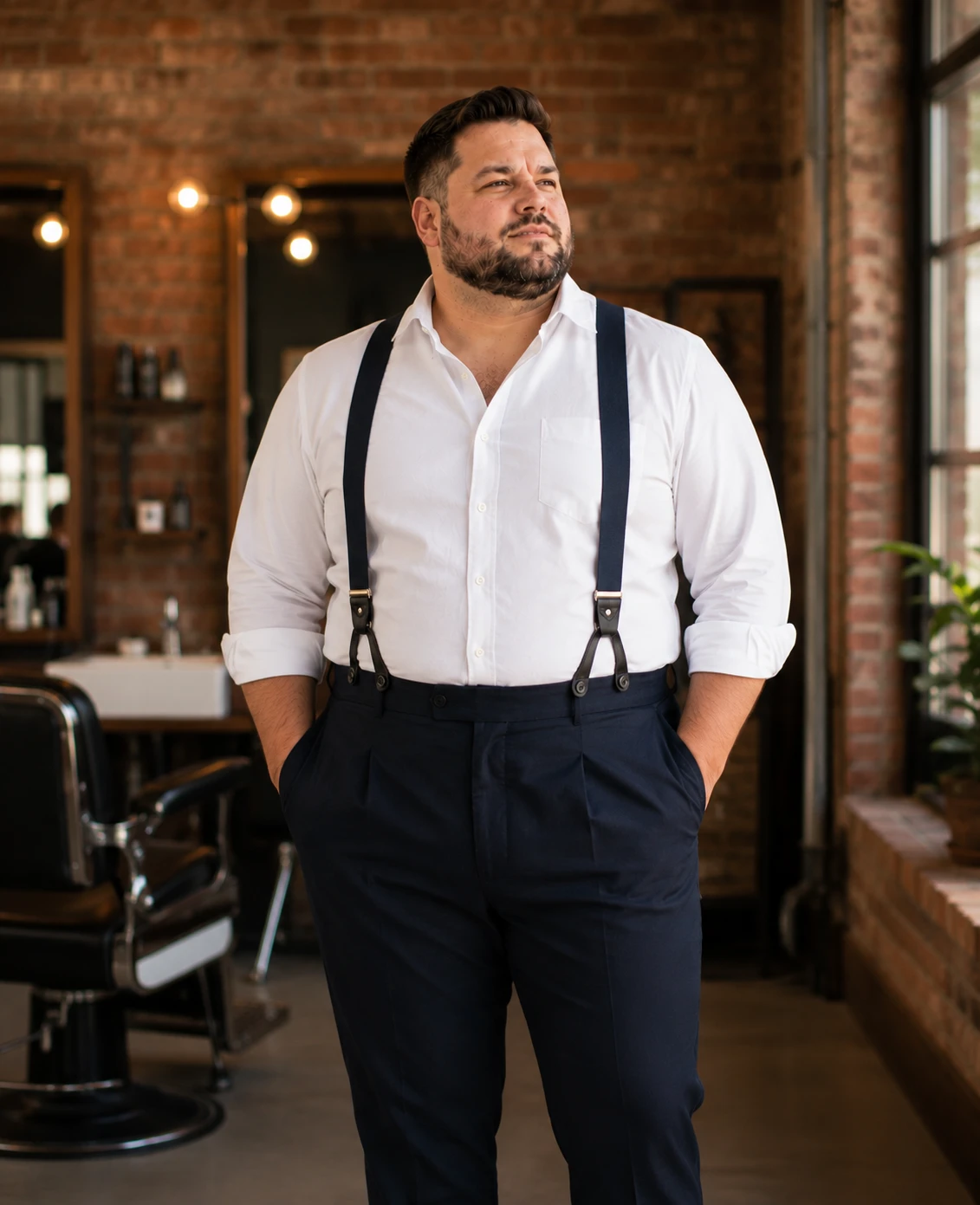
Pants that bunch, sag, or dig into your waist make every outfit look sloppy — and no amount of tucking fixes it. Suspenders hold your waistband exactly where it belongs, all day, without pressure on your stomach.
The comfort difference is real. Belts work by squeezing. Suspenders work by lifting. For plus size men, that shift changes how your clothes sit, how you breathe, and how confident you feel moving around.
Clip-on suspenders work with almost any pants you already own. Button suspenders look sharper and are worth the investment if you wear dress pants often. Either way, start with a solid neutral color black, navy, or brown so they pair with everything in your closet.
Wider straps, around 1.5 inches, distribute weight better and look more proportional on a bigger frame.
Body Language & Demeanor
12. Keep your hands visible
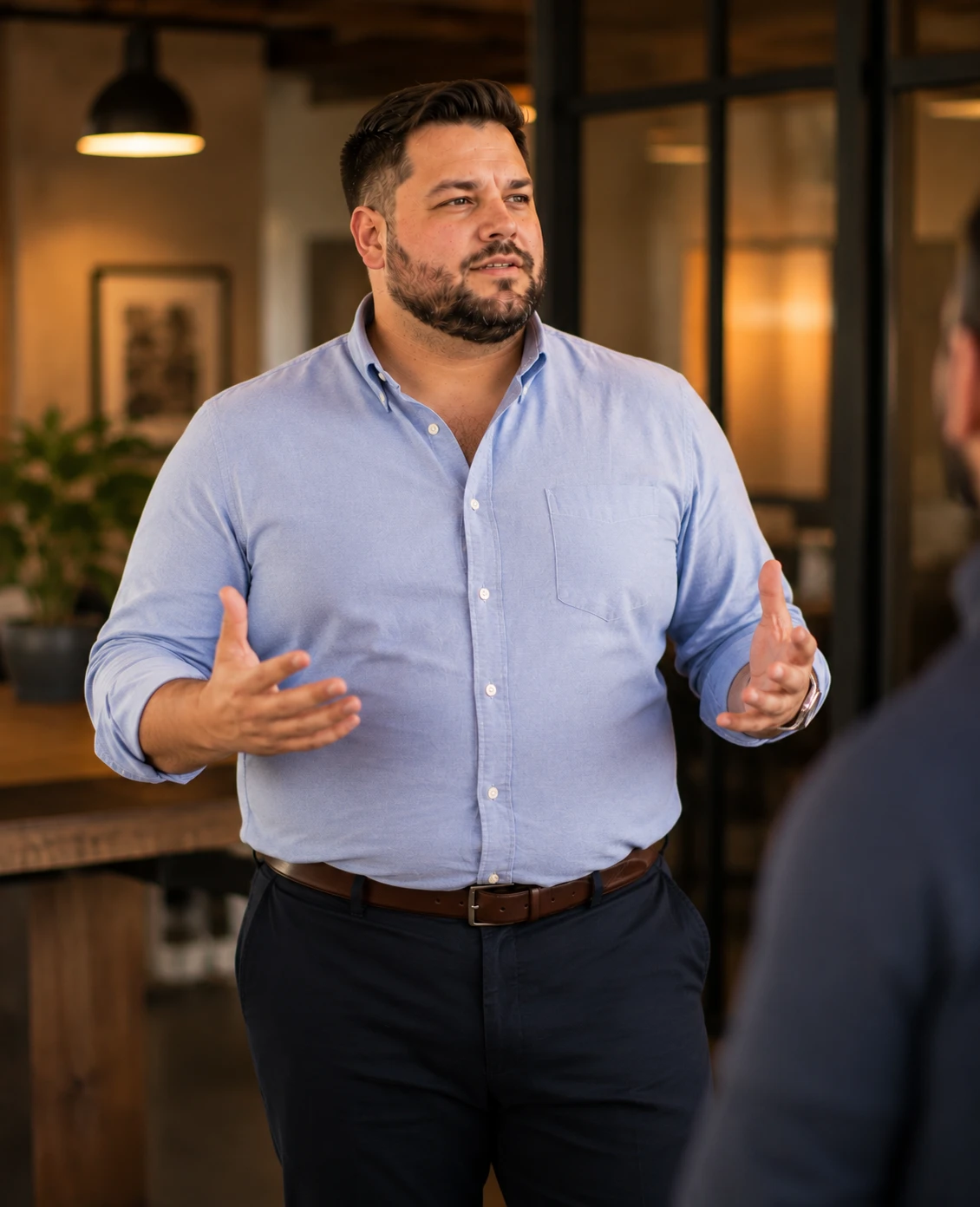
Hands tucked away actually signal the opposite of what most men want to project. When your hands disappear into your pockets during a conversation, your body tells the room you’re closed off or uncomfortable even when you’re not. People read these signals faster than they process your words.
Visible hands create an immediate sense of openness. Research in body language consistently shows that open palm gestures make speakers appear more trustworthy and in control. For plus size men especially, where physical presence is already commanding, pairing that presence with open, active hands shifts the whole energy you bring into a room.
Big hands moving with intention read as powerful, not awkward. The discomfort you feel keeping them visible fades fast once it becomes habit. Start by noticing how often you reach for your pockets in the next conversation you have most men are surprised by the answer.
13. Speak slowly and clearly
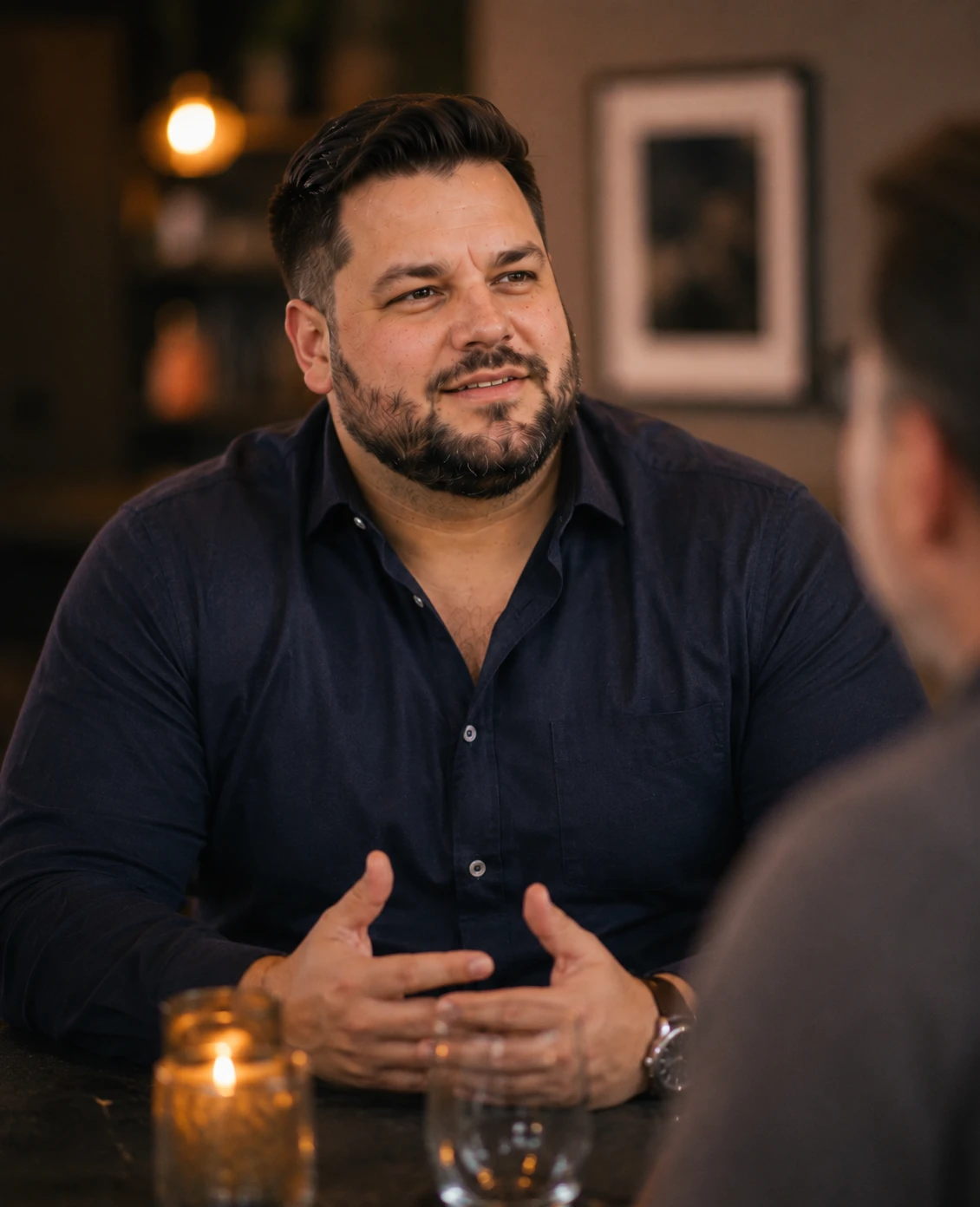
Your voice gives you away before your words do. Most people focus on what they say. The ones who command attention focus on how they say it. Pace, tone, and pauses communicate confidence more than vocabulary ever will.
Rushing through sentences tells everyone in the room that you’re nervous about taking up their time. Slowing down says the opposite. It signals that you expect people to listen, and that you’re worth listening to.
Short pauses feel longer to you than to the listener. What feels like an awkward three-second gap sounds like composure to everyone else. Confident speakers use silence as a tool, not something to escape from.
Practice when the stakes are low. Order your food deliberately. Speak up in small group conversations. Over time, the slower pace stops feeling forced and starts feeling natural.
| Habit | What to Do | Why It Works |
|---|---|---|
| Breathe first | Take one full breath before responding | Resets your pace and stops rushed answers |
| Lower your pitch | Let your voice drop at the end of statements | Sounds decisive, not uncertain |
| Use pauses | Wait 1–2 seconds after your main point | Silence reads as confidence, not weakness |
| Steady volume | Keep the same level through the whole sentence | Trailing off signals doubt |
| Hold eye contact | Look at people while you speak, not just listen | Shows you own what you’re saying |
| Match the room | Slow down in quieter, smaller settings | Forces people to lean in and pay attention |
| Cut filler words | Pause instead of saying “um” or “like” | Pauses sound calm; fillers sound nervous |
| Speak from your chest | Push your voice down, not out through your throat | Deeper tone reads as more grounded |
| Finish your thought | Complete your sentence before stopping | Shows you trust what you’re saying |
| Hold your ground | Finish calmly if someone interrupts | Quiet persistence signals self-respect |
14. Maintain strong eye contact

Eye contact is one of the fastest ways to change how both you and others experience your presence in a room.
Most people underestimate it. When you hold someone’s gaze during a conversation, you signal that you are present, grounded, and sure of yourself. That lands differently than anything you wear.
A lot of men avoid direct eye contact without realizing it. Some look down when they talk. Others glance away mid-sentence, especially when they feel self-conscious. Those small habits quietly tell people you are unsure of yourself, even when your words say something different.
Practice in low-stakes moments first. Try it with a cashier, a coworker, or someone you pass regularly. Short, intentional exchanges build the habit without any pressure.
The goal is not to stare. Natural eye contact feels like you are listening, not competing. People notice when someone is genuinely engaged. That kind of attention, given freely and comfortably, reads as quiet confidence every single time.
15. Prioritize fun and presence
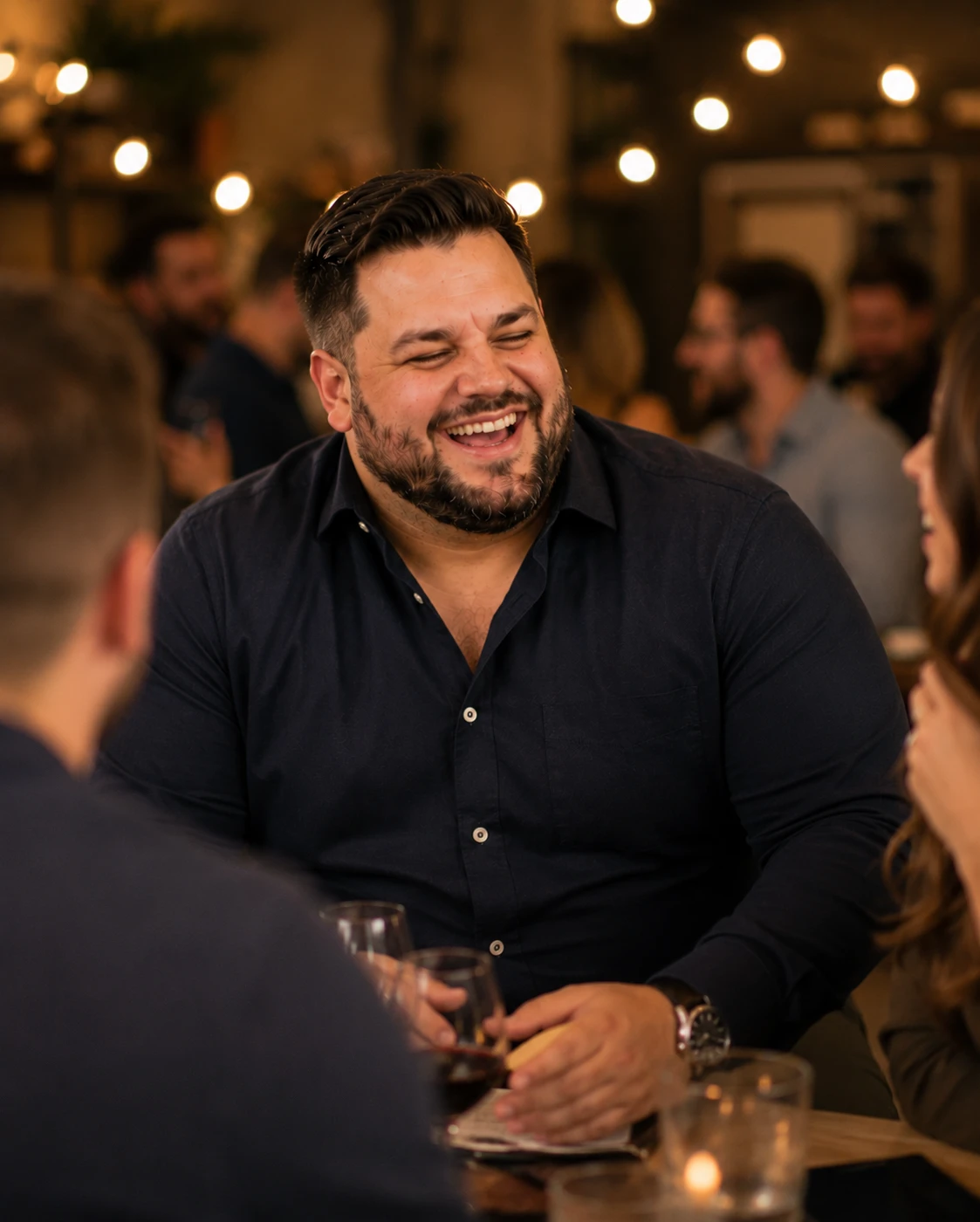
The most confident guys in any room aren’t the ones with the best bodies. They’re the ones having the most fun.
Social settings feel harder when part of your brain is running a background check on how you look. That mental chatter pulls you out of the moment and puts you in your head instead of in the conversation.
Here’s what that actually costs you:
- Missing the joke because you were adjusting your shirt
- Staying quiet in group conversations to avoid drawing attention
- Leaving early because discomfort built up over the evening
- Passing on photos and missing memories you can’t get back
Presence is a skill, not a personality trait. Practice redirecting your focus outward: ask a follow-up question, make someone laugh, notice what’s happening around you. Every time your brain drifts toward how you look, give it something else to do.
The shift doesn’t happen all at once. Start small by choosing one social moment per week where you commit fully to enjoying it, no self-monitoring allowed. Conversations go longer. Laughs come easier. People notice your energy, not your waistline.
| Tip | The Move | Why It Works |
|---|---|---|
| Dress your actual body | Buy clothes that fit now | Fitted clothes look intentional |
| Own your walk | Slow down, head up | Posture signals confidence instantly |
| Build a signature look | Pick 2–3 colors that work for you | Easy to get dressed, hard to forget |
| Invest in one great outfit | Quality over quantity | One strong outfit beats ten mediocre ones |
| Stop waiting to lose weight | Dress well today | Confidence builds on action, not plans |
| Get proper measurements | Know your exact size | Eliminates guesswork when shopping |
| Wear clothes that move with you | Prioritize comfort and fit | Discomfort shows on your face |
| Find your go-to brands | Stick to what fits consistently | Saves time and reduces frustration |
| Cut the negative self-talk | Replace critique with neutral observation | What you say internally shapes how you carry yourself |
| Surround yourself with the right people | Spend time with those who build you up | Environment shapes confidence over time |
| Take up space unapologetically | Stop shrinking in chairs or photos | Physical presence reinforces self-worth |
| Try one new thing per month | A new style piece, event, or experience | Small risks build real courage |
| Focus outward in social settings | Ask questions, make people laugh | Presence beats appearance every time |
| Document your wins | Save outfits and moments that felt good | Evidence fights doubt on hard days |
| Move your body in ways you enjoy | Walk, swim, lift, whatever feels good | Movement builds confidence from the inside out |

Hello there! I’m Jesse Joe, the author and editor behind SolganGenius. I’m thrilled you’ve stopped by, and I can’t wait to share with you the essence of what this platform is all about.
I’m a writer, social media enthusiast, and a firm believer in the power of words. I’ve always been fascinated by how a simple phrase or slogan can capture an emotion, convey a message, and even change perspectives. Learn More