
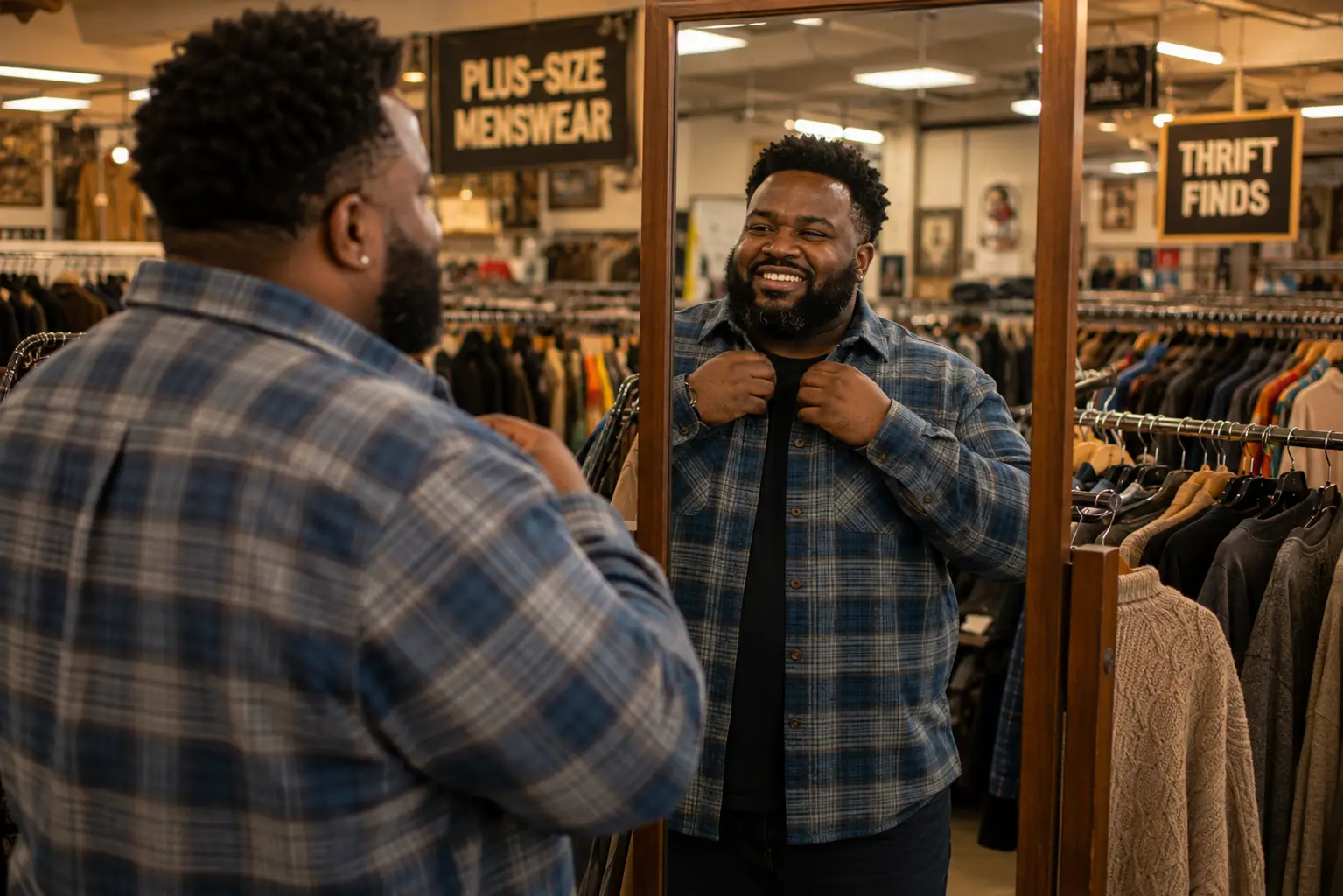
Walking into a vintage shop usually means staring down endless racks of medium shirts. Waistlines there are often built for teenagers. The plus-size corner, if it even exists, looks like a dumping ground for ugly corporate polos.
Frustration sets in fast. Big guys are constantly told to just buy online or stick to boring big-and-tall catalogs. Scoring cool, affordable clothes in person feels impossible without a smart plan. Real strategy is required to beat the broken sizing rules at most secondhand shops.
We must stop treating these places like normal retail stores. Success happens when you ignore printed labels and check the exact spots where larger items actually migrate.
Armed with a few specific techniques, those messy aisles suddenly hold genuine options for heavier frames. Here is exactly how to spot the gems and leave the tiny denim behind.
Stop Letting the “XL Wall” Dictate Your Wardrobe
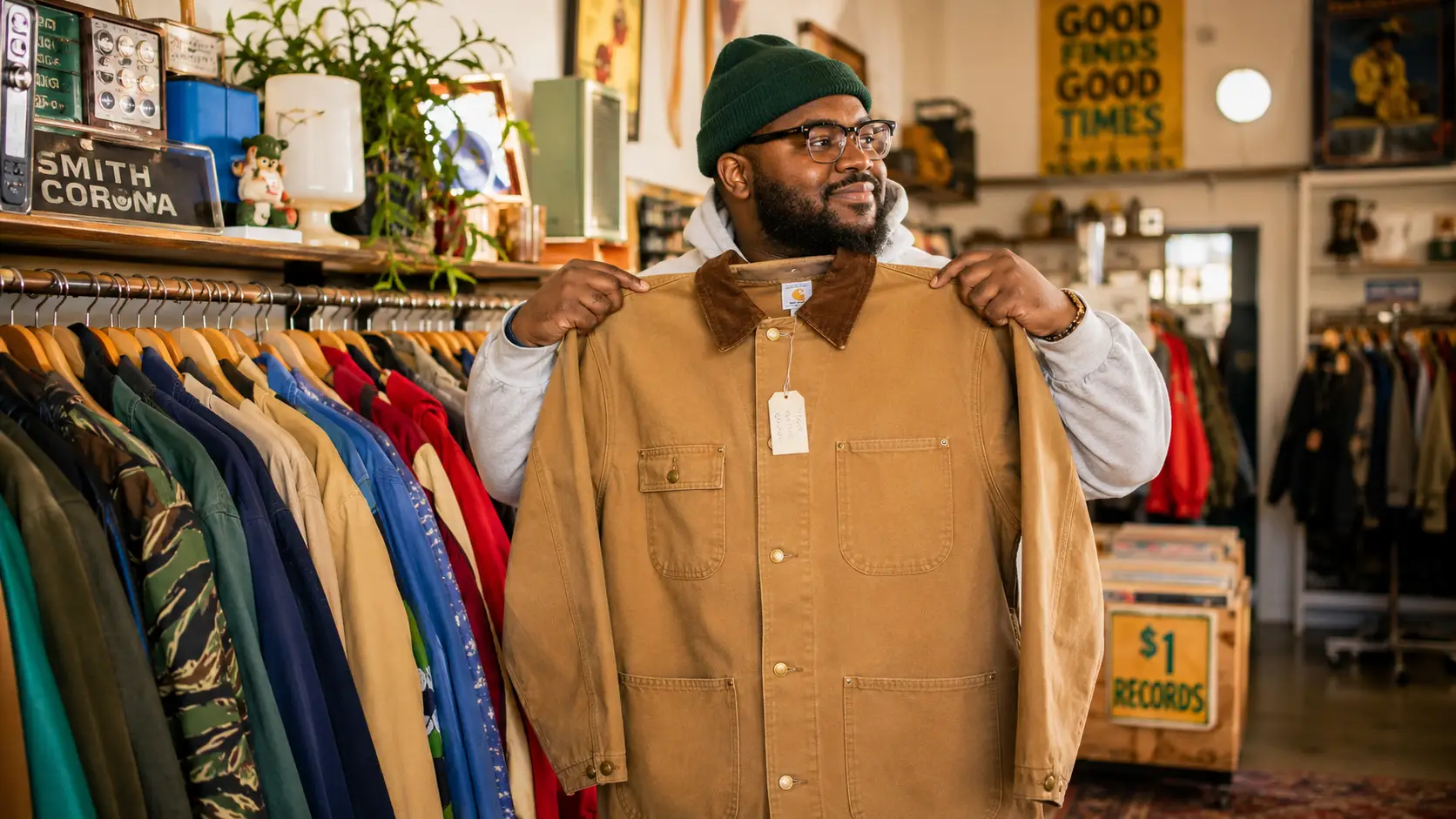
You probably walk into a thrift store, spot the tiny rack labeled XXL, and feel your heart sink. Society tells big guys to stay in that dusty corner. That is a lie. Most men immediately restrict themselves to the plus-size rack, grabbing whatever loose tent they find.
Instead, ignore the tags completely. Vintage sizing runs wild compared to clothes made today. A jacket from the nineties marked “Large” might actually fit like a modern XXL because oversized cuts were trendy back then.
This matters for bigger bodies since boxy cuts drape straight down past your stomach. Stop looking at tiny letters on a collar. Shop by your eye. Hold every single garment directly up against your shoulders. If the shoulder seams drop past your actual shoulder bone, the jacket will look incredibly sloppy.
Buy it immediately if those seams line up perfectly with your natural frame. Many big men hide inside oversized, poorly fitting tops. Doing so makes you look heavier. Check the general outerwear section before looking anywhere else.
Heavy chore coats or thick flannel overshirts often run extremely huge by sheer design. They give broad guys solid structure without trapping heat against the skin. Wandering beyond the XL wall opens up everything. Go claim it.
The Retail Fallacy: Why You Keep Striking Out in the Men’s Section
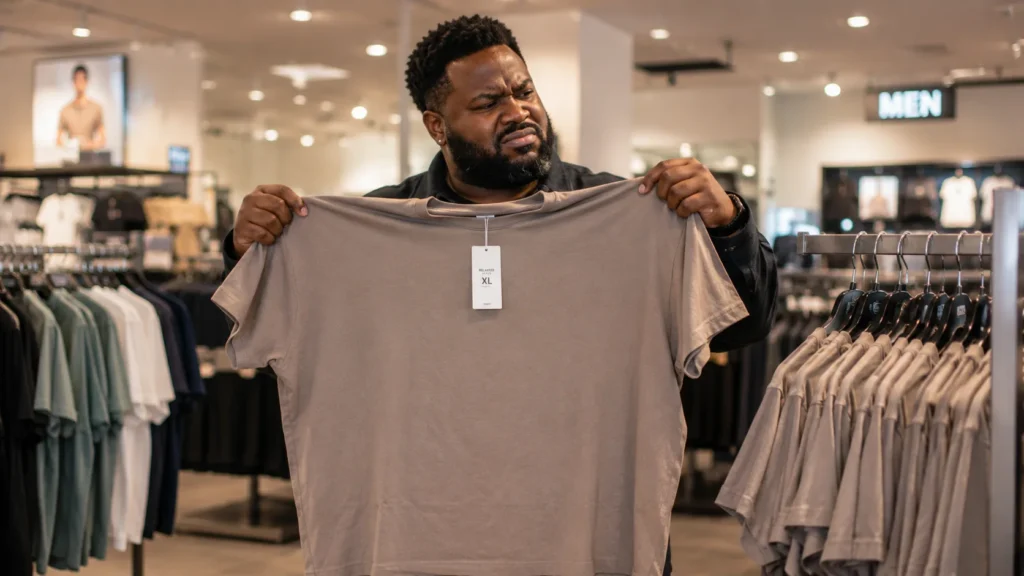
You probably think thrift stores suck because big guys wear their clothes until they simply fall apart. Brands want you to believe that lie, but the real problem starts at the mall. Modern retail companies do not design for large frames.
They just take a basic medium pattern and stretch it horribly wide. This creates a terrible square box. Most heavy men grab the biggest size available, hoping for comfort, only to end up looking like a sloppy balloon.
But grabbing a massive shirt from a fast fashion rack will never work. The neck hole droops wide, while the sleeves hang awkwardly down past your elbows.
Why does this happen? Because cheap overseas factories refuse to adjust the actual shoulder and chest grading for heavier bodies. Stop blaming your body for clothes that were built wrong from the start. Instead of fighting bad retail math, start feeling the fabric.
Look for thick cotton pieces from the nineties. Vintage shirts use a drop-shoulder cut, meaning the seam naturally sits lower on your arm without stretching the chest fabric tight. That specific design flatters a belly by draping softly over your middle instead of clinging tightly to your sides.
Arm Yourself with Hard Numbers (Because Vintage Tags Lie)
Throw that bad idea away. Decades of washing machines and hot dryers shrink older clothes in strange, frustrating ways. Tags lie to you constantly. Most guys blindly trust the printed collar, bring garments home, and quickly realize their new jeans will not even pull past their thick thighs.
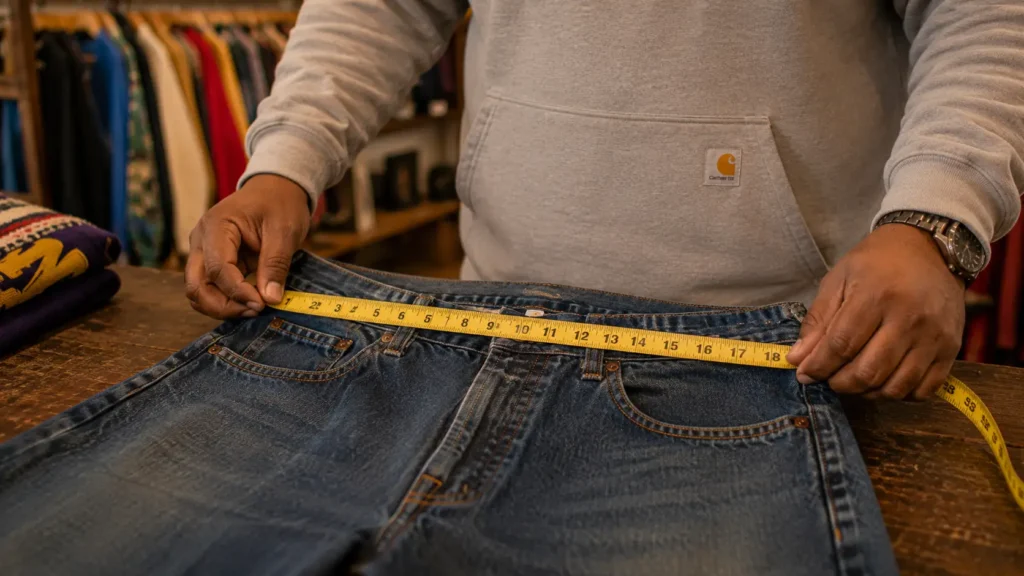
Shortcuts always waste your money. Smart thrift shoppers carry a flexible cloth measuring tape directly into the store to fight back against fake sizing. Grab your absolute best-fitting shirt.
Lay the garment perfectly flat across your bed and carefully smooth out any stubborn wrinkles. Measure across the middle stomach. Big men actually need this exact belly number because vintage tops frequently get much narrower at the bottom waist.
Narrow shirts cling awkwardly tight. Do the exact same simple process with your favorite pair of comfortable daily pants today. Stretch tape across the front waistband. Multiplying that number by two gives you the true waist size hiding behind the label.
Thigh measurements matter heavily too. Record the width right below the crotch seam where thick legs require serious breathing room. Heavy denim chafes upper thighs. Checking numbers right on the metal hanger saves you from sweating heavily inside a tiny, poorly ventilated dressing room.
Trying tight clothes ruins days. Nothing destroys a good thrift trip faster than wrestling violently with a heavy wool coat that actually runs three sizes too small. Hard numbers always tell the absolute truth.
Map Your Route Away from Hyper-Curated Vintage Traps
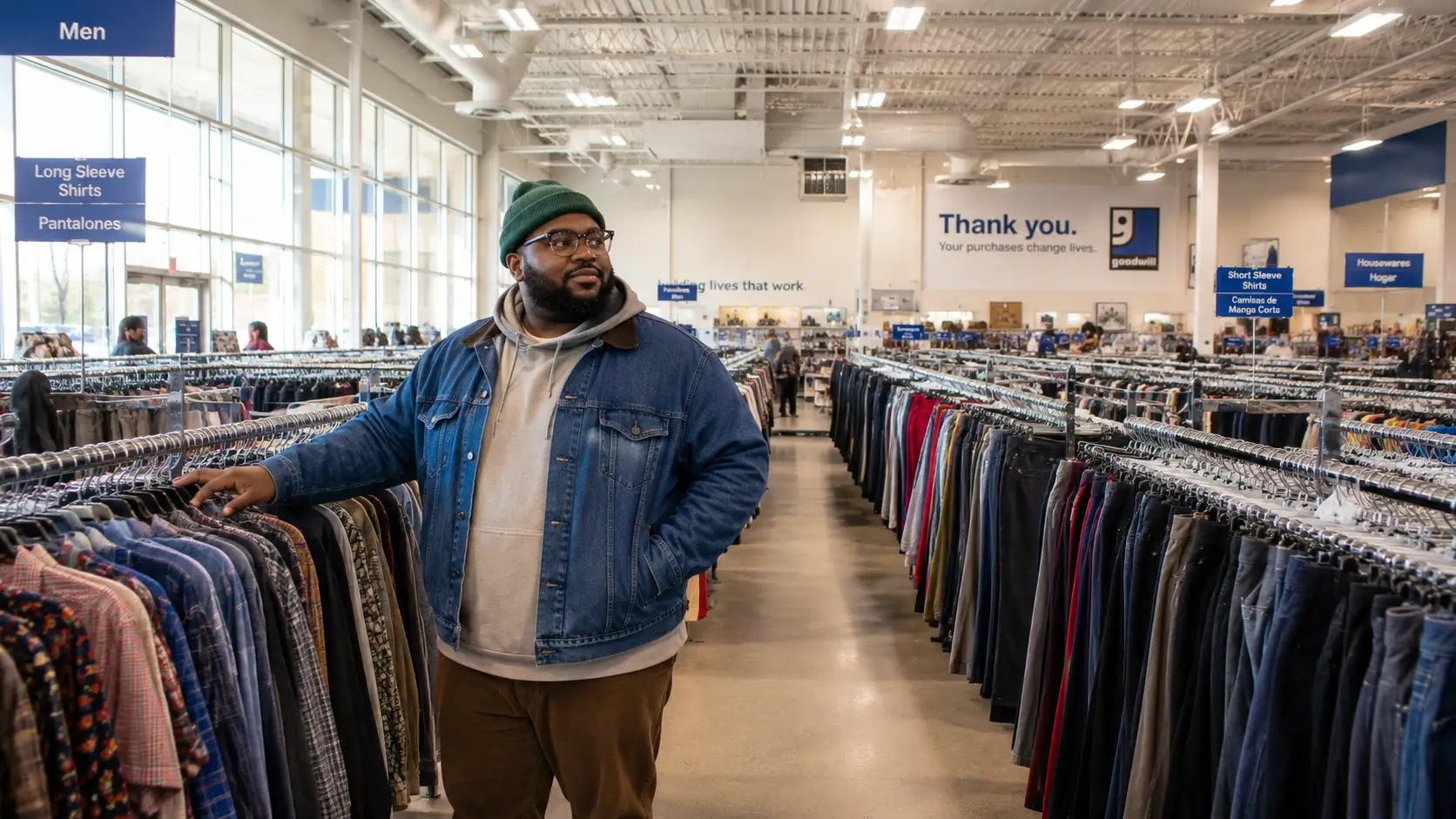
You probably see trendy downtown thrift shops on social media and assume they hold hidden treasures. Forget those traps. Hip boutique owners curate their racks specifically for skinny teenagers who want slightly baggy band shirts. Nothing fits us.
Most large men waste hours digging through these tiny city stores before giving up completely defeated. Change your strategy. Drive straight out toward affluent suburban neighborhoods where massive charity centers process thousands of daily donations.
Big guys live there. Wealthy older executives frequently donate high-quality suits and heavy winter coats after gaining extra body weight. Rich neighborhoods deliver. These massive suburban warehouses do not filter out extended sizes just because they look uncool.
Everything gets racked. Finding thick flannel shirts or wide corduroy pants happens much faster inside giant warehouse buildings. Volume beats curation. Estate sales offer another incredible goldmine for dudes needing wider shoulders and deeper chest measurements. Dead grandpas rule.
Families clearing out inherited homes usually sell off entire closets filled with generously cut vintage menswear. Classic brands breathe. Clothing manufactured before the year two thousand featured deeper armholes that accommodate thick biceps easily.
Heavy knit fabrics naturally drop straight down past your midsection instead of clinging awkwardly to rolls. Structure creates shape. Mapping out weekend routes toward sleepy towns entirely fixes the worst part of secondhand clothing hunts. Go find gold.
Scan the Store Like a Pro: Where the True Big-Boy Gems Hide
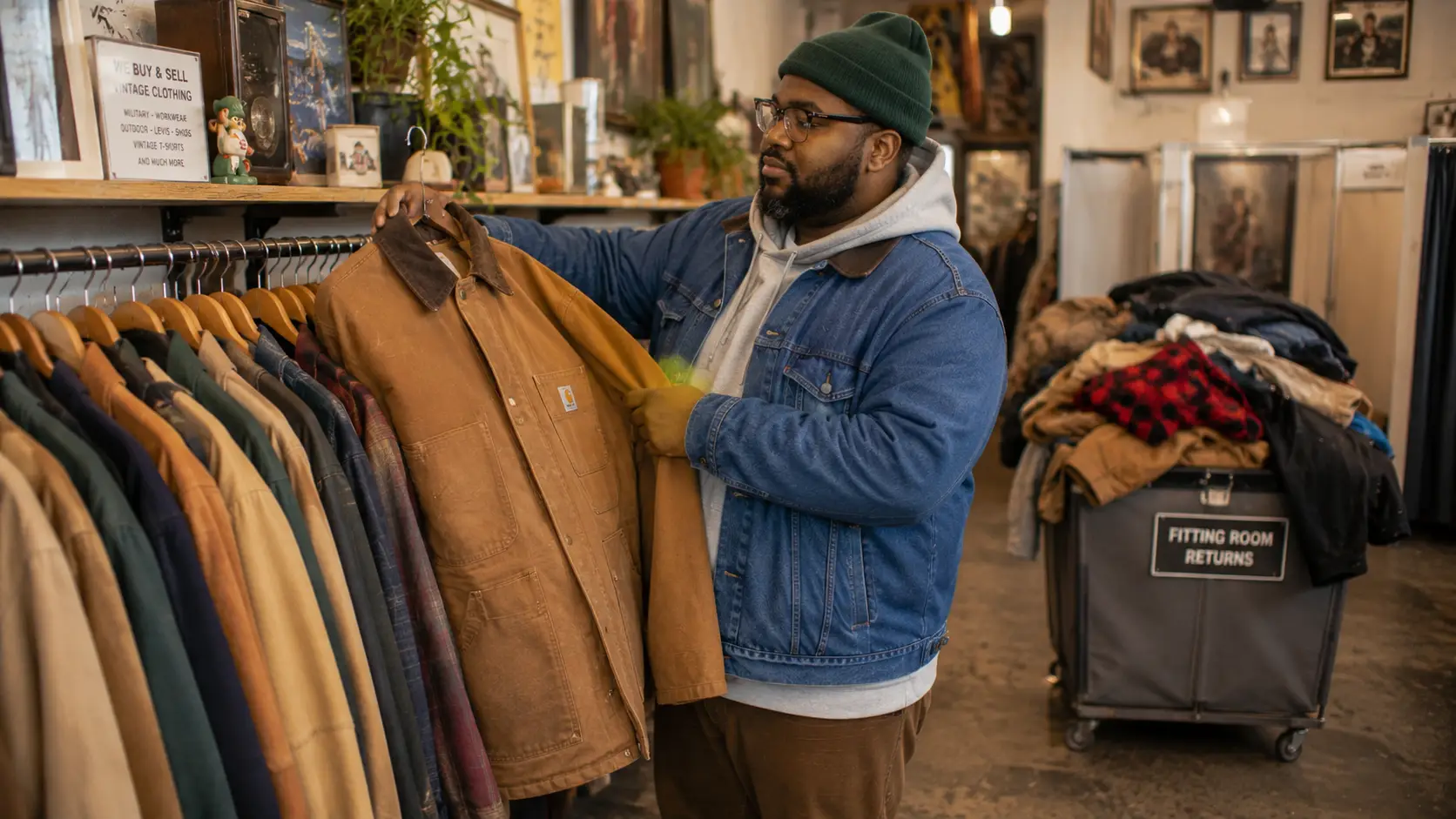
Most heavy guys waste their energy digging through tightly packed cotton shirts before feeling completely exhausted. Smart shoppers always map a vastly better route. Head directly toward the heavy coats and vintage outerwear section right away.
Winter clothing naturally features wider shoulders and much deeper armholes because bulky layers require extra interior room. Thick fabrics effortlessly hide round stomachs. Sturdy chore jackets drape straight down past your belt instead of clinging tightly to love handles.
Next, march bravely right into the ladies plus department. Guys usually ignore this area completely, missing out on massive heavy sweaters. Slouchy knit cardigans and oversized hoodies from these racks often function perfectly as genuinely comfortable unisex pieces.
Flowing materials soften your upper body shape. Nobody will ever know exactly where you found that amazing thick gray pullover. Finally, check the messy return carts. Skinny dudes frequently grab older extra-large flannels hoping for a trendy baggy fit, only to drown inside.
Those rejected items get dumped right near the fitting room doors. Skimming that single rack saves you from walking fifty different aisles searching for something wide enough. Go grab those abandoned gems.
Wandering aimlessly just leads to empty hands and sore feet. Strategic hunting completely changes your entire wardrobe.
Master the Tailor’s Test to Rescue “Almost Perfect” Fits
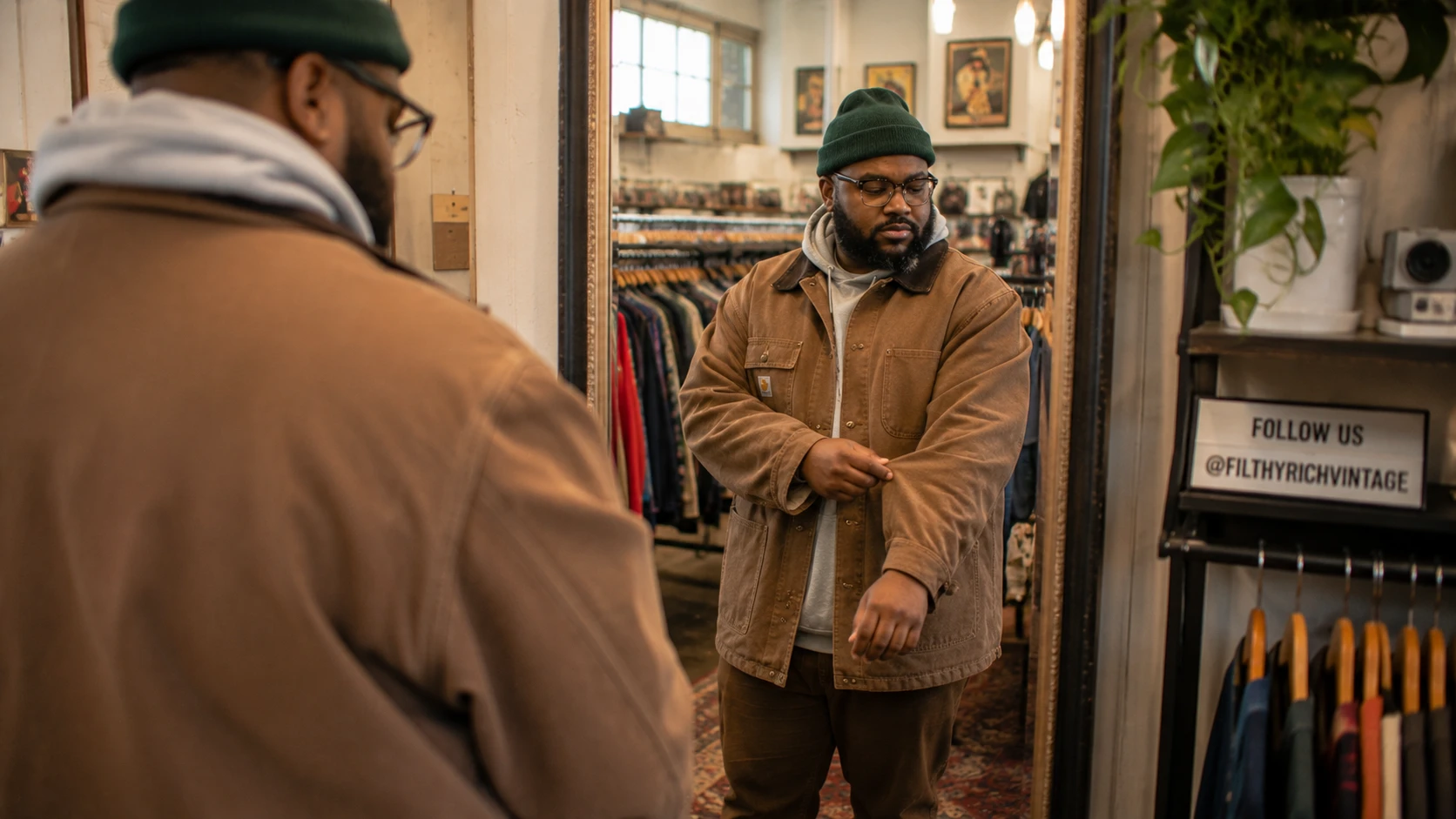
Most big guys demand a flawless fit straight from the dirty hanger, while smart shoppers happily buy slightly flawed garments to fix later.
Tailors solve minor clothing problems incredibly cheaply. Always buy tops specifically for your chest and broad shoulders. If the thick shoulder seam ends exactly at your natural bone, the jacket will drape smoothly over a heavy belly without stretching tight.
Everything else below that matters significantly less. Shortening long sleeves or chopping extra fabric off dragging pant legs costs very little money locally. Taking away length prevents baggy material from bunching heavily around your ankles, which instantly makes short, wide frames look much taller.
However, recognize impossible repairs immediately. Never purchase tight pants secretly hoping to stretch the waistline wider. Factory machines trim those inside seams extremely close to the stitching, leaving absolutely no extra hidden cloth for a seamstress to let out.
Too small means totally ruined. Learning this basic rule saves you from massive frustration. Suddenly, those almost-perfect thrift store finds transform into custom-fitted pieces that genuinely flatter a larger body. Go build your dream wardrobe bravely.
Arm Yourself with Hard Numbers (Because Vintage Tags Lie)
Vintage sizes, vanity sizing, and decades of fabric shrinkage mean that an XXL from 1994 will fit entirely differently than an XXL from 2024. If you trust the tag, you will end up taking home clothes that don’t fit.
Instead of relying on the label, take a soft measuring tape and measure the best-fitting shirt and pants you currently own. Keep those numbers in your phone, bring your tape measure to the store, and check the garments against this cheat sheet before you buy.
| What to Measure | How to Measure It on the Garment | Why It Matters Most |
| Chest (Pit-to-Pit) | Lay the shirt flat and measure straight across from the bottom of one armpit seam to the other. | This dictates how the shirt buttons over your stomach and chest without pulling or gaping. |
| Shoulders | Measure straight across the back from the top of one shoulder seam to the other. | If the shoulders droop too far down your arm, the garment will look sloppy rather than styled. |
| Pants Waist | Lay the pants flat, pull the top waistband taut, and measure straight across. Double that number. | Vintage denim has zero stretch. If this measurement is even an inch too small, you won’t be able to button them. |
| Inseam | Measure from the crotch seam down the inside of the pant leg to the hem. | This determines where the pants hit your shoes. Note: If this number is too long, it’s easily fixable. |
Master the Tailor’s Test to Rescue “Almost Perfect” Fits
As a bigger guy, you will often find pieces that fit your chest perfectly but drape like a tent everywhere else, or pants that fit your thighs but drag on the floor.
You don’t need a perfect fit off the rack—you just need to know what a tailor can easily fix versus what will completely ruin the garment. The golden rule is to always buy to fit the widest part of your body (shoulders, chest, or waist) because tailors can easily take fabric away, but they usually can’t add it.
| The Fit Issue | Can a Tailor Fix It? | The Verdict |
| Pants or sleeves are too long | Yes. This is the easiest and most common alteration. | Buy it. Hemming is incredibly cheap and fast. |
| Shirt or jacket is too boxy/wide | Yes. A tailor can take in the side seams or add darts to the back. | Buy it. This transforms a tent-like shirt into a custom-fitted piece for a low cost. |
| Pants waist is too tight | Usually No. Unless there is extra fabric left inside the back seam (rare in modern clothes). | Leave it. Never buy pants hoping to stretch them or let them out. |
| Jacket shoulders are too wide/tight | No. Reconstructing the shoulders requires taking the entire jacket apart. | Leave it. It will cost more than the garment is worth and rarely looks right. |

Hello there! I’m Jesse Joe, the author and editor behind SolganGenius. I’m thrilled you’ve stopped by, and I can’t wait to share with you the essence of what this platform is all about.
I’m a writer, social media enthusiast, and a firm believer in the power of words. I’ve always been fascinated by how a simple phrase or slogan can capture an emotion, convey a message, and even change perspectives. Learn More