
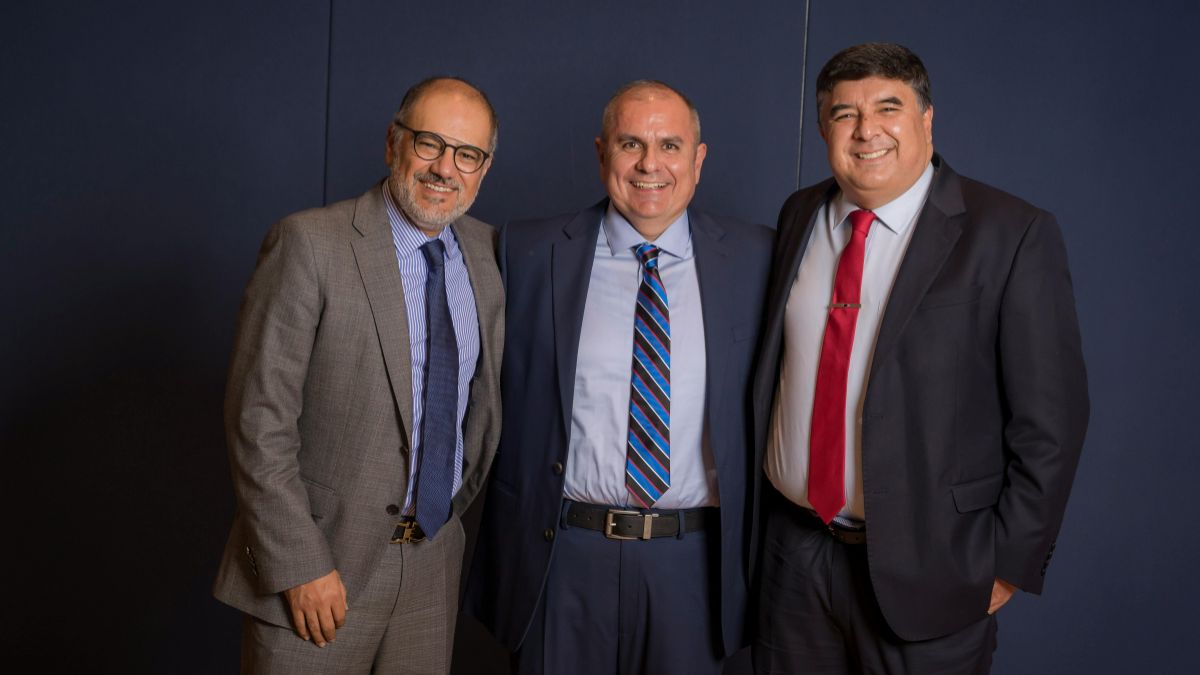
Most suits fail plus-size men before they even leave the rack. The chest fits barely and everything else is a negotiation you didn’t sign up for. Baggy through the back. Pulling at the button. Trousers that bunch at the seat before you’ve sat down once.
That’s not a body problem. It’s a construction problem.
Standard suits are built around proportions that don’t match a broader frame, and going up a size usually makes things worse more fabric in the wrong places, a longer jacket that shortens your legs, and the same gap at the button you were trying to avoid.
A suit can fit you well. Not “well enough.” Actually well. But it requires knowing exactly what to look for, what to ask a tailor, and where to find suits cut for your frame not scaled up from someone else’s.
The Suit Has Been Failing You Not the Other Way Around
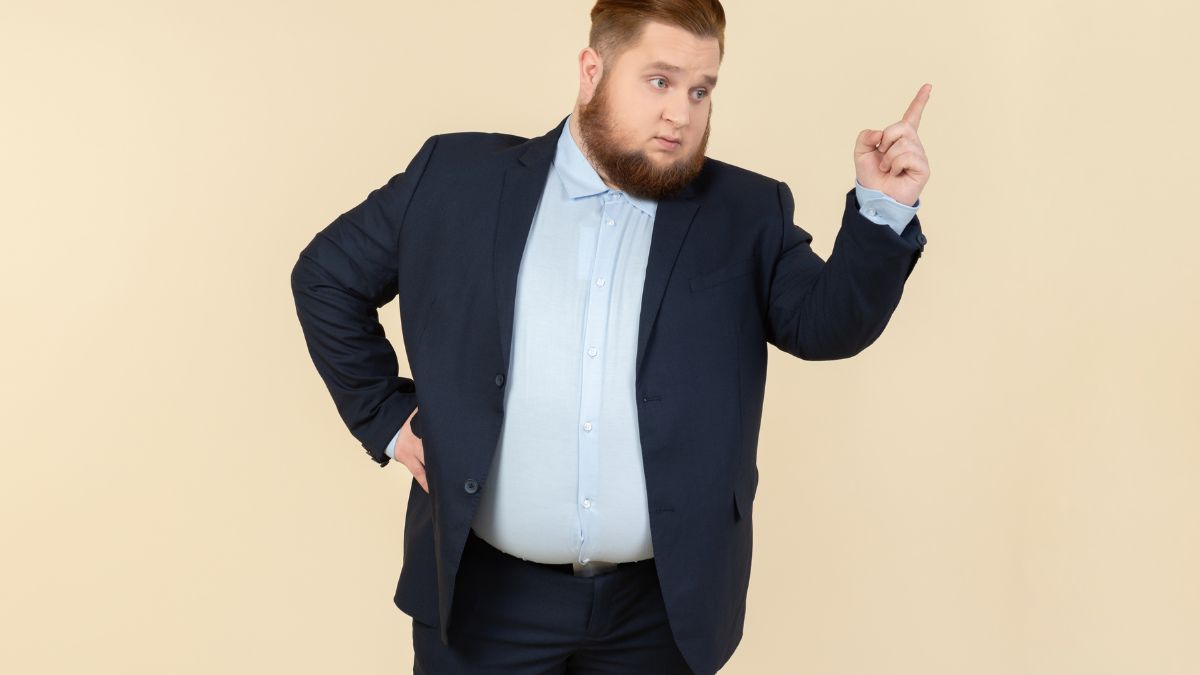
Going up a size feels like the obvious fix. Usually, it makes things worse.
Standard suits are drafted around a body with a specific chest-to-waist ratio a drop of roughly 6 inches between the two measurements. On a plus-size frame, that gap is often smaller, which means scaling a suit up doesn’t adjust the proportions to match your shape.
What you end up with is a jacket that’s close across the chest and then bags through the back, pools in the sleeves, and sits wrong at the shoulders all at once.
Loose fabric doesn’t read as comfortable. Sloppy is the word people reach for, and it gets attached to the man, not the jacket.
Four things are typically failing at the same time when a suit looks off on you:
- The chest-to-waist ratio is wrong for your shape the jacket’s suppression falls in the wrong spot, so fabric buckles instead of drapes
- Jacket length is too long sizing up adds length, shortening your leg line and making the silhouette wider
- Shoulder seams are sitting past your actual shoulder that’s the one fit point a tailor cannot correct, no matter how skilled they are
- Trouser rise is too low pulling across the thighs and bunching at the seat follow immediately
Suits are built on assumptions about shape. When your body doesn’t match those assumptions, the suit fails not you.
Four Measurements to Take Before You Touch a Suit Rack
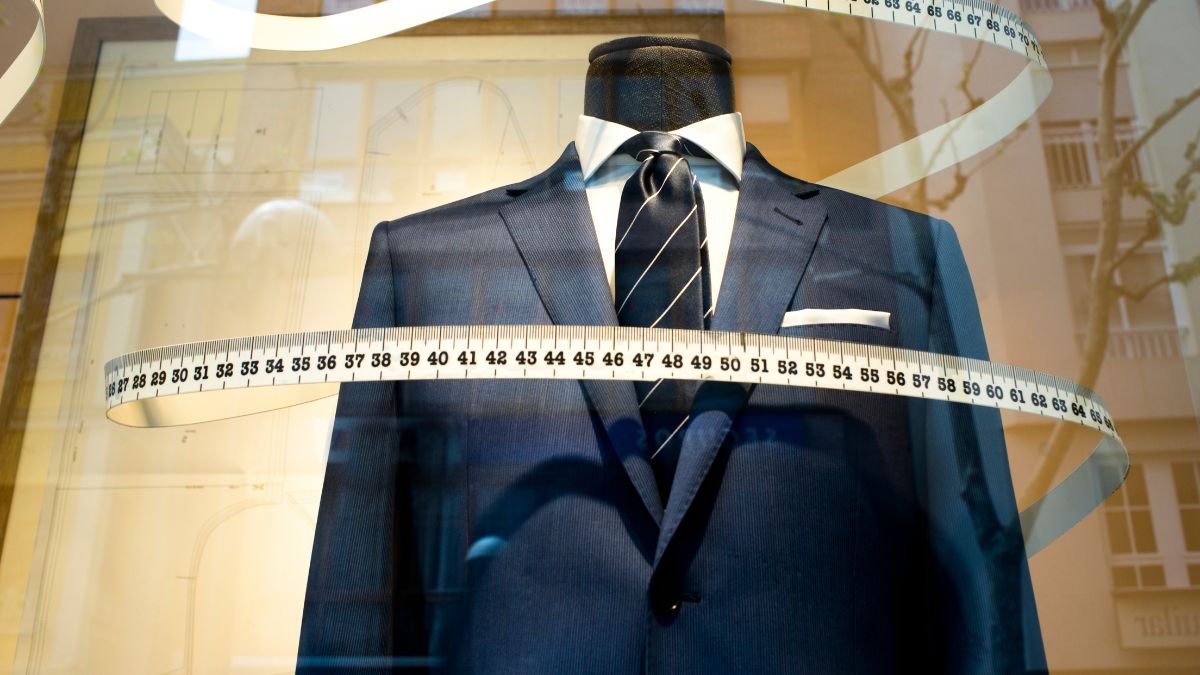
Most men walk in knowing two numbers. Neither is enough.
Chest and inseam don’t tell a salesperson or you whether the jacket will pull across the back, bunch at the seat, or restrict your thighs the moment you sit down. Taking four specific measurements before you go changes every conversation you’ll have in a fitting room.
Grab a soft tape measure and record these:
- High chest wrap the tape around the fullest part of your chest, directly under your arms and across your shoulder blades. Jacket sizes are built from this number, and it often reads differently than a measurement taken lower on the chest.
- Natural waist find the narrowest part of your torso, typically an inch or two above the navel, and measure there. This tells you how much a jacket needs adjusting at the waist it has nothing to do with trouser waist size.
- Seat circumference stand with feet together and measure around the fullest part of your hips and backside. Trouser fit through the seat is driven by this number alone.
- Thigh circumference measure around the fullest part of one thigh. A trouser can have enough room at the seat and still pull tight here.
Write these down. Bring them with you. When a jacket fits at the high chest but pulls at the waist, you’ll know that’s a construction issue not a sign you need to go up a size.
The Shoulder Seam Is the One Point a Tailor Cannot Fix Start There
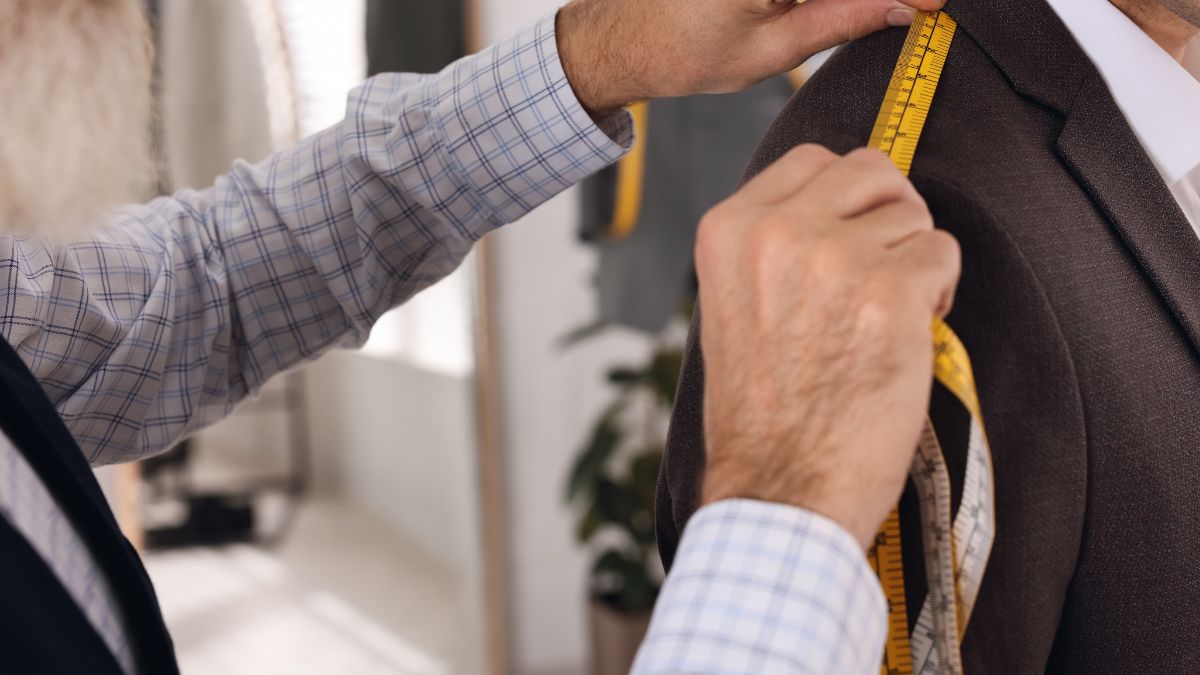
Tailors can take in the waist, shorten the sleeves, taper the trousers, and reshape the chest. Shoulders are the exception. Moving a shoulder seam means rebuilding the jacket from scratch — and that cost usually exceeds what the suit is worth.
This changes how you shop. Instead of buying for chest size and hoping the shoulders line up, you buy for the shoulder first and treat every other fit issue as something to correct afterward.
What a correctly placed shoulder seam looks like on your body:
- The seam sits at the edge of your shoulder bone run your finger along the top of your shoulder to find the natural endpoint; the seam should land exactly there, not hanging past your arm or pulling up toward your neck
- The sleeve falls straight from the shoulder diagonal creasing across the upper arm means the shoulder placement is off, not your arm shape
- The collar lays flat against the back of your neck a shoulder that’s too wide pulls the collar away from the neck, leaving a visible gap at the back
If the shoulder fits and nothing else does, that jacket is worth pursuing. Everything below that seam is fixable. Even one inch of extra width at the shoulder changes the entire silhouette the sleeve hangs wrong, the chest pulls forward, and no alteration downstream corrects it.
Jacket Length Is Silently Destroying Your Proportions and Most Plus-Size Men Wear It Two Inches Too Long
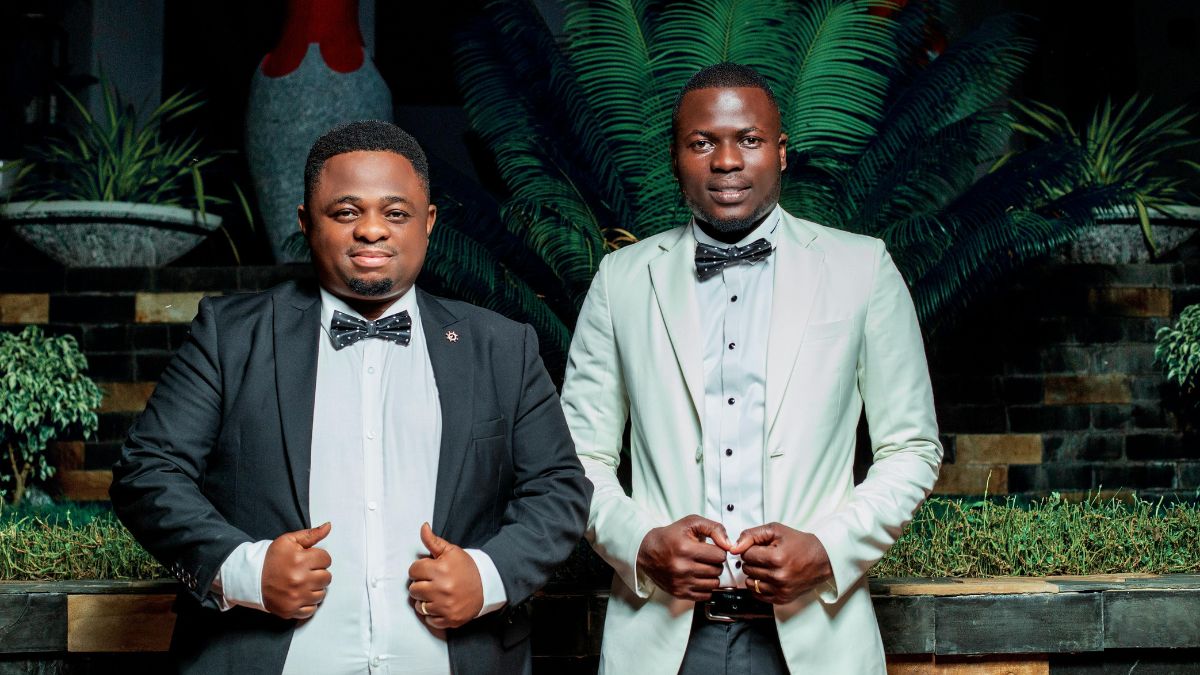
Longer feels like it covers more. It doesn’t.
A jacket hem that falls too low cuts your body at the widest visual point, shortens the leg line below it, and adds perceived bulk to your midsection. Going longer when a suit feels tight across the chest is one of the most common reasons a plus-size man ends up looking wider instead of sharper.
The correct rule is simple: when your arms hang relaxed and you curl your fingers, the hem should sit at your mid-knuckle not your fingertips, not your wrist.
Here’s what changes when the length is right:
- Your leg line gets longer even one extra inch of jacket hem eats into the visible trouser length below it, making you look shorter and wider at the same time
- Your waist shape shows a jacket that runs too long hides the natural taper through the middle, turning the entire silhouette into a straight column
- The fit reads as intentional correct length signals a suit chosen carefully; excess length signals the opposite
Check this in the fitting room right after the shoulder. Stand straight, arms relaxed, fingers lightly curled. Wrong length on an otherwise well-fitted jacket undoes every proportion point below it.
Trousers for Plus-Size Men Have Entirely Different Rules and No One Covers Them
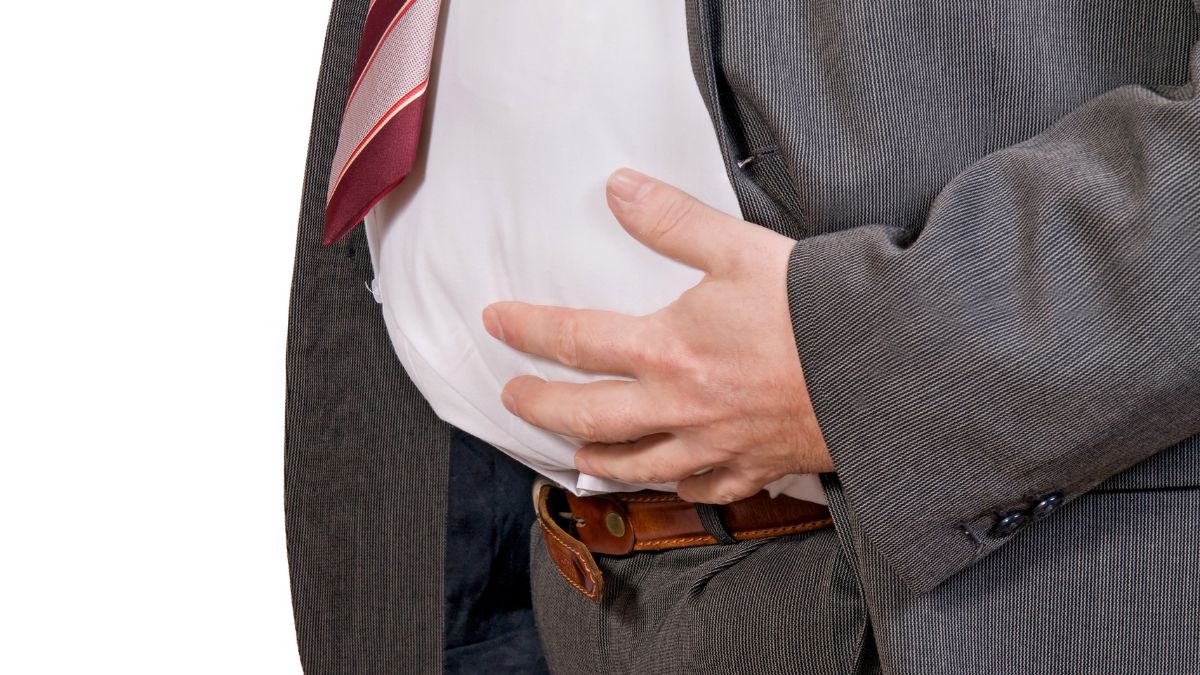
Most trouser problems on a plus-size frame have nothing to do with waist size. Rise, thigh room, and break length are doing the real damage. Almost no one adjusts them.
Low-rise trousers dominate most suit ranges. They’re the wrong choice for a plus-size frame the waistband lands right across the widest part of your midsection, creating pulling at the front and bunching at the seat before you’ve taken a single step. Mid-to-high rise puts the waistband above that point, distributes fabric more evenly, and removes both problems without needing to size up.
Three things to check before you leave the fitting room:
- Rise: aim for mid-to-high the waistband should sit at or just above your natural waist. Low rise on a plus-size frame creates visible pulling across the front and excess bunching at the seat, and neither goes away with wear.
- Thigh room: enough to stride, not enough to fold take one full step in the fitting room. Fabric pulling tight means too little room; deep vertical creases down the leg mean too much. A tailor adjusts in either direction.
- Break: one clean fold at the shoe the hem should touch the top of your shoe with a single, slight fold. More than that shortens your leg line the same way a too-long jacket does.
None of them require a bigger size. A tailor can correct all three from the right starting point.
What It Means When Your Jacket Gaps at the Button and Why Wearing It Open Isn’t the Fix
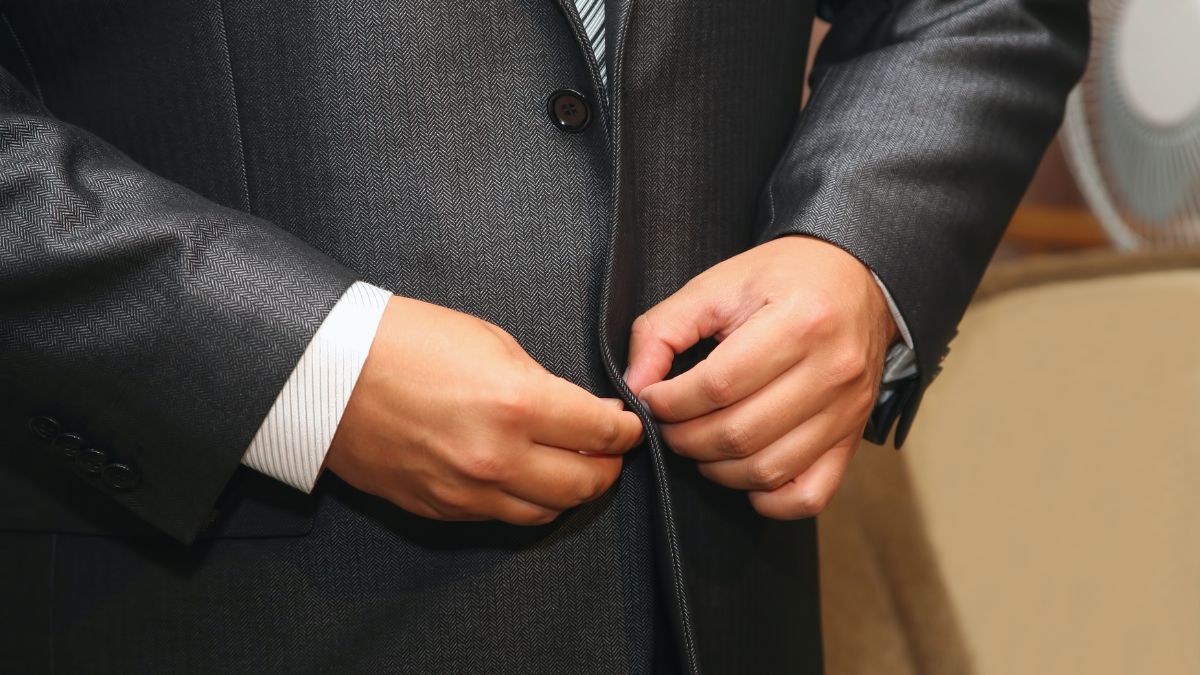
Gaping at the button is not a size problem. It’s a proportion problem.
When the button pulls or the front fans open, the jacket is narrowing too sharply from chest to waist for your frame. Sizing up doesn’t fix this. Going bigger adds chest room you don’t need while the inward taper stays proportionally the same.
Here’s what actually works:
- Look for a relaxed, comfort, or classic fit cut these labels mean the jacket has less aggressive tapering through the midsection and will drape more naturally on a fuller frame than a slim or tailored cut ever will
- Use the single-button rule on a two-button jacket, fasten only the top button; one button sitting at the natural waist works with your shape rather than pulling across the widest point of your midsection
- Choose a center or double vent at the back both allow fabric to move and fall correctly when you stand, sit, and walk; a no-vent jacket traps fabric and makes pulling at the button worse
Wearing the jacket open is a style choice only when you’ve made it deliberately. Clean drape and correct length reads as intentional. An open jacket hiding a gap reads differently. People notice more than you think.
Before buying, ask a tailor how much the waist seam can be let out. Most jackets have limited seam allowance there if it isn’t enough, the jacket cannot be fixed, and knowing that before you pay matters.
The Four Alterations to Request Before the Suit Leaves the Shop
Budget for alterations when you budget for the suit. They are not optional. On a plus-size frame, alterations are the difference between a suit that looks bought and one that looks built for you plan on adding $80–$150 to the cost of any off-the-rack purchase.
Four specific requests to make before the suit leaves the shop:
- Side seam suppression on the jacket ask the tailor to “take in the side seams” to reduce excess fabric through the back and sides. This shapes the jacket to your torso without touching the chest or shoulders. Budget $30–$60.
- Seat adjustment on the trousers say “let out the seat” if the trousers pull across the backside, or “take in the seat” if fabric bunches there. This single alteration changes how the entire bottom half of the suit reads. Budget $20–$40.
- Sleeve shortening sleeves on off-the-rack suits almost always run long. Ask to shorten them so roughly half an inch of shirt cuff shows below the jacket sleeve. Cost: $15–$30.
- Trouser taper from the knee down request this specifically as “taper the leg from the knee,” which removes excess fabric below the thigh without touching the seat or thigh room you’ve already confirmed. Budget $20–$40.
Ask for all four at once. Grouping them with one tailor on one visit usually reduces the total cost and gives the tailor a clearer picture of how the suit needs to move as a whole.
Using this language tells a tailor you know what you want. Vague requests get vague results. Specific ones get a suit that actually fits.
Where Plus-Size Men Actually Find Suits Cut for Their Frame Not Just Scaled Up
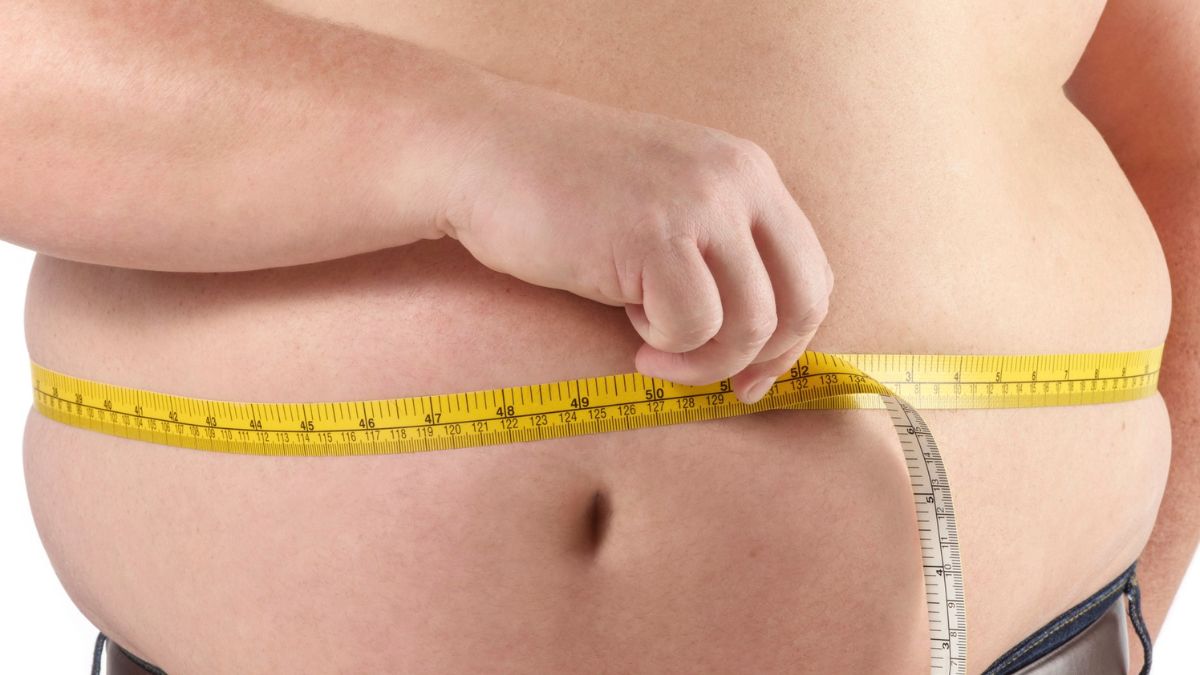
“Big & tall” on a label means the suit was made in your size. Most aren’t cut for your proportions. That distinction determines whether you leave wearing a suit that reads as intentional or one that spends most of its life in a garment bag.
Three categories worth knowing:
- Destination XL (DXL) one of the few retailers that specifically designs garments around a larger body block rather than scaling up a standard pattern. Their suit separates allow you to size the jacket and trousers independently, which directly solves the chest-to-waist mismatch that causes most fit problems. Mid-range price point.
- Men’s Wearhouse big & tall wide selection with in-store tailoring available on the same visit. Apply the shoulder test before committing some cuts in their range are proportional scale-ups; others are built around broader proportions. Mid-range.
- Made-to-measure services (Indochino is the most accessible entry point) you submit your measurements and the suit is cut to your exact numbers, removing most fit problems before they start. Price sits above basic off-the-rack but comparable to mid-range once you factor in the alteration cost you won’t be paying on top.
Skip any big & tall section where jackets and trousers can only be bought as a set that assumes matching proportions that may not be yours.
Find a suit that fits at the shoulder and can be altered everywhere else. If the store handles both in one visit, that’s where you buy.

Hello there! I’m Jesse Joe, the author and editor behind SolganGenius. I’m thrilled you’ve stopped by, and I can’t wait to share with you the essence of what this platform is all about.
I’m a writer, social media enthusiast, and a firm believer in the power of words. I’ve always been fascinated by how a simple phrase or slogan can capture an emotion, convey a message, and even change perspectives. Learn More