
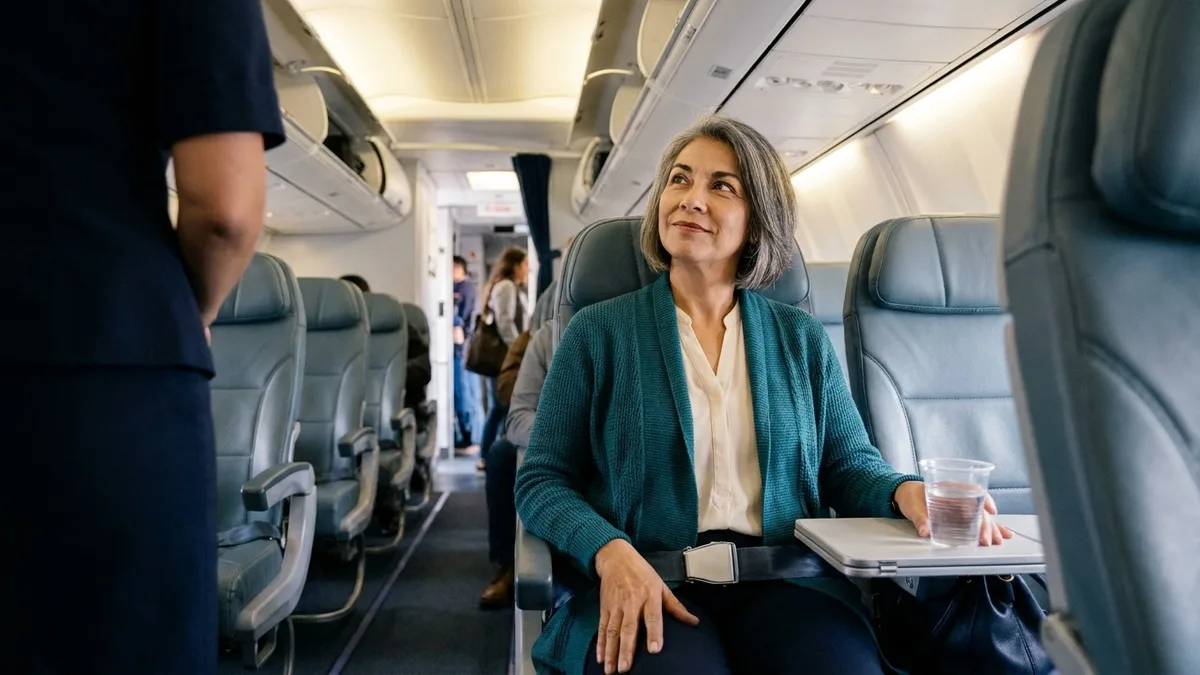
Cabin crew watch the same thing on every single flight: a traveler in their sixties or seventies wrestling a 20 lb carry-on into an overhead bin that was clearly designed by someone who has never had a shoulder replacement. Nobody offers. Nobody asks. The bag goes up anyway, and the rotator cuff pays for it.
Here is the part that stings. Most of the help, the early boarding and the extra legroom already exist, written into federal rules and standard airline practice. The crew simply cannot hand it out uninvited. They are waiting for one calm sentence at the right moment, and most passengers never say it.
This list is those sentences. Ten of them, in the order you will need them, from the jet bridge to 35,000 feet. Each one is short enough to memorize, and none of them requires paperwork, a diagnosis or an argument at the gate.
Bold the ones that fit your next trip and keep them in your phone. That is the whole system.
At a Glance
1. Bag Help Is Required, So Ask Early
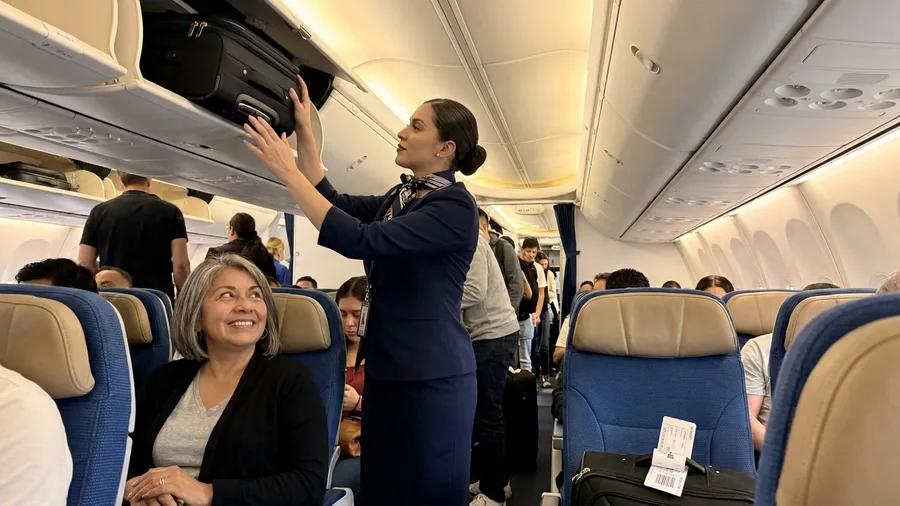
That last seat choice only pays off if your bag actually makes it into the bin, so start with the part of boarding that trips up more shoulders than any other. And no, the help with your bag is not a favor anyone is doing you.
Under the Air Carrier Access Act, crew are required to help any passenger who cannot lift a bag because of a disability or a physical limitation. A torn shoulder or an arthritic grip at 68 counts. For a clearer picture of the quiet physical shifts that arrive with age, see the silent changes after seventy. It does not need to be visible, and it does not need a doctor's letter. Here is what actually happens instead: you board, drag the bag down the aisle, reach up, and wrench something. Crew see it daily, and they told me plainly that they are waiting to be asked. They will not rush over uninvited while the boarding clock is running and the aisle is filling behind you, and most passengers wave them off before the offer even lands.
The phrase is seven words: "I could use some help with my bag, please." Say it as you step through the door, before you reach your row, with the bag tag in hand.
Crew already moving through the cabin can carry it straight to your bin instead of squeezing past a line backed up to row 37. Timing is the whole trick, because a request at the door costs them five seconds and a request mid-aisle costs everyone a minute.
Do not apologize and do not explain your knee. This is part of the job description, and crew genuinely prefer being asked early to being flagged down mid-aisle.
A realistic example: a 20 lb roller with a laptop and two days of clothes. Lift it yourself and you risk a week of ice packs. Hand it over at the door and you walk to your seat with both hands free.
💡 Tip: Have the bag tag facing out and your seat number ready. Crew can then take it to the right bin on their way forward.
💡 PRO TIP
Ask at the door, not at row 22
The aisle is narrowest and busiest during boarding. A request made at the aircraft door takes five seconds; the same request at row 22 means crew squeezing backward past a queue with your bag.
2. Aisle Armrests Have a Hidden Release
So the bag is stowed. Now what do you do about the armrest that seems welded across your lap?
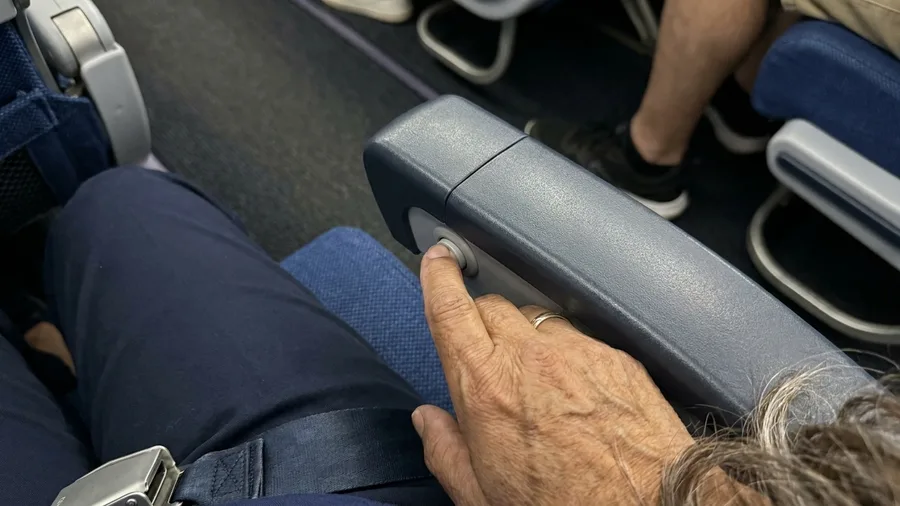
Nearly every aisle seat has a release button or lever tucked under the back edge of the aisle-side armrest, right where it joins the seat. Press it, lift, and the whole armrest swings up and back out of your path. Crew learn this in their first week of training, and on a Boeing 737 or an Airbus A320 it lifts clear and gives you an open route to the aisle instead of a fixed bar at hip height. With a hip replacement or stiff knees, that difference is the whole flight.
If your fingers cannot find it, ask: "Can you show me how to move the aisle armrest?" You will get a demonstration, not a sigh. One catch: do it before takeoff and put it back down for landing, when the cabin has to be secure.
Boarding comfort, from foundation up
Fix the basics first; the extras only help once these are in place
3. Pre-Boarding Needs One Sentence, Not Proof
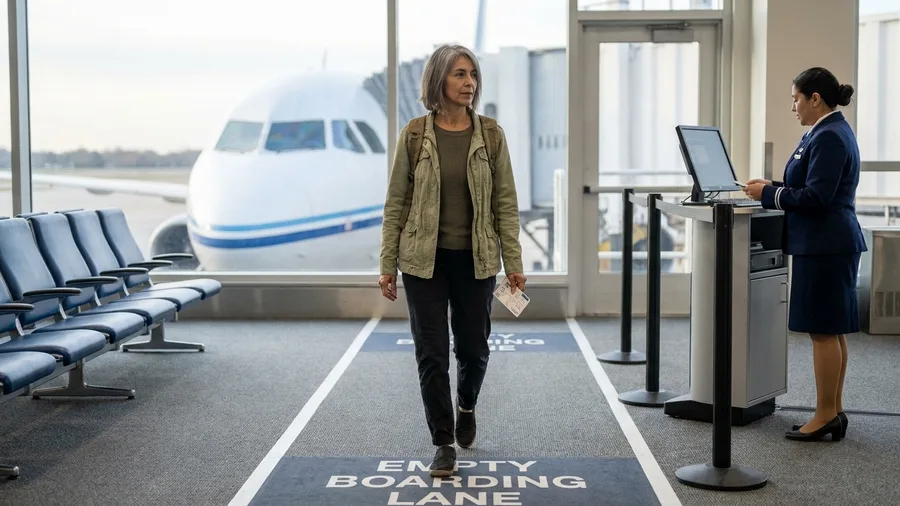
Pre-boarding is not reserved for wheelchair users and families with strollers, whatever the announcements imply. Any passenger who needs extra time to board because of a disability, a mobility concern, or simply needing space to settle safely can board before general boarding begins.
There is no form, no diagnosis and no documentation. You self-identify to the gate agent before boarding starts. The sentence is: "I need extra time to board today." That is the entire process, and a travel companion may pre-board with you under federal policy.
Airlines keep it quiet for an obvious reason: announce it openly and the pre-boarding line would reach the parking garage. So the knowledge stays with the people who ask.
Say it calmly, without explaining your knees or your hip, and walk onto a nearly empty plane. You stow the bag, find the seat, and watch the rest of the scrum from a comfortable chair.
| Situation | What to say | When to say it |
|---|---|---|
| Heavy carry-on | "I could use some help with my bag, please." | As you step onto the plane |
| Need more time | "I need extra time to board today." | To the gate agent before boarding starts |
| Aisle armrest stuck | "Can you show me how to move the aisle armrest?" | Before takeoff, once seated |
| Medication on board | "I have some medications I wanted you to know about in case anything comes up." | As you settle into your seat |
| Water with a pill | "I take medication with meals. Is there any chance I could get a glass of water once we reach cruising altitude before the cart starts?" | During boarding, near the galley |
| Personal safety walk-through | "I'd like to request an individual safety briefing before we depart, please." | After you are seated |
4. Front Economy Lavatory Is Usually Least Crowded
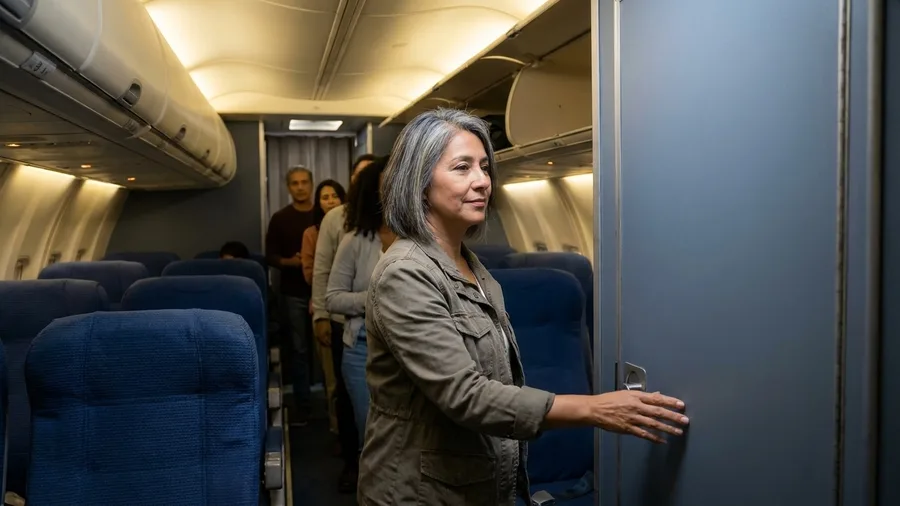
Settling in early also means you can pick your moment for the lavatory instead of joining the stampede. The assumption most passengers carry is that the lavatory at the front of economy belongs to business class. It does not.
It is not reserved, you can use it, and because everyone else trudges to the back out of habit, it is often free when the rear ones have a four-person queue. Timing matters as much as location. The first 30 minutes after the seatbelt sign goes off is the worst window on the whole flight: everyone moves at once and the aisle becomes a traffic jam.
Aim for roughly 45 to 90 minutes in, after the first rush and before the meal cart blocks the aisle entirely. As you board, ask quietly: "Which lavatory would you recommend during the flight?" Crew appreciate a reasonable question and give you a straight answer.
On a long flight that one habit can save you twenty minutes of standing in a swaying line, which is its own kind of strain on a bad knee.
⚠️ COMMON MISTAKE
Do not wait for the cart to reach you
Many medications need food or a full glass of water. If you wait for the cart to work its way to row 28, that window can pass or you end up swallowing a pill dry. Plan the water before you need it.
5. Keep Medications in the Bag Under Your Seat
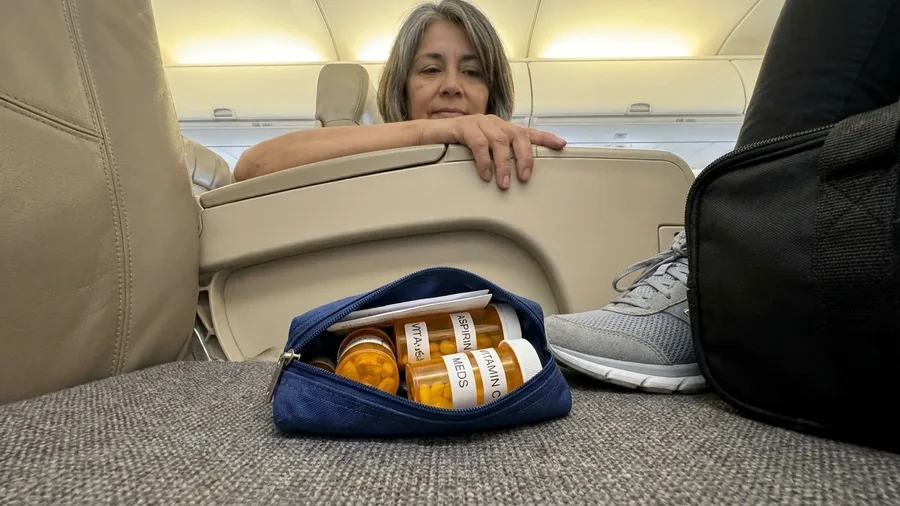
On the way back to your seat from that lavatory, the one bag you never want to be separated from is the small one. Picture the moment that makes this point matter.
Somewhere over the Midwest a passenger feels a familiar tightness in the chest, needs their nitroglycerin, and the bag with the nitroglycerin is in an overhead bin four rows behind because the bin above their seat was already full. Now a crew member is climbing over people in a moving aircraft to find it.
That scene is preventable every single time. Pack a dedicated zip pouch with all your prescriptions, your doctor's contact information, a written list of your conditions, and any emergency device such as a nitroglycerin tablet or an EpiPen. It goes in the personal item under the seat in front of you, not in the carry-on and not in checked luggage.
When you sit down, flag it quietly: "I have some medications I wanted you to know about in case anything comes up." You do not list your medical history. You just say where the bag is and which seat you are in, for example seat 24B.
Crew log that mentally, and you have made yourself far safer for the cost of one sentence.
6. Seat Swaps Are Possible After the Door Closes
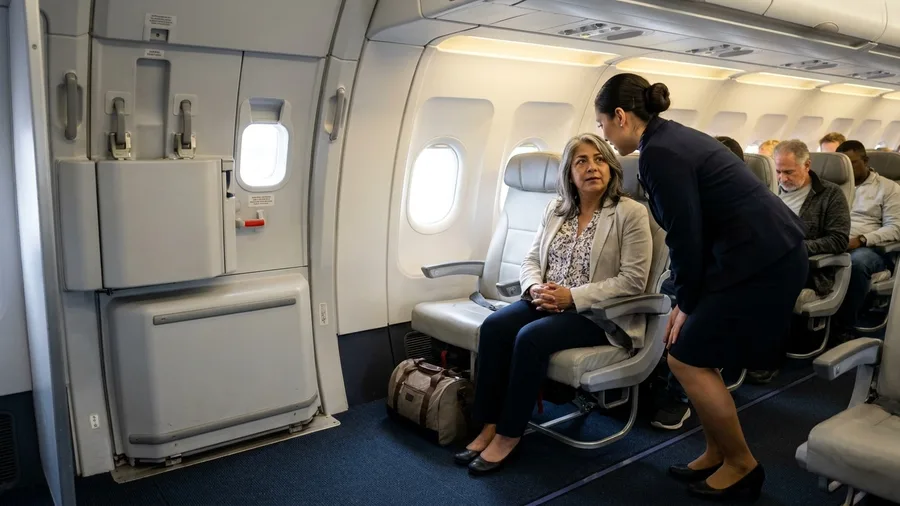
Once the cabin door closes, their authority ends and the crew's begins, and that's when seats open up that no app or service desk could touch.
No-shows happen on nearly every flight, and last-minute upgrades leave economy seats empty. After the headcount, the crew know exactly which seats are free, so timing is the whole trick here. Wait until boarding is finished and the door is shut.
Then keep it calm and specific: "I have some discomfort in my current seat due to a mobility issue. If anything opened up with more legroom or aisle access, I would really appreciate it." Don't order a seat off a menu, don't demand, and don't mention that you've been flying since 1972.
It's a request, not a guarantee, and your tone decides it. The passengers who get moved are those with the courtesy to ask at the right moment.
7. Crew Only Knows Conditions You Flagged
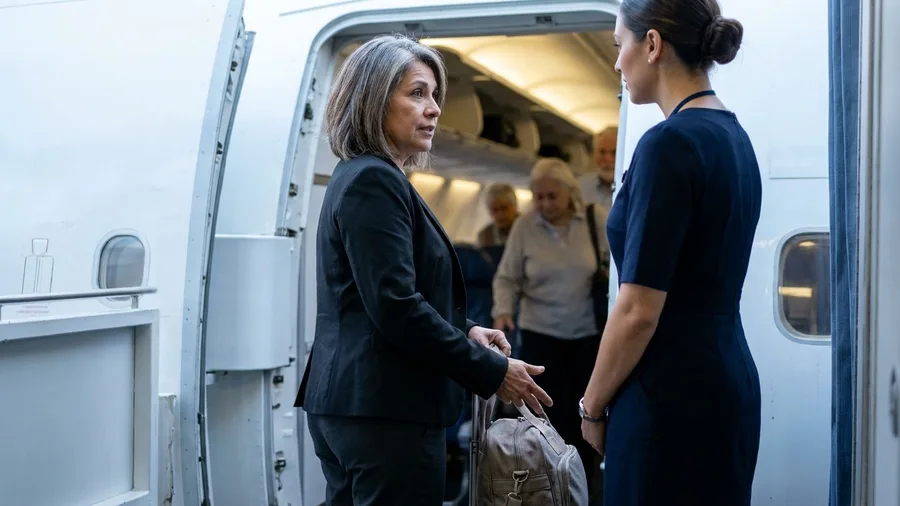
Picture the moment someone feels faint halfway over the Atlantic, and the nearest crew member has no idea what's going on in that row.
Every crew gets a briefing before boarding, and it includes passengers who flagged medical conditions, assistance needs or special considerations when they booked. If you never flagged anything, you're not on that list.
That gap matters at altitude. Crew are trained in CPR, AED use and emergency medical response, and every commercial aircraft carries the equipment. That training works best when they already know who on board has a heart condition, a severe allergy, insulin-dependent diabetes or needs supplemental oxygen. The proper route is at booking, through the airline's accessibility desk, so it reaches that briefing.
If you missed that step, use the eight-second version as you board: "I have a heart condition, and my medication is in my personal item under seat 24B." That's the whole thing. It creates awareness, not panic.
And if a second crew member greets you at the door, say it again. They'd rather hear it twice than not at all.
Who Knows What, and When
📞 At booking
Ask for the accessibility desk by name
🗒️ Crew briefing
Read before the door opens
🚪 At the door
Say condition, then seat and pouch location
💺 Under the seat
Pouch at your feet, not in the overhead
🫀 Conditions crew track
Heart, severe allergy, insulin diabetes, oxygen
The gap
If your condition is not on the briefing sheet, crew only learns it when you speak up, so tell each new crew member who greets you.
8. Ask for Water Before the Cart Starts
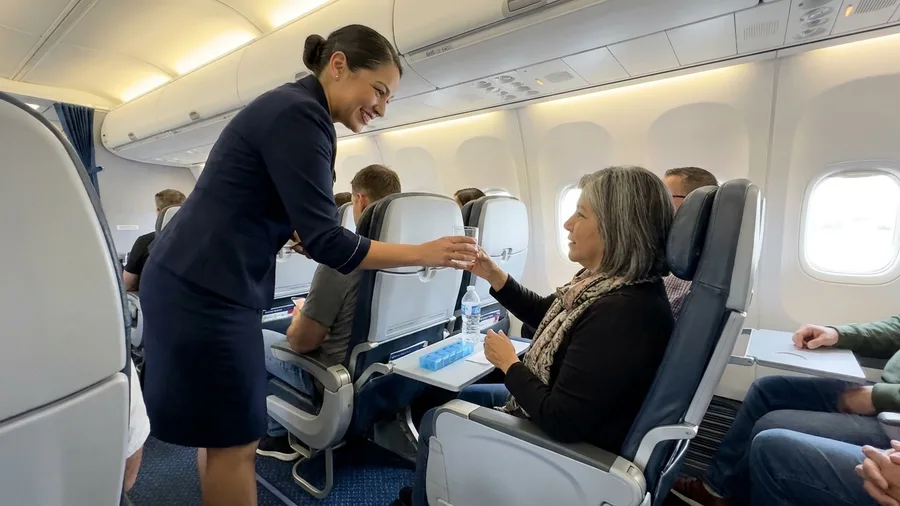
Unlike the seat swap, which waits for the door to close, this one has to happen while you're still walking down the aisle. The drink cart always starts at the front, so a seat toward the back waits longest, sometimes 40 minutes or more on a full flight.
If a pill has to go down with food or a full glass of water, that wait breaks the schedule you keep at home. Make the request during boarding: "I take medication with meals. Is there any chance I could get a glass of water once we reach cruising altitude before the cart starts?" Crew usually bring it within minutes of the seatbelt sign going off.
On flights over 2 hours, order a special meal online at least 24 hours before departure. Low sodium, diabetic-friendly and heart-healthy meals come off the cart first, before row 10 is served.
💡 Tip: Keep a small empty bottle in your personal item and ask crew to fill it once cruising, so you are not rationing sips.
🌱 GROWING TIP
Order the meal before you pack
Special meals need at least 24 hours' notice online and cost nothing extra. Put a reminder in your phone the day you book, while the confirmation email is still open.
9. Exit Row Is a Legal Job, Not Just Legroom
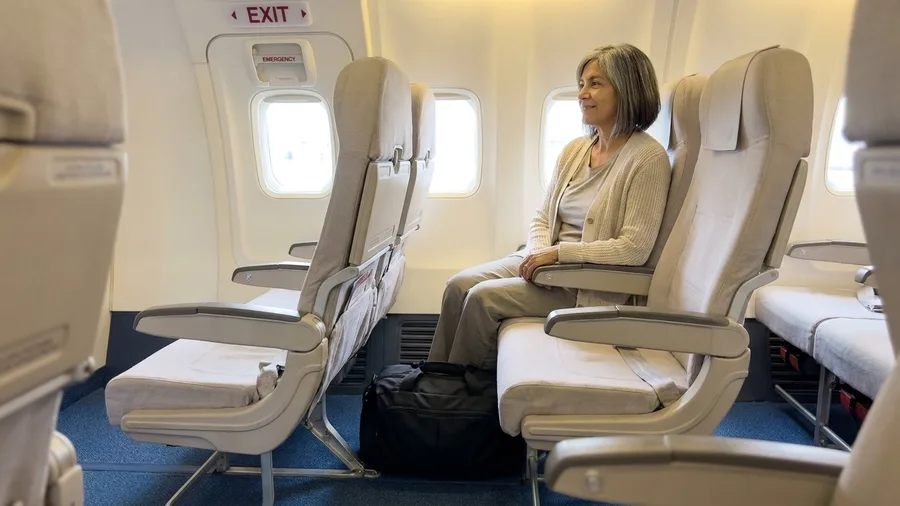
That extra-legroom seat you were eyeing for stiff knees comes with a contract most passengers never read. Sitting in an exit row means you agree that in an evacuation you can operate the exit, lift a door that weighs up to 60 lb on some aircraft, direct other passengers and assist without waiting for crew instructions.
Crew verify this verbally with every exit-row passenger: "Are you willing and able to assist in an emergency?" The answer is yes or no, and plenty of travelers say yes out of habit just to keep the seat. If someone clearly has mobility limits, a crew member has both the authority and the duty to move them before the door closes. That's federal safety compliance, not discrimination.
The better seat, and the one crew named without exception, is the row directly behind the exit row. On most aircraft it still has extra legroom, because the exit-row seats in front don't recline.
You get the space without the obligation.
Every right on this list exists because someone decided your safety in the air was worth writing into law.
— What veteran crew keep saying
10. Request a One-on-One Safety Briefing
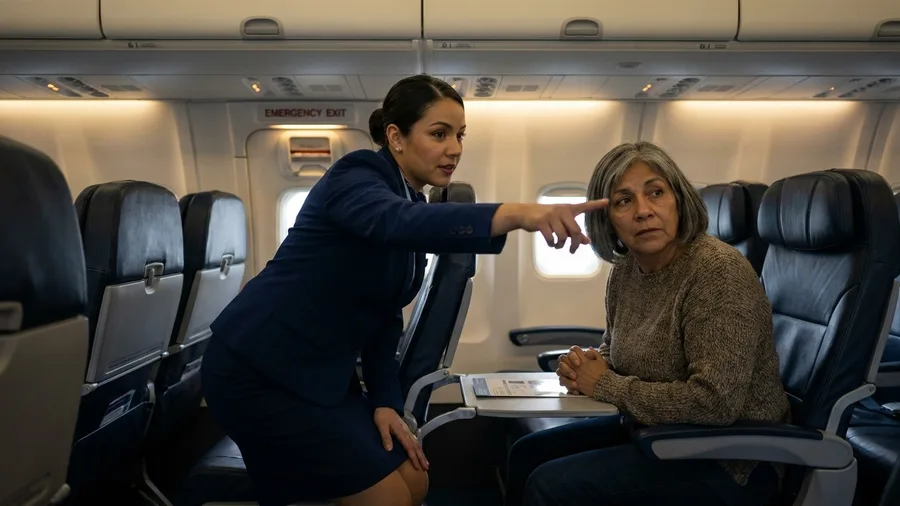
And because that safety question leaves some people quietly unsure, there's a backup that almost nobody uses. Ask for the briefing and you trigger a protocol, not a favor. Under FAA rules, every major US airline must give an individual safety briefing to any passenger who requests one, delivered privately before the aircraft moves.
The request is exactly this: "I'd like to request an individual safety briefing before we depart, please." A crew member comes to your seat, kneels to your level, and walks through the exit nearest you and whether you could manage it, fitting the oxygen mask if your hands have limited dexterity, what the crew do in a medical situation, and the question you've carried for years without asking in front of a full cabin.
One former flight attendant with more than 30 years on international routes had given it fewer than 20 times. Not because nobody needed it, but because nobody asked.
Do These Rights Apply on International Flights?
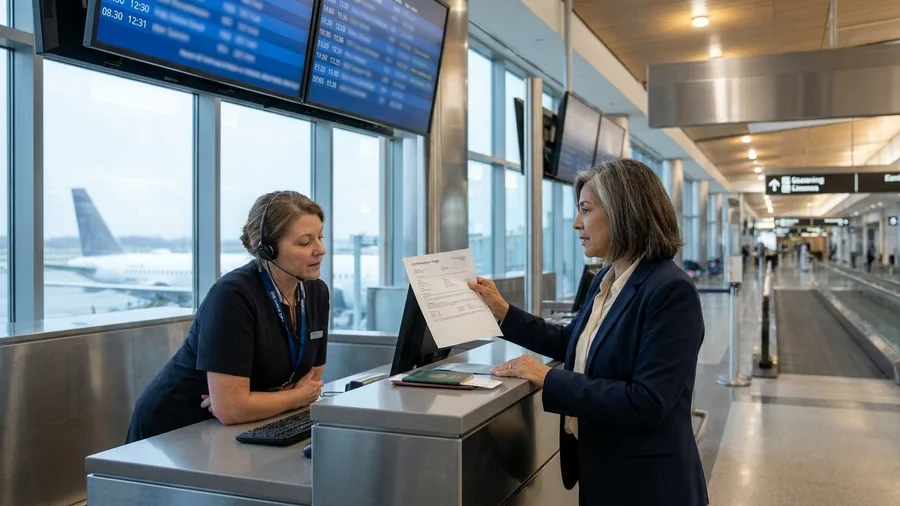
Everything so far rests on one condition: the flight touches the United States. The bag-help rule, the pre-boarding right, the individual safety briefing, all of it comes from US accessibility law covering flights to, from or within the country. Step onto a foreign carrier leaving another country and the crew may be just as kind, but the legal duty behind that kindness can look different.
So before you fly, call the operating airline's accessibility desk. Not the booking site, not the travel agent, the airline actually flying the plane, because on a codeshare that may not be the name printed on your ticket.
Ask three plain questions. What boarding assistance do you provide? Can I pre-board? Will someone brief me one-on-one before departure? Write down the answers, or at least the agent's name and the date you called.
If your departure airport sits outside the US, check the local aviation authority's passenger-rights page too. It tells you what that country requires, which may be more or less than you would get at home.
One last catch: don't assume the US phrases carry over word for word. Say the same calm request at the gate, then confirm with the crew as you board that what you were promised is what actually happens.
Frequently Asked Questions
Can I ask for bag help if I do not use a wheelchair or cane?
Yes. The Air Carrier Access Act covers any passenger who cannot lift a bag because of a disability or physical limitation, and a bad shoulder or arthritic hands count. Say "I could use some help with my bag, please" as you step on board, before you reach your row.
Will asking to pre-board make me look like I am jumping the queue?
No. Needing extra time to board and settle is a recognized reason to pre-board, and no documentation is required. Say it calmly to the gate agent before boarding begins, and your companion can board with you.
What if the crew says there is no room to change my seat?
Accept it gracefully. A seat change after the door closes is a request, not a guarantee, and it depends on no-shows and last-minute upgrades. Calm tone is what gets passengers moved, and the crew remember the ones who ask reasonably.
Do I have to tell the airline my whole medical history?
No. At booking you disclose the relevant condition to the accessibility desk so it reaches the crew briefing. On board, one sentence naming the condition and where your medication sits is enough.
Is the individual safety briefing really available on every US flight?
Major US airlines operating under FAA rules are required to provide one to any passenger who requests it, delivered privately before departure. Ask after you are seated with: "I'd like to request an individual safety briefing before we depart, please."
Save the Sentences, Not the Whole List
You will not use all ten on one trip, and you do not need to. Pick the two or three that fit this flight: bag help and pre-boarding if either applies, the medication flag if you travel with prescriptions, the water request if a pill has to go with food.
Then save the exact wording in your phone notes. Not a summary, the sentences themselves, so you can read them at the gate without composing anything under pressure.
Ask at the gate or as you board, calmly, once. Crew cannot volunteer help to everyone, but they answer every time someone asks, and now you know what to say.

Hello there! I’m Jesse Joe, the author and editor behind SolganGenius. I’m thrilled you’ve stopped by, and I can’t wait to share with you the essence of what this platform is all about.
I’m a writer, social media enthusiast, and a firm believer in the power of words. I’ve always been fascinated by how a simple phrase or slogan can capture an emotion, convey a message, and even change perspectives. Learn More