
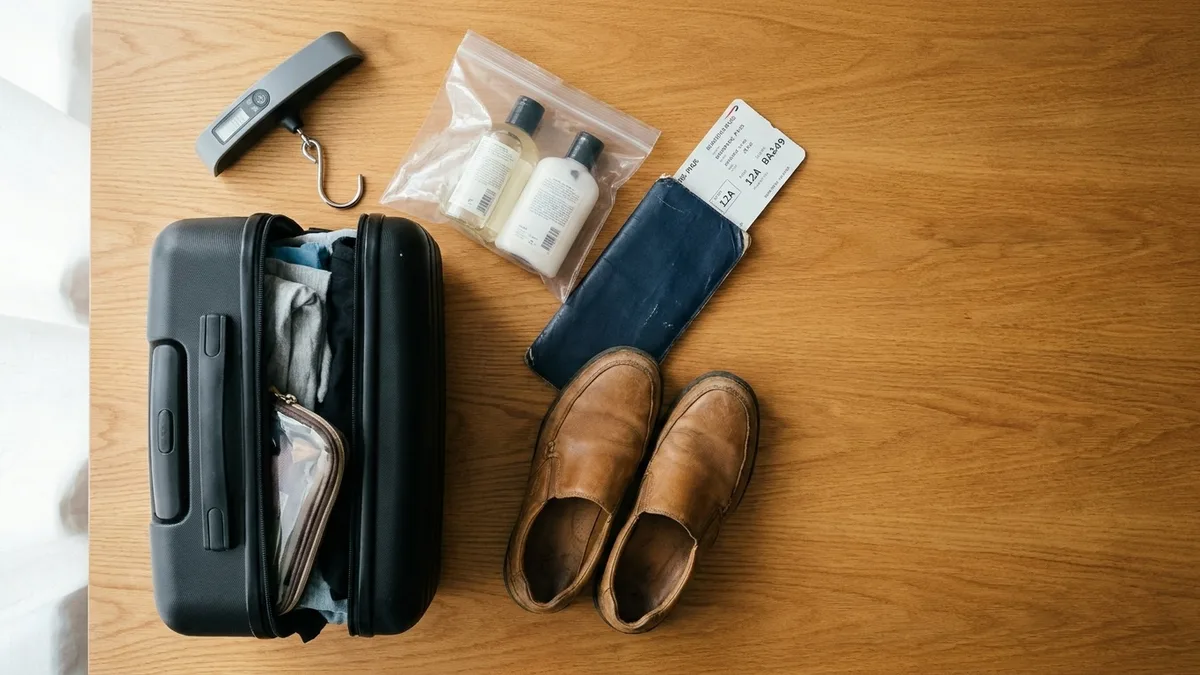
A Phoenix woman, age 71, handed over $127 in fees before her plane ever took off, all because she trusted a travel routine she had used for 15 years.
That routine no longer matches the way airports and airlines operate today. Policies have shifted quietly, and the travelers who pay for it are usually the ones who did not know the rules had changed.
This list comes from hundreds of traveler complaints and more than three months of digging through TSA reports and airport staff interviews. Your habits might be on it. Good news: every fix here is cheap, quick, and doable before you leave home.
| Mistake | What it can cost | Pre-flight fix |
|---|---|---|
| Skipping online check-in | Bumped seat, missed connection | Set a reminder for 24 hours before and check in immediately |
| Small document pouch | Lost passport, cash, boarding pass | Use a neck wallet or zippered inside pocket |
| Not weighing bags | $100+ overweight fee | Weigh at home with a $12 luggage scale |
| Booking blind seat | 8 hours in a bad seat | Check SeatGuru before confirming |
| Plastic wrap luggage | $15–$25 wasted, no access | TSA-approved lock and reusable cover |
| First security line | 35-minute unnecessary wait | Scan the whole area and walk to the farthest lane |
| Half-empty big bottles | $60 cologne tossed | Decant into 3.4 oz travel bottles |
| Duty-free browsing | $340 rebooking fee | Set a 30-minute boarding alarm |
| Heavy terminal meal | Hours of stomach trouble | Eat light, familiar food before flying |
| Afternoon flight | 4 hours of nausea | Book before 10 a.m. or after 8 p.m. |
| Dirty TSA bins | Vacation-ruining illness | Pack antibacterial wipes and use them |
| Refusing wheelchair help | Exhaustion before boarding | Request 24–48 hours ahead; it is free |
1. Skipping online check-in can cost your seat
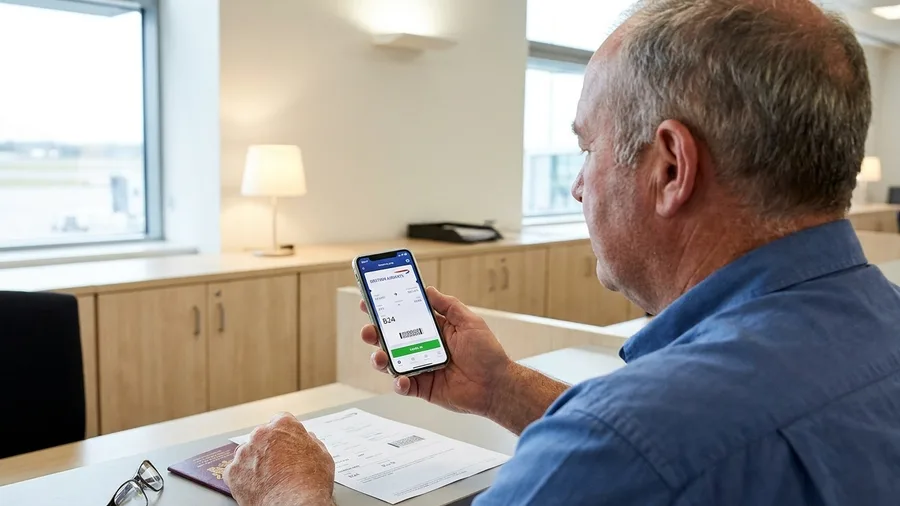
That $127 fee was only the start of the pattern. The moment check-in opens, 24 hours before departure, the clock starts working against you. If a flight is oversold, passengers who have not checked in are the easiest targets to bump.
Set a phone reminder for that exact minute and download the boarding pass right away. If you are checking bags you still stop at the desk, but your place is already locked in.
A Tampa couple arrived two hours early for their anniversary cruise connection, but because they had not checked in online they were moved to a flight six hours later and missed their ship. Arriving early is not the same as checking in.
💡 Tip: Set a phone reminder for exactly 24 hours before departure, then check in without waiting.
2. A document pouch is a third item to lose
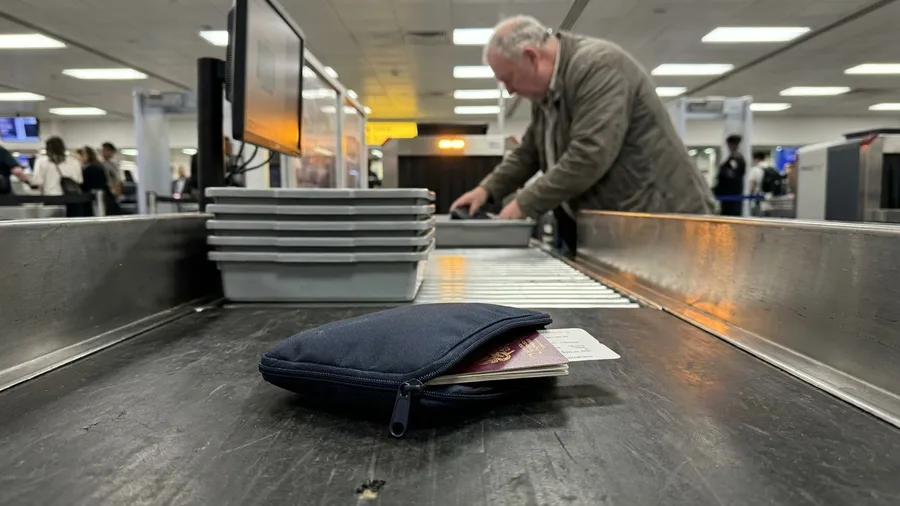
There is a moment at security when you set your little zippered pouch down on the conveyor belt and it slides out of sight, and small pouches vanish at security bins, bathroom counters, and gate seating.
A 73-year-old from Denver realized 20 minutes after hers disappeared that it was gone, and by then someone had taken it. Thieves like small pouches because they slide into a pocket without anyone noticing. A misplaced backpack might come back, but a tiny pouch almost never does.
Tuck a neck wallet under your shirt, or use a zippered jacket pocket pressed against your body. Keep passport, cash, and boarding pass in the same inside pocket every trip, so you never have to track a third bag.
💡 Tip: Pack your document routine once: one pocket, every time, no exceptions.
3. An overweight bag costs more than a luggage scale
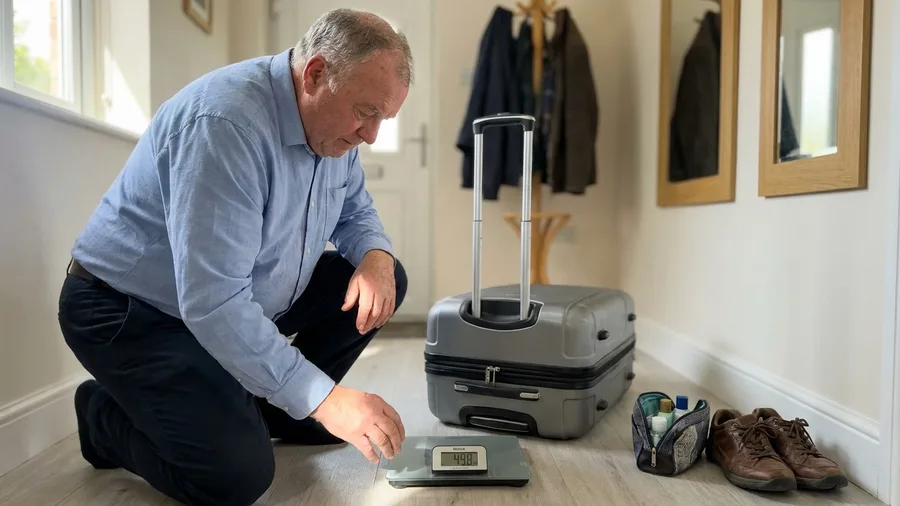
A pouch is easy to lose, but an overweight bag is easy to prevent, and the cost difference is brutal. The checked-bag limit is 50 pounds, and overage fees start at $100.
A Seattle traveler who was three pounds over paid $125 and threw away $15 worth of toiletries. A full-size shampoo, conditioner, and body wash add nearly 3 pounds. A hardcover book is about 1 pound, and just-in-case shoes add 2 more.
Buy a $12 luggage scale and weigh every bag at home before you leave. If you are close, put on your heaviest shoes and jacket for the flight rather than packing them.
Airlines count wheels and handles now, so measure the bag fully extended and leave a cushion under 50 pounds.
That small scale pays for itself the first time you avoid a $100 fee.
💡 Tip: Weigh your bag at home with a $12 luggage scale, not at the check-in counter.
4. Booking blind can trap you in a bad seat
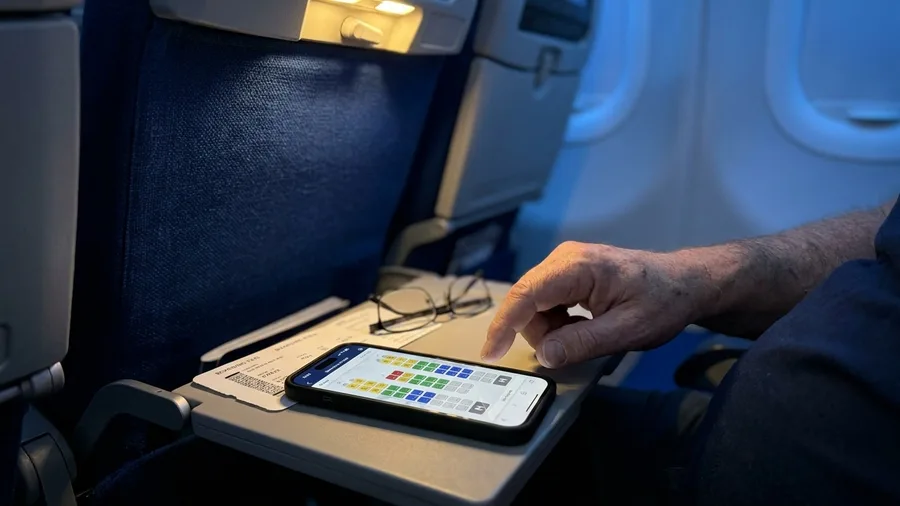
Weighing the bag is only half the job, because getting to the airport with the right bag and then ending up in a miserable seat is its own special grief. Seat maps are free on SeatGuru and airline apps, and you can check them before you book.
Avoid last rows, seats near lavatories and galleys, missing windows, broken recline, and narrow seats. A 72-year-old on an eight-hour flight to London took what looked like an aisle seat and ended up in the last row with no recline, a bathroom door banging every two minutes, and bad smells for the whole trip.
Look for extra legroom or exit rows if you are able-bodied, and check whether there are outlets where you can plug in your devices. Window seats run cold near the fuselage even in summer, so bring a light jacket if you choose one.
💡 PRO TIP
Check the seat map before you pay
Most booking sites let you view the aircraft seat map before you confirm a seat. Use SeatGuru or the airline app to spot the last row, lavatories, galleys, and missing windows before you commit.
5. Paid plastic wrap fails when security opens the bag
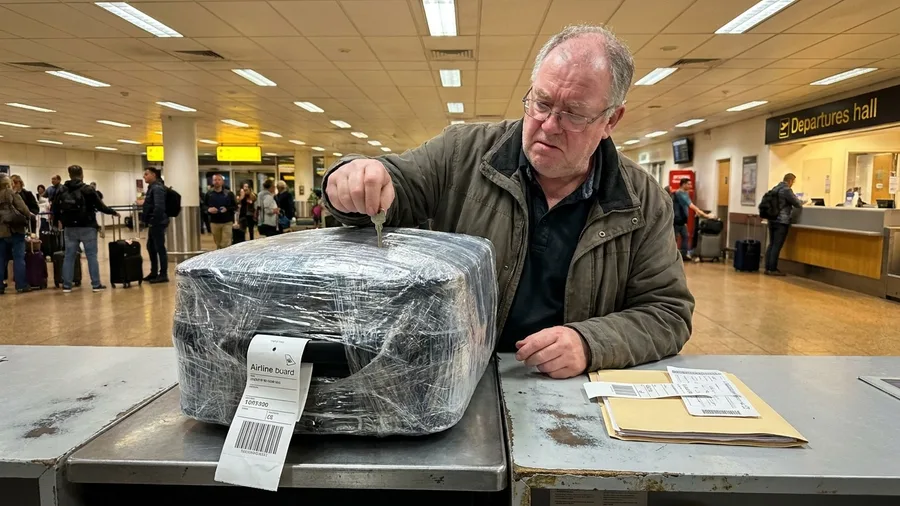
Kiosk plastic wrapping costs $15 to $25 and looks secure, but TSA will cut through it the moment your bag is flagged for inspection.
A 70-year-old from Boston had her checked bag wrapped for extra security. When the agent at the ticket counter requested her prescription medication list, it was sealed inside the wrapped suitcase. She tore the wrap open with her car keys right there at the counter, wasting $15 and holding up the line for 10 minutes.
Use a TSA-approved lock plus a reusable zip-on luggage cover from a brand like TravelPro or Samsonite. Your bag stays protected, you keep access, and you cut plastic waste.
Keep medication lists and anything you might need at the counter in your personal item, never inside a wrapped checked bag.
6. The first security line is often the slowest
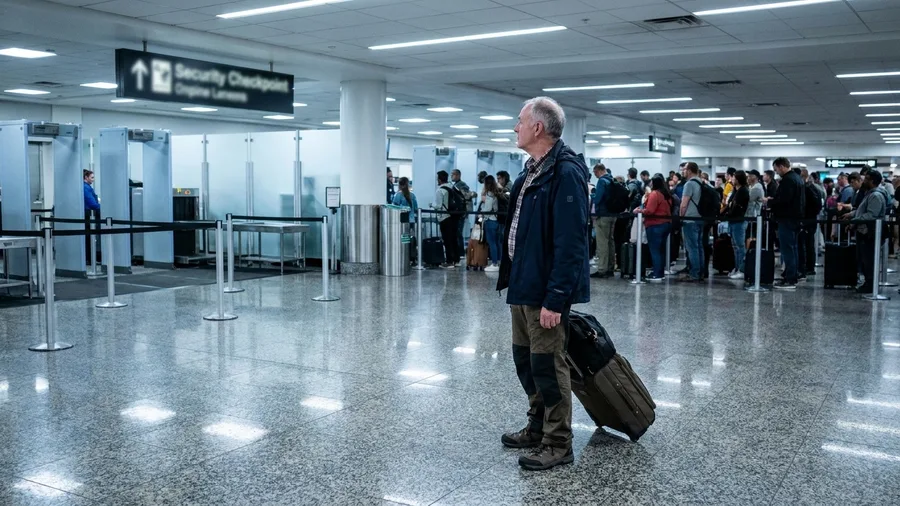
You look past the first one. Most airports run several lanes across several checkpoints, and the one closest to where you came up from the train or the curb is usually where everybody piles in.
A Chicago couple stood in the main line for 35 minutes while three checkpoints at the far end of the terminal sat nearly empty. A TSA agent finally mentioned it, but only after they had already waited. When you reach security, stop and scan the whole area before you commit to a queue.
Ask an airport employee which lane is moving fastest. It is their building, they see the flow all day, and staff often use the far lanes themselves because they know better.
One catch before you walk: confirm that far checkpoint takes your terminal and your status. Some are terminal-specific, and some are PreCheck-only, so a five-minute walk can land you at a lane you are not allowed to use.
💡 Tip: Before walking away, confirm the far checkpoint accepts your terminal and status—some are terminal-specific or PreCheck-only.
7. Half-empty bottles over 3.4 ounces still get tossed
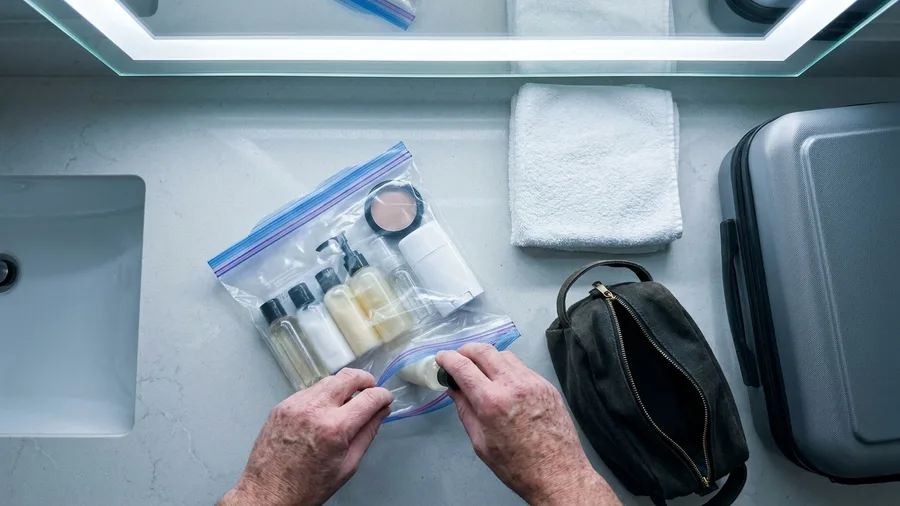
This is the moment that costs money: you are at the conveyor, the bin comes out, and the agent picks up your cologne or your shampoo, looks at the bottle, and drops it in the trash.
The limit is 3.4 ounces per container, all of it inside one quart-size clear bag. Screeners judge the container, not what is left inside, because they cannot measure liquid levels at the lane. A Miami traveler lost a $60 bottle of cologne that was only half full, and the agent just shook her head: what matters is the size of the bottle.
So decant at home. Buy travel-size bottles for a few dollars and transfer what you need before you leave the house, not in the parking garage on the way in.
Then pack the bag where it works. Keep the clear quart bag at the very top of your carry-on and pull it out before you reach the conveyor, so you are not digging through a suitcase with people behind you.
And switch where you can: solid deodorant, powdered makeup, and stick lip balm are not liquids, so they never touch the bin. That half-full bottle is not worth a $60 loss and an argument in the security line.
Pre-flight preparedness scorecard
8. Duty-free can swallow your boarding time
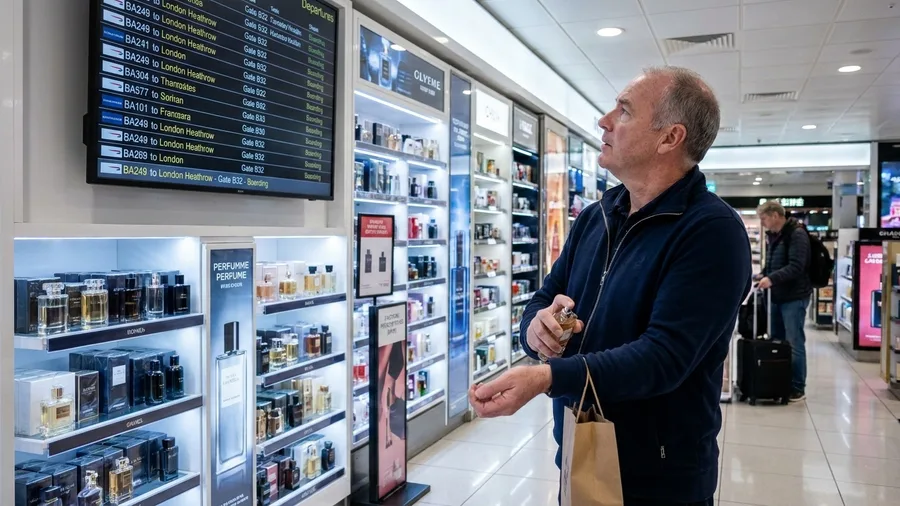
Once you are through the lane with your bag back in hand, the next trap is the one that looks like a treat. Where does the time go after security? Sometimes into a duty-free zone big enough to absorb two hours, with boarding announcements that never reach the back of the shop.
Set an alarm on your phone for 30 minutes before boarding and keep your gate number visible. Shop only after you have confirmed gate and boarding time on the departure screen. An Atlanta traveler reached the gate after her seat was released and paid $340 to fly the next day.
If your gate is a long walk away, give yourself more than 30 minutes. A $20 souvenir is never worth a next-day rebooking.
9. A heavy terminal meal can backfire at altitude
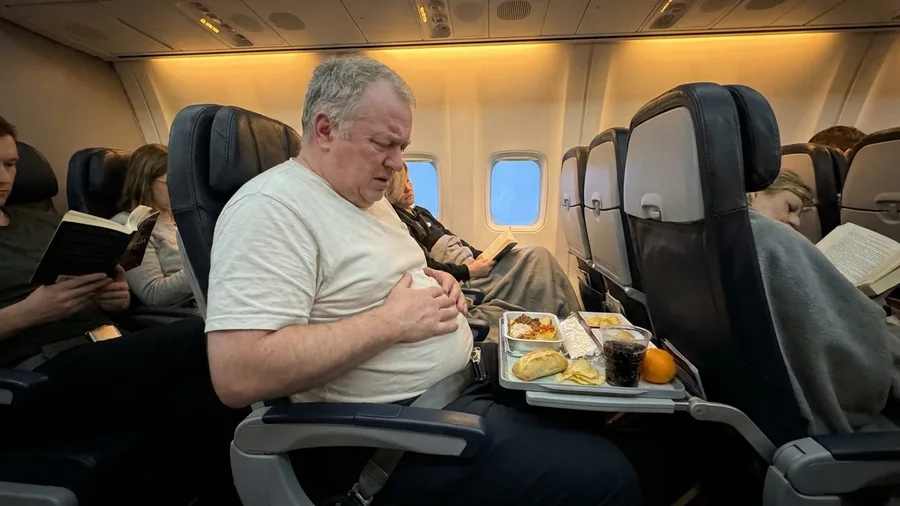
That rebooking stings, but a bad meal before a long flight can make the trip feel just as rough. At cruising altitude the cabin pressure drops, and gas in your stomach expands. The result is bloating, cramps, and constant discomfort in a seat you cannot walk away from.
Beans, broccoli, and carbonated drinks expand even more up there, and even familiar food can turn on you if it is salty or greasy.
A Phoenix traveler ate airport sushi before a five-hour flight, got cramps and nausea within an hour, and spent half the flight in the lavatory. It was not exotic food that did it. It was a heavy meal, eaten in a hurry, right before boarding.
Choose bananas, ginger tea, or plain crackers before you board, and save the adventurous eating for after you land. A light, boring snack is genuinely the better deal on a long flight.
Your stomach will thank you at 35,000 feet.
10. Afternoon flights often mean rougher air
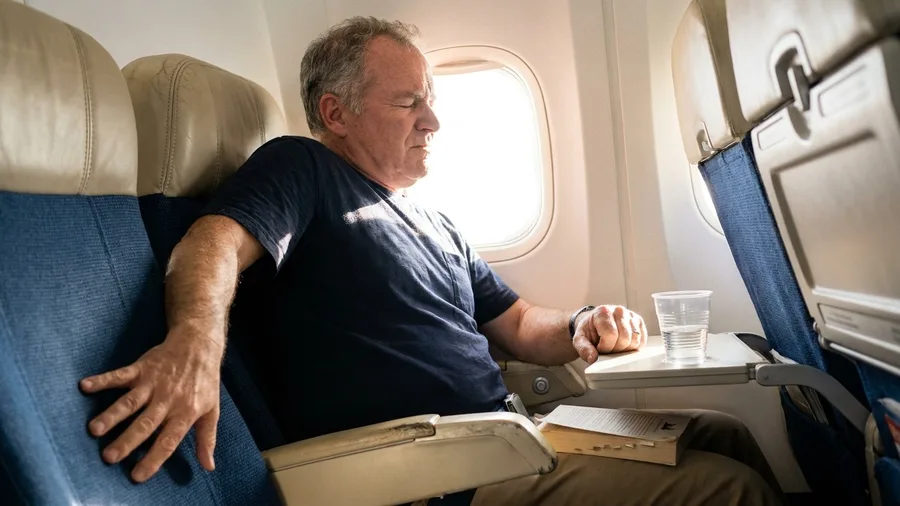
If the food does not get you, the timing might. Turbulence comes from thermals, those rising pockets of warm air the sun builds through the day, so the more heat the ground has soaked up, the rougher the ride.
A Denver traveler chose a 2 p.m. departure to save money and spent four hours feeling nauseous, unable to eat or read, just holding the armrest. The smoothest windows are winter, flights before 10 a.m., or flights after 8 p.m., so book those if you are motion-sensitive.
Seat choice matters too, so sit over the wings, where the aircraft moves the least in the air.
Timing reduces turbulence but does not wipe it out. If you are very sensitive, pair an early flight with a wing seat and ask your doctor about motion sickness options before you fly.
Do this before security vs. the costly alternative
Do before security
- Check in 24 hours ahead and download the boarding pass
- Weigh bags at home and wear heavy shoes and jacket
- Keep documents in a neck wallet or zip pocket
- Decant liquids into 3.4 oz containers in one quart bag
- Scan all checkpoints and ask staff which lane is fastest
Costly alternatives
- Arrive early without checking in online and lose your seat
- Pay $100+ overweight fee at the counter
- Set a pouch down at security and never see it again
- Lose a half-full $60 bottle at TSA
- Join the first 40-person line while far lanes sit empty
11. Security bins are a high-touch germ stop
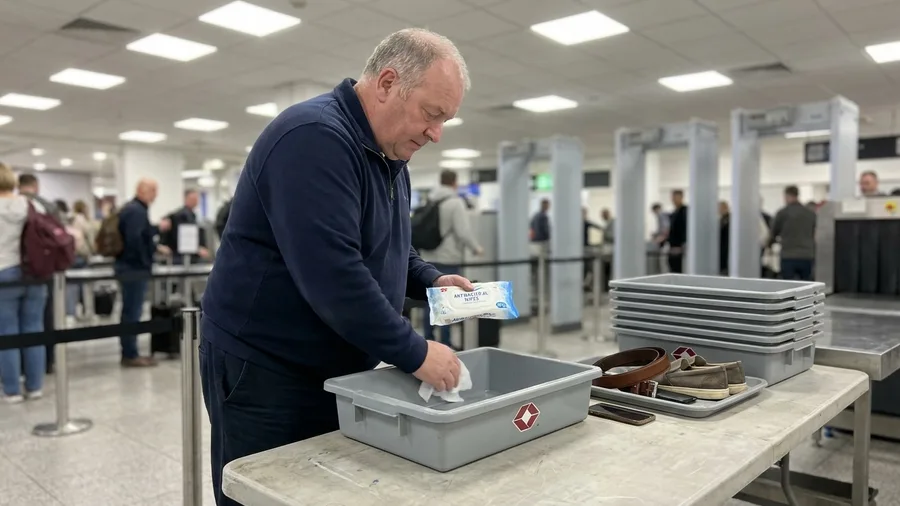
Security bins are rarely cleaned between uses, and they have turned up carrying more germs than the airport toilet seats. Everyone drops shoes, belts, phones and bags into the same plastic tray, one person after another, all day long.
The tray table is second on the list. It gets wiped between flights far less often than you would hope, and you eat your snack right off it at 30,000 feet.
So pack a small pack of antibacterial wipes in your carry-on. Wipe the bin before your things go in, clean your hands the moment you clear security, and give the tray table a pass before you use it.
A San Diego couple both got sick after a flight and traced it back to eating snacks right after security without washing their hands. Thirty seconds of wiping might save you a week of vacation in bed.
⚠️ COMMON MISTAKE
Don't treat the TSA bin like a clean surface
Bins collect shoes, belts, phones, and bags all day and are rarely cleaned. Wipe the bin before you load it, and sanitize your hands immediately after security.
12. Refusing free wheelchair help can exhaust you
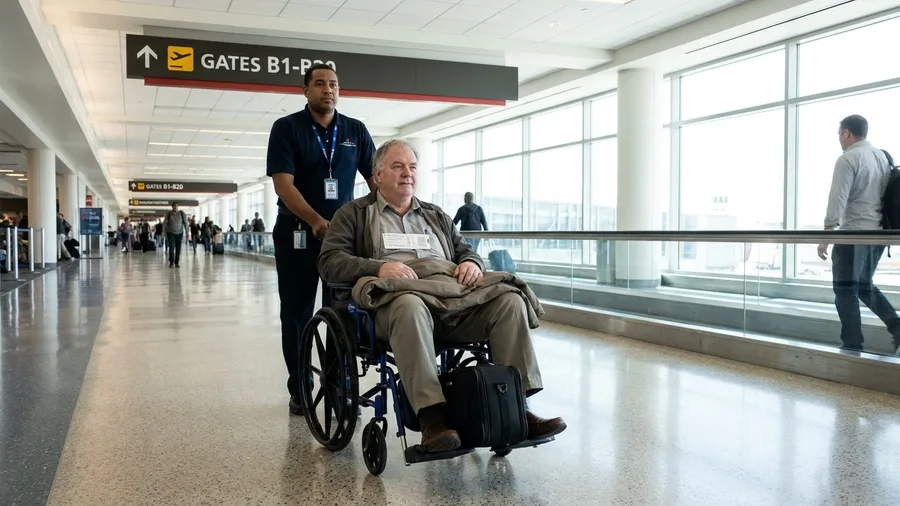
Wiping a bin is a small defense; skipping the wheelchair is the one that can genuinely wreck you. If a cane is what you rely on at home, assistance is available to you, and it is free.
At Atlanta, Denver and Dallas, some gates sit more than a mile from security. A 76-year-old from Florida turned the wheelchair down, reached his gate sweating and dizzy with aching knees, and could barely stand for boarding.
Call your airline 24 to 48 hours ahead and request it, then go to the assistance desk near the entrance when you arrive. Confirm it is in your booking and ask at check-in how connections are handled, so a transfer does not leave you stranded.
How to challenge a bump, fee, or bag cut
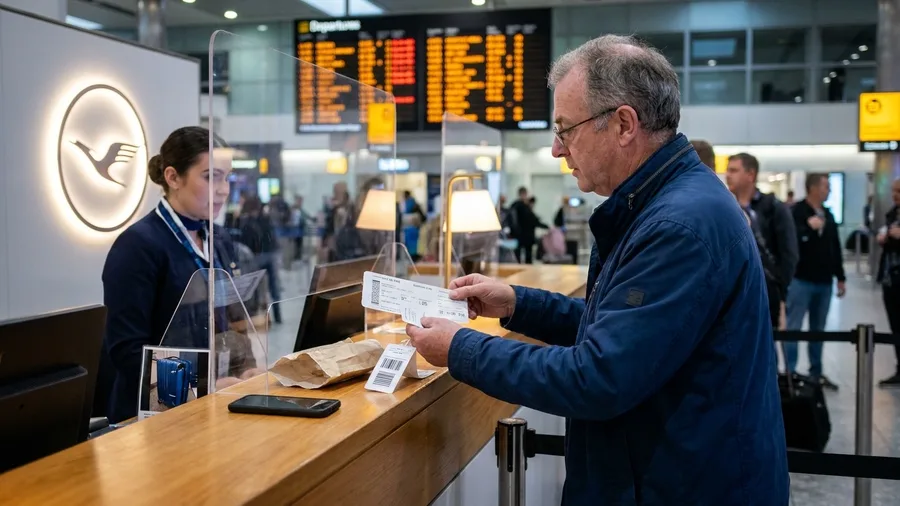
So you did everything right, and it still went sideways. A bump, a surprise fee, a bag sliced open at security. Here is the part nobody tells you: what you do in the next ten minutes decides whether you get any of it back.
Before you leave that desk, build your file. Keep your boarding pass, the fee receipt, the bag tag, and a photo of anything cut, torn, or damaged, wrap included. Then ask the employee, politely and out loud, for the written reason for the bump or the fee and the exact policy name they are applying. Write down the time, the desk, and their name.
Ask one more question before you accept anything: is this cash, a voucher, or a rebooking? It matters. Take the voucher and you may have signed away the cash you were owed, so decide with your eyes open, not because a gate agent is rushing you toward a closing door.
Then file. Start on the airline's official complaint or refund page, where you upload that paper trail. Next, check the U.S. DOT consumer complaint page and read the airline's contract of carriage, the dry document that spells out the current rules on bumps, delays, and bag damage. Those pages change, so read the version in force for your flight.
It sounds like a lot of fuss over a hundred dollars. It isn't. That trail of receipts, names, and photos is what turns a shrug at the counter into a real claim. Without it, you're just a voice on the phone describing something nobody can verify.
The three rules that prevent most traps
🏠 Rule 1
Prepare at home: weigh bags, check seat maps, organize liquids
📋 Rule 2
Stay informed: check tsa.gov and your airline site before every trip
❓ Rule 3
Ask questions: airport staff would rather answer now than fix a crisis later
Before every trip
Spend five minutes on these three rules and most of the twelve mistakes on this list disappear.
Frequently Asked Questions
If I check in online, do I still need to go to the counter?
Yes, if you are checking bags. The counter visit is for bag drop only—your seat is already protected because you checked in online. If you have no checked bags, you can go straight to security with your mobile boarding pass.
Can I bring a half-full bottle of shampoo if it is larger than 3.4 ounces?
No. TSA judges by container size, not liquid level, and will discard any bottle larger than 3.4 ounces even if it is almost empty. Decant into travel-size bottles at home.
How do I request wheelchair assistance, and does it cost anything?
Call your airline 24 to 48 hours before departure and request it. On arrival, go to the designated assistance area near the entrance. The service is free and includes help through security, to the gate, and during boarding.
What is the smoothest time of day to fly if I get motion sickness?
Book flights before 10 a.m. or after 8 p.m., when the sun has not heated the ground enough to create strong thermals. Winter flights are also generally smoother. Ask for a seat over the wings for the most stable ride.
Is airport plastic luggage wrapping worth the $15 to $25?
Usually not. TSA will cut through the wrap if your bag is flagged for inspection, which means you pay for protection that disappears when you need access. A TSA-approved lock and reusable luggage cover work better.
Your one-page pre-flight checklist
The day before your flight, set a reminder for 24-hour online check-in, review the seat map, weigh your bags, and request wheelchair assistance if you need it.
At home, put your documents on your body, place the clear liquids bag at the very top of your carry-on, and add antibacterial wipes and a light snack.
At the airport, scan all security checkpoints, confirm your gate and boarding time, and set a 30-minute boarding alarm. Then relax—you have already done the hard part.
The single first action is to set that 24-hour check-in reminder right now, before anything else.

Hello there! I’m Jesse Joe, the author and editor behind SolganGenius. I’m thrilled you’ve stopped by, and I can’t wait to share with you the essence of what this platform is all about.
I’m a writer, social media enthusiast, and a firm believer in the power of words. I’ve always been fascinated by how a simple phrase or slogan can capture an emotion, convey a message, and even change perspectives. Learn More