

If you or your parents have a Medicare Advantage plan, you're probably used to tossing the pile of mail that shows up every fall straight into the recycling. Most of it is glossy junk. This year, though, a plain white envelope in that stack could be the most expensive piece of paper you ever ignore.
More than a million seniors are losing their Medicare Advantage coverage. Humana is ending plans that cover 600,000 members. UnitedHealthcare has cut about 13% of its offerings across 18 states and expects up to 1.1 million fewer members by year-end. And a survey of health plan leaders found nearly 70% expect benefits to get less generous, with higher specialist copays and narrower doctor networks.
You are not powerless. By the end of this article, you'll know exactly which dates to circle, how to tell a real Medicare letter from a sales flyer, the three-step phone audit that keeps your doctors, and how a cancellation letter can actually unlock a Medigap policy without a single health question.
The $0-Premium Autopilot Era Is Over

For years, Medicare Advantage worked like a subscription – pick a $0-premium plan, pay your Part B, and forget about it until the next January. That era is finished.
Insurers spent a decade buying enrollment. Complimentary fitness center access, food stipends, and no-cost copays on the biggest-ticket services. All of it was designed to make switching feel like a no-brainer, and it worked. Now the bill has come due.
Squeezed by rising medical costs and regulators closing the billing loopholes they leaned on, carriers are purging what they call unprofitable plans in hundreds of counties. This is structural, not a one-year blip – the cheap-to-join era was propped up by coding games that are being shut down.
So what happens if you do nothing when your plan is terminated? You don't stay on your old policy. Federal default puts you into Original Medicare.
That generally means no drug coverage, uncapped 20% liability on everything from a specialist visit to a hospital stay, and the loss of the primary care doctors you actually see. No cap means $100,000 of cancer treatment is $20,000 out of your pocket. Medicare Advantage plans at least had ceilings, roughly $4,000 to $9,000.
And here's the trap for the people who think they're safe – the ones whose plan renews. A plan that renews is not a plan that stays the same. Even continuing members must read the Annual Notice of Change line by line, because the copays and allowances you relied on can quietly move inside the same plan name.
Open the envelope, find out which of the two you got, and act now while the calendar still gives you room.
Two Plain Official Notices Must Never Be Tossed

That one look takes ten seconds and it's the whole game.
Between mid-September and mid-October your mailbox fills up. Brokers and marketing firms spend hundreds of millions mailing glossy flyers, oversized postcards and envelopes stamped 'urgent Medicare update' or 'official government benefits notice'. Almost all of that is sales marketing, built to get you on the phone so an agent can switch your plan and earn a commission. Toss it.
The real ones look boring. They come in a standard corporate envelope from your current carrier, often marked 'important plan information' or 'official document enclosed'. Nothing flashy about them.
There are two documents you must find. The Annual Notice of Change tells you how your plan's rules shift next year. The Plan Non-Renewal Notice, which comes dated around October 2, tells you the plan is gone at the end of the year.
Missing either one costs real money – one hides a price change, the other starts a clock. Put both in a folder the day they arrive, and don't let the shrink-wrap flyers confuse you into thinking you've already handled it.
💡 PRO TIP
The envelope test
If the return address isn't your current insurance company, it's probably advertising. If it is your carrier but the envelope says 'urgent' in red, still open it. The two official notices are boring on purpose.
The ANOC Means Your Plan Lives but Its Rules Change

An ANOC is not a renewal notice. It's a side-by-side admission that next year's plan is a different, thinner product – same name, different deal.
Federal law requires your insurer to deliver it typically by September 30, comparing this year's coverage with next year's starting January 1. Read it with a pen in your hand, next to last year's summary and your current copay amounts, so every increase becomes a concrete dollar figure.
Hunt for the specific changes that hit hardest. Over-the-counter or grocery allowances cut from $100 a month to $25, or gone entirely. Dental downgraded to basic cleanings. Part B premium givebacks removed. Specialist copays jumping from $35 to $75. Out-of-pocket maximums pushed up to the federal ceiling.
Miss those and the surprise lands at the pharmacy counter or the specialist's office in January – not in September, when you could still do something about it.
The ANOC is your early warning. Treat it as a price quote, not a formality, and you keep the choice in your hands.
A Non-Renewal Notice Is a Real Cancellation and a Clock

A non-renewal letter means the plan ends. Under CMS rules, insurers dropping plans or exiting counties must generally issue these termination notices with an October 2 date, and your coverage ceases to exist at midnight on December 31.
The calendar stacks up fast. September 30: ANOCs delivered. October 2: non-renewal letters dated. October 15: annual enrollment opens. October 15 through December 7: compare plans and switch on Medicare.gov. December 7: hard deadline. January 1: whatever you chose takes effect.
That letter is a legal document with a second use. It's the proof required for a guaranteed-issue Medigap application – and that window opens 60 days before the plan ends and runs 63 days after coverage terminates. So it goes in a folder, not the recycling bin.
The relief in all this: your coverage stays fully active until December 31. You have time to compare properly instead of panic-enrolling on the phone with the first agent who calls.
Write those dates on the envelope, pin the letter where you'll see it, and work the list in order.
📅 The Medicare Fall Calendar
September 30
No letter by this date? Call 1-800-MEDICARE and ask for the ANOC – it may be lost in transit.
October 2
Letter dated later than this is likely a plan change, not a cancellation. Read the header: 'non-renewal' means the plan ends.
October 15
Switch online to avoid phone wait times. Have your drugs list and doctors' names handy.
December 7
Miss it and you're locked in – unless you qualify for a special enrollment period.
December 31
Don't cancel your old plan yourself. Auto-enrollment into Original Medicare happens only if you do nothing.
January 1
If you bought a Medigap plan, confirm the policy number is active before your first appointment.
Doing Nothing Drops You Into Original Medicare With No Cap

If your plan is terminated and you take no action, federal law drops you into Original Medicare on January 1. That might sound fine. It isn't.
Original Medicare generally does not cover routine prescriptions. Your pharmacy card dies, and you pay 100% of the retail cash price for blood pressure meds, insulin or heart medication. And every month without creditable drug coverage adds a permanent Part D late enrollment penalty to your future premiums – for the rest of your life.
Then there's the missing safety net. Original Medicare has no annual out-of-pocket maximum and charges 20% coinsurance on doctor visits, surgeries and hospital stays, with no cap. Run the math on $100,000 of cancer treatment: that's $20,000 out of your pocket. Medicare Advantage plans at least had a ceiling, roughly $4,000 to $9,000.
So doing nothing isn't neutral. It's a choice – the most expensive one on the table.
Before December 7, either pick a plan that works or line up a supplement. The only wrong move is letting the deadline pass on autopilot.
Confirm Your Exact Contract Number on Medicare.gov

You check it by the code on your card, not by the name on the envelope. The five-character contract ID is the only thing that proves your exact plan is still alive next year.
Pull out your insurance card and look for it now. It starts with an H or an R, followed by four digits, and it sits next to a three-character plan benefit package number. Those two codes together are the exact legal product you're enrolled in. Everything else on the card is decoration.
Here's why the name fails you. One carrier can sell ten plans with near-identical marketing names, and only one of them may be ending. If you call and say "my Humana plan is being cancelled," you may be describing a product that doesn't exist on paper. The contract ID doesn't have that problem. It points to one plan, in one county, for one year.
After October 15, log into Medicare.gov and search that exact contract number for the coming plan year. You're checking one thing: is it listed as active, yes or no? If it's there, your plan survives, and the cancellation talk doesn't apply to you.
If the number is missing, treat it as a cancellation. Don't wait for a second letter and don't assume a phone rep will sort it out later. Go straight to the guaranteed-issue Medigap route, because that right has a clock on it and the proof is already in your hand.
⚠️ COMMON MISTAKE
Don't trust the plan name
Humana and UnitedHealthcare each sell multiple plans with similar names. Checking by name instead of contract number is how people think they're covered and find out in January they're not.
Online Doctor Directories Are 30 to 50 Percent Wrong

You can't. Studies have found that 30% to 50% of doctors listed as in-network in these directories are wrong, which makes the website a rough guess rather than a check.
The causes are boring and everywhere. Doctors retire and nobody removes them. Practices move to a new hospital system and the file doesn't follow. Some drop a carrier over a billing dispute while the listing stays up. And a growing number close their practice to new Medicare Advantage patients entirely, worn down by prior authorization fights they keep losing.
Now the part that actually hurts. Say you're mid-treatment with a cardiologist or an oncologist, and in January the plan says that doctor was never in-network. The bill lands on you. Finding a new specialist in the middle of a crisis is not a paperwork problem, it's a health problem.
So use the directory for the one thing it's good at: it hands you a starting list of phone numbers. Treat every green checkmark as unverified until a human at the office confirms it in writing. The next step is exactly how to make that call, because the first person who answers won't know the answer.
Run the Billing Office Audit, Not the Front Desk

You verify it with a scripted call to each doctor's billing office, and you write the answer down. The front desk is not the place to ask.
Start by making a list on paper. Every primary care doctor, every specialist, the physical therapist, and the hospital system you or your family member has used in the last couple of years. Miss one and that's the one that surprises you in January.
Then call each office and ask for the office manager or the billing department. Reception staff are checking in patients and will happily say "yes, we take that" without knowing the first thing about your specific policy. That casual yes is how people get burned.
Have three things in front of you before you dial: the doctor's 10-digit National Provider Identifier, the exact insurer name, and the 8-character contract and plan benefit package number from your card. Then ask precisely this: "Is Dr. Smith contracted in-network and accepting assignment under this specific plan benefit package starting January 1?" Write down the date, the time and who answered. Ask them to email or mail written confirmation. If they hesitate, that hesitation is your answer, and you keep calling.
The Billing Audit — At a Glance
👨⚕️ Who to ask for
Office manager or billing department
🔢 Have ready
NPI + contract ID
🗣️ Exact question
In-network and accepting assignment Jan 1?
📝 Record
Date, time, who answered
📧 Get proof
Written confirmation
Skip the front desk
Receptionists often answer from habit, not from your policy details.
Medigap Underwriting Traps People With Health Conditions

Because outside a narrow window, an insurer can look at your health records and simply say no. The guaranteed shot at Medigap is a one-time deal, and most people spend it without knowing.
Here's how it works. When you turn 65 and sign up for Part B, you get a six-month open enrollment window. In those six months you can buy any Medigap plan sold in your state, Plan G included, and no one can ask a health question. Medigap then picks up what Original Medicare leaves behind: the 20%, the copays, the coinsurance, the deductibles. No networks. Usually no referrals, no prior authorization.
After that, in most states, underwriting comes back. Think a multi-page health questionnaire and a full review of your history. Diabetes, a heart stent, rheumatoid arthritis, high blood pressure or active cancer treatment can mean a rejection, a premium three times higher, or a pre-existing condition exclusion slapped on top.
So picture the person who took the $0 Advantage plan at 65 because it looked free, and then developed a condition at 68. They want out. Underwriting won't let them out. They feel locked in for life.
That's the trap, and it's exactly why the next rule matters so much: when a plan cancels you instead of you quitting, the door swings back open.
Medigap With and Without Guaranteed Issue
Guaranteed Issue
- Triggers when your plan is non-renewed, not when you quit
- Window: 60 days before Dec 31 end, then 63 days after
- The Oct 2 non-renewal letter is the proof you submit
- No underwriting only while that window is open
Medical Underwriting
- Returns the day the 63-day window closes
- A diabetes or stent history can mean a denial
- Rejection or 3x premium is per insurer, so shop
- Some states limit underwriting, so check yours
A Cancellation Letter Can Unlock Guaranteed-Issue Medigap

It's a federal right that lets you buy Medigap with no health questions, and you get it when your Advantage plan cancels you rather than the other way round.
The trigger is specific. Your plan ends its contract, leaves your county, or cuts your coverage. When that happens, insurers cannot ask you a single health question, cannot pull your records, cannot charge you more because of your age or an illness, and cannot deny you. The underwriting that trapped you a moment ago is simply switched off.
Now the clock, because this is where people lose it. Your window begins 60 days ahead of the plan's end date and continues for 63 days after coverage terminates on December 31. The letter dated around October 2 is your legal proof of the cancellation, so it does not go in the recycling. It goes in a folder, and you know exactly where that folder is.
The usual route from there is a Plan G Medigap policy paired with a standalone Part D drug plan. That pairing strips out the network and, in most cases, the prior authorization, which is a wider door than the Advantage plan you're leaving.
One warning: this right attaches to an involuntary loss of coverage. If you disenroll on your own, you don't get it. That's why the next deadline matters so much.
Three Medicare Myths That Cost Money
Miss December 7 and the Backup Window Has a Trap
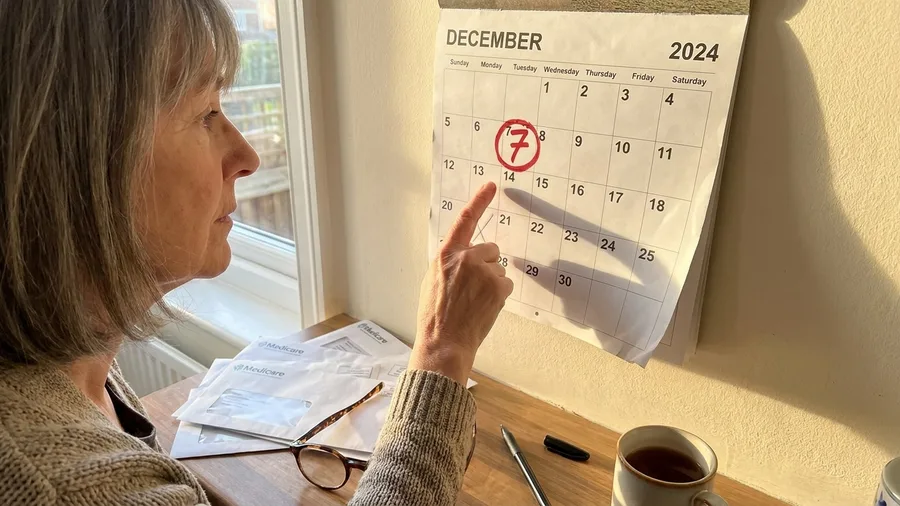
Miss December 7 and you're not left with nothing, but you are left with a worse deal. Federal rules give members whose plans are being cut a backup: the service area reduction special enrollment period, which runs December 8 through the last day of February. Call 1-800-MEDICARE and they'll help you pick a replacement Advantage plan or a standalone Part D plan.
Here's where people get hurt. Wait until January to use that window and your new coverage doesn't start until February 1.
That's a whole month with no drug coverage at all. Not a month of paying more at the counter, a month of paying the full sticker price on every prescription. And the damage doesn't stop at one month's pills: it can break your creditable coverage record and hand you a Part D late enrollment penalty that follows you for as long as you keep drug coverage.
So treat the December 7 deadline as the real one. Pick your plan in October or November while you still have every option on the table, and tuck February in your back pocket as the emergency backup, not the plan. If you do end up leaning on that special enrollment period, call 1-800-MEDICARE the day you know you need it, not the last week of January.
Insurers Are Cutting Low-Margin Members on Purpose

Because the industry's medical inflation story is only half of it, and their own earnings calls say the rest out loud. On Humana's July 29 second-quarter call, the CFO said the company would drop the "lower tail of profitability." Translate that: find the counties and plans with higher-need members or thinner margins, and drop those patients.
The CEO tied the exits to margin expansion, targeting at least a 3% operating margin by 2028.
Humana covers over seven million members, is dropping 600,000 of them, and expects to recapture only about 40%. That leaves roughly 360,000 people to find coverage somewhere else on their own.
UnitedHealthcare is running the same playbook. About 13% of its Advantage plans eliminated across 18 states, up to 1.1 million fewer members, narrower networks and fewer over-the-counter benefits.
So when you hear that seniors use too much care and inflation is crushing the plans, hold onto this: a plan that is unprofitable is a plan full of sick people, and those are exactly the people being let go. If you're one of them, you're not a bad customer. You're a cost someone decided to cut.
Washington Raised Insurer Payments While Benefits Were Cut

Because Washington actually handed them more money, not less, before the benefits shrank. The industry argument was that it couldn't afford to keep plans without more cash. So CMS initially proposed a near-flat 0.09% payment increase, worth about $700 million. Insurer stocks fell, and a lobbying campaign followed, warning of devastating cuts for seniors.
CMS finalized a 2.48% average net increase instead, roughly $13 billion in new federal money. Another $13.4 billion flows through the Quality Bonus Program for plans rated four stars or higher, spending that per KFF has more than quadrupled since 2015.
So where did all that go? Not to over-the-counter cards, not to keeping hospitals in network, and not to the 600,000 Humana members being dropped.
It went into balance sheets and earnings targets. When you read that a plan is trimming dental, or dropping a hospital system, or nudging you out the door, remember that the money to keep you arrived and simply went somewhere else. Check your plan's star rating on Medicare.gov this fall, and ask yourself whether those bonus dollars showed up in what your plan actually gives you.
🌱 GROWING TIP
What to ask your agent
Ask directly: 'Is this plan commissionable, and would you still recommend it if it weren't?' If the answer hesitates, ask which plans they are paid to show you.
Zero Commissions Quietly Kill Plans Without Cancelling Them

Because a plan doesn't have to be cancelled to disappear from your options. Aetna froze commissions on 123 Medicare Advantage plans in 33 states and nearly 780 counties for the coming plan year, with a fifth of the cuts concentrated in Georgia.
Federal rules cap commissions at about $725 for a new member and $363 for a renewal, though carriers may legally pay zero. When a plan goes zero-commission, agents quietly stop showing it. Enrollment shrinks without the insurer ever filing to cancel the contract.
That's the part that should worry you. No non-renewal letter, no guaranteed issue right, no clock telling you to move. Your plan can dry up beneath you while technically still existing, and you find out when the pharmacist or the specialist tells you.
So ask your agent a blunt question before you sign anything: is this plan commissionable, and would you still recommend it if it weren't? An honest answer tells you plenty. Then cross-check any plan they pitch against the full Medicare.gov plan finder yourself, because what an agent is paid to show you and what's actually available to you are two different lists.
The Squeeze by the Numbers
Where the money and the members are going
Upcoding Crackdowns Push the Pain Onto Members

Because the billing tricks that quietly funded those low premiums and perks are now being closed, and the cost is coming out of your benefits. For years, insurers padded payments through risk adjustment upcoding. They sent nurse practitioners into homes for annual wellness visits or hired data firms to scour old charts and add secondary diagnosis codes, raising the monthly fee the government pays per member.
CMS is closing that door. It now refuses payment for diagnoses from unlinked chart reviews when there's no in-person visit with a treating doctor, and it bans diagnoses captured on audio-only phone calls. That chart review rule alone is estimated to cut payments about 1.53%, and a DOJ False Claims Act case forced Aetna to pay $117 million over false diagnosis codes.
Then there's the other side of the same squeeze. The standard Part D deductible rises to $700 from $615, and the annual out-of-pocket cap adjusts to $2,400, so you pay more at the pharmacy counter before coverage kicks in.
You didn't code a single diagnosis, yet you feel the whole thing. Budget for that higher deductible now, and don't let anyone tell you the perks are free.
The Final Action Plan: Open, Audit, Keep, Choose

Four moves, in this order: open everything, audit your doctors, keep the letter, and make an active choice before December 7. Skip any one of them and the system decides for you, which is exactly the outcome you don't want.
Start by opening every envelope from your current insurer through mid-October. You're hunting for two things: the Annual Notice of Change and, if your plan is ending, a non-renewal notice dated around October 2. Standard white envelopes from your carrier are not junk this year.
If your plan is continuing, don't assume your benefits survived intact. Read the ANOC line by line for copay increases, cuts to dental coverage, and reductions in over-the-counter allowances. Then call the billing office, not the front desk, of every doctor you've actually seen in the last couple of years and confirm they'll still take the plan in January.
If your plan is being cancelled, take a breath. Your coverage stays 100% active until midnight on December 31, and that October 2 letter is your ticket to guaranteed-issue Medigap, no health questions asked. Use it to apply for a Plan G policy and a standalone Part D plan, and file the original letter somewhere safe.
Finally, circle December 7 as your hard personal deadline. Submit an active choice on Medicare.gov rather than letting auto-renewal or a default assignment decide for you, because doing nothing drops you into Original Medicare with no out-of-pocket cap. Private insurers are protecting their bottom line. Protecting yours is entirely up to you.
Frequently Asked Questions
What is the difference between the ANOC and the non-renewal notice?
The Annual Notice of Change means your plan is continuing but its benefits and costs are changing for January 1. The Plan Non-Renewal Notice means your plan is being cancelled entirely at midnight on December 31. Both come from your current insurer, and both require action.
If my plan is cancelled, do I automatically lose coverage on January 1?
Yes, if you do nothing. By federal law, you are dropped into Original Medicare on January 1, which generally means no routine drug coverage and uncapped 20% coinsurance. You must actively choose a new plan or Medigap during the enrollment windows.
Can I get Medigap without answering health questions if my plan is cancelled?
Possibly. If your Medicare Advantage plan terminates its contract, exits your county, or drops your coverage, you may qualify for guaranteed issue. Insurers then cannot ask health questions or deny you. The window opens 60 days before your plan ends and runs 63 days after December 31, and the October 2 letter is your proof.
How do I verify my doctor will still accept my plan next year?
Call the doctor's office and ask for the billing department, not the front desk. Have ready the doctor's NPI number and your plan's contract ID and plan benefit package number. Ask whether the doctor will be in-network and accepting assignment under that specific plan on January 1, and request written confirmation.
What if I miss the December 7 deadline?
You may still be able to enroll through the service area reduction special enrollment period, which runs December 8 through the last day of February. Call 1-800-MEDICARE. But if you wait until January, your new plan won't start until February 1, leaving a gap month without drug coverage.
Why did my agent stop offering my plan even though it wasn't cancelled?
Insurers can legally pay zero commission on specific plans. When that happens, agents often stop showing those plans to seniors, which shrinks enrollment without the insurer ever filing a cancellation. Ask your agent directly whether a plan is commissionable and whether they'd still recommend it if it weren't.
Which Letter You Opened Decides Your Next Move
Your next step depends entirely on which notice you're holding. If your plan is still active, read the ANOC line by line for copay increases, dental cuts and over-the-counter reductions, then run the billing-office audit on every doctor you've seen in the last two years.
If your plan has been cancelled, keep the October 2 letter in a folder and use it to apply for guaranteed-issue Medigap, typically Plan G, plus a standalone Part D drug plan. Your coverage stays active until December 31, so you have time to choose properly.
The single action to take this week, before any comparing begins: open every envelope from your current insurer and find out which of those two letters you have.
Find your two official letters today
Before you compare a single plan, sort this week's mail and confirm whether you have an ANOC or a non-renewal notice. That one answer decides everything that follows.

Hello there! I’m Jesse Joe, the author and editor behind SolganGenius. I’m thrilled you’ve stopped by, and I can’t wait to share with you the essence of what this platform is all about.
I’m a writer, social media enthusiast, and a firm believer in the power of words. I’ve always been fascinated by how a simple phrase or slogan can capture an emotion, convey a message, and even change perspectives. Learn More