

A retiree in Raleigh wrote in with a question that thousands of people with an IRA are quietly asking: how do I take money out of this account in a way that doesn't hand a chunk of it to the IRS?
Here is one answer that works better than most people realize. If you are 70½ or older and you already give money to charity, you can send part of your IRA straight to that charity and never count it as income.
No tax on the withdrawal. No itemizing required. And it can knock out the required minimum distribution you were going to have to take anyway.
That move is called a qualified charitable distribution, or QCD. By the end of this you will know exactly who qualifies, how much can go, how it interacts with your RMD, and the one phone call that sets the whole thing up.
What a QCD Actually Is
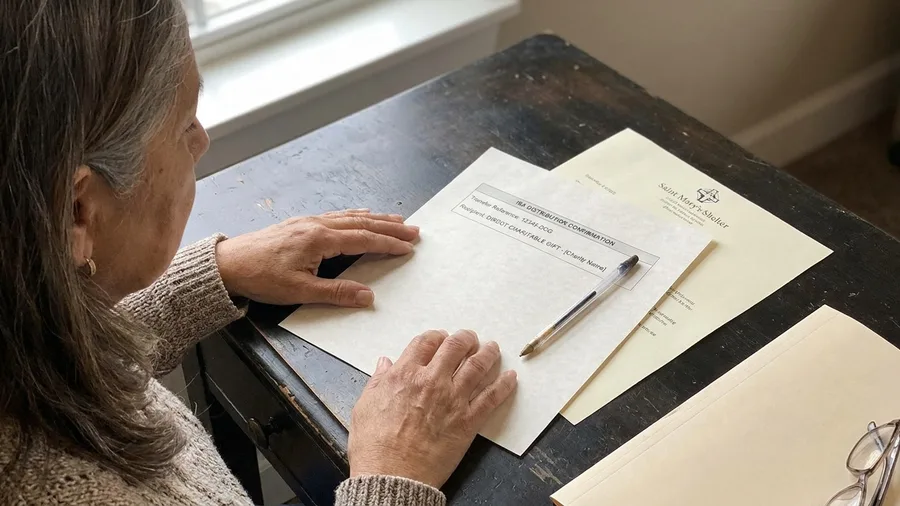
A qualified charitable distribution is a direct transfer of money from your IRA to a charity, and the word doing all the work there is direct.
The money never passes through your hands. Your IRA custodian sends it straight from your account to the charity's account, and because you never take possession of it, the tax code leaves that amount out of your taxable income entirely. That is the whole trick, and it is a good one.
Picture the alternative. You pull $5,000 out of the IRA yourself, deposit it, then write the charity a $5,000 check. That $5,000 lands on your return as ordinary income, and you only get any relief if you itemize your deductions. Skip straight to the charity instead and the income never appears at all.
You qualify at 70½ or older. There is no income test, no phase-out, and no cap on how many separate QCDs you make in a year, as long as the total stays under the annual limit.
That age is worth pausing on, because it no longer lines up with when the IRS makes you start pulling money out. The giving window opens before the withdrawal window does, and knowing that gap exists is half the planning.
| Feature | Qualified charitable distribution | Regular charitable deduction |
|---|---|---|
| Where the money comes from | Straight from the IRA to the charity | You withdraw first, then write a check |
| Starting age | 70½ or older | Any age |
| Effect on taxable income | Excluded from income before tax | Itemized deduction claimed after income is calculated |
| Does itemizing matter | No | Yes, only helps if you itemize |
| Can it satisfy the RMD | Yes, counts toward it | No |
| Annual limit | $100,000 per person in this example | No cap, subject to deduction limits |
Family Does Not Count as a Qualified Charity

Your children and grandchildren are not qualified charities, not for this purpose and not ever, so a QCD cannot be used to pass IRA money to family.
A QCD has to land with an organization the IRS recognizes as tax-exempt under the charitable rules. A church, a food bank, a university scholarship fund, a local animal shelter, a hospital foundation. A person, no matter how much you love them, is not on that list.
Send IRA money to your daughter anyway and it does not quietly become a QCD. The IRS treats it as a normal distribution to you, taxable in full at your ordinary rate. You have just paid income tax to make a gift, which is the opposite of the point.
Donor-advised funds and private foundations need extra checking too, since some of them cannot accept QCDs at all. Ask the organization directly whether it can receive one before you call the custodian, and get its legal name and EIN in writing so the check is made out correctly the first time.
The rule is simple once you say it plainly: the recipient has to be an eligible charity, not a person. Everything else in this strategy rests on that.
⚠️ COMMON MISTAKE
Never Cash Out First
The most expensive mistake is taking the distribution yourself and then donating it. Once the money lands in your checking account it is taxable income, and the QCD is gone. The transfer has to go custodian to charity.
Non-Itemizers Get the Biggest Benefit
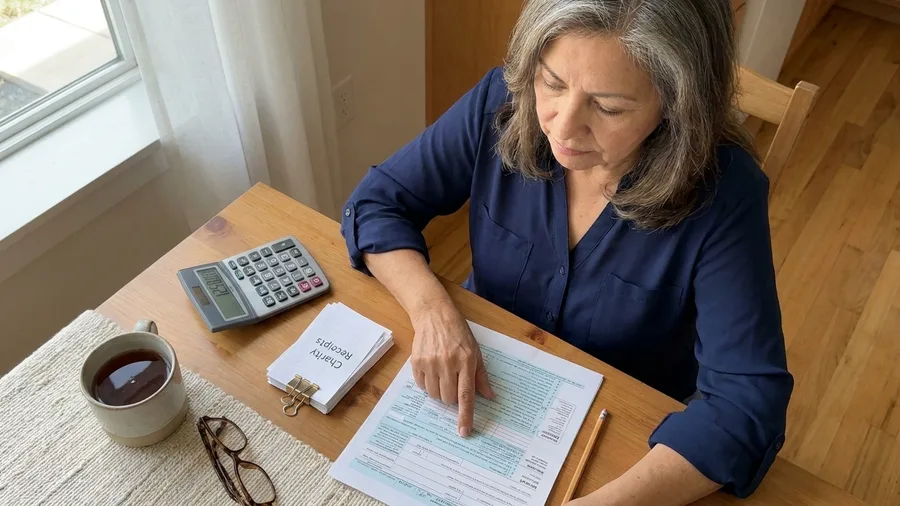
A QCD beats writing a check when you take the standard deduction, because it lowers your taxable income directly instead of feeding a deduction you will never get to use.
And since the standard deduction went up, taking it is what most retirees do. Here is the problem a regular donation creates for you. You give $3,000 to your church, but because you are not itemizing, that $3,000 does nothing for your tax return. It never shows up anywhere. You gave from after-tax money and got no break at all.
A QCD works in the opposite direction. It keeps the amount out of your taxable income before any deduction math happens, so the benefit arrives whether you itemize or not.
Say you are 72, you were going to take a $12,000 RMD, and you also write $12,000 in charity checks each year. Swap the two. Send the $12,000 from the IRA as a QCD instead. Your RMD is satisfied, your income is $12,000 lower, and the charity still gets the same check.
Nothing about your life changed except the tax bill. That is the whole appeal for someone who is never going to itemize again.
Confirm current-year rules with your custodian or tax preparer.
The $100,000 Limit Is Per Person

The ceiling is $100,000 per person per year in this example, and the words per person matter more than the number itself.
It is not $100,000 per couple. If you are married and both of you have IRAs, each spouse can give up to $100,000 from their own account, so together you could move $200,000. But each transfer comes out of that person's own IRA and gets reported separately.
How much can you actually give this year? Whatever the current limit is, so confirm it rather than assuming the figure stays put. These amounts can be adjusted over time, and the last thing you want is a gift that overshoots the cap and creates a taxable excess.
When you call the custodian, be clear that these are two separate QCDs from two separate accounts. Ask what documentation each spouse will receive, since you will need both sets at tax time.
A small thing, easily missed when two people share one household and one folder of paperwork.
QCD at a Glance
A QCD Can Satisfy Your RMD

A QCD made during an RMD year counts toward your required minimum distribution, and avoiding the RMD mistake is where the strategy gets genuinely elegant.
The RMD is the amount the IRS makes you pull from a traditional IRA each year once you hit the starting age, and it is taxed as ordinary income whether you need the money or not. A QCD made in an RMD year is credited against that requirement, so the same dollars that satisfy the IRS also fund your giving, with no income added.
There is a timing wrinkle worth knowing. QCDs begin at 70½, but the RMD start age is generally 73 for many retirees today. That leaves a window where you can make QCDs before any RMD exists, which is a fine time to build the habit. Confirm the current RMD age and your account type with the IRS guidance or your custodian rather than relying on memory, because these rules have moved before.
Tell the custodian in writing that you want the QCD applied to this year's RMD, and check the confirmation slip to make sure it was credited. Small step, very avoidable penalty.
📞 Setting Up a QCD, Start to Finish
Pick the charity
Confirm it is IRS-eligible and can accept a QCD, then get its legal name and EIN in writing.
Call the custodian
Ask for their QCD procedure and the deadline for transfers in the current tax year.
Name the amount
Specify the dollar figure and say clearly that it is a QCD, not a normal distribution.
Let them transfer it
The custodian sends the funds directly to the charity; you never take possession.
File the paperwork
Keep the confirmation, the charity acknowledgment and the tax forms for your preparer.
Lower Income Can Protect Medicare and Social Security

Keeping the QCD out of your income doesn't just save tax on the gift itself. It changes several other numbers that all key off the same income figure, and those knock-on effects can be worth more than the gift.
The first is the direct one. Fewer taxable dollars can keep you from crossing into a higher tax bracket. If a $12,000 QCD pulls your taxable income back under a bracket line, every dollar that used to be taxed at the higher rate now gets the lower one.
The indirect effects are the ones people miss. Medicare premiums are tied to income thresholds, so a lower income figure can keep you under the surcharge that higher-income retirees pay on Part B and Part D. And the portion of your Social Security benefits that counts as taxable is calculated from your income as well, so a smaller income can shrink that too.
Be clear about what this is not, because the confusion is common. A QCD is not a dollar-for-dollar tax deduction. You don't get a credit back, and there's no refund waiting.
The benefit is that the amount never enters your income in the first place. The bracket, the Medicare thresholds and the Social Security formula all read that lower number, and that is where the real money sits.
One Move, Two Very Different Results
QCD done directly
- Custodian sends funds straight to the charity
- Amount excluded from taxable income
- Counts toward the year's RMD
- Does not require itemizing
- Lowers income for Medicare and Social Security thresholds
Withdraw, then donate
- Distribution lands in your checking account
- Full amount added to taxable income
- You still owe the RMD on top
- Relief only if you itemize deductions
- Higher income can raise premiums and Social Security tax
How to Set Up a QCD With Your Custodian

You set up a QCD with a phone call to whoever holds your IRA, whether that's a brokerage, a mutual fund company or a bank. Tell them you want a qualified charitable distribution, name the charity, and give the dollar amount. They'll walk you through their form and do the rest.
The custodian handles the transfer to the organization and takes care of the IRS reporting that marks it as a QCD. That reporting matters, because it's what keeps the gift from showing up as taxable income on your return.
The one thing you must not do is request a normal distribution payable to yourself and then forward the money. That converts the whole thing into taxable income, and there's no undo button once it's done.
Before you hang up, ask two questions: when does the transfer need to be requested to count for this tax year, and what confirmation will they send you? Get both answers in writing if you can.
It's a short call, honestly. Most of the work sits on their side of the desk, not yours.
Your QCD Year, Month by Month
Dates are a planning guide; follow your custodian's stated deadlines.
Keep Records the IRS and Your Preparer Need

For a QCD, you need three pieces of paper, and they all belong in the same folder. The custodian's confirmation showing the date, the amount and the charity. The charity's own acknowledgment that it received the gift. And the tax form your custodian issues that reports the distribution and the exclusion.
The IRS wants detailed records for this, so treat the folder as part of the gift itself. Nothing about a QCD is hard except proving it later, and that's the one job that lands on you.
Give copies of all of it to whoever prepares your return. Don't rely on memory or a verbal note from a phone call back in March. The exclusion has to be reported correctly, and your preparer needs the paper in front of them to do it.
While you have their attention, ask about state tax. Federal treatment of a QCD doesn't automatically set what your state does, and some states handle the same dollars differently. One question now saves a confusing letter later.
QCD vs. a Regular Charitable Deduction

A QCD and a regular charitable deduction are not the same animal, even though both involve giving money away. A QCD comes out of your income before tax is calculated. A regular charitable deduction is claimed after the fact, and only if you itemize.
That difference decides the whole question for a lot of retirees. If you take the standard deduction, a check you write to charity produces no deduction at all. The QCD, by contrast, works whether you itemize or not.
There's a second difference that settles it for many people. A QCD can satisfy your required minimum distribution. A deduction cannot. You still take the RMD, you still add it to income, and then you hope the deduction offsets enough of it.
So which one fits you? If you're 70½ or older, give to charity, and take the standard deduction, the QCD is almost always the stronger move.
If you itemize heavily, or you need the money yourself and are giving separately, run the comparison with your preparer before switching anything. The math changes with your bracket and your giving.
Inherited IRAs, Roth IRAs, Deadlines, and State Tax
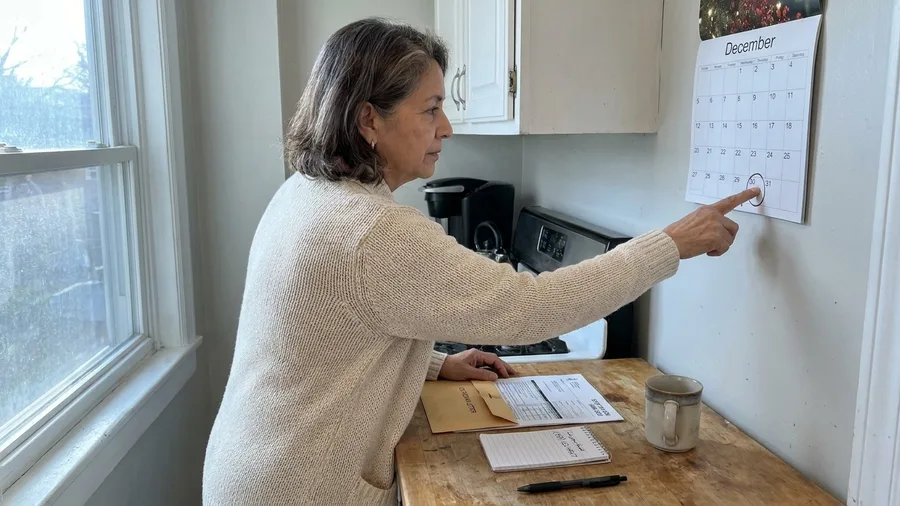
Inherited IRAs and Roth IRAs sit outside the straightforward case, and both need confirmation from your custodian and a look at current IRS guidance before you attempt a QCD from them. The rules are narrower than for your own traditional IRA, and a custodian may simply decline the request. Ask first rather than assuming.
Deadlines run on the calendar year, not on your convenience. The transfer has to leave the account by December 31 to count for that year, and custodians set their own processing cutoffs weeks earlier. Start in the fall, not the last week of December, when the phone lines are jammed.
State tax is the quiet one. Federal QCD treatment doesn't automatically set how your state treats the same dollars, so ask your preparer whether your state follows along.
And while you have their ear, confirm the current RMD age against the 70½ QCD age for your account type. Those two numbers no longer match, and mixing them up is an easy way to mistime a gift.
Frequently Asked Questions
What is the difference between a QCD and a regular charitable deduction?
A QCD is excluded from your taxable income before tax is calculated, and it can satisfy your required minimum distribution. A regular charitable deduction is claimed only if you itemize, and it cannot satisfy an RMD. Non-itemizers get nothing from the deduction but full value from the QCD.
Can I make a QCD from an inherited IRA or a Roth IRA?
Possibly, but confirm it with your custodian and check current IRS guidance before you request the transfer. The rules are narrower for these accounts, and some custodians will not process a QCD from them. Get a clear answer in writing first.
Does a QCD count toward my required minimum distribution?
Yes. A QCD made in an RMD year is credited against the requirement, so it satisfies the RMD without adding the gift to your taxable income. Tell the custodian to apply it to the RMD and check the confirmation to make sure it was credited.
How much can I give with a QCD each year?
Up to $100,000 per person per year in this example, and each spouse can give that amount from their own IRA. The limit is per person, not per couple, and it can be adjusted, so confirm the current-year figure before you finalize the amount.
Can I take the money out and then donate it?
No. If the distribution is paid to you, it becomes taxable income and cannot be converted into a QCD afterward. The transfer has to go directly from the IRA custodian to the charity.
What records should I keep for a QCD?
Keep the custodian's confirmation showing date, amount and charity, the charity's acknowledgment of receipt, and the tax forms reporting the distribution and exclusion. Give copies to your tax preparer and ask how your state treats the same amount.
The First Call to Make Before You Move a Dollar

Everything else in this article comes down to one decision, so here it is plainly: if you are 70½ or older, you give to charity, and you take the standard deduction, your first call is to your IRA custodian to ask for their QCD procedure. Same week, pull the charity's legal name and EIN and confirm on the IRS Tax Exempt Organization Search that it is a qualified charity. Neither step costs a thing, and both prevent the most expensive mistakes.
If you itemize heavily, or you need that IRA money to cover groceries and the light bill, the QCD is not your tool right now. A QCD only works if you were going to give that money away anyway. Swap a gift you would have written a check for, not rent money.
When you call the custodian, ask three things: what form they need, how they want the charity identified, and when the check goes out. Some mail a check to you, which is the catch, because a check made out to you is a withdrawal, not a QCD. It must go straight from the IRA to the charity.
So make the call, get the EIN, then move a dollar. In that order, the rest of this is easy.
Where the Tax-Free Part Actually Comes From
The tax-free part of a QCD is not a trick. It comes from one detail: the money never becomes yours. It leaves the IRA and arrives at the charity, and the tax code simply never counts it as income.
Get that detail right and the rest follows. You qualify at 70½, the limit is per person, the amount counts toward your RMD, and the record-keeping is three pieces of paper in a folder.
Get it wrong, by taking the cash first or sending it to a family member, and the whole benefit vanishes in a single taxable distribution.
So make the call, confirm the charity, and keep the paperwork. That is the whole strategy.
Confirm the Charity Before You Call the Custodian
Get the organization's legal name and EIN in writing, then ask your custodian for their QCD procedure and year-end cutoff. Those two answers set up the entire transfer.

Hello there! I’m Jesse Joe, the author and editor behind SolganGenius. I’m thrilled you’ve stopped by, and I can’t wait to share with you the essence of what this platform is all about.
I’m a writer, social media enthusiast, and a firm believer in the power of words. I’ve always been fascinated by how a simple phrase or slogan can capture an emotion, convey a message, and even change perspectives. Learn More