

I ask every 64-year-old who sits in my exam chair the same thing: have you sorted out your Medicare coverage yet? Most of them laugh and say they have a meeting booked, but no decision made. That meeting is where the biggest financial choice of your retirement gets made, and too many people walk in without knowing what they are choosing.
I am a retina specialist. I spend my days giving injections into people's eyes to keep them from going blind, and I have watched how that goes very differently depending on which Medicare path a patient took. This is not about politics or which plan is 'better' in a brochure. It is about what I can actually order for you when things go wrong.
The choice comes down to Medicare Advantage versus traditional Medicare with a Medigap supplement. One costs less every month. The other costs less when you get sick. I will show you exactly where that line falls, in dollars, so you can decide with your eyes open.
And no, I do not get paid more for telling you this. I actually get paid slightly less by Advantage plans. I am writing it because I have had patients lose vision they probably would have kept, and because I would rather you heard it now than in my office at 67.
Quick Tips Before You Start
Start at 64, Not 65
Give yourself six months before your birthday to compare plans, because the good decisions take time.
List Every Drug
Write down each prescription, dose and whether it is brand or generic, then check it against the plan's formulary.
Ask What They Earn
Ask your broker what commission they get on each option before you sign anything.
Check Your Doctors
Confirm your specialists and your hospital are in network for the specific plan, not just the carrier.
Know the Out-of-Pocket Max
A low premium means nothing if the out-of-pocket maximum is $9,000 and you need expensive care.
1. Your Doctor Can Do More on Traditional Medicare

There's a moment I have several times a week. A patient is settled in my exam chair, a little nervous already, and I have to decide what I can actually offer them. That decision was made months earlier at a kitchen table, without me in the room.
So when I ask every 64-year-old who sits down in front of me the same thing, "Have you figured out your Medicare yet?", the answer is almost always a version of no. There's a meeting booked for next month. Nothing's been decided. That fork in the road between an Advantage plan and traditional Medicare with a supplement is exactly why I bring up the habits that cost you later at all.
Here's the part that surprises people: Medicare Advantage pays me slightly less, and that is not why I raise it. I raise it because under traditional Medicare I'm free to treat you according to my own clinical judgment. Under an Advantage plan, there are many times when I can't, and it gets worse when things turn serious.
What does treat as needed actually mean in my world? It means I pick the drug, the dose and the schedule based on what your eye needs, not on what a reviewer will approve. For macular degeneration, that might be a stronger injection that holds longer between visits, or a tighter schedule that gives you the best shot at keeping your vision.
On an Advantage plan, that same decision runs through prior authorization and coinsurance. You may end up with a different drug, a shorter-acting one, or a delay while the paperwork moves from desk to desk. None of that is because your doctor stopped caring. It's because the plan sits between us.
Before your meeting, ask one question: if I get seriously ill, how many steps stand between my doctor's decision and my treatment?
💡 Tip: Ask your doctor directly: 'If I need an expensive drug, will my plan let you use the one you want?' The answer tells you a lot.
| Cost | Traditional Medicare + Medigap | Medicare Advantage |
|---|---|---|
| Part B premium (monthly, from Social Security) | A little under $300 | A little under $300 |
| Extra monthly premium | $180–$300 for the supplement | $0, or about $30–$50 |
| Yearly premium difference | About $2,400 more | About $2,400 less |
| Deductible before coverage kicks in | About $283, then the supplement covers the rest | Copay per visit; coinsurance on some services |
| 20–30% coinsurance on a $2,000 injection | $0 after the deductible | $400–$600 per dose |
| Yearly out-of-pocket maximum | None beyond the supplement premium | Commonly about $5,000; can be as high as $9,000 |
2. Healthy Friends Make Advantage Plans Look Better Than They Are

That gap between what a doctor can order and what a plan will approve is the same gap that explains your friends. Think about the ones who love their Advantage plan. They're usually 65 or 66, in good health, and they're not wrong about their own experience. The vision and dental perks are real, and the extra premium can be nothing at all, so when you barely use your insurance it feels free.
That's exactly the problem. A plan isn't tested by healthy years; it's tested by sick ones. Your friend's glowing review is a report on the easy part.
So this is where you have to look at yourself honestly. If you already have a condition, see a specialist on a regular schedule, or have a family history that makes expensive care likely, your first year on that plan will look nothing like your friend's. Ask them how many specialists they see. If the answer is none, their experience tells you nothing about the part you're worried about.
The perks aren't the issue. The issue is what happens when the perks stop mattering and the medical bills start. Keep that distinction in your pocket for every page that follows.
3. The Premium Gap Is Real: About $200 a Month

Both paths cost you the Part B premium, which is a little under $300 a month and comes straight out of your Social Security check. That part is identical whichever way you go, so it isn't the number to argue about.
The difference is what you add on top. With traditional Medicare, you add a Medigap supplement, roughly $180 to $300 each month, varying with your age and other factors. With an Advantage plan, you might pay nothing extra, or $30 to $50 a month. Run the subtraction and you land around $200 a month, or $2,400 a year.
That is a real saving, not marketing. For a lot of people a couple hundred dollars a month is meaningful, and I won't pretend otherwise. Pick your supplement while you're healthy, too, because the price is generally set at that point, so the $180 end of the range belongs to people who move early.
So the question isn't whether you save money. It's what happens to that saving later.
⚠️ COMMON MISTAKE
Don't Confuse a Low Premium With Low Cost
A $0 premium plan with a $9,000 out-of-pocket maximum is not cheaper than a $250 supplement if you get seriously ill. Compare the worst-case year, not the best-case month.
4. One Course of Treatment Can Eat the Whole Saving

That saving disappears fast the moment you need real care. On traditional Medicare you meet a deductible of about $283, and after that the supplement picks up the rest. Check the current-year figure at Medicare.gov, because it changes.
Now the other side. The injectable I use for macular degeneration runs about $2,000 a dose. On an Advantage plan with 20 to 30% coinsurance, that's $400 to $600 every time, and the out-of-pocket maximum on many plans sits around $5,000, with some as high as about $9,000. Do the math on twelve monthly doses: $4,800 to $7,200 before you count anything else.
How Bad a Year Gets on Each Path
Illustrative annual costs for one patient needing monthly eye injections
- Traditional Medicare + Medigap, healthy year: $2,400 more in premiums than Advantage, but no coinsurance on care.
- Advantage, healthy year: You keep the $2,400; perks like vision and dental are real.
- Traditional Medicare + Medigap, monthly injections: About $283 deductible, then the supplement covers the rest.
- Advantage, monthly injections, low out-of-pocket max: You hit a $5,000 maximum, wiping out the $2,400 saving and then some.
- Advantage, monthly injections, high out-of-pocket max: Up to $9,000 out of pocket, plus the premium, for the same drugs.
Figures are illustrative. Confirm your plan's out-of-pocket maximum and coinsurance at Medicare.gov.
5. The Saving Only Works If You Never Touch It

On paper that works beautifully. Left alone and earning a little interest, it would cover a bad year. In practice, I've almost never seen it happen.
Money is tight, and money you have is money you spend. The saving gets absorbed into the household budget, the car, the grandkids, the roof, not a medical fund in an envelope. When the expensive year arrives, the money isn't there, and the premium difference never really came back.
I see the result in my own office. Patients who can't afford the stronger drug take one that doesn't last as long or work as well, and they come in more often for smaller gains. I've had people lose vision that I'm fairly sure they would have kept on traditional Medicare.
If you're genuinely counting on banking the difference, open a separate account and set up the transfer for the first of every month before you sign anything. If you can't picture yourself doing that for fifteen years, don't build your plan on it.
🌱 GROWING TIP
If You Pick Advantage, Automate the Difference
Set up an automatic transfer of the $200 monthly saving into a separate savings account the day you enroll. Treat it as a medical fund, not spending money.
6. Same Services on Paper, More Hoops in Practice

Here is where it stops being about money and starts being about permission. Your Advantage plan covers the same list of services traditional Medicare does. It just doesn't cover them the same way or to the same extent, and the main reason is prior authorization. That means the plan has to approve certain drugs and procedures before they happen. Not after. Before.
The word 'approve' sounds harmless until the thing needing approval is a drug on a fixed schedule. In my exam room, the injection goes into the eye every four to eight weeks. That timing isn't a preference. A delayed authorization can push a treatment back weeks, and I have to sit across from someone and explain that the medicine exists, the coverage exists, and the path to it just got longer.
I'm not the only one who sees this. Staff at skilled nursing facilities tell me the same story after a hospitalization. Someone arrives from the hospital needing rehab, and the family spends the first days on the phone chasing approvals instead of settling in. Ask a specific plan, before you enroll, for its authorization turnaround times and its appeal process, and confirm your appeal rights at Medicare.gov.
Check the Drug List and Prior-Auth Rules First

Before you sign anything, get the paperwork. Pull the plan's formulary, which is the list of drugs it covers, and look up every medication you take by brand name and by generic name. Then write down the tier each drug sits in and what that tier costs you. Do the same for your spouse.
Next, flag the drugs that need prior authorization or step therapy. Step therapy means trying a cheaper drug first. That is fine if the cheaper drug works, but if your doctor already knows you need something specific, the rule can cost you weeks. In my world, a patient who needs a particular injectable does not have weeks to spend on a trial of something the plan prefers.
Then check the network, and check the exact plan, not the carrier. Confirm your physicians, your lab, and any infusion or injection site are in network for that specific plan. Networks vary by plan, even within the same company, which is how families get split up without anyone noticing at the sales meeting.
Get the plan's answers in writing, then cross-check them against Medicare's Plan Finder. If the answer changes between the phone call and the paperwork, trust the paperwork, because the paperwork is what gets honored.
7. Your Broker May Earn More If You Pick Advantage

Picture the kitchen table, the night before you sign, with the brochures fanned out and someone across from you saying, 'This one costs you nothing.' That is the moment to ask a question nobody likes asking out loud. That person is paid by the plan you choose. Not a crime. Just something you should know before you decide.
The commission is higher on an Advantage plan than on a supplement. So you save money and they make more money, and both of you have a reason to lean the same direction. Most people never bring it up, which is exactly why you should. Three questions, asked plainly. What do you get paid on each option I'm considering? How many carriers do you represent? Will you put the side-by-side comparison in writing for me to keep?
A good broker answers all three without flinching, and you will know in ten seconds whether you are talking to an advisor or a salesperson.
Then go read the plan's own documents, not the summary sheet. The summary is marketing. The evidence of coverage is the contract, and it is the only thing that will still be true two years from now.
💡 Tip: If a broker cannot or will not answer what they earn on each option, find another broker.
Traditional Medicare vs. Medicare Advantage at a Glance
Traditional Medicare + Medigap
- Higher monthly premium: about $180–$300 for the supplement
- Doctor chooses the drug, dose and schedule without prior authorization
- After a small deductible, the supplement covers the rest
- No network restrictions for most providers
- You can switch to Advantage later with fewer penalties
Medicare Advantage
- Lower or zero extra premium: save about $2,400 a year
- Perks like vision and dental are real and useful
- Prior authorization and coinsurance apply to expensive drugs
- Out-of-pocket maximum commonly $5,000, up to $9,000
- Switching back to a supplement later can be difficult or impossible
Switching Back Later Can Cost You the Supplement
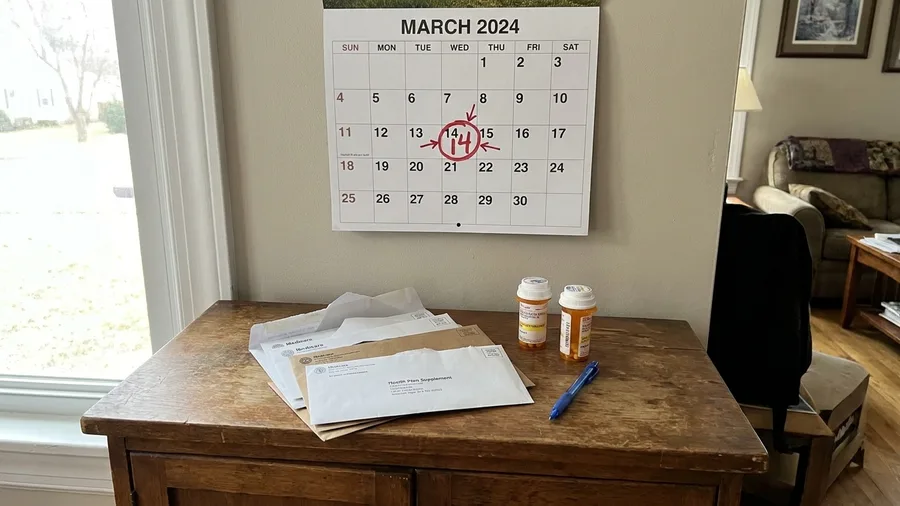
You can go back to traditional Medicare. I want to be clear about that, because people hear 'you're locked in' and panic. The usual route is the Medicare Advantage Open Enrollment Period early in the year, and you can confirm the current dates at Medicare.gov. So the plan itself is not a trap.
The supplement is the trap. Medigap guaranteed-issue rights, the ones that let you buy a supplement no matter what shape you're in, are largely confined to your one-time Medigap open enrollment window around age 65. After that window closes, in most states, insurers can ask you about your health and refuse you or charge you more. Not every state, but most.
Here's what that looks like in practice. You're 65, healthy, and you choose the Advantage plan because it looks cheaper. At 68 you get a diagnosis. Now you want out, and the supplement is either unavailable or priced like a punishment. The decision you made when you felt fine is the decision that matters when you don't.
Rules vary by state, so before you count on switching later, call your State Health Insurance Assistance Program and your state insurance department. Get the answer for where you actually live.
What If the Supplement Is Genuinely Out of Reach?

I'm not going to pretend everyone can afford the supplement. Some people can't, and telling them to find $200 a month they don't have is not advice. So let's do the honest math. The saving is about $2,400 a year. Against that sits an Advantage plan out-of-pocket maximum commonly around $5,000 and as high as about $9,000, plus 20 to 30% coinsurance on drugs that can run $2,000 a dose.
If you go the Advantage route, choose by the in-network out-of-pocket maximum and the drug list, not by the premium and the perks. A plan with a $5,000 maximum that covers your drugs on a low tier beats a flashy $0 premium plan with a $9,000 maximum every time you get seriously sick.
Two things to check before you count on a cap. The annual Part D out-of-pocket cap covers pharmacy drugs, not Part B office-administered drugs like my patients' eye injections. Confirm what is covered at Medicare.gov. And if you do choose Advantage, treat the monthly saving as a medical fund. Automate the transfer the day the premium stops coming out, so the money is there when the coinsurance arrives.
Frequently Asked Questions
Can I switch from Medicare Advantage to traditional Medicare later?
Yes, you can return to traditional Medicare. The Medicare Advantage Open Enrollment Period early in the year is the usual route, and you can confirm the current dates at Medicare.gov. The harder part is getting a Medigap supplement afterward, because guaranteed-issue rights are limited.
Do I still pay the Part B premium with Medicare Advantage?
Yes. Both traditional Medicare and Medicare Advantage require you to pay the Part B premium, which is a little under $300 a month and comes out of your Social Security. The difference is whether you add a Medigap supplement on top.
What is prior authorization and why does it matter?
Prior authorization means the plan has to approve a drug or procedure before it happens. When a drug is needed on a fixed schedule, a delay can affect your care. Ask the plan which of your drugs require it and how the appeal process works.
Are the vision and dental perks worth it?
They can be, if you use them and you are healthy. But do not let a dental benefit decide a decision that also governs whether your doctor can order the drug you need. Compare the worst-case year, not the best-case month.
What if I can't afford Medigap at all?
If the supplement is out of reach, choose Advantage by its in-network out-of-pocket maximum and drug list rather than by premium and perks. Automate the monthly saving into a medical fund, and ask a SHIP counselor whether you qualify for a Medicare Savings Program.
Who can help me compare plans for free?
Your State Health Insurance Assistance Program (SHIP) offers free, unbiased counseling. You can also use Medicare's Plan Finder at Medicare.gov to compare drug costs and out-of-pocket maximums side by side.
The Decision Rule I Give My Own Patients at 64
Here is the rule I hand to patients. If you can carry the Medigap premium and you expect to need real care, take traditional Medicare with a supplement. It costs more every month and less when it matters.
If the supplement is genuinely out of reach, take Advantage with your eyes open. Choose it by the out-of-pocket maximum and the drug list, not by the perks, and bank the saving automatically.
This week, call your state's SHIP counselor and pull the plan documents before your enrollment meeting. That one hour of homework is worth more than any brochure.
Do This Before Your Enrollment Meeting
Call your state's SHIP counselor and pull the plan's drug list and out-of-pocket maximum. Bring both to the meeting, and ask the broker what they earn on each option.

Hello there! I’m Jesse Joe, the author and editor behind SolganGenius. I’m thrilled you’ve stopped by, and I can’t wait to share with you the essence of what this platform is all about.
I’m a writer, social media enthusiast, and a firm believer in the power of words. I’ve always been fascinated by how a simple phrase or slogan can capture an emotion, convey a message, and even change perspectives. Learn More