
The shirt fits across your chest. Everywhere else, it hangs like a curtain. Buying up a size fixes the pull but turns the whole thing into a tent so you’re stuck choosing between two versions of the same problem.
Most style advice for bigger men treats every body the same. Chest-heavy frames have a specific issue: top-to-bottom imbalance, not just overall size.
Fixing that takes a different approach than “wear dark colors and avoid stripes.” These 12 tricks are built around exactly that.
Why Your Chest Looks Bigger in Loose Shirts — and What That Means for Every Trick Below
Baggy shirts don’t hide a big chest. They make it the first thing anyone sees.
Why: a loose shirt drapes off the widest point of your body and hangs straight down from there. That widest point is your chest. So the fabric billows outward from it, creating a tent shape that frames your chest like a spotlight then adds extra bulk on top of the size that’s already there.
The fix isn’t smaller. It’s smarter.
Every trick in this article works on one idea: your chest doesn’t need to disappear, it needs a frame that makes your whole body look proportional. That means:
- Creating a stronger vertical line through your torso so the eye travels down, not across
- Adding visual weight below the waist so your lower half matches your upper half
- Controlling where fabric sits on your body, not how much of it there is
None of that involves hiding anything. A fitted shirt that skims your chest without pulling will always read smaller than a loose one that balloons off it even if the fitted version shows more of your actual shape.
That’s the shift to make before reading anything below. Coverage is not the goal. Balance is.
Trick 1: The shirt should skim your chest, not strain across it
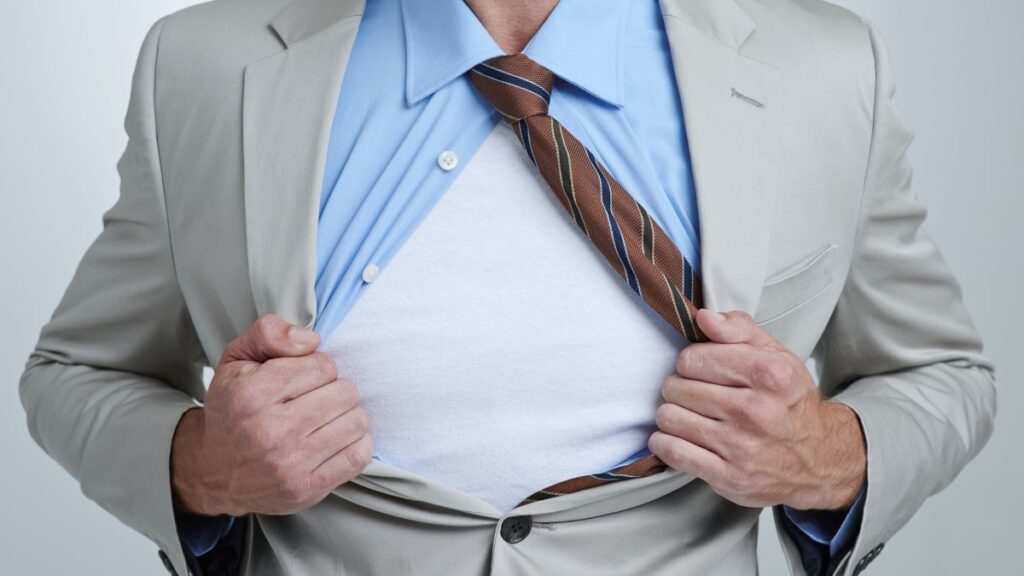
- Fabric must lie flat with no diagonal pulling or stress lines between buttons
- Pinch the side seam when the shirt is buttoned one inch of give is the target; three inches means the cut isn’t working for your frame
- Excess room past the chest adds bulk right where you least want it
Trick 2: Look for cuts with waist suppression
- Suppression means the shirt tapers inward between your chest and hip instead of hanging straight down
- Without it, a shirt with enough room in the chest becomes a box silhouette on your frame
- Athletic fit and tapered fit labels are a useful starting point, but always verify the chest measurement size numbers alone won’t tell you enough
Trick 3: Know what tailoring can and can’t do

- Shirts where the chest fits but the waist and sides hang loose are exactly what tailors handle well
- Bringing in the sides is low-cost and fixes the problem cleanly
- Chest-pulling cannot be tailored out alterations add room in limited ways, so a shirt that’s already tight across the buttons isn’t a candidate
Trick 4: The Collar Shape That Narrows Your Chest Without Changing a Single Seam
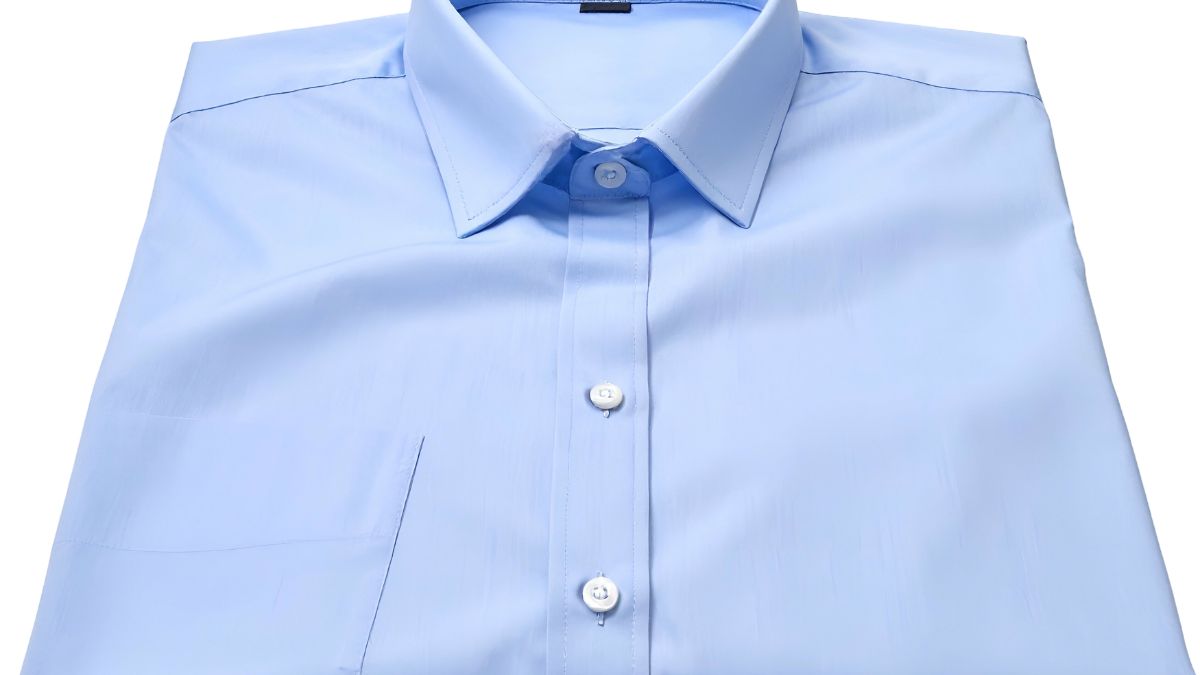
Changing your collar costs nothing. No tailor, no new wardrobe just a different neckline shape that controls how wide your chest reads from across the room.
The collar points frame the top of your chest like a border. Wider that border sits, the wider your chest appears. Narrower it sits, the more the eye is pulled inward and downward instead of across.
Here’s how each neckline works for a chest-heavy frame:
| Neckline | What It Does to Your Chest | Verdict |
|---|---|---|
| Point collar | Pulls the eye inward and down | ✅ Best for broad chests |
| Spread collar | Widens the visual frame across the chest | ⚠️ Use with caution |
| Moderate V-neck | Creates a vertical line that breaks up chest width | ✅ Works well |
| Deep V-neck | Exposes too much chest, draws attention to width | ❌ Avoid |
| Crew neck | Sits across the chest with no vertical break | ❌ Worst option |
A few things worth knowing before you swap anything out:
- Point collars work in both casual and dress shirts this isn’t just a formal-wear fix
- V-necks help most when the point lands between your collarbone and mid-chest; below that, the effect reverses
- Crew necks create a horizontal line right across the widest part of your frame, which is exactly the opposite of what you need
One neckline change on a shirt you already own. That’s the whole trick.
Trick 5: Wear the open layer over a fitted base, not a loose one Shirt
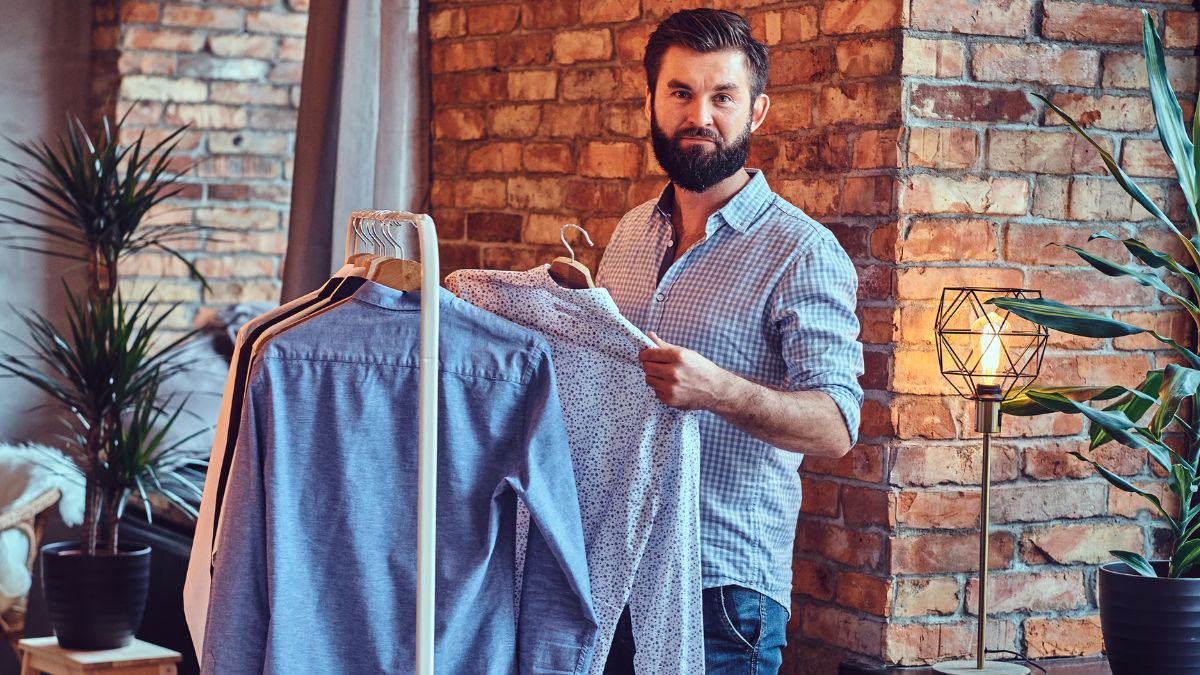
- Fitted base + open layer = vertical line works
- Loose base + open layer = doubled bulk across the chest, vertical line disappears
- Color contrast between the two layers sharpens the vertical column dark outer, lighter base works well
- Matching the outer layer to your trousers extends the vertical line even further down
Trick 6: Length and fit of the outer layer decide whether it balances or backfires
| Layer Type | Ideal Length | What to Avoid |
|---|---|---|
| Open button-down shirt | Hip bone or just below | Cropped — stops the vertical line too early |
| Overshirt / shirt jacket | Low hip | Boxy cuts that add shoulder width |
| Longline cardigan | Mid-thigh | Belted — breaks the vertical line at the waist |
One rule covers all three: the outer layer should never be the widest thing in the outfit. Wear it open, keep it relaxed but not oversized, and let the base layer do the fitted work underneath.
Trick 7: Trouser leg opening is the balance dial most men ignore
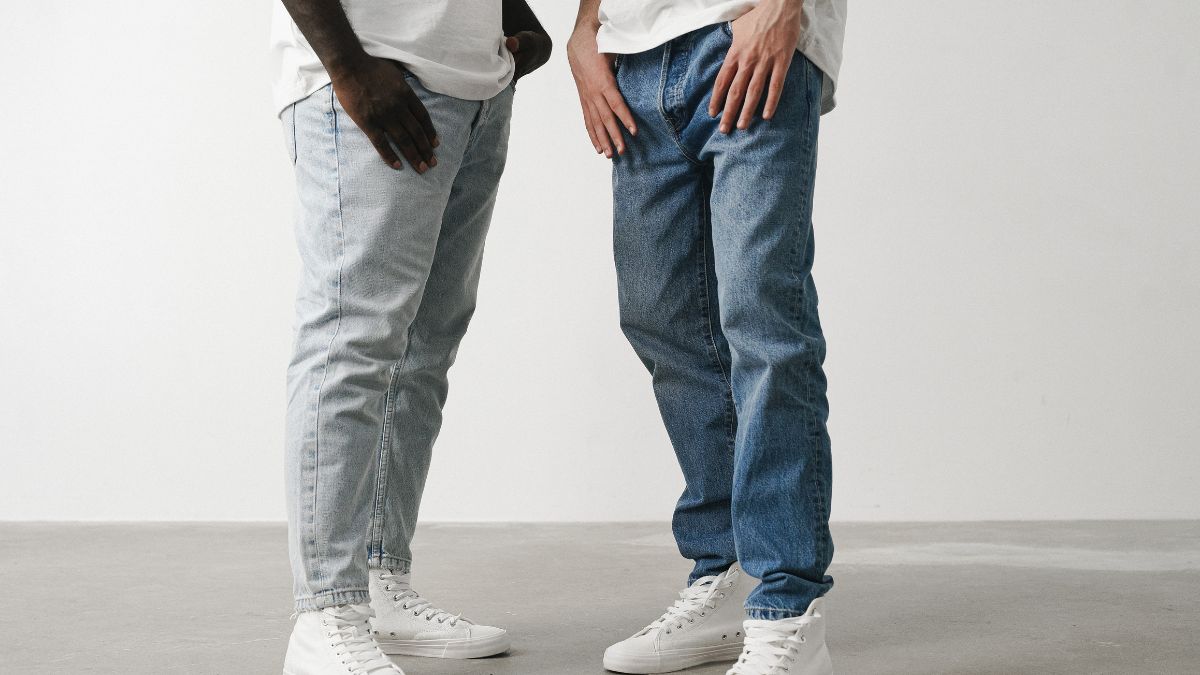
- Straight-leg and relaxed-fit trousers with a leg opening between 16 and 19 inches create enough lower-body presence to counter a broad chest
- Slim or tapered cuts narrow below the knee, which makes everything above the waist read wider by comparison
- Chinos, dress trousers, and denim all come in straight cuts this isn’t a formal-only fix
Trick 8: Fabric weight in trousers adds presence without adding size
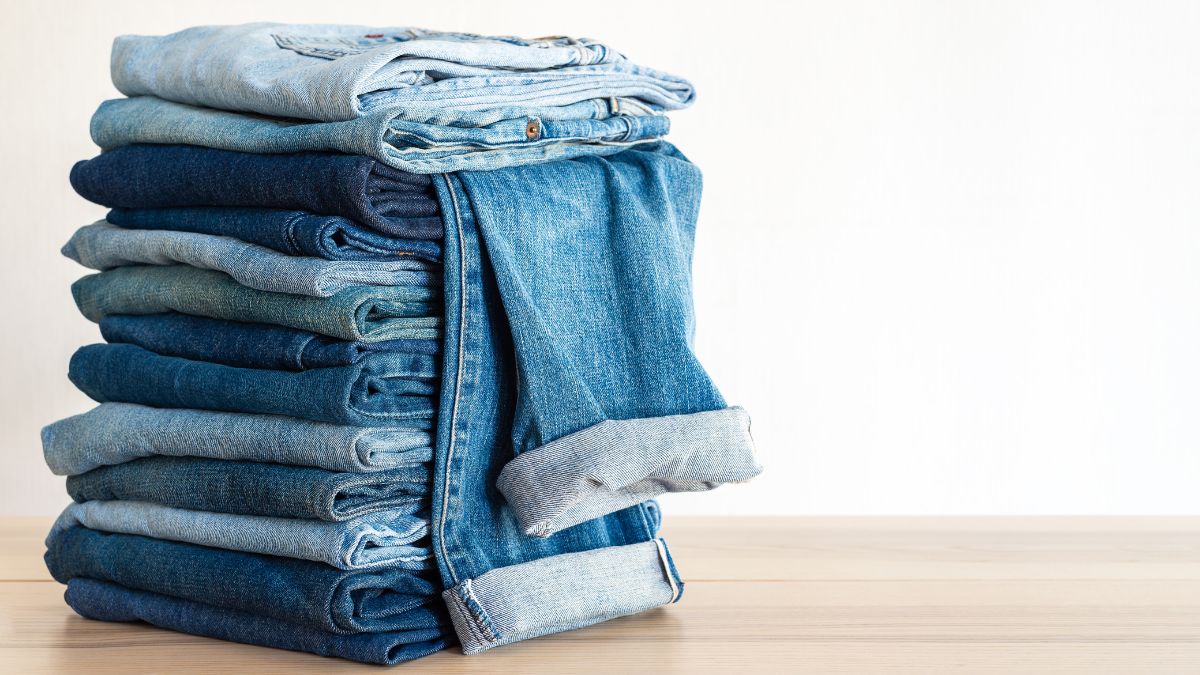
- Heavier fabrics like denim, wool, and canvas hold their shape and fill space visually
- Lightweight trousers in thin fabric collapse close to the leg and reduce the lower-body silhouette
- Structure at the bottom of the outfit grounds the whole frame
Trick 9: Footwear needs enough visual mass to anchor the look
| Footwear Type | Visual Weight | Works for This Frame |
|---|---|---|
| Chunky sneakers / boots | High | ✅ Strong anchor |
| Derby shoes / loafers | Medium | ✅ Works well |
| Slim pointed dress shoes | Low | ⚠️ Use carefully |
| Minimalist sneakers | Very low | ❌ Disappears under a heavy frame |
Nothing here makes your lower half larger. It makes the full frame read as one balanced shape instead of a heavy top sitting on a narrow base.
Trick 10: Lapel width relative to shoulder width sets the tone
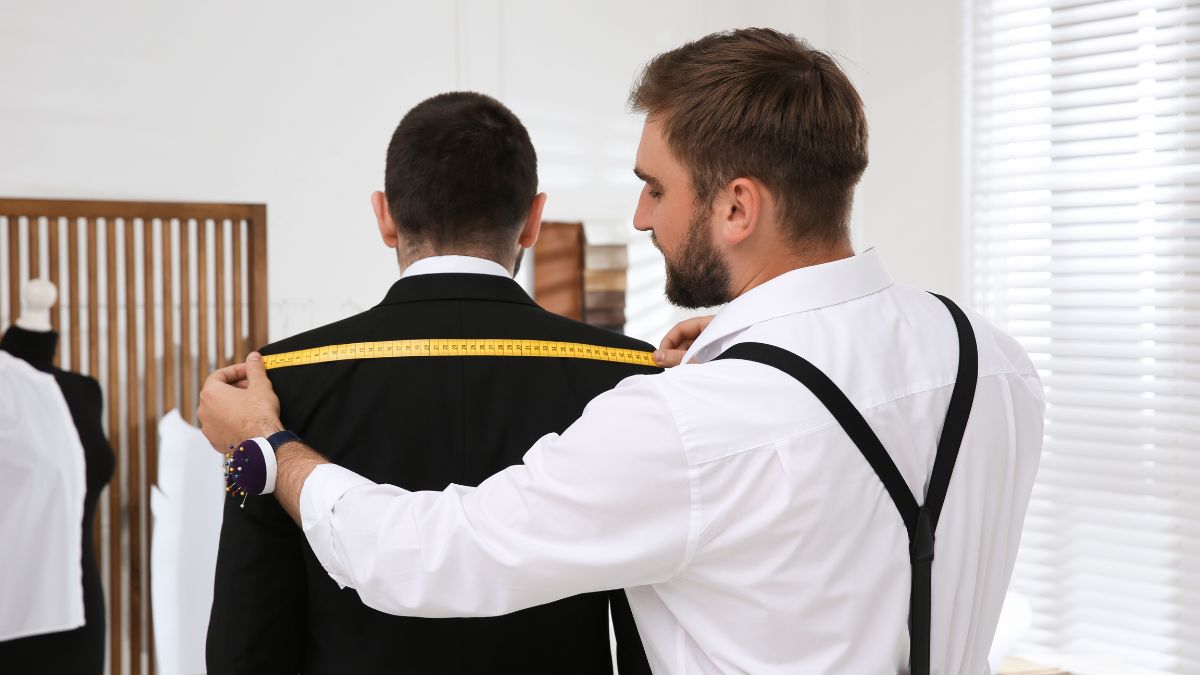
- Lapels that are too narrow on a broad chest create a pinched, top-heavy look that draws more attention to chest width
- Medium lapels roughly 2.5 to 3.5 inches at the widest point sit in proportion without competing with your frame
- Wide peak lapels add horizontal spread across the chest and should be avoided for this body type
Trick 11: Button position and shoulder seam placement change everything
| Blazer Detail | What to Look For | What to Avoid |
|---|---|---|
| Top button position | Should sit at or just above your natural waist | High button stance shortens the chest visually and adds bulk |
| Shoulder seam | Must land exactly at the shoulder’s edge | Seams that droop or extend outward widen the silhouette dramatically |
| Chest suppression | Blazer should taper slightly from chest to waist | Boxy cuts turn the whole upper body into one wide block |
- Shoulder seams sitting even half an inch past your shoulder’s edge are worth fixing a tailor can take this in
- Button stance cannot easily be altered, so check it carefully before buying
- Suppression through the waist can be added by a tailor if the chest fits but the body hangs straight
Right fit off the rack is rare for this frame. Buying for the chest and tailoring the rest is the most reliable path.
Trick 12: The Side-Profile Mirror Test That Shows You Which of These Tricks You Actually Need
Every man checks his outfit facing forward. That single habit is why most chest-heavy men never identify the real shape of their problem and end up applying the wrong fixes.
Turn sideways. That view tells you which type of chest you’re actually working with, and the answer changes which tricks above matter most for your frame.
The 60-second side-profile assessment:
- Barrel chest your chest projects forward from your body, creating a rounded forward curve when viewed from the side
- Broad chest your chest extends wide left and right, but sits relatively flat from the front profile
- Both most men with a large chest have some degree of each, with one being more dominant
| What You See From the Side | Your Priority Tricks |
|---|---|
| Strong forward projection (barrel) | Tricks 1, 2, 3 shirt fit and suppression matter most; fabric pulling forward off the chest is your main problem |
| Significant lateral width (broad) | Tricks 4, 5, 6 collar shape and vertical layering reduce the across-the-chest reading |
| Heavy top, narrow lower body | Tricks 7, 8, 9 lower-body balance is your fastest visible fix |
| Blazer looks wrong but fits the chest | Tricks 10, 11 lapel and shoulder seam adjustments are the issue |
Most men need two or three of these groups working together. Start with whichever side-view problem is most obvious, apply those tricks first, then layer in the rest.
One mirror angle. Completely different information.

Hello there! I’m Jesse Joe, the author and editor behind SolganGenius. I’m thrilled you’ve stopped by, and I can’t wait to share with you the essence of what this platform is all about.
I’m a writer, social media enthusiast, and a firm believer in the power of words. I’ve always been fascinated by how a simple phrase or slogan can capture an emotion, convey a message, and even change perspectives. Learn More