

Sell the big house, buy something smaller, watch your bills drop. That's the advice every retirement article hands you, and I followed it.
I moved out of a 1,300-square-foot house I had built in 2012 and into a condo I already owned. On paper it was the obvious call. Looking back, I think I got it wrong.
The house was one story. The yard took twenty minutes to mow. There were sidewalks, a grocery, a pharmacy and a bank within about half a mile. My daughter and grandkids were twelve minutes away.
I'm not miserable where I am now. But the place I left was a better retirement house than the one I moved into, and I didn't see it until the furniture was already gone.
Downsizing is sold as automatic advice
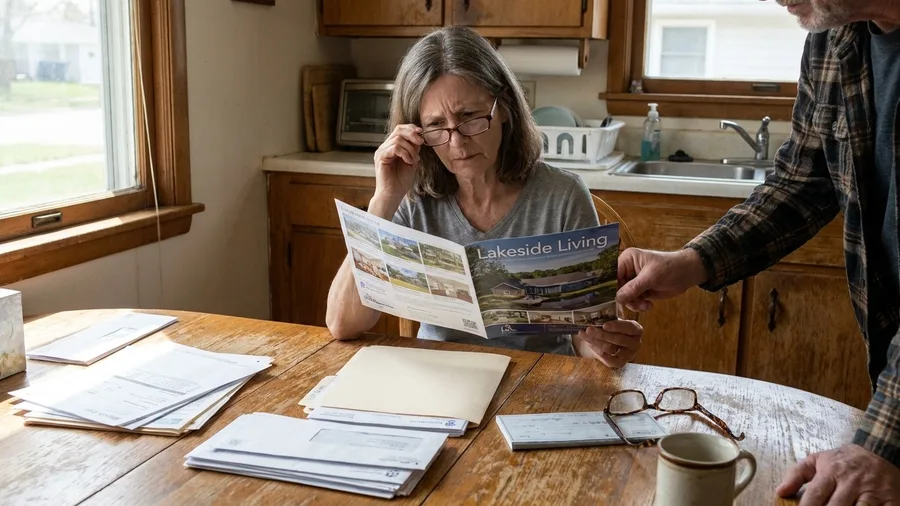
It's a default suggestion, and those aren't the same thing.
The pitch goes like this. Sell the big house, move into something smaller, lower your monthly expenses, simplify your life. And it delivers. Downsizing typically trims your utility bills, cuts down on upkeep and cleaning, and can even shrink your monthly payment.
For plenty of retirees that is exactly the right call, and I'll get to who those people are. What I want to flag first is the word automatic. Advice that arrives without conditions gets followed without conditions.
That's how I ended up in a second-floor condo wondering what I'd just done. I had a 1,300-square-foot single-story house built in 2012, and I moved out of it because moving was what you were supposed to do.
Here's the part the pitch skips. A smaller place saves you money only if the savings actually land in your budget. My condo had no mortgage, which sounded great. Then the HOA dues came in at $310 a month, and the unit sat on the second floor with no yard and nothing much to walk to. The square footage shrank. The life shrank with it.
A smaller home is a tool, not a verdict. Before you use it, you owe yourself a hard look at the house you're already in.
| Monthly cost | 1,300 sq ft house | Condo |
|---|---|---|
| Mortgage or HOA | $1,180 mortgage | $310 HOA dues |
| Utilities | $185 | $95 |
| Insurance | $105 | $45 HO-6 |
| Upkeep set-aside | $150 | $0 (HOA covers exterior) |
| Car | About $540 if you drive everywhere | About $540 unless walkable |
| One-off risks | Roof, HVAC, water heater | Special assessment |
The house I left was nearly perfect
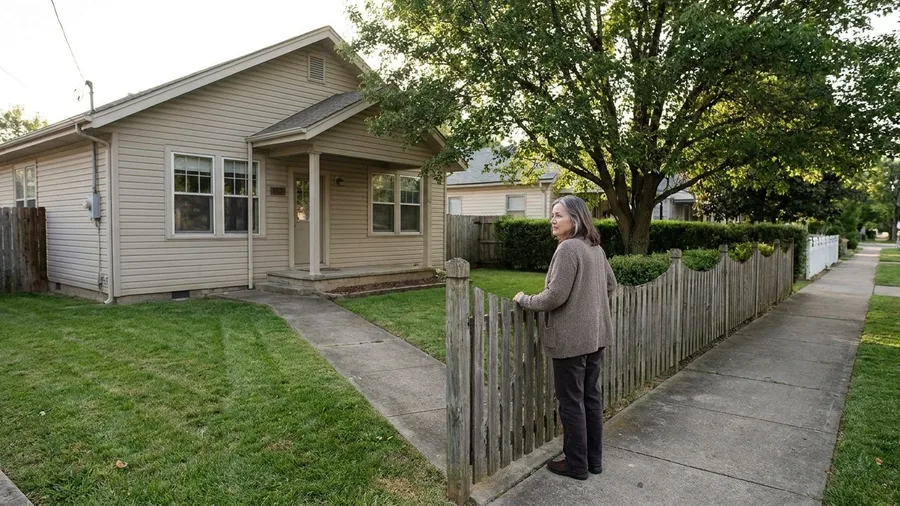
A house that checked nearly every box a retiree should care about, and I didn't notice until it was someone else's.
It was about 1,300 square feet. Not a sprawling place with rooms nobody used. Single story, so no stairs to negotiate when a knee goes. The yard was small and low-maintenance, just enough to look nice without turning into a weekend job.
And the location. Sidewalks, nearby stores, places you could reach without getting in the car every time. It sat twelve minutes from my daughter and grandkids, even after her divorce.
I already owned the condo, and that made it feel logical. No more mowing or shoveling, fewer outside chores, everything easier to keep up with. The house, by comparison, just felt like the old one. I thought I was trading up into a simpler life and trading away a house that had done its time.
I'm not miserable now. I want to be clear about that, because this isn't a story about a terrible condo. The regret is about what I didn't see at the time.
Looking back, I had a modest, single-story, walkable home close to my family, and I treated it as the thing to leave rather than the thing to keep.
⚠️ COMMON MISTAKE
The mistake was the comparison
I compared the condo to the house on maintenance and square footage, not on walkability, family distance or how the house would age with me. Those three things cost more than the yard ever did.
Walkability buys back independence and a car

Because it's the difference between choosing not to drive and not being able to.
From that house I could walk to a grocery, a pharmacy and a bank within about half a mile. That protects independence and flexibility as driving gets harder, and it eventually opens the door to dropping a car entirely.
The car math is not small. Insurance, maintenance, fuel and registration ran me roughly $6,500 a year all in. That's money that disappears from the budget, not just from the driveway, once you live somewhere you can actually walk out of.
That number matters more as you get older, not less. It's also the kind of expense you don't think to check when you're comparing two homes on price and square footage.
One catch. Walkability only counts for the errands you really run. A coffee shop two blocks away is nice. A pharmacy you can reach on foot is the thing that lets you sell the car.
Car-dependent vs walkable retirement
Car-dependent address
- Two cars at $6,500 each is $13,000 a year
- One dropped car is like finding $540 a month
- A ride to the pharmacy costs a fare, a favor, or a wait
- Check the route on foot before you sign anything
Walkable address
- Half a mile is about a 10-minute walk each way
- Sidewalks the whole route, not just near the house
- Crosswalks and lighting matter more than distance
- Test it at night and in bad weather first
Distance changes family more than you expect

More than the brochures about hobbies and travel suggest.
That house stayed closer to my daughter and grandkids even after her divorce. The condo is thirty-five minutes away. Thirty-five minutes isn't far until you're the one who has to make the drive both ways, in the evening, after a long day.
Retirement turns out to be made of free time and hobbies — the work retirees keep doing — but also of being able to see family easily. Distance affects that far more than most people expect, and it does so quietly, one skipped visit at a time.
You don't decide to see your grandkids less. You just start weighing whether it's worth the drive tonight, and some nights it isn't. A dozen of those nights add up to a different relationship than the one you had when they were twelve minutes away.
There's a counterweight, though. This only matters if your family stays put. Ask where your kids plan to be in five years before you choose a house based on where they are today.
💡 PRO TIP
Ask the question out loud
Before you sell, ask your kids where they expect to be in five years. A house chosen for proximity to family is only worth its premium if the family stays.
Downsizing is about lifestyle, not square footage
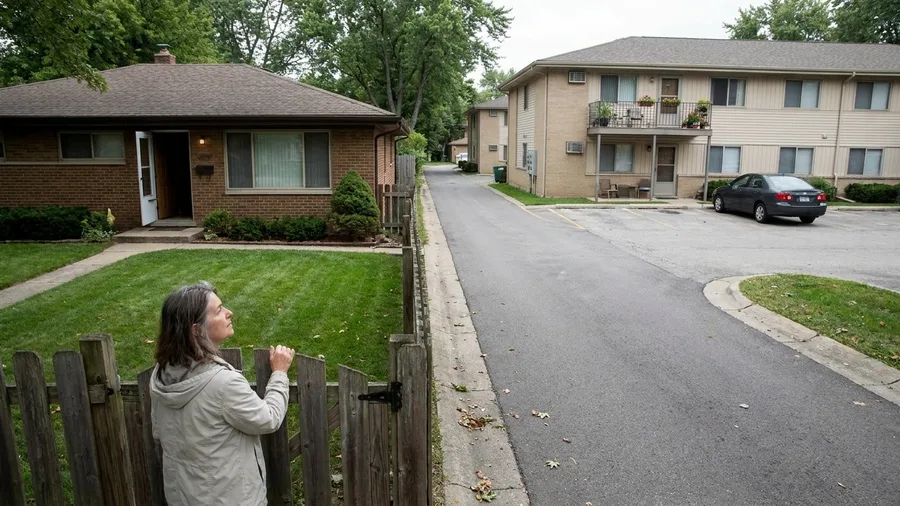
Location, walkability and how close you are to the people you want to see.
I already owned the condo, so moving into it felt like the logical, low-friction choice. No more mowing or shoveling, fewer outside chores, everything easier to keep up with. Those things are real, and I'm not pretending otherwise.
But that's the reframe I wish someone had handed me. Those are maintenance advantages, not lifestyle advantages. A home that saves you two hours a week on yard work but adds half an hour of driving every time you want to see your grandkids isn't obviously the better deal.
The test I should have run is simple. Picture an ordinary Tuesday in each place. Where do you wake up, what do you walk to, who can drop by, and how much of the day goes to driving? Compare those two Tuesdays, not the square footage.
The mistake, in one line, is focusing on the house itself instead of the life it supports.
A newer house keeps major repairs away
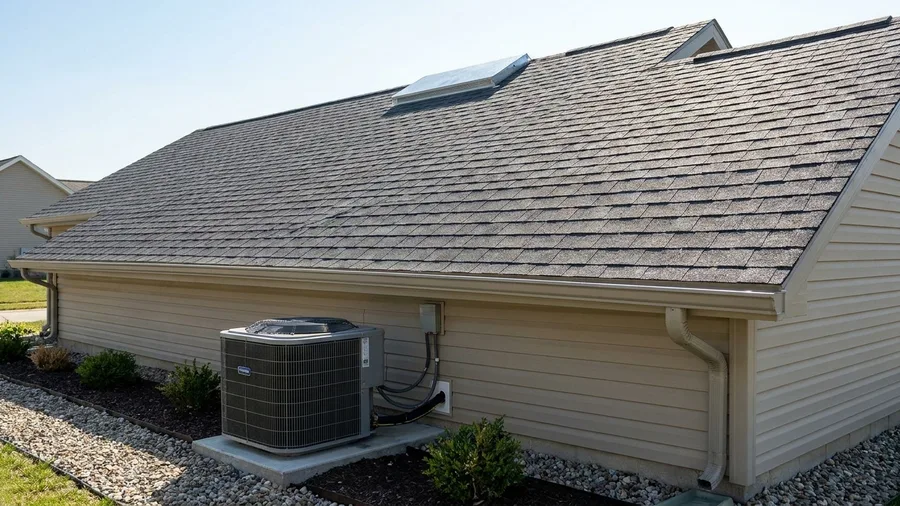
I could have kept the house, and there were two clean ways to do it. That's the part that stings when I look back.
The house went up in 2012, so the roof and the big systems were newer and in good shape. A furnace, a water heater, a roof – those were years away from being my problem. In an older home you can almost count on one of them landing in the first decade of retirement, and it lands with a four-figure bill attached.
Option one was the obvious one: sell the condo, take the roughly $260,000 of equity, and put it against the house mortgage. The payment was $1,180 a month, so that money would have retired most of it. Option two was a refinance to bring the monthly number down instead. Actual terms on a refinance come from a lender, not from me – call one and get a real quote before you assume either path works.
But the condo has its own version of a surprise. The exterior belongs to the HOA, so repairs aren't mine to schedule or pay for month to month. A special assessment can still show up anyway, and it arrives as one lump sum with a deadline attached. That's the catch nobody warns you about on this side of the move.
My two numbers, side by side
📊 Carrying cost gap
House $1,620 vs condo $450
🏠 Who pays exterior repairs
You vs the HOA
⚠️ Special assessment
Lump sum, deadline, no notice
🚗 Drive to my daughter
12 min house / 35 min condo
💰 Second car keeper
About $6,500/yr
The refinance question
The equity could kill most of the $1,180 payment, but a lender sets the real terms. A second car costs $6,500 a year even when paid off.
Downsizing is still right for some people

Downsizing is the correct decision when the house you're in is actively working against you. Mine wasn't, which is why my move went the wrong way.
A large house with multiple floors is the clearest case. Every staircase turns into a daily negotiation, and one fall changes everything about how you live. A big yard that eats your weekends and your back is the second. Then there's the version where the expenses are stretching your budget and the house is the thing doing the stretching.
In any of those situations the math clearly favors moving, and the smaller place you buy will probably make your life easier, not smaller. I've watched friends do exactly this and land in better shape than they started.
Now here's the counterweight. If you just recognized your own house in my description of the wrong one, you may be the person this advice doesn't apply to. Single-story, modest, cheap to keep – that's not a problem to solve. That's the thing I walked away from.
When to move, ranked
The strongest reason sits on top. If none of these apply, you already own the house.
Five questions test the house you own

You find out by scoring your current house on five plain questions, honestly, and counting the noes. No spreadsheet, no realtor – just a piece of paper and some nerve.
Can you really handle the square footage? Is everything on one level? Does the yard make sense? Is it in a good spot? Is it near the people you want to be close to? Write them down and give each one a straight yes or no.
Answer them on a bad day, not a good one. Imagine your knee is acting up, it's raining, and you need a prescription filled. Walk yourself through the house and the neighborhood on that version of your life, not the version where you're 65 and feeling fine.
A single no isn't a verdict. Several noes with no fix in sight make the decision for you. And one of them can't be remodeled at all: location and proximity to family are fixed. If those are your noes, moving is the honest answer, and staying is just hoping the map changes.
📝 Test your house before you list it
Score the five questions
Size, one floor, yard, location, proximity to family — write down a yes or no for each.
Walk the errands
Do your real grocery, pharmacy and bank run on foot and time it honestly.
Run the two budgets
Pull twelve months of bank statements and compare what staying costs against the condo.
Read the HOA file
Ask for dues history, reserve fund and special assessment record before you commit.
Talk to the family
Confirm where your kids expect to be in five years before you move for proximity.
Don't rush a decision you can't undo

You avoid it by not rushing, and by looking hard at what you already have before you call anyone. That's the whole advice, and it's the one thing I didn't do.
It's easy to miss the value of a house. You see the yard work and the maintenance and the stairs, and you stop seeing the sidewalk, the neighbors, and the twelve minutes to your daughter's door. That value shows up after you move, which is the worst possible time to learn it.
So give yourself a set window – ninety days works – and live deliberately in your current house. Take the walk to the store. Pull out the repair record and look at what the last few years actually cost. Time the drive to your family. Then decide with the information you just gathered.
There's no perfect answer. There's the best decision you can make with what you know. My one regret is that I didn't go looking for a little more to know.
The two budgets need the same line items
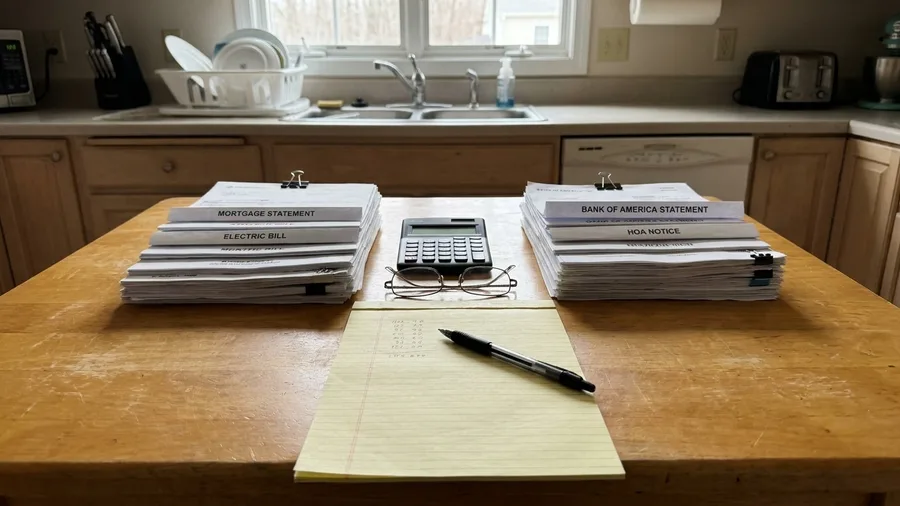
Put staying and leaving in the same line items and the comparison stops being about square footage. That's the only way I could see clearly what the move had actually done.
On my numbers, the house ran $1,180 for the mortgage, $185 for utilities, $105 for insurance and a $150 monthly upkeep set-aside. That set-aside is the line people quietly drop – a roof and an HVAC system don't bill you monthly, but they are still coming. The condo was $310 in HOA dues, $95 in utilities and $45 for HO-6 insurance, with no upkeep line at all, though the exterior wasn't mine either.
Then list what isn't monthly. On the house: that eventual roof or HVAC replacement. On the condo: a special assessment, which lands as one number with a deadline. On both: one-time moving costs, which people consistently forget.
Build your own version from the last twelve months of bank statements. That's the real record of what you pay, and it will beat anyone's averages, including mine.
The tax and paperwork check comes first

Before I signed anything on that condo, I should have sat down with my tax preparer and a stack of HOA documents, and I did neither. I want to say I learned that the hard way, but the truth is I got lucky, and lucky is not a plan. So do the boring part first. It takes an afternoon, and it protects the whole decision.
Start with a tax preparer, not a website. Ask specifically how the capital gains exclusion works on a primary residence under the IRS rules in effect the year you sell, and what the move does to your property tax bill. Call your county assessor for the actual numbers. My old house carried $1,180 a month in mortgage, and I had assumed the tax side would just sort itself out. That assumption is worth a couple hundred dollars to verify.
Then pull the condo or HOA documents and read them like a suspicious detective. Dues history tells you which direction they have been heading. The reserve fund tells you whether the roof has been paid for or put off. The special assessment record is the one people skip, and it is the one that turns a cheaper home into an expensive one. My condo HOA ran $310 a month. That number is a starting point, not a ceiling.
Last, have the family conversation, in person, before signatures. Ask your kids where they expect to be in five years, because that answer decides whether 12 minutes from your daughter beats 35.
Frequently Asked Questions
Was the mistake the downsizing itself or the condo you chose?
The condo. I didn't fully understand what I was giving up: the single-story layout, the sidewalks, the short drive to my daughter. A smaller, walkable, one-story place near family would have been a fine downsizing. I just didn't compare on that.
How do I know if my current house is a good retirement house?
Score it on five things: manageable size, one floor, reasonable yard, good location, and close to the people you want nearby. Answer as if your knee hurts and it's raining. One no is workable; several, or a location no, is the honest signal to move.
Can I afford to keep a house on a fixed income?
Run the actual numbers. On my figures the house was $1,180 mortgage plus $185 utilities, $105 insurance and $150 upkeep. If you own another property, its equity can pay down the mortgage or a refinance can lower the payment — but take those terms to a lender.
What should I check before I sell my house in retirement?
Talk to a tax preparer about the capital gains exclusion on a primary residence and how the move affects property tax in your county. Pull the HOA documents for the place you're buying. And confirm where your kids plan to be in five years.
Is a condo always less work than a house?
Less exterior work, yes. But the HOA dues can rise, and a special assessment can arrive as a single large bill. Read the reserve fund and assessment history before you buy, because those are the costs the monthly fee doesn't show you.
Score your own house before you list it
The house wins if it's single-story, has a small yard, sits within walking distance of an errand or two, and is near the people you love — and if your budget can be made to work, whether that means paying down the mortgage or refinancing. Downsizing wins if you're in a multi-story place with a big yard and expenses that strain the budget.
This week, before you call an agent, do two things. Take the retirement readiness test on your own house, honestly. Then walk from your front door to the grocery and time it.
That's the test I didn't run. It's the one I'd run now.

Hello there! I’m Jesse Joe, the author and editor behind SolganGenius. I’m thrilled you’ve stopped by, and I can’t wait to share with you the essence of what this platform is all about.
I’m a writer, social media enthusiast, and a firm believer in the power of words. I’ve always been fascinated by how a simple phrase or slogan can capture an emotion, convey a message, and even change perspectives. Learn More