

The letter from Social Security arrives, and the number on it looks smaller every year. Rent, groceries, insurance and prescriptions keep climbing while the check stays flat. That gap is the reason so many retirees start looking at maps instead of budgets.
Moving abroad doesn't magically fix a small pension, but in the right country it can turn a tight month into a comfortable one. The trick is finding a place where the numbers actually work, not just a postcard with cheap beer.
Here are ten countries that fit a modest pension or Social Security check, ranked by how well they balance cost, healthcare and a visa you can actually qualify for. Each one lists a real monthly budget, typical rent, what the retirement visa asks for and the healthcare catch you need to price before you pack.
Start with the table below to see the whole picture, then read the entries for the details that decide whether a country fits your income and your health.
| Country | Monthly budget | One-bedroom rent | Retiree visa / income test | Healthcare and insurance note |
|---|---|---|---|---|
| Thailand | $1,200–$1,500 | from about $300 outside center | Retirement visa age 50+: 65,000 baht (~$1,800)/month or 800,000 baht (~$22,000) in bank | Modern private and public hospitals; private insurance important as you age |
| Vietnam | $1,000–$1,500 | $300–$600 | No dedicated retirement visa; long-term tourist or business visas renewable | Public care inconsistent; private hospitals in major cities good and cheap by Western standards |
| Bulgaria | $1,000–$1,500 | $300–$500 in Sofia or Plovdiv | Long-term residence: show about 3,000 leva (~$1,700)/month | Public and private; expats often choose private for higher standards and shorter waits |
| North Macedonia | $800–$1,200 | from about $250 in Skopje | No specific retirement visa; residence permit requires proof of sufficient income or savings | Public care limited in rural areas; private care in capital affordable and good quality |
| Colombia | $1,200–$1,500 | $300–$600 in Medellín | TP-7 retirement visa: stable income at least 3x minimum wage (~$750)/month | Ranked among best in Latin America; private hospitals world-class at a fraction of U.S. cost |
| Philippines | $1,200–$1,500 for a couple | $200–$500 outside city center | SRRV: proof of pension or time deposit in a local bank | Affordable mix of private and public; English widely spoken |
| Dominican Republic | $1,200–$1,500 | around $400 in smaller towns | Retiree visa: pension income at least $1,500/month | Good and affordable in Santo Domingo and Santiago; private insurance recommended |
| Montenegro | $1,500–$2,000 | $400–$600 in Podgorica, Kotor or Budva | No retiree visa; residency by property purchase or proof of income, renewable yearly | Public care free for residents; private affordable; specialized treatment may mean travel |
| Ecuador | $1,200–$1,800 | $300–$600 furnished | Pensionado visa: pension income at least $800/month | Public available to residents; private insurance $50–$150/month depending on coverage |
| Panama | $1,500–$2,000 | from about $500 outside capital | Pensionado visa: lifetime pension at least $1,000/month, plus discounts | High-quality hospitals in Panama City and David; insurance $100–$200/month |
1. Thailand: Low Costs, Strong Care, Retirement Visa
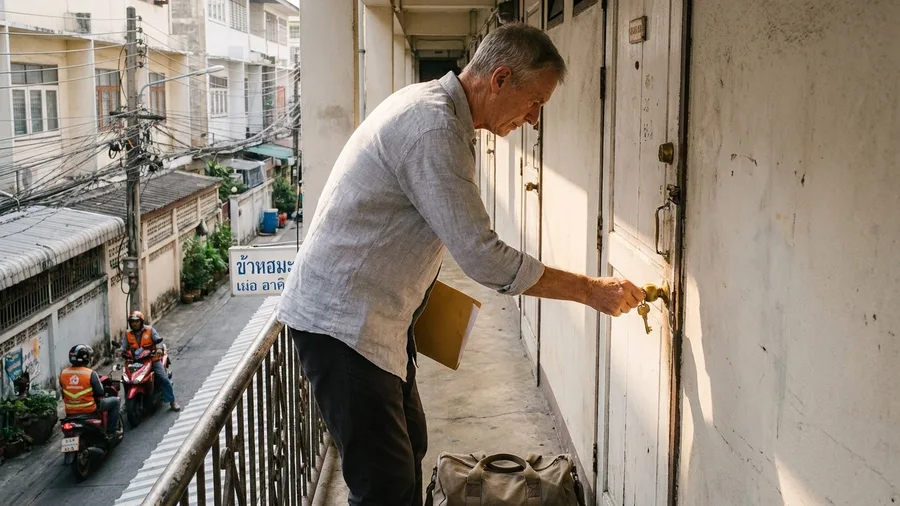
Two numbers matter more than the flight price: the monthly budget and the visa income bar. Get both straight before you look at airfare.
In Chiang Mai or Bangkok, $1,200 to $1,500 a month is enough for a comfortable life. A one-bedroom outside the city center starts around $300, and food, transport and utilities stay low if you eat local and use the BTS or motorbike taxis instead of running a car.
The retirement visa is for foreigners over 50 and asks for income of no less than 65,000 baht (about $1,800) each month, or 800,000 baht (about $22,000) parked in a Thai bank. That income bar sits above the basic monthly budget, so a single retiree on $1,400 a month can live well here but still needs savings or the bank-balance route to qualify. Confirm the current rule with Thai immigration before you apply.
Hospitals are modern and medical tourism keeps standards high, but private insurance matters more as you age. A retiree of 68 who assumes the low budget covers care may find a hospital bill or a rising premium eating the gap. Get a quote for your age before you commit.
This fits a single retiree who can meet the visa threshold and wants city energy or a beach town within reach. The income bar, not the cost of living, is usually the real gate.
💡 Tip: The bank-balance route (800,000 baht) often suits retirees whose pension is below the $1,800 monthly threshold. Ask the consulate how long the money must be seasoned.
⚠️ COMMON MISTAKE
Don't confuse the budget with the visa
In several countries on this list the retirement visa income threshold is lower than the realistic monthly budget. Qualifying for the visa is not the same as affording the life you pictured. Run both numbers side by side.
2. Vietnam: Cheapest Living, No Retirement Visa
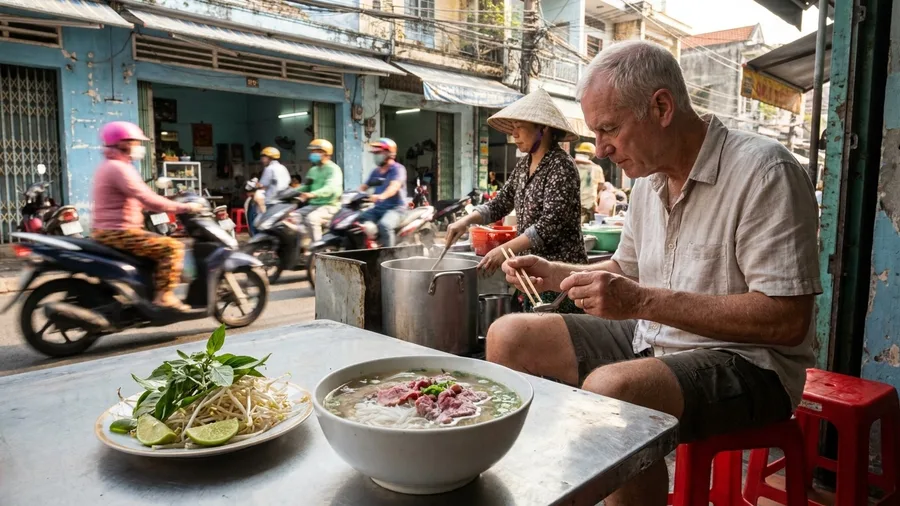
Vietnam costs less than Thailand, but it swaps one problem for another: there is no dedicated retirement visa here yet. Long-term tourist or business visas are renewable, and a retirement visa has been discussed but not introduced.
In Da Nang, Ho Chi Minh City or Hanoi, $1,000 to $1,500 a month covers a comfortable life, with one-bedroom rent of $300 to $600. That is the easy part.
Healthcare is the question you were about to ask. Public care is inconsistent, but private hospitals in major cities are good and cheap by Western standards. Price affordable health insurance before you pick a city, because a good private hospital nearby matters more than a nicer apartment.
Don't treat tourist visa renewals as a permanent plan. Check current visa rules with Vietnamese immigration and keep exit and re-entry options in the budget, since the occasional visa run is a real line item.
3. Bulgaria: Europe’s Cheapest Low-Cost Option
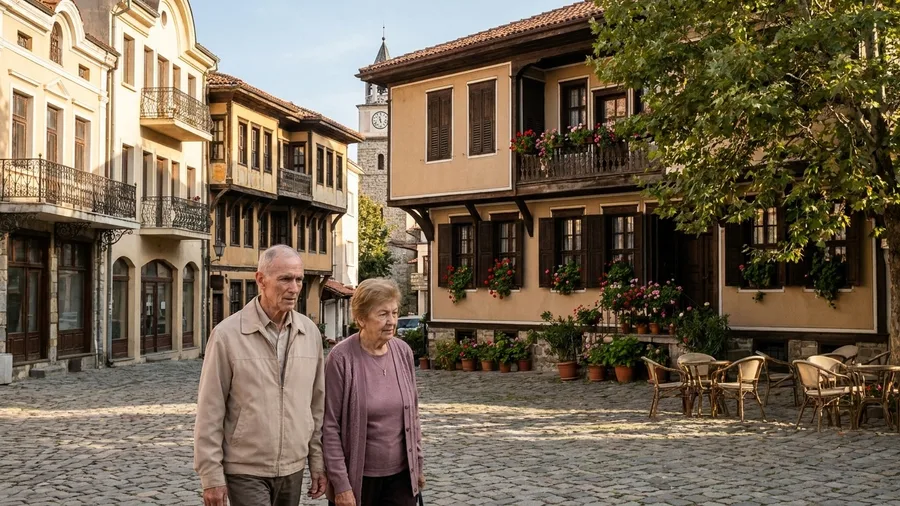
If learning a new alphabet in Southeast Asia feels like too much, Bulgaria keeps you in Europe on a similar budget. A retiree can live on $1,000 to $1,500 a month including rent, utilities, groceries and entertainment, with one-bedroom rent of $300 to $500 in Sofia or Plovdiv.
The long-term residence permit for retirees requires you to show about 3,000 leva (roughly $1,700) a month. Check the current proof rules with the Bulgarian consulate, because that income test sits above the comfortable budget.
Public and private healthcare both exist, but expats usually pick private for higher standards and shorter waits, and many doctors speak English. A retiree on $1,200 may live well here but still need savings or another qualifying income source to get residence.
4. North Macedonia: Quiet Balkans on a Small Budget

You wake up on Lake Ohrid with nothing on the day's schedule but a walk and lunch, and that pace is the whole point of North Macedonia. It's the lowest-cost place on this list for a single retiree.
Budget $800 to $1,200 a month, with a one-bedroom in Skopje from about $250. A sample $1,000 month covers rent, utilities, food and private insurance with room to spare.
There's no specific retirement visa, and a residence permit requires proof of sufficient income or savings, so confirm the exact threshold with the Macedonian embassy. Public care can be limited in rural areas, but private care in the capital is affordable and good, and reasonably priced health insurance belongs in the plan.
💡 Tip: Lake Ohrid is a UNESCO World Heritage site and a good base if you want low rent and don't mind a smaller expat scene.
Balkan budgets at a glance
🇧🇬 Bulgaria visa catch
Long-term residence needs ~3,000 leva/mo (~$1,700)
🇧🇬 Bulgaria rent unlock
Plovdiv runs cheaper than Sofia: $300–$500
🇲🇰 Skopje rent floor
from $250 – your biggest cost lever
🇲🇪 Montenegro tradeoff
$400–$600 rent, no retiree visa
🇲🇪 Montenegro total
$1,500–$2,000/mo – pricier than its neighbors
Skip North Macedonia if…
You need guaranteed public care. It's thin outside cities; budget private care in Skopje and get the exact income proof from the embassy.
5. Colombia: Strong Healthcare and an Easy TP-7 Visa
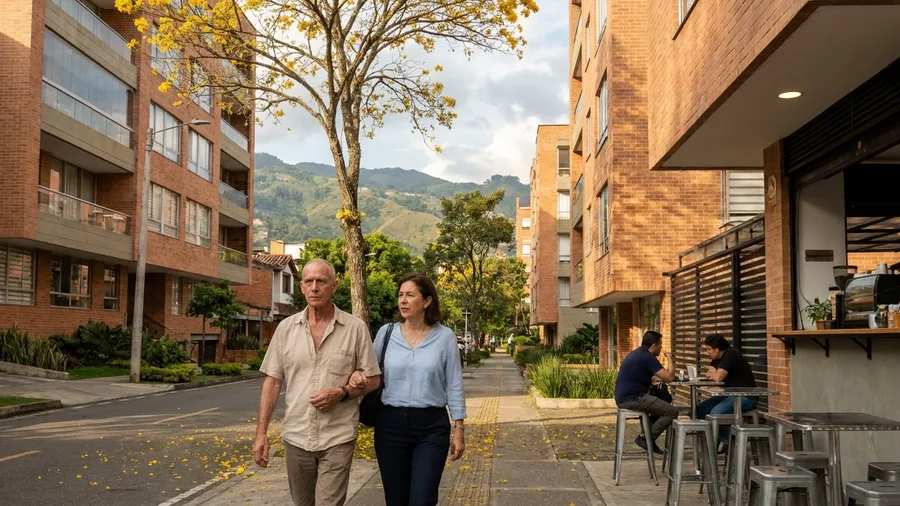
Colombia's TP-7 retirement visa asks for stable income worth no less than three times the minimum wage, about $750 a month. That's low enough that most small pensions qualify. Check the current minimum wage and consular proof rules before applying.
You'll want $1,200 to $1,500 a month to live well in Medellín, where one-bedroom rent runs $300 to $600 and the 'City of Eternal Spring' climate means no heating bill. Private hospitals are world-class at a fraction of U.S. cost, and many doctors trained abroad and speak English.
Here's the catch: the visa threshold is lower than the realistic monthly budget. Qualifying is not the same as affording the lifestyle, so budget for private insurance and city rent before you commit.
💡 PRO TIP
Price the insurance before the rent
A cheap apartment in a country with weak private care can cost more in the long run. Get an insurance quote for your age in each candidate country before you shortlist neighborhoods.
6. Philippines: English-Speaking Islands and Low Rents
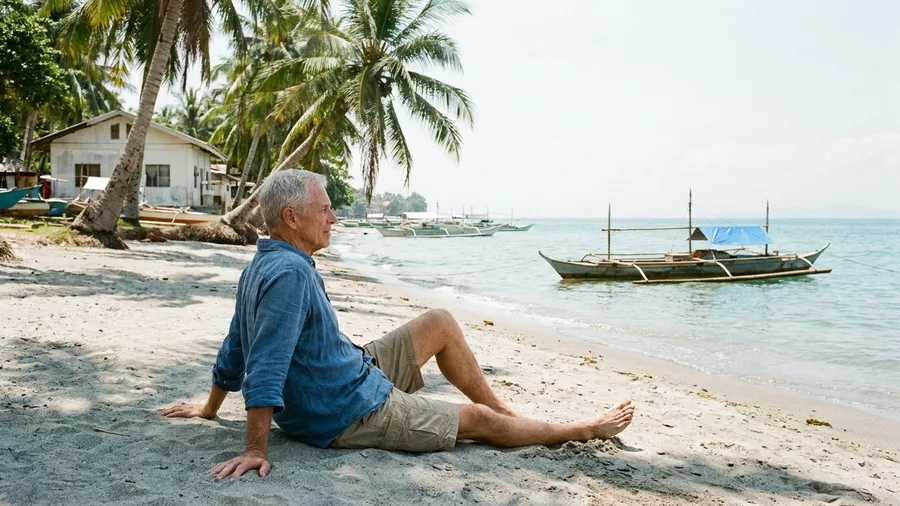
So if the last option felt right on climate but wrong on language, the Philippines fixes that problem almost completely. English is widely spoken here and the expat communities are large, which makes it one of the easiest places on this whole list to settle into without ever learning the local language. It's also one of the cheapest.
A retired couple can live on $1,200 to $1,500 a month depending on lifestyle and location. Manila is pricier, while smaller cities and provinces are much cheaper. One-bedroom rent outside the city center averages $200 to $500.
Cebu, Dumaguete and Davao are the largest expat hubs, spread across more than 7,000 islands. That geography is the catch: you get beautiful beaches, but specialist care can mean a flight, so build travel costs into the budget. Say you need a cardiologist and you're on a smaller island, that's a round trip to Cebu or Manila.
The Special Resident Retiree's Visa gives you permanent residence and requires either a pension you can document or a time deposit held in a local bank. Check current amounts with the Philippine Retirement Authority, because the deposit requirement can change.
Healthcare is affordable, and the ready-made community means you'll find a doctor, a landlord and a coffee group in the first month rather than the first year. On a modest check, that combination of low rent and no language barrier is hard to beat.
💡 Tip: Look outside Manila first. Cebu and Dumaguete have good private hospitals and lower rents than the capital.
What to check, from most to least urgent
Work down the pyramid before you book the flight
7. Dominican Republic: Caribbean Beaches and a Fast Retiree Visa
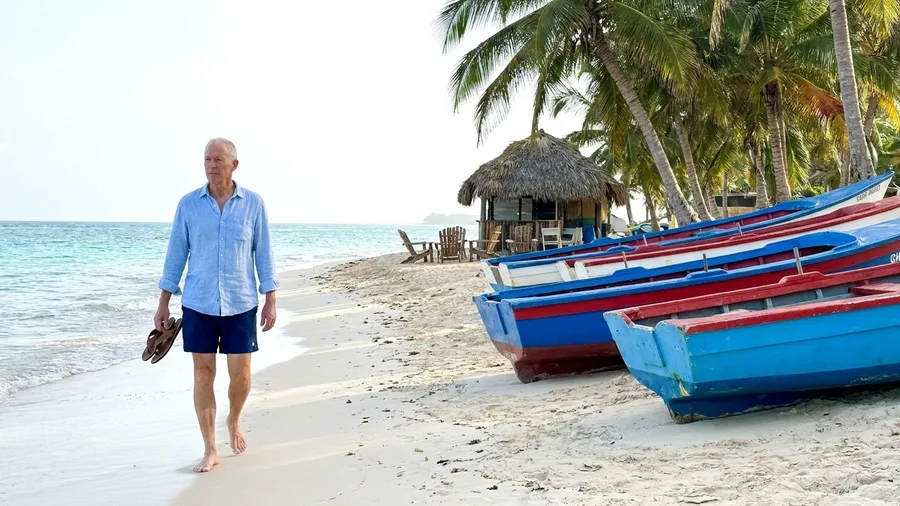
Where the Philippines asks you to hop between islands, the Dominican Republic keeps things on solid Caribbean ground, and its retiree visa moves faster than most. You can have residency in just a few months.
Budget $1,200 to $1,500 a month, with rent around $400 in smaller towns or rural areas. Sosúa and Las Terrenas have established expat communities. But here's the snag: the visa asks for pension income of at least $1,500 a month, so a couple living on one $1,200 check may fall short even if the budget itself looks possible. Verify current fees and documents with the Dominican consulate.
Healthcare is good and affordable in Santo Domingo and Santiago, and private insurance is much cheaper than in Western countries. Lenient tax policies draw retirees, though you should confirm how your pension is treated officially. It fits best if your own pension clears that $1,500 floor on its own.
📋 First-year paperwork, in order
Gather documents
Passport, pension or income proof, bank statements, background check, apostilles and certified translations.
Check the consulate list
The consulate sets the exact list and timing, so confirm before paying for translations.
Book a scouting trip
Go in the shoulder season and stay in a rental in a candidate neighborhood.
Test daily life
Visit hospitals, use public transport, buy groceries and check internet speed before committing.
Get insurance quotes
Price private cover for your age in each candidate country before applying for residency.
Apply for the visa
Submit the application only after the budget and health cover are confirmed.
Register locally
Complete in-country registration once you arrive.
8. Montenegro: European Lifestyle at a Higher Cost
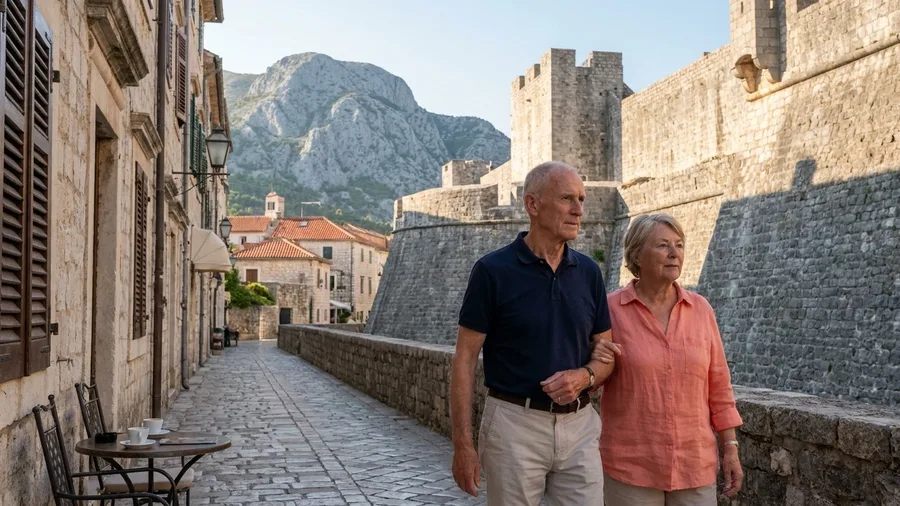
Unlike the Caribbean and Latin American options so far, Montenegro hands you Europe itself: Mediterranean climate, mountains, coast and medieval towns, all without Western European prices. It costs more than Bulgaria or North Macedonia, but it's still affordable by European standards.
Budget $1,500 to $2,000 a month, with rent of $400 to $600 in Podgorica or coastal Kotor and Budva. There's no retiree visa, though. Residency is possible by buying property or proving sufficient income, with temporary residency renewable yearly, so confirm current property and income rules with the Montenegrin authorities.
Public care is free for residents, and many expats choose the affordable private route. Larger cities have high-standard facilities, but specialized treatment may mean traveling to a neighboring country.
The trade-off beyond money is the smaller expat community, thinner than what you'd find in Latin America or Southeast Asia. It's a beautiful place to land, just a quieter and pricier one.
9. Ecuador: Low Costs, $800 Pensionado Visa, Big Expat Scene
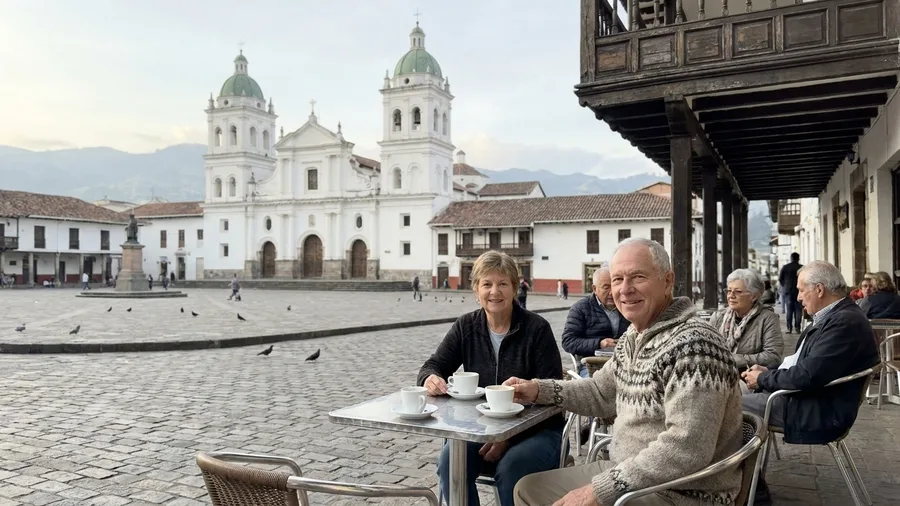
Picture yourself in Cuenca, sitting in a café surrounded by other retirees who have already worked out the paperwork. That ready-made community is exactly why so many North Americans choose Ecuador, and it comes with one of the cheapest visas on this list.
Budget $1,200 to $1,800 a month depending on location, with furnished rent of $300 to $600. Cuenca and Quito are cheaper than the coast. The Pensionado visa requires pension income of at least $800 a month, and residency gives access to public healthcare. Verify current income proof and application steps with Ecuadorian consulates.
Private insurance runs $50 to $150 a month depending on coverage, so get a quote for your age before trusting the low end. If you want the lowest Latin American visa threshold and highland or coastal choices, this fits.
💡 Tip: Private insurance runs $50 to $150 a month depending on coverage. Get a quote for your age before trusting the low end.
Ecuador or Panama: which fits your check?
Ecuador
- Retiree income counts per pensioner, so a couple at $1,600 qualifies twice over
- Insurance quote climbs fast after age 75 – get the written rate first
- Public care is free after residency; the private quote is your backup
- Drop the coast and you hit the same budget for less rent
- Pensionado route has the lowest income bar on this list
Panama
- Lifetime pension required – lump sums and annuities don't count
- Withdrawals from savings accounts fail the test; only pension income works
- Just $200 more a month clears it at $1,000 versus $800
- Public care isn't the safety net; budget the $100-$200 premium
- Pensionado discounts shave health, transport and utility bills
10. Panama: Pensionado Perks, Dollar Economy, Higher Budget
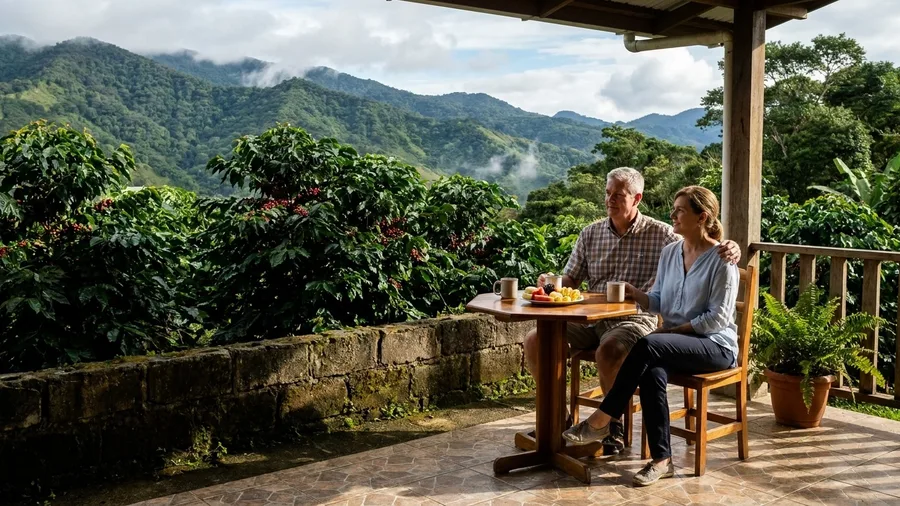
Panama is the country that costs more per month but gives some of it back in perks and convenience. It runs on the U.S. dollar, so there's no currency exchange to worry about, and it's politically stable with large expat communities.
Budget $1,500 to $2,000 a month. Panama City is pricier, while Boquete and Coronado are cheaper, with modest apartment rent outside the capital from about $500. Ask anyone who has done the move and they'll tell you the Pensionado discounts are the real draw.
The Pensionado Visa requires a lifetime pension worth no less than $1,000 a month and brings discounts on healthcare, entertainment, travel and dining. Confirm the current benefit list with Panamanian officials, because the categories and percentages are worth checking before you count on them.
Modern hospitals in Panama City and David are high quality, with health insurance running $100 to $200 a month depending on coverage. Those two cities are where you'd want to be for anything serious, so factor that into where you rent.
Compared with Ecuador or Colombia, Panama costs more. But the dollar economy, proximity to the U.S. and Pensionado discounts can offset some of that for retirees who qualify. If your pension clears $1,000 and you want convenience over rock-bottom costs, it earns its spot.
Taxes on Pensions and Social Security Abroad
Once you've picked a country and checked the visa threshold, the next question tends to arrive fast: will my pension or Social Security get taxed here? Before that, it's worth knowing how to keep your Social Security check arriving abroad without a missed deposit. The honest answer is that it depends on the country, your residency status, and whether a tax treaty exists between your home country and the new one.
No list can hand you a flat rate. Anyone who does is guessing.
So start with two phone calls or website visits: the destination's tax authority and your home-country tax office. Ask specifically whether Social Security, private pensions, and investment income get treated differently, because they often are. In many places, simply becoming a resident triggers a local filing requirement even if your pension is taxed back home.
Double-taxation treaties can stop you paying twice, but they usually come with paperwork and a few conditions. This is worth paying a local accountant for, and it should be an accountant who knows both countries, not just one. Treat any claim about lenient local tax policies, including in the Dominican Republic, as something to check officially rather than a promise.
Put this on your planning sheet right next to the visa income threshold and the insurance quote. It's one of the first practical steps, not a detail for later.
Paperwork, Scouting Trips and First-Year Mistakes
Even with the tax question settled, the paperwork still has to happen. Expect a stack of it: passport, income or pension proof, bank statements, a background check, apostilles, certified translations, and in-country registration once you arrive.
The consulate sets the exact list and timing, so confirm it before you pay a translator for documents you may not need.
Book a scouting trip in the shoulder season and stay in a rental in a neighborhood you're actually considering. Test the hospitals, transport, groceries, and internet before you sign a lease or buy a property.
Three mistakes catch people out. Buying property before securing residency is one. Overstaying tourist visas in countries like Vietnam is another. And underestimating private health insurance for older applicants is the third, so get quotes before you pick a country, not after.
Your first three actions: check the current visa threshold on the official site, run a three-month budget with a currency buffer built in, and join a local expat forum to ask about healthcare and paperwork timelines.
Frequently Asked Questions
Can I retire abroad on Social Security alone?
In the cheapest countries on this list, yes, in some cases. North Macedonia and Vietnam have the lowest entry budgets, around $800 to $1,200 a month, but you still need to clear the visa income test. Check whether your Social Security alone meets that threshold before you plan the move.
Which country has the easiest retirement visa?
Colombia's TP-7 asks for income of about $750 a month, Ecuador's Pensionado visa asks for $800, and Panama's requires $1,000. Those are among the lowest income tests here. Apply through the consulate and confirm current proof requirements, because amounts and documents change.
Do I need private health insurance abroad?
In most of these countries, yes. Public systems vary, and private hospitals offer faster, higher-standard care. In Ecuador, private insurance runs $50 to $150 a month; in Panama, $100 to $200. Get a quote for your age before you commit to a country.
Will my pension be taxed in my new country?
It depends on the country, your residency status and any tax treaty. Ask the destination's tax authority and your home tax office whether Social Security, private pensions and investment income are treated differently. Get professional advice and don't rely on forum posts.
Do I need a scouting trip before moving?
Yes. Stay in a rental in a candidate neighborhood during the shoulder season, test hospitals, transport, groceries and internet, and get insurance quotes in person. A scouting trip costs less than undoing a bad move.
Which country fits your check and your health?
Rank the list by your own situation, not by the order above. If the lowest rent matters most, look at North Macedonia or the Philippines. If you want the easiest retiree visa, Colombia and Ecuador have the lowest income tests. For the best healthcare value, look at Thailand, Colombia or Panama.
For a European option, Bulgaria and Montenegro trade budget for lifestyle, and for a Caribbean or Latin American fit, the Dominican Republic, Ecuador and Panama cover different budgets and visa thresholds.
Before you commit, verify current visa thresholds with official sources and get insurance quotes for your age. Then run your own three-month budget with a currency buffer, and plan a scouting trip. That's the first practical step, and it beats any ranking.

Hello there! I’m Jesse Joe, the author and editor behind SolganGenius. I’m thrilled you’ve stopped by, and I can’t wait to share with you the essence of what this platform is all about.
I’m a writer, social media enthusiast, and a firm believer in the power of words. I’ve always been fascinated by how a simple phrase or slogan can capture an emotion, convey a message, and even change perspectives. Learn More