
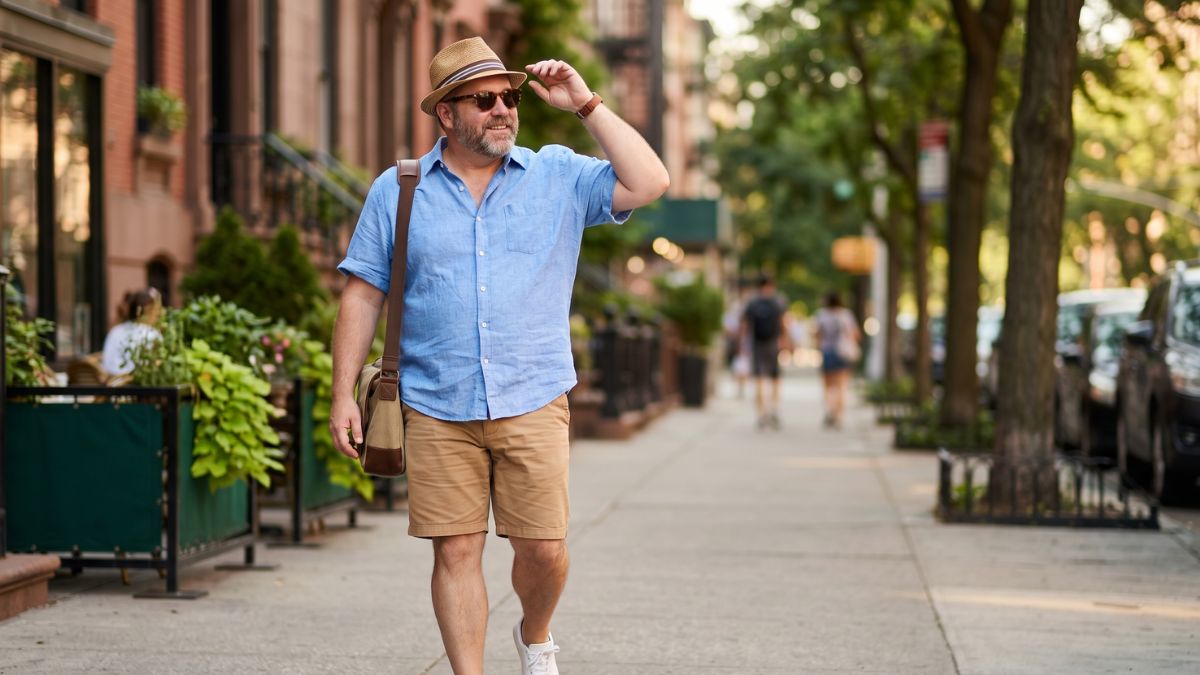
Most plus size men spend summer choosing between looking decent and staying cool. They pick the dark shirt because it “hides more,” the baggier fit because it feels safer, the long sleeves because they’ve always done it that way and they end up hotter, sweatier, and no more confident than if they’d just worn whatever was clean.
Hot weather dressing for plus size men isn’t about finding ways to disappear. It’s about understanding what actually keeps you cool and what just feels like it should.
Fabric matters more than color. Fit matters more than coverage. And a few non-clothing habits will do more for your comfort than any single wardrobe swap. Everything below is specific, practical, and built around what actually works when the temperature climbs not generic advice repackaged for a larger body size.
Your Body Runs Hotter, How to Dress Around That Physiology, Not Against It
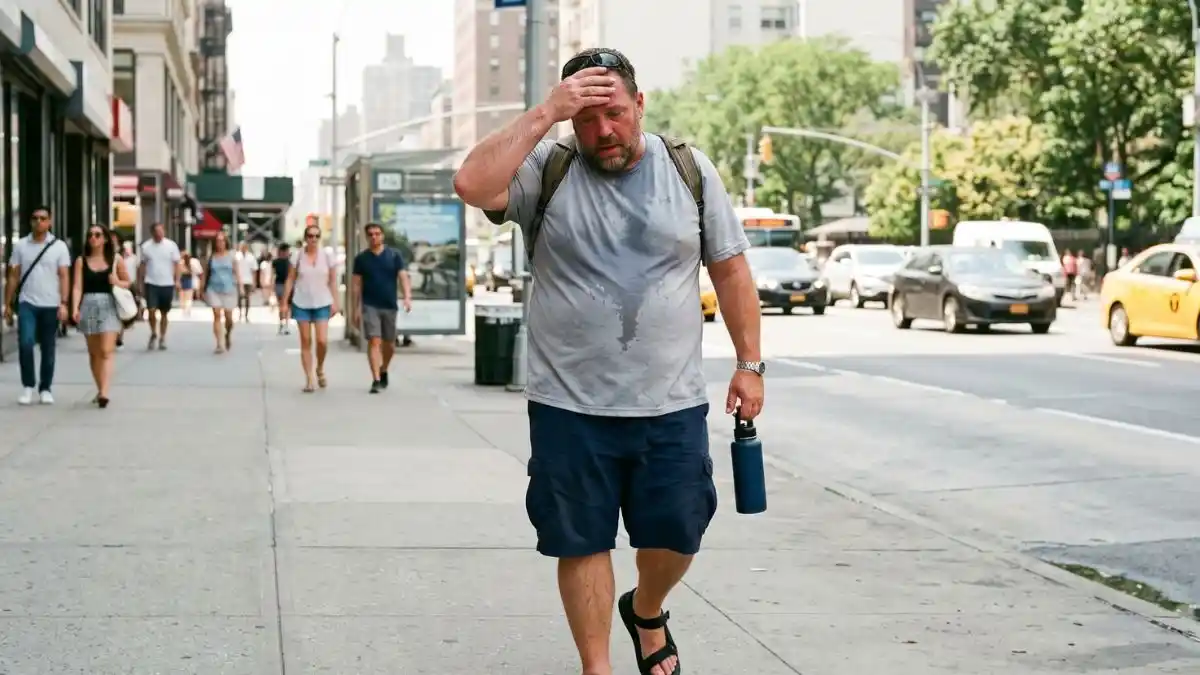
Sweating isn’t a willpower problem it’s a surface area problem. A larger body generates more heat from muscle and fat tissue, and that heat has more distance to travel before it escapes. Your clothes either help it escape or trap it against your skin.
Three spots cause the most trouble for plus size men in summer:
- Chest and back Large flat surfaces that hold heat like a radiator, especially under thick or dark fabric
- Inner thighs Skin-on-skin contact creates friction heat that no amount of airflow fixes from the outside
- Underarms and neck High blood-flow areas that sweat first and show it fastest on the wrong fabrics
Most men respond by adding more fabric darker colors, baggier cuts, extra layers thinking coverage controls the problem. It does the opposite. Trapping heat against your skin makes your body work harder to cool down, which means more sweat, not less.
The real fix is building your wardrobe around one question: does this outfit help heat leave my body?
Fabric, fit, and color all affect the answer. Once you stop dressing to hide and start dressing to regulate, hot weather stops being something you survive and starts being something you can actually dress well for.
The Dark Colors Are Making You Hotter (And the “Slimming” Logic Is Working Against You)
Black absorbs heat. That’s physics, not opinion. Wearing a dark shirt in direct sun turns your torso into a heat collector and your body responds by sweating harder to compensate.
The “black is slimming” rule was built for indoor lighting and photography. Outside, in summer heat, it works against you in two ways:
- Thermally Dark fabric pulls in solar heat and holds it against your skin, raising your surface temperature faster than light colors do
- Visually In bright outdoor light, heavy dark tones flatten your shape and make fabric texture disappear, which actually removes the visual detail that makes an outfit look intentional
Light and mid-tone colors do the opposite. Pale blues, warm tans, sage greens, and soft greys reflect heat instead of absorbing it and in natural light, they make fit and fabric quality much more visible, which is exactly what you want when your clothes actually fit well.
The concern most plus size men have is looking washed out or “too big” in lighter colors. That comes from the wrong shade, not the concept itself.
Colors that work without washing you out:
- Warm neutrals Camel, stone, terracotta, olive
- Muted mid-tones Dusty blue, slate, moss green
- Off-whites Cream and ecru read cleaner than stark white and don’t show sweat as fast
Save black for evenings or air-conditioned settings. Outdoors in July, it’s working against you on every level.
Fabric Is the Only Variable That Actually Matters in 35°C Heat
Hold your shirt up to a window right now. If light doesn’t pass through it, that fabric will trap your body heat and hold it there all day. That single test tells you more than any label ever will.
Most men pick clothes by color or price. Fabric is the decision that actually determines whether you stay cool or spend the afternoon soaked through.
Fabrics that work with your body:
- Linen Naturally hollow fibers that pull heat away from skin and dry fast; wrinkles easily but breathes better than almost anything else
- Cotton poplin Tightly woven but thin enough to allow airflow; holds its shape and doesn’t cling when damp
- Chambray Looks like denim, weighs almost nothing; the best option if you want a smart casual look in serious heat
- Moisture-wicking jersey Synthetic but engineered to move sweat away from skin quickly; best for casual or active settings, not dress occasions
Fabrics that will make summer miserable:
- Polyester blends Trap heat, hold odor, and show sweat patches as dark spreading stains
- Rayon Feels cool in a shop but soaks through fast and clings uncomfortably once wet
- Heavy cotton A thick cotton tee holds moisture against your skin instead of releasing it
One practical swap makes the biggest difference: replace any polyester-blend polo or shirt in your regular rotation with a linen or chambray version in the same color. Same outfit. Completely different experience once the temperature climbs past 30.
Fit in Summer Means Structured — Not Baggy, Not Tight
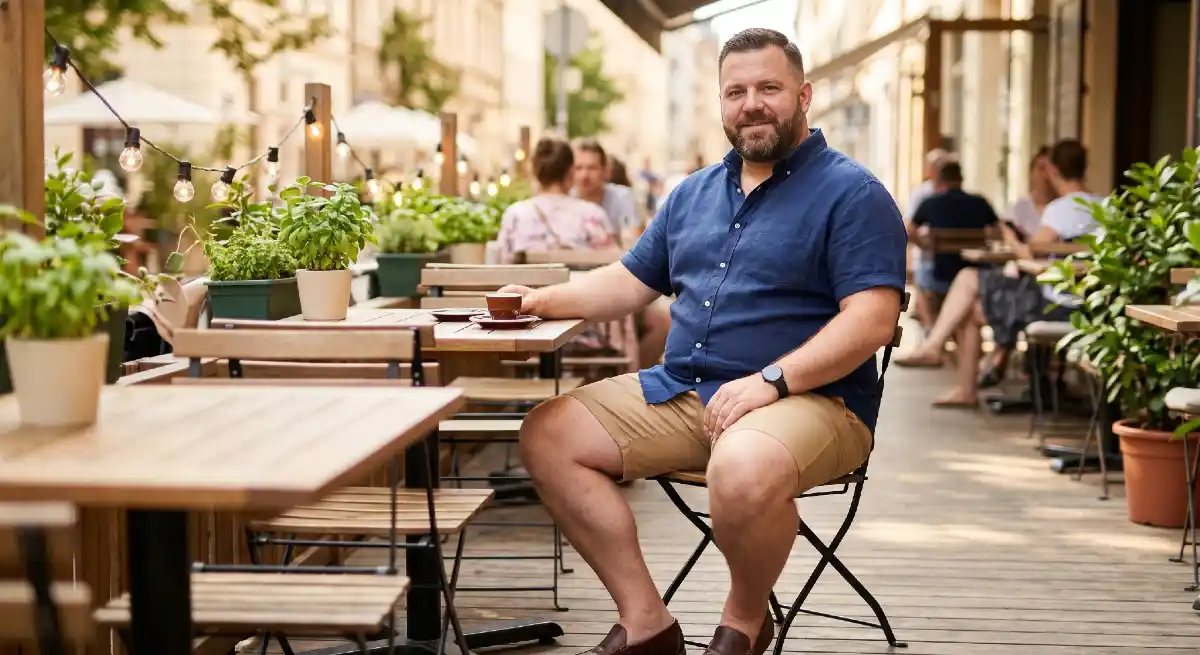
Baggy clothing does not keep you cooler. Extra fabric bunches, folds, and traps heat in pockets against your skin and on a hot day, all that loose material becomes a second layer you can’t take off. Tight clothing is equally bad. Anything pressing directly against skin in heat will show every drop of sweat within minutes.
The fit you’re looking for has a name: structured ease. It means the garment skims your body with a little breathing room, holds its shape throughout the day, and doesn’t collapse or cling when you start to perspire.
Here’s what to check at each key point before buying:
- Shoulders The seam should sit exactly at the edge of your shoulder bone, not drooping down your arm; a dropped shoulder makes the whole garment look shapeless and adds visual width
- Chest Enough room to pinch an inch of fabric on each side without pulling; any tighter and it will cling when damp, any looser and it billows
- Thighs Shorts or trousers should allow your hand to slide in at the side without squeezing; too narrow creates friction heat, too wide creates chafing fabric
Structure is what separates a man who looks dressed from a man who looks covered. Defined shoulders create a silhouette even when the rest of the fit is relaxed, which is why shoulder fit is the one measurement worth being strict about.
Get that right first. Everything else can be adjusted.
The Summer Outfits That Actually Work — Built Around What He Already Owns
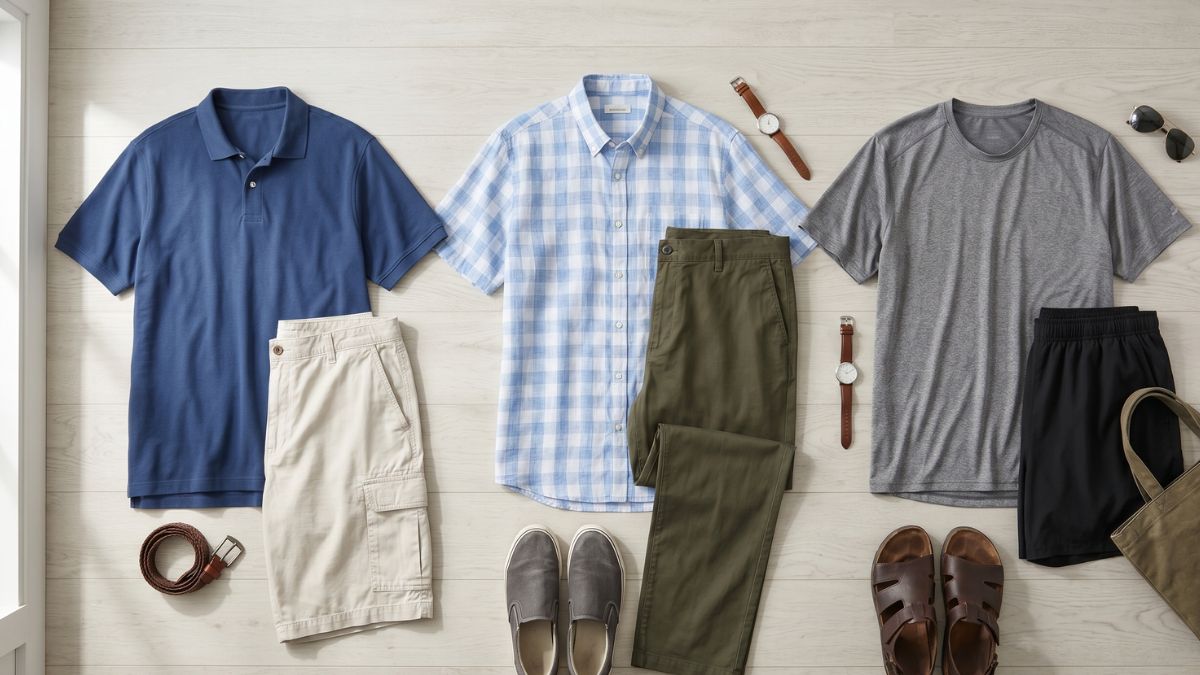
You don’t need a new wardrobe. You need three reliable formulas that work with what you likely already have and understand why each piece earns its place thermally and visually.
Outfit 1: Casual Weekend
- Stone or pale blue linen short-sleeve shirt worn untucked, structured ease fit; linen breathes, the open hem adds airflow at the waist
- Dark chino shorts, 9–11 inch inseam long enough to avoid exposure anxiety, short enough to prevent inner-thigh heat buildup
- Clean white or tan leather sneakers grounds the outfit without adding visual weight upward
Why it works: Light top, darker bottom creates a visual anchor that draws the eye down rather than across.
Outfit 2: Outdoor Social Event
- Chambray button-down, half-tucked gives shape at the waist without committing to a fully formal tuck; chambray handles heat better than regular cotton
- Tailored chino trousers in olive or stone structured thigh with a slight taper; avoids the balloon-leg problem of relaxed fits
- Leather sandals or clean suede loafers keeps the outfit from reading as overdressed in outdoor heat
Why it works: The half-tuck defines your waistline without a belt doing all the work.
Outfit 3: Smart Casual / Rooftop
- Short-sleeve linen camp collar shirt in cream or muted print camp collars lie flat, eliminate neck heat, and read as intentionally stylish rather than casual
- Well-fitted dark trousers or tailored shorts one dressed-up piece balances the relaxed shirt
- Simple white leather sneakers or loafers clean footwear elevates the whole look instantly
Why it works: Camp collar shirts do the styling work so everything else can stay simple.
Arms and Legs The Honest Answer to Whether You Should Show Them
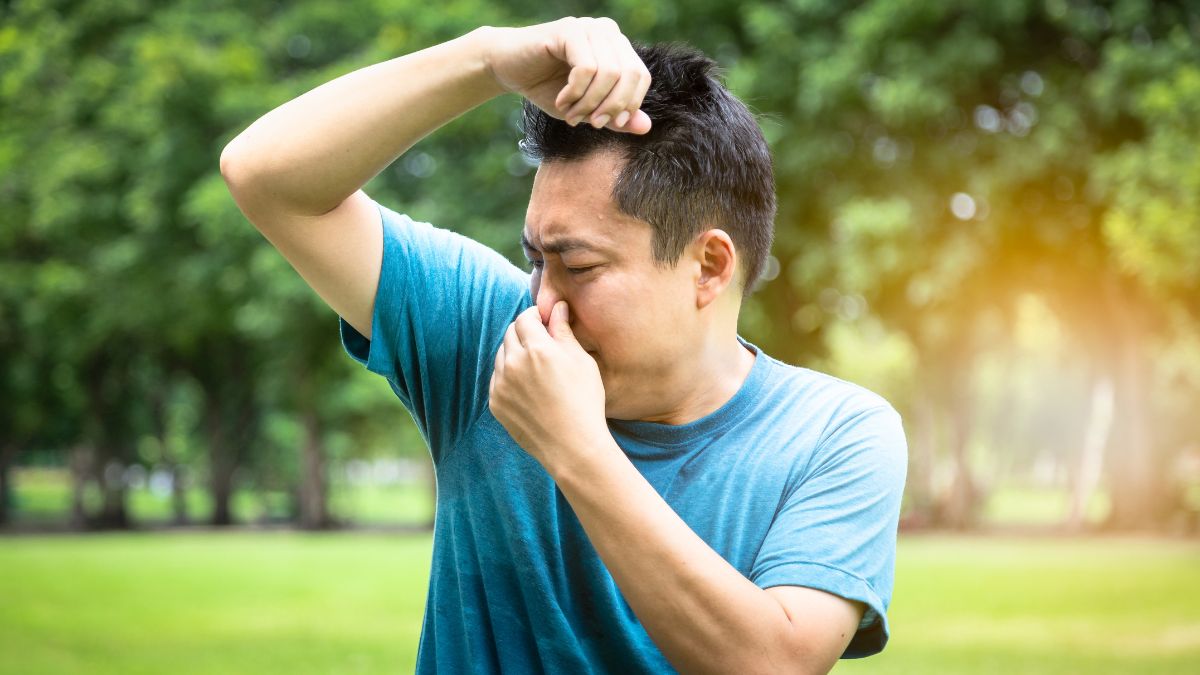
Covering up does not make you look smaller. It makes you look hotter, more uncomfortable, and more self-conscious and other people read that discomfort before they read your body. Showing skin strategically is both cooler and more confident, and confidence is what people actually notice.
The honest breakdown by body part:
Arms:
- Short sleeves work on almost every plus size man the key is sleeve length; the hem should hit mid-bicep, not droop toward your elbow, which shortens the arm and adds visual width
- Avoid cap sleeves entirely they cut the arm at its widest point and create an unflattering horizontal line
- A clean, fitted short sleeve in a breathable fabric reads as intentional and put-together, regardless of arm size
Legs:
- Shorts are viable. Full stop. The question isn’t whether to wear them it’s which inseam length works for your proportions
- 9 to 11 inch inseam suits most plus size men; it clears the knee, avoids the mid-thigh exposure that feels uncomfortable, and prevents the heavy-fabric buildup that makes longer shorts sweat-trap around the thighs
- Wider thighs need a relaxed-straight cut not tapered, not baggy; tapered binds and creates friction, baggy bunches and adds bulk
Showing your arms and legs in summer is not a statement. It’s just dressing for the weather you’re actually in. The men who look most at ease in summer heat are the ones who stopped negotiating with the temperature.
The Sweat-Proofing Routine That Has Nothing to Do With Clothing
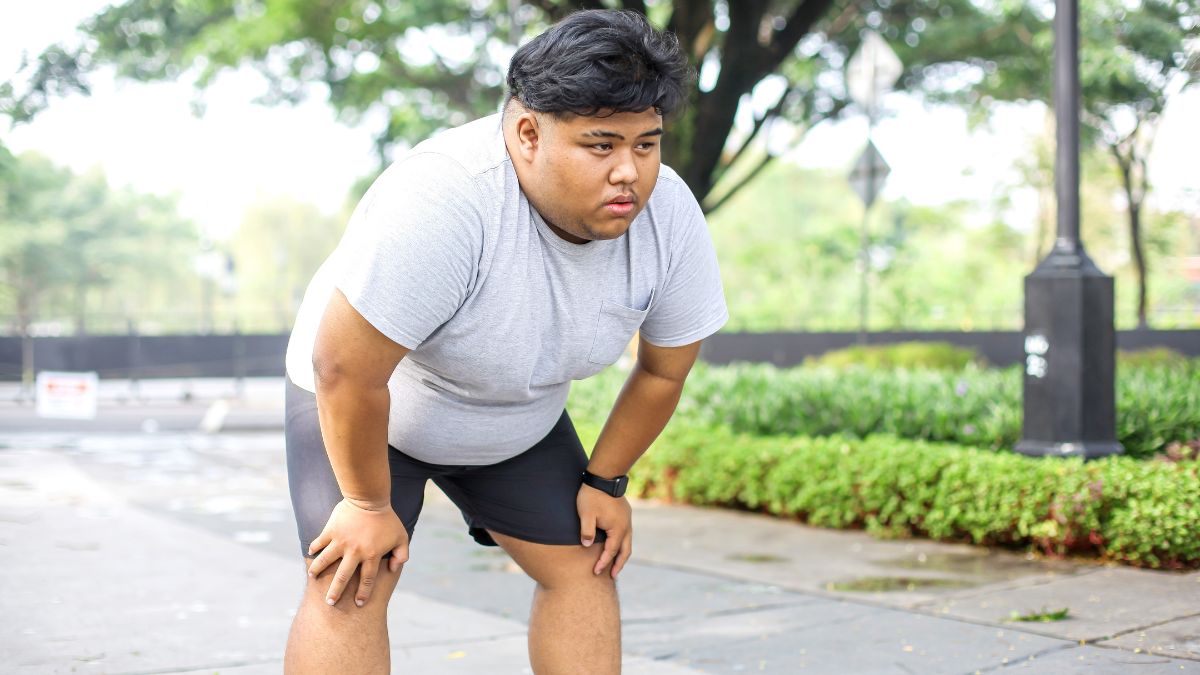
The best outfit you own will fail if the body underneath it isn’t prepared. Clothes manage heat but a few non-clothing habits determine whether your shirt stays presentable for two hours or eight.
Antiperspirant placement most men get wrong:
- Underarms only is the standard application, but for plus size men, the real problem zones are often the chest, lower back, and under the chest fold apply clinical-strength antiperspirant to these areas the night before, when skin is dry and cool, so it absorbs properly before you sweat
- Clinical-strength formulas (not regular deodorant) contain higher levels of aluminum compounds that physically block sweat glands regular deodorant masks odor but does nothing to reduce moisture output
Inner thigh chafing is a heat problem, not just a comfort problem:
- Friction between thighs generates additional body heat that radiates upward through your outfit all day
- Anti-chafe balm or stick products applied to inner thighs before dressing eliminate friction, reduce heat buildup, and prevent the skin irritation that makes you walk differently and look uncomfortable
Undershirt strategy:
- Wear one only if it’s a thin, moisture-wicking v-neck that sits below your shirt collar; a visible crew neck or thick cotton undershirt adds a full layer of trapped heat
- Skip it entirely with linen or chambray those fabrics are already doing the moisture work
When evening comes and temperatures drop, a lightweight unstructured overshirt in cotton or linen adds a layer without weight and instantly shifts a casual daytime outfit into something that reads deliberately styled.

Hello there! I’m Jesse Joe, the author and editor behind SolganGenius. I’m thrilled you’ve stopped by, and I can’t wait to share with you the essence of what this platform is all about.
I’m a writer, social media enthusiast, and a firm believer in the power of words. I’ve always been fascinated by how a simple phrase or slogan can capture an emotion, convey a message, and even change perspectives. Learn More