
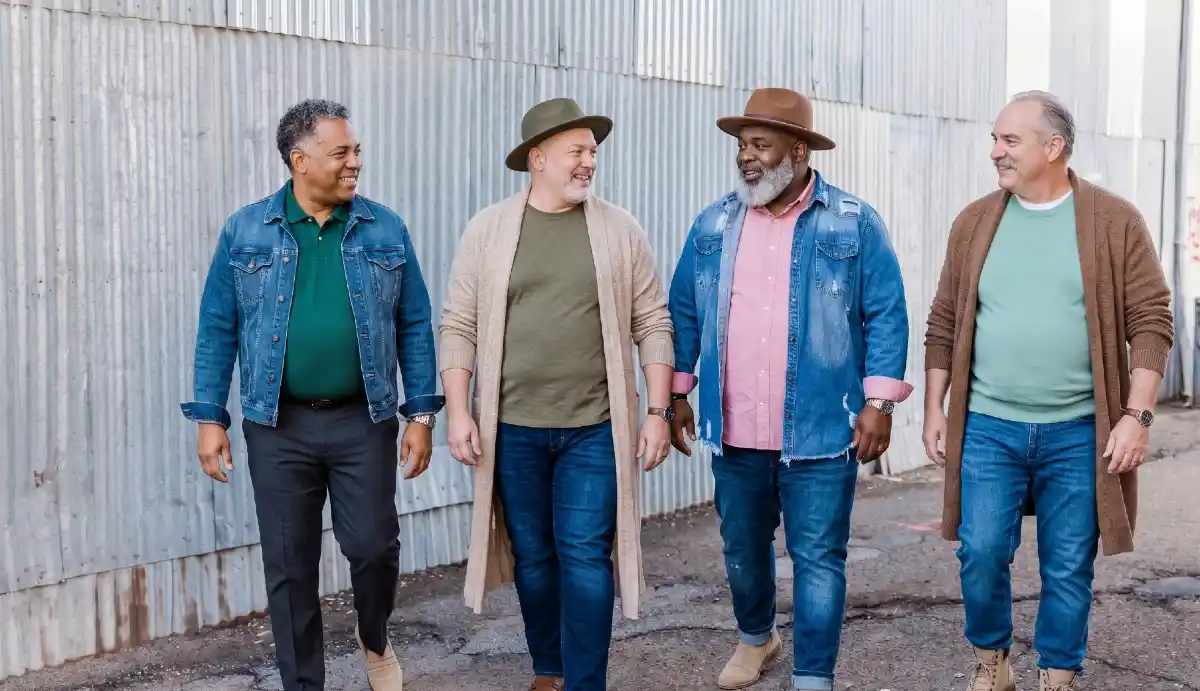
Most men over 50 with a larger frame have made a quiet agreement with themselves: dress to disappear, not to impress. Dark colors. Loose fits. Nothing that draws attention. It feels like the safe play but it’s the reason getting dressed feels like damage control instead of something worth doing.
Dressing sharp at this size and age is not complicated. It’s also not about shrinking yourself visually or waiting until the scale moves. A few specific principles fit, proportion, structure make the difference between clothes that work against you and clothes that work for you.
What follows covers exactly that. Where to start, what to buy, what to stop doing, and which brands actually build clothes for this body. No fluff, no generic advice that was written for someone else.
The Reason Your Clothes Keep Letting You Down Has Nothing to Do With Your Size
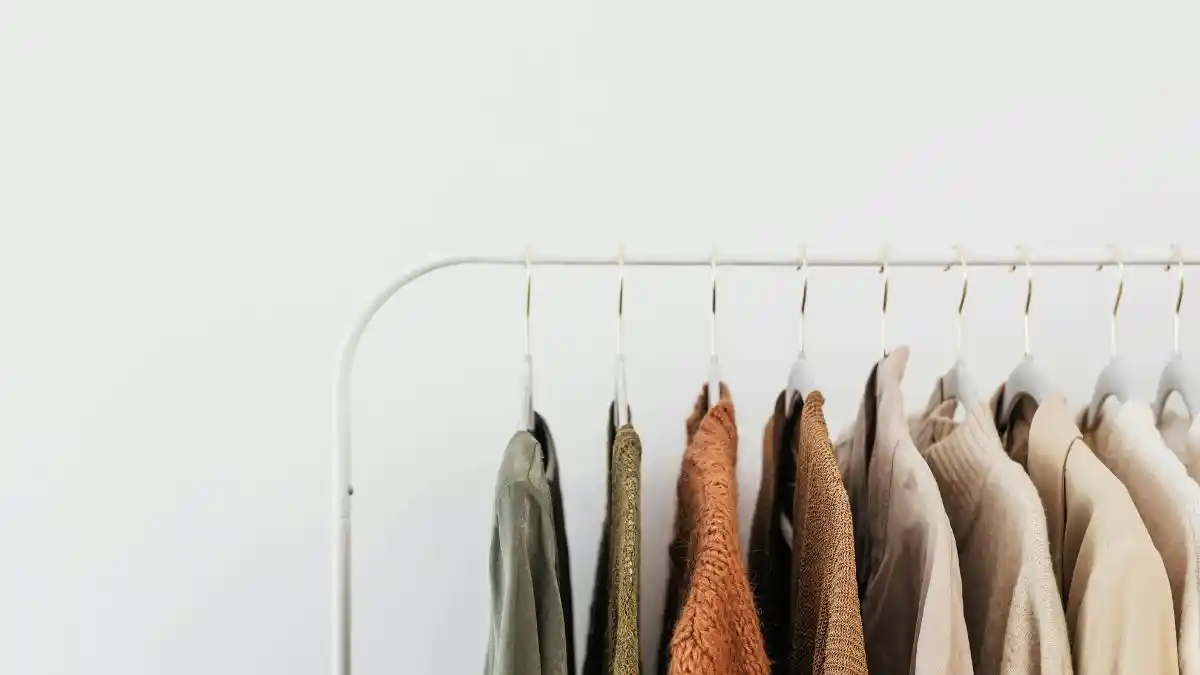
You’ve stood in front of that closet. Plenty of clothes, nothing feels right, and you end up reaching for the same dark shirt that’s “good enough.” Most plus-size men assume this is a size problem. It isn’t.
Fit and proportion are the real culprits and those are fixable.
What’s actually happening: clothes bought too large to “hide” the body remove all shape from your frame. No shape means you look bigger, not smaller. A shirt with six extra inches of fabric bunching at your sides tells the eye exactly what you don’t want it to notice.
Sharp dressing at any size comes down to a few specific principles:
- Shoulder seams sit at your actual shoulder bone not drooping down your arm
- Fabric skims your body it doesn’t cling, and it doesn’t float two inches away from you
- Proportions are balanced no piece overwhelms another
These aren’t style opinions. They’re the mechanics of how clothing reads on a body.
Dressing well at 50-plus and plus-size is a learnable skill. What follows is the specific version of it built for your body.
The One Measurement That Changes Everything (Most Men Over 50 Skip This)
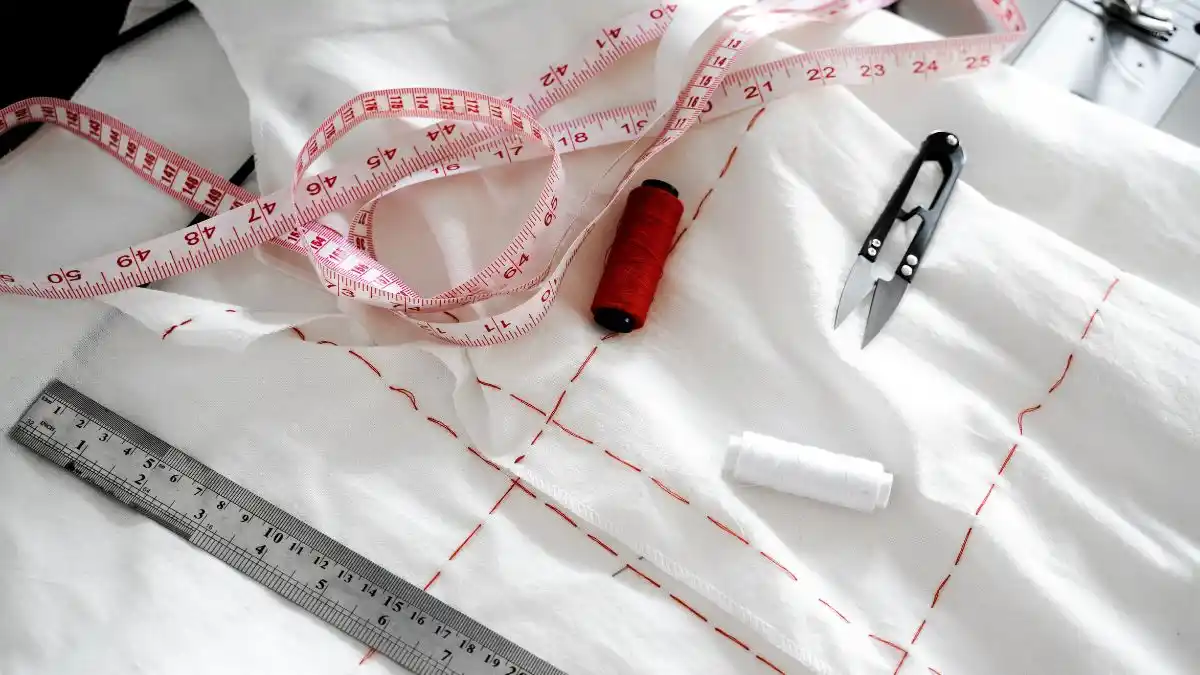
Most men shop by the number on the tag. That number is almost meaningless.
A size 2XL at one brand fits completely differently than a 2XL at another. Buying by tag size is guessing and for plus-size men, a bad guess means a shirt that pulls across the chest, pants that bunch at the waist, or sleeves that hang past your knuckles.
Four numbers fix all of that:
- Chest: Measure around the fullest part, tape parallel to the floor this is your anchor measurement for shirts, jackets, and blazers
- Waist: Measure at your natural waist (an inch above your navel), not where you wear your belt most men measure too low and wonder why pants gap
- Sleeve: From the center back of your neck, over your shoulder, down to your wrist this one measurement eliminates the “swimming in fabric” problem
- Inseam: From your crotch seam straight down to your ankle bone critical for pants that don’t bunch or drag
Write these down. Keep them in your phone.
Every time you shop in store or online check these numbers against the brand’s size chart before buying anything. Returns drop. Fit improves immediately. Shopping stops feeling like a gamble.
Why “Dark Colors and Loose Fits” Is the Advice That’s Been Making You Look Worse
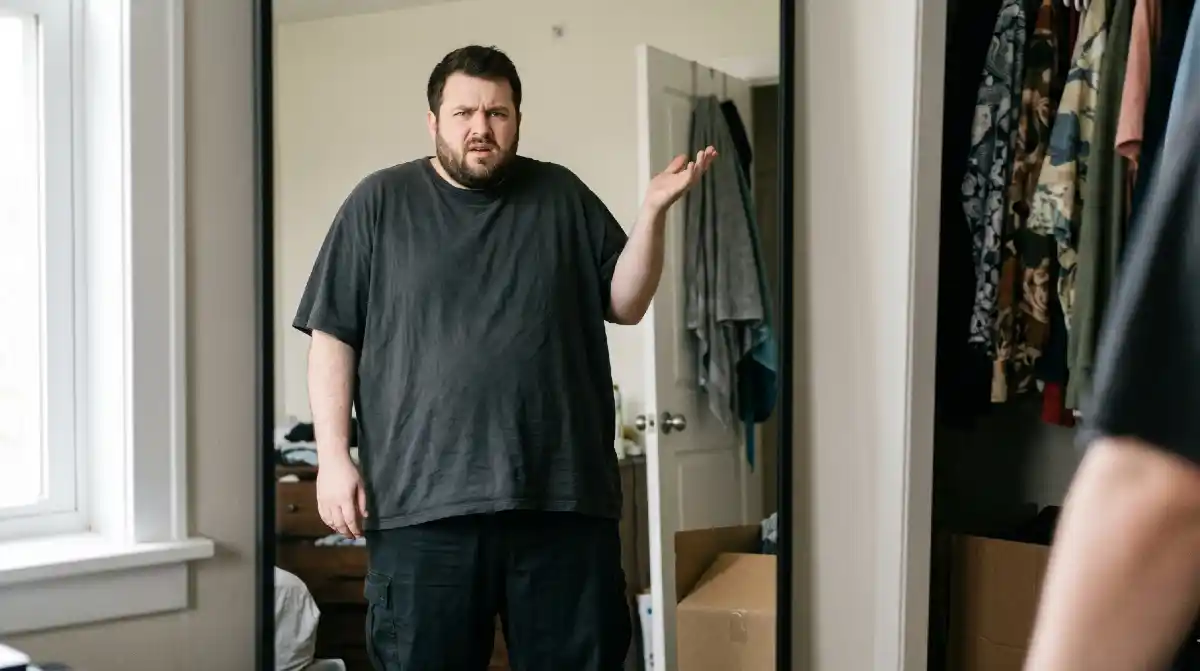
Someone told you to wear dark colors and keep it loose. That advice made sense on the surface. It’s also been working against you for years.
Baggy clothing doesn’t hide a larger frame. It removes all definition from it and a body with no visible shape reads as more bulk, not less. Dark colors alone don’t fix proportion. Wearing a dark, shapeless shirt just gives you a dark, shapeless silhouette.
What actually works is structure. Here’s what that means in practical terms:
- Fabric with some weight and body linenblends, ponte, structured cotton holds its shape instead of collapsing against you or floating away from your frame
- Clothing that skims, not drowns there should be roughly one inch of ease between the fabric and your body at the chest and arms, not four
- A visible shoulder line when a jacket or shirt has a defined shoulder, it creates a frame that organizes your whole silhouette
- Straight or tapered trouser legs excess fabric below the waist adds visual weight exactly where most men don’t want it
Nobody is saying wear tight clothes. Fitted and tight are not the same thing.
Structure gives your body a shape the eye can follow. That’s what sharp dressing actually is not camouflage, just clarity.
The 5 Fits That Work for Plus-Size Men Over 50 And Exactly Why They Work

Knowing the principles is one thing. Walking into a store and knowing exactly what to look for is another. Here’s what good fit looks like, category by category.
- Trousers mid-rise, straight leg or slight taper Low-rise pants cut across the widest part of your midsection and shorten your legs visually. Mid-rise sits at your natural waist, creates a cleaner line, and makes your legs look longer. Straight or slightly tapered legs keep the proportion balanced from hip to ankle avoid wide legs, which add bulk below the waist.
- Dress Shirts structured shoulders, clean torso Your shoulder seam ends exactly at your shoulder bone. Not an inch past it. The fabric across your chest should lie flat with no pulling at the buttons if it pulls, go up a size and tailor the waist. Excess fabric bunching at your sides means the shirt is too large, not too small.
- Blazers and Jackets your single highest-return purchase One well-fitted blazer does more for your appearance than ten casual pieces. It creates a shoulder line, defines your silhouette, and instantly makes any outfit look intentional. The jacket should close without pulling and sit flat across your upper back.
- T-Shirts and Casual Tops skim, not cling or drown Crew necks work well for broader shoulders. V-necks add length for rounder faces and shorter necks. Either way, the hem should hit at your hip not mid-torso, not mid-thigh.
- Outerwear proportional to your frame, not just warm Avoid oversized puffer coats that add bulk across the shoulders. A structured wool coat or fitted bomber that follows your actual silhouette keeps proportion intact through winter.
What to Actually Buy First (A Short List That Covers Almost Every Room)
Don’t try to rebuild your entire wardrobe at once. That leads to spending too much, buying the wrong things, and ending up back at square one. Start with seven pieces that cover almost every situation you’ll face.
- One well-fitted blazer navy or charcoal, structured fabric this goes over a t-shirt for dinner, over a dress shirt for work, and makes every outfit look like a decision was made
- Two dress shirts one white, one subtle pattern check that the shoulders sit right and the chest lies flat before buying anything else about the shirt
- Two pairs of mid-rise straight-leg trousers one dark (navy or charcoal), one neutral (khaki or grey) these pair with everything above
- Three crew-neck t-shirts in solid colors grey, white, navy fitted enough to show you have a shape, loose enough to be comfortable all day
- One pair of dark jeans straight leg, no distressing, hem falling cleanly at your shoe dark denim dresses up easily and works on weekends without trying
- One structured coat wool blend, follows your silhouette worn over any combination above, it holds the whole look together through colder months
Seven pieces. Dozens of combinations. Every room covered work, dinner, family events, casual weekends without needing a full wardrobe overhaul before you feel good walking out the door.
The Brands That Actually Stock Clothes Built for This Body (Not Just Extended Sizes)
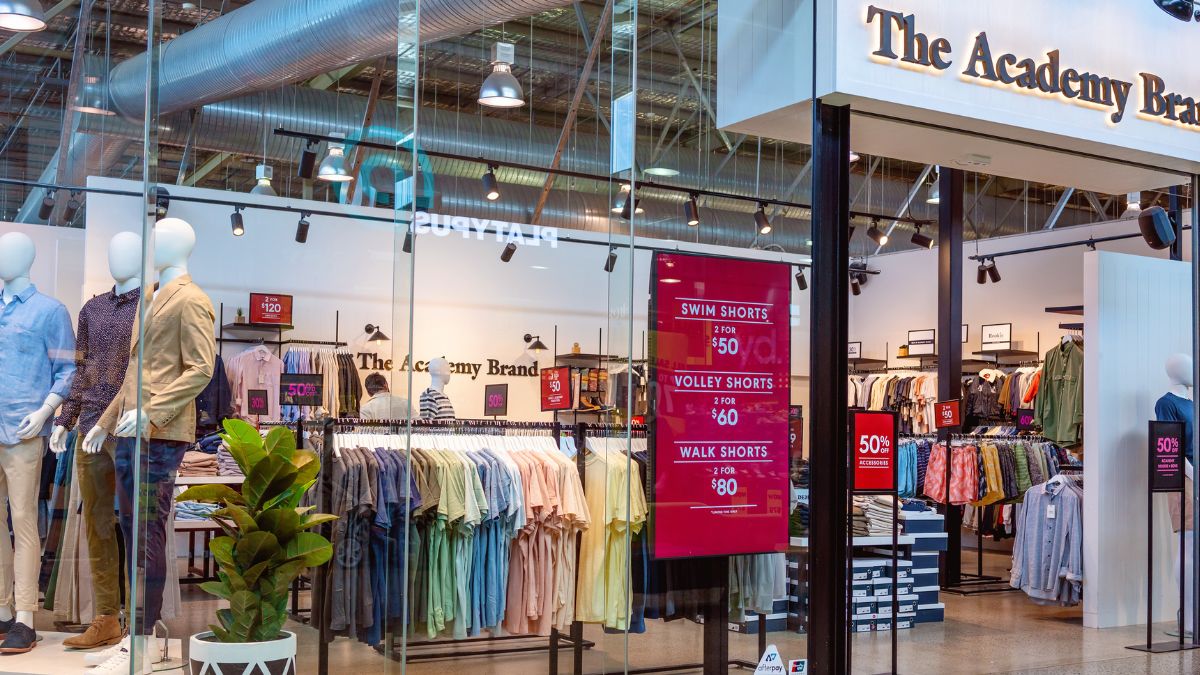
Finding the right clothes is hard when most brands just take a standard cut and scale it up. Bigger numbers, same proportions and that’s exactly why things don’t fit right. A handful of brands actually design for larger frames, with longer torsos, wider shoulders, and more room where it’s needed.
Here’s where to start:
- DXL (Destination XL) the most complete plus-size menswear retailer available, with in-store and online options; they carry multiple fits within each size, which matters more than the size number itself
- Bonobos mid-range, ships online, known for getting trouser fit right on larger frames; their extended sizes are cut differently, not just scaled
- Old Navy budget-friendly starting point for basics like t-shirts, jeans, and casual trousers; quality is inconsistent but the price makes it low-risk for building out foundational pieces
- Ralph Lauren Big & Tall worth the price for blazers and dress shirts specifically; structured construction holds up and the shoulder fit on jackets is noticeably better than most
- Amazon Essentials Big & Tall not exciting, but reliable for solid-color basics at low cost; use your measurements against their size charts and returns are straightforward
One practical note: always check the brand’s specific size chart against your four measurements before ordering anything online. Sizing varies enough between these brands that guessing will still cost you returns even from the better options on this list.
How to Walk Into Any Room and Own It — Without Waiting to Lose a Single Pound
For a long time, the plan was probably “I’ll deal with clothes when I lose the weight.” That plan has a cost. Every event attended in something that doesn’t fit right, every photo where you wanted to disappear, every room you walked into already apologizing for how you looked that’s the cost of waiting.
Sharp dressing is not a reward for a different body. It’s a decision you make for the one you have right now.
What actually changes when you get this right:
- You stop being invisible a well-fitted blazer and clean trousers tell a room you’re intentional, regardless of your size or age
- Confidence shifts before anyone says a word wearing clothes that fit correctly changes how you carry yourself, and that’s visible
- You stop postponing your own life waiting to look good is waiting to show up fully, and there’s no good reason to keep waiting
None of this requires a new body. It requires four measurements, a few specific pieces, and the decision to start today.
That’s the first action: grab a tape measure today. Write down your chest, waist, sleeve, and inseam. Those four numbers are the foundation everything else builds on.
Everything covered in this article works for the body you have right now. Not the one you’re planning for. This one.

Hello there! I’m Jesse Joe, the author and editor behind SolganGenius. I’m thrilled you’ve stopped by, and I can’t wait to share with you the essence of what this platform is all about.
I’m a writer, social media enthusiast, and a firm believer in the power of words. I’ve always been fascinated by how a simple phrase or slogan can capture an emotion, convey a message, and even change perspectives. Learn More