
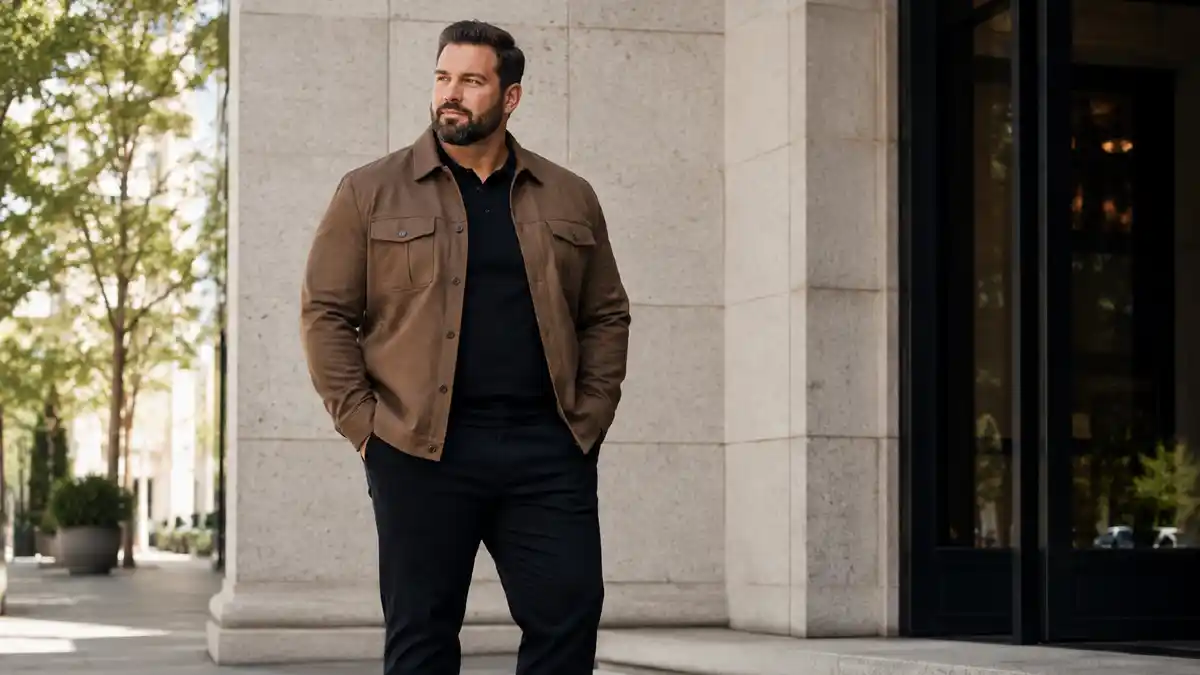
Standing in a fitting room, shirt straining across your back while the rest of it hangs like a tent. Sound familiar? Most style advice for broad-shouldered men stops at XL and assumes the rest takes care of itself.
It doesn’t.
Broad shoulders on a plus-size frame are not the problem. Dressing them wrong is. This article covers exactly what to wear, what to skip, and where to shop so your shoulders start working for you instead of against you.
Your Broad Shoulders Already Give You a V-Shape — Most Plus Size Men Just Don’t Know How to Use It
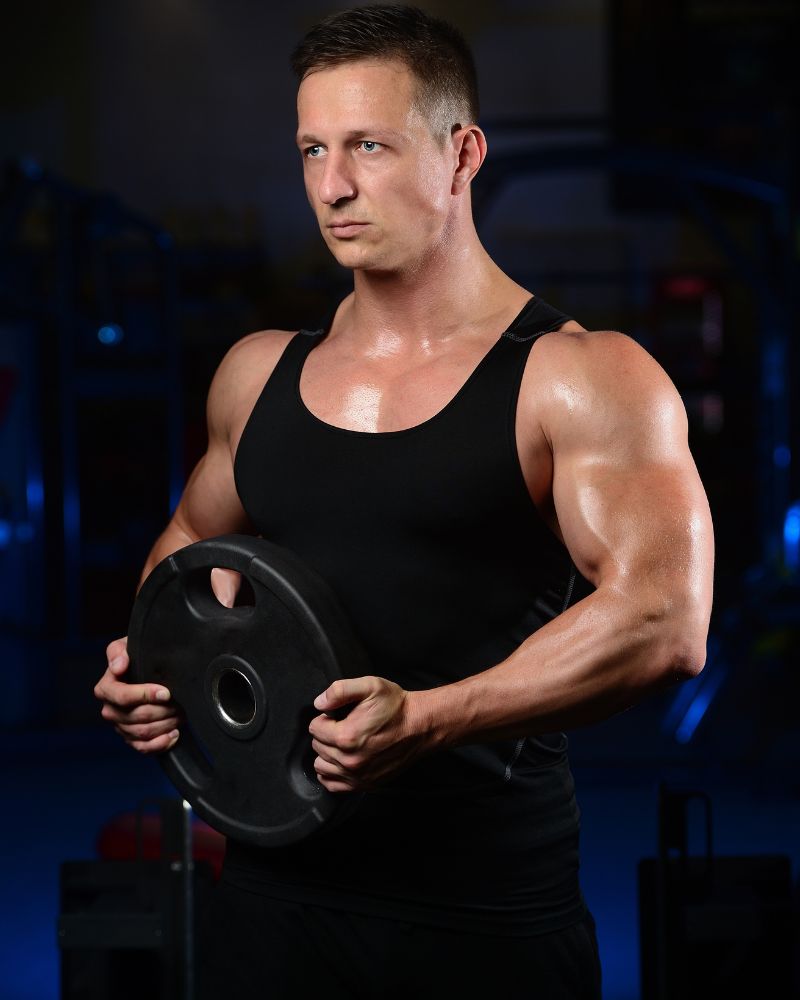
Guys spend years at the gym trying to build broad shoulders. You already have them. Start there.
That’s the structural advantage most men work hard to earn and you’re starting with it. Broad shoulders create a natural V-shape from your upper body downward, which pulls the eye toward your strongest feature and makes the midsection appear slimmer, even before a single clothing strategy comes into play.
The real problem is not your shoulders. It’s that most plus-size men have been taught to dress smaller reaching for oversized cuts, dark shapeless layers, and clothes chosen for coverage rather than fit, which quietly erases the one feature already working in their favor.
What your broad shoulders actually do for your frame:
- Draw the eye up and away from the midsection
- Create a natural taper from chest to waist
- Make structured clothing look powerful, not tight
- Give every outfit a built-in focal point before styling even begins
| What Most Plus Size Men Believe | What’s Actually True |
|---|---|
| Broad shoulders make me look bigger | They create a V-shape that draws attention away from the waist |
| I need to cover my upper body | Your upper body is the feature worth framing |
| Baggy clothes make me look less heavy | Shapeless clothes remove structure and add visual bulk |
| Fitted clothing is only for slim men | Clothes fitted at the shoulder define your frame at any size |
Dressing well with this body type starts with one shift: stop treating your shoulders as the problem and start building every outfit around them.
Sizing Up to Fit Your Shoulders Is Exactly Why You Look Shapeless, Not Just Big
When a shirt fits your shoulders but bunches at the waist and hangs loose at the arms, that extra fabric is not comfort it’s the exact thing making you look bigger than you are.
Sizing up solves one measurement. It creates problems everywhere else. Fabric pools at the chest. Definition disappears at the waist. Arms look like they’re swimming in extra material.
The real issue: fit is not one number. Shoulders might need an XL while the waist fits a large and picking one size to handle both always ends in a compromise, usually at the expense of your shape.
What happens when you size up just to fit your shoulders:
- Shoulder seams land correctly, but everything below hangs and billows
- Extra chest room reads as body size, not shirt size
- Your waist disappears under excess fabric, removing the natural taper your frame already has
- Sleeve volume adds width to your arms that isn’t actually there
Picking the right cut matters far more than picking the right number on the tag. Athletic and hybrid fits are built wide at the shoulder and chest, then tapered through the waist — solving both measurements at once instead of sacrificing one to fix the other.
Athletic Fit Shirts With Stretch Fabric Are the Only Combination That Actually Solves This Problem
Most plus-size men walk past the athletic fit section assuming it’s cut for smaller builds. Wrong. Athletic and hybrid fits are specifically designed to be wider through the shoulder and chest while tapering at the waist the exact shape a broad-shouldered plus-size frame actually needs.
Stretch fabric is the other half. Pure cotton pulls tight across the back when you move your arms, creating that strained look across the shoulders. Even a small percentage of elastane or spandex usually listed as 2% to 5% on the tag lets the shirt move with your body and hold its shape across the chest instead of bagging out.
What to look for on the label:
- Fit type reads “athletic fit,” “hybrid fit,” or “tailored fit” skip “relaxed,” “classic,” or “comfort fit”
- Fabric content includes elastane, spandex, or Lycra alongside cotton or polyester
- Shoulder seam lands at the edge of your actual shoulder, not drooping down your arm
- Shirt tapers through the midsection without pulling across the chest
60-second fit test before buying:
With the shirt on, raise both arms straight above your head. Back pulling across the shoulders? Hem lifting more than two inches? That means the cut is the problem, not your size. Try the athletic fit version in your current size before reaching for a bigger number.
Ignore “relaxed fit” and “comfort fit” entirely. Zero taper means zero shape and that’s exactly what those labels deliver.
A Structured Blazer Does More for This Body Type Than Any Other Single Item — Here’s Why Plus Size Men Avoid It Wrongly
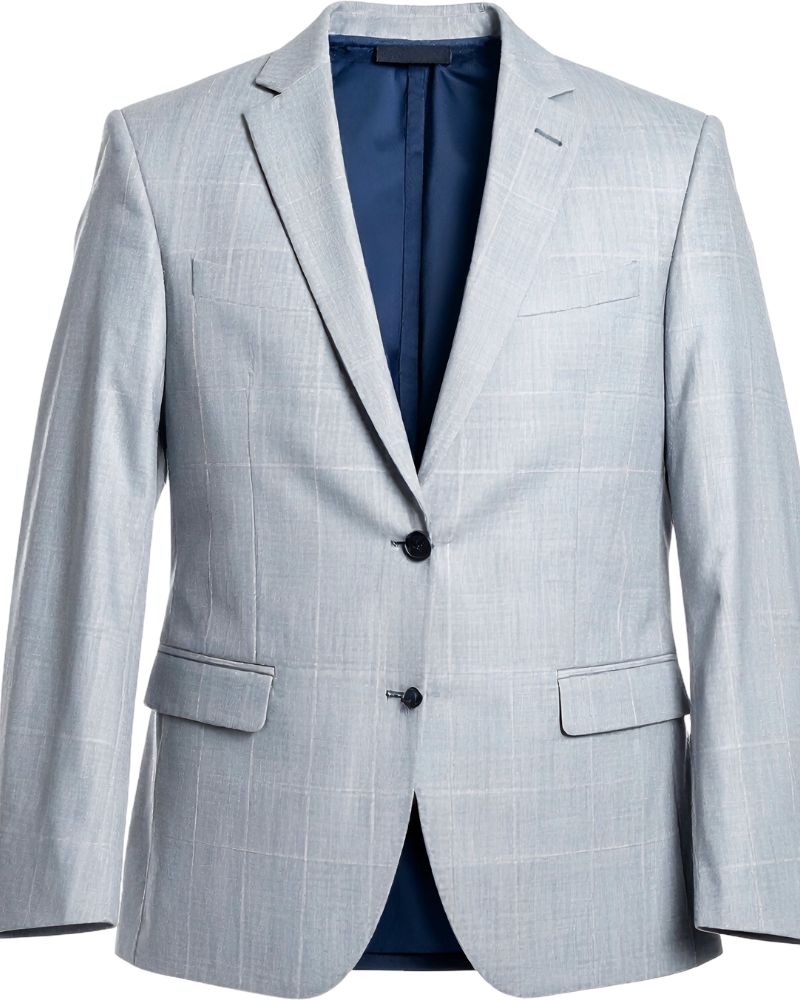
Shoulder fit is the only measurement that matters when buying a blazer off the rack. Everything else chest, waist, length, sleeves can be fixed by a tailor. Only the shoulder seam position cannot be moved without rebuilding the entire garment from scratch.
Most plus-size men avoid blazers entirely. That’s the mistake. No shirt, however well-fitted, creates the same defined silhouette a structured blazer delivers because the blazer’s built-in shoulder structure frames your torso and creates a visual taper without the body underneath needing to do that work.
How to check shoulder fit before buying:
- Shoulder seam sits exactly at the edge of your shoulder bone not drooping down your arm, not riding toward your neck
- No bunching or pulling across the upper back when arms hang naturally at your sides
- Chest and waist can have extra room a tailor adjusts both easily
- Length and sleeves are alterable; the shoulder seam position is not
Why the tailor visit is worth it:
Bringing a well-fitting blazer to a tailor for waist suppression pulling the sides inward to create a taper costs far less than most men expect and takes less than an hour. Broad shoulders stop reading as bulk and start reading as structure.
One blazer. Single fitting. Few purchases in your wardrobe deliver this kind of return.
Color Placement Does What “Wear Dark Colors” Never Could — Frame Your Shoulders as Structure, Not Bulk
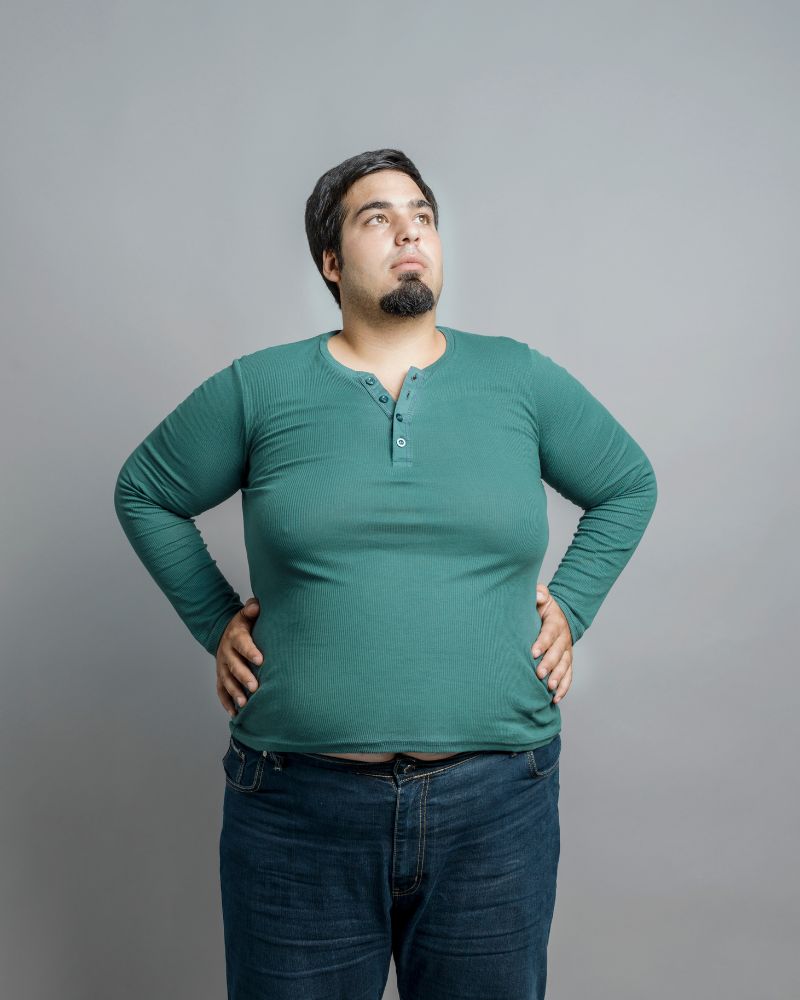
Wearing all dark colors head-to-toe doesn’t slim you down. It removes contrast, which removes definition, and makes your whole body read as one large flat shape.
Color placement is the real tool. Direction matters more than darkness. Where you position light and dark tones tells the eye where to look and for a broad-shouldered plus-size frame, you want the eye moving upward toward the shoulders, not scanning down toward the midsection.
Dark bottom, rich tone on top. That combination grounds the lower half while pulling visual attention toward your strongest feature.
Color placement rules for this body type:
- Dark trousers or jeans anchor the lower half and create a clean visual base
- Medium or bold tones on the upper half lift the eye toward the shoulder line
- A lighter or brighter color blocked at the chest and shoulders reads as width and structure not bulk
- Head-to-toe dark with zero contrast break flattens your entire frame into one shape
What to know about prints:
Small micro prints tiny checks, fine dots, mini florals get visually lost on a larger frame and read as muddy texture instead of actual pattern. Medium-scale prints work better because they register clearly at your body size without competing with your silhouette.
Vertical stripes narrow the torso. Horizontal stripes at a small scale draw attention across the chest and shoulders on this frame, exactly where you want it.
Your Pants Don’t Need to Balance Your Upper Body — They Need to Anchor It
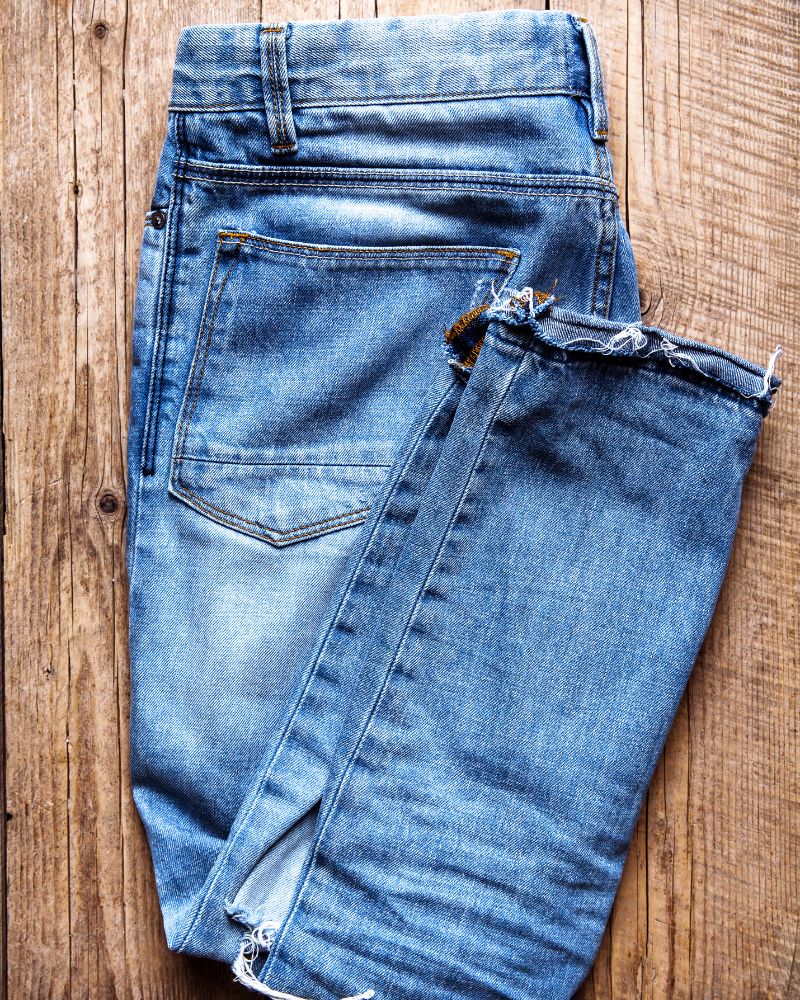
Wide pants don’t balance broad shoulders. They just make two large things sit on top of each other with no definition between them.
Pants on this frame have one job: create a clean, grounded line from waist to floor that lets the upper body do its work without competition. Straight-leg and slim-fit dark wash pants do exactly that they run close to the leg without clinging, which draws the eye downward in a controlled line and makes your shoulder width read as intentional proportion, not top-heavy bulk.
Rise matters more than most men realize. A mid to high rise shortens the visible length of your torso and creates a defined break between your upper and lower half which is exactly what this body type needs to look structured rather than shapeless.
Pants rules for a broad-shouldered plus-size frame:
- Straight-leg or slim-fit in dark wash both create a clean vertical line without adding volume below
- Wide-leg, relaxed, or baggy cuts add bulk below and cancel out your upper body structure entirely
- Mid to high rise defines the waist break and keeps the torso from reading as one long shapeless stretch
- Pleated trousers add extra fabric at the hip skip them for casual and smart-casual looks
Tuck vs. untuck treat it as a proportion decision:
Going tucked creates a visible waistline, shortens the torso, and defines the break between your upper and lower body. Leaving it untucked adds torso length but buries the waist — removing the one taper your frame already carries.
Tuck in. More often than you think.
Where to Actually Shop When You’re Broad-Shouldered AND Plus Size and Neither Section of the Store Is Built for You

The problem isn’t that your size doesn’t exist. It’s that most retailers split “plus size” and “athletic fit” into two completely separate sections that almost never overlap.
Here’s where to start. DXL (Destination XL) is the most reliable retailer for this body type they stock big and tall sizing specifically and carry athletic fit cuts within that range, which almost no mainstream retailer does.
Bonobos carries athletic fit shirts in extended sizes with shoulder-width consideration built directly into the cut. ASOS Plus offers a wider selection at lower price points, with fitted and athletic options across categories that update regularly.
Brands worth checking for athletic fit in extended sizes:
- DXL / Destination XL big and tall specialty with athletic fit options built in
- Bonobos athletic fit shirts in extended sizing with structured shoulder cuts
- Untuckit athletic fit available in extended sizes, designed specifically for untucked wear
- ASOS Plus wide selection, accessible pricing, regularly refreshed athletic fits
For suits and blazers:
Made-to-measure costs far less than most men assume. Indochino offers made-to-measure suits where you input your shoulder, chest, and waist measurements separately — which is exactly how this body type needs to be fitted, at a fraction of what traditional tailoring runs.
Practical online filter that saves you time:
Search “athletic fit” first. Then apply your size filter. Never start inside a “big and tall” section and scroll hoping it buries the athletic cuts you actually need.

Hello there! I’m Jesse Joe, the author and editor behind SolganGenius. I’m thrilled you’ve stopped by, and I can’t wait to share with you the essence of what this platform is all about.
I’m a writer, social media enthusiast, and a firm believer in the power of words. I’ve always been fascinated by how a simple phrase or slogan can capture an emotion, convey a message, and even change perspectives. Learn More