

Layering works on every body type. The problem is that most advice about it was written for guys who don’t have to think about fit. So when you try it throw on an extra shirt, add a jacket you end up looking wider than when you started, take it all off, and go back to one layer.
This is not a body problem. Most layered outfits fail for plus-size men because of the order pieces go on, not the pieces themselves. Wrong fabric in the wrong layer position. Lengths ending at exactly the wrong spot. Necklines stacking in ways that widen the chest instead of framing it.
Every one of those mistakes is fixable. Once you know what is actually going wrong, building a layered outfit that works with your shape instead of against it is a lot more straightforward than you have been led to believe.
Why Layering Keeps Making You Look Bigger (It’s Not the Layers It’s the Order)
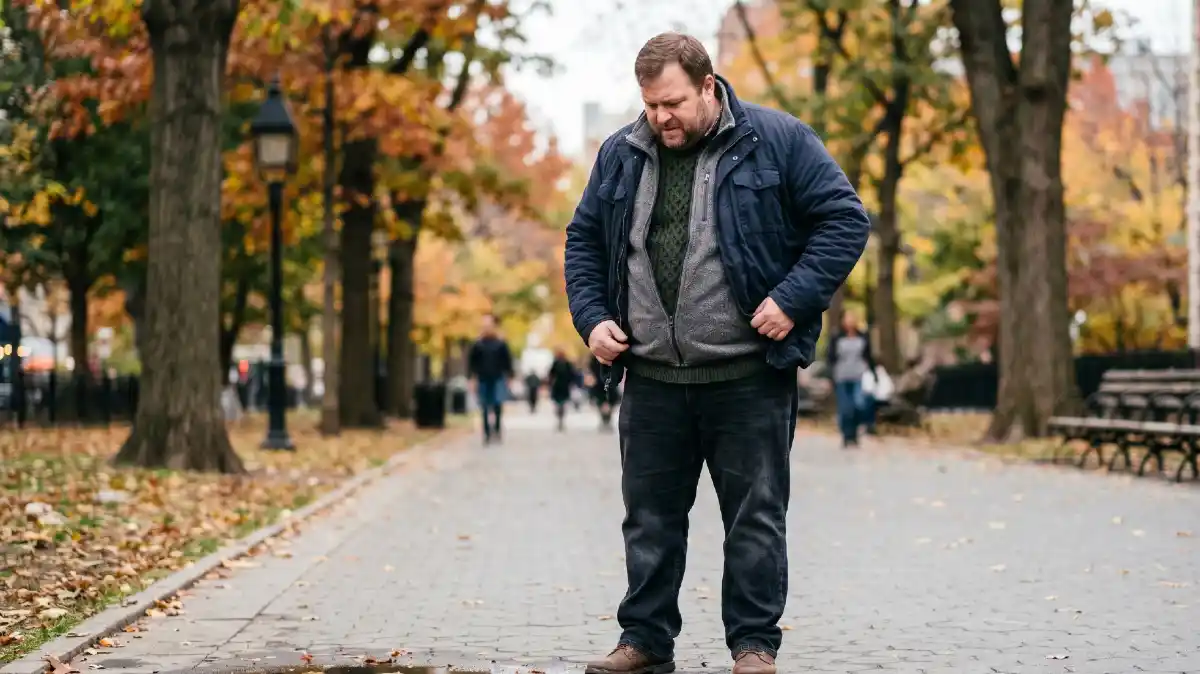
Most layered outfits go wrong before you even leave the house. The problem is not your body it is the order you put things on. Bulk happens when a thicker or looser piece sits closer to your skin than a thinner, more fitted one. That single mistake traps fabric, creates uneven surface texture, and pushes everything outward.
What that looks like in practice:
- A thick hoodie worn under a jacket forces the jacket to stretch across your chest and shoulders adding width you do not actually have
- Wearing a loose base layer under anything creates bunched fabric that shows through, especially around the stomach and sides
- Putting your most structured piece directly over a heavy mid-layer removes the shape that outer piece was supposed to create
Layering works on every body type. What it does not forgive is bulk sitting closest to the skin. Build thin-to-structured lightest piece first, most defined piece last and the layers stop fighting your shape and start working with it.
The Thin-to-Structured Rule: The One Principle Every Outfit Has to Follow
Building a layered outfit is like stacking materials by weight the lightest goes against your skin and the most structured piece goes on the outside. Flip that order anywhere and the outfit expands. Thin first. Structured last. That is the whole rule.
How each position works:
- Innermost layer A fitted tee, henley, or slim shirt. Thin fabric, close to the body, zero extra material. This piece should add no visible bulk on its own
- Mid layer (optional) A lightweight open shirt or flat-knit cardigan worn loosely over the base. Slightly more weight than the base, but still not structured
- Outer layer Your most defined piece: a blazer, chore coat, or tailored jacket. This layer does the shaping but only if everything underneath it is thinner
Skipping the mid layer is fine. Reversing the order is not. Putting a thick flannel as your base and a thin jacket on top pushes the jacket outward immediately, removing the silhouette it was supposed to create for you.
Every section ahead is just this rule applied to a specific layer.
Base Layer Fit Is Not About Tight It’s About No Excess Fabric
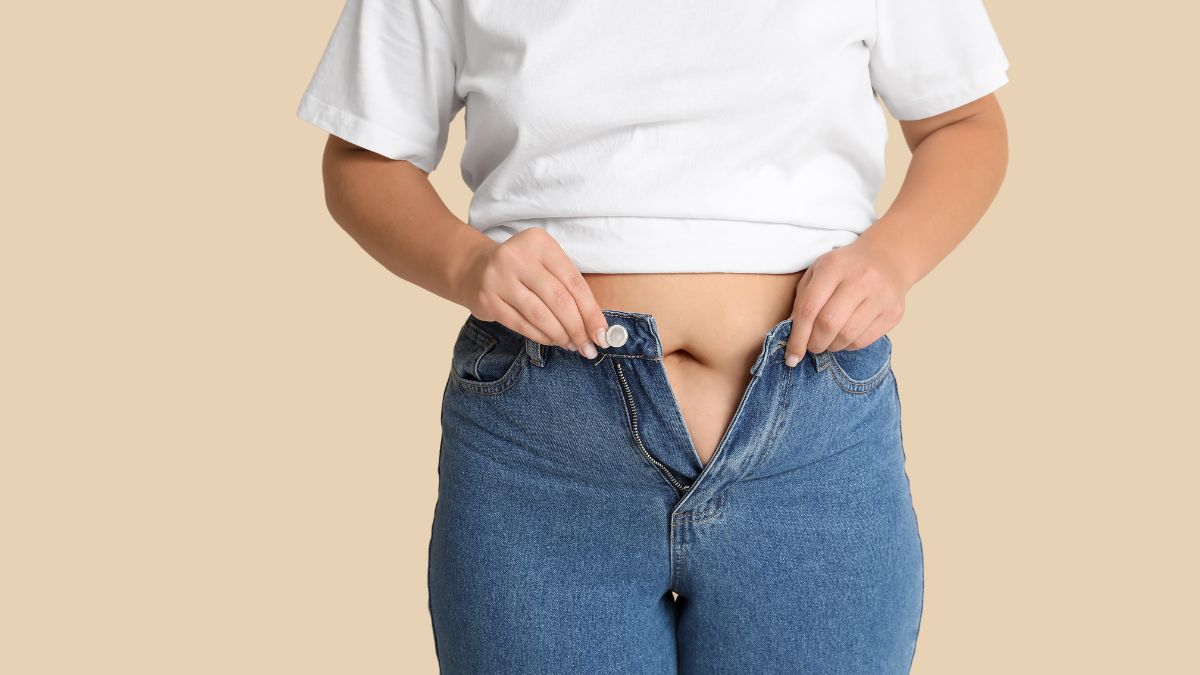
Squeezing into a shirt that pulls across the chest is not the goal. Neither is going too big. Both extremes kill the outfit. Your base layer needs to sit smoothly against your body with no pulling at the chest, no gathering at the sides, and no loose fabric hanging anywhere.
Before adding any layer on top, run these three checks:
- Shoulder seam Should sit right at the edge of your shoulder, not sliding down your arm. If it is off, everything placed on top sits wrong too
- Hem length Long enough to stay tucked if needed, but not so long that extra fabric stacks up at your waist
- Side seam Press your hand along the side seam. Excess fabric here is what bunches under jackets and creates visible ripple texture across your chest and back
Neckline shapes the entire upper half of your layered outfit. Crew necks add width. V-necks and henleys open a vertical line upward, giving every outer layer something clean and uncluttered to sit over. Make the henley your default base it disappears under almost any outer piece without competing for attention or creating visible bulk at the neckline.
The Open-Front Mid-Layer: The Tool Most Style Guides Never Mention
Leaving a shirt unbuttoned does more to slim your silhouette than wearing all black ever will. An open front creates two vertical lines running down both sides of your torso vertical lines pull the eye up and down, not across. Closed layers do the opposite. Button everything shut and you create one wide horizontal surface across the widest part of your body.
The best mid-layers for plus-size men are all open-front pieces:
- Lightweight overshirt Worn open over your fitted base. Flat weave works best; flannel adds too much thickness in this position
- Flat-knit cardigan Open down the front, not a chunky cable knit. Thinner knit sits flatter and adds far less surface bulk
- Unzipped harrington or lightweight jacket Works as a mid-layer under a heavier outer coat in cold weather, as long as it stays unzipped
Avoid these in the mid-layer position:
- Zipped or fully buttoned hoodies closing the front kills the vertical line completely
- Heavy flannels or thick wool shirts too much fabric bulk sitting between your base and outer layer
One rule covers every piece on both lists. Keep it open. Wear it unzipped. If you button or zip the front closed, you immediately undo everything the open mid-layer was working to create for your silhouette.
What Happens at Your Stomach When You Layer And How to Control It

When layers all end at the same height as your widest point, they draw a horizontal line directly across it which is exactly where you do not want attention. That is the problem. Most plus-size men never identify it as a hem issue.
The fix is hem length hierarchy:
- Base layer Shortest of the three, but long enough to stay flat and not ride up under anything placed over it
- Mid layer Slightly longer than the base. This covers the base hem and stops fabric from bunching at the midsection
- Outer layer Always the longest piece. It covers every hem beneath it and pulls the eye downward, away from the widest part of your torso
One additional rule applies to the outer layer specifically. Never let your jacket end at your stomach. Hip-length or slightly below hip is the target short jackets that end at the belly button cut your body in half at exactly the wrong spot.
Longer on the outside. Shorter underneath. Stack them in that order and the midsection stops being the first thing the eye finds.
Fabric Choice Creates More Bulk Than Color Ever Will
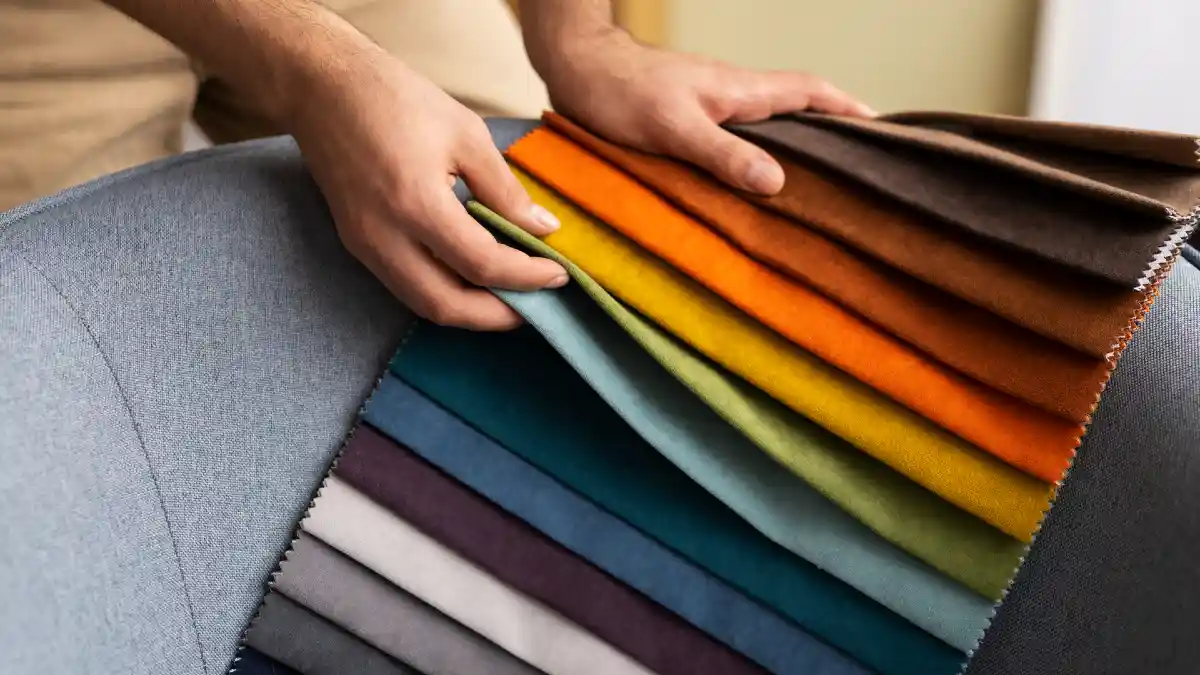
Wearing all black in a chunky cable knit still adds bulk. Color cannot fix what fabric creates. All three texture, finish, and drape are doing far more work on your silhouette than any color choice you make, and most style guides never cover this at all.
Here is how each property affects perceived size:
- Texture Chunky knits, waffle weaves, and heavily textured surfaces catch light and create shadow that reads as added volume. Flat weaves and smooth cotton stay quiet on the body
- Finish Matte fabrics absorb light and sit flat. Shiny or semi-shiny fabrics push light outward, making every surface they cover look further from your body than it actually is
- Drape Soft fabrics that fall with gravity reduce bulk. Stiff fabrics that hold shape away from the body create it
Assign fabrics to each layer position like this:
- Base Smooth cotton, modal, or flat jersey. Matte finish only
- Mid layer Flat-woven shirt, thin merino, or light chambray. Nothing textured or shiny
- Outer layer Structured woven cotton, canvas, or a wool blend that holds shape at the shoulder
Two pairings quietly add size regardless of color. A chunky knit in the mid-layer position always fights the jacket above it because thick surface texture pushes against whatever sits on top. Avoid it entirely. Shiny fabric does the same. Neither one can be fixed by going darker.
Collar Stacking Done Right: The Neckline Combinations That Slim vs. Widen
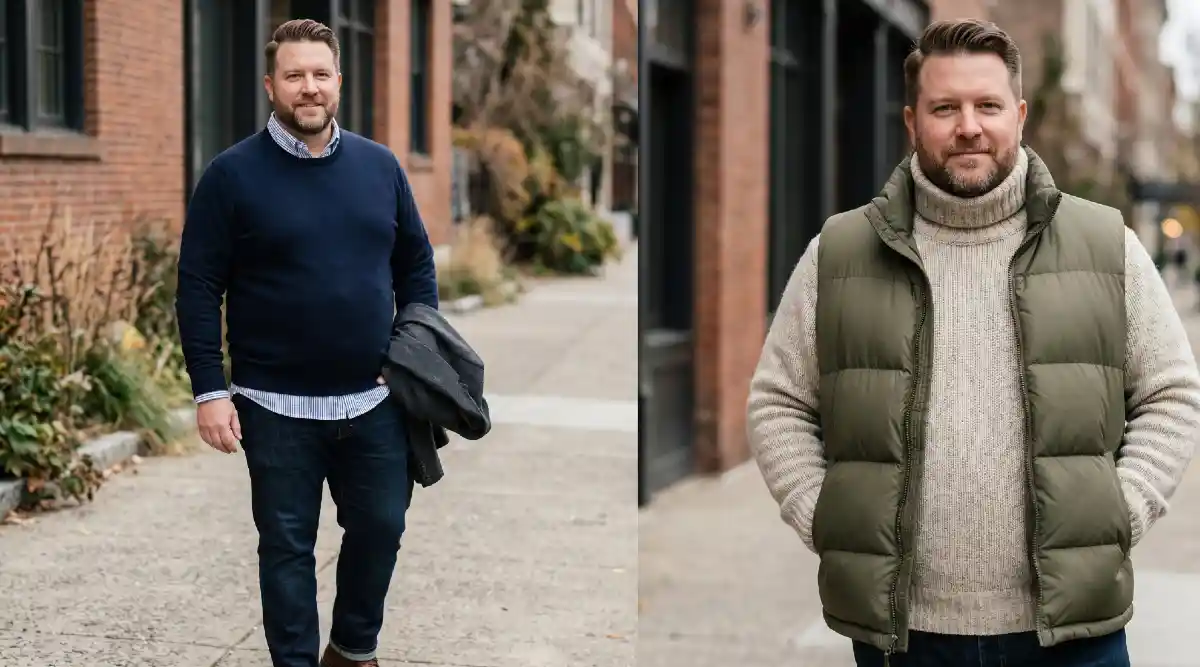
Two crew necks stacked on each other create a thick horizontal band across your upper chest widening exactly the area you want to keep narrow. Neckline combinations are doing more to the shape of your layered outfit than most men realize.
Pairings that slim the upper body:
- V-neck base + collared shirt or jacket Opens a vertical line through the center of your chest. Placing a collar above it frames the face and pulls the eye upward rather than outward
- Henley base + open overshirt or blazer Subtle button detail runs vertically down the center. Keeping the outer layer open means this vertical line stays visible and working
- Crew neck base + open-front layer Only works when the outer piece stays fully open. Closing it removes any vertical element and leaves just the wide horizontal band
Pairings that widen:
- Crew neck on crew neck Stacks two horizontal lines directly at your chest. Avoid this combination entirely
- Crew neck base + zipped jacket Zipping it closed eliminates the vertical line and doubles down on horizontal width across the chest
Higher necklines close things off. Lower ones keep the vertical line open. Your base layer neckline sets everything else in the outfit up no amount of open-front layering or outer structure can fix a bad neckline choice underneath it.
Three Outfit Formulas You Can Build From What You Own Right Now
Most of these pieces are probably sitting in your wardrobe already, waiting to be stacked in the right order rather than worn as single layers. The order is what changes everything. Pick the formula that matches your day.
Formula 1 Casual Weekend
- Base: Fitted henley in white, grey, or navy matte cotton, close fit
- Mid: Lightweight button-up in chambray or linen, worn fully open
- Outer: Not needed the open shirt is doing enough work on its own
- Substitute: No chambray? Any flat-weave button-up worn open works the same way
Formula 2 Smart Casual (Dinner or Work)
- Base: Fitted V-neck tee in dark navy, charcoal, or black
- Mid: Skip entirely
- Outer: Hip-length unstructured blazer or chore coat
- Substitute: No blazer? A dark structured overshirt worn as the outer layer covers this
Formula 3 Cold Weather
- Base: Fitted long-sleeve tee or thin merino wool top
- Mid: Flat-knit cardigan worn open at the front
- Outer: Structured overcoat or heavy chore jacket always the longest piece
- Substitute: No overcoat? A denim jacket as the outer layer holds in mild cold with the cardigan underneath
Each formula follows the same logic: thin to structured, open front in the mid position, longest piece on the outside. Once those three rules are locked in, the specific pieces become interchangeable swap the chambray for linen, the blazer for a chore coat, and the formula still holds. Specific pieces change. Logic stays fixed.

Hello there! I’m Jesse Joe, the author and editor behind SolganGenius. I’m thrilled you’ve stopped by, and I can’t wait to share with you the essence of what this platform is all about.
I’m a writer, social media enthusiast, and a firm believer in the power of words. I’ve always been fascinated by how a simple phrase or slogan can capture an emotion, convey a message, and even change perspectives. Learn More