
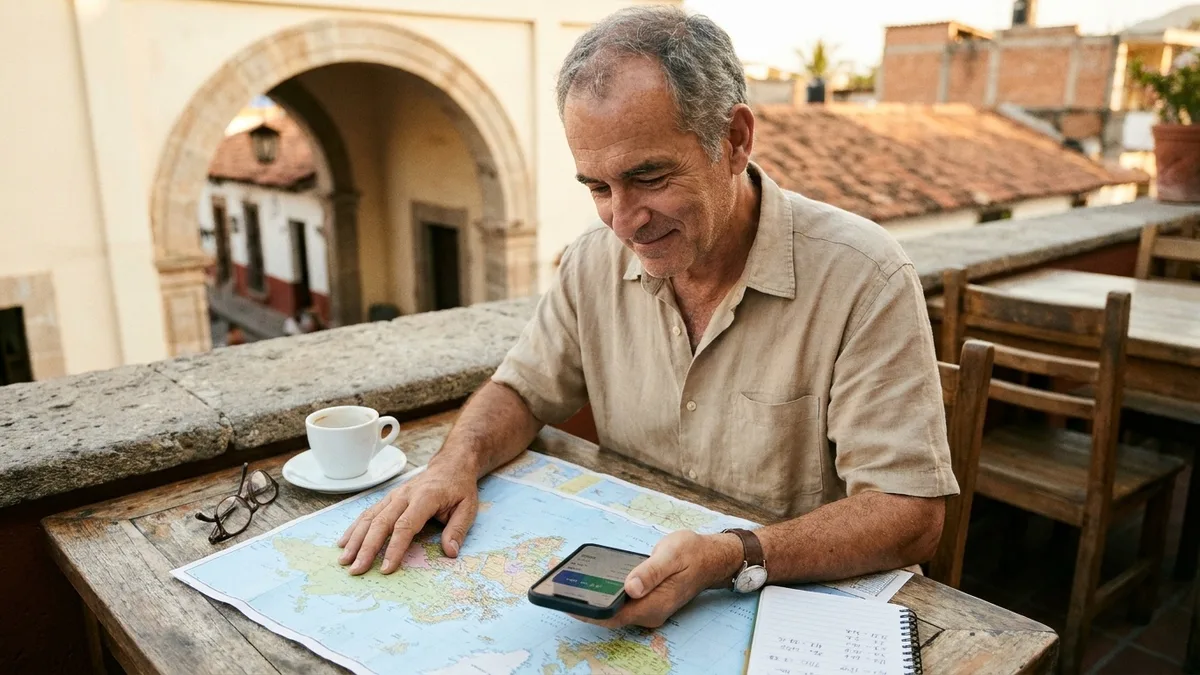
Roughly one in two Americans has given real thought to spending retirement outside the US. That's not a fringe survey result. It's a quiet, widespread feeling that the old retirement math no longer works.
But here's the twist: fewer than 700,000 people actually do it. That's under 1% of Social Security recipients. The ambition is huge. The follow-through is uncommon. And the reason most people stay isn't confusion or lack of information. It's the weight of a real life.
The crisis hiding in plain sight isn't about the people who leave. It's about what happens to them after they arrive. A financial gap pushes them out. Something else pulls them back. And neither shows up in the glossy videos of $500-a-month apartments with pools.
This article gives you the honest version: what retirement actually costs in five popular destinations, what follows you across the border (taxes, banking, Medicare), and what you lose in ways that don't appear on a budget spreadsheet. By the end, you'll know whether to move, test it with a scouting trip, or stay and cut costs where you are.
The old retirement bargain quietly broke
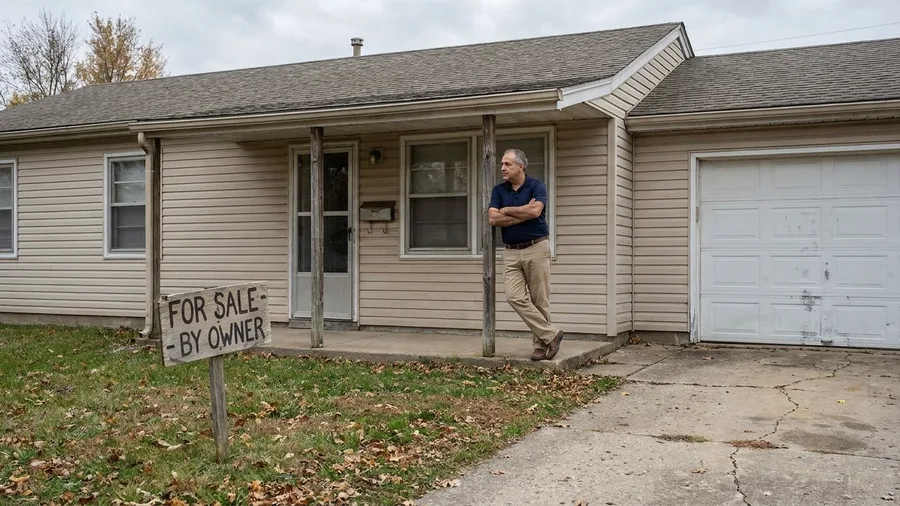
Retirement feels harder than the plan promised because the plan itself stopped working, and nobody sent a replacement. For decades the American version of old age had a fixed shape: work 30 or 40 years, pay off the house, put something aside every month, and walk into your seventies with stability. Not rich. Just okay.
Millions of people built whole lives on that shape. Where they bought the house, which job they stayed in, whether they took the pension or the 401(k) match, how much they let themselves spend on their kids. Those choices made sense under the old deal. Then it changed, quietly, with no announcement and no new copy handed out.
That's the part that stings. The deal didn't break loudly. It just stopped covering what it used to cover, while the bill for housing, medication, and care kept climbing. If you planned around the old version, you're now carrying a gap you were never told to budget for.
And here's the catch. You have to close that gap with the savings you actually have, not the ones the plan assumed. That's why so many people in their sixties start doing math they never expected to do at this stage, and why a question that used to sound wild starts sounding practical.
The monthly math leaves a $3,000 hole
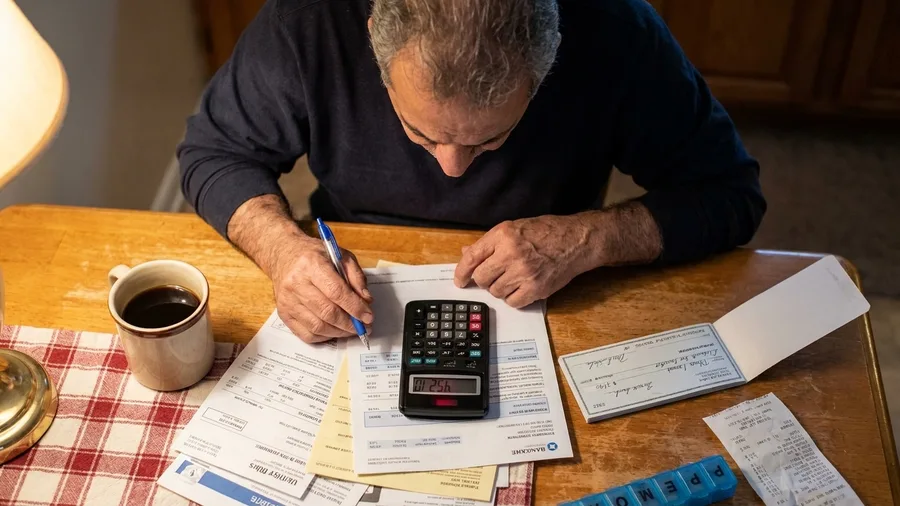
Social Security alone covers roughly two-fifths of what a retired household actually spends, which leaves about $3,000 a month to find somewhere else. A typical retired household burns through about $5,000 each month. The typical check lands near $2,000.
That gap doesn't sit still. It widens most years as rent goes up and the pharmacy receipt gets longer, while the check adjusts by a cost-of-living figure that rarely keeps pace with either.
Here's the number that really lands. Average apartment rent runs about $1,500 a month. That's roughly three-quarters of the whole Social Security check gone before you've bought a single grocery. Miami, Austin, or San Francisco: a simple one-bedroom won't just squeeze the budget. It consumes it.
Then add food, medications, utilities, and a copay that somehow went up again this year. The math doesn't close. It hasn't closed for a long time, and millions of people run that same arithmetic at the kitchen table every month, wrestling figures that were never going to balance.
A quick way to see your own version: total your monthly income from every source, subtract rent or mortgage, then subtract what you actually spend on health. Whatever's left is the real number. If it's negative, you're already making decisions around it.
| Destination | Typical rent or benchmark | What it sells | Main trade-off |
|---|---|---|---|
| Mexico (Puerto Vallarta, San Miguel, Mérida) | Two-bedroom $600–$1,000/mo; meal $2–$5 | Proximity, English-friendly, matching time zones | Not as cheap as Asia; less cultural distance |
| Thailand (Chiang Mai) | Modern furnished apartment under $500/mo; private hospital visit $15–$30 | Low daily costs and affordable private healthcare | Significant language and cultural gap |
| Portugal (Lisbon and beyond) | More than Southeast Asia; not a bargain | Safety, reliable systems, slower pace | You pay for ease, not the lowest rent |
| Vietnam (Da Nang, Ho Chi Minh City) | Very low costs | Energy and momentum of a country still becoming | Less established retiree infrastructure |
| Japan | Expensive by any measure | Trust in the system: clean streets, trains on time | Language barrier and high costs |
The crisis hides as private cutbacks

You don't see this crisis because it doesn't look like a crisis. It looks like a woman buying the generic version of everything, and a man who decided this was the year to skip the dentist.
Nothing visible marks it. No queue forms, nobody marches, and no street corner shows that something has broken for millions at once. What's there instead is a swarm of small private adjustments happening behind closed doors. Postponing the specialist. Choosing between the electric bill and the refill. Eating the same cheap dinner four nights running and calling it a habit.
Look at who's behind the register at any large store. Gray-haired cashiers in their late sixties. Men and women in their early seventies stocking shelves, working jobs that were supposed to be fifteen years behind them. It's tempting to call that staying active. For most of them it's arithmetic.
That's the mechanism, and it's worth saying plainly: the adjustment is private, so the crisis stays invisible, and what stays invisible stays easy to ignore. Right up until it's your own kitchen table.
If you want to know how widespread it is, stop looking for dramatic evidence. Ask the people around you what they've quietly stopped paying for. The answers come fast, and they're usually about teeth, eyes, or a medication they halved.
Loneliness arrives with the money pressure
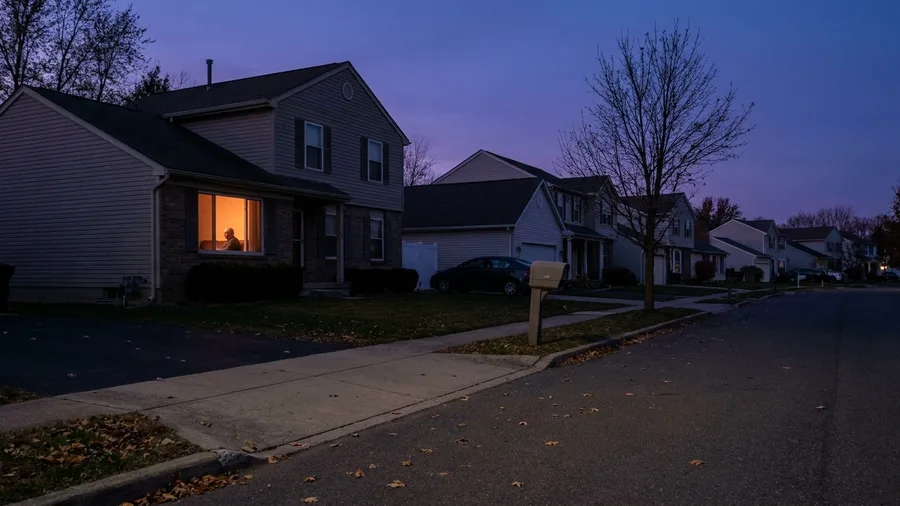
Leaving starts to feel like the only option because the money pressure and the loneliness land in the same season of life, and together they make staying feel less and less like a choice.
The social foundation that made retirement feel worth having tends to thin out right when you need it most. The neighborhood where everyone knew your name. The friends who'd known you thirty years. The family near enough to swing by midweek. For a lot of people, all three erode at once.
The kids moved to other states for better jobs. That's not a betrayal, it's just how work moves now. Old friends passed away or drifted. Neighborhoods churned so thoroughly that the street looks identical and the feeling is entirely gone. You can drive down your own block and not know a single person on it.
So two pressures arrive together. Financially you're short every month. Socially you're more alone than you've been in decades. Either one alone might be survivable. Together they plant a question that's almost too quiet to say out loud: if I can't grow old here, why not leave?
That question, once it takes hold, doesn't leave. That's the thing worth noticing, and it's where the next few decisions actually start.
Expat videos show real but selective upside
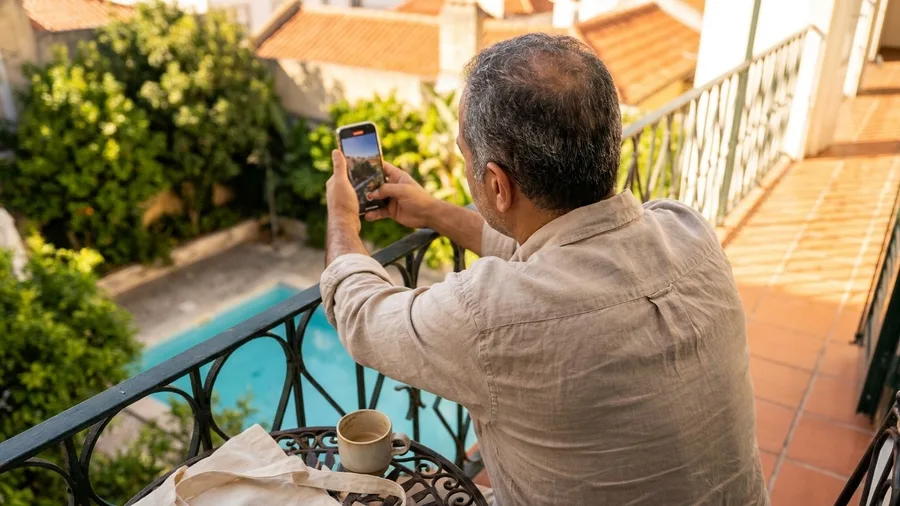
The expat videos are not lying to you. They're just selling you the trailer, and the film has paperwork in it that the trailer leaves out.
A retired nurse in Thailand really does walk through an apartment with a pool for around $500 a month. A former teacher in Lisbon really does walk to the market every morning, coffee about a euro, eat well, sit in the square, and skip the bills that used to make her stomach sink. Those are real lives, not staged ones.
But here's what a short clip can't fit. The taxes that follow a US passport. The banking friction on both ends. The Medicare gap that starts at the border. The forms, the deposits, the residency rules, the translations.
And the family distance, which doesn't show up in the first year and doesn't ask permission when it does. One retiree made the move work beautifully for three years before a sick friend and a granddaughter's first steps watched on a phone changed what the whole thing felt like.
So take in the postcard, but treat it as a trailer. The upside on display is genuine. The parts left out are the parts that decide whether the move holds. Before you book anything, price the insurance, ask a tax preparer what filing looks like from abroad, and write down how many hours the flight home would take.
Mexico is the easiest transition

Mexico is the closest thing to a soft landing, which is exactly why it tops so many lists. Proximity, familiar groceries, English in the expat zones, and rent that leaves room to breathe.
It works because it doesn't feel like emigrating. In Puerto Vallarta, San Miguel de Allende, or Mérida, a two-bedroom in a good neighborhood runs roughly $600 to $1,000 a month, and a full meal at a local restaurant is $2 to $5. Compare that to the $1,500 average apartment back home eating three-quarters of a Social Security check and you see the appeal.
The smaller stuff matters more than people expect. In established expat communities, English gets you a long way, familiar US grocery chains are on hand, and the clocks frequently match your family's back in the states. A call to your daughter at dinner time is just a call, not a scheduling puzzle.
For a lot of Americans living on Social Security, Mexico doesn't come across as a strange land. It comes across as the American Southwest, with money that actually stretches. This is the pick for someone who wants real savings without total cultural shock.
The trade-off is real, though. Mexico isn't as cheap as Southeast Asia, and the established expat zones cost noticeably more than the local neighborhoods next door. You're paying for convenience and proximity. Worth knowing that going in rather than discovering it in month three.
Is Mexico the right fit for you?
Thailand wins on medical and daily costs

Thailand wins because the medical math is genuinely different, and for a lot of retirees that's the whole ballgame. In Chiang Mai, a modern furnished apartment can be had for under $500 a month. Seeing a quality private hospital doctor costs $15 to $30 for the appointment itself.
Sit with those two numbers for a second. That's rent and a doctor's visit for less than some people pay for a single prescription refill back home.
Operations that would set you back tens of thousands of dollars stateside come at a tiny share of that cost, often at facilities specifically built to serve international patients. Americans who spent years dreading the moment they opened a medical bill describe walking out of a Thai hospital with a feeling they'd almost forgotten: relief.
That's the practical side. The fuller picture has a catch, and it's not about money. The trade-off here is cultural distance. The language gap is wider than Mexico's, the food and rhythm of the day ask more of you, and being an outsider takes daily effort in a way it doesn't in an established expat town. That's the price of the lower costs, and it's a real one. If you're weighing Thailand, spend a month there first, not a week.
Portugal sells ease and safety, not price

Portugal isn't a bargain, and it doesn't pretend to be. It's a place people choose for something other than the lowest rent, and the people already living there will tell you so straight.
What you're buying is safe streets, reliable systems, and a pace of daily life that doesn't feel like a sacrifice. It feels like reclaiming something you didn't realize you'd lost. Coffee for about a euro. A walk to the market. Systems that work when you need them to.
The country has spent years crafting visa programs with international retirees in mind, which removes a layer of bureaucratic dread that stops a lot of people before they even start. That's part of what the higher price tag covers.
This is the pick for someone buying texture and safety. You're paying European prices for European ease, and that's the honest pitch. If the goal is squeezing the most out of every dollar, Portugal will disappoint you. If the goal is a life that feels calmer and more secure than what you left, the numbers line up differently.
The mistake to avoid is moving there expecting Southeast Asian costs. People who do that spend their first year frustrated by every bill. Go in knowing you're paying for ease, and the budget stops feeling like a problem.
Vietnam appeals through low costs and momentum
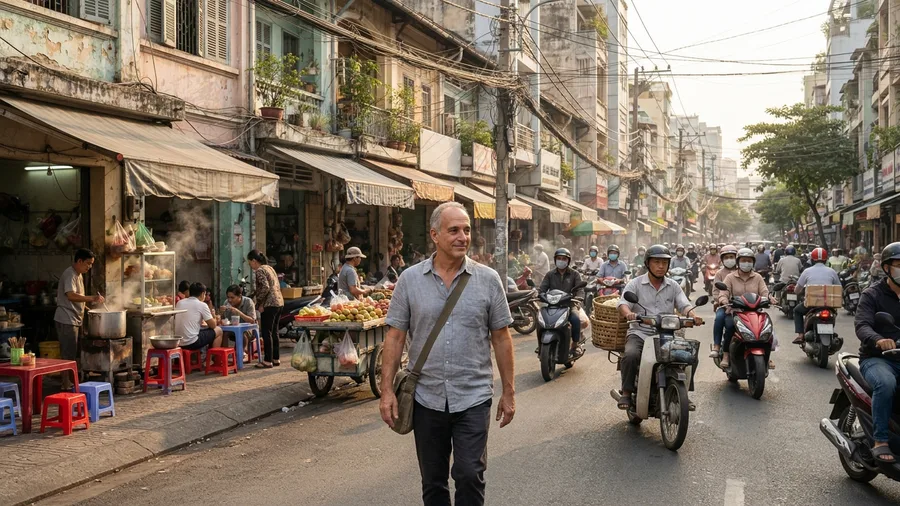
Vietnam is the option for people who don't want the settled expat enclave. Da Nang and Ho Chi Minh City combine very low costs with rapidly modernizing infrastructure, and the energy of a place on the move is contagious.
Here's the pattern that keeps showing up. People arrive planning to stay six months. Three years later they're still there, a little surprised by how natural it started to feel. One retiree's repeated moves make a useful case study in finding the city that finally fits.
Part of that is momentum. A city still becoming something gives you something to do, to watch, to be part of, and that turns out to matter more than a lot of retirees expect when they're doing the cost math at the kitchen table. The daily costs are low enough that a fixed income stretches, but it's the sense of motion that keeps people.
This is the pick for someone energized by a place that's still becoming something. The retiree infrastructure is less established than Mexico's or Portugal's, so you'll be building more of it yourself. If that sounds like a burden rather than an adventure, Vietnam probably isn't your fit. If it sounds like the point, it might be exactly right.
Japan is chosen because the system works
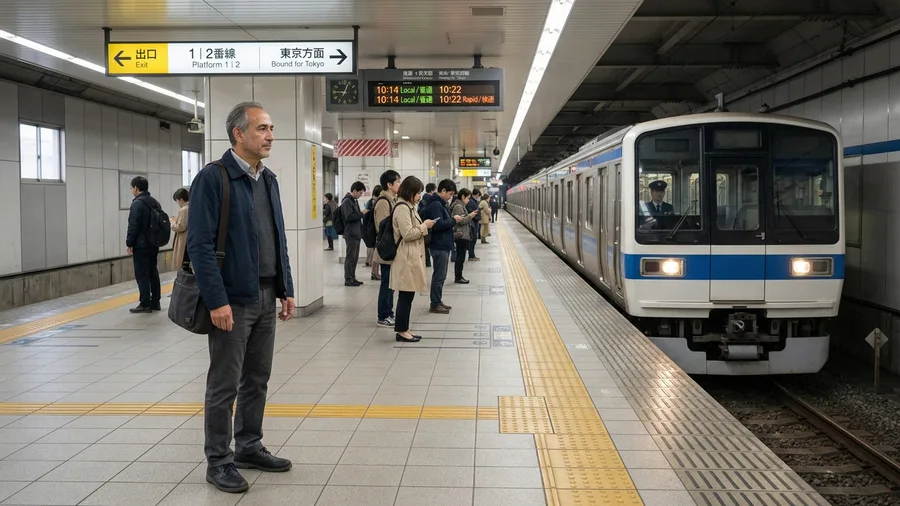
Japan gets chosen because it's not cheap, and people go anyway. It's consistently one of the top destinations for Americans receiving Social Security abroad. Sit with that, because it tells you something important.
The trend isn't just about the most affordable rent. For a growing segment of people, what they want is functional. Streets that are clean and stay that way. Trains that follow their published timetables. A society built around mutual consideration rather than constant low-level friction.
That's a different kind of value, and it's worth being honest about what it costs you. The obstacles are real: the language difference, the cultural expectations, the expense of everyday life. Nobody moves to Japan to save money. They move because they're quietly exhausted by the feeling that basic things back home no longer work reliably.
For those people, Japan offers something you can't really price. The comfort of living inside a system that simply works. Whether that's worth the price is a question only you can answer, but it's a fair question to ask, and it's the one Japan puts in front of you.
The emotional cost arrives years in
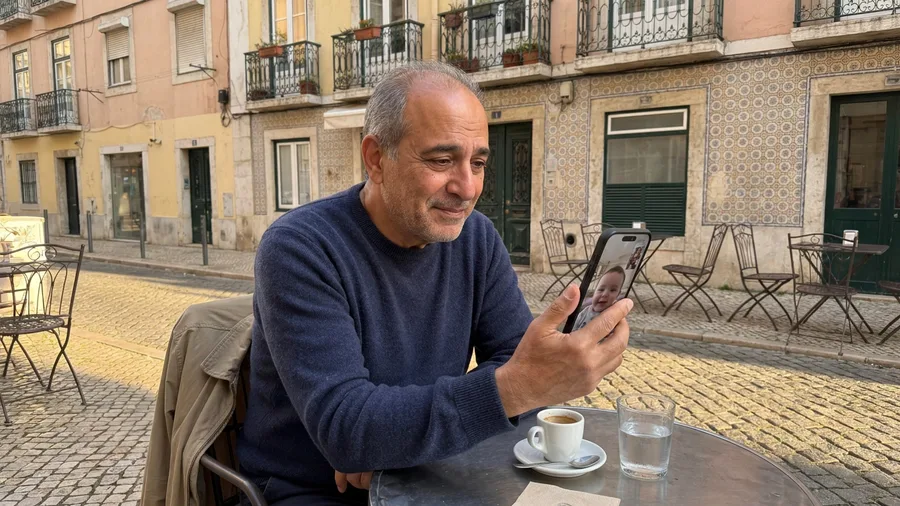
The money pressure lifts first, and what replaces it takes years to show up. Take the retired school administrator who spent 35 years in the classroom, watched every dollar, and moved to Portugal at 68. For three years it was everything she'd hoped for.
She walked more than she had in a decade. The quiet financial worry she'd carried in the back of her mind just let go. She sat in outdoor cafes with coffee for a euro and felt, for the first time in a long while, like she wasn't running from anything.
Then year four arrived, and it had nothing to do with her budget.
Her closest friend back home was diagnosed with a serious illness. Getting there meant planning ahead, the physical toll of flying across the Atlantic in your late 60s, and landing somewhere that already felt a little less like home. Her kids were scattered across different states, all busy, all in different time zones. When her granddaughter took her first steps, she watched it on a phone screen 4,000 miles away.
She isn't miserable. By plenty of measures her life abroad is still good. What she feels is harder to name than sadness, closer to dawning awareness that she is fully at home in neither country. She's in between, and that in-between has no address.
So before you commit, pick the two or three people whose absence would hurt most, and ask yourself honestly how you'd handle their bad news from another continent. Visit once for a month in the off-season too, not just the sunny week.
⚠️ COMMON MISTAKE
Don't confuse the honeymoon with the life
The first three years are usually the easy part. The real test is year four and beyond, when family back home starts needing you and the novelty has worn off. Plan for that version of the move, not the version in the videos.
US taxes follow you by passport
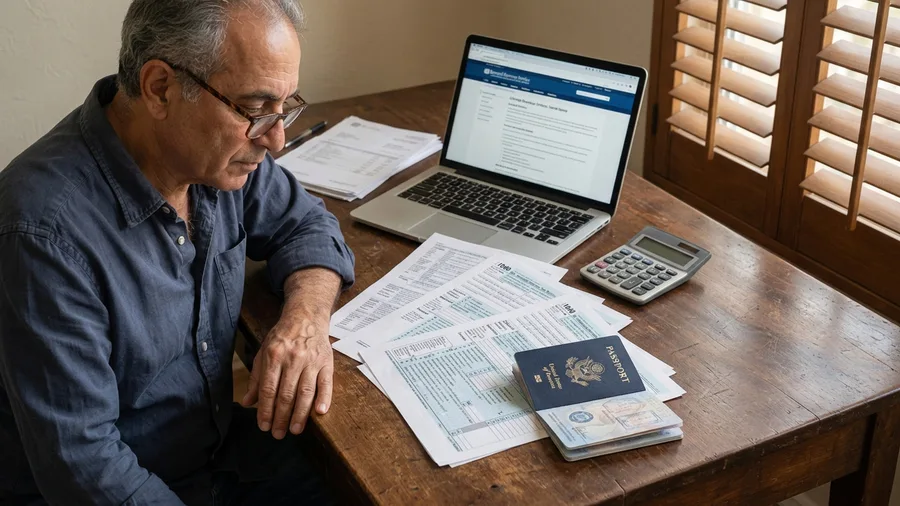
They do, because only the US and one other country tax people on citizenship rather than residence. It doesn't matter where you live, how long you've been gone, or whether you ever plan to come back.
Carry an American passport and you're required to file a federal return every year. Even if you owe nothing. Even if every dollar you earned was made in another country.
Then there's the reporting most people don't hear about until it's a problem. If a foreign bank account holds more than $10,000 at any single point during the year, a separate report goes to the Treasury Department. That threshold is low, and it's easy to trip with normal living expenses plus modest savings sitting in one account.
Skip that form and the fines are steep even when the mistake was honest. The IRS treats a missing form as a missing form.
Here's the cost of getting it wrong: a penalty that can run into thousands for a reporting slip you never knew existed, on money you already paid tax on. The fix is cheap and boring. Look up the filing rules on the IRS site before you move, not after, and hire a preparer who actually handles expat returns. Ask them up front how they handle foreign account reporting, and get it in writing.
Banking is harder on both sides
Often you can't, because many foreign banks simply don't want American customers. The compliance cost of holding US citizen accounts makes plenty of them in popular expat destinations decide it isn't worth the trouble.
That catches people at the worst moment. They arrive, sign a lease, unpack the boxes, and only then find out that opening a basic checking account is a lot harder than they pictured.
The squeeze runs both ways. Back home, some US institutions aren't exactly welcoming to clients who leave. Accounts have been closed with little notice after a mailing address changed to a foreign country, and some brokerages won't keep retirement accounts tied to a non-US address at all.
Picture it playing out: a retiree moves, gives up the US address, and three weeks later gets a letter saying the account that holds her Social Security deposits is closing. Now she's chasing a local bank that doesn't want her paperwork and a US institution that's already gone.
So line up banking before you commit to a lease. Get a local account recommendation from people already living there before you sign anything, keep a US address active for as long as you legally can, and confirm with your brokerage in writing that they'll let you keep your accounts with a foreign address on file.
Medicare stops at the border

It really does. Medicare, with a few narrow exceptions, only pays for care received inside the United States. Once you make your home abroad, you step outside a safety net you paid into your whole working life. Not reduced coverage. None.
The good news is that care in Thailand and Mexico is affordable and often excellent, with well-trained doctors and modern accredited facilities. Plenty of Americans abroad pay less for treatment than they did at home.
The catch is the insurance you'll need instead. Private international coverage for someone 70 with pre-existing conditions runs high, the underwriting is picky, and every policy has limits that suddenly matter a great deal.
And cost is only half of it. Imagine being 74, in a hospital in the middle of the night, in a country where the main language isn't the one you think in. You're trying to explain your symptoms, your history, and what you're allergic to through broken phrases and a translation app that keeps misreading you. The care can be good and the night can still frighten you in a way nothing prepares you for.
Before you go, get quotes on international coverage with your actual conditions listed, and read what the policy excludes. Then learn a handful of medical phrases in the local language. It sounds small. In that hospital room it isn't.
What moves with you and what stays behind
Follows you across the border
- Annual US federal tax filing, even with nothing owed
- Treasury report on foreign accounts over $10,000
- The 4,000-mile distance from family and close friends
- The language and cultural learning curve you can't skip
Stops at the border
- Medicare coverage, with very limited exceptions
- The entire web of local know-how: pharmacy, neighbors, furnace guy
- Easy US banking and brokerage access
- The community that was already thinning before you left
Most dreamers stay, and the gap is huge

They dream about it and don't go, because wanting it and doing it are two very different jobs. 44% of Americans have seriously considered retiring abroad. Fewer than 700,000 actually do. That's under 1% of all Social Security recipients.
The dream is enormous and the execution is rare. That gap isn't confusion or a shortage of information. It's a whole life landing on top of the decision.
Selling a house. Working out a foreign tax situation from scratch. Learning how another country's healthcare actually works when you need it. Navigating a language gap, even a small one, day after day. Leaving behind a community, even one that's already thinned out. None of that is small.
On top of all that sits something even harder to put into words, which is the real reason the numbers split so sharply.
Here's how to find out where you actually fall. Rent your home out for three months and live abroad on the same budget you'd have after moving, then come back and write down what you missed. If the list is short and the money held up, you're in the rare group. If it's long, you've just saved yourself a very expensive mistake.
What stops people is losing local know-how

What you lose by moving is a web of small knowledge you spent decades learning without ever noticing you were learning it. Nobody retires into a country. They retire into a system.
You know which pharmacy stays open late on a weeknight when a prescription runs out at nine. You know exactly who to call when the furnace quits in January, and roughly what it should cost, and whether the guy on the second number is trying it on. You know which neighbor keeps a spare key and will actually check in when your lights stay off a day too long.
You also know how a medical appointment goes. Which door, which desk, what the receptionist means, how the insurance call will unfold and what to say when it doesn't. None of that is written down anywhere. It lives in your head.
Move abroad and you hand all of it over at once. Then you rebuild it from zero, in a second language, inside a system whose shortcuts you can't see, among people who don't yet know you. What pharmacy stays open late? You'll find out the hard way, at nine at night, with a phrasebook.
That is a specific kind of tired. Not dramatic, just constant. It's the piece almost nobody puts in the cost-of-living spreadsheet, and it's the one you feel every single week of the first year.
Before you commit, test it. Do one ordinary errand abroad entirely yourself, no help, no translation app. Then imagine doing that for a year.
Familiar difficulty feels safer than unfamiliar possibility
People stay when the math says go because staying isn't comfortable. It's known, and known is a different kind of comfort than easy.
That's the part the numbers miss. A household spending $5,000 a month against a $2,000 Social Security check has a $3,000 hole, and Mexico or Chiang Mai would patch it. The spreadsheet is clear. But the spreadsheet doesn't have to live with the decision afterward.
Familiar hardship gets tolerated in a way unfamiliar opportunity often isn't, even when that opportunity would make their lives measurably better. The leaking roof you already understand feels safer than the roof you've never seen.
That's not a flaw in how people think. It's how people work. And it gets stronger, not weaker, with age, when the cost of getting one big decision wrong feels much higher than it did at thirty. There's less runway to fix it if you're wrong.
So most people run the numbers, pull up photos of Lisbon or Chiang Mai, feel the full weight of uprooting everything at this point in their lives, and stay. Not because staying is easy. Because the hardship they already carry is at least one they recognize.
Worth asking yourself plainly: are you choosing the familiar, or the better? If it's the familiar, at least name it. That's a decision you can make, not a fog you drift in.
Family ends more conversations than money

Family ends more of these conversations than money does, because an international retirement sounds reasonable right up until you picture an ocean sitting between you and someone you love when something goes wrong.
The arithmetic of that is brutal. What used to be a 40-minute drive turns into a full-fare transatlantic flight booked at the last minute in a panic, on a body that's already tired. You land twelve hours later and the emergency has already had its own head start.
The helplessness of being that far away when someone you love is in trouble isn't abstract once you've pictured it clearly. Not the brochure version. The real version, at 2 a.m., with a phone in your hand and no way to be in the room.
For a lot of people, that one picture settles it. The discussion stops right there. And it doesn't matter how good the rent was or how short the flight looks on a map.
Here's the honest test before you go any further. Write down the two or three people you'd drop everything for. Then ask what a real emergency with each of them would cost you in hours and dollars from your chosen city. If that number is unbearable, that's your answer.
Countries are courting retirees with different sells
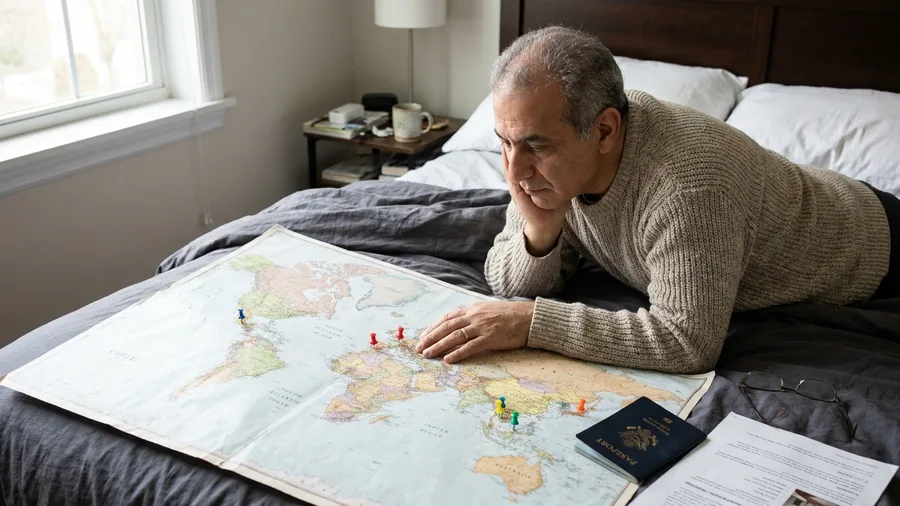
Each country is selling you something different, and it's worth knowing exactly what you're being promised before you sign a lease.
Mexico's pitch is proximity and retirement infrastructure. Close enough that the time zones line up, close enough that a flight home doesn't feel like an expedition. A two-bedroom in a good neighborhood of Puerto Vallarta, San Miguel de Allende, or Mérida runs about $600-$1,000 a month, and English is common in the established areas. For someone who wants real relief without cutting every tie, that solves the tension better than almost anywhere.
Thailand's pitch is savings plus healthcare, with more cultural distance as the trade-off. A furnished modern apartment in Chiang Mai comes in under $500 a month, and a private hospital appointment runs $15-$30. The catch isn't money. It's the language, the script, and the distance from home.
Portugal sells Europe without European prices: safety, systems that work, a pace built around coffee and conversation, at about a euro a cup. Vietnam, in Da Nang or Ho Chi Minh City, sells energy and momentum, a place still becoming something. And Japan sells trust in the system above affordability, which is why it pulls Americans who care more about things working than things being cheap.
None of these pitches are lies. But each one asks for something back, and the asking is what gets left out. Read the pitch, then ask what it wants from you.
💡 PRO TIP
Ask for the sell, not the brochure
When you talk to any relocation service or consulate, ask one question: what does this program ask of me in return? The honest ones name the trade-off before you name the destination.
Leaving is a trade, not a windfall
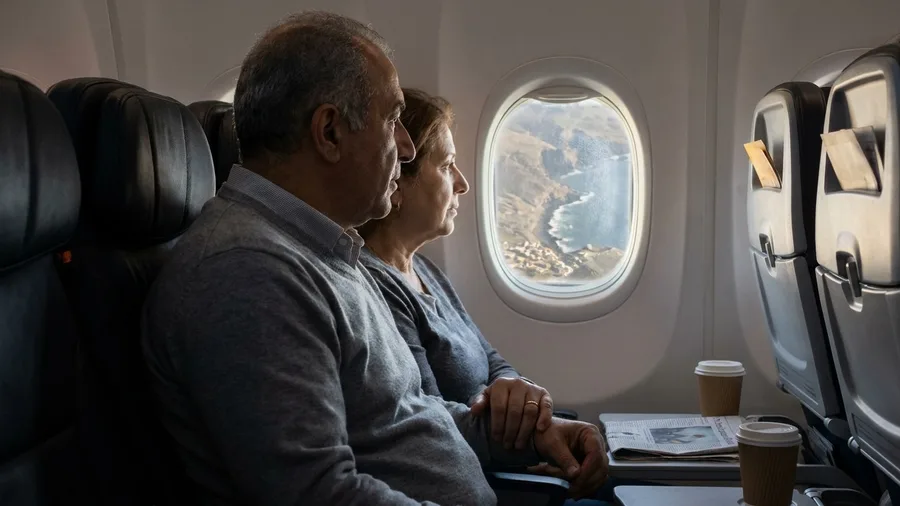
The deal you were handed was simple: contribute, save, do the right things for forty years, and the country would keep a secure, dignified place for you at the end. Not rich. Just steady.
That deal stopped holding up, so hundreds of thousands of Americans have already packed up and left, and a much larger group is quietly running the same numbers at the kitchen table. The 44 percent who say they have seriously considered it is not a lifestyle trend. It is a calculation.
For some, those people are free. They land in a place where the money stretches, the pace makes sense, and a real community forms around them, and they will tell you it isn't settling, it's better than anything they had back home.
For others, it's the opposite, and they'll be the first to admit it. It's a practical fix to a structural problem, made under pressure, with losses built right in. They move because draining your savings slowly in a place that has also drained away the people you need is the worse option, not because the new place is a paradise.
What they trade away doesn't show up on a cost-of-living chart. And the ones who stay aren't making a political statement either. They're trimming a little here and a little there, and those small cuts stack up year after year until they add up to a quiet version of the same decision, made in place.
Frequently Asked Questions
What visa do I need to retire abroad, and what income must I show?
Start with the official consulate or immigration website for your destination — not an expat forum. Mexico, Thailand, Portugal, Vietnam, and Japan all have different requirements: the income threshold, health insurance requirement, background check, and proof of local address vary widely. Build in application lead time, and never sign a lease before you have visa approval. Japan is one to verify carefully, because it may not offer a retirement visa in the way you expect.
Will I pay US and local tax on the same income?
You'll file a US federal return every year regardless of where you live, even if you owe nothing. The foreign tax credit and totalization agreements are meant to prevent double taxation, but the details depend on the specific treaty and your personal situation. Get a written quote from an expat tax preparer before you move. Do not rely on a forum answer for a treaty or credit position.
Should I sell or rent my US house?
Selling gives you cash and no landlord duties; renting gives you income but also maintenance, a property manager, and tax filings. There's no universal right answer. Check state residency and tax rules with a CPA before you change your address, update your will, power of attorney, and beneficiaries for a foreign residence, and confirm with Social Security how payments work in your specific country.
Does Medicare really stop covering me abroad?
Yes, with very limited exceptions. Medicare covers almost nothing outside the United States, so you'll need private international health insurance. For a 70-year-old with pre-existing conditions, that coverage is expensive and limited. Care in countries like Thailand and Mexico is affordable and often high quality, but the insurance and the language barrier are real parts of the equation.
Why do so few people actually retire abroad if so many want to?
44% of Americans have seriously considered it, but fewer than 700,000 actually do — under 1% of Social Security recipients. The gap isn't confusion. It's the weight of a real life: selling a house, managing foreign taxes, learning a new healthcare system, dealing with a language barrier, and leaving a community behind. For many, the familiar difficulty of staying feels safer than the unfamiliar possibility of going.
Who should stay, who should scout, who should go
If your monthly income after housing, insurance, and visa costs already covers your real spending, staying and cutting costs is the smarter move. Trim the biggest three line items first, then revisit the question in a year.
If the math only works abroad, take a scouting trip before you sell anything. Rent for a month, open a bank account, sit in a hospital waiting room, and see how the language feels on a Tuesday. Then call the Social Security office for your specific country and the destination's consulate to confirm the visa income threshold in writing.
If you've done the scouting month, lined up the visa, quoted the insurance, and pictured the year-four version of the move—not just the honeymoon—then you're genuinely ready. The first number to check is your monthly income after housing, insurance, and visa costs. The first official office to contact is the destination's consulate. Do those two things before you book a one-way flight.

Hello there! I’m Jesse Joe, the author and editor behind SolganGenius. I’m thrilled you’ve stopped by, and I can’t wait to share with you the essence of what this platform is all about.
I’m a writer, social media enthusiast, and a firm believer in the power of words. I’ve always been fascinated by how a simple phrase or slogan can capture an emotion, convey a message, and even change perspectives. Learn More