
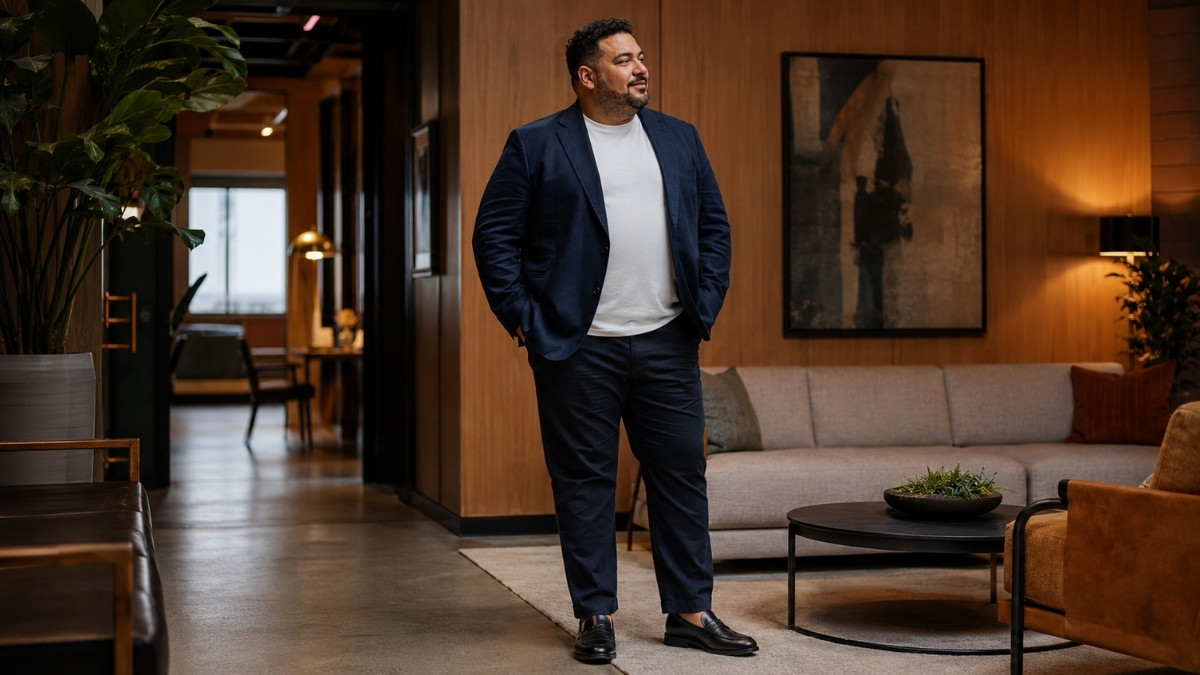
A closet can feel full and still give you nothing that feels right for work. One shirt pulls at the buttons, another hangs too wide, and the pants that “fit” somehow make the whole outfit look unfinished.
Business casual gets harder when most advice is written for slimmer men. You are told to wear chinos, polos, and button-downs, but nobody explains how those pieces should sit on a bigger body. The good news is you do not need to buy a whole new wardrobe. You need better choices with what you already own.
Small fixes can change a lot. A cleaner pant shape, a better layer, darker color pairings, and shirts that follow your body instead of fighting it can make your outfits look sharper fast. Start with the clothes in your closet, then build smarter from there.
Stop Treating Business Casual Like “Dress Clothes Without a Tie”
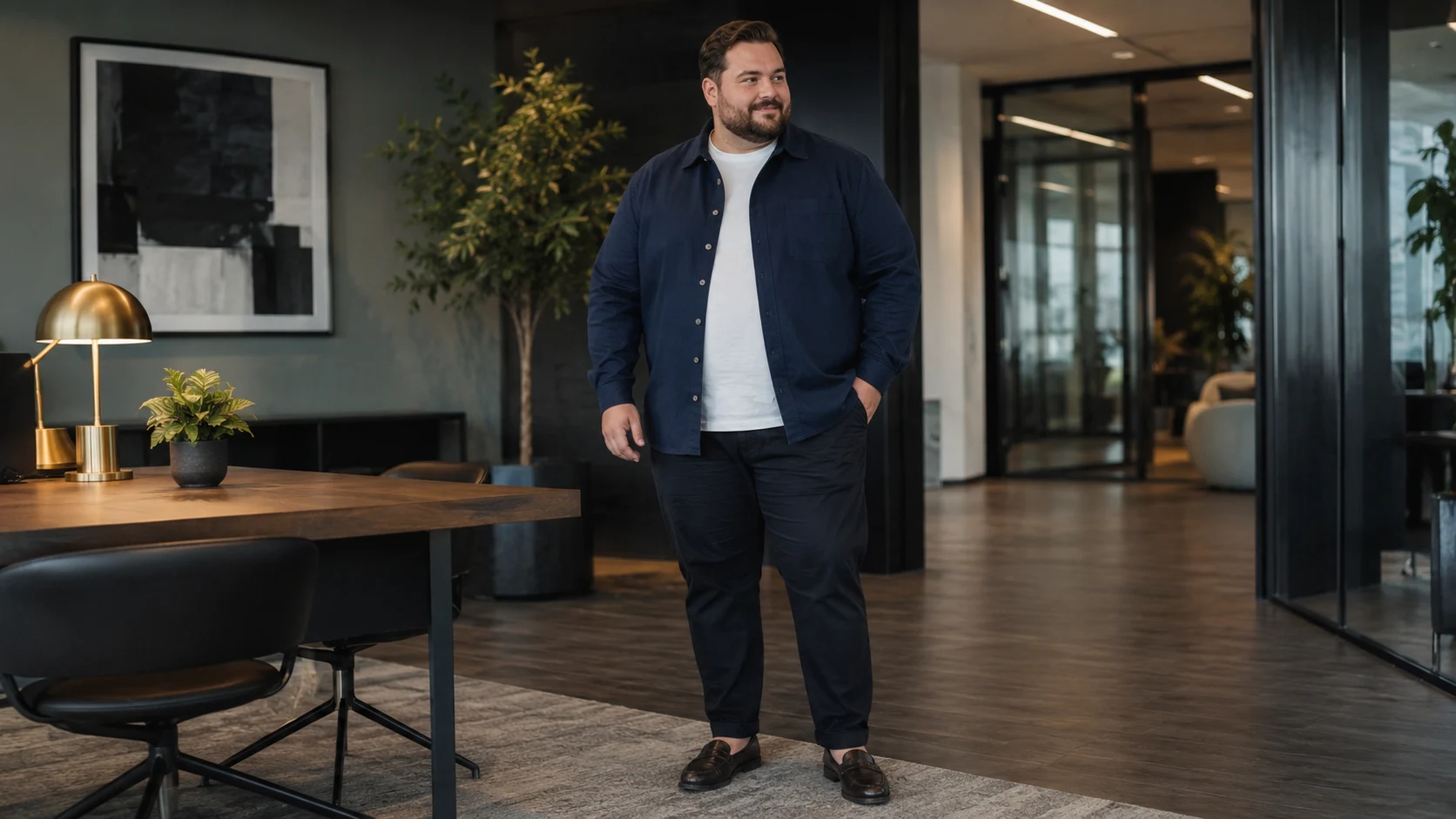
Business casual works best when it feels planned, not dressed up for the wrong room. You do not need to look like you are going to a wedding or a job interview every day. Clean beats formal.
Most bigger men make the same mistake. They take a dress shirt, remove the tie, wear stiff pants, and hope it reads as relaxed. Instead, the outfit can look half finished. A shirt that pulls at the buttons, pants that bunch at the ankle, or shiny dress shoes with casual chinos can make you look uncomfortable before you even speak.
Better business casual starts with control. Choose clothes that sit clean on your body, give you room to move, and do not fight your shape. A simple polo under a light jacket can look sharper than a tight dress shirt. Dark straight pants can look more polished than loose dress pants. Neat sneakers or simple loafers can feel modern without looking lazy.
Fit matters most. Structure helps too. When your outfit has clean lines, soft layers, and low contrast colors, people notice that you look put together instead of noticing your size first. That is the real goal.
Start With the Clothes You Already Own and Sort Them Into Three Piles
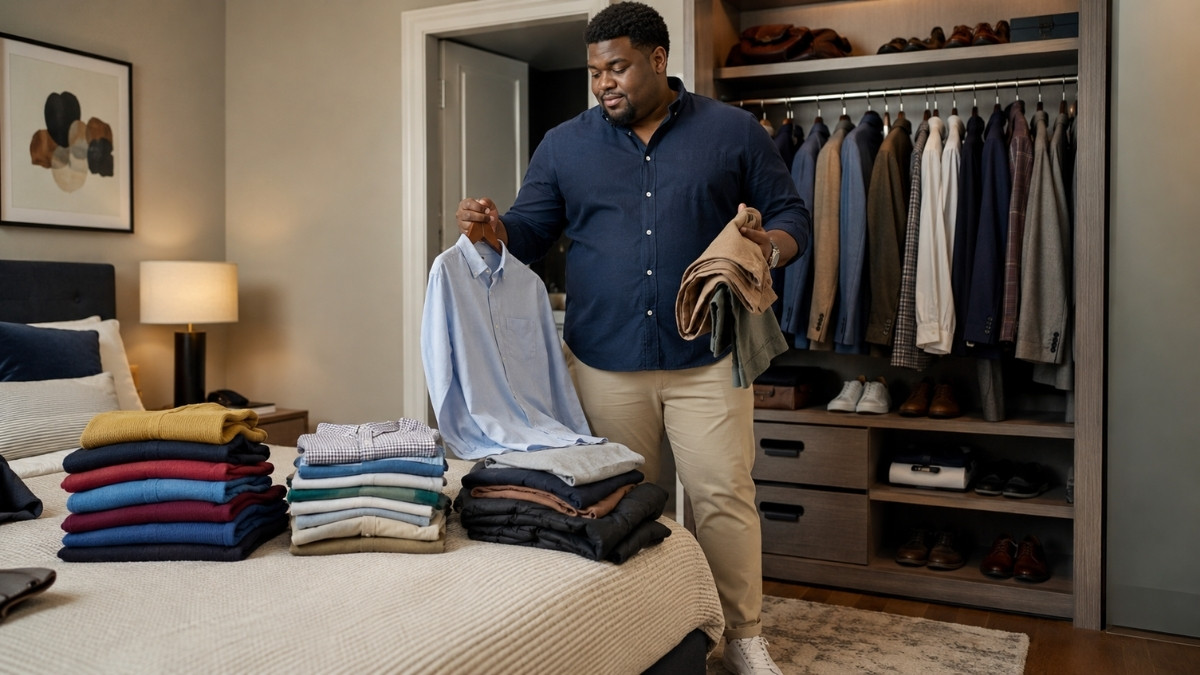
Buying less gets easier when you see what is already working. Pull out the clothes you wear to work, dinners, meetings, or any place where you want to look put together. Then sort them into three clear piles: keep, alter, and stop wearing.
Keep anything that fits your body today, not the body you are hoping for later. A good business casual piece should let you sit, walk, and move without pulling across your stomach, chest, arms, or thighs. Shirts that skim your body, straight pants that do not cling, clean sweaters, solid polos, and simple jackets can all stay.
Alter the clothes that are close but not quite right. Maybe the sleeves are too long. Maybe the pants bunch at the ankle. Maybe a shirt fits your shoulders but feels too wide through the sides. Small fixes can make old clothes look sharper without making you buy a whole new wardrobe.
Stop wearing anything that makes you feel sloppy the second you put it on. Stretched collars, faded black pants, shiny worn fabric, tight buttons, sagging hems, and oversized shirts that hang like a tent will not help you look business casual. Be honest here. Comfort matters, but messy comfort works against you.
Try everything on in front of a full mirror. Move around. Sit down. Raise your arms. Clothing that looks fine while standing still can fail fast once your body starts moving, especially if you carry more weight in your stomach, chest, or thighs. This one closet audit gives you a real starting point. After that, you only buy what fills the gaps.
The Fit Rule That Matters Most: Clothes Should Follow Your Shape, Not Fight It
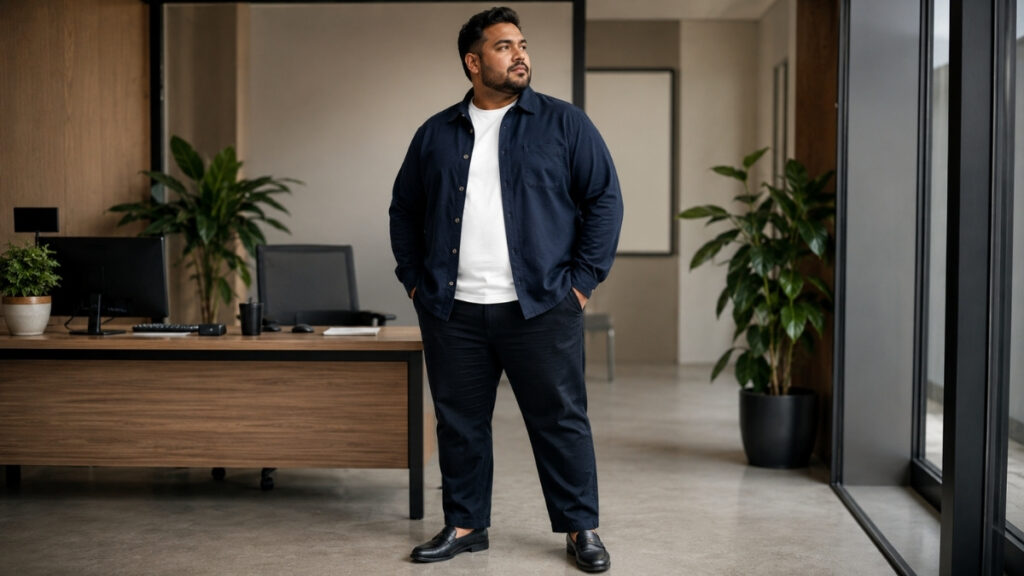
Bigger clothes do not hide your body as well as you think. They often add extra fabric around your stomach, chest, arms, and legs, which can make your frame look wider than it is. A better business casual fit follows your real shape without squeezing it.
Start with your shoulders. A shirt, overshirt, or jacket should sit close to the edge of your shoulder, not slide down your arm. That one detail makes your outfit look cleaner right away.
Tight is not the goal. If buttons pull across your chest or stomach, the shirt is too small. If your pants pinch when you sit, they are fighting your body. You should be able to move, sit, and reach without feeling trapped.
| Fit Type | What It Looks Like | Why It Hurts the Outfit | Better Choice |
|---|---|---|---|
| Too Loose | Shirt hangs like a box, sleeves look wide, pants bunch at the ankles | Adds extra fabric and can make your body look larger | Choose a shirt that sits closer at the shoulders and pants that fall straight |
| Too Tight | Buttons pull, fabric clings, pants pinch when sitting | Draws attention to areas you may want to smooth out | Pick clothes with room to move without sagging |
| Structured Fit | Clean shoulder line, neat collar, smooth pants, fabric follows your shape | Makes business casual look polished and intentional | Look for straight cuts, firm fabric, and simple tailoring |
| Easy Fix | Outfit almost works but has small issues | Small problems can make the whole outfit look messy | Roll sleeves, tuck neatly, hem pants, or layer with an overshirt |
Loose is not the answer either. A shirt that hangs like a box can make your outfit look messy, even if the fabric feels comfortable. Long, wide sleeves can swallow your arms. Baggy pants can bunch at the ankles and make your whole look feel heavier.
Structured fit is the sweet spot. Choose pieces that have a clear shape, like a neat collar, a straight side seam, a clean shoulder line, and pants that fall smoothly from the waist. These details help your outfit look intentional without needing a suit or expensive new clothes.
Try this mirror test: stand straight, then check where the fabric pulls, sags, or balloons. Those spots tell you what needs changing. Sometimes the fix is simple, like rolling sleeves, tucking a shirt better, wearing a firmer undershirt, or getting pants hemmed.
Build Around Dark Straight Pants Before Buying New Shirts
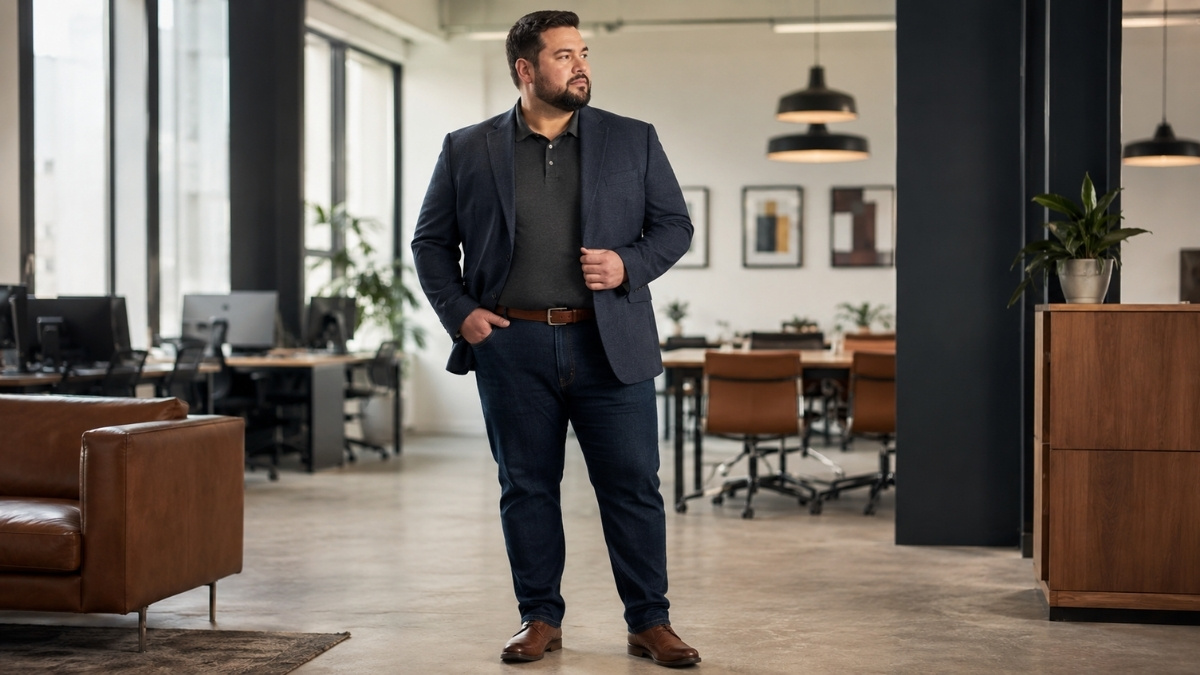
Dark straight pants are the easiest place to start because they clean up your lower half and make your outfit feel more business casual right away. Navy, charcoal, black, dark olive, and deep brown all work well because they are simple, easy to match, and less likely to pull attention to fit problems.
Chinos are the most useful choice for most men. They feel less formal than dress pants but still look cleaner than jeans. Choose a pair with a smooth front, a little room in the seat, and a straight leg that falls cleanly from thigh to ankle.
Rise matters a lot. A mid rise or slightly higher rise usually sits better on a bigger stomach than low rise pants. Low rise pants can slide under your belly, pull at the waist, and make your shirt look messy even when the shirt fits.
Dress pants can work too. Pick ones with a soft drape, not thin fabric that clings to every line. Pleats can be fine if they lay flat, but skip anything that balloons out when you sit or walk.
Dark jeans are only business casual when your workplace allows them. Go for dark indigo or black with no fading, holes, heavy whiskering, or skinny shape. They should look clean enough to wear with a polo, button down, or casual blazer.
Avoid skinny cuts. They make the upper body look larger by shrinking the legs too much. Baggy pants have the opposite problem because they add extra fabric and make the outfit look careless.
Straight fit is the safe middle. It gives your thighs room, keeps your shape balanced, and still looks neat with loafers, leather sneakers, boots, or dress shoes. Once you get the pants right, most shirts you already own will look better tucked, untucked, or layered under a jacket.
Use Your Best Casual Shirts Differently Instead of Replacing Them
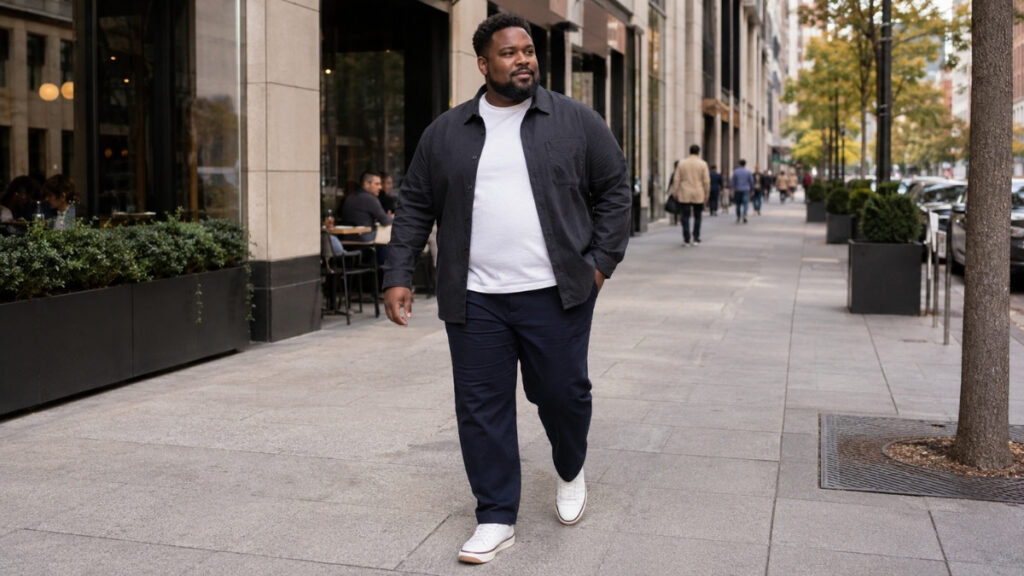
The fastest way to make your casual shirts look business casual is to change what sits around them. A polo with gym shorts feels weekend. That same polo with straight chinos, a clean belt, and leather sneakers looks ready for a casual office.
Start with your best polo. Choose one that skims your body instead of clinging to your stomach or hanging like a tent. Dark navy, black, olive, burgundy, and charcoal usually look sharper than bright colors. Leave it untucked if the hem hits around mid-fly. Tuck it only when the fabric is smooth and the waistband sits clean.
Button-down shirts are even easier to dress up. Wear them open over a plain tee for a relaxed office look, or button them up with chinos for something neater. A soft roll at the sleeve can look sharp, but avoid bunching fabric high on the arm. Too much fabric adds bulk. Clean lines help more.
| Styling Detail | Why It Works for Plus Size Men |
|---|---|
| Straight pants | Balance the body without squeezing the legs |
| Clean shoes | Make casual shirts look more polished |
| Dark solid colors | Create a sharper, calmer outfit |
| Open layers | Add shape without tightness |
| Light tucking | Makes the outfit look intentional when the waistband sits clean |
Overshirts are your secret weapon. They give your outfit shape without feeling stiff, which helps if you do not like tight clothes. Pair one with a plain tee, dark straight pants, and simple shoes. The open front creates a vertical line down your body, and that can make the outfit look cleaner without trying too hard.
Sweaters can work too. Pick a crewneck, quarter-zip, or fine knit that sits flat over your shirt. Thick, bulky sweaters can make your upper body look wider, so choose smoother fabric when you can. Wear them over a collared shirt when you want more polish, or over a plain tee when the office is relaxed.
Plain tees can still be part of business casual, but they need help. Use solid colors, thicker cotton, and a neckline that does not stretch out. Pair the tee with an overshirt, cardigan, or neat jacket so it looks intentional. Shoes matter here. Running shoes pull the outfit back into casual mode, while loafers, desert boots, clean leather sneakers, or simple dress shoes make it feel more grown up.
Small changes do the work. Better pants. Cleaner shoes. Smarter layers. Your shirt does not need to be new; it just needs better support from the rest of the outfit.
Add One Structured Layer to Make Basic Clothes Look Work-Ready
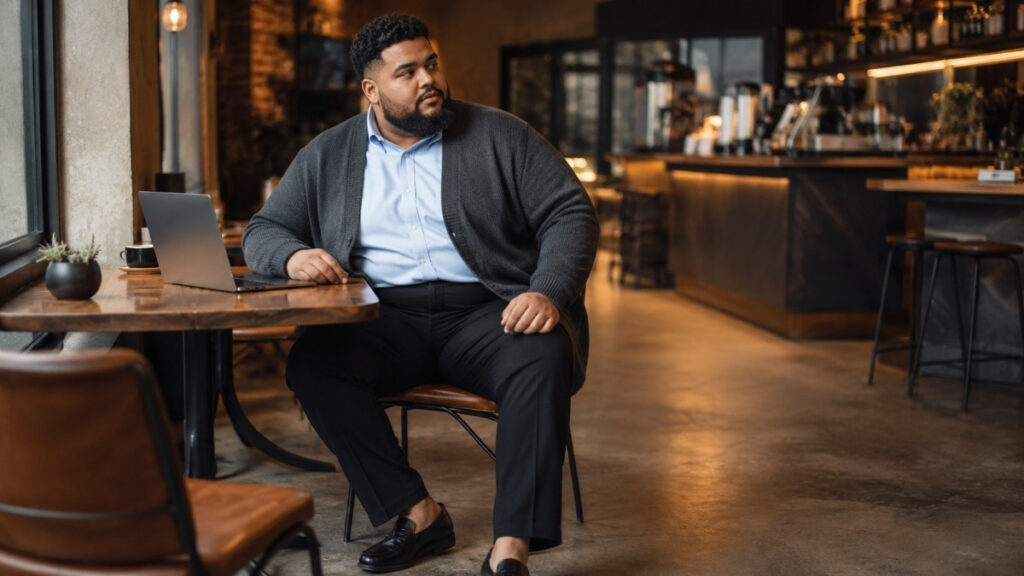
A plain outfit can look work-ready fast when the top layer has shape. Your tee, polo, or button-down does not need to be fancy if the piece over it gives your body a clean frame.
Start with one sharp layer. A navy blazer is the dressiest choice, but it should not feel stiff or tight across your stomach. Choose one that sits smoothly on your shoulders, closes without pulling, and ends around the middle of your seat.
Chore jackets work well when your office leans relaxed. They give your outfit straight lines without looking too formal. Pick cotton, twill, or canvas in navy, olive, brown, or charcoal.
Cardigans can also work, but avoid thin, floppy ones that cling to the belly. Look for a thicker knit with a clean front, so it hangs down instead of wrapping every curve.
Overshirts are the easiest upgrade if you already wear basic tees. Wear one open over a solid tee or polo, then pair it with chinos or dark jeans if your workplace allows them.
Clean zip jackets can look business casual too, as long as they are simple. Skip shiny gym jackets, loud logos, and bulky hoodies. A smooth knit, suede-look, or structured cotton zip jacket feels sharper.
Fit matters most here. The layer should follow your shape, not squeeze it. Leave it open if closing it creates pulling around the buttons or zipper.
This method works because the eye sees the outer frame first. When that frame is neat, your basic clothes underneath look more planned, even if you already owned them.
Keep the Outfit Low Contrast So Your Body Looks More Balanced
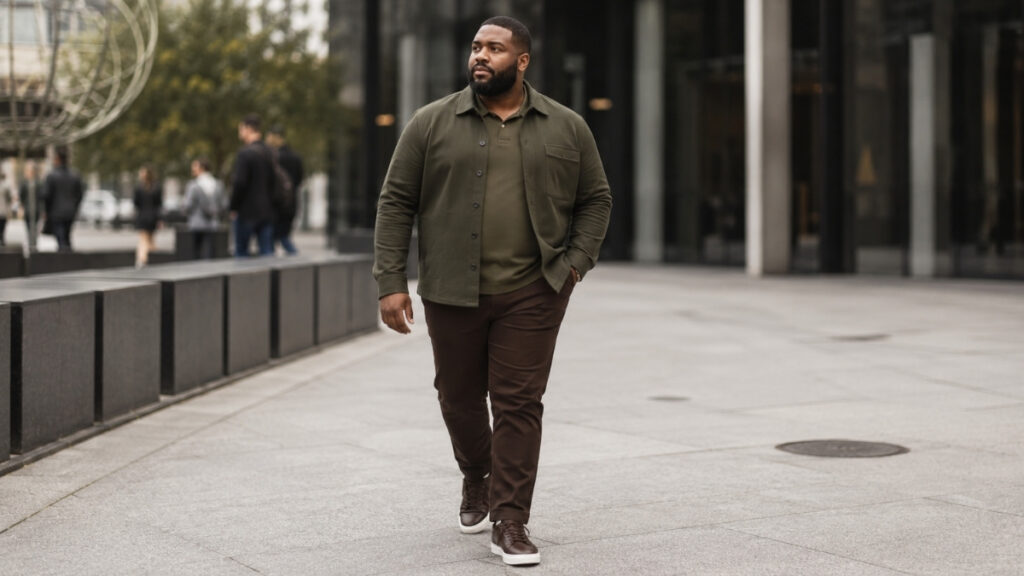
Color contrast can make the same body look smoother or more broken up. A white shirt with black pants creates a hard line across your middle, so your eye stops right where many plus size men want less attention. Softer color pairings work better.
- Try navy with charcoal.
- Wear olive with dark brown.
- Choose black with dark gray.
These colors do not have to match exactly. They just need to stay close enough that your outfit feels connected from top to bottom. A medium blue shirt with navy chinos looks cleaner than a bright white shirt with very dark pants because the body line feels less cut in half.
Business casual gets easier when you build around one main color family. Start with the pants you already own, then choose a shirt or layer that sits near that shade. Dark chinos, a muted polo, and a structured overshirt can look sharp without feeling like you tried too hard.
Lighter colors are not banned. Use them with care. A light blue shirt can work well under a navy blazer because the darker layer frames your body and keeps the outfit grounded. Strong contrast works best in small areas, like shoes, a belt, or a watch strap.
The goal is simple: let the outfit flow.
Fix the Small Details That Make Plus Size Business Casual Look Sloppy Fast
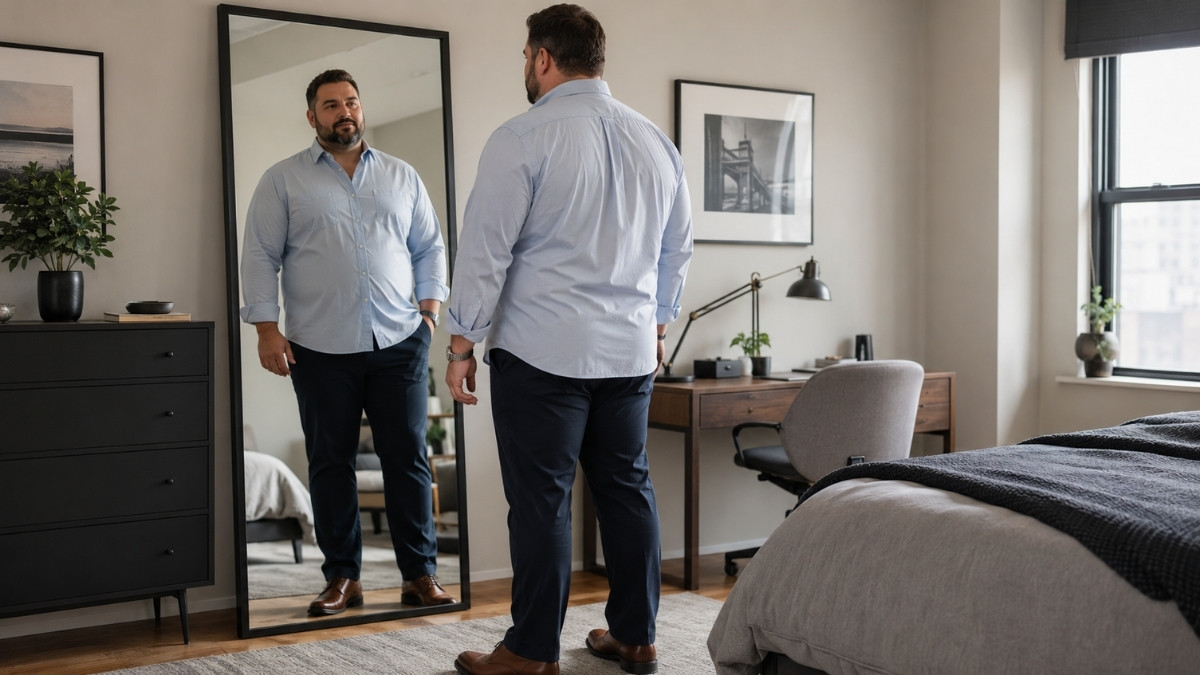
Small fixes can make the same outfit look cleaner without buying a single new piece. Most “messy” business casual outfits are not ruined by the shirt or pants. They are ruined by the parts people notice first.
A weak collar is one of the fastest ways to look untidy. Choose a collar that stands up around your neck instead of folding flat, curling, or spreading too wide. Button-down collars usually work well because the points stay in place. Avoid collars that collapse under your chin.
Sleeves matter too. Long sleeves should end near your wrist bone, not halfway over your hand. Short sleeves should stop around the middle of your upper arm. Anything too long can make your arms look shorter and your shirt look borrowed.
| Small Detail | What to Check | Why It Matters |
|---|---|---|
| Collar shape | Collar should stand neatly, not curl, fold, or spread too wide. | A weak collar makes the whole shirt look tired. |
| Sleeve length | Long sleeves should end near the wrist bone. Short sleeves should stop around mid upper arm. | Wrong sleeve length makes clothes look borrowed or oversized. |
| Shirt length | Untucked shirts should end around mid-fly. Tucked shirts should stay smooth. | Too much length makes the body look boxy. |
| Belt placement | Belt should sit where your pants naturally rest. | A bad belt line can draw attention to the stomach. |
| Wrinkled fabric | Smooth the collar, cuffs, front, and button area first. | These spots are noticed quickly. |
| Stretched buttons | Buttons should not pull or gap across the chest or stomach. | Pulling fabric makes the shirt look too tight. |
| Shoes | Wear clean shoes with neat soles and no crushed backs. | Shoes can make or break business casual. |
Shirt length changes everything. A shirt that hangs far past your hips can make your body look boxy. Pick one that ends around mid-fly if you wear it untucked. Tucked shirts should have enough length to stay in place, but not so much fabric that it bunches around your waist.
Belt placement is easy to miss. Wear your belt where your pants naturally sit, not under your stomach or too high on your belly. When the belt cuts across the widest part of your midsection, it draws more attention there. Straight pants with a clean waistband usually look sharper.
Wrinkles make business casual look careless fast. Steam or iron the front of your shirt, collar, cuffs, and the area near the buttons first. These spots sit close to your face and hands, so people notice them right away.
Stretched buttons are a clear sign that the shirt is fighting your body. Try a different shirt, wear it open over a neat tee, or add a light overshirt or blazer instead. You do not need tight clothes to look dressed up. You need clothes that sit smoothly.
Know When Tailoring Is Cheaper Than Buying More Clothes
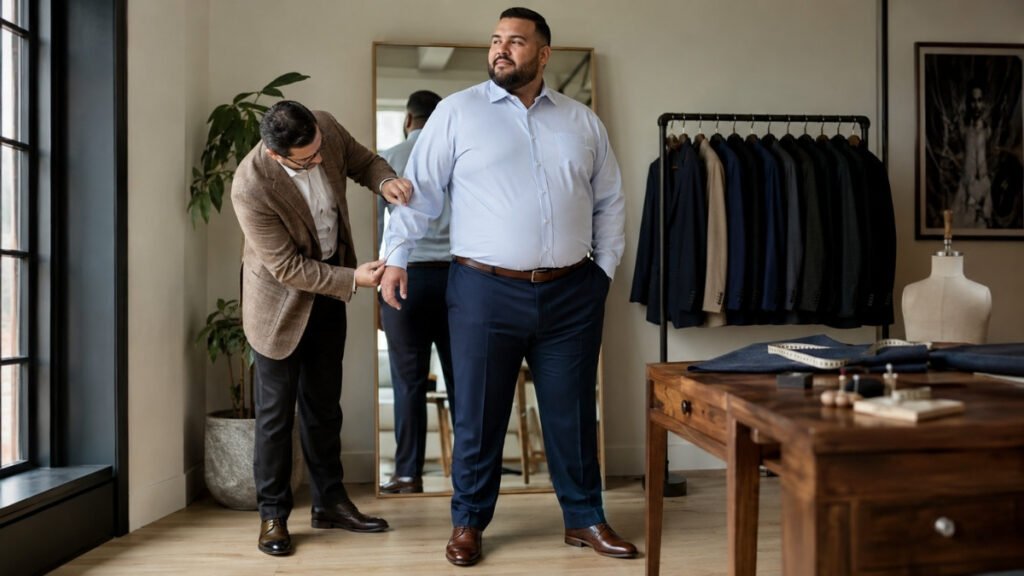
A tailor can make a cheap outfit look cleaner than a new outfit that fits badly. Start with pants. Hemming is usually one of the best fixes because extra fabric at your shoes makes your whole outfit look sloppy. Clean pants should touch your shoes without stacking in heavy folds. Small change. Big effect.
Sleeves come next. Shirt sleeves that cover your hands make your arms look shorter and your frame look wider. Ask for the cuff to sit near your wrist bone. Jacket sleeves should show a little shirt cuff, not swallow it.
Shirt length matters too. Many plus size men buy shirts that fit the chest but hang too long. That extra length can bunch around your hips and make the outfit look bigger than it is. Shortening the shirt can help it sit cleaner, especially if you wear it untucked.
Jackets need more care. A tailor can often clean up sleeve length, small waist shape, and loose fabric in the back. Shoulder fixes are harder and often not worth the cost. Skip any jacket that pulls hard across your stomach, lifts at the front, or feels tight when you sit.
Use this rule before buying more: if the item already fits your shoulders, chest, waist, or seat pretty well, tailoring may save it. If the whole piece feels wrong, walk away. Better fit beats more clothes.
Create Three Repeatable Business Casual Formulas for Workdays
Formula 1: Polished Casual
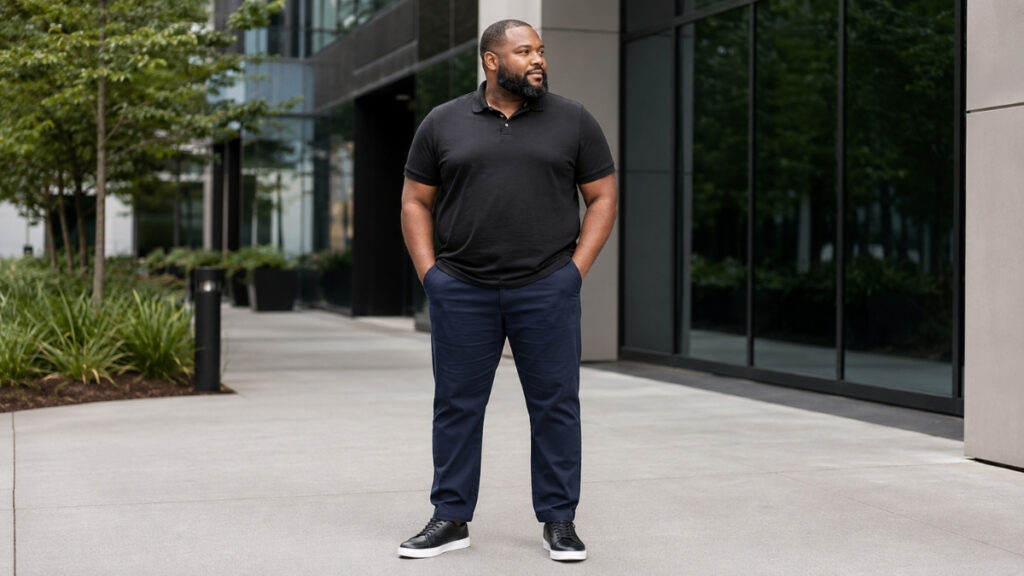
Start with a solid polo or clean crew neck tee. Add straight-leg chinos or dark jeans if your workplace allows denim. Finish with simple leather sneakers or loafers.
This works best when the top is not too long, the pants sit at your natural waist, and the shoes look clean enough for work. A dark polo with navy chinos can look much sharper than a dress shirt that pulls across your chest.
Keep it simple. Fit does the work.
Formula 2: Office-Ready

Choose a button-down shirt that follows your body without pulling. Wear it with straight chinos or dress pants. Add a belt that matches your shoes.
This is the safest formula for most workdays because it looks neat without feeling stiff. Roll the sleeves once or twice if the office is relaxed, but keep the collar clean and the shirt smooth across your stomach. A shirt with a small pattern can also help hide light creases better than a thin plain shirt.
Structure matters here. Avoid clingy fabric.
Formula 3: Slightly Dressier
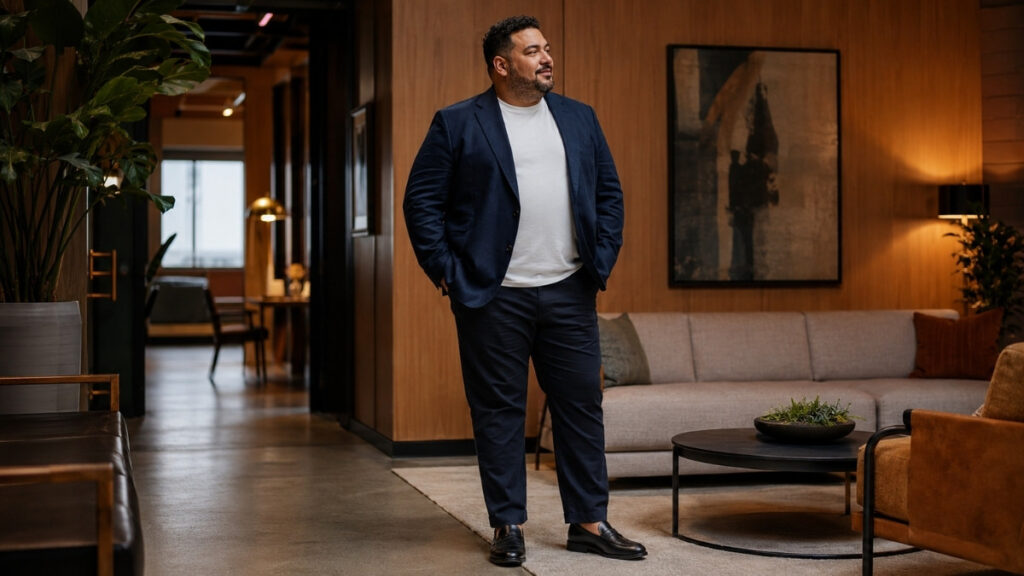
Use a structured overshirt, blazer, or smart jacket over a plain tee, polo, or button-down. Pair it with dark straight pants and solid shoes.
This formula is great for meetings, first days, interviews, or any workday when you want more presence. The outer layer gives your outfit shape, especially around the shoulders and chest, which helps the whole look feel more balanced. You do not need a tight jacket. You need one that closes comfortably and hangs cleanly.
| Section Idea | Main Point | What the Reader Should Do |
|---|---|---|
| Business casual mindset | Business casual is about looking clean and intentional, not overly formal. | Stop copying suit style and aim for neat, balanced outfits. |
| Closet audit | You do not need to replace everything. | Sort clothes into keep, alter, and stop wearing piles. |
| Fit rule | Bigger clothes do not always look better. | Choose clothes that follow your shape without clinging or hanging. |
| Pants first | Pants control the whole outfit’s shape. | Start with dark straight pants, chinos, or clean dress pants. |
| Reuse casual shirts | Many shirts can work for business casual. | Style polos, button-downs, sweaters, and overshirts with better pants and shoes. |
| Structured layer | One sharp layer can upgrade basic clothes. | Add a blazer, overshirt, cardigan, or clean jacket. |
| Low contrast colors | Strong color breaks can make the body look wider. | Pair similar tones, like navy with charcoal or olive with dark gray. |
| Small details | Tiny fit issues can make an outfit look messy. | Check collars, sleeves, shirt length, buttons, belt, wrinkles, and shoes. |
| Tailoring | Altering clothes can cost less than buying new ones. | Hem pants, shorten sleeves, and fix shirt or jacket fit. |
| Outfit formulas | Repeatable outfits make dressing easier. | Build 3 go-to looks for casual, office-ready, and dressier days. |

Hello there! I’m Jesse Joe, the author and editor behind SolganGenius. I’m thrilled you’ve stopped by, and I can’t wait to share with you the essence of what this platform is all about.
I’m a writer, social media enthusiast, and a firm believer in the power of words. I’ve always been fascinated by how a simple phrase or slogan can capture an emotion, convey a message, and even change perspectives. Learn More