
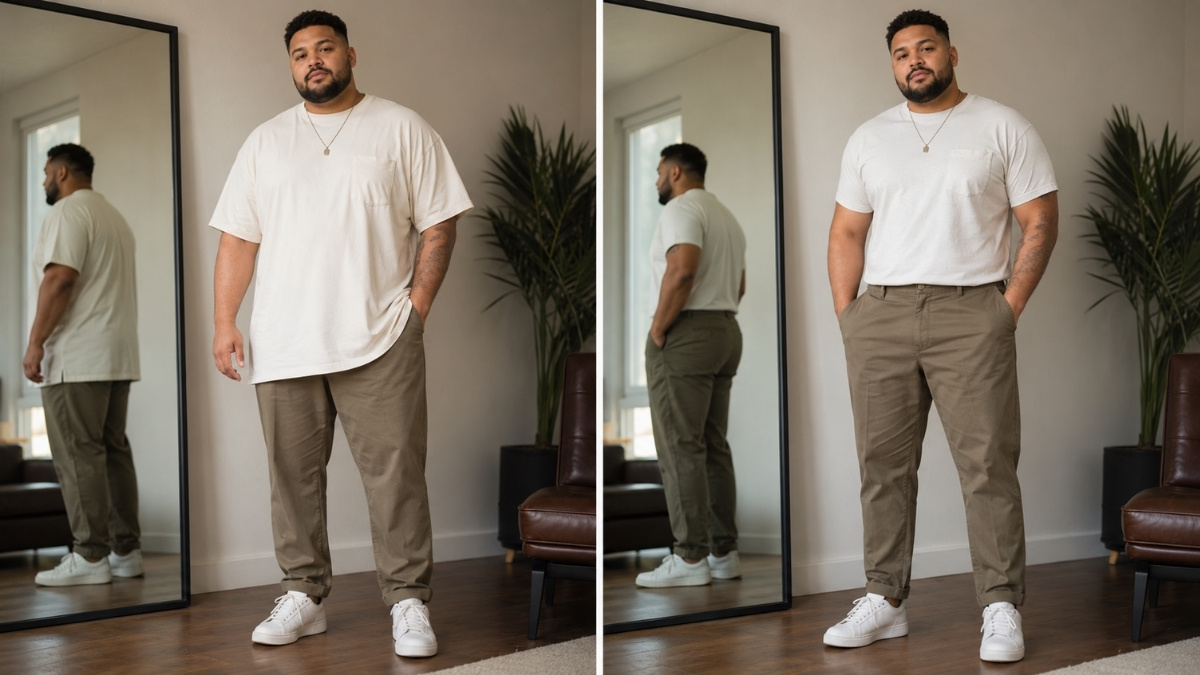
Some outfits fit your body but still make you look shorter than you are. A shirt hangs too low, pants sit under your belly, and suddenly your legs look smaller in the mirror. It feels frustrating because the clothes technically fit, but the shape is off.
Looking taller as a plus size man is less about your actual height and more about how your outfit divides your body. Small choices like color contrast, pant rise, shirt length, and shoe style can either stretch your frame or cut it into blocks. Most advice tells you to “wear black” or “stand straight,” but that does not fix the real problem.
This guide gives you styling rules made for a bigger body, not copied from skinny style advice. You will learn how to create cleaner lines, longer legs, and better balance without changing your whole closet.
Start With Proportion, Not Height — Explains the real goal
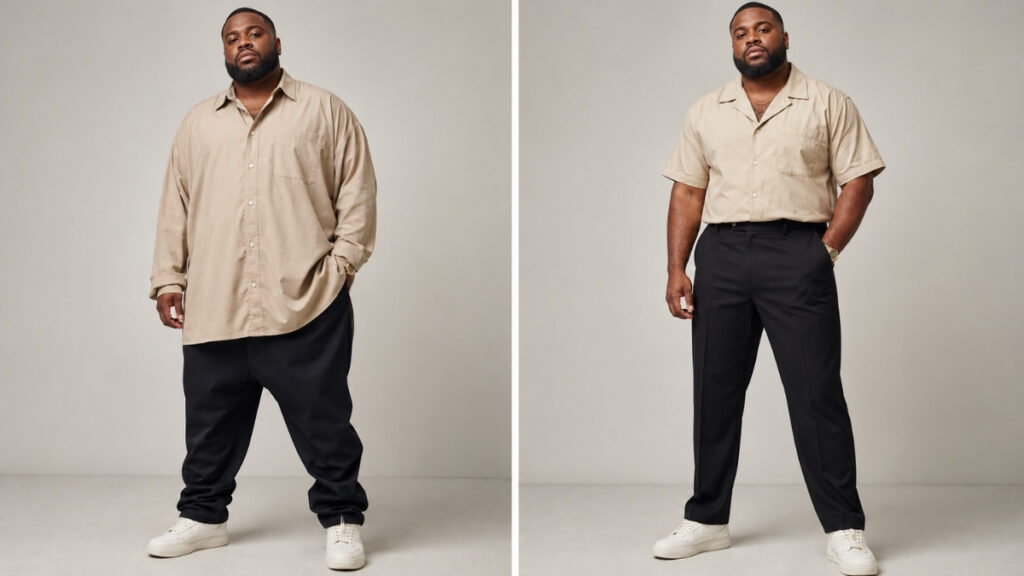
The fastest way to look taller is to stop chasing height and start fixing balance. When your outfit looks smooth from shoulders to shoes, your body looks longer without trying too hard.
Most plus size men make one mistake first. They focus on being taller instead of looking more even. A shirt that is too long can make your legs look shorter. Pants that bunch at the ankle can make your lower body look heavy. Big contrast between your top and bottom can cut your body in half.
Balance comes from clean lines. Your shoulders should look shaped, not squeezed. Your shirt should end around the middle of your zipper, not down near your thighs. Pants should sit at your natural waist, because low pants shorten your legs and make your torso look larger than it is.
Small changes matter. A straight pant leg, simple shoes, and a top that does not hang too low can make your whole frame look cleaner. Darker bottoms help ground the outfit, while a neat top layer can pull the eye upward toward your chest and face.
Think of your outfit as one full line. When every piece works together, you look taller because nothing is breaking your shape in the wrong place.
Rule 1: Stop Cutting Your Body in Half With High Contrast Outfits
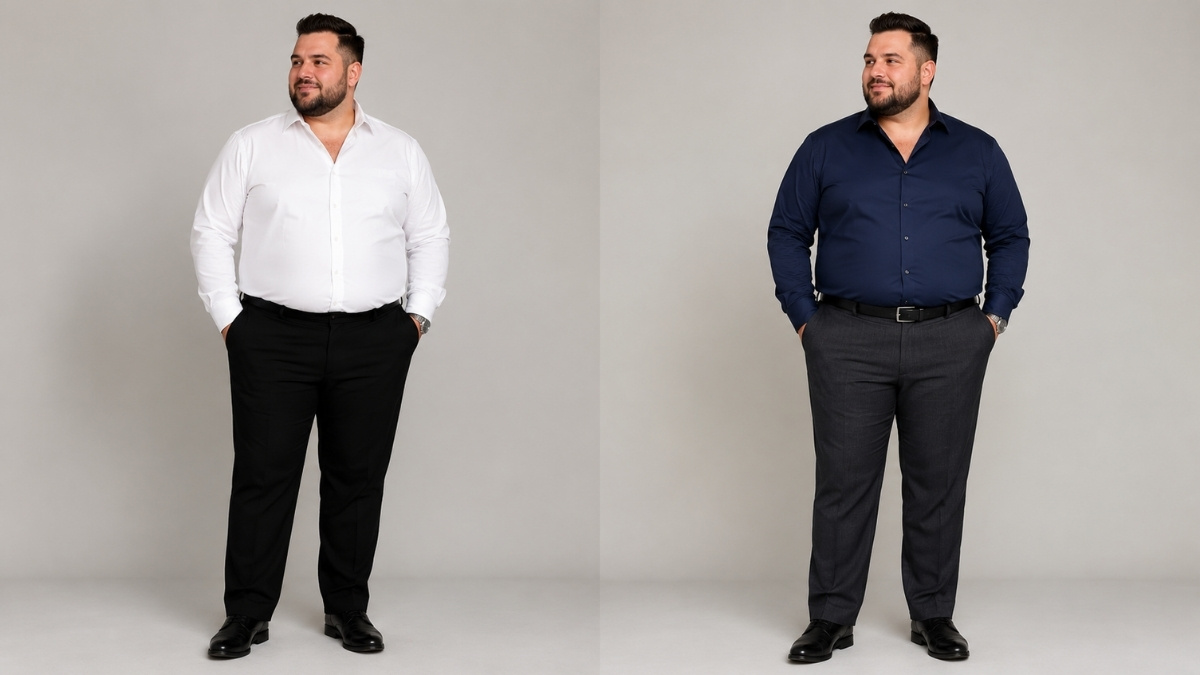
A sharp color break can make your body look shorter before anyone notices your height. A white shirt with black pants is the most common example. Your eye stops at the waist. That hard line cuts your body into two blocks, which can make your torso look bigger and your legs look shorter.
Contrast adds width too. A bright top with dark pants pulls attention across your middle, especially if the shirt ends near the stomach. Loud belts do the same thing. They draw a line right where many plus size men do not want extra focus.
Low contrast is the easier fix. Wear colors that sit close together, like navy with charcoal, olive with dark brown, or black with deep gray. This lets the eye move from your shoulders to your shoes without stopping.
Small changes count. Choose a belt close to your pants color. Pick shoes that do not fight your trousers. Match your socks to your pants when possible, so your lower half looks longer and cleaner.
Dark outfits are not the only choice. Tan chinos with a cream polo can work if the colors feel soft together. Medium gray jeans with a washed navy shirt also keep the line smooth without looking flat.
Fit still matters. A low contrast outfit that is too tight will pull at the stomach. One that is too baggy will add bulk. Aim for clean, straight lines that skim your body.
Start with one simple formula: dark shirt, dark straight pants, quiet belt, and solid shoes. It works because nothing chops you in half.
Rule 2: Wear Pants That Sit Higher on Your Waist, Not Under Your Belly
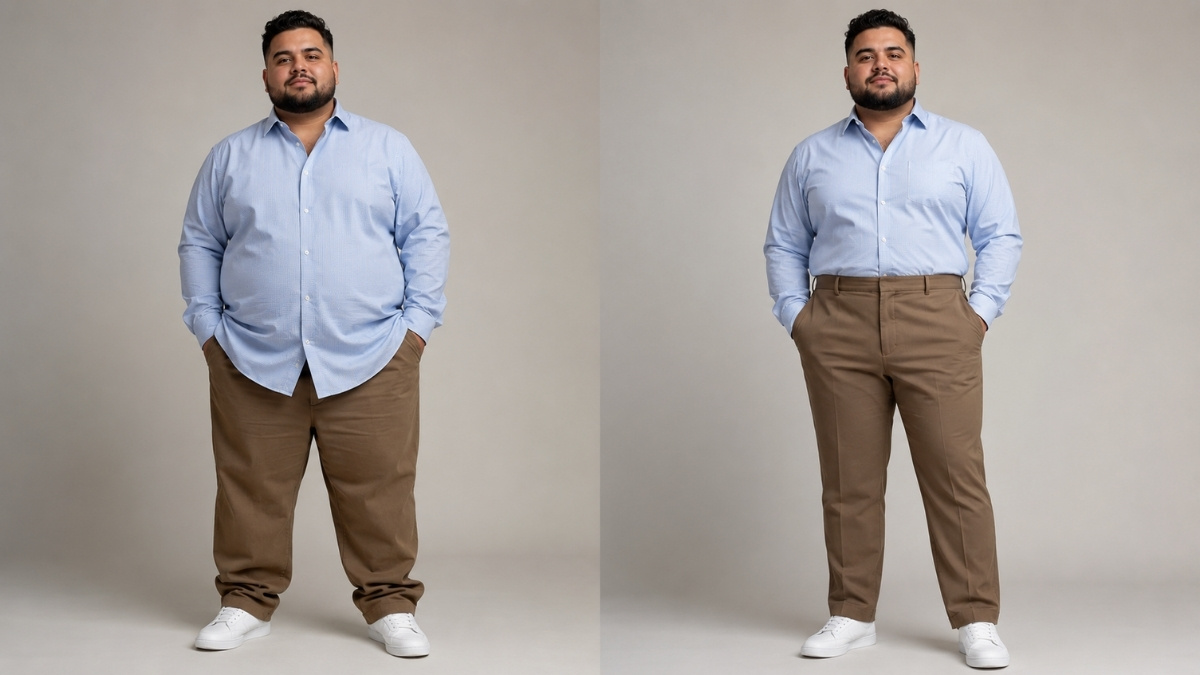
Most short plus size men wear pants too low because it feels easier. The waistband slips under the stomach, the shirt hangs over it, and the whole outfit starts from the wrong place. That one choice can make your legs look shorter before anyone even notices your shoes.
Higher waist pants give your legs back their length. They move the starting point of your lower body upward, so your body looks more balanced. This does not mean you need old-fashioned pants pulled up to your chest. It means the waistband should sit closer to your natural waist, around the area above your hips where your torso narrows.
Low pants create a problem. They make your shirt look longer. They make your belly look heavier. They also leave less visible leg, which makes you look shorter and wider at the same time.
Fit matters here. Choose pants with a mid-rise or higher-rise cut, not a low-rise cut. The waistband should feel secure when you stand, sit, and walk without needing to be pulled up every few minutes. A little stretch can help, but the pants should still hold their shape.
Belts can help, but only if the pants already sit in the right place. A belt should lock the fit in, not fight against pants that keep sliding down. If your waistband rolls, digs in, or falls under your stomach, the rise is probably too low or the size is wrong.
Shirts also look cleaner when pants sit higher. A tucked shirt becomes easier to wear because the tuck starts at a better point. An untucked shirt also hangs better because it does not have to cover a low waistband and extra fabric around the belly.
Try this in the mirror. Put on your usual pants first. Then raise the waistband slightly to your natural waist and look at your leg line. You will usually see the change right away. Longer legs. Less heavy torso. Cleaner shape.
Rule 3: Choose Straight Fit Pants That Fall Clean, Not Skinny or Baggy
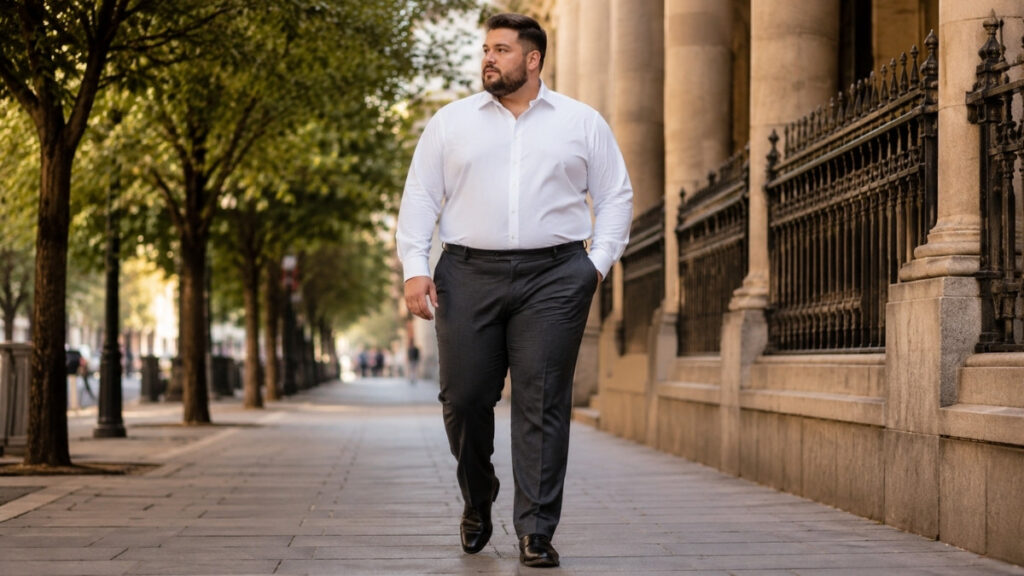
The fastest way to look taller in pants is to remove extra shape from your legs. Skinny pants squeeze your thighs and calves, which can make your upper body look heavier by contrast. Baggy pants do the opposite. They add width, folds, and bulk around your legs, so your frame looks shorter and wider.
Straight fit is the safer middle. It gives your thighs enough room without turning your legs into two loose columns of fabric. A clean straight leg lets the eye travel from your hip down to your shoe with fewer breaks. That longer line helps your body look more balanced.
Fit matters most around the thigh. You should be able to sit, walk, and bend without the fabric pulling hard across your lap. Too tight looks strained. Too loose looks sloppy.
| Pants Choice | Why It Helps or Hurts | Best Move |
|---|---|---|
| Skinny pants | Make thighs and calves look tight, which can make the upper body look larger | Choose more room through the leg |
| Baggy pants | Add folds, width, and bulk, making the body look shorter | Avoid excess fabric around the legs |
| Straight fit pants | Create a cleaner line from hip to shoe | Pick pants that fall smoothly |
| Heavy ankle stacking | Breaks the leg line and makes legs look shorter | Choose little or no break |
| Loud pant details | Cargo pockets, fading, cuffs, and distressing pull the eye sideways or down | Wear simple dark pants |
| Matching pants and shoes | Keeps the lower body line smooth | Pair dark pants with dark shoes |
Length matters too. Pants that stack heavily on your shoes create a messy stop at the ankle. That makes your legs look shorter. Choose pants that touch the top of your shoes with little or no break. A slight break is fine. Big bunching is not.
Dark straight jeans, navy chinos, and charcoal trousers are easy wins because they create a clean base under most shirts. Pair them with shoes in a similar color when you can. Black pants with black shoes, navy pants with dark brown shoes, or dark jeans with dark sneakers keep the line going.
Avoid pants with huge cargo pockets, strong fading, loud distressing, or thick cuffs if your goal is height. Those details pull the eye sideways or downward. Simple pants do more work than busy ones.
Rule 4: Keep Shirts Short Enough to Show Your Leg Line
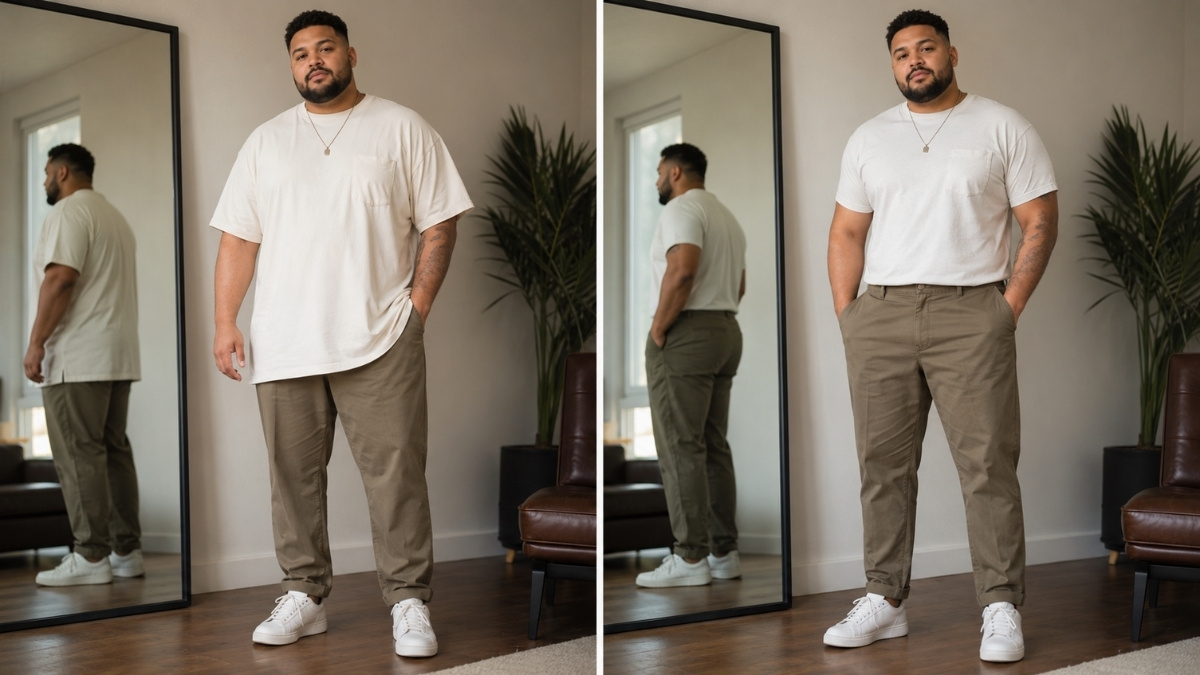
Long tops cover the point where your legs begin. That makes your upper body look heavier and your legs look shorter. For a plus size man, this can turn a simple outfit into one big block from shoulder to thigh.
Aim for shirts that end around the middle of your fly or just below the belt line when worn untucked. A tee that reaches the lower crotch will pull the eye down. A button down that covers most of your seat can make your legs almost disappear.
Polos need the same rule. Choose one that skims your stomach without dropping too low. The hem should not cling, curl, or stretch across your midsection, but it also should not hang like a mini dress.
Untucked button downs are tricky because many are made too long. Look for casual shirts with a shorter hem, especially if you plan to wear them open over a tee. Dress shirts are usually built to be tucked, so they often look sloppy when left out.
Overshirts should frame your body, not swallow it. Pick one that stops near the upper hip and has enough structure to sit cleanly over your torso. When the overshirt is too long, it hides your waist, cuts off your legs, and makes your whole shape look wider.
Stand in front of a mirror and check where the shirt ends from the front and side. If the hem covers too much of your pants, shortens your legs, or makes your outfit look boxy, it is too long for this goal.
Rule 5: Use Vertical Lines Without Wearing Obvious Stripes
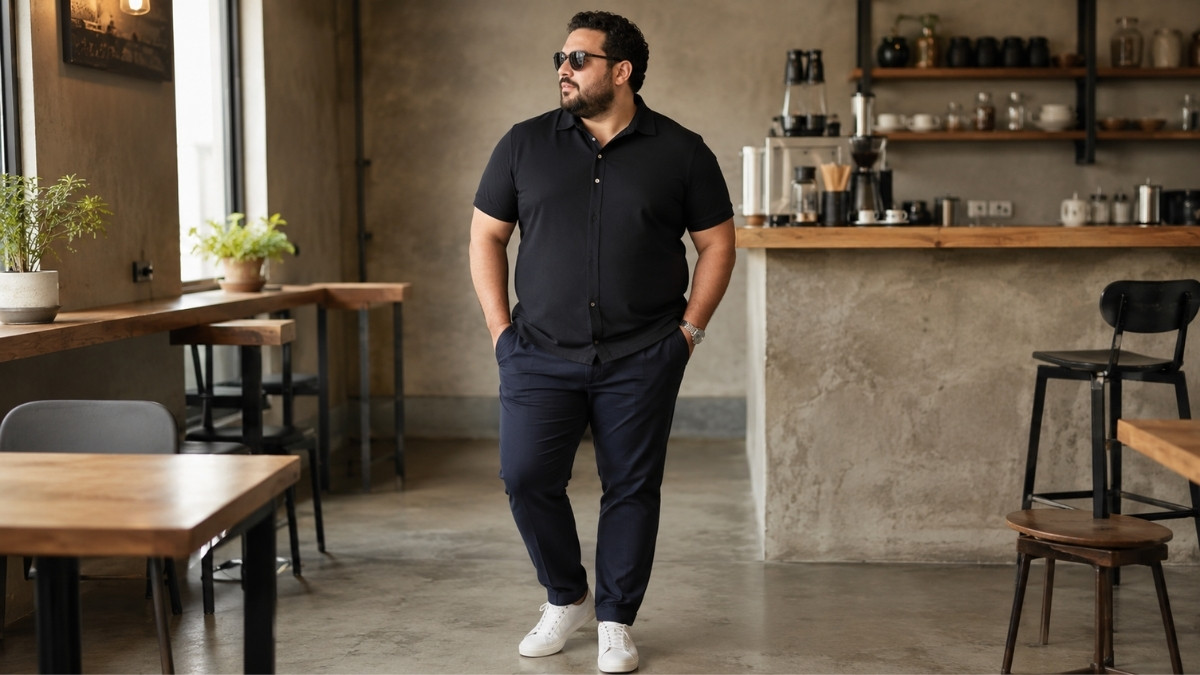
Vertical lines do not have to mean striped shirts. The best ones are often built into the outfit, so they guide the eye up and down without looking forced.
An open jacket is the easiest trick. It creates two long lines down the front of your body, especially when the jacket is darker than the shirt underneath. This works well for a plus size man because the open layer gives shape without squeezing your stomach.
Button plackets help too. A polo, overshirt, henley, or button-down with a clean center line pulls attention toward the middle of your body. That center line can make your outfit feel taller and neater, even when the clothes are simple.
Trouser creases are another quiet win. Flat-front pants with a sharp crease down the leg make your lower half look longer. Avoid pants that bunch at the ankle because that breaks the line and makes your legs look shorter.
Seams can do the same job. Jackets, overshirts, and pants with clean vertical seams add structure without shouting for attention. Small details matter here.
Monochrome dressing also creates a vertical effect. Wearing similar shades from top to bottom keeps the eye moving instead of stopping at your waist. Navy with dark blue, charcoal with black, or olive with dark green can all work without looking like a uniform.
Clean layering makes the whole trick stronger. Wear a plain tee or polo under an open overshirt, then pair it with straight-leg pants in a close color. The outfit feels simple, but the lines are doing real work.
Rule 6: Build Height From the Shoulders, Not From the Shoes
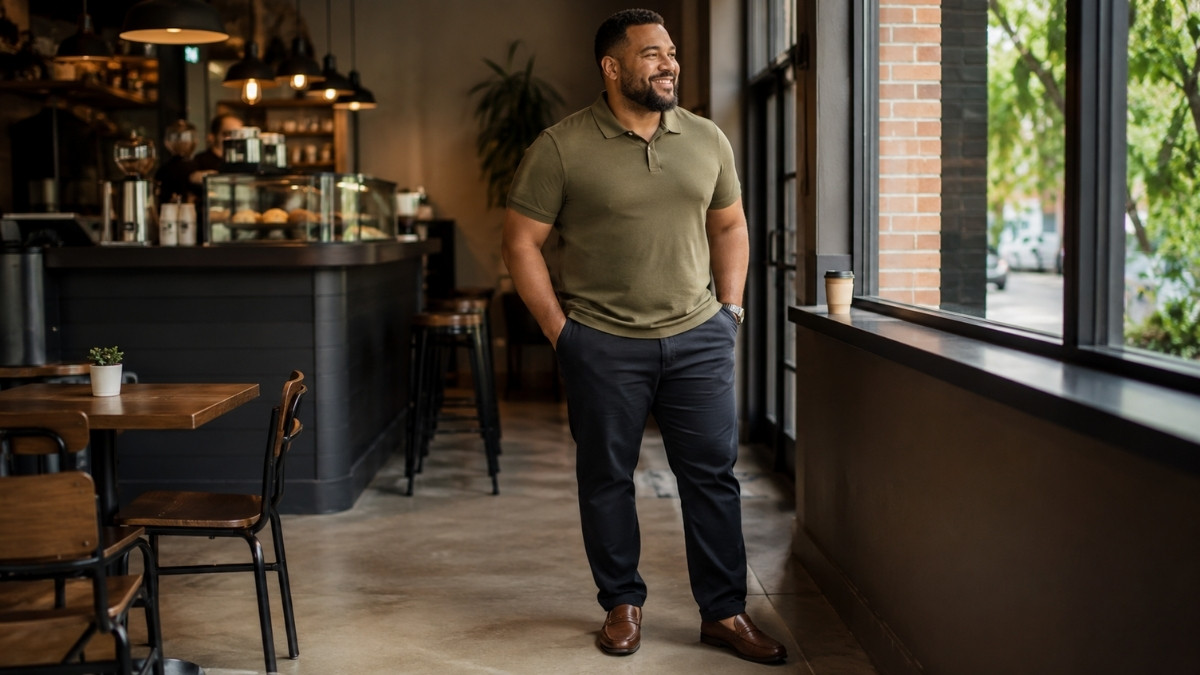
Chunky shoes can add height, but they can also make your lower body look heavy. A short plus size man usually looks taller when the top half of the outfit feels strong, clean, and lifted.
Start with the shoulders. Structured shoulders give your body a clearer shape, especially if your shirts usually sag or pull around the chest. This does not mean stiff suits or padded jackets. Choose overshirts, shirt jackets, denim jackets, light bombers, or casual blazers that sit neatly on your shoulders without drooping down your arms.
Clean collars help too. A polo collar, open button-down collar, or simple overshirt collar frames your neck and face. That matters because the eye naturally moves toward the sharpest part of the outfit. When your collar sits flat and your shoulders look neat, people notice your upper body before they notice your width.
Open layers are one of the easiest fixes. Wear an overshirt open over a plain tee, henley, or polo. The open front creates two long vertical lines down your torso, which can make your body look longer. Keep the layer light. Heavy jackets, thick hoodies, and bulky vests can add too much weight around your middle.
Color matters here. A dark open overshirt over a slightly lighter tee can work well if the contrast is soft. Low contrast keeps your body from being chopped into blocks, while the open layer still gives shape. Avoid loud collars, huge logos, and busy chest prints because they break the clean upward pull.
Shoes still matter. Just do not make them the whole plan. A clean leather sneaker, simple boot, or low-profile trainer can ground the outfit without making your feet look oversized. When your shoulders, collar, and top layer are doing the work, your shoes only need to finish the line.
Rule 7: Match Your Shoes to Your Pants When You Can
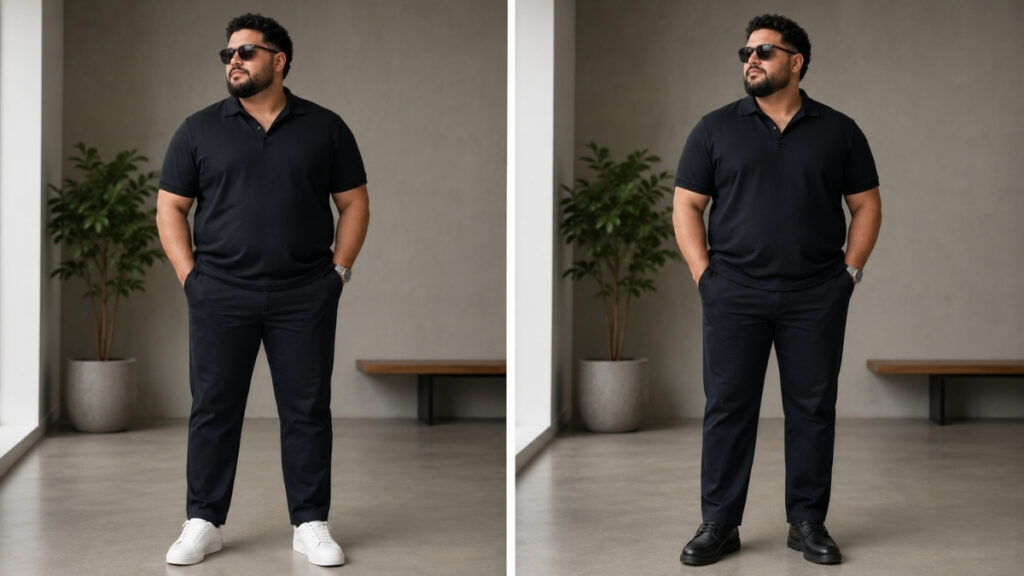
Matching your shoes to your pants keeps the eye moving down in one clean line. Black pants with black shoes, navy pants with dark navy sneakers, and charcoal pants with dark gray shoes all help your lower body look smoother and longer.
Contrast does the opposite.
White sneakers with black pants can look sharp, but they also create a bright stop sign at your ankles. That break can make your legs look shorter, especially if you are already carrying more weight through the middle.
Small changes work fast.
Choose dark shoes when you wear dark pants. Pick tan, brown, or beige shoes when you wear khaki or stone chinos. Try not to let your shoes become the loudest part of the outfit unless you want attention pulled downward.
Clean shape matters too.
Chunky shoes can work, but avoid pairs that look too wide, too bright, or too bulky against your pants. A simple leather sneaker, clean loafer, Chelsea boot, or low-profile casual shoe usually gives you a neater finish.
This trick is not about hiding your shoes.
Instead, you are making them support the full outfit. Similar colors help your pants and shoes act like one longer line, which is exactly what you want when your goal is more height and better balance.
Rule 8: Use Jackets and Overshirts That End Around the Hip
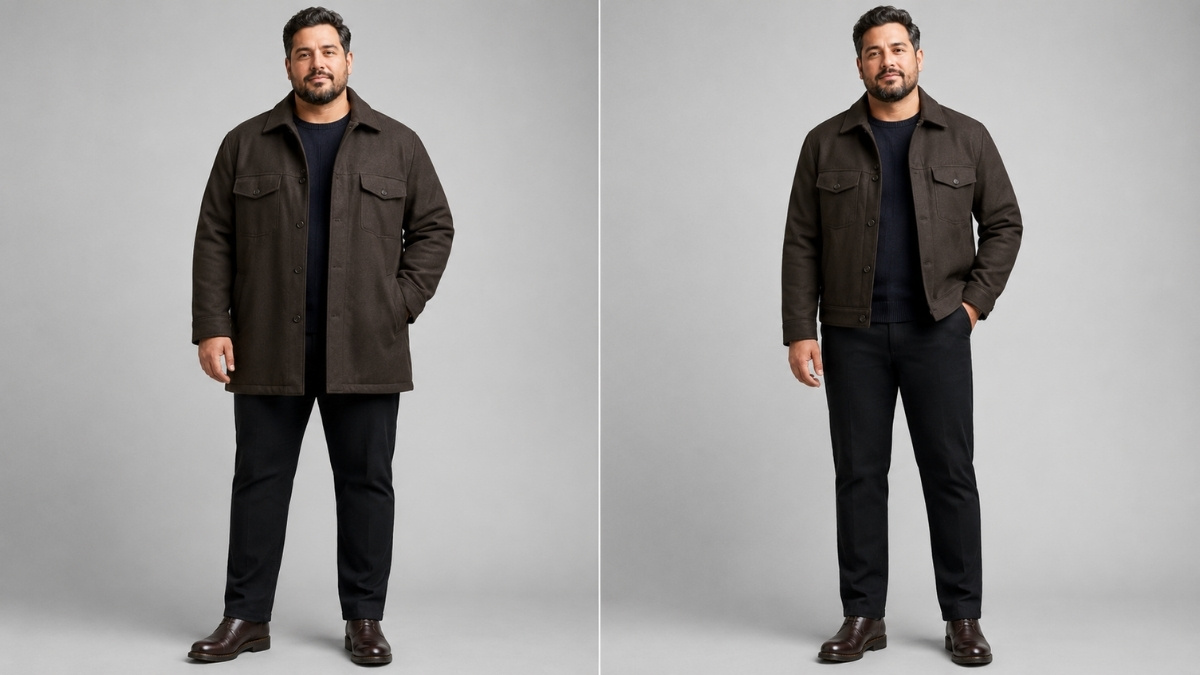
A jacket that drops past your hips can make your upper body look longer and your legs look shorter. That effect is stronger when you are plus size because extra fabric can add width at the same time. Your best range is around the hip, where the jacket ends near the top of your pants pocket or just below your belt line.
Shorter layers help your body look more balanced. They show more of your pants, which makes the lower half of your body look longer. Clean endings matter. Avoid jackets that stop at the widest part of your belly because they can pull the eye sideways.
| Outer Layer Choice | What It Does | Best Fix |
|---|---|---|
| Jacket ends past the hips | Makes the upper body look longer and legs shorter | Choose jackets that stop around the hip |
| Jacket covers the upper thighs | Adds extra fabric and can shorten your shape | Use shorter layers for daily outfits |
| Jacket stops at widest belly point | Pulls the eye sideways | Pick a length slightly above or below that area |
| Hip length jacket | Shows more pants and helps legs look longer | Try denim jackets, bombers, chore jackets, or overshirts |
| Structured overshirt | Adds shape without clinging | Choose one with clean shoulders and smooth sleeves |
| Long coat | Can work, but needs balance | Wear with low contrast pants and shoes |
Overshirts work well when they have structure. Choose one that sits close to the body without clinging, with shoulders that line up and sleeves that do not bunch. A boxy overshirt that ends around the hip can give you shape without making you look squeezed.
Long coats are not banned. Save them for outfits where the pants and shoes are low contrast, so your legs still have one clean line. For everyday outfits, a hip length denim jacket, bomber, chore jacket, overshirt, or light zip jacket will usually be easier to style.
Try this simple check in the mirror. Stand straight. If your jacket covers too much of your thigh, it is probably making you look shorter. If it ends near the hip and lets your pants show clearly, you are in the right zone.
Rule 9: Keep Patterns and Details Higher on the Body
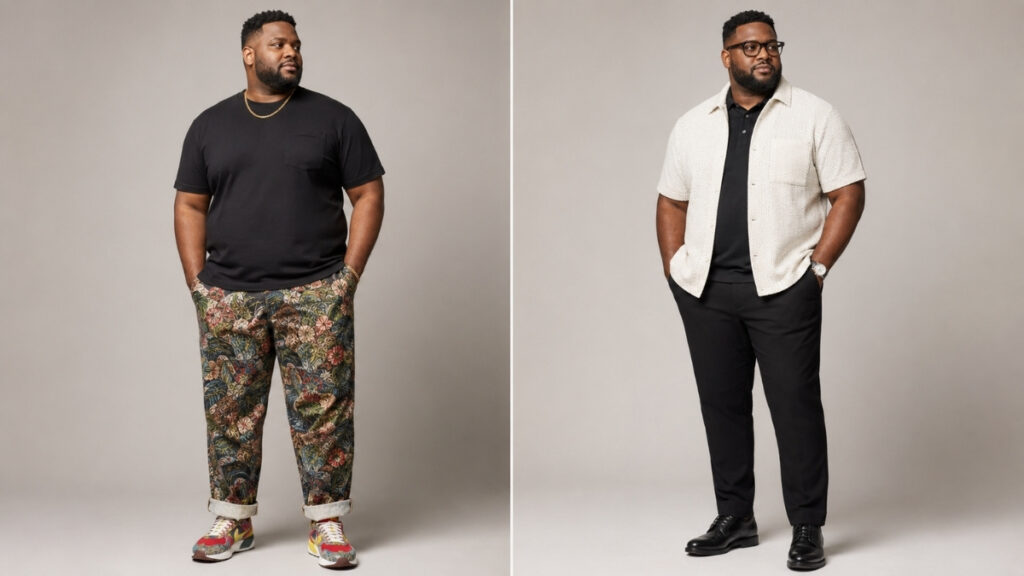
Small details can change where people look first. If the strongest part of your outfit sits near your face and chest, the eye travels upward instead of stopping at your waist, stomach, or shoes.
Use glasses, a neat collar, a clean neckline, or a watch to create that lift. A textured polo, a fine knit shirt, or a button-down with a simple chest pocket can also help because the detail stays high on your body. This works better than putting all the interest near your feet.
Shoes still matter. Keep them clean and simple. Loud sneakers, bright soles, heavy boots, thick cuffs, and busy pants can drag attention downward, which makes your legs look shorter. That is the opposite of what you want.
Patterns should also sit higher. Try a subtle vertical stripe shirt, a textured overshirt, a dark jacket with a clean collar, or a polo with a structured placket. Avoid bold prints on pants unless you are already tall and balanced. Busy lower halves add width and break the long line you are trying to build.
Accessories should feel intentional, not crowded. One watch is enough. Glasses can help. A neat collar helps too. The goal is not to decorate every inch of your outfit; it is to place the best detail where it helps your height the most.
The Outfit Formula That Makes a Plus-Size Man Look Taller
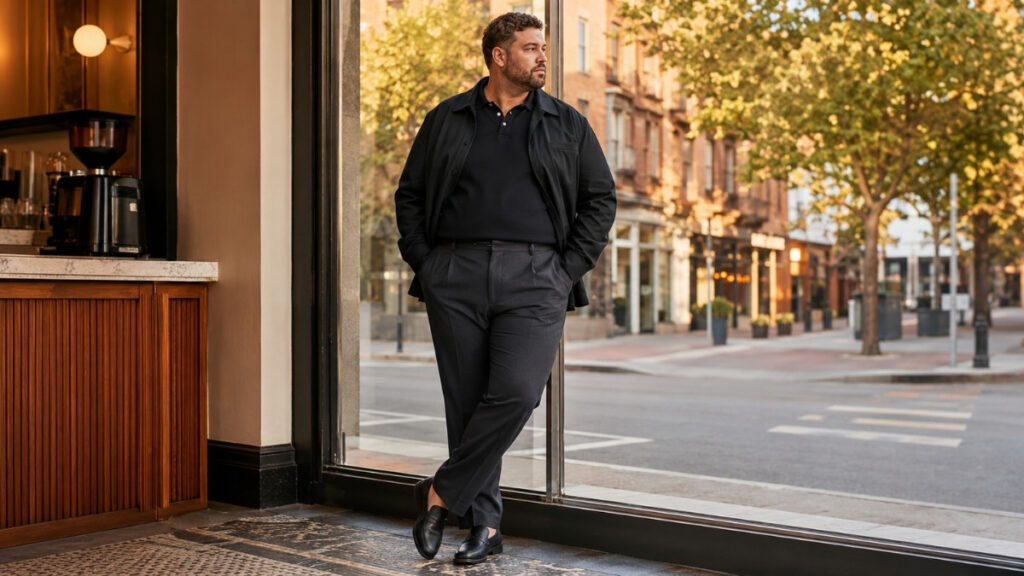
Start with a dark tee, polo, or knit shirt. Pair it with pants in a close color, like navy with charcoal, black with dark gray, or olive with deep brown. Low contrast helps your body look less chopped up. Sharp color breaks do the opposite.
Choose higher-rise straight pants. They should sit closer to your natural waist, not under your belly. This makes your legs look longer without making the outfit feel tight. Straight pants also give your lower body a cleaner shape than skinny or baggy pants.
Keep the top shorter. A shirt that hangs too low can make your legs look smaller, especially when you already have a wider frame. Aim for a top that ends around the middle of your zipper area. Small change. Big difference.
Add an open layer if the weather allows it. A jacket, overshirt, or open cardigan creates two vertical lines down your front, which helps guide the eye up and down instead of side to side. Pick a layer that ends around your hips, not one that swallows your whole body.
Finish with clean shoes in a color close to your pants. Dark sneakers, loafers, or boots can all work. Bright white shoes with dark pants pull the eye down and can make your legs look shorter.
| Styling Rule | What It Fixes | What to Wear Instead | Why It Helps You Look Taller |
|---|---|---|---|
| Avoid high contrast outfits | Sharp breaks between your top and pants | Low contrast colors like navy with charcoal, olive with dark denim, black with dark gray | Creates one longer visual line instead of splitting your body in half |
| Wear pants higher on the waist | Pants sitting under the belly shorten the legs | Mid-rise or higher-rise pants that sit closer to the natural waist | Makes your legs look longer and your torso look more balanced |
| Choose straight fit pants | Skinny pants show imbalance, baggy pants add width | Straight-leg chinos, trousers, or dark jeans | Gives your lower body a clean vertical line |
| Keep shirts shorter | Long shirts hide the legs | Tees, polos, and button-downs that end around mid-fly or upper hip | Shows more leg length and avoids a boxy shape |
| Use subtle vertical lines | Outfits that look wide and flat | Open overshirts, jacket edges, trouser creases, button plackets | Pulls the eye up and down instead of side to side |
| Build height from the shoulders | Chunky shoes can look heavy | Structured overshirts, clean collars, light jackets | Draws attention upward and improves your frame |
| Match shoes to pants | Bright shoe contrast cuts off the legs | Dark shoes with dark pants, tan shoes with khaki pants | Extends the leg line down to the floor |
| Choose hip-length layers | Long jackets shorten the legs | Jackets and overshirts ending around the hip | Gives shape without covering too much leg |
| Keep details higher | Busy pants and loud shoes pull the eye down | Glasses, collars, watches, chest texture, neat upper layers | Keeps attention near the face and shoulders |

Hello there! I’m Jesse Joe, the author and editor behind SolganGenius. I’m thrilled you’ve stopped by, and I can’t wait to share with you the essence of what this platform is all about.
I’m a writer, social media enthusiast, and a firm believer in the power of words. I’ve always been fascinated by how a simple phrase or slogan can capture an emotion, convey a message, and even change perspectives. Learn More