
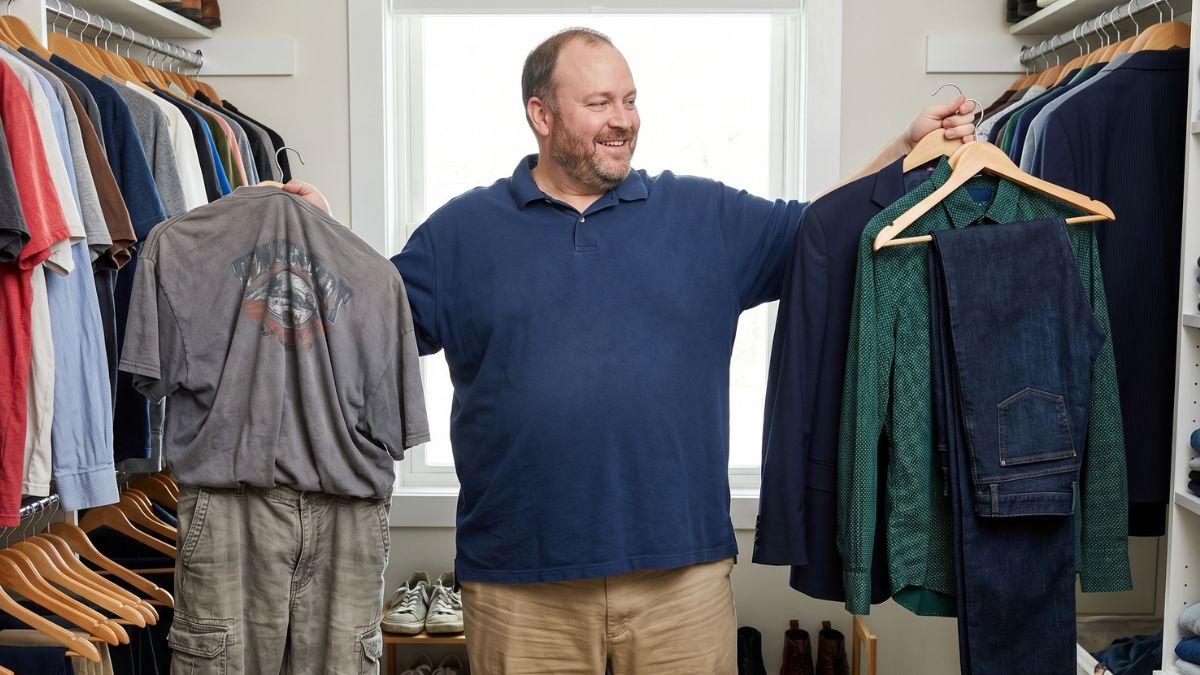
Most plus size men don’t have a style problem. They have a misinformation problem.
Somewhere along the way, you were told to size up, wear dark colors, avoid fitted clothes, and stay invisible. That advice didn’t make you look better. It made you look larger, shapeless, and like someone who gave up which isn’t true and isn’t fair.
Your wardrobe is probably full of clothes bought out of necessity rather than intention. Things that fit in the sense that they go on your body, but not in the sense that they actually work for you. That gap between “goes on” and “works” is where most plus size men lose the game without realizing it.
This is a full closet reset. What’s actively hurting your look, what replaces it, and exactly how to wear it starting with the real reason the current stuff isn’t working.
The Real Reason Plus Size Men Look Sloppy (It’s Not the Weight)
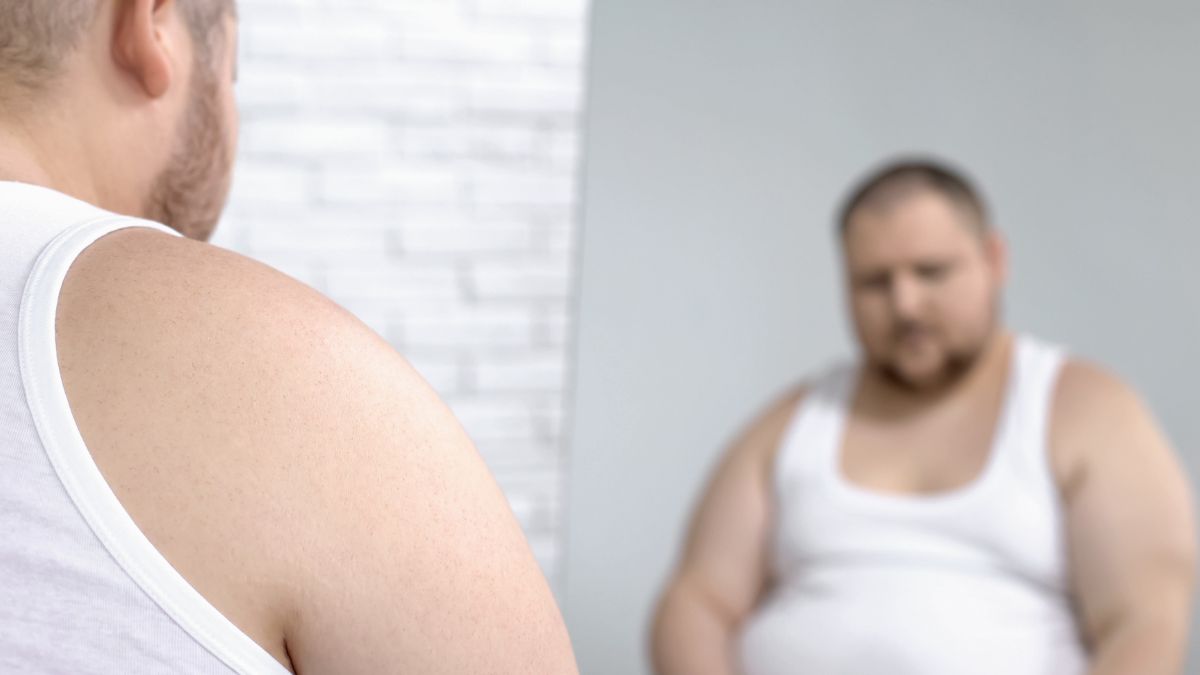
Two men can wear the same size shirt and look completely different one pulled-together, one like he just rolled out of bed. The difference is never the number on the tag. Proportion is doing all the work.
Most heavier men dress to hide. Bigger shirt to cover the belly. Longer tee to mask the waist. Darker everything to shrink the silhouette. The problem is that hiding doesn’t work it just trades one visual problem for another. Excess fabric adds bulk. Shapeless cuts remove structure. Clothes that are “safe” end up being the exact thing making you look larger and more disheveled than you actually are.
What’s actually happening:
- Fit mismatch wearing a size larger than needed creates horizontal folds and bunching, which read as bulk, not coverage
- Wrong proportions a top that’s too long visually cuts your body at its widest point, making you look shorter and wider simultaneously
- No structure soft, unstructured fabrics with no shape collapse against the body and emphasize the midsection instead of skimming it
- Length errors sleeves, hems, and trouser breaks at the wrong length throw off the entire silhouette regardless of how good the rest fits
Your body isn’t the problem to solve. Clothes that fight your frame instead of working with it that’s the problem. Every item you wear either creates a clean, proportional silhouette or it doesn’t. Weight has almost nothing to do with it.
Fit and proportion are skills. Both can be learned.
The Throw-Out List 7 Items Making Your Size More Visible, Not Less
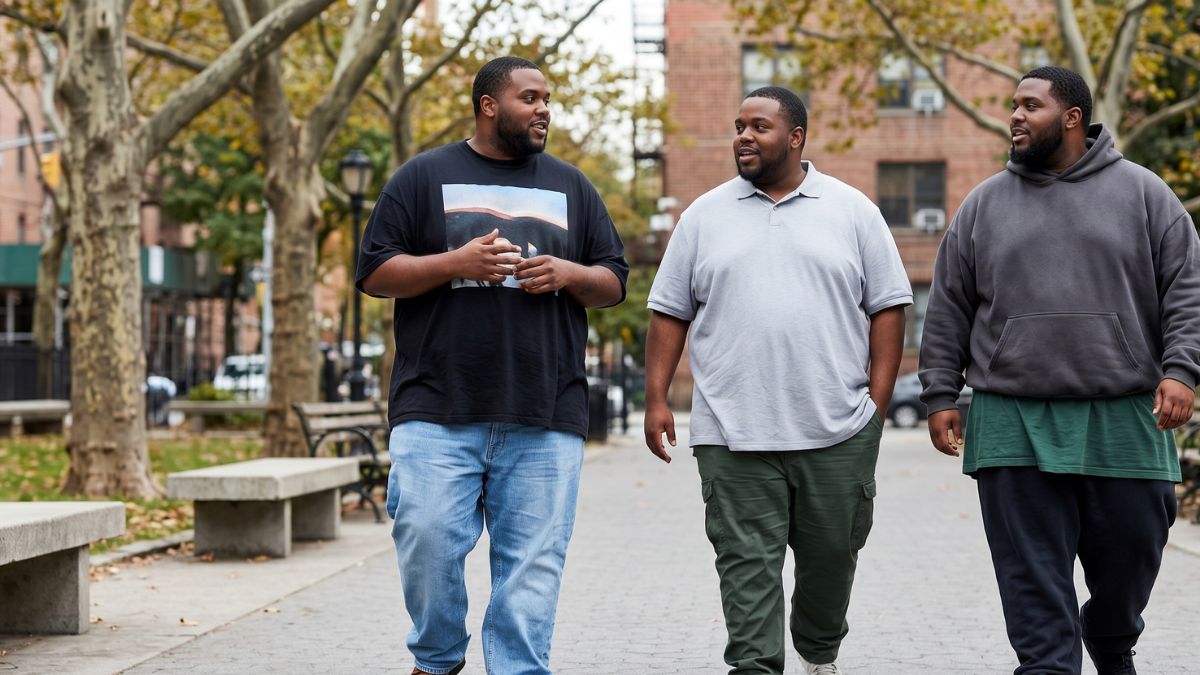
Before buying a single new piece, you need to pull these out of your closet. Each one is actively working against you not because of style taste, but because of what they do to your silhouette.
- Oversized graphic tees wide print placement across the chest creates a visual billboard effect that broadens your upper body and adds perceived bulk
- Shapeless polos a polo with no taper hangs off the chest and drapes over the midsection like a tent, removing any waist definition you actually have
- Elastic-waist pants the gathered fabric at the waistband creates a bunching effect that draws the eye directly to the widest part of your midsection
- Ill-fitting dark jeans dark denim only “slims” when it fits correctly; a baggy dark jean gives you the worst of both excess fabric AND a heavy silhouette
- Too-long tees any tee hem that falls past the crotch is cutting your body at its widest horizontal point, making you look shorter and wider simultaneously
- Baggy hoodies as outerwear worn as a jacket, an oversized hoodie adds visual mass to your shoulders, chest, and stomach all at once with zero structure to balance it
- Square-toe dress shoes the wide, blunt toe visually shortens the foot and throws off lower-body proportion, making legs look heavier than they are
None of these items are unfixable categories. Polos, jeans, and hoodies all exist in versions that work well on bigger frames. These specific versions don’t.
Why “Just Size Up” Is the Worst Advice You Were Ever Given
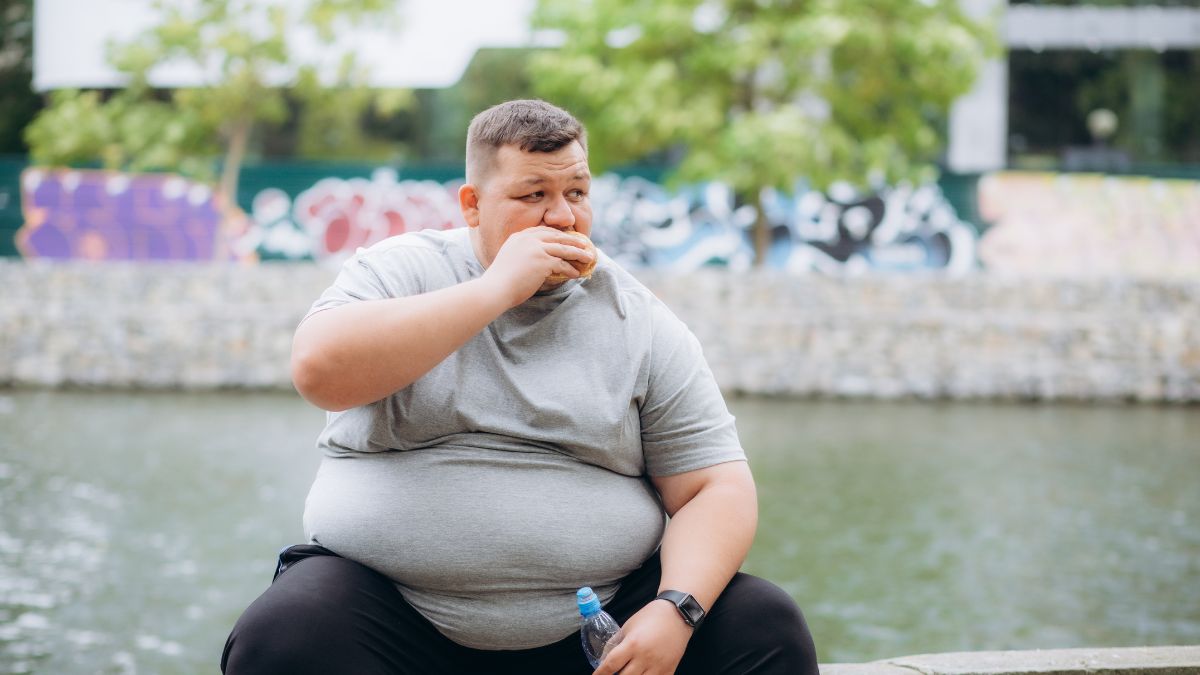
Wearing a bigger size doesn’t make you look smaller. It makes you look bigger and unkempt. That’s the trap most plus size men have been stuck in for years buying up to feel comfortable, then wondering why nothing ever looks right.
What excess fabric actually does to your silhouette:
- Creates horizontal bulk extra material across the chest and shoulders folds and bunches, adding visible width that has nothing to do with your actual body
- Removes all shape a shirt two sizes too big hides nothing; it just replaces your natural outline with a shapeless box that reads as larger than your frame
- Pulls everything down oversized clothes drop and sag, which shortens your visual height and makes the whole outfit look heavy and tired
- Shifts the shoulder seam wrong when the seam slides off your shoulder, the entire upper half of the outfit collapses and loses structure immediately
Comfort is a real concern. Nobody is telling you to wear clothes that feel tight or restrictive. Fitted doesn’t mean tight it means the fabric follows your actual shape without excess material hanging off it.
Proper fit at your real size gives your body a clean edge. That clean edge is what makes a man look put-together regardless of his weight. Sizing up removes that edge entirely and replaces it with fabric that draws the eye to everything you were trying to hide.
Buy your size. Fit it correctly. That’s the whole game.
The Buy List — 8 Specific Pieces That Work With a Bigger Frame
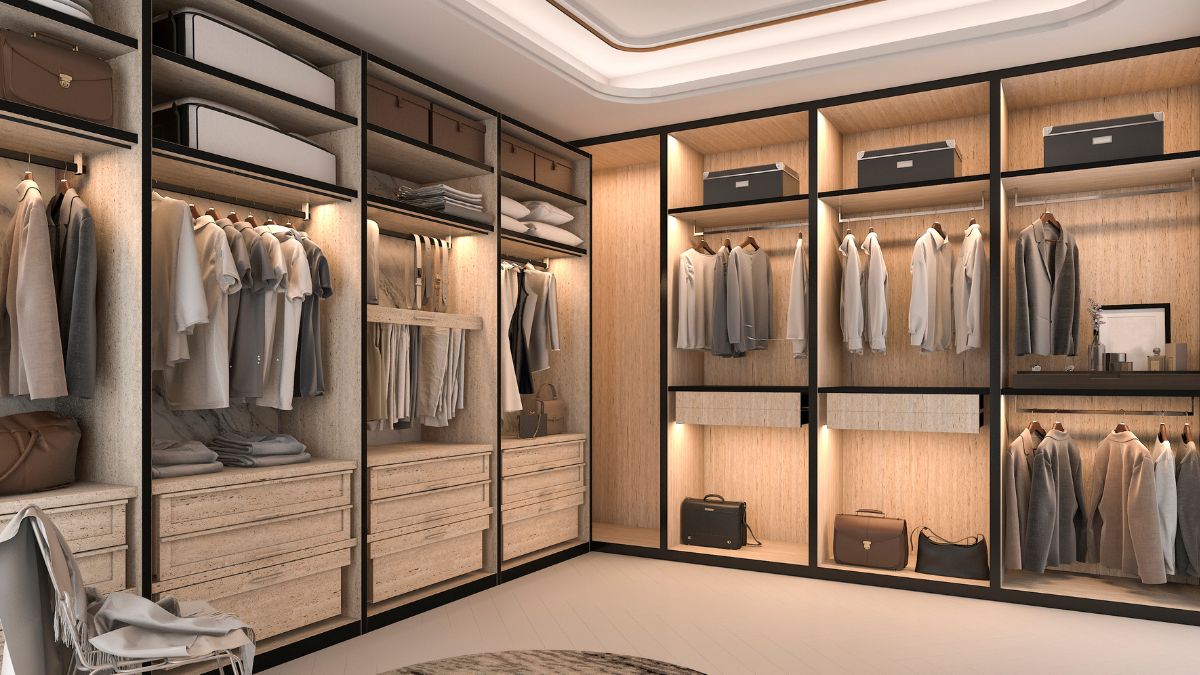
Every item below was chosen for one reason: it creates structure and clean lines on a bigger frame without requiring you to be a different size first.
- Structured henley — gives the chest definition a plain tee can’t; fit check: fabric should lie flat across the chest with no pulling at the buttons
- Flat-front chinos in a tapered cut — tapered leg creates a cleaner lower-body line than straight or relaxed cuts; fit check: no excess fabric bunching at the thigh or knee
- OCBD shirt worn untucked — versatile enough for casual or smart-casual; fit check: hem should end at mid-fly length — not lower, or it cuts you at the wrong point
- Dark slim-straight jeans — slim-straight gives you the slimming effect of dark denim without the restrictive feel of skinny fit; fit check: waistband sits at your natural waist with no gap at the back
- V-neck tee in medium-weight fabric — the V creates a vertical line that draws the eye downward; fit check: the V should end at mid-chest, not deep
- Single-button blazer — one button sits at the natural waist and cinches your silhouette at its narrowest point; fit check: shoulder seam must sit exactly at the edge of your shoulder
- Chelsea or derby shoes — both have a sleek, elongated toe that adds visual length to the leg; fit check: no platform sole — keep the profile low and clean
- Fitted bomber or Harrington jacket — sits at the hip without adding bulk; fit check: should close comfortably across the chest without pulling
None of these are trend pieces. All eight will work across seasons and occasions, which means buying them once and wearing them for years.
The One Fit Rule That Replaces Every Style Tip You’ve Read
Style lists are only useful if you know how to apply them in a fitting room. Without that skill, you’ll buy the right items in the wrong fit and end up back where you started. Three checkpoints will tell you whether any garment works on any shopping trip, for the rest of your life.
The three fit checkpoints that matter:
- Shoulder seam placement the seam where the sleeve meets the shirt must sit exactly at the edge of your shoulder bone, not drooping down your arm or pulled toward your neck; this single point controls how the entire upper half of the garment hangs
- Chest and torso room without excess fabric should skim your torso smoothly, meaning you can pinch roughly one inch of fabric on each side but no more; anything beyond that is excess that creates bulk and shapelessness
- Trouser break the hem of your trousers should touch the top of your shoe with a slight fold, called a half break; too long and the extra fabric bunches and shortens your leg visually, too short and the proportions look off
Run these three checks on every piece before buying. Shoulder wrong? Put it back. Too much fabric at the torso? Size down and try again. Break too long? Ask about hemming before you walk out.
Tailoring is not expensive vanity. A $12 hem on a $40 chino produces a result that a $200 ill-fitting trouser never will.
These three points override every other style rule you’ve encountered.
Where to Actually Buy These — Brands That Cut for Bigger Builds (Not Just Wider)
Most big and tall sections solve one problem size while creating another. They scale garments up in every direction equally, which means more fabric everywhere instead of more room where you actually need it. These brands do it better, each with a different strength and a known weakness.
- ASOS Plus wide range of on-trend pieces at low price points; weakness: sizing is inconsistent across styles, so check reviews before ordering
- Bonobos excellent trouser and chino fit with genuine taper through the leg; weakness: limited extended sizing beyond 2XL and expensive for a full wardrobe build
- DXL (Destination XL) the most complete plus size men’s retailer with in-store fitting; weakness: styling skews older and conservative, so shop selectively
- Ralph Lauren Big & Tall shirts and blazers cut with actual structure and shoulder shape; weakness: premium price point, best used for investment pieces only
- River Island Plus strong casual and smart-casual options with modern cuts; weakness: primarily online, so returns need to be factored into your budget
- Quince affordable basics in quality fabrics with clean, minimal cuts; weakness: size range stops at 2XL, so check their size chart carefully before buying
No single brand covers everything on the buy list well. Pick two or three based on your budget and build your wardrobe across them rather than defaulting to one retailer for everything.
Fit still comes first. Brand name means nothing if the shoulder seam is wrong.
The Capsule — How These 8 Pieces Combine Into 15+ Outfits
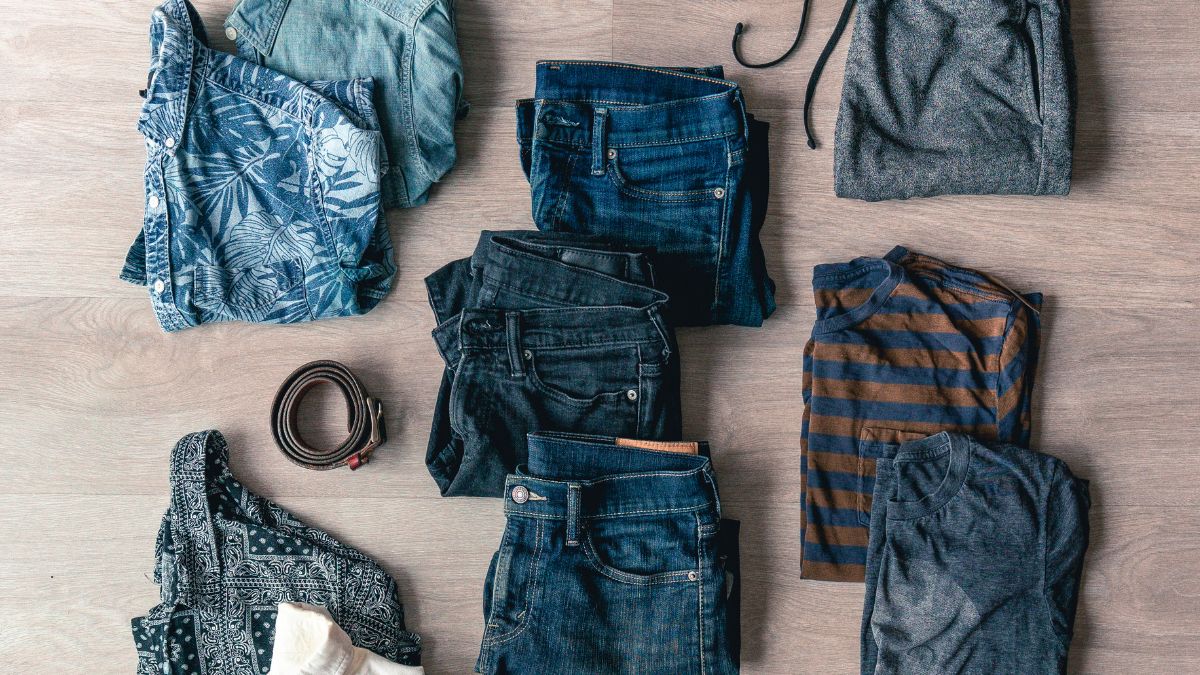
Eight items sounds minimal until you see how far they actually stretch. Capsule dressing works because every piece was chosen to pair with multiple others nothing is a standalone that only works one way.
Real combinations for real situations:
- Job interview single-button blazer + OCBD shirt + flat-front chinos + derby shoes; structured, clean, and proportional without looking overdressed
- First date fitted bomber + henley + dark slim-straight jeans + Chelsea boots; sharp enough to show effort, relaxed enough to not look like you’re trying too hard
- Weekend errands V-neck tee + flat-front chinos + Chelsea boots; three pieces, five minutes, looks deliberate
- Casual Friday at work OCBD shirt untucked + dark slim-straight jeans + derby shoes; smart without the blazer, easy to dress up if the day requires it
- Evening out single-button blazer + V-neck tee + dark jeans + Chelsea boots; the blazer over a tee is one of the most versatile combinations a bigger man can own
- Weekend lunch Harrington jacket + henley + flat-front chinos + clean white sneakers; relaxed but structured enough to look intentional
Every combination above uses three or four pieces maximum. Rotating tops, bottoms, and outer layers across these eight items produces well over fifteen distinct outfits without repeating the same look twice in a week.
That’s the point of a capsule. Less deciding. More looking good.

Hello there! I’m Jesse Joe, the author and editor behind SolganGenius. I’m thrilled you’ve stopped by, and I can’t wait to share with you the essence of what this platform is all about.
I’m a writer, social media enthusiast, and a firm believer in the power of words. I’ve always been fascinated by how a simple phrase or slogan can capture an emotion, convey a message, and even change perspectives. Learn More