
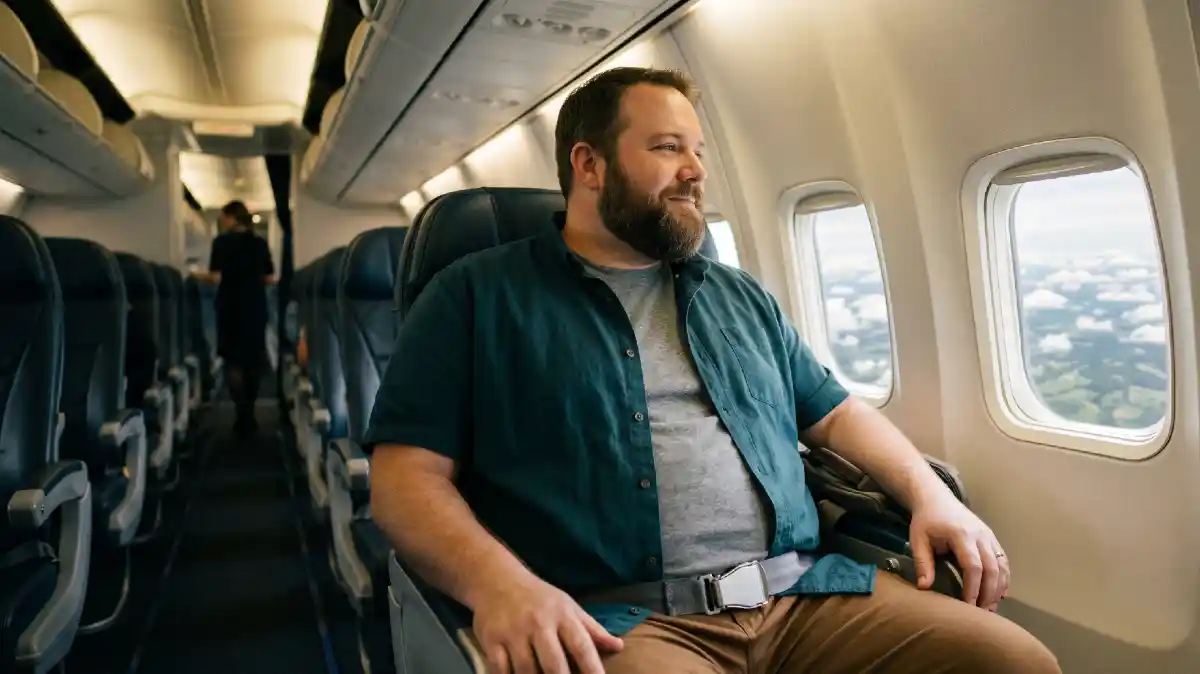
The tips are fine, technically. Book early. Pack light. Wear comfortable shoes. None of it is wrong it just skips everything that actually makes travel harder when you’re a bigger guy. The armrest situation. The seatbelt conversation you’ve been quietly dreading. The hotel bed that looked fine in photos and sagged the moment you sat on it.
Travel is already a logistical exercise. You shouldn’t have to white-knuckle the parts that have straightforward fixes nobody bothered to write down.
This covers the specifics aircraft seat configurations, row numbers worth knowing, how to handle the extender request without it becoming a moment, and what to confirm before you check into any hotel. Practical, direct, and none of it requires upgrading to business class.
The Seat Upgrade Isn’t the Only Option — What Actually Changes the Flight

Most of the real comfort on a flight comes down to one thing: armrests. Specifically, whether they lift up or stay fixed because a liftable armrest on an aisle seat gives you several extra inches of usable width without paying for a single upgrade.
What’s worth knowing before you book:
- Bulkhead rows (the first row in a cabin section) have the most legroom and no seat in front reclined into your space but the armrests on bulkhead seats are almost always fixed and house the tray table, so they don’t move
- Rows 10–20 on most narrowbody aircraft are more likely to have liftable aisle armrests check SeatGuru for your specific flight and look for notes on armrest type
- Boeing 737s have a slightly narrower cabin than Airbus A320s if you have a choice between aircraft, the A320 family gives you a bit more shoulder room at the same seat class
- Exit row seats often get recommended for legroom, but many have fixed armrests too, and the seats themselves don’t recline
Choosing an aisle seat in rows 10–20 on an A320, where the armrest lifts, will do more for your comfort than a bulkhead seat or an exit row on a 737. That combination is free, available on most flights, and takes about two minutes to check before you book.
Why the Aisle Seat Is the Wrong Default — and What Row Number Actually Matters
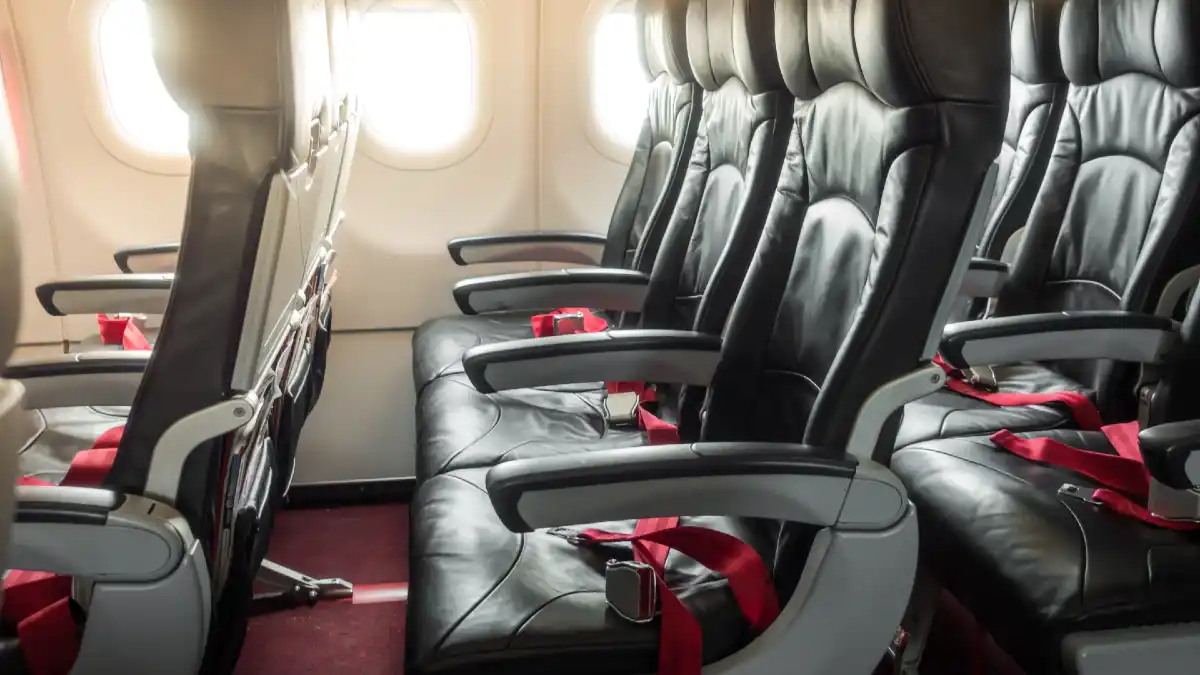
Booking an aisle seat is the right instinct. Booking any aisle seat without checking the row is where the plan falls apart.
The aisle seat only helps you if the armrest lifts. Fixed armrests the kind that stay locked in place no matter what cut into your hip space and make the seat effectively narrower than it looks on a seating chart. Here’s where they show up most:
- Rows 1–5 (bulkhead and near-bulkhead) almost always have fixed armrests because the tray table is stored inside them
- Exit rows are the same trap fixed armrests are standard because of safety equipment built into the seat
- Rows toward the back of the main cabin (roughly rows 20–30 on most narrowbodies) tend to have the most liftable aisle armrests, though this varies by aircraft
Seat width also changes depending on where you sit in the plane. Forward cabin seats on some aircraft are slightly wider than seats further back, and the curve of the fuselage means middle-of-the-plane rows sometimes give you a fraction more shoulder clearance.
Check matters. Pull up SeatGuru, enter your flight number, and look specifically at the armrest notes for the aisle seat you’re considering before you lock in the booking. Two minutes of that research will tell you more than the seat map alone ever will.
The Seatbelt Extender Conversation — How to Request One Without Making It a Moment
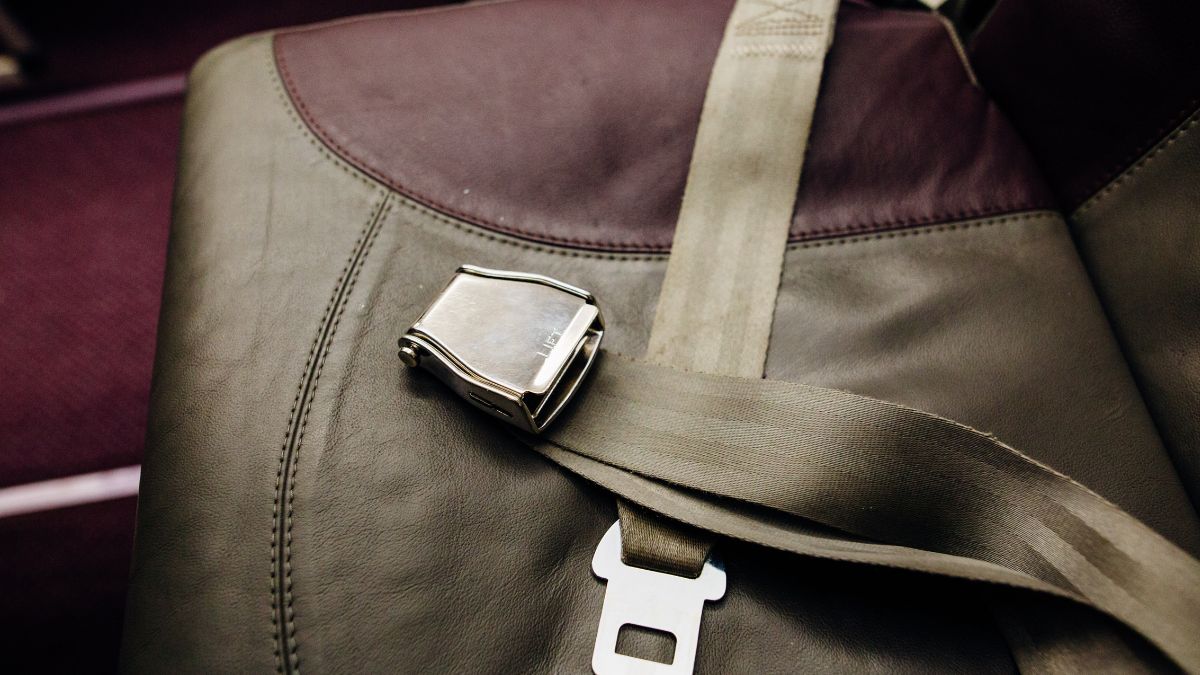
You can buy your own. That one fact removes the entire awkward interaction if you want it to.
FAA-approved seatbelt extenders are sold online for around $20–$30, and carrying your own means you never have to ask a crew member for one mid-boarding when the aisle is full and everyone is watching. Search “FAA approved seatbelt extender” and check that it matches your airline’s buckle type most US carriers use a standard tongue-and-latch buckle, but verify before you buy.
If you’d rather not carry one, here’s how the request actually works:
- Before boarding is the easiest time ask the gate agent quietly when you check in at the gate, and they’ll radio ahead so a crew member has one ready when you board
- At your seat works fine too simply say “Could I get a seatbelt extender?” to any flight attendant during boarding. That’s the whole sentence. They hand it over without comment
- Some airlines (Southwest is one) keep extenders in the seat pocket on certain aircraft — worth checking before you ask
- Never wait until after takeoff when crew are belted in ask during boarding when they’re actively moving through the cabin
Flight attendants handle this request dozens of times a week. Nothing about it registers as unusual on their end. The discomfort lives entirely in the anticipation not in the moment itself.
Hotel Beds Are Not All the Same Size — The Specific Things Worth Confirming Before You Book
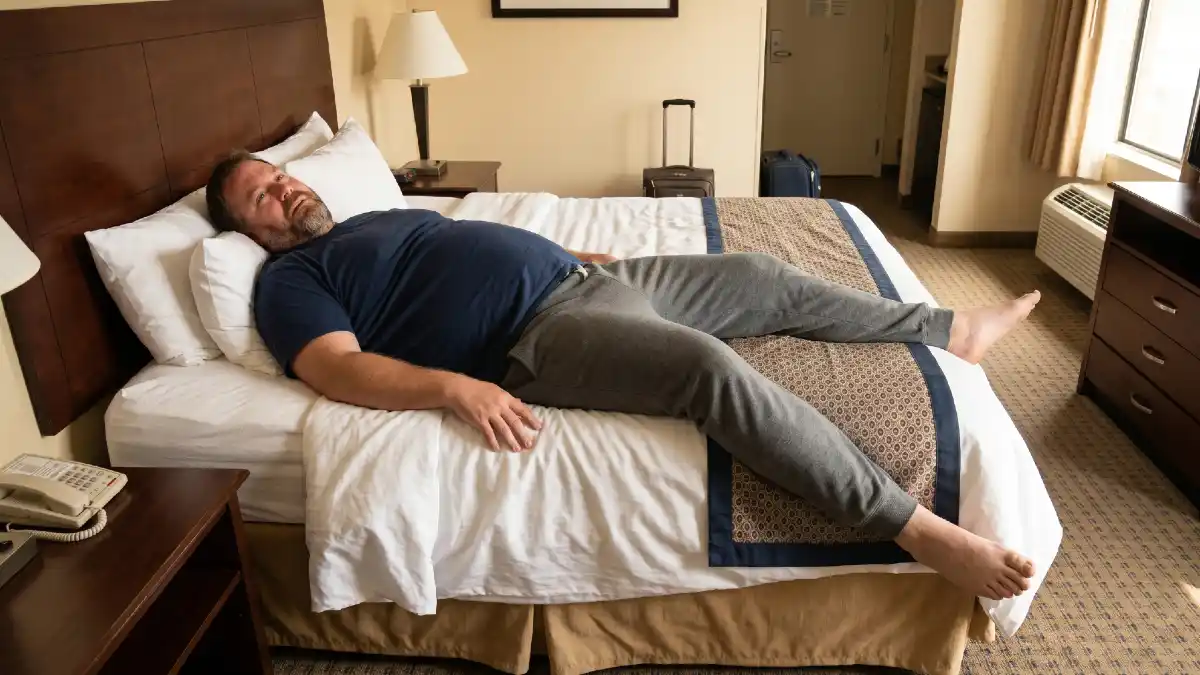
“King bed” is a category, not a standard. The actual frame underneath and whether it holds up varies more than the booking page will ever tell you.
Budget and mid-range hotels frequently use slatted wooden bed frames or metal platform frames with weight ratings that aren’t published anywhere online. A solid box spring base behaves completely differently under a larger body than a flex-slat platform, and you won’t know which one you’re getting until you sit down on it at 11pm after a long travel day.
Before you book, these are worth a direct look:
- Bed height in room photos a bed that sits low to the floor (under 20 inches) is significantly harder to get up from; zoom into hotel photos and compare the bed height against nearby furniture
- Pull-out sofas and rollaway beds have published weight limits of 250–300 lbs on most hotel-grade models skip these entirely if that’s a concern
- Budget chain rooms (think roadside motels and economy brands) are more likely to have flex-frame platforms; mid-range and above chains like Marriott, Hilton, and Hyatt tend to use sturdier solid-base frames as part of their branded bed programs
- Suite layouts often have sturdier bed setups than standard rooms simply because the furniture is built to a higher spec
Calling the hotel directly not the booking line and asking “what type of bed frame do you have in that room?” takes 90 seconds and answers all of it.
The Pre-Trip Call That Solves Three Problems Before You Check In
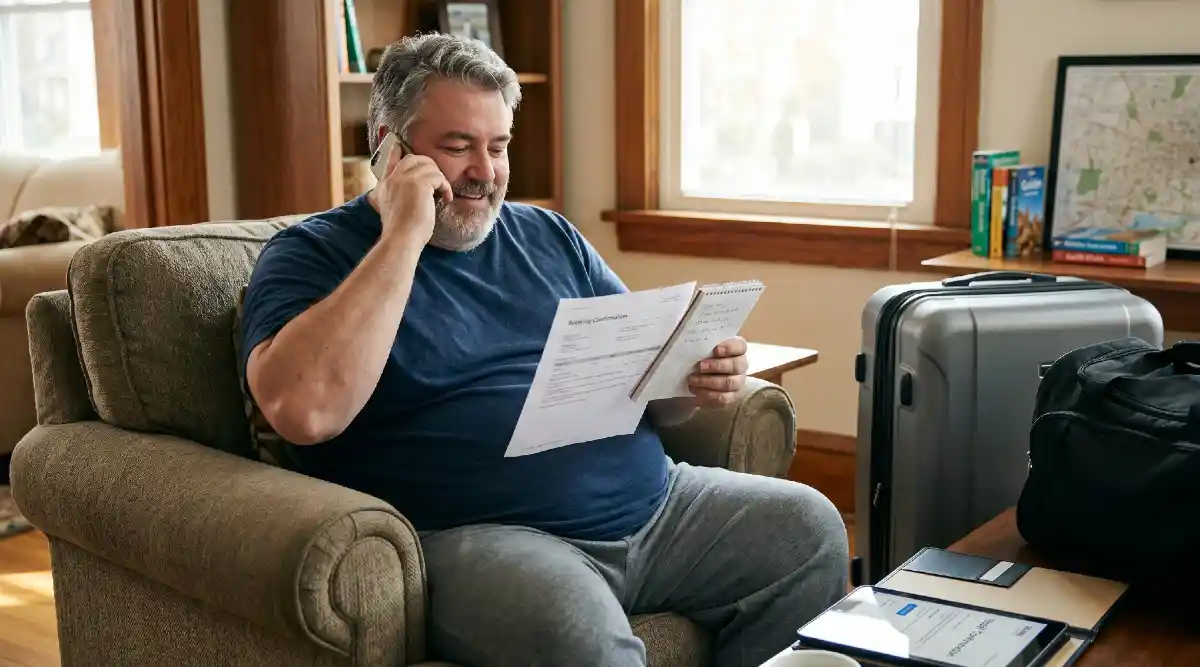
The hotel’s direct number not the 1-800 booking line is one of the most useful tools in travel planning that almost nobody uses. Staff at the property itself can actually action requests. Central reservation lines mostly just take notes.
One five-minute call, made two to three days before arrival, handles all of this:
- Bed frame confirmation ask “Can you tell me what type of bed base is in that room is it a solid platform or a slatted frame?” Simple, practical, no explanation needed
- Room placement request a ground-floor room or one close to the elevator by saying “I’d prefer a room that doesn’t require a long walk from the elevator is that something you can note on the reservation?” Most hotels will do this without hesitation
- Bathroom setup ask “Does the bathroom have a walk-in shower or grab bars installed?” framed exactly that way, as a logistics question, not a medical one. Many standard rooms have these features and they simply aren’t listed online
Nothing about these questions signals anything other than a traveler who knows what he wants. Hotels get calls like this regularly from people with luggage concerns, mobility preferences, and sleep sensitivities.
Write down the name of the person you speak with. Confirmation at check-in goes smoother when you can say “Maria noted this on the reservation” than when you’re starting the conversation cold with whoever is at the front desk.
Rental Cars, Trains, and Buses: The Hidden Sizing Issues Most Travel Guides Ignore Entirely

“Full size” on a rental car booking page refers to the vehicle class, not the cabin dimensions. Two full-size cars from different manufacturers can have dramatically different front seat width and steering wheel clearance and the booking site won’t show you that.
Skip the category and book the specific model instead. Search the car model name plus “front seat width” or “cabin space” before confirming. SUVs and minivans consistently offer more hip room and easier entry than sedans in the same rental tier, often at a similar price point.
Ground transportation has its own sizing traps worth knowing:
- Amtrak reserved seating in coach has fixed armrests on most routes Business Class seats are wider with more clearance and cost only marginally more on many corridors
- European trains vary widely Eurostar and TGV first-class seats are noticeably wider than standard, while regional trains often have bench-style seating with no armrest issue at all
- Priority seating on city buses sits directly behind the front door, has no fixed armrests on either side, and is legally designated for anyone who needs it that includes you, no medical reason required
- Rideshares let you request the vehicle type electing SUV in the app takes about three extra seconds and gives you a completely different entry and seating experience than a standard sedan
Getting the flight right and then white-knuckling every car ride and train leg defeats the purpose. These fixes are small. The difference they make isn’t.
What to Pack That Has Nothing to Do With Clothes
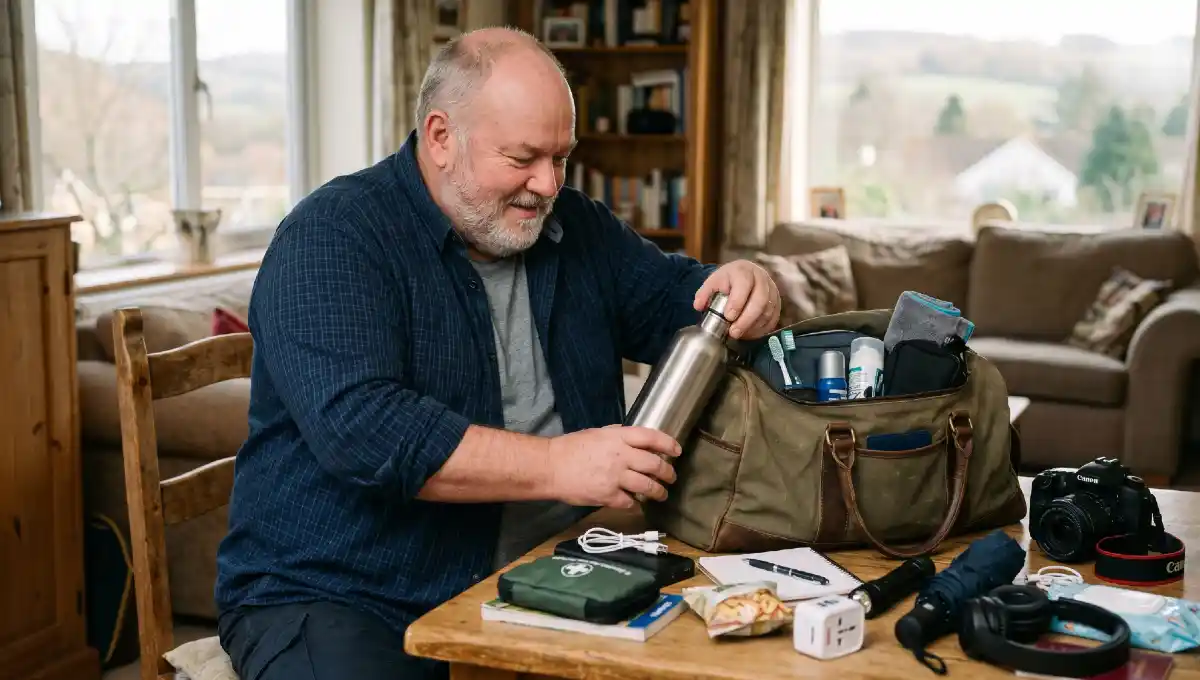
Chafing on a walking-heavy trip will sideline you faster than a delayed flight. Anti-chafe balm Body Glide is the most widely available brand weighs nothing, costs under $10, and belongs in every bag regardless of destination.
Everything else on this list solves a specific problem that standard packing guides don’t think to mention:
- Your own seatbelt extender around $20–$30 online, FAA-approved, eliminates the onboard request entirely and works on most US carrier buckles if you verify the fit before you travel
- A compact lumbar cushion lower back pressure builds differently on larger frames during long haul flights; a small inflatable lumbar roll fits in a jacket pocket and changes the last three hours of a long flight significantly
- Anti-chafe balm thighs, underarms, and anywhere fabric meets skin repeatedly on warm-weather or high-step-count days; reapply mid-day, not just at the start
- A collapsible trekking pole uneven cobblestones, long airport terminals, and hilly city walking all put different stress on knees and ankles at higher body weight; a single collapsible pole folds to carry-on size and adds real stability without signaling anything medical
- A small microfiber towel hotels in warmer climates or budget tiers often provide thin towels; having your own means one less friction point after a long travel day
None of these items are heavy. None take meaningful space. Each one addresses something that will quietly affect your trip if it isn’t there.

Hello there! I’m Jesse Joe, the author and editor behind SolganGenius. I’m thrilled you’ve stopped by, and I can’t wait to share with you the essence of what this platform is all about.
I’m a writer, social media enthusiast, and a firm believer in the power of words. I’ve always been fascinated by how a simple phrase or slogan can capture an emotion, convey a message, and even change perspectives. Learn More