

Here's a fact that surprises almost everyone: many retirees finish retirement with a bigger balance than the one they began with. Not because they picked great stocks, but because they were afraid to spend. The retirement spending gap is the quiet reason seven-figure portfolios keep growing long after the paychecks stop.
The usual story is running out. The balances tell a different one: they hold steady and often climb. That gap between what your money could safely support and what you actually withdraw is the subject of everything below, and it has a real cost in trips not taken and doors not replaced.
This list walks through why the gap exists, what a $1 million portfolio can genuinely support, and the steps that turn a growing balance into spending you can enjoy without lying awake over it.
Quick Tips Before You Start
Write your goals first
List the experiences and legacy you want before you touch a withdrawal rate.
Stress-test the plan
See what historic downturns would have done to your spending, not just average returns.
Keep a cash bucket
Set aside enough liquid money to avoid selling investments in a down market.
Review annually
Check your withdrawal level, portfolio drift, and any changes in guaranteed income.
Ask about assumptions
Request the withdrawal rate your adviser recommends and the assumptions behind it.
1. Retirees Often Finish Richer Than They Started

The story you expect is running out. The balances say something different: plenty of ordinary savers close out a 30-year retirement holding more than they opened it with, and they didn't get there by picking brilliant investments.
It's fear of spending that does it. Withdrawals stay small, so the portfolio keeps compounding in the background year after year.
Which leaves an uncomfortable reading. A balance that grows through retirement isn't proof your plan was safe. It's evidence you spent less than you could have.
💡 Tip: If your balance has grown for several years, treat that as a signal to review your spending, not as a badge of safety.
| Approach | Annual spending | Withdrawal rate | What has to be true |
|---|---|---|---|
| Scenario A: 8% return, 3% inflation | $61,000 | 6.1% | 30-year retirement, spending rises with inflation, no spending smile |
| Scenario B: 7% return, 4% inflation | $49,000 | 4.9% | Same 30 years, lower returns and higher inflation |
| 4% rule through history (1870–present) | 4% of starting balance | 4.0% | 60/40 portfolio, withdrawals each year; most finish with more than they started |
2. The Real Problem Is the Consumption Gap

That growing balance has a name, and once you hear it you'll start seeing it everywhere. It's the consumption gap: the difference between what your portfolio could safely support and what you actually spend each year.
Retirement hands you plenty of adjustments — a new daily rhythm, a lost sense of purpose, social contact you have to rebuild, a spouse home all day. Most of those get sorted within a year or two. The spending gap just quietly compounds for twenty.
Put a number on it. On $1 million, the distance between a 4% withdrawal ($40,000) and a 6.1% withdrawal ($61,000) is $21,000 a year. Stretch that over 20 years and you're looking at $420,000 of spending you never did.
3. Retirees Underspend Even Through Bad Markets

This isn't a bull-market artifact. Research published in the Journal of Financial Planning found that retirees spend far less than the theory says they could — and that holds even when returns are poor.
The study looked straight at 2000-2008, a brutal stretch for any portfolio. Wealthier retirees' assets still grew through it. A lot of them simply kept saving in retirement; the habit didn't switch off when the paychecks did.
In that research, wealthy meant roughly $700,000 or more. If you're near that line, you're inside the group the data describes, not standing outside it.
Here's the catch that makes it matter: the 4% rule was never a ceiling, and plenty of people treat it like one anyway. A household with $800,000 drawing 3% is pulling $24,000 a year while their own plan, on the numbers in this article, could justify closer to $48,000.
That's a quiet $24,000 a year forgone out of caution, not necessity. And it tends to happen in the years when health, travel and energy are still on your side.
⚠️ COMMON MISTAKE
Don't take permission you haven't earned
This diagnosis applies to retirees whose guaranteed income covers the essentials. If Social Security and pension fall short of your basic bills, the portfolio has to fill that gap first. Get that baseline right before you loosen anything.
4. Two Forces Drive It: Habit and Uncertainty

Two forces pull in the same direction: the saving habit and plain uncertainty.
You built the money by forgoing things, so a withdrawal now feels like a violation of who you are, not just a line on a statement. Layer on uncertainty — you don't know how long you'll live, costs could double or triple across 30 years, and a bad run of early returns can wreck the sequence — and holding back starts to feel like prudence.
One couple in their mid-70s had about $7 million plus a pension covering every expense. They asked whether they could afford a new front door. They could have bought a hundred.
One caveat, and it's the important one: this diagnosis doesn't apply to someone whose guaranteed income fails to cover essentials. If that's you, don't take permission from any of this — the gap is a problem for people who have already cleared their basics.
💡 Tip: If you've saved automatically for decades, set up an automatic monthly 'spend' transfer to break the habit in reverse.
5. A $1 Million Portfolio Supports 6.1%, Not 4%

Picture the moment you're sitting at the kitchen table with a statement in front of you, wondering whether a $50,000 year is allowed. On these numbers, it is.
Take $1 million in a 60/40 mix over a 30-year retirement at 8% average return and 3% inflation. To land at zero, you could spend $61,000 a year, rising with inflation — a 6.1% withdrawal rate. The part that lands: you wouldn't touch principal for the first 17 years.
Pessimistic case? Use 7% returns and 4% inflation. Then $49,000 a year works, a 4.9% rate, with principal untouched until year 18. The 8% isn't a guess — a 60/40 portfolio has returned slightly over 8% annualized across the past 40 years. Neither scenario uses a spending smile, so spending simply rises with inflation.
At a Glance
6. History Says 4% Withdrawers Usually Double Their Money
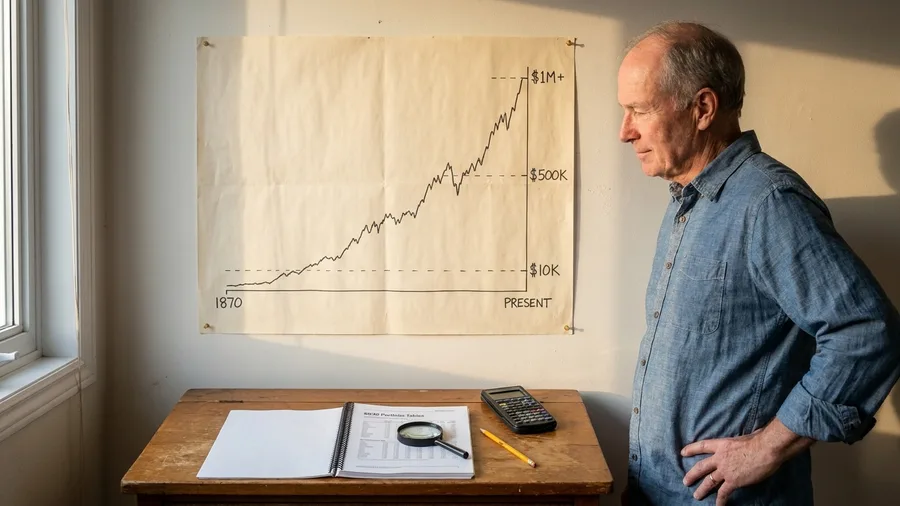
So the math says you can spend, but that only matters if history supports drawing at that level through the ugly years too. This is where the long view earns its keep.
Run Monte Carlo testing on a 60/40 portfolio's market data all the way back to 1870, pulling 4% each year and raising it with inflation. In 23 scenarios your starting wealth more than doubled. In over two-thirds of scenarios, doubling or better was the result. That counts depressions, wars and the 1970s inflation mess.
And the tail end is stranger still: finishing with five times your starting wealth is more likely than finishing with less than you began. Five times.
So be honest about which camp you're in. A deliberate legacy pile, money you intend to leave, is a fine reason to underspend, and nobody should talk you out of it. An accidental pile, one that grew because you couldn't bring yourself to touch it, is a cost dressed up as prudence.
Deliberate vs. accidental underspending
Deliberate
- You know the money is for a specific legacy.
- Your spending matches your written goals.
- You review withdrawals annually.
Accidental
- You don't know what the money is for.
- You spend from gut feel, not a plan.
- You haven't checked your withdrawal rate in years.
7. Most People Never Plan Their Withdrawals

But all that evidence doesn't help if you never actually decide anything, and that's the part almost everyone skips. The research points at three things that push retirees toward spending too little: fear, failure to plan, and low confidence in any strategy at all.
Of people who have thought about withdrawals, only 40% have an actual plan. Think about that for a second. The other 60% are improvising with a seven-figure balance.
The study describes what happens next, and it will sound familiar. Retirees shift from spending to preservation, get shortsighted, and start leaning on their gut for withdrawal decisions. You can see the loop: no plan makes you nervous, nervousness makes you keep it all, and keeping it all never gives you the evidence that spending would have been fine.
Here's the part to carry with you. An unwritten plan isn't a conservative plan. It's an arbitrary one, and you deserve better than a number that changes with your mood.
💡 Tip: Write down your current withdrawal rate and the assumptions behind it. If you can't, that's your first project.
8. Gut Feel Turns Every Withdrawal Into a Loss

Which is exactly why gut feel is so dangerous when a plan doesn't exist to fall back on. Every time you transfer money out, your balance drops, and the drop registers as a loss rather than as the plan doing its job.
That's loss aversion at work: losses feel about twice as painful as equivalent gains feel good. Pointed at withdrawals, the same feeling means that spending money feels like losing money, even when the amount is exactly what the plan calls for.
You can guess where that ends. Spending gets trimmed, then frozen entirely, and no plan ever said it should. Now picture the same withdrawal made inside a written strategy: the same dollars leave the account, but on the statement it reads as the plan working, not a loss. That shift in framing is the difference between a retiree who keeps spending and one who quietly stops.
Want a practical version? Open the year with the number already set. Say it's $55,000, taken in monthly installments of about $4,580. Then when the balance dips in June, the question isn't whether you've lost money. It's whether June's transfer went out.
🗺️ How to build a spending plan in four steps
Stress-test the portfolio
See what historic downturns would have done to your spending.
Set guardrails
Define when and how much you'd adjust spending if markets fall.
Build a cash bucket
Set aside enough liquid money to avoid selling in a down market.
Review annually
Check withdrawals, portfolio drift, and changes in income or health costs.
9. Larger Accounts Pay Advisers More to Hold Back

And here's where that gut feel can get reinforced by the very person you hired to help. You're sitting across the desk, the account statement showing a seven-figure balance, and you ask the question you've been dreading. The answer comes back: about 2% a year, safe.
One client heard exactly that from a previous adviser. Meeting after meeting, they simply couldn't believe they were allowed to spend more. But there's a structural reason this advice keeps surfacing: larger accounts generate higher fees. Underspending is, quietly, profitable for the adviser, and your balance staying plump keeps the relationship sweet.
That doesn't mean most advisers are acting in bad faith. It does mean the incentive exists, and you should know it's in the room.
So ask for three things: the withdrawal rate they recommend, the assumptions behind it, and how that rate would change if the next decade looks like 2000 to 2009. A good adviser will welcome the question. A nervous one will tell you something.
From saver to spender: what to expect
10. Purpose First, Then a Plan, Then Confidence

That's the question that needs answering before any of the numbers really click, and it comes down to three things in order: purpose, a plan, and confidence.
Purpose goes first because the arithmetic is meaningless without it. So ask yourself, honestly: what is this money for? Leaving a large inheritance is a completely legitimate answer, as long as it's genuinely the goal and not a comfortable excuse.
If it isn't the goal, price the skip, because it isn't free. Fewer trips to see the grandchildren. The dream vacation never booked. The backyard left unfinished. Help with a first house withheld. And the constant low hum of money anxiety, which is its own cost.
Then sit with one question. If not now, when?
11. An Annuity Buys Confidence, Not Maximum Wealth

That is why the guaranteed floor keeps coming up: once you have a plan you trust on paper, the only thing left that stops you spending is the fear of the market itself. Research on real retirees found something striking: the average annuity holder spends twice as much as someone with a similar invested portfolio. That gap is the confidence dividend, and it is not small.
The trade is honest. The portfolio owner ends up richer on paper; the annuity owner feels more secure, and feeling secure enough to actually spend is a return too. It just does not show up on a statement.
An annuity suits the retiree whose anxiety survives a good plan and who needs a guaranteed floor. It does not suit someone who has not yet defined spending goals, because annuitizing before that locks in the wrong number for decades. Define the budget first, then decide what needs guaranteeing.
If you are considering one, get quotes from several insurers and compare the monthly payout against what the same money would generate inside your own plan. A $200,000 quote paying $1,050 a month is a 6.3% payout; ask yourself whether your plan needs the guarantee more than the flexibility.
12. Guardrails Beat Pass/Fail Success Probabilities
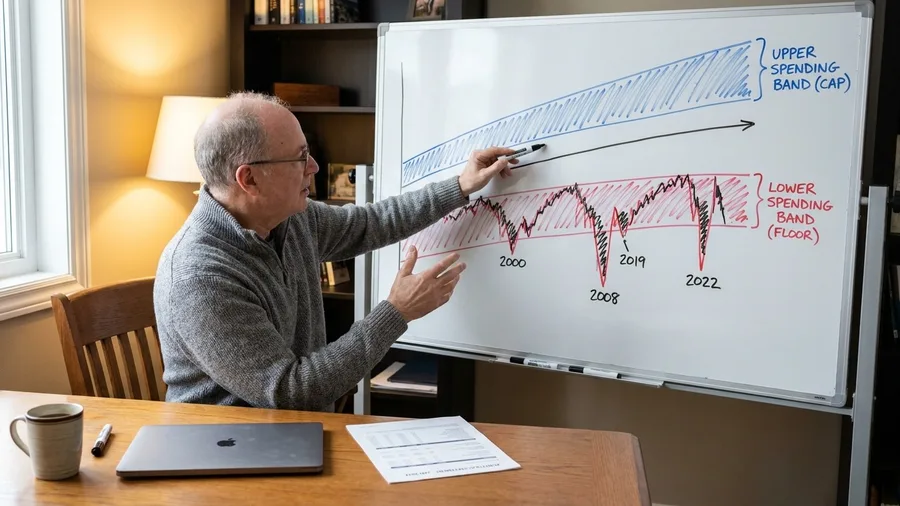
Start with a stress test: run your portfolio against historic downturns and see what each one would have done to your spending. Then build in the flexibility to adjust when markets fall.
That willingness to adjust is exactly what lets you spend more overall than the fixed inflation-growing scenarios from the $1 million example. Probability-of-success framing fails because it treats retirement as pass or fail, when it is adaptable and dynamic.
A good guardrails plan outputs three things: when a change is needed, how big the adjustment is, and how likely it is you will ever need one. Plain rules, decided in advance.
💡 Tip: Ask your adviser to show the guardrail thresholds in writing, not just the probability of success.
13. Cash Buckets Keep You Out of Down Markets
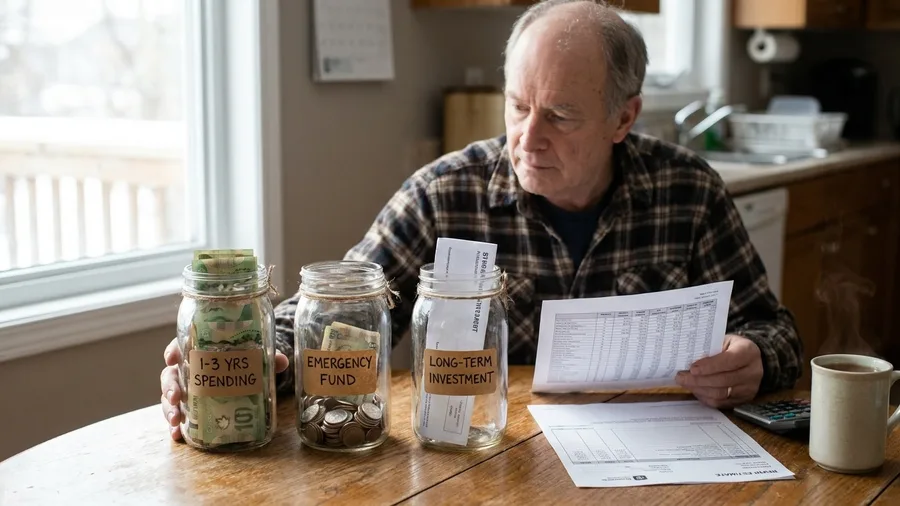
Picture the month a bad market hits, the car dies, and the only way to cover it is selling investments at the bottom. That is the moment a cash bucket is designed to prevent.
Liquidity tiering simply means setting aside enough liquid money, typically one to three years of spending, so bills get paid without touching the portfolio in a down market. It is the difference between choosing when to sell and being forced to.
A dynamic income strategy works without buckets, but buckets are what make people confident enough to keep spending. They sit alongside the guardrails, not in place of them, so the flexible plan still runs in the background.
Size the bucket to your comfort level. On a $61,000 spending plan, two years of cash is about $122,000 held aside; more cash means less growth, but far more peace of mind when the headlines turn ugly.
14. Reviews Are What Turn the Plan Into Peace of Mind

A review checks three things: your withdrawal level against the plan, drift in the portfolio, and any change in guaranteed income or health costs. Put a date on the calendar and keep it.
That calendar date removes the need to make a fresh emotional decision every month. You know when you will look and what you will look at.
Pre-agree the action too: what you will do in a downturn before the downturn happens. Each review should produce something in writing, so the next one has a baseline to compare against.
15. Write Down the Goals, Then Build the Income Plan

With the review cadence settled, the first real task this week is to write down your spending goals. Which experiences matter most? What legacy do you want? What would you do if you let yourself spend freely?
Then convert those goals into an income plan or a full financial plan, not the other way round. If an adviser fits your budget, bring your goals list and a recent statement to the first meeting. An afternoon for the list, a few weeks for the plan.
💡 Tip: Set aside two hours this week for the goals list. The income plan can follow in the next month.
Where Social Security, Pensions and Taxes Fit
Here's where the whole picture finally settles into place: the portfolio isn't doing all the work. Guaranteed income does a lot of it, and once you see that, the withdrawal numbers stop looking scary.
Take a couple with $2,900 a month from Social Security and a $1,100 pension. Against a $5,800 monthly budget, that's $4,000 of the basics already covered before a single share is sold. What's left is $1,800 a month for the portfolio to fund.
That's $21,600 a year. On a $1 million portfolio, it's about 2.2% – well below anything that portfolio can realistically support. The same million that looked stretched at 6% suddenly looks almost idle.
This is the quiet arithmetic nobody runs. Guaranteed income covering essentials is what makes a more aggressive withdrawal rate safe for everything else. When your basics are already paid, the portfolio is funding the fun, not survival – and fun money can flex when markets don't cooperate.
Two more lines belong in the plan. Taxes and required minimum distributions are a real budget item the flat scenarios never modeled, so check the current IRS rules and sit down with a tax preparer rather than guessing. And health costs deserve a genuine line item built from actual plan and Medigap quotes, not a percentage pulled from thin air.
Get those numbers before you set the spending plan. Then the plan is built on what's true, not what's feared.
Frequently Asked Questions
Is it safe to spend 6% of my portfolio each year?
It can be, depending on your time horizon and market returns. The $1 million example shows 6.1% works for 30 years at 8% returns and 3% inflation, but a dynamic plan with guardrails gives more flexibility.
What is the consumption gap in retirement?
It's the difference between what your portfolio could safely support and what you actually spend. Research shows many retirees spend far less than they could, often out of habit or uncertainty.
Do I need an annuity to feel comfortable spending?
Not necessarily. An annuity can provide a guaranteed income floor that makes spending easier, but a well-built plan with guardrails and a cash bucket may be enough. Define your goals first.
How often should I review my retirement spending plan?
Once a year at minimum, plus after any major life change. A review checks your withdrawal rate, portfolio drift, and changes in income or health costs.
What if my Social Security and pension don't cover my essentials?
Then the portfolio has to fill that gap first. Get your baseline right before loosening spending. The consumption gap data applies most to retirees whose guaranteed income covers the basics.
The decision rule for your seven-figure balance
If Social Security and pension already cover your essentials, you're almost certainly underspending. Write your goals and get a guardrails plan.
If you're anxious enough that a plan on paper still won't loosen your wallet, look at a partial annuity for the confidence. It's a trade, not a failure.
If you're in the few-hundred-thousand range, flexibility is the whole game. Guardrails and a cash bucket matter more than a precise withdrawal rate.
Before you move any money, write down your spending goals and the permission question. That first physical act is what starts the shift.
Start with two hours and one sheet of paper
Write down what your money is for and what you'd do if you gave yourself permission to spend. That list is the first step to closing your retirement spending gap.

Hello there! I’m Jesse Joe, the author and editor behind SolganGenius. I’m thrilled you’ve stopped by, and I can’t wait to share with you the essence of what this platform is all about.
I’m a writer, social media enthusiast, and a firm believer in the power of words. I’ve always been fascinated by how a simple phrase or slogan can capture an emotion, convey a message, and even change perspectives. Learn More