

You see an older man spending most evenings at home, and a worrying thought creeps in. Has retirement made him lonely, withdrawn, or unhappy? The concern grows when weekends pass without outings, crowded dinners, or constant social plans.
Yet judging men over 60 who love staying at home by how often they leave the house can be misleading. Chosen solitude is very different from unwanted isolation.
For many older men, home becomes a sovereign sanctuary where noise fades, obligations shrink, and time finally feels personal. The key is learning when staying home brings peace and when it signals a deeper problem.
1. Why Being Comfortable Alone Can Feel Like Freedom After 60

One of the biggest mistakes families make is assuming that an older man sitting alone must feel lonely. Those two experiences are not the same. A person can spend hours alone and feel content, while another person can sit at a crowded dinner table and feel painfully disconnected.
The National Institute on Aging describes loneliness as a feeling of being alone or separated, while social isolation refers more to having limited social contacts and interaction. That distinction matters because someone’s emotional experience cannot be judged from the number of people standing around him.
For a man who spent decades answering phones, meeting deadlines, commuting, attending gatherings, raising children, and solving problems, an empty afternoon may feel less like emptiness and more like relief. There is nobody asking for anything. His time belongs to him.
He might make coffee and sit on the porch. He might spend three hours repairing an old radio, then watch a baseball game without checking a clock. The pleasure comes from having control over the pace of the day.
That does not prove he has reached some final stage of emotional wisdom. People are too different for a claim that broad. But it does mean that enjoying solitude should not automatically be treated as a symptom that needs fixing.
Solitude and loneliness are not the same
| Healthy chosen solitude | Unwanted loneliness |
|---|---|
| He wants time alone | He wishes he had someone to call |
| He usually feels calm at home | He often feels empty or forgotten |
| He still values certain relationships | He feels disconnected from almost everyone |
| Hobbies continue to interest him | Activities feel pointless |
| He can leave home when he wants | Fear or distress keeps him inside |
The real question is not, How many hours does he spend alone? The better question is, Does the life he has chosen still feel meaningful to him?
2. Why Older Men Often Become More Selective About People

A man in his 30s may accept an invitation because he wants contacts, opportunities, information, status, or new experiences. A man in his 70s may look at the same invitation and think that a quiet dinner with one longtime friend sounds much better.
Psychologist Laura Carstensen’s socioemotional selectivity theory helps explain this shift. Stanford describes the theory as a change in motivation that can occur as people become more aware of time and begin placing greater value on emotionally meaningful goals.
This does not mean everyone suddenly becomes antisocial after 60. It means the quality of an interaction can start mattering more than the quantity.
Stanford’s Center on Longevity has described how smaller social networks in later life can sometimes reflect selective pruning. Less meaningful relationships fade while emotionally rewarding ones remain.
That can explain the senior man who no longer wants to attend every neighborhood function but still looks forward to lunch with an old coworker. He may stop answering group invitations while calling his brother every Sunday evening.
From the outside, his social life looks smaller. From his point of view, it may feel better.
What may change after 60
| Earlier priority | Later priority may become |
| Meeting more people | Spending time with valued people |
| Expanding a network | Protecting meaningful relationships |
| Attending every invitation | Choosing gatherings carefully |
| Seeking novelty | Choosing familiar pleasures |
| Social approval | Personal satisfaction |
There is still a line worth watching. Selectivity means choosing people carefully. Isolation means meaningful relationships start disappearing too, especially when the person does not want that loss.
3. Why Home Feels Better When the Pressure to Perform Fades

Many men spend their adult lives attached to roles. They are the manager, provider, employee, father, problem solver, driver, organizer, handyman, or person everyone calls when something goes wrong.
Retirement can change several of those roles almost overnight. The calendar gets quieter, workplace demands disappear, and adult children may need less daily support.
For some men, that change creates an identity problem. For others, it creates a huge sense of breathing room.
At home, there may be no need to dress for anyone, impress anyone, make conversation, hit a target, or prove that the day was productive. A man can read until noon, fix a cabinet after lunch, then sit outside for an hour without needing to explain why.
That ordinary freedom can be psychologically valuable. The house stops being the place he returns to after life and becomes one of the main places where life happens.
But retirement is not automatically peaceful. The National Institute on Aging notes that depression can affect older adults, and social isolation and loneliness are associated with higher depression risk.
A sudden loss of interest in friends, food, hobbies, grooming, or ordinary pleasures deserves more attention than simply preferring a quiet afternoon.
And here’s why that matters. Freedom from unwanted roles feels very different from losing the desire to participate in anything at all.
4. Why Quiet Can Give a Man Space to Think About What Matters

Later life often brings questions that a busy workweek can keep buried. What was worth all that effort? Which relationships mattered most? What does a good day look like now?
Stanford’s research on emotional aging supports the broader idea that priorities can shift when people view time differently. Emotionally meaningful experiences can gain importance while activities done mainly for future payoff can lose some of their pull.
A quiet home gives those questions somewhere to land. A man may start reading history again, return to prayer, organize old photographs, write down family stories, or simply spend more time thinking.
None of these activities look dramatic from the driveway. Yet they can make a day feel rich.
The key is what happens after reflection. Healthy reflection can create clarity, gratitude, acceptance, or a renewed sense of purpose. Constant rumination that leaves someone hopeless or trapped is something different and may deserve professional support.
Home therefore works best as a sanctuary when it provides space for thought without becoming a place where difficult thoughts endlessly circle.
A favorite chair, good natural light, familiar books, music, photographs, and a calm room can all support this slower pace. The room does not need to look impressive. It needs to feel like his.
5. Why Hobbies Make Staying Home Feel Full Instead of Empty

Watch what a home centered older man actually does before deciding he is doing nothing. His days may contain far more activity than outsiders notice.
He may garden before breakfast, restore furniture in the afternoon, cook dinner from scratch, research family history, practice guitar, care for birds, organize tools, paint, read, write, repair watches, work puzzles, or build things in the garage.
The National Institute on Aging encourages older adults who feel isolated or lonely to connect with others and take part in meaningful, productive activities they enjoy. That wording matters because useful activity and social activity do not always have to look the same.
A hobby can return something that retirement sometimes removes: visible competence.
At work, a man may once have been known as the person who could solve problems. After retirement, woodworking, gardening, cooking, or repair work can give him another place to see skill turn into a real result.
A tomato grows. A chair gets repaired. A bookshelf fills. A difficult song finally sounds right.
There is no boss judging the result. There may be no audience at all.
That can be part of the pleasure.
What a home sanctuary can contain
| Space | Possible purpose | What it can provide |
| Garage | Repair or woodworking | Skill and concentration |
| Garden | Growing plants | Routine and visible progress |
| Kitchen | Cooking | Creativity and independence |
| Study | Reading or writing | Quiet mental activity |
| Living room | Music and films | Rest and enjoyment |
| Porch | Coffee or conversation | Calm connection with the outdoors |
A homebody with interests is very different from a man who sits through the day because nothing appeals to him anymore. Look at engagement, not simply location.
6. Why Control Over His Home Can Matter More Than Going Out
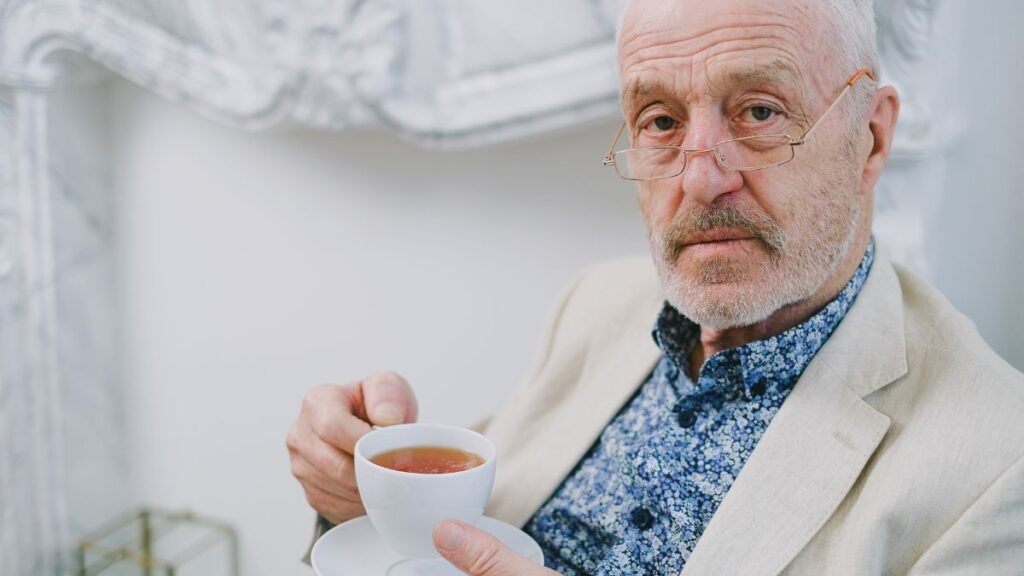
Leaving home means giving up a certain amount of control. There is traffic, noise, uncomfortable seating, crowds, waiting, weather, bright lights, unfamiliar bathrooms, schedules, and other people’s preferences.
At home, nearly all of that can be adjusted.
The chair is where he wants it. The television volume is right. Coffee is made the way he likes it. The thermostat is familiar. Nobody cares if lunch happens at 1:17 instead of noon.
For some senior men, this control is a major part of what makes home appealing. It reduces small irritations and lets ordinary routines unfold without negotiation.
That does not mean a house literally regulates a person’s nervous system or guarantees emotional calm. Those claims would go beyond the evidence. It simply means a familiar setting can remove many unwanted demands.
Turn the house into a calmer sanctuary
The home decor side of the sovereign sanctuary does not require a major remodel. Calm often comes from reducing friction and making frequently used rooms easier to enjoy.
Sherwin Williams named Universal Khaki SW 6150 its 2026 Color of the Year and describes it as a warm neutral centered on simplicity and comfort. Benjamin Moore’s 2026 selection, Silhouette AF 655, combines rich brown with charcoal notes and can suit a deeper study or reading room.
Farrow and Ball also recommends muted neutrals for calm living areas and lists soft shades such as Skimming Stone among its bedroom selections. These are style ideas rather than psychological prescriptions, so the best color remains the one the person actually enjoys living with.
A simple sanctuary might include:
- A supportive chair beside natural light.
- One strong reading lamp instead of harsh overhead light.
- Closed storage for visual clutter.
- A table within easy reach for books and drinks.
- Photos and objects with personal history.
- A hobby area that can stay set up between sessions.
- Curtains or rugs that soften unwanted sound.
If choosing paint feels difficult, Sherwin Williams’ Color Expert app lets users preview colors in their space, while Benjamin Moore’s Personal Color Viewer allows people to upload a room photo and test shades digitally.
The goal is not to trap someone indoors. The best sanctuary makes home pleasant while leaving the front door psychologically easy to open.
7. How to Tell Healthy Solitude From Harmful Isolation

This is the part families should pay closest attention to.
Do not judge an older man’s wellbeing by the number of evenings he spends at home. Judge it by choice, mood, function, relationships, and interest in life.
The CDC says social connection supports physical and emotional health, while social isolation and loneliness are associated with increased risks that include depression, anxiety, heart disease, stroke, dementia, and earlier death.
The National Institute on Aging also reported that about one in four adults age 65 and older experience social isolation. That makes it important to respect chosen solitude without ignoring real isolation.
An NIA funded analysis published in 2025 found loneliness was associated with a 31 percent higher risk of dementia. That finding concerns loneliness, not simply staying home, and it should never be used to frighten a contented man into having a busier social calendar.
Signs his sanctuary is probably working for him
He chooses to spend time at home and can still enjoy going out when there is something he cares about. His interests remain alive, and he still has some contact with people he values.
He eats, sleeps, manages his home, handles ordinary responsibilities, and takes pleasure in familiar routines. Most important, when asked about his life, he generally says he likes it.
Signs something may have changed
Pay more attention if he repeatedly says he feels lonely but believes nobody wants him around. Notice if he stops answering people he used to enjoy or gives up hobbies that once mattered to him.
Other concerning changes can include persistent sadness, hopelessness, neglect of basic needs, major changes in sleep or appetite, or loss of pleasure in nearly everything. The NIA advises older adults experiencing depression symptoms, loneliness, or social isolation to seek connection and appropriate support.
How family members can help without trying to fix him

Do not begin with, “You need to get out more.” That starts from the assumption that his preferred lifestyle is wrong.
Try to learn what his life feels like from the inside. Ask about the garden, watch a game together, bring dinner, help with a project, or invite him somewhere specific that matches his interests.
Connection does not have to mean a crowded calendar. The CDC defines social connectedness in terms of belonging, support, and feeling valued, which means one strong relationship can matter more than forcing a person into social activity he dislikes.
Respect the sanctuary. Just make sure it still has a door.
I’m Austin Becker, an advocate for living life with intention and resilience. I write for men who are actively navigating life’s major transitions, tackling the realities of reinvention and finding renewed purpose with grit and honesty. I believe that personal growth doesn’t have a deadline it’s about continuously gearing up for the chapters that matter most.
Through my work, I aim to strip away the clichés of modern manhood, offering practical, no-nonsense insights on health, mindset, and legacy for those who want to move forward with strength and clarity.