

Getting older can make your health surprisingly hard to judge. You may take three prescriptions and still walk several miles, while someone else may take very little medicine but struggle to climb a flight of stairs.
That is why your number of diagnoses does not tell the whole story. What often matters more in retirement is how easily you move, how much help you need, how well you recover from normal activity, and how much your health controls your daily choices.
The 6 retirement health tiers below offer a simple way to look at those changes. This is not an official medical grading system, but it can help you spot where your independence is strong and where it may need more support.
1. Your Body Still Gives You Plenty of Freedom

At this level, your health rarely decides what you are allowed to do. You might have arthritis, high blood pressure, high cholesterol, or another condition, but it is controlled well enough that your normal life remains mostly unchanged.
You can shop, cook, manage appointments, take care of your home, and handle personal care without another person’s help. A long day may leave you tired, but normal activity does not usually feel like a major physical challenge.
You may also walk regularly, exercise, garden, travel, or spend hours outside without worrying much about your body. The important sign is not that you feel young, but that your health still gives you plenty of choices.
CDC guidance says adults age 65 and older who are able should aim for at least 150 minutes of moderate activity each week. The guidance also recommends muscle strengthening on at least two days and activities that improve balance.
Signs Number 1 May Fit You
• You can comfortably walk through a large store.
• You can get out of a normal chair without another person’s help.
• You can carry ordinary grocery bags.
• You can climb stairs without needing another person.
• You manage bathing, dressing, meals, and transportation yourself.
• You recover fairly well after an active day.
There is still something worth watching at this stage. Being strong today does not guarantee that the same strength will remain without effort, especially if retirement has made daily life much less active.
You may no longer walk through an office, climb workplace stairs, or carry things throughout the day. Replacing some of that lost movement can help protect the freedom you already have.
2. You Are Healthy but Starting to Adapt

At this level, you are still independent, but small adjustments have started slipping into your routine. They may seem so normal that you barely notice them at first.
Perhaps you make two trips with the groceries instead of carrying everything at once. Maybe you look for an elevator before taking the stairs, or you need a quiet afternoon after a busy morning.
Your body still lets you live on your own terms, but recovery may be slower than it used to be. Stiffness, minor pain, lower endurance, or reduced strength may influence how you organize certain days.
This can actually be an important time to act because you still have plenty of independence to work with. CDC guidance encourages older adults to combine aerobic movement, muscle strengthening, and balance activities rather than relying on walking alone.
Signs Number 2 May Fit You
• You are independent but heavy chores feel harder.
• Long walks are possible but require more recovery.
• You prefer elevators when both choices are available.
• You notice more stiffness after sitting.
• You avoid carrying very heavy items.
• You still manage your home and personal needs yourself.
Try to notice the difference between changing something because it is convenient and changing it because you physically cannot do it anymore. That difference can tell you a lot about where your health is heading.
You do not need to panic because climbing stairs feels harder at 70 than it did at 40. But a steady loss of strength, balance, or endurance deserves attention rather than being automatically blamed on age.
3. Health Problems Are Changing Your Routine
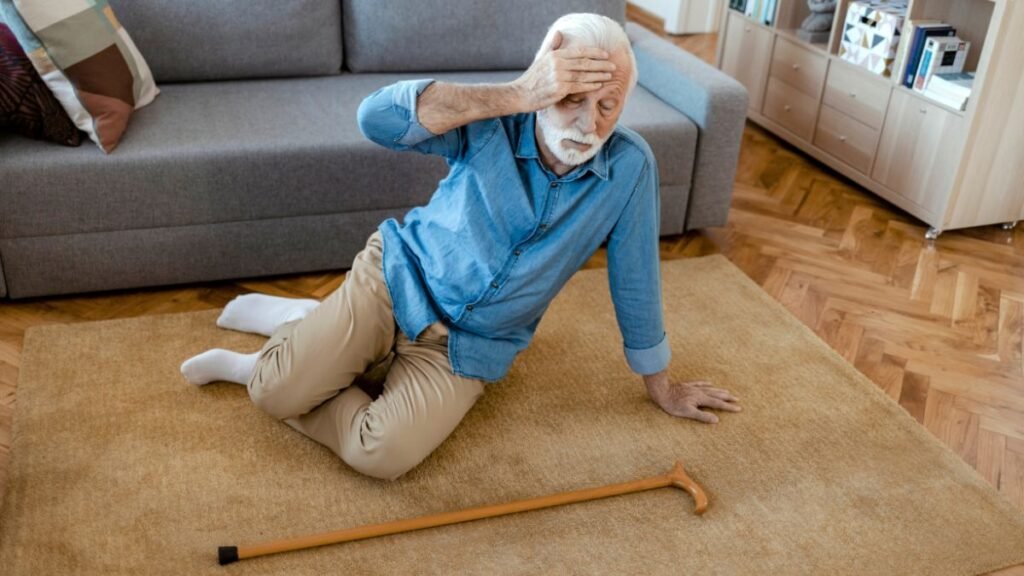
At this level, health is no longer sitting quietly in the background. It has started influencing where you go, how long you stay, and which activities you agree to do.
You may choose restaurants based on parking distance or avoid attractions with lots of stairs. You might turn down a long shopping trip because you know your knees, back, breathing, or energy level will make the day difficult.
You are still largely independent, which makes this level easy to dismiss. Yet there is an important difference between doing almost everything comfortably and doing everything through careful planning.
Signs Number 3 May Fit You
• Long walks require regular breaks.
• Stairs have become noticeably difficult.
• Pain changes some of your plans.
• You schedule your day around your energy level.
• You avoid some places because you fear falling.
• Medical appointments take more time than they once did.
• You still manage most personal care without assistance.
Falls deserve special attention here because they can quickly change someone’s confidence and independence. CDC reported in February 2026 that more than 14 million adults age 65 and older, about one in four, report falling each year.
A previous fall matters too. CDC information states that falling once increases the chance of another fall, which is one reason repeated falls should not simply be treated as an unavoidable part of getting older.
Tell your doctor about falls, near falls, new dizziness, or a growing fear of walking. Medication effects, eyesight, muscle weakness, footwear, balance, and hazards in the home may all deserve a closer look.
What Your Everyday Tasks May Be Telling You
| Everyday Task | Strong Independence | Starting to Change | Greater Support May Be Needed |
| Walking | Normal errands feel comfortable | More breaks are needed | Another person or aid is often needed |
| Stairs | Managed alone | Slow or tiring | Often avoided or requires help |
| Shopping | Done independently | Smaller trips feel easier | Someone else usually handles it |
| Cooking | Regular meals prepared | Simpler meals are preferred | Regular meal help is needed |
| Dressing | Independent | Takes more time | Physical assistance is needed |
| Bathing | Independent | Safety supports are useful | Another person helps |
| Medicines | Managed correctly | Reminders help | Someone else manages them |
| Transportation | Independent | Trips are becoming limited | Regular transport help is needed |
One difficult task does not automatically place you at a certain level. Look for patterns across several parts of daily life and watch whether those patterns are getting better, staying stable, or slowly becoming harder.
Changes over several months can be more useful than how you feel on one bad morning. Illness, poor sleep, stress, or an unusually busy week can temporarily make anyone feel less capable.
4. Your Independence Is Becoming Fragile

At this level, you may still describe yourself as independent, and in many ways you are. The difference is that keeping that independence now requires more planning, caution, equipment, or help from other people.
Shopping may be difficult because carrying bags hurts or leaves you exhausted. Cleaning, laundry, driving, cooking, yard work, and other household jobs may also be getting harder to manage alone.
The National Institute on Aging explains that aging at home can involve help with personal care, household chores, meals, shopping, transportation, and money management. Planning for these needs can make staying at home safer and more practical.
Signs Number 4 May Fit You
• Someone else handles heavy shopping.
• You regularly need help with housework.
• Driving has become difficult or limited.
• You have had several falls or near falls.
• Preparing full meals is becoming tiring.
• You use walls or furniture for extra balance.
• You avoid parts of your home because of stairs.
This stage matters because independence may still look strong from the outside while becoming fragile underneath. A bad fall, infection, medication problem, or hospital stay can suddenly make tasks that were barely manageable impossible for a while.
Home changes can also become useful here. The National Institute on Aging advises people who want to age at home to consider safety, access, and the activities they may need help performing.
Adding help does not automatically mean losing independence. Sometimes a handrail, safer bathroom setup, grocery delivery, cleaner, or transport service is exactly what allows someone to keep control over the rest of life.
5. Daily Life Now Depends on Regular Help

At this level, assistance is no longer something you need once in a while. It has become a normal part of getting through the week or the day.
A spouse, adult child, caregiver, neighbor, or professional may help with meals, medicines, transportation, bathing, dressing, cleaning, or movement. You may also rely on a walker, wheelchair, shower chair, or other equipment to stay safe.
The National Institute on Aging describes everyday personal care needs as activities such as bathing, dressing, grooming, eating, using the toilet, and moving from a bed to a chair. Help with several of these tasks is a strong sign that daily independence has changed.
Signs Number 5 May Fit You
• Someone regularly organizes your medicines.
• You need help getting into or out of the shower.
• Another person usually provides transportation.
• Meals are often prepared or delivered for you.
• Walking outdoors alone feels unsafe.
• A caregiver visits on a regular schedule.
• One or more personal care tasks require physical help.
At this point, health planning needs to go beyond medical appointments. You also need a realistic plan for who provides care, what happens when that person is unavailable, and which tasks are becoming too difficult for family members to handle alone.
There is no benefit in waiting for an emergency before discussing those questions. A simple backup plan can reduce stress for both the person receiving care and the people providing it.
Using support can sometimes protect independence rather than take it away. If grocery delivery saves your energy for bathing, cooking, seeing friends, or going to appointments, that service is helping you keep control over more important parts of your life.
6. Health Needs Shape Most of the Day

At this level, significant health or mobility needs determine much of the daily routine. Assistance may be required with several basic tasks, and another person may need to be available for long parts of the day.
Getting out of bed, moving to a chair, bathing, dressing, using the bathroom, or eating may require physical help. Some people may also need supervision because of memory problems or other conditions that affect safety.
The goal changes at this stage because pushing for complete independence may no longer be realistic or safe. Comfort, dignity, safety, connection, and preserving the function that remains become more important.
Signs Number 6 May Fit You
• Extensive personal care is needed every day.
• Significant mobility help is required.
• Another person needs to be nearby for safety.
• Several daily activities cannot be completed alone.
• Caregiving takes up a large part of the household routine.
• Professional home care or another care setting may be needed.
There is still room for movement and meaningful activity at this level, but the plan needs to match the person’s health and physical ability. A doctor, physical therapist, occupational therapist, or other qualified professional may help decide what is safe.
Some people can receive extensive support at home, while others may eventually consider assisted living, skilled nursing care, or another setting. There is no single choice that works for every family because health needs, money, housing, caregiver availability, and personal wishes can differ greatly.
The aim is not to prove that someone can remain at home at any cost. The better goal is to find enough support to make daily life safe, comfortable, and as meaningful as possible.
How to Work Out Your Number Today
Do not begin by counting prescriptions or birthdays. Start by thinking about what happens during a normal day, from getting out of bed in the morning to getting ready for sleep at night.
Focus on what you can actually do without assistance and what has quietly become harder. You are looking for changes in function, not trying to judge yourself against other people your age.
Ask Yourself These 10 Questions
- Can I get out of bed and out of a chair without another person’s help?
- Can I bathe and dress safely by myself?
- Can I prepare normal meals?
- Can I manage my medicines correctly?
- Can I shop for normal household needs?
- Can I walk around my home without holding onto furniture?
- Can I manage stairs when I need to use them?
- Can I get to appointments and other places safely?
- Have I stopped activities because I am afraid of falling?
- Do I depend on another person for basic tasks most days?
Do not worry if a few answers fall into different categories. Most people will not fit neatly into one box because health does not change in a straight line.
A person may have strong legs but struggle with medication management, while another may use a walker but handle every other part of life independently. The value of this exercise comes from spotting the areas where your independence has changed.

I’m Austin Becker, an advocate for living life with intention and resilience. I write for men who are actively navigating life’s major transitions, tackling the realities of reinvention and finding renewed purpose with grit and honesty. I believe that personal growth doesn’t have a deadline it’s about continuously gearing up for the chapters that matter most.
Through my work, I aim to strip away the clichés of modern manhood, offering practical, no-nonsense insights on health, mindset, and legacy for those who want to move forward with strength and clarity.