
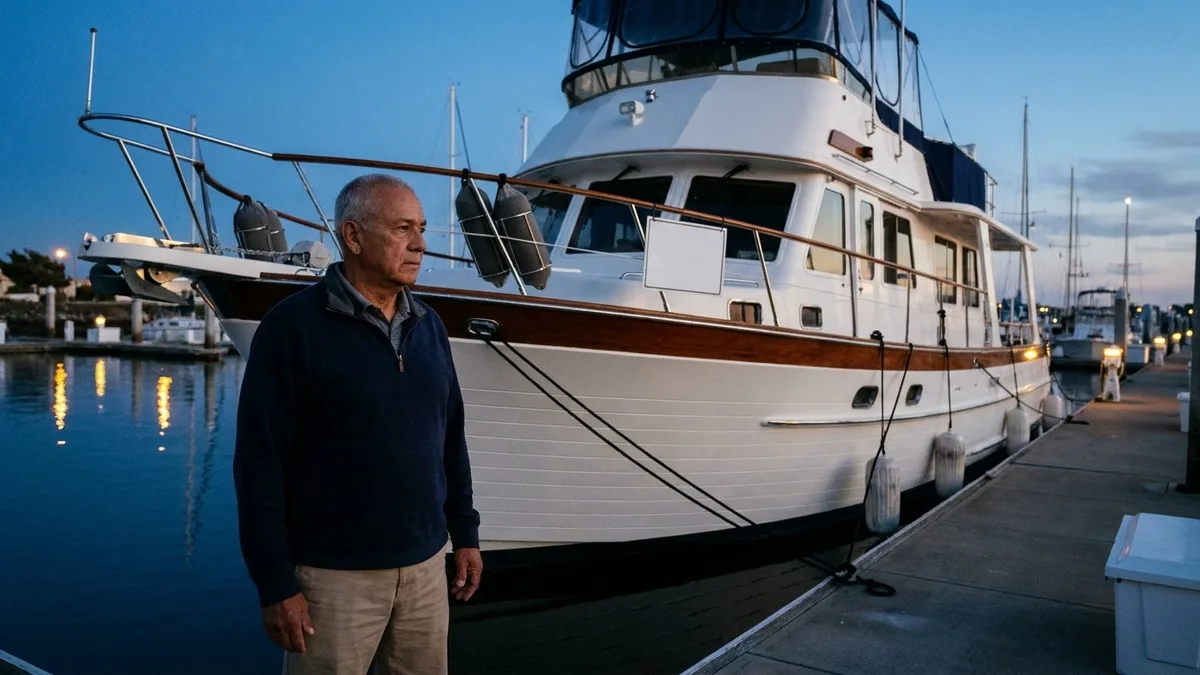
A two-year-old trawler is listed this morning at $30,000 below what the owner paid, low hours, fresh bottom paint, and still tied to the same dock it has known since day one.
That owner is not unlucky. Walk any brokerage this fall and you will run across his situation again and again: nearly new trawlers returned to market within a year, their owners accepting any offer a buyer will make just to put it behind them. The brokers have stopped being surprised.
Most retirees who buy a trawler for their retirement quietly regret it within a year, and the boat is almost never what let them down. What gets them is a short list of realities nobody mentioned before they signed: the annual cost that dwarfs the sticker, the daydream that gets used a dozen weekends, bodies that are not thirty anymore, a clean survey that hides a couple's doubt, and the handful of habits that separate the owners still cruising in year two from the ones already on the broker's website.
Quick Tips Before You Start
Diesel runs over $5 a gallon
Fuel dock prices carry a premium over the road, so plan every trip with that number in mind.
Measure the slip, not the dream
A 40-footer needs at least 40 feet of water and a marina that will take your beam and draft.
Add 10% of value every year
That is the rule for keeping a boat running, and it covers only the good years with no breakdowns.
Simple beats clever
One mechanical diesel and plain systems are cheaper to fix and easier to find parts for than a gadget-heavy helm.
Bring your partner to the dock
If they are not on board with the plan before you buy, they will not be on board after.
1. Annual upkeep dwarfs the purchase price
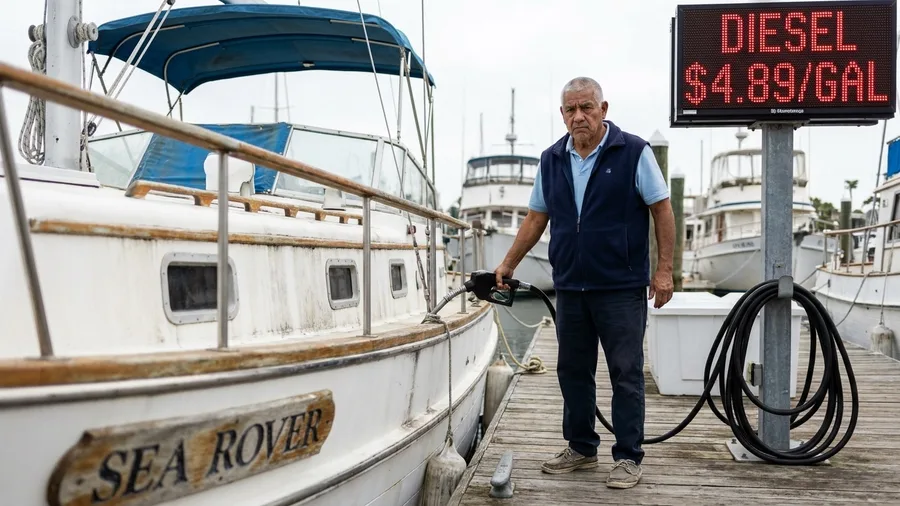
The price on the listing is not the number that hurts you. A $100,000 trawler is the cheapest thing you will ever buy, because that check is the last cheap day you and that boat will have together.
Start with the slip, since it comes every month whether you sail or not. A 40-footer runs $35 to $55 per foot per month inland, and $50 to $100 per foot anywhere near water people actually want to be. That is $600 a month on the cheap end and better than $2,000 where the pretty water is, before you ever turn the key.
Insurance adds roughly 1% to 2% of the boat's value every year, so about $2,000 on a $100,000 hull. And once a boat passes about 40 years old, many carriers will not write it at all, which is worth knowing before you fall for a classic. Then comes the annual haul-out and bottom job at $2,000 to $5,000, plus the old yard rule: a boat costs about a tenth of her value each year just to keep floating and running. On a $100,000 boat that is $10,000 in a good year, the year nothing breaks.
Real owner budgets show where the range lands. One Long Island owner puts his 40-footer at $12,000 to $15,000 a year before any real repair, and a Crogan 42 owner budgets a flat $20,000 and hopes to make December. Out in Washington, an owner pays $575 a month moorage, $2,100 a year insurance, and $1,500 for a single oil change at the yard, with diesel over $5 a gallon at the dock.
Add it up honestly and a $100,000 trawler costs $15,000 to $25,000 a year to own. Run that against a retirement budget before you write a deposit check, because the boat is the down payment and the upkeep is the mortgage. If the yearly number makes you flinch, that flinch is information.
💡 Tip: Write your own ten-year cost sheet before you make an offer. If the annual number makes you flinch, the boat is too big for your budget.
⚠️ COMMON MISTAKE
The sticker is not the cost
A $100,000 trawler can cost $15,000 to $25,000 a year to keep, and that is before anything breaks. Budget the annual number first, then decide what boat fits it.
2. The daydream gets used a dozen weekends
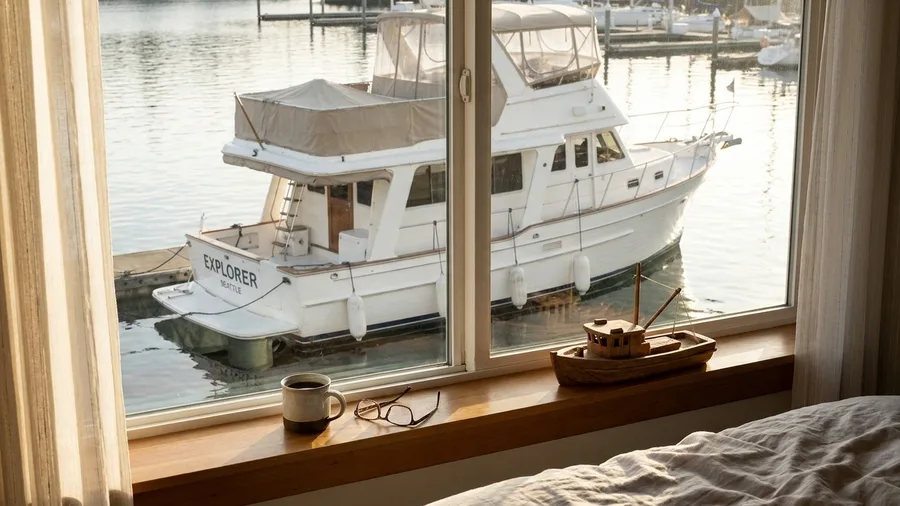
None of that money would sting so much if you actually used the boat. The picture in your head is a sunrise run down the Intracoastal with coffee in hand, but a real trawler makes seven or eight knots, and that is the whole menu. It is a fast walk, a wonderful way to travel if you have nothing but time and love the going itself.
The trouble is the man who bought her still has a house to keep, grandkids to visit, a knee that bothers him, and a spouse who prefers her own mattress. So the vessel meant to carry him around America ends up carrying him a dozen weekends a year, if that, and the fixed costs keep running whether she leaves the slip or not.
Divide the annual cost by the days you actually untie the lines and the number turns ugly, pushing toward $1,000 a day of use. Diesel over $5 a gallon makes even the trips you take feel expensive. One woman wrote about her husband's long-held dream of a 40-foot cruiser down in Cabo; he finally let it go and admitted the fuel and upkeep had simply gotten too big to handle at his age.
💡 Tip: Track your last twelve months of actual days off before you buy. If you cannot find a dozen free weekends, charter instead.
| Cost item | Typical amount | What it means |
|---|---|---|
| Slip fees | $600–$2,000 per month | Inland is $35–$55 per foot; desirable coast is $50–$100 per foot. |
| Insurance | About $2,000 per year | Roughly 1–2% of value; boats over 40 years old may be hard to insure. |
| Haul-out and bottom job | $2,000–$5,000 per year | The bottom must be scraped and painted every year. |
| Maintenance rule | About $10,000 per year | 10% of value in a good year with no breakdowns. |
| All-in ownership | $15,000–$25,000 per year | Owner reports range from $12,000 to $20,000 before major repairs. |
3. Docking a big trawler tests older bodies
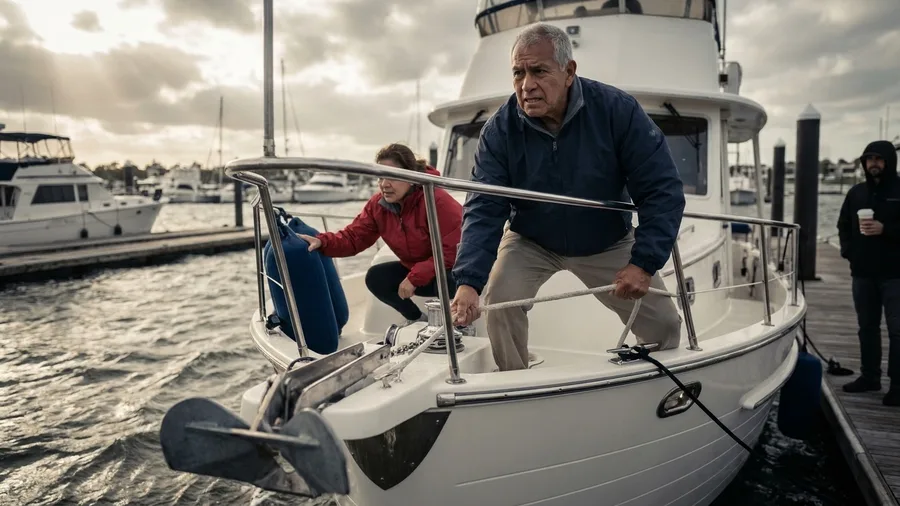
The dream was the two of you against all that open water, but a 45- or 50-foot trawler is a heavy thing to bring into a slip when the wind is up and every other boater in the marina is staring, coffee cup in hand.
Most buyers are not thirty anymore. A shot shoulder, a bad back, or balance that is not what it was turns every docking into a knot in both stomachs, and a crosswind turns it into a genuine event.
One owner was grateful his wife talked him down from a 55-footer to a 41, because the couple could actually handle the smaller boat and still enjoy her. Sit in that for a second: the right boat was the one they could still wrangle, not the one they could afford.
An owner who had cruised for years put it as square as anyone: the sea shows no mercy, nothing can be left neglected, and the endless maintenance grinds you down to nothing. The picture never shows the Saturday you spend on your knees in the bilge instead of with the grandkids, or the quiet drive home where neither of you says much.
💡 Tip: Before you buy, practice docking the target size in a breeze. If it makes your stomach drop, go smaller.
⚓ The Six Rules Happy Owners Follow
Buy less boat
Choose a trawler you can bring into the slip alone in a cross breeze without your heart hammering.
Charter the exact size
Rent or charter the size you think you want for a week or two and live the real days, not the daydream.
Solve the slip first
Get the rate, the size limits and the policy on increases in writing before you buy the boat.
Buy used and pay cash
Let someone else eat the first ugly year; a new trawler sheds about a third of its value in five years.
Hire your own surveyor
Use an independent surveyor, never the broker's friend, and haul the boat out before money changes hands.
Choose the boring boat
One simple mechanical diesel and plain systems beat a gadget-heavy helm that quits on a Sunday.
4. A clean survey can hide a couple's doubt
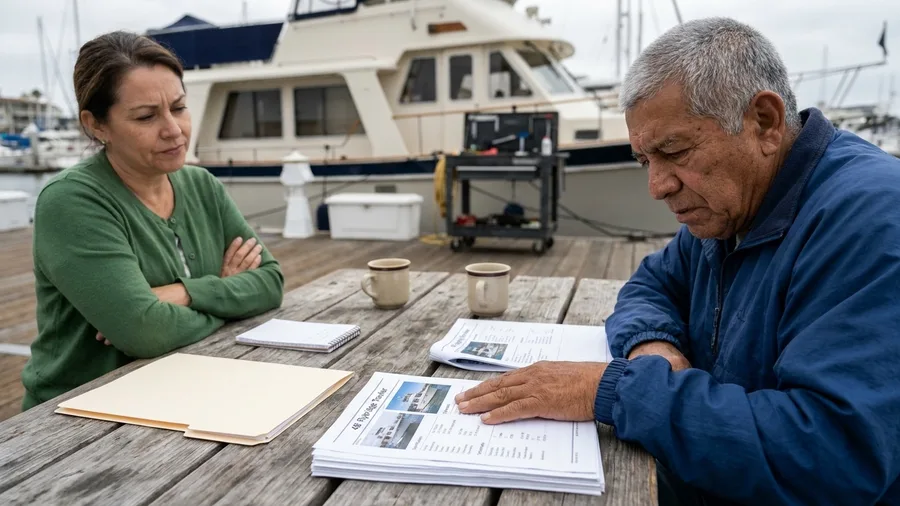
Now picture the afternoon a retired long-haul driver asks a mechanic to look over a big flybridge trawler he has fallen for completely. Two engines, three staterooms, every option, and the survey comes back clean as a whistle.
On paper she is a lot of boat for the money. But the mechanic asks one thing that has nothing to do with engine hours: where is your wife this afternoon? The man gets quiet and admits she thinks the whole business is a mistake, that they are both past the age for wrestling a vessel that size around a fuel dock.
The advice was to walk away, and he did. A year later he bought a boat two-thirds the size, paid cash, and he still calls from the water. Get the spouse to the yard before the second visit, not after, because doubt nobody says out loud turns into a resale listing inside a season.
The lesson is easy to miss and worth taping to the fridge: judge the life around the boat, the spouse, the age, the time and the temperament, before you let a clean survey do your thinking.
💡 Tip: Ask your partner one question before the sea trial: would you feel safe docking this boat with me in a crosswind? If the answer is no, keep shopping.
Screen the hull, tanks and wiring first
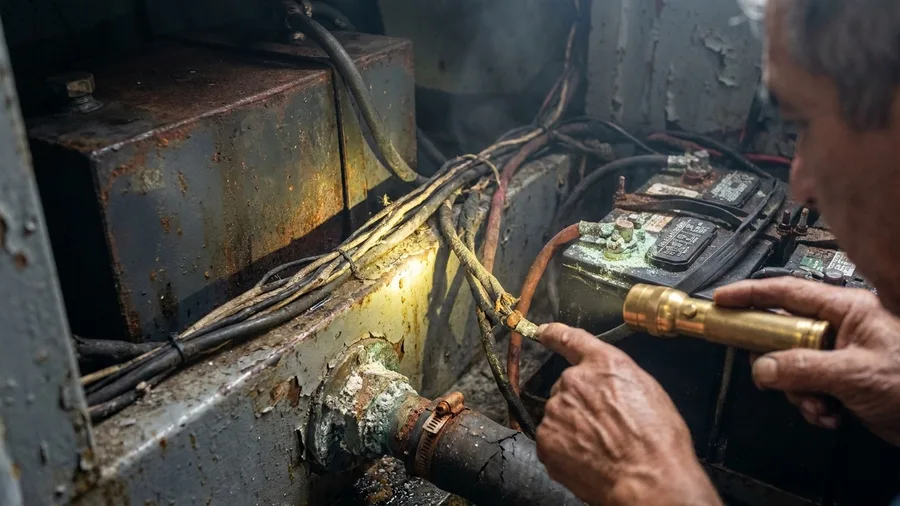
Engine hours get all the attention, and in the end they are one line on a much longer list. Walk the decks looking for soft spots underfoot, which usually mean wet core, and run your hand along the hull for blisters or cracks that suggest a hard life or a poor repair.
Open every locker and look around the tanks for rust streaks and leaks, then follow the wiring. Corroded terminals and connectors, cracked insulation, and aged hoses or thru-hulls tell you how the boat has been kept. Ask for the maintenance records and check parts availability for the engine and systems, because a simple, documented boat is far easier to own than a complex one with a missing history.
Treat this as a pre-offer screen only. An independent surveyor and a haul-out still decide the deal, and no walk-through replaces either.
If the engines look clean but the wiring is a bird's nest, walk. There are plenty of trawlers with honest systems and clear records, and you only need to find one.
Test your body before you test the boat
That surveyor's report will tell you plenty about the hull and the wiring. It won't tell you a thing about your shoulders. The one spec sheet nobody reads before buying a trawler is the buyer, and it's the one that decides whether the boat ever leaves the dock.
So before you sign anything, get aboard the size you're seriously considering and stay there for a full day. Not a peek at a boat show. A real day: practice docking in a bit of breeze, handle the lines yourself, climb the ladders, and walk the deck from bow to stern a dozen times like you'd actually do offshore. By mid-afternoon your back will have opinions.
Be honest about the body you've got. Shoulders, lower back, knees, balance, and reaction time all matter on a moving deck, and they don't improve with a boat payment attached. If you can't swing a leg over the rail without a hand, that's data, not defeat.
Here's the part people skip: the boat you can handle alone in a crosswind is the boat that actually gets used. The one that scares you is the one that ends up on a brokerage listing twelve months later. A couple who can each bring a 40-footer into the slip without shouting is a couple still cruising in year three.
And don't be proud about the small stuff. Budget a few hundred dollars for grab rails, a step that makes boarding easier, and a windlass so you're not hauling anchor by hand. A few hundred bucks of handholds can be the difference between a boat you use and a boat you dread.
Cruise without owning a trawler
Say the numbers came back ugly, or your knees said no, or the charter week convinced you that a solid week two feet from your partner is more togetherness than you signed up for. You can still be on the water. Owning a trawler isn't the only door.
The cheapest way to find out if the dream is real is to rent a piece of it. A one- or two-week bareboat charter of the size you were eyeing gives you the cruising without the slip fee, the insurance bill, or the haul-out. You show up, you run the boat, you hand back the keys. If something goes wrong at 2 a.m., it's the charter company's problem, not yours.
There's a middle ground too. Shared ownership splits the boat and the fixed costs among a few partners, and a charter club gives you access to a fleet for a monthly fee. Put them side by side on cost, on how often you can actually use the boat, and on how far ahead you have to book. A club boat you can get on a Tuesday is worth more than a shared boat booked solid through summer.
Whatever route you take, read the contract before you write a check. Look hard at usage limits, who handles maintenance, who carries the insurance, and what happens when you want out. Exit terms are where these deals bite.
This path suits the retiree who loves the water but not the dock work, the fixed costs, or the resale risk. It's also the honest rehearsal. Better to find out on a two-week charter than on a boat you can't sell.
5. Six rules keep a trawler off resale
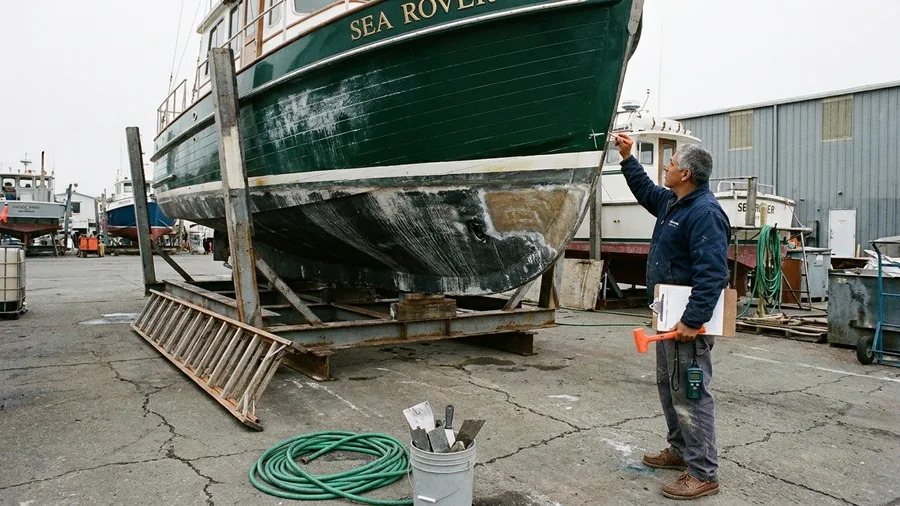
He walked away, and later bought a boat two-thirds the size for cash. He's still on the water while that bigger dream sits at the dock, and he shows the pattern the happy owners all share.
First, buy less boat. The man who can bring his trawler into the slip alone in a cross breeze is the one who actually unties her, and a 40-footer a couple can handle beats a 50-footer they both fear. Second, charter the exact size for a week or two before you buy. Practice docking her a few times in a breeze, sit out a rainy Saturday confined inside her, and find out whether you and your partner really like being two feet apart for a solid week.
Third, solve the slip before you buy the boat, and get it in writing: today's rate, whether they'll take your size, and whether they can raise the rate whenever they please. Add up a decade of ownership costs, not the single joyful afternoon of buying. Fourth, buy used at two or three years old and pay cash. New trawlers lose about a third of their value in five years, used prices are down 10% to 15%, and there are more boats than buyers, so the timing is in your favor. A man who owes no bank can walk away from any deal.
Fifth, hire your own independent surveyor, never the broker's friend, and get the boat fully out of the water before any payment is made. It costs roughly $1,000 on a 40-footer and returns ten dollars for every one you spend.
Sixth, choose the unexciting option: a single simple mechanical diesel, a straightforward hull, and systems a rural mechanic can still find parts for. Every extra gadget is one more thing that fails on a Sunday, usually twenty miles from the nearest dock.
Frequently Asked Questions
How much does a trawler really cost to own each year?
A $100,000 trawler typically runs $15,000 to $25,000 a year all-in: slip fees, insurance, an annual haul-out and bottom job, and the 10%-of-value maintenance rule. Owner reports range from $12,000 to $20,000 before major repairs, so build your own ten-year sheet before you make an offer.
Why do nearly new trawlers come back on the market so fast?
Because the boat is rarely the problem. The annual cost, the slow seven-to-eight-knot cruising speed, bodies that are not thirty anymore, and a couple's unspoken doubts all surface in the first year. The boat simply makes those realities impossible to ignore.
What size trawler can a retired couple actually handle?
The one you can bring into a slip alone in a crosswind without your heart hammering. Many couples are happier in a 40- or 41-footer than a 50-footer, and a boat you can handle beats a bigger one you fear every day of the week.
Is it better to charter before buying a trawler?
Yes. A one- or two-week charter of the exact size you want is the cheapest insurance in the business. Dock it in a breeze, spend a rainy day inside it, and find out whether the life fits before you commit your retirement.
What does an independent survey cost, and why hire one?
About $1,000 on a 40-footer, plus the haul-out. Hire your own surveyor, never the broker's friend, because your surveyor answers to you. It is the one bill in boat buying that returns ten dollars for every one you spend.
The fork in the road before you make an offer
You have two honest paths from here. If the trial charter, the annual numbers or the physical test says no, do not buy a trawler. Charter, share ownership or walk away, and you keep the water without the slip fee, the bottom job or the resale risk.
If you still want to buy, apply the six rules in order: buy less boat, charter the exact size, secure the slip in writing, buy used at two or three years old and pay cash, hire your own surveyor and haul out, and choose the simple mechanical diesel. The man who does that is not the one listed on the broker's site next fall. He is enjoying the water in year two, living the life he actually has.
Run the numbers before you make an offer
Write down your slip fee, insurance, haul-out and the 10% maintenance rule for the exact boat you are considering. If the annual total works, run the six rules in order.

Hello there! I’m Jesse Joe, the author and editor behind SolganGenius. I’m thrilled you’ve stopped by, and I can’t wait to share with you the essence of what this platform is all about.
I’m a writer, social media enthusiast, and a firm believer in the power of words. I’ve always been fascinated by how a simple phrase or slogan can capture an emotion, convey a message, and even change perspectives. Learn More