

You turn 70, look at your retirement accounts, and think the hardest financial decisions are behind you. The mortgage may be smaller or gone. Medicare is already in place. Social Security may be arriving every month. You have spent years learning how much retirement really costs.
Then the rules start changing again.
Age 70 is not an official financial danger zone, and there is nothing magical or automatically risky about the birthday itself. But from roughly 70 through 73, several important retirement decisions begin to collide.
Social Security delayed retirement credits end. Required minimum distributions get closer. Medicare premiums can react to taxable income. Health expenses deserve more attention. Your investment mix may also need another look.
Why Age 70 Changes the Retirement Math

The biggest mistake is thinking retirement planning ends when retirement begins.
It does not.
Your first few retirement years may revolve around deciding when to claim Social Security, getting Medicare coverage, adjusting to life without a paycheck, and figuring out how much you actually spend.
By 70, the questions change.
The Social Security Administration says delayed retirement credits stop once you reach 70. There is no additional increase for continuing to postpone your retirement benefit after that age.
Then another deadline appears. The IRS says owners of traditional IRAs and many retirement accounts generally must begin required minimum distributions at 73. Roth IRAs do not require distributions while the original owner is alive.
That creates an important period between 70 and 73.
| Around This Age | What Changes | Why It Matters |
|---|---|---|
| 70 | Social Security delayed credits stop | Waiting longer normally produces no extra retirement credit |
| 70 to 72 | Possible tax planning window | You may have more control over taxable withdrawals |
| 73 | RMDs generally begin | Traditional retirement money starts coming out under IRS rules |
| 70s | Health needs may rise | Medical costs can take a larger share of the budget |
None of these events means you are about to run out of money. Together, though, they are a good reason to rebuild your retirement forecast using the numbers you have today.
1. Waiting Past 70 for Social Security Can Cost You Income

Delaying Social Security can be a strong strategy for some retirees.
For people born in 1943 or later, delayed retirement credits generally increase retirement benefits by 8 percent a year after full retirement age until age 70. The exact total increase depends on your birth year and claiming age.
But the important words are until age 70.
Once you reach 70, delaying longer does not produce additional delayed retirement credits. SSA specifically says the benefit increase stops at that point.
So if you are already 70 and have been delaying simply because you believe another year will produce another increase, review your situation.
For example, someone born in 1957 had a full retirement age of 66 years and 6 months. SSA says claiming at 70 produces about 128 percent of that person’s full retirement benefit. Waiting beyond 70 does not increase the percentage further.
There are special situations involving survivor benefits, pensions, work records, and family benefits. Those deserve individual review. But the general retirement benefit rule is clear.
Age 70 is the end of the delayed retirement credit runway.
For context, Social Security’s 2026 cost of living adjustment is 2.8 percent, and SSA estimates the average retired worker receives about $2,071 a month after that adjustment.
That annual COLA is different from delayed retirement credits. COLAs can still increase your benefit after 70.
2. RMDs Are About to Change How You Control Taxable Income
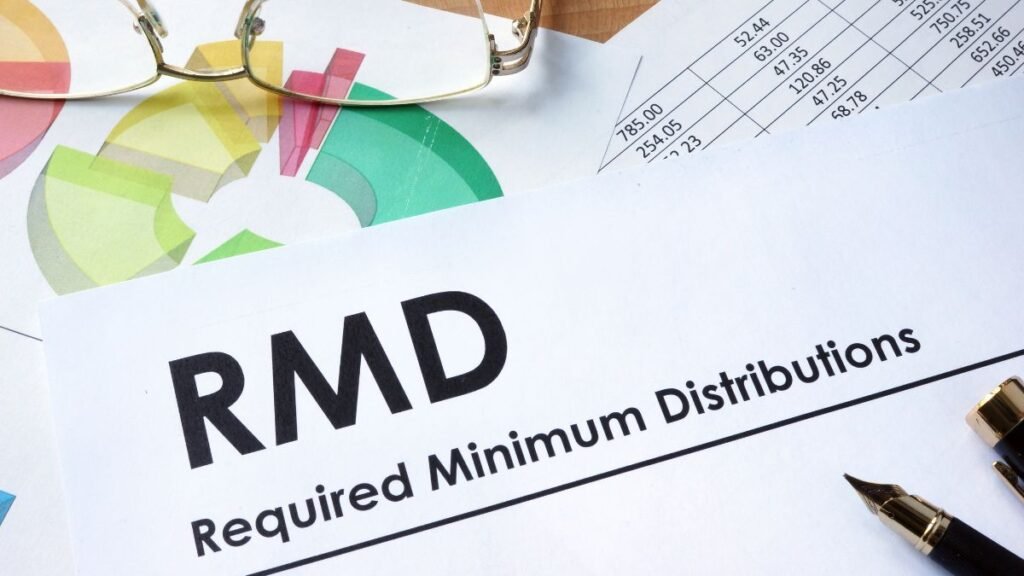
For many retirees, the years immediately before RMDs begin offer something valuable.
Control.
You may be able to decide how much money to take from a traditional IRA each year. You may decide when to realize investment gains. Some retirees may consider Roth conversions.
Once RMDs begin, part of that choice disappears.
The IRS says traditional IRA owners generally begin required minimum distributions at age 73. The amount is calculated using the prior December 31 account balance and an IRS life expectancy factor.
The withdrawal is generally included in taxable income unless part of it represents money already taxed.
There is another detail that catches retirees.
Your first RMD can generally be delayed until April 1 of the year after the year you turn 73. But the next RMD is still due by December 31 of that same year.
That means waiting can result in two taxable RMDs falling into one calendar year.
Suppose you turn 73 and your calculated first RMD is $30,000.
If you take it during that year, the income falls into that year’s tax return.
If you postpone the first $30,000 until the following spring, you could also have another RMD due before December 31. Your taxable retirement distributions for that second year could therefore be much larger.
That does not automatically mean delaying the first RMD is wrong. It means the decision deserves a tax projection first.
Why ages 70 through 72 matter
This period may be useful for considering:
- Planned traditional IRA withdrawals
- Roth conversions
- Capital gains
- Charitable giving
- Cash reserve needs
- Future RMD estimates
- Medicare income thresholds
A Roth conversion deserves special care. Moving money from a traditional IRA to a Roth can create taxable income now. That may reduce future traditional IRA balances, but it can also increase current taxes and potentially affect future Medicare premiums.
The best answer comes from looking at several years together instead of trying to minimize one year’s tax bill.
3. A Large IRA Withdrawal Can Make Medicare More Expensive

Taxes are not the only reason taxable income matters after 70.
Medicare looks at income too.
The standard Medicare Part B premium for 2026 is $202.90 per month, according to the Centers for Medicare and Medicaid Services. The annual Part B deductible is $283.
Higher income can trigger an Income Related Monthly Adjustment Amount, commonly called IRMAA.
For 2026, higher Part B premiums begin when modified adjusted gross income exceeds $109,000 for an individual taxpayer or $218,000 for a married couple filing jointly. CMS says roughly 8 percent of people with Part B pay an income related adjustment.
| 2026 Modified Adjusted Gross Income | Single Filer | Married Filing Jointly | 2026 Monthly Part B Premium |
| Base level | Up to $109,000 | Up to $218,000 | $202.90 |
| First IRMAA tier | Over $109,000 to $137,000 | Over $218,000 to $274,000 | $284.10 |
| Second tier | Over $137,000 to $171,000 | Over $274,000 to $342,000 | $405.80 |
| Third tier | Over $171,000 to $205,000 | Over $342,000 to $410,000 | $527.50 |
Higher tiers continue beyond these amounts.
This is why a retirement withdrawal strategy cannot focus only on the account balance.
A large IRA distribution might fund a home renovation, car, vacation, or family gift. But if it pushes income across an IRMAA threshold, there may be another cost later.
The same concern can apply to Roth conversions and large investment gains.
That does not mean you should refuse to spend your retirement money because you fear Medicare premiums. Retirement savings exist to support your life.
It means you should know the full cost before deciding how much to withdraw and from which account.
4. Health Care Can Take a Bigger Bite Than Your Old Budget Allowed

A retirement budget built at 60 can look very different when you reach your 70s.
Health care is one reason.
Fidelity’s 2026 Retiree Health Care Cost Estimate says a 65 year old retiring in 2026 could expect to spend an average of about $185,500 on health care and medical expenses throughout retirement. Fidelity says the estimate increased 7.5 percent from the prior year.
That figure is not a bill waiting for every retiree.
Your actual cost can be much lower or much higher depending on health, longevity, insurance, prescriptions, location, and the care you eventually need.
Fidelity also notes that health coverage decisions and retirement income can interact because Medicare premiums can rise with income.
The more useful lesson is simple.
Do not assume the amount you spent on health care during the first two years of retirement is what you will spend forever.
Review expenses such as:
- Medicare premiums
- Prescription drugs
- Dental care
- Vision care
- Hearing care
- Copays
- Insurance premiums
- Home modifications
- Help with daily tasks
Long term care deserves its own discussion because ordinary retirement health cost estimates may not fully capture it.
At 70, having a large investment account is useful. Having some of that money available without needing to sell investments at a terrible moment can be even more useful.
5. Your Portfolio Still Needs Growth at 70

Some retirees reach 70 and decide the safest possible move is putting nearly everything into cash.
It feels logical. You worked decades for the money, and losing it now sounds unbearable.
But avoiding market risk completely creates another kind of risk.
Inflation can slowly reduce what cash buys. And your retirement may continue for many years.
The opposite approach can also cause trouble. A retiree who keeps nearly everything in stocks may face a major decline just as large withdrawals become necessary.
The goal is balance.
Your investment mix should consider:
- Social Security income
- Pension income
- Necessary monthly spending
- Optional spending
- Cash reserves
- Expected withdrawals
- Your ability to tolerate losses
- The amount of time the money may need to last
This is also where simple withdrawal rules need context.
Morningstar’s 2025 retirement income research estimated a 3.9 percent starting withdrawal rate in its base case for someone seeking inflation adjusted spending over a 30 year retirement with a 90 percent probability of money remaining at the end.
That is research, not a promise.
Your situation may support more or less spending.
Someone with strong pension and Social Security income may depend very little on investments for basic expenses. Someone with no pension and a large housing payment may depend heavily on the portfolio.
A fixed percentage cannot see those differences.
A simple example
Suppose two 70 year olds each have $600,000 invested.
Retiree A receives $4,500 a month from Social Security and a pension while essential expenses total $4,000.
Retiree B receives $2,500 a month from Social Security while essential expenses total $5,000.
Their investment balances are identical.
Their retirement risk is not.
Retiree B needs the portfolio to produce much more dependable income. That makes cash reserves, asset allocation, and withdrawal planning more important.
6. Spending Rules That Worked at 65 May Be Wrong at 70

Your retirement plan probably began with estimates.
You estimated groceries.
You estimated travel.
You estimated insurance, home repairs, utilities, hobbies, gifts, and medical costs.
Five years later, you have something better than an estimate.
You have actual spending records.
Age 70 is a good time to rebuild the retirement budget using what life really costs.
Start by separating spending into three groups.
| Expense Type | Examples | Why It Matters |
| Essential | Housing, food, utilities, insurance, medicine | These costs need dependable funding |
| Flexible | Restaurants, travel, hobbies, gifts | These can often be adjusted during bad markets |
| Irregular | Roof repairs, vehicles, dental work, family help | These can create sudden large withdrawals |
Then compare that spending with reliable income.
If Social Security and pensions cover nearly all essential expenses, your portfolio has more room to absorb changes.
If investment withdrawals are required for groceries, housing, insurance, and medical bills every month, your plan needs a stronger margin for market declines.
Also check for spending that has quietly become permanent.
A few subscriptions, regular family support, higher insurance bills, and more frequent home services can add hundreds of dollars a month without producing one obvious financial shock.
7. One Spouse’s Death Can Rewrite the Retirement Plan

Couples often build retirement plans around two Social Security checks.
That can create a false sense of security.
When one spouse dies, household income can change. The surviving spouse may be eligible for a survivor benefit based on the deceased spouse’s record, but that does not normally mean both full Social Security payments continue forever.
Many household expenses also remain.
The property tax does not become half as large.
The roof still costs the same to replace.
Home insurance does not drop by half.
Internet service, utilities, transportation, and home maintenance continue.
Taxes may change as well because a surviving spouse may eventually file under a different tax status.
That is why a retirement plan for a couple needs a survivor version.
Ask what happens if either spouse lives another 15 or 20 years alone.
Check:
- Expected survivor Social Security income
- Pension survivor benefits
- Beneficiary designations
- Life insurance
- Housing costs
- Future RMDs
- Taxable income
- Medicare premiums
- Access to financial accounts
- Estate documents
The goal is not to predict who dies first.
It is to make sure either person could still manage the financial system after a loss.
Retirement at 70: What Has Changed?
| Question | At Early Retirement | Around Age 70 |
| Social Security | Claiming may still be optional | Delayed credits end at 70 |
| RMDs | Often years away | Usually approaching at 73 |
| Spending | Based partly on estimates | Several years of real data may be available |
| Health costs | Often uncertain | Actual needs may be clearer |
| Investments | Long retirement ahead | Growth still matters, but withdrawals matter more |
| Survivor planning | Easy to postpone | Increasingly important |

I’m Austin Becker, an advocate for living life with intention and resilience. I write for men who are actively navigating life’s major transitions, tackling the realities of reinvention and finding renewed purpose with grit and honesty. I believe that personal growth doesn’t have a deadline it’s about continuously gearing up for the chapters that matter most.
Through my work, I aim to strip away the clichés of modern manhood, offering practical, no-nonsense insights on health, mindset, and legacy for those who want to move forward with strength and clarity.