
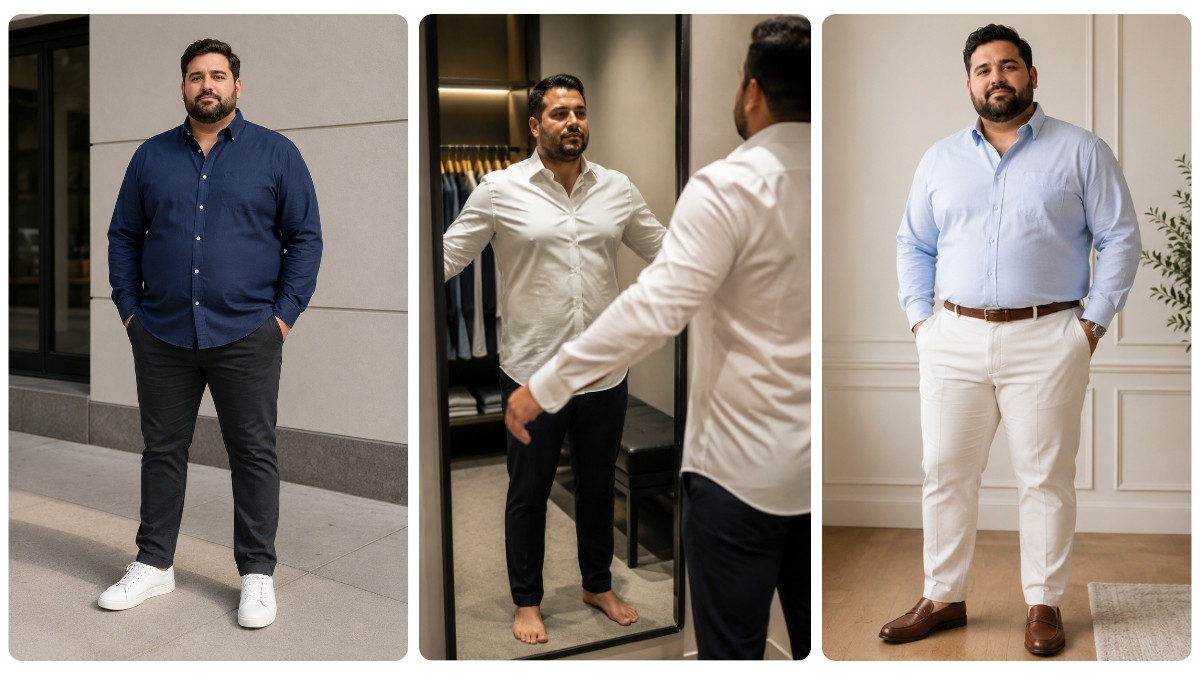
Many men follow random advice that ignores how a fuller stomach changes shirt shape and throws off proportions instantly. Truth becomes clearer when you look at hem length, rise, and how fabric sits around the midsection instead of just the size tag.
Standing in front of the mirror, deciding between tucking or leaving your shirt out can feel confusing, especially when nothing seems to sit right on your body. Most shirts suddenly look wrong the moment they touch the waistline.
This article breaks down the simple rule that removes guessing and shows what actually works for tucked and untucked outfits. Confidence comes easier when every shirt choice finally follows a clear, repeatable standard you can trust before buying anything new.
Style Advice That Makes You Look Worse
Most plus-size men have heard the same thing: leave it untucked; it hides more. That advice is not wrong. It is just dangerously incomplete.
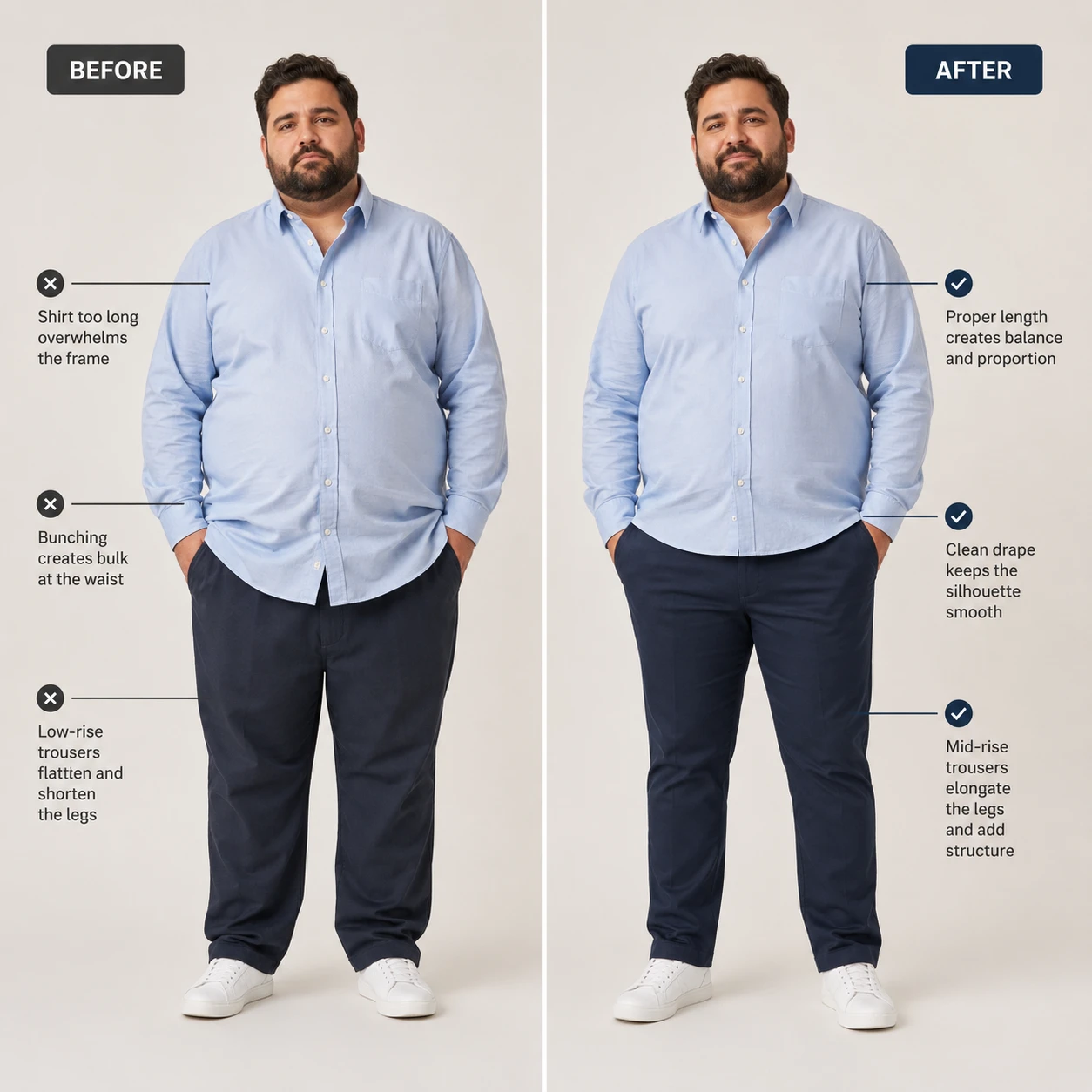
An untucked shirt in the wrong length does not hide your midsection. It cuts your body at the widest point, shortens your legs, and widens your silhouette. Paired with low-rise trousers, you have now split your body into two uneven halves, and neither looks intentional.
Tucked is not the safe answer either. Too much fabric stuffed into flat-front trousers bunches at the waist and pulls attention straight to the spot you were trying to avoid.
Here is what no one tells you: the real question was never tucked vs. untucked. Your hem length, shirt cut, and trouser rise either work together or they do not. Get those three right, and both options look sharp. Get them wrong, and neither one saves you.
The One Rule That Decides Everything Before You Dress
Most men think tucking is a style choice. It isn’t. It’s a structural decision, and the shirt tells you the answer before you even look in the mirror.
Three things decide it. Hem shape, shirt length, and trouser rise. Get all three right, and the question answers itself.
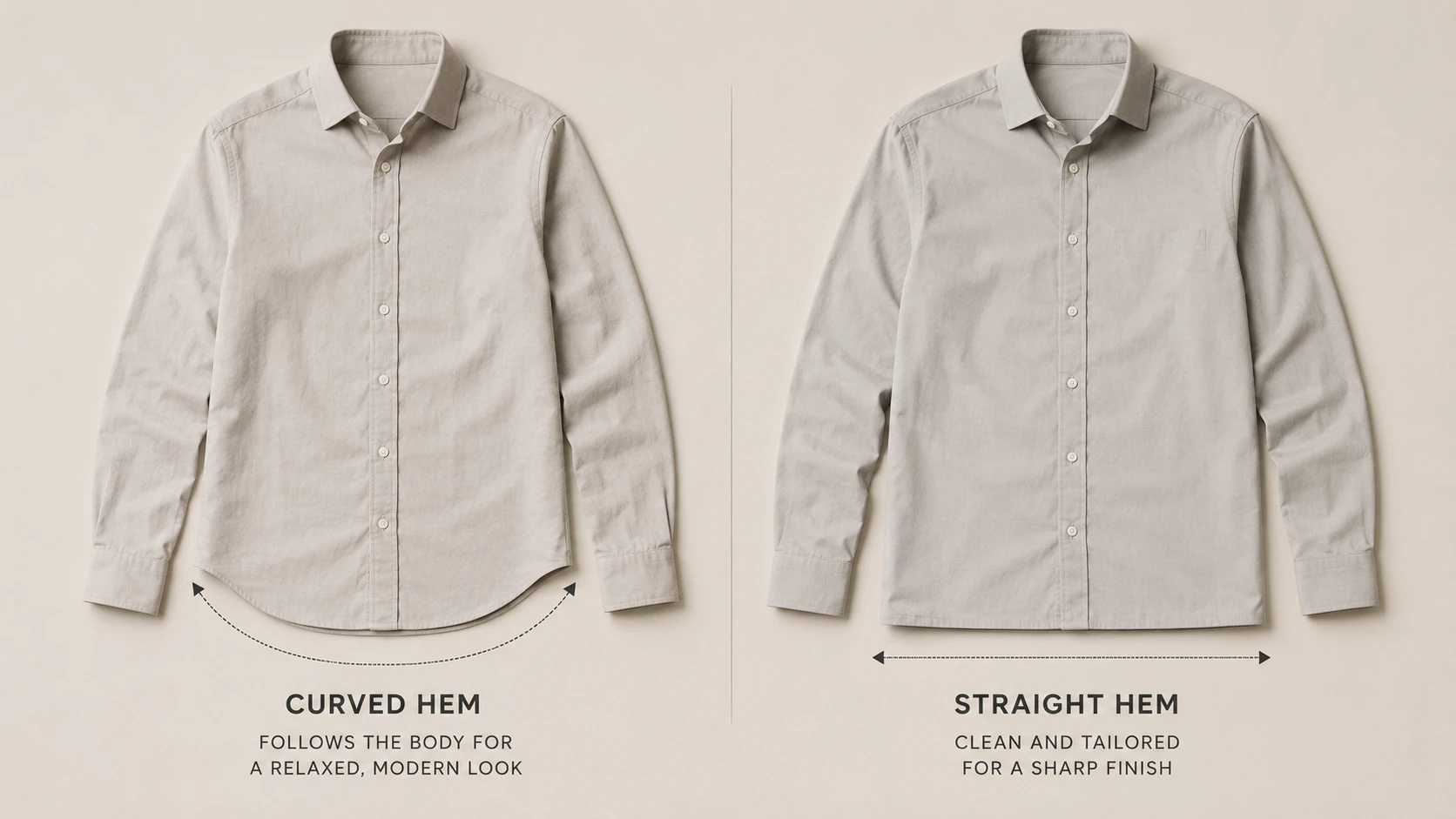
Hem shape first. A curved hem, one that dips lower on the sides, is designed to sit outside your trousers. It follows the hip line so it doesn’t bunch or ride up. A straight hem is cut to be tucked. Wear it out, and it hangs like a box around your midsection, which adds visual width exactly where plus-size men don’t need it.
Shirt length second. Hold the shirt against your body. The hem should fall no lower than the middle of your fly. Any longer and untucked looks sloppy. Any shorter and tucked looks stretched.
Trouser rise last. Low-rise trousers and a tucked shirt is a losing combination for plus size men — it shortens the torso and pushes attention to the widest point. Mid to high rise gives the tuck somewhere to anchor, which lengthens your silhouette instead of cutting it in half.
What Your Shirt’s Hem Shape Is Actually Telling You to Do
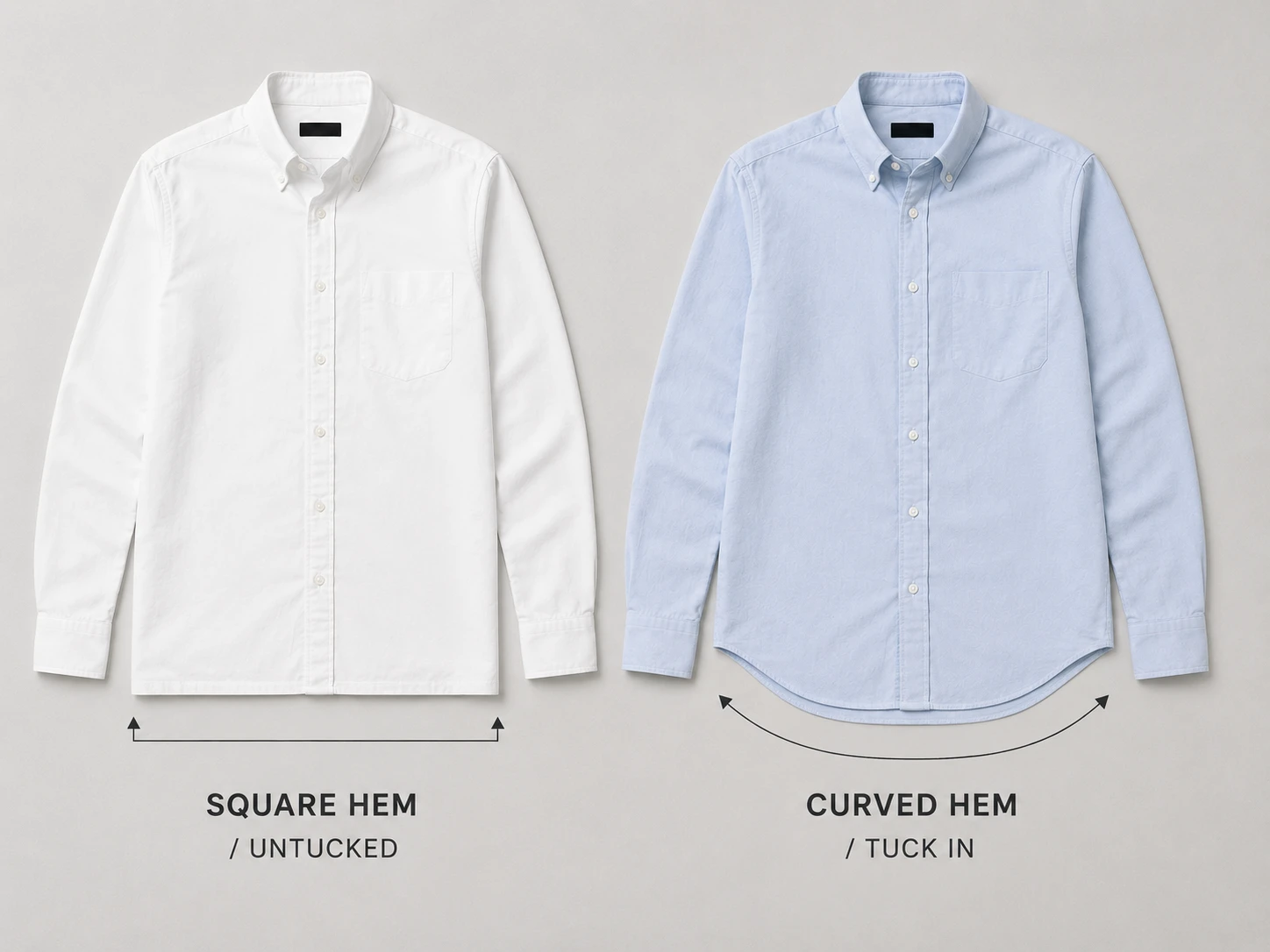
Flip the shirt and look at the bottom edge. Flat all the way around? That’s a square hem. It was cut short on purpose, made to sit cleanly at the hip without tucking. Polos, casual short-sleeve button-downs, and purpose-built untuck shirts all work this way. Leave them out. They’re designed for it.
Now look at a dress shirt. The sides curve upward. The front and back hang several inches lower than the sides. That shape exists for one reason: to stay locked inside your trousers and not ride out. Worn loose, those curved tails create an uneven drape around the hips. On a larger frame, that pooling fabric adds width exactly where you don’t want it.
The problem is that most plus-size men can’t identify which type they’re holding. Here’s how:
- Square/straight hem → designed for untucked. The bottom edge is flat all the way around. Think classic polo, casual short-sleeve button-down, or a purpose-built untuck shirt. These look clean and deliberate, left out.
- Curved/shirttail hem → designed for tucking. The sides scoop up, and the front and back hang lower. Leaving these untucked creates an awkward, uneven drape that looks unfinished on any body but especially on a larger frame where excess fabric at the bottom adds visual bulk.
The Untucked Look Without Losing Leg Length
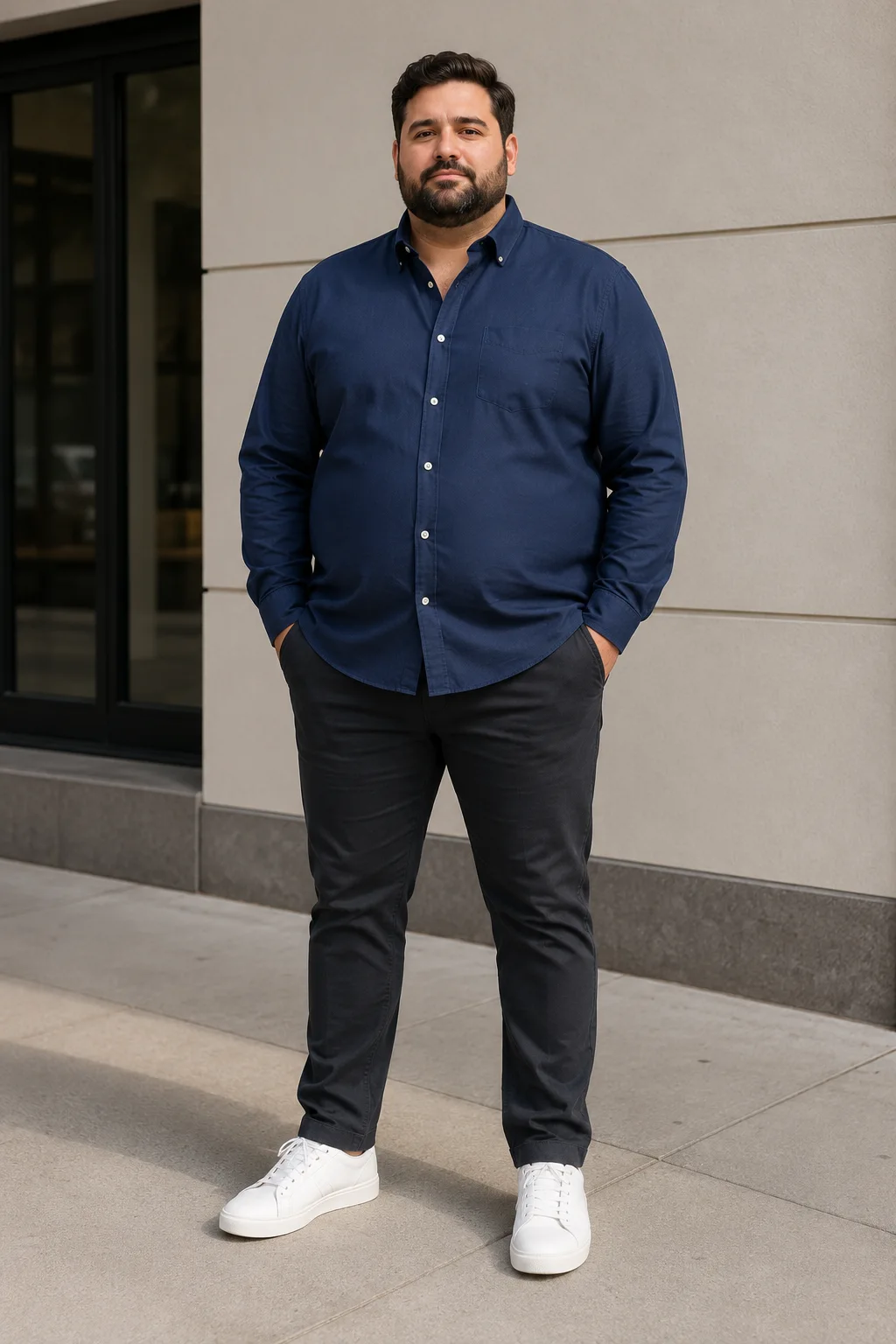
Most guys go untucked thinking longer means more coverage, which means better. Wrong. That extra length is actually the thing cutting your legs short and making your whole frame look compressed.
Why does this matter specifically for plus-size men? Because your leg-to-torso ratio is everything. Too much fabric hanging below your waist visually steals inches from your legs and adds them to your midsection, the exact opposite of what you want.
Manufacturers don’t help here. As sizes go up, shirts often get longer. That’s a production decision, not a style one. Don’t let the factory decide your hem length.
The Untucked Execution Checklist:
- Hem lands at mid-fly — not at the thighs, not at the pockets. Right at the zipper midpoint.
- The shirt is straight-cut — no curved tails, no extra length at front or back.
- For plus-size guys, leaving the shirt untucked allows the fabric to flow naturally — tucking in certain styles adds bulk and disrupts the relaxed silhouette.
- Open layering works well — wear an unbuttoned casual shirt over a fitted tee. This creates strong vertical lines down the torso that visually balance a larger frame.
- If the shirt is too long, get it hemmed — a tailor can shorten a shirt for under $15, and it makes a bigger difference than buying a new one.
How to Tuck In Your Shirt So It Actually Stays Clean (Not Bunched)
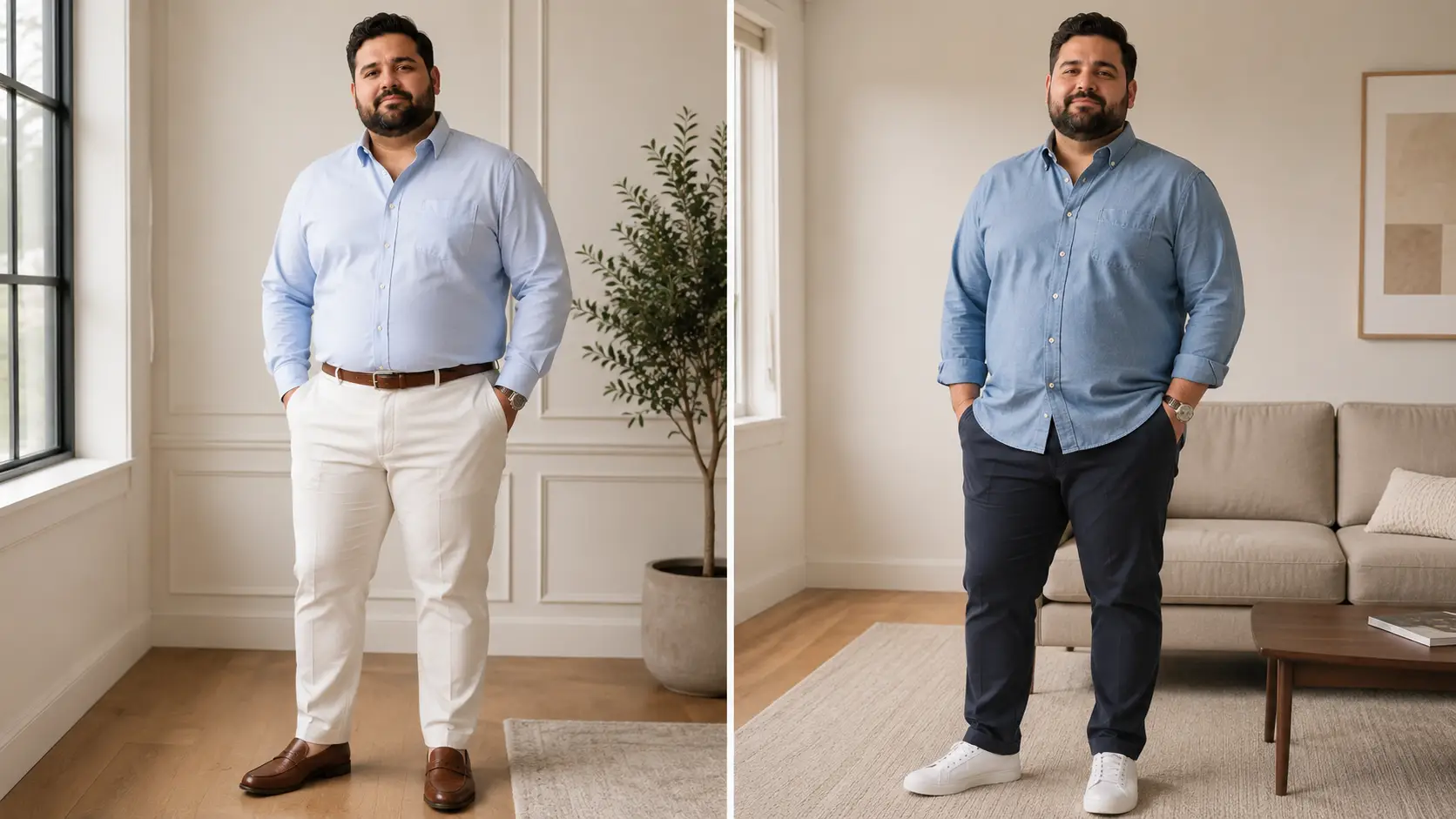
Most guys blame the shirt. Wrong. Nine times out of ten, a messy tuck comes down to where your pants sit. Low-rise trousers worn under the belly are the real culprit.
They push the stomach forward, leave the shirt with nowhere to anchor, and it pops right out the moment you sit down or reach for something. Go mid-rise or high-rise instead, pulled up to just below your navel. That one change alone turns a sloppy tuck into a sharp one.
Three Tucking Techniques:
1. The Standard Tuck
Works when the shirt fits close to the body. Pull the shirt down evenly all the way around after tucking, smooth the front flat, and secure with a belt.
2. The Military Tuck
Best for shirts with extra fabric at the sides:
- Pinch the excess fabric on each side seam
- Fold it backward toward the rear pockets
- Tuck neatly and fasten your belt. This keeps the front completely flat and eliminates the “stuffed” look.
3. The French Tuck
Tuck only the very front center of the shirt and let the sides hang naturally. This is the smart-casual middle ground. It hints at a waistline and breaks the shirt’s length without committing to a full tuck. It works especially well with casual button-downs and untailored shirts.
A tucked shirt immediately changes the proportions of an outfit. It creates structure, defines the waistline, and often makes the legs appear longer. This works particularly well with mid-rise or high-rise trousers like chinos.
The Comparison Table: Tucked vs Untucked at a Glance
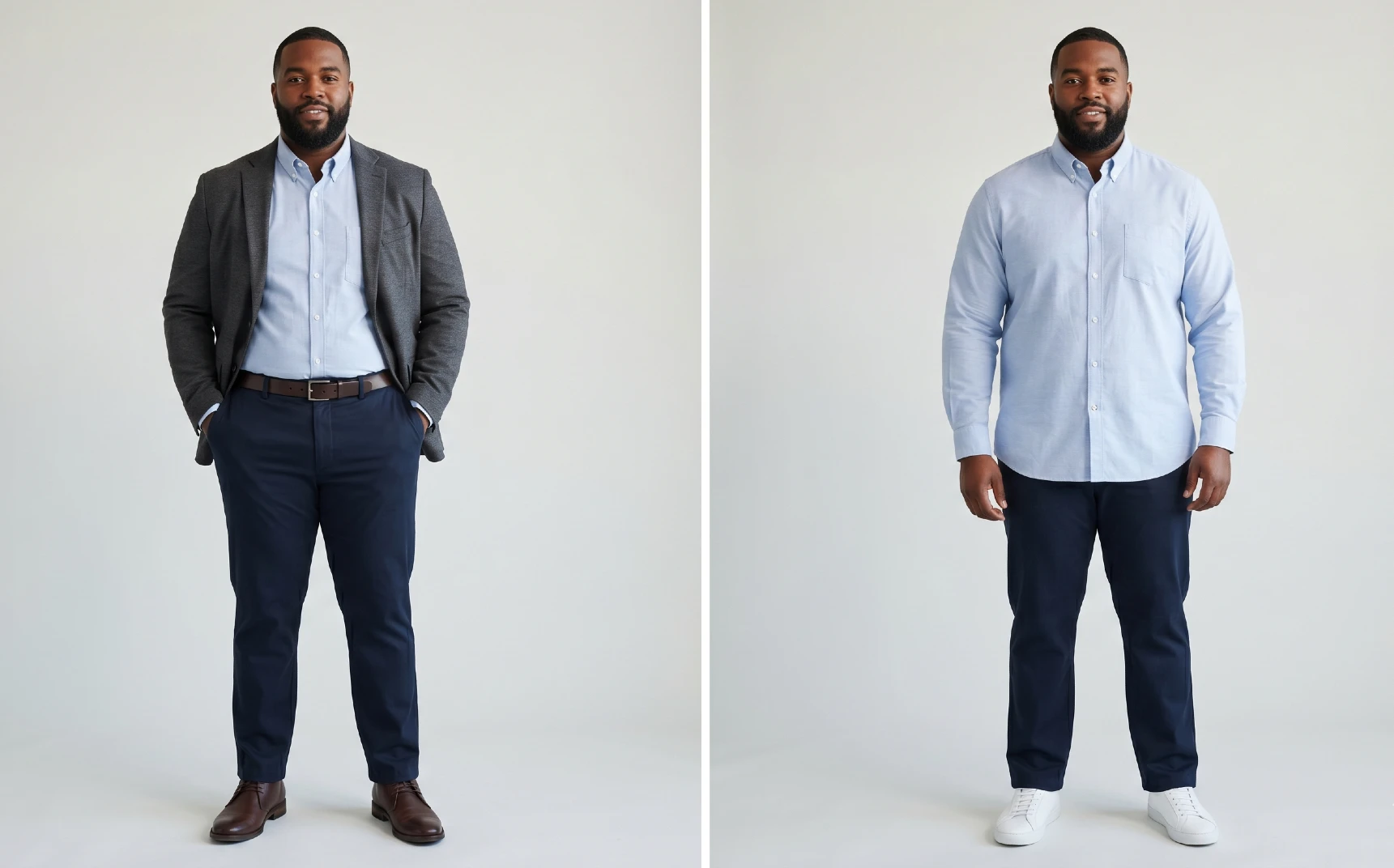
| Factor | Untucked | Tucked |
|---|---|---|
| Best hem shape | Straight, square-cut | Curved shirttail |
| Ideal shirt length | Mid-fly (zipper midpoint) | Long enough to stay tucked through movement |
| Required trouser rise | Any | Mid-rise or high-rise (at natural waist) |
| Visual effect | Skims midsection, relaxed silhouette | Elongates legs, adds structure |
| Best occasions | Casual, weekend, outdoor | Business, smart-casual, formal |
| Best shirt types | Polos, casual button-downs, t-shirts | Dress shirts, formal button-downs |
| Common mistake | Hem too long — shortens the legs | Tucking below the belly — accentuates midsection |
| Fix for imperfect fit | Get the hem shortened by a tailor | Use the Military Tuck to flatten sides |
| Middle-ground option | Open layering (unbuttoned over a tee) | French Tuck (front-only) |
The Occasion-by-Occasion Breakdown So You Never Have to Guess Again
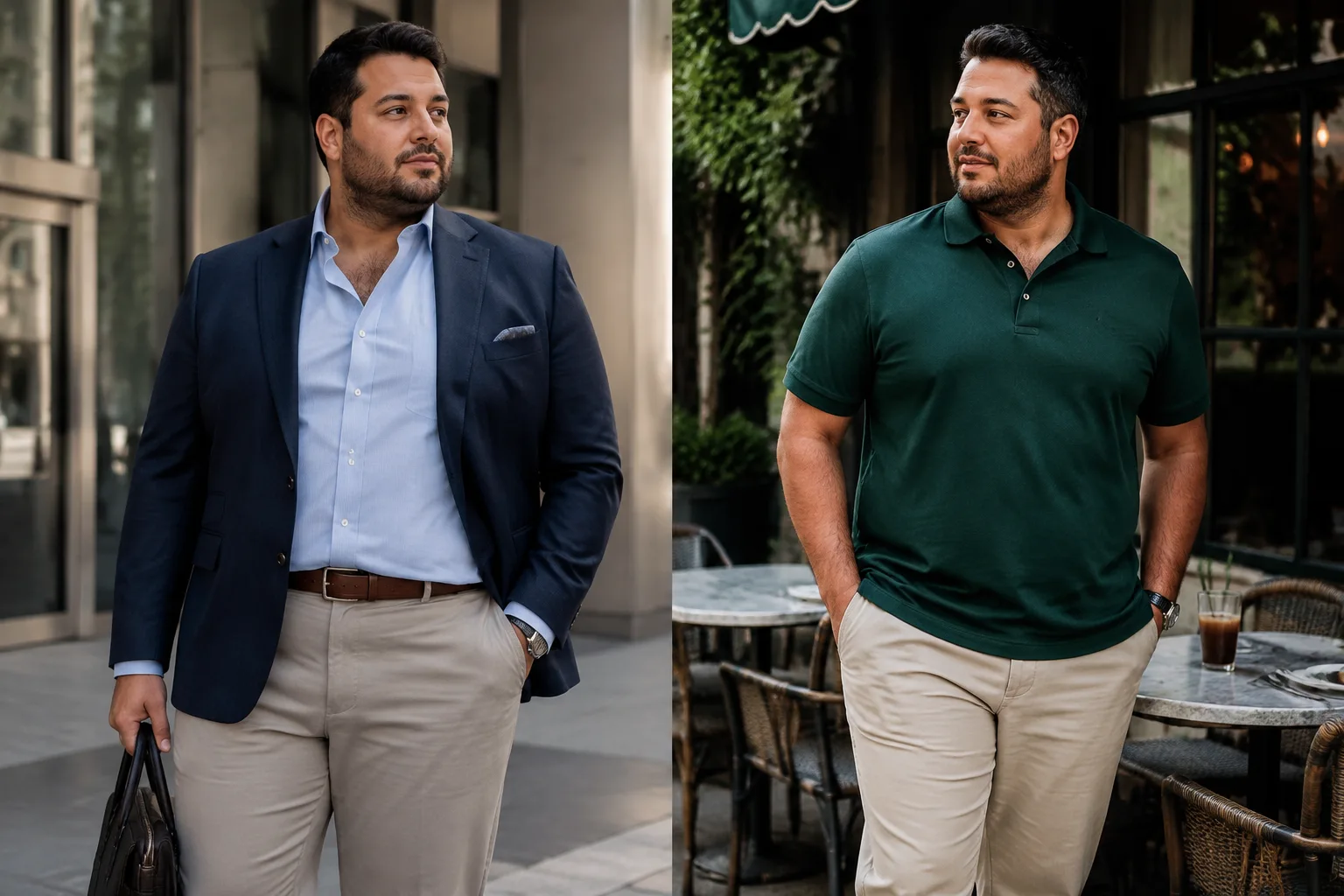
Most men think tucked means formal and untucked means casual, but real life does not work that way. Actually, the choice changes with the setting of body balance and how your shirt falls over your stomach.
Work meetings need cleaner lines, so a half tuck keeps structure without pulling attention to the midsection. Weekend outfits like tees or polos usually sit better untucked because they drape naturally and relax the frame.
Events such as dinners or weddings favor tucking when fabric is thicker and shirt length is controlled. Travel days lean untucked since comfort matters more, and sitting long makes tucked shirts feel tight quickly.
Office / Business:
Tuck in. A dress shirt with a curved hem is designed to be tucked, and leaving it untucked in a professional setting often looks unfinished. Pair with mid-rise or high-rise trousers so the shirt sits cleanly at the waist. If you notice fabric bunching at the sides, use the Military Tuck to keep the silhouette sharp.
Smart Casual (Dinner, Social Events, Date Night):
Both tucked and untucked can work, depending on the shirt length and hem. A French tuck on a casual button-down creates a relaxed but intentional look. If the shirt has a straight hem and ends around mid-fly, leaving it untucked usually looks balanced and natural.
Weekend / Casual:
Untucked is the default. The key is shirt choice, go for shorter lengths and straight hems made for wearing out. Oversized or too-long shirts will add bulk, so avoid those. An open overshirt layered over a fitted T-shirt is one of the most flattering casual combinations for plus-size men.
Formal / Weddings / Events:
Tuck in. No exceptions. Use high-rise dress trousers with a clean belt or side adjusters for a smooth waistline. If the shirt creates excess fabric around the midsection, apply a Military Tuck before heading out so the silhouette stays structured.
The Only Shopping Checklist You Need Before Buying Another Shirt
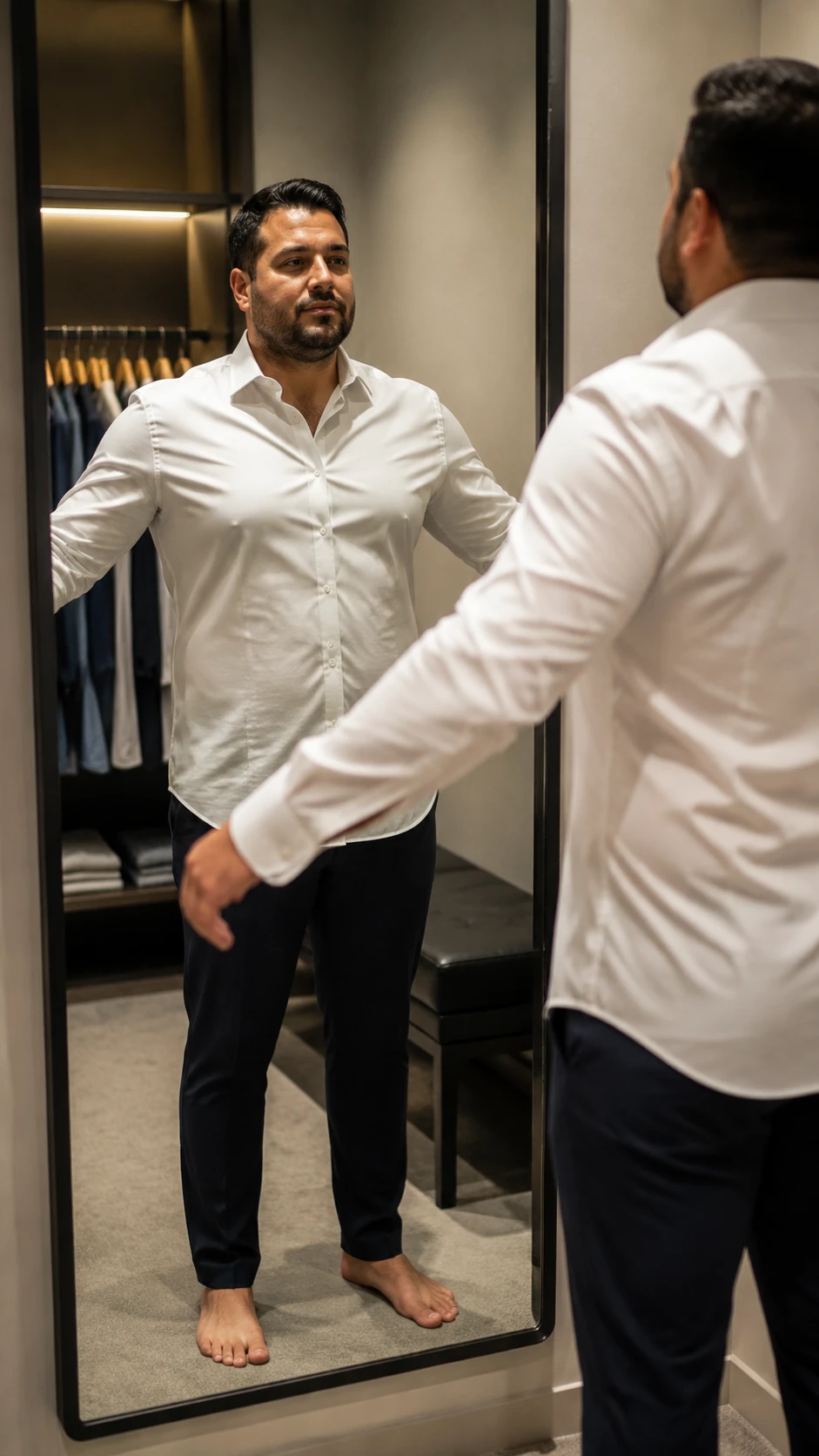
Most shoppers think any shirt will work if the size feels right on the rack.
Reality says the hem length decides everything for plus-size men more than color or brand choices.
Check shirt length by raising your arms and seeing where the hem falls on your fly line. Pick mid-rise trousers so tucked shirts stay flat and do not balloon around the stomach area. Avoid shirts with long curved hems if you plan to wear them untucked regularly.
Remember the simple rule: shorter hems stay in, longer straight hems come out, and fit at the shoulders matters most for balance.
Before buying for untucked wear:
- Hem is straight and square-cut (not curved)
- Length hits at mid-fly when held up against your body
- Fits across the shoulders without pulling
- If it’s too long, confirm a tailor can shorten it for under $20
Before buying for tucked wear:
- Shirt is long enough to stay tucked through movement (sits a few inches below the waistband)
- You own mid-rise or high-rise trousers to pair with it
- There’s no excess fabric that can’t be managed with the Military Tuck
Comparison table: Tucked vs Untucked for Plus-Size Men:
| Factor | Tucked | Untucked |
|---|---|---|
| Waist appearance | Creates cleaner vertical lines when the shirt fits well | Hides midsection and feels relaxed |
| Best body effect | Too-long shirts that make legs look shorter | Works when you want a softer, casual shape |
| Shirt length needed | Shorter to mid-length hems work best | Mid to slightly longer hems are safer |
| Best trousers | Mid-rise or higher rise helps control the tuck | Mid-rise works to avoid pulling and bunching |
| Common mistake | Over-tight tuck that highlights the stomach | Too long shirts that make legs look shorter |
| Overall look | Sharper, more structured | Easygoing, comfortable, less formal |

Hello there! I’m Jesse Joe, the author and editor behind SolganGenius. I’m thrilled you’ve stopped by, and I can’t wait to share with you the essence of what this platform is all about.
I’m a writer, social media enthusiast, and a firm believer in the power of words. I’ve always been fascinated by how a simple phrase or slogan can capture an emotion, convey a message, and even change perspectives. Learn More