

A market crash feels much scarier once the paychecks stop.
While working, you may be able to leave your investments alone and wait for prices to recover. In retirement, you might need to sell investments every month to cover food, housing, insurance, and health care.
That creates a painful choice. Do you sell stocks after they fall, or cut spending while you wait?
The 3 bucket method for retirement gives you a third option. It places near term spending in cash, medium term spending in bonds, and later spending in growth investments.
When stocks fall, your grocery money does not have to come from the part of your portfolio that just lost value.
Important: This article provides general education, not personal financial, investment, or tax advice. Retirement decisions should reflect your spending, taxes, age, accounts, health, and risk level.
Why a Market Crash Hurts More After Retirement

A falling account balance is stressful at any age. The risk becomes more serious when you are taking money out at the same time.
Suppose you own an investment worth $100,000. It falls 25 percent, leaving you with $75,000.
You then withdraw $10,000 for living costs. Your balance drops to $65,000. Even if the market later recovers, that withdrawn money is no longer invested.
This is part of sequence of returns risk. It means that the order in which good and bad returns occur can affect how long a retirement portfolio lasts.
A poor market during the first years of retirement may cause more harm than the same decline much later. Early withdrawals can leave fewer shares in the account to benefit from a future recovery.
Vanguard describes this risk as a loss of lifetime spending power caused by taking withdrawals during an early down market.
Morningstar also identifies poor early returns as one of the biggest threats facing new retirees. Its researchers note that keeping one or two years of planned withdrawals in cash may reduce the chance of selling investments during a decline.
The goal is not to predict the next crash.
The goal is to avoid turning every crash into an income crisis.
How the 3 Bucket Method Separates Today’s Bills From Future Growth

The retirement bucket strategy groups money by when you expect to use it.
Bucket 1: Money needed soon
This bucket pays near term bills. It normally holds cash and other assets that are easy to access.
Bucket 2: Money needed in the middle years
This bucket holds assets such as high quality bonds. It is designed to support later withdrawals and help refill the cash bucket.
Bucket 3: Money needed much later
This bucket holds growth investments, usually a diversified mix of stocks. It has more time to recover from market declines.
Morningstar also calls this type of system a time segmentation strategy. Its common model places one to two years of expected withdrawals in cash, another five to eight years in high quality bonds, and the remaining money in long term growth assets.
The buckets do not have to be three separate brokerage accounts.
You could hold all three inside one retirement account and track them on a spreadsheet. You could also use separate accounts if that makes the system easier to follow.
The labels are less important than the plan.
You need to know which assets will pay your bills now, which assets can support the next several years, and which assets should remain invested for later life.
Bucket 1 Pays the Bills When Stocks Fall
Bucket 1 is the part designed to give you breathing room.
A common starting point is one to two years of planned portfolio withdrawals. That does not always mean one to two years of your total household spending.
First subtract income that does not come from your investment portfolio, such as:
- Social Security
- Pension payments
- Annuity income
- Rental income you expect to continue
- Part time work
- Other reliable cash flow
The amount left is your annual portfolio gap.
A Simple Bucket 1 Example
Suppose your household spends $60,000 per year.
You receive:
- $34,000 from Social Security
- $8,000 from a pension
Your reliable income totals $42,000.
That leaves an annual portfolio gap of $18,000.
A one year cash bucket would hold about $18,000. A two year bucket would hold about $36,000.
You may also need a separate emergency reserve for large home repairs, medical bills, or car costs. Mixing emergencies with normal monthly spending can drain Bucket 1 sooner than planned.
Possible Bucket 1 holdings include:
- An insured savings account
- A money market deposit account
- A money market mutual fund
- Treasury bills
- Short certificates of deposit
Check liquidity, insurance limits, fees, and withdrawal rules before choosing a product. A bank money market account and a money market mutual fund are different products and do not have the same protections.
Bucket 1 is not meant to earn the highest return.
Its main job is to make sure you do not need to sell stocks for next month’s bills during a market decline.
Bucket 2 Creates a Bridge Through Longer Downturns
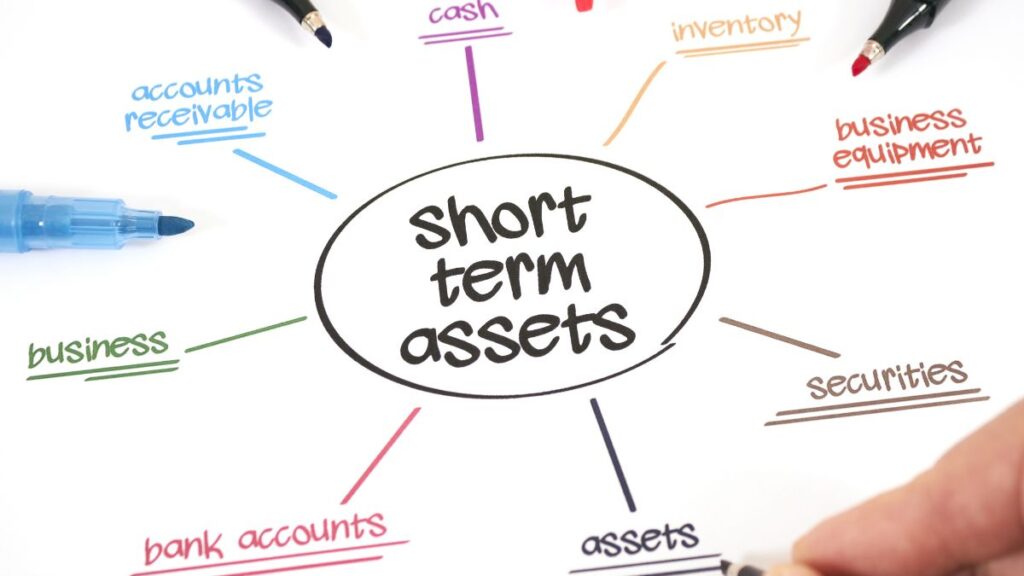
A cash reserve helps during a short decline. A longer market slump may require a second layer.
Bucket 2 often holds about five to eight years of future portfolio withdrawals after Bucket 1. Morningstar uses this range in its basic bucket examples.
This money usually goes into higher quality fixed income assets, such as:
- Short term Treasury securities
- Intermediate Treasury securities
- High quality corporate bonds
- Certificates of deposit
- A diversified high quality bond fund
- Treasury Inflation Protected Securities
Some retirees use a bond or certificate of deposit ladder. With a ladder, bonds or deposits mature at set times. The proceeds can then help refill Bucket 1.
For example, you might buy bonds that mature in one, two, three, four, and five years. Each maturity gives you a planned source of cash.
But bonds are not risk free.
Bond prices may fall when interest rates rise. A company or other issuer may fail to make a payment. Longer term bonds can move more sharply when rates change. Investor.gov lists market risk, interest rate risk, credit risk, and inflation risk among the key issues bond investors should review.
Bucket 2 should therefore focus on quality and timing, not chasing the highest yield.
A high yield bond can behave more like a stock during a financial crisis. That makes it less useful as the stable bridge you expected it to be.
Bucket 3 Keeps Money Growing for Later Retirement

A retirement lasting 20 or 30 years still needs growth.
Cash may feel safe, but inflation slowly reduces what it can buy. Bonds may provide income and stability, but they may not produce enough growth to support a long retirement by themselves.
Bucket 3 holds money you are unlikely to need for many years. It may include:
- Broad United States stock funds
- International stock funds
- Large company stocks
- Small and medium company stocks
- Real estate investments as a limited part of a wider portfolio
The right mix depends on your spending needs, age, risk level, guaranteed income, and ability to cut withdrawals after a poor market.
Fidelity notes that retirees need to balance current income with long term growth. That choice should reflect withdrawal needs, time horizon, goals, and risk tolerance.
Diversification matters here. Owning a few familiar stocks may feel simple, but one company or one business sector can fall much more than the wider market.
Investor.gov recommends spreading investments across stocks, bonds, cash, industries, and other groups to reduce the effect of any single loss on the whole portfolio.
Bucket 3 will fall at times. That is expected.
The other two buckets are there to give it time.
Use This 5 Step Formula to Build Your Buckets
You do not need to start by picking funds. Start with your spending.
1. Find Your Expected Annual Spending
Review the past 12 months of expenses.
Include regular bills and costs that do not happen every month:
- Housing
- Food
- Health insurance
- Medical care
- Transportation
- Taxes
- Travel
- Gifts
- Home repairs
- Car replacement
- Family support
Use a realistic number. A plan built on a low guess will create a cash shortage later.
2. Subtract Reliable Income
Add expected income from Social Security, pensions, annuities, and other dependable sources.
The Social Security Administration offers online tools to estimate benefits at different claiming ages. Benefits can generally begin at age 62, while delaying can raise the monthly amount up to age 70.
Subtract reliable income from annual spending.
The result is the amount your portfolio must provide.
3. Set Bucket 1
Multiply your annual portfolio gap by the number of years you want in cash.
For many retirees, that may be one or two years.
A person with less flexible spending may want a larger cushion. A person with strong pension income may need less.
4. Set Bucket 2
Decide how many additional years of withdrawals you want in bonds and similar assets.
Morningstar often uses another five to eight years as a planning range. That is a model, not a rule.
5. Place the Rest in Bucket 3
The remaining portfolio becomes the long term bucket.
The stock percentage should match the risk you can truly handle. Do not choose an aggressive mix just because a calculator shows a higher possible return.
Example With a $750,000 Portfolio
Consider a retiree with:
- $750,000 in investments
- $58,000 in annual spending
- $34,000 from Social Security
- A $24,000 annual portfolio gap
The buckets might look like this:
| Bucket | Purpose | Example Amount |
|---|---|---|
| Bucket 1 | Two years of withdrawals | $48,000 |
| Bucket 2 | Six more years of withdrawals | $144,000 |
| Bucket 3 | Long term growth | $558,000 |
This is an educational example. It does not account for taxes, investment gains, inflation, required distributions, fees, emergencies, or changes in spending.
It also does not mean the retiree can safely withdraw any chosen amount.
Morningstar’s late 2025 research estimated a 3.9 percent starting withdrawal rate for a 30 year retirement with steady inflation adjusted spending and a 90 percent target for funds remaining. The rate changes with time horizon, asset mix, and spending method.
At 3.9 percent, a $750,000 portfolio would produce an initial annual withdrawal of $29,250 before taxes. That is a research starting point, not a promise.
Refill the Buckets Without Guessing the Market

The system needs rules for moving money.
Without rules, retirees may leave Bucket 1 empty for too long or sell stocks based on fear.
One practical order is:
- Send interest and dividends into Bucket 1.
- Use proceeds from maturing bonds or certificates of deposit.
- Rebalance after strong market periods.
- Sell assets that have grown above their target amount.
- Avoid selling a depressed investment when another source is available.
Schwab suggests beginning retirement withdrawals with required distributions when they apply, followed by portfolio income, maturing bonds and deposits, and additional asset sales as needed.
You could review the buckets every six or twelve months.
During the review, ask:
- Does Bucket 1 still cover the planned period?
- Are any bonds about to mature?
- Has one part of the portfolio grown too large?
- Has spending changed?
- Has reliable income changed?
- Are taxes affecting the withdrawal order?
Do not wait for a perfect signal.
No one knows the exact top or bottom of a market. Investor.gov warns against making rash decisions during volatility and recommends building a diversified plan before the decline arrives.
A written refill rule is more useful than a guess made during a frightening week.

I’m Austin Becker, an advocate for living life with intention and resilience. I write for men who are actively navigating life’s major transitions, tackling the realities of reinvention and finding renewed purpose with grit and honesty. I believe that personal growth doesn’t have a deadline it’s about continuously gearing up for the chapters that matter most.
Through my work, I aim to strip away the clichés of modern manhood, offering practical, no-nonsense insights on health, mindset, and legacy for those who want to move forward with strength and clarity.