

Michael did not ruin his finances because he never earned enough. He earned good money, yet somehow the bills kept winning.
New cars, restaurant meals, clothes, upgrades, and small treats slowly took control of income that could have bought something far more valuable: freedom.
The worst part was not seeing money disappear. It was the stress that followed. Debt limited choices, basic bills became frightening, and every surprise expense created another problem.
Years later, Michael saw the lesson clearly. Live below your means before your lifestyle starts controlling your life. It sounds simple, but following it can change almost everything.
Why Earning More Never Fixed Michael’s Money Problem

Michael was making good money when he was young. That should have made life easier. Instead, a larger income gave him more ways to spend.
At one point, his household had three vehicles and a bass boat even though only two adults could drive. Two vehicles had payments, along with insurance, fuel, maintenance, and all the other costs that come with owning them.
The spending did not stop there. His family ate at restaurants often. New clothes appeared regularly. Cars were replaced long before they needed replacing because another new car created a brief feeling of excitement.
That feeling never lasted.
Michael was caught in a cycle many people know well. More income made a larger lifestyle possible, and the larger lifestyle quickly made the extra income disappear.
Current Federal Reserve data shows why this problem is still relevant. In 2025, 32 percent of adults reported that monthly family income had increased from the prior year, but 35 percent said monthly spending had increased. The Fed also found that 58 percent felt price increases had made their finances worse.
A raise helps most when part of it stays yours. If every increase in income quickly becomes another payment, subscription, restaurant visit, or more expensive home, your financial position may barely improve.
Lifestyle creep can happen quietly
Lifestyle creep rarely begins with one wild purchase. More often, spending rises a little at a time.
A better car seems reasonable. Then comes the larger home. Takeout becomes normal instead of occasional. A streaming service gets added. Clothes arrive more often. Vacations become more expensive.
Each decision may fit into the monthly budget by itself. The trouble appears when they are stacked together.
| When Income Goes Up | Lifestyle Creep Response | Below Your Means Response |
|---|---|---|
| $300 monthly raise | Add a $300 monthly expense | Save or invest part of it |
| Bonus arrives | Spend the full amount | Split it among goals and fun |
| Debt gets paid off | Replace it with another payment | Keep sending that amount to savings |
| Salary increases | Upgrade several parts of life | Upgrade one priority if affordable |
Michael eventually learned that earning more and keeping more are two different skills.
What Living Beyond Your Means Really Costs
Living beyond your means can look comfortable from the outside. That was part of Michael’s problem.
There were cars in the driveway. The family went out to eat. New clothes came home. Money was clearly being spent.
Yet there were also times when basic bills became difficult to pay.
That contradiction is possible because visible spending says very little about financial security. Someone can own expensive things while having almost no cash available for an emergency.
Michael remembers the embarrassment of needing family help after spending money on things that could have waited. What bothered him later was not just how much those decisions cost. It was how little freedom remained.
A person with heavy monthly payments cannot easily leave a bad job. A surprise car repair feels larger. A temporary drop in income can become frightening very quickly.
That is the hidden price of living beyond your means.
Debt turns future income into old spending
Every payment attached to yesterday’s purchase makes tomorrow’s paycheck less flexible.
That matters even more when the debt carries a high interest rate. The Federal Reserve’s August 2026 G.19 data listed an average rate of 22.15 percent for credit card accounts assessed interest in the reported period.
Meanwhile, the Federal Reserve Bank of New York reported that American credit card balances reached $1.263 trillion in the second quarter of 2026. Auto loan balances reached about $1.713 trillion.
Those national numbers do not tell you what any one household should do. They do show that borrowing is a major part of modern household finances.
| Financial Position | What Happens When a $1,000 Surprise Appears |
| No savings and high card balances | Another balance may have to grow |
| Small cash buffer | Part or all may be covered without new debt |
| Strong emergency fund | The bill hurts, but daily life can continue |
| Low fixed expenses plus savings | More choices remain after the expense |
The goal is not to fear every form of debt. A mortgage, student loan, business loan, or reasonable vehicle loan may serve a useful purpose.
The danger comes when debt repeatedly supports a lifestyle that current income cannot comfortably pay for.
The One Rule Michael Wishes He Had Followed at 25

The rule Michael wishes he had followed is almost embarrassingly simple:
Spend less than comes in.
That is what it means to live below your means.
It does not mean never eating at a restaurant. It does not mean driving the oldest car in town forever. It does not mean refusing every vacation, hobby, home upgrade, or item that makes life enjoyable.
It means leaving a gap.
If $5,000 comes into the household each month and every dollar immediately has somewhere to go, there is no room for error. A medical bill, broken appliance, insurance increase, or missed week of work can throw the entire plan off course.
If expenses are kept below income, that gap can slowly become savings.
Savings create choices.
The choice to replace a broken appliance without a credit card. The choice to survive a period between jobs. The choice to visit family. The choice to fix the roof. The choice to retire with fewer financial demands.
Michael eventually realized that the real luxury was not another new car.
It was breathing room.
Enough is a financial skill
One question changed the way Michael looked at spending:
When is enough actually enough?
If a household already has enough usable space, does another room improve life enough to justify the higher payment?
If the current car is reliable, does replacing it create enough value to justify restarting years of payments?
If the closet already covers work, weekends, special events, and bad weather, will another shopping trip solve a real problem?
There is no universal answer. The important part is asking the question before spending.
Start With a Budget That Shows Where the Money Goes
Michael spent decades avoiding one of the simplest tools available: a written budget.
Later, he could not believe how long he had resisted it.
A budget does not need complicated software. Start with three numbers:
- How much money comes home each month?
- How much must leave for basic obligations?
- Where does everything else go?
The Consumer Financial Protection Bureau recommends looking at actual spending and reviewing several months so irregular costs are not forgotten. That can include insurance, medical expenses, school costs, gifts, vacations, repairs, and other bills that do not arrive every month.
That last part matters.
A budget often fails because it includes rent, groceries, utilities, and car payments but forgets birthdays, repairs, annual subscriptions, school clothes, vet bills, holidays, and other predictable surprises.
Build a real budget, not an ideal one
Start with what you actually spend.
Do not write $300 for groceries because you wish you spent $300 when bank statements show $650. The first job of a budget is to tell the truth.
Here is a simple example for a household bringing home $5,000 per month.
| Category | Monthly Amount | Purpose |
| Housing and utilities | $1,700 | Core needs |
| Food | $700 | Groceries plus planned meals out |
| Transportation | $650 | Payment, fuel, insurance, maintenance |
| Insurance and health | $400 | Protection and care |
| Debt payments | $450 | Required payments |
| Personal and household | $300 | Clothing and daily costs |
| Entertainment | $200 | Planned fun |
| Emergency savings | $300 | Financial cushion |
| Other savings | $200 | Future goals |
| Flexible buffer | $100 | Small unexpected costs |
| Total | $5,000 | Every dollar has a purpose |
This is only an example. Housing and transportation costs vary greatly, and some households need much larger amounts for childcare, medical care, debt, or family support.
The lesson is the structure.
If the expenses total $5,400 while take home income is $5,000, something has to change. Pretending the extra $400 will somehow work itself out usually turns that difference into debt.
Look for the expenses that repeat
Big purchases are easy to remember. Repeated spending can be harder to notice.
Check several months of transactions for:
- Restaurant meals
- Food delivery
- Coffee
- Forgotten subscriptions
- App charges
- Clothing
- Online shopping
- Convenience store spending
- Entertainment
- Bank fees
- Memberships that are rarely used
A $7 purchase will not destroy a sound financial plan. The issue is frequency.
Michael’s daily coffee was never the whole problem. Cars, eating out, shopping, and many other choices were happening at the same time.
That is why cutting one cup of coffee is not a complete financial strategy.
The goal is to find the pattern.
Wants or Needs? This Question Changes the Budget
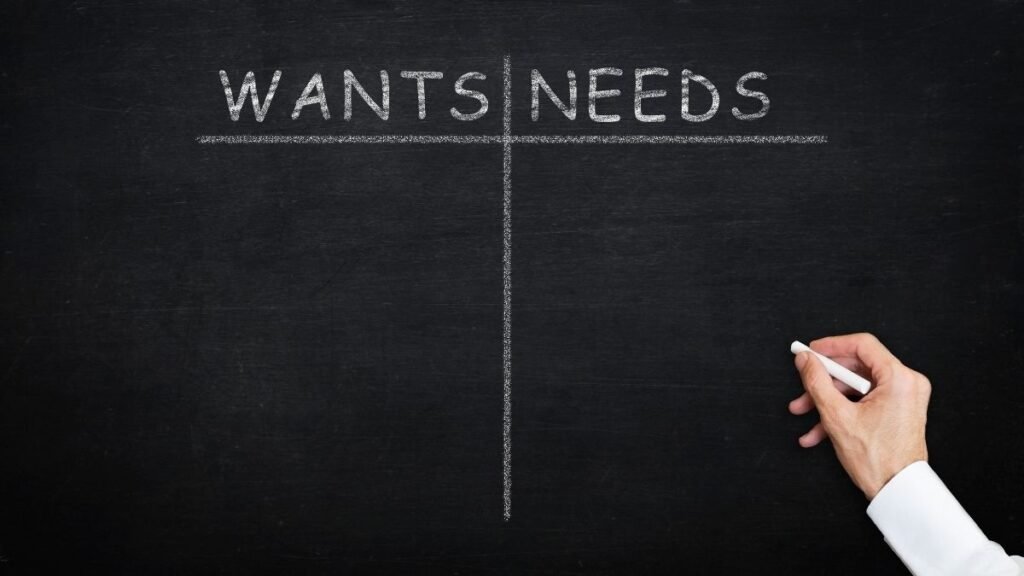
Michael’s spending improved when he started separating wants from needs.
The idea sounds obvious until a purchase is sitting in front of you.
A reliable car can be a need. Replacing a reliable two year old car because another model looks better is usually a want.
Food is a need. Restaurant food may be a want when groceries are waiting at home.
Clothing is necessary. Buying new clothes every week is usually something else.
A safe place to live is a need. The largest house a lender will approve is not automatically one.
The answer can change based on your work, health, family, location, and income. The goal is not to create rigid rules.
The goal is to become more honest about why money is leaving.
Minimalism gave Michael a stopping point
Later in life, Michael became attracted to minimalism and essentialism because they helped answer one useful question:
Does this add enough value to justify the money, space, care, and attention it requires?
He stopped treating every new purchase as progress.
That mattered at home too. A house can slowly fill with furniture, decor, kitchen tools, electronics, clothing, storage bins, and hobby supplies. Eventually, money is spent storing and organizing things that were supposed to make life better.
There is nothing wrong with decorating a home or buying something beautiful.
But a calm home does not require endless buying.
Sometimes the better purchase is no purchase at all.
Build the Cushion Before Life Forces You to Need It
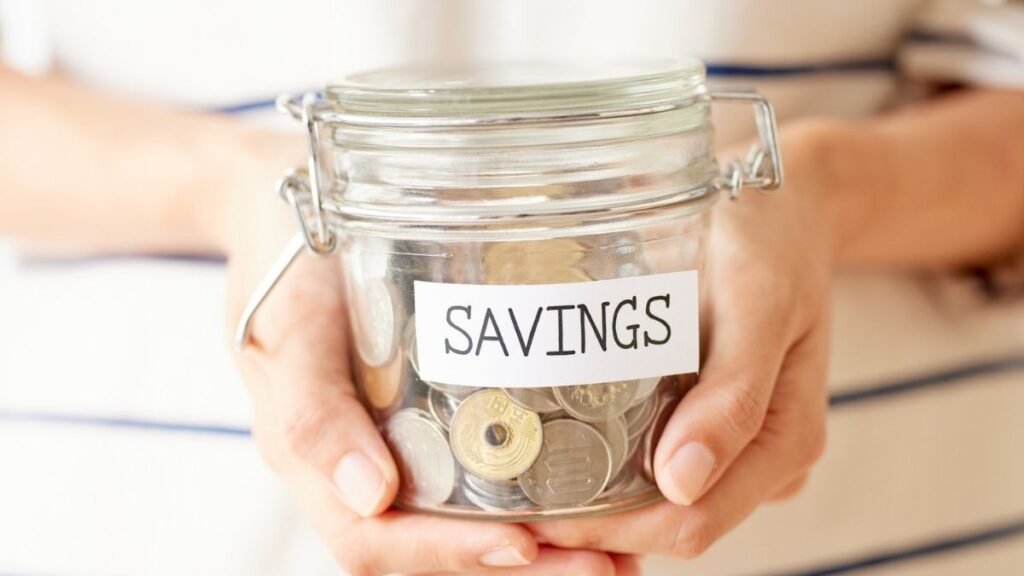
Michael’s parents lived very differently.
They were careful enough with money that at one point they could make a major life change using savings. Michael looked at that example years later and realized what savings had really purchased for them.
It had purchased time.
Emergency savings performs the same job on a smaller scale.
According to the Federal Reserve’s May 2026 report, 63 percent of adults said they could cover a hypothetical $400 emergency using cash, savings, or a credit card that would be paid off at the next statement. Another 12 percent said they could not cover the expense by any method.
The same report found that 55 percent had emergency savings covering three months of expenses. Thirty percent said they could not cover three months through their rainy day savings, other savings, borrowing, or selling assets.
These numbers help explain why financial breathing room matters.
Do not wait until you can save thousands
A three month emergency fund can sound impossible when you are starting with almost nothing.
So do not make three months the first goal.
Try a sequence:
- Build the first $250.
- Push it to $500.
- Work toward $1,000.
- Save one month of essential expenses.
- Keep building based on your job stability, household needs, insurance, and other risks.
Some households may need more than three months. Others may have competing goals, especially high interest debt.
The amount is personal.
The principle is simple: the more cash you have available for genuine emergencies, the less likely every problem is to become new debt.
Why High Interest Debt Can Keep You Stuck
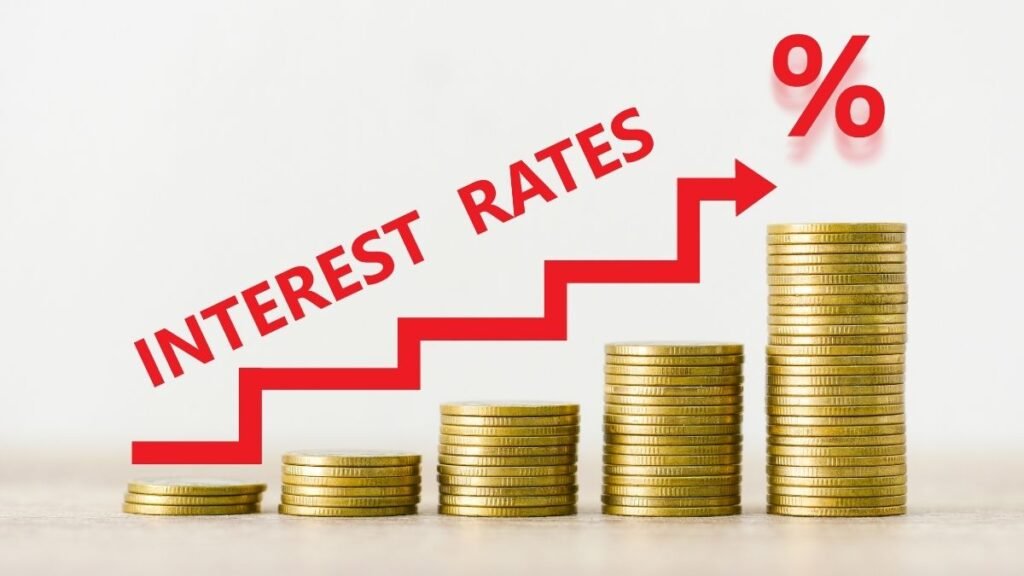
Michael eventually decided that carrying revolving credit card debt had to stop.
The math gives that decision some urgency.
Suppose a person carries a $5,000 credit card balance at about 22 percent interest. Without even considering new purchases, interest can consume a meaningful amount of money that could otherwise go into savings or debt reduction.
That is money being charged today for things bought yesterday.
For someone already struggling, telling them to pay every debt off immediately is not useful. Money for housing, food, utilities, medicine, transportation, and other basic needs comes first.
After those essentials are protected, a debt plan can begin.
Pick a debt strategy you can keep using
Two common approaches are simple.
The highest rate approach sends extra money to the debt with the highest interest rate while minimum payments continue on the others. This usually reduces interest cost faster.
The small balance approach attacks the smallest balance first. Clearing one account can create a quick win and free another monthly payment.
Neither method fixes overspending by itself.
If paid balances are immediately replaced with new purchases, the cycle starts again.
That was the larger lesson Michael had to learn. Debt payoff works best when the lifestyle that created the debt changes too.
/* ===================================================== LBYM INFOGRAPHIC All styles are isolated to this infographic only ===================================================== */#lbym-infographic, #lbym-infographic * { box-sizing: border-box; }#lbym-infographic { width: 100%; max-width: 1050px; margin: 35px auto; padding: 55px 45px; background: #ffffff; border-radius: 24px; box-shadow: 0 12px 35px rgba(0, 0, 0, 0.08); font-family: Arial, Helvetica, sans-serif; color: #25313b; line-height: 1.5; }/* HEADER */#lbym-infographic .lbym-header { text-align: center; margin: 0 0 45px; padding: 0; }#lbym-infographic .lbym-eyebrow { display: inline-block; margin: 0 0 16px; padding: 8px 14px; background: #e7f0ea; color: #32624f; border-radius: 30px; font-size: 13px; font-weight: 700; line-height: 1.4; letter-spacing: 1.5px; text-transform: uppercase; }#lbym-infographic .lbym-title { max-width: 760px; margin: 0 auto 15px; padding: 0; color: #17324d; font-family: Arial, Helvetica, sans-serif; font-size: 38px; font-weight: 700; line-height: 1.15; text-align: center; }#lbym-infographic .lbym-intro { max-width: 720px; margin: 0 auto; padding: 0; color: #66717b; font-family: Arial, Helvetica, sans-serif; font-size: 17px; font-weight: 400; line-height: 1.7; text-align: center; }/* GRID */#lbym-infographic .lbym-choices { display: grid; grid-template-columns: repeat(2, minmax(0, 1fr)); gap: 22px; width: 100%; margin: 0; padding: 0; }/* INDIVIDUAL CARDS */#lbym-infographic .lbym-choice { position: relative; margin: 0; padding: 28px 25px 25px; background: #faf9f5; border: 1px solid #e7e3d9; border-radius: 18px; }#lbym-infographic .lbym-choice:last-child { grid-column: 1 / -1; }#lbym-infographic .lbym-number { display: flex; align-items: center; justify-content: center; width: 46px; height: 46px; margin: 0 0 18px; padding: 0; background: #17324d; color: #ffffff; border-radius: 50%; font-size: 19px; font-weight: 700; line-height: 1; }#lbym-infographic .lbym-choice-title { margin: 0 0 10px; padding: 0; color: #243746; font-family: Arial, Helvetica, sans-serif; font-size: 21px; font-weight: 700; line-height: 1.3; }#lbym-infographic .lbym-choice-text { margin: 0 0 14px; padding: 0; color: #606a73; font-family: Arial, Helvetica, sans-serif; font-size: 15px; font-weight: 400; line-height: 1.65; }/* TAKEAWAY BOX */#lbym-infographic .lbym-takeaway { margin: 0; padding: 12px 14px; background: #ffffff; border: 0; border-left: 4px solid #c49a4a; border-radius: 8px; color: #394650; font-size: 14px; font-weight: 700; line-height: 1.5; }/* MONEY EXAMPLE BOX */#lbym-infographic .lbym-money-example { margin: 12px 0 0; padding: 13px 15px; background: #eaf3ed; border-radius: 10px; color: #2f5c49; font-size: 14px; font-weight: 700; line-height: 1.5; }/* FOOTER */#lbym-infographic .lbym-footer { margin: 35px 0 0; padding: 24px; background: #17324d; border-radius: 16px; color: #ffffff; text-align: center; }#lbym-infographic .lbym-footer-title { display: block; margin: 0 0 7px; padding: 0; color: #ffffff; font-size: 20px; font-weight: 700; line-height: 1.4; }#lbym-infographic .lbym-footer-text { display: block; margin: 0; padding: 0; color: #e3e9ee; font-size: 15px; font-weight: 400; line-height: 1.6; }/* MOBILE */@media only screen and (max-width: 760px) {#lbym-infographic { margin: 25px auto; padding: 35px 18px; border-radius: 16px; }#lbym-infographic .lbym-header { margin-bottom: 30px; }#lbym-infographic .lbym-title { font-size: 30px; line-height: 1.2; }#lbym-infographic .lbym-intro { font-size: 16px; }#lbym-infographic .lbym-choices { grid-template-columns: 1fr; gap: 18px; }#lbym-infographic .lbym-choice, #lbym-infographic .lbym-choice:last-child { grid-column: auto; }#lbym-infographic .lbym-choice { padding: 24px 20px; }#lbym-infographic .lbym-choice-title { font-size: 20px; } }7 Small Choices That Make Living Below Your Means Easier
Financial breathing room usually does not come from one huge sacrifice. It comes from small decisions repeated often enough to change where your money goes.
Wait Before You Buy
Give unplanned purchases time. Wait about 24 hours for smaller wants and longer before making an expensive purchase.
Eat What You Already Have
Restaurant spending costs even more when groceries at home spoil. Plan a few meals before shopping and use what is already in the kitchen.
Keep a Reliable Car Longer
Replacing a dependable vehicle too often can restart payments, fees, financing costs, and the steep costs tied to newer cars.
Review Your Subscriptions
Check bank and card statements several times a year for memberships and services you no longer use.
That is $720 over 12 months.
Keep Part of Every Raise
Do not let every increase in income become an increase in spending. Decide where part of the raise goes before your lifestyle expands.
Give Fun Spending a Limit
A budget should still leave room for enjoyment. Pick an amount for meals out, hobbies, entertainment, or other wants.
Make Saving Automatic
Set up a regular transfer after payday so saving does not depend on whatever happens to be left at the end of the month.

I’m Austin Becker, an advocate for living life with intention and resilience. I write for men who are actively navigating life’s major transitions, tackling the realities of reinvention and finding renewed purpose with grit and honesty. I believe that personal growth doesn’t have a deadline it’s about continuously gearing up for the chapters that matter most.
Through my work, I aim to strip away the clichés of modern manhood, offering practical, no-nonsense insights on health, mindset, and legacy for those who want to move forward with strength and clarity.