
Retirement sounds like freedom until the job title disappears and a harder question takes its place. Who is a person when the career that shaped decades of life is suddenly gone? For many retirees, the money may be planned, but the emotional side is not.
Mark discovered this after quietly retiring and rarely mentioning it to new people for five years. Without his career as an introduction, he began seeing how deeply work had shaped his routine, confidence, friendships, and sense of purpose.
His experience reveals 11 important lessons about retirement identity and building a meaningful life after work.
1. Your Job Title May Have Shaped More of Your Identity Than You Realized

For most of Mark’s adult life, describing himself was easy. His profession gave people a quick picture of his skills, responsibilities, experience, and place in society.
When that title disappeared, he still had the same knowledge and character. Yet he suddenly struggled to explain who he was without mentioning what he used to do for a living.
Research on retirement identity has found that leaving work can affect professional, personal, family, and social parts of identity. AARP also encourages people preparing for retirement to think beyond finances and consider how they will replace the structure and purpose that work once provided.
That realization changed the way Mark described himself. Instead of starting with an old position, he began thinking about qualities and roles that would still exist even if no employer ever called again.
He was a husband, father, grandfather, reader, problem solver, neighbor, mentor, and friend. Those identities had been there for years, but his career had often been louder than all of them.
A useful exercise is to describe yourself without mentioning employment. The answers can reveal parts of your identity that were pushed into the background while work took center stage.
2. Keeping Retirement Private Changed the Questions People Asked

Mark noticed something strange when he stopped introducing himself as retired. Conversations often became more interesting because people could no longer place him inside a simple career or retirement category.
They asked about his hobbies, family, interests, travel, books, neighborhood, and plans. Those questions gave Mark more room to speak about who he was now rather than explaining the career he had already left.
There is nothing wrong with calling yourself retired. The problem starts when retirement becomes the only label used to describe an entire person.
Retirement explains employment status. It does not explain curiosity, values, relationships, skills, interests, personality, or the things that still make someone excited to get out of bed.
| Narrow Description | Broader Description |
|---|---|
| Mark is retired | Mark enjoys woodworking and local history |
| Mark used to manage a company | Mark mentors younger business owners |
| Mark no longer works | Mark now controls more of his weekly schedule |
| Mark is a former executive | Mark is a husband, friend, reader, and mentor |
Mark eventually realized he did not need to hide retirement. He simply stopped treating it as the most important fact about himself.
That small change helped him see retirement as one part of life rather than the definition of everything that came after work.
3. Free Time Does Not Automatically Feel Like Freedom

Before retirement, Monday had a meaning. So did Friday, weekends, holidays, lunch breaks, deadlines, vacations, and the quiet relief that came after finishing a difficult week.
When Mark retired, those boundaries disappeared almost overnight. At first, having nowhere he needed to be felt wonderful, but after several months the days started blending together.
Bureau of Labor Statistics data shows how large the change in available time can become. Its analysis of the American Time Use Survey found that adults age 65 and older spend considerably more time on leisure activities than younger working age adults.
More free time sounds like an obvious benefit. Yet having extra hours and knowing how to use them in a satisfying way are two separate problems.
Mark eventually created a loose weekly pattern instead of a strict schedule. Exercise, errands, family visits, reading, projects, social time, and open afternoons each had a place.
He did not recreate his old work calendar. He created just enough rhythm to make Tuesday feel different from Saturday.
That distinction mattered. Retirement became more enjoyable once time had gentle structure without becoming another list of deadlines.
4. Productivity Can Follow You Home After the Career Ends

Mark stopped working, but the habit of measuring productivity came home with him. He initially treated retirement like another project that needed goals, progress, and visible results.
If he read a book, he wanted to finish it quickly. If he exercised, he wanted better numbers, and if he started organizing the house, he wanted every room completed.
Even hobbies began feeling like assignments. The career had ended, but the pressure to prove that every hour was useful had remained.
AARP notes that work can provide routine, identity, purpose, and social connection. When those things disappear, some retirees may try to replace them by filling every empty hour.
Mark slowly learned that retirement did not need another performance review. Some activities could exist simply because they were pleasant.
A walk did not need a fitness target. Reading did not need to become a yearly book challenge, and gardening did not need to produce the best yard on the street.
That became one of his most useful lessons. A satisfying day does not always need to be a productive day.
5. Some Work Friends Were Really Workplace Friends

Mark once spoke with certain colleagues almost every day. They ate meals together, solved problems, complained about difficult weeks, shared jokes, and sometimes knew more about his daily life than longtime friends did.
After retirement, several of those relationships faded surprisingly fast. It hurt at first, but Mark eventually realized that no argument or betrayal had occurred.
The workplace itself had been holding some of those connections together. When the shared office, meetings, deadlines, and projects disappeared, the reason for constant contact disappeared too.
The National Institute on Aging warns that social isolation and loneliness can become important concerns later in life. Retirement can increase that risk when people lose the casual contact that once happened naturally at work.
Mark started paying more attention to relationships that existed beyond a professional setting. He also stopped saying, “We should get together sometime,” and started suggesting an actual day.
| Type of Relationship | What Mark Learned | What Helped |
| Close friends | Strong bonds often survive retirement | Calls, meals, visits, and shared activities |
| Work friends | Some friendships need more effort after work | Making real plans instead of vague promises |
| Work acquaintances | Many connections naturally fade | Accepting change without taking it personally |
| New friends | Retirement can create room for new connections | Clubs, volunteering, classes, and hobbies |
Mark also made new friends who had never known his professional title. Those relationships felt different because they were built around the person he had become rather than the position he once held.
Retirement can remove an automatic social network. That makes deliberate friendship far more important than many people expect.
6. Being Needed Feels Different From Simply Being Busy

During Mark’s career, somebody usually needed an answer. Employees wanted decisions, clients wanted updates, projects needed approval, and his phone constantly reminded him that people were waiting.
Retirement made the phone quieter. At first, Mark enjoyed the silence, but after some time that silence occasionally felt like evidence that he no longer mattered.
The feeling helped him recognize something important. He did not miss packed meetings nearly as much as he missed contribution.
So Mark began finding smaller ways to be useful. He helped a younger relative prepare for an interview, assisted neighbors with practical problems, and occasionally shared career lessons with people who actually asked for them.
Research on volunteering among older adults has found links between helping others and several positive measures of well being. The National Institute on Aging also lists volunteering and community involvement among ways older adults can stay connected and active.
Still, Mark learned to keep limits. Retirement was not supposed to turn him into the unpaid assistant for everyone around him.
Helping people gave him purpose. Protecting some of his own time gave him freedom.
7. Retirement Can Quietly Change a Marriage
Before retirement, Mark and his wife naturally spent parts of their days apart. Each person had routines, responsibilities, social connections, and quiet hours that did not involve the other.
Then Mark suddenly began spending much more time at home. He started noticing household routines that had existed for years without his involvement.
He had opinions about errands, meals, shopping, chores, and how the day should be organized. His wife, however, already had a routine that worked perfectly well before his retirement.
That created a lesson neither of them had expected. More time together does not automatically create better time together.
Retirement can work better when couples discuss what they want their days to look like. Shared activities matter, but individual interests and personal space can matter just as much.
Mark kept his projects and friendships. His wife kept hers, and they also created plans that belonged to both of them.
A strong retirement relationship does not require two people to spend every hour together. It gives both people room to remain individuals while still building a shared life.
8. Most People Were Not Watching Mark as Closely as He Thought

Years of professional life had trained Mark to expect judgment. Clients evaluated results, managers noticed mistakes, coworkers compared performance, and important decisions could affect other people.
That habit remained after retirement. Mark sometimes acted as though an invisible audience was still evaluating how well he was using his life.
He wondered if he was traveling enough, exercising enough, learning enough, volunteering enough, or doing retirement the right way. Eventually, he noticed something freeing.
Almost nobody was keeping score. Most people were busy thinking about their own lives.
That realization made it easier for Mark to become a beginner again. He could try an activity without needing to become skilled at it or explain why it mattered.
He attended events that turned out to be boring. He tried interests that lasted only a few weeks, and he tested hobbies that became important parts of his routine.
Retirement gave Mark something his career rarely offered. He could experiment without turning every interest into proof of success.
9. Purpose Became Smaller, Quieter, and More Personal

Mark once thought purpose had to sound impressive. It meant building something, leading people, reaching a difficult goal, or leaving behind something that others would recognize.
Retirement slowly changed that idea. Purpose began appearing in ordinary moments that would never belong on a professional resume.
A 2025 review of research on meaning during retirement found that leaving work can challenge a person’s sense of meaning. It also showed that meaning after retirement can come from different parts of life rather than one universal source.
Mark saw that in his own routine. Helping a grandchild with homework could matter, and so could calling a lonely friend, fixing something for a neighbor, growing vegetables, or mentoring someone younger.
The National Institute on Aging encourages older adults to stay involved in enjoyable, social, creative, and productive activities. Those activities can support connection and give days a stronger sense of direction.
Mark eventually stopped asking if an activity looked important. He started asking if it felt meaningful.
That was a much better test. Purpose did not need applause to be real.
10. A Strong Retirement Identity Needs Several Pieces
For a while, Mark searched for one new label that could replace his old professional identity. Eventually, he realized that approach could create the same problem all over again.
If he replaced “executive” with “golfer,” his identity would still depend heavily on one role. The same problem could happen if he built everything around being a grandparent, volunteer, traveler, or hobbyist.
A broader identity proved more stable. Mark began seeing himself as a collection of relationships, interests, skills, values, and responsibilities.
| Identity Area | Question to Ask | Example |
| Relationships | Who matters most? | Partner, friend, parent, grandparent |
| Skills | What can still be shared? | Teaching, repairing, cooking, mentoring |
| Interests | What creates curiosity? | History, gardening, music, photography |
| Community | Where can contribution happen? | Library, charity, neighborhood, club |
| Growth | What is still worth learning? | Art, language, technology, fitness |
| Daily life | What makes an ordinary day enjoyable? | Reading, walking, cooking, nature |
This wider identity gave Mark more emotional stability. If one hobby stopped being possible, he still had many other parts of himself.
The same was true when friendships changed or a volunteer role ended. One change no longer threatened his entire sense of self.
That may be one of the strongest ways to build retirement identity. Do not replace one narrow label with another narrow label.
11. Retirement Became Easier When Mark Stopped Explaining Himself
For years, Mark felt he needed a good answer when someone asked what he did. His old career had always provided one within seconds.
Eventually, he stopped preparing a response. Sometimes he said he was retired, and other times he talked about a project, hobby, family plan, or something interesting he had done recently.
He no longer felt responsible for making retirement sound impressive. That reduced a surprising amount of pressure.
Paid work teaches many people to connect value with output, status, deadlines, and income. Retirement can expose how strongly those ideas have become tied to self worth.
Yet useful contributions continue outside employment. Family support, friendship, mentoring, volunteering, caregiving, creative work, and community involvement may produce no salary but can still matter greatly.
Some retirees also choose to return to paid work. AARP notes that people may work again for money, social connection, personal interest, or a renewed sense of purpose.
Mark eventually stopped asking what a retired person was supposed to do. He began asking what kind of life made sense for him now.
The second question gave him far more freedom than the first.
What Mark’s Five Years Reveal About Retirement Identity
Retirement planning often focuses heavily on savings, pensions, health costs, and housing. Those issues are important, but they do not answer every question a person faces after leaving work.
A career may have quietly provided structure, community, status, goals, responsibility, and recognition for decades. When it ends, each of those things may need a new source.
| What Work Once Provided | What Can Replace It |
| Daily structure | A flexible weekly routine |
| Status | Confidence based on values and character |
| Social contact | Friends, family, clubs, and community |
| Goals | Learning, hobbies, and personal projects |
| Responsibility | Mentoring, volunteering, and caregiving |
| Recognition | Meaningful relationships and inner satisfaction |
| Professional identity | Several personal roles and interests |
The replacement does not need to look impressive to other people. It only needs to make life feel connected, useful, interesting, and worth participating in.
Mark’s experience also shows why emotional preparation deserves a place beside financial preparation. A funded retirement can still feel empty if a person has no idea what will replace the parts of life that work quietly provided.
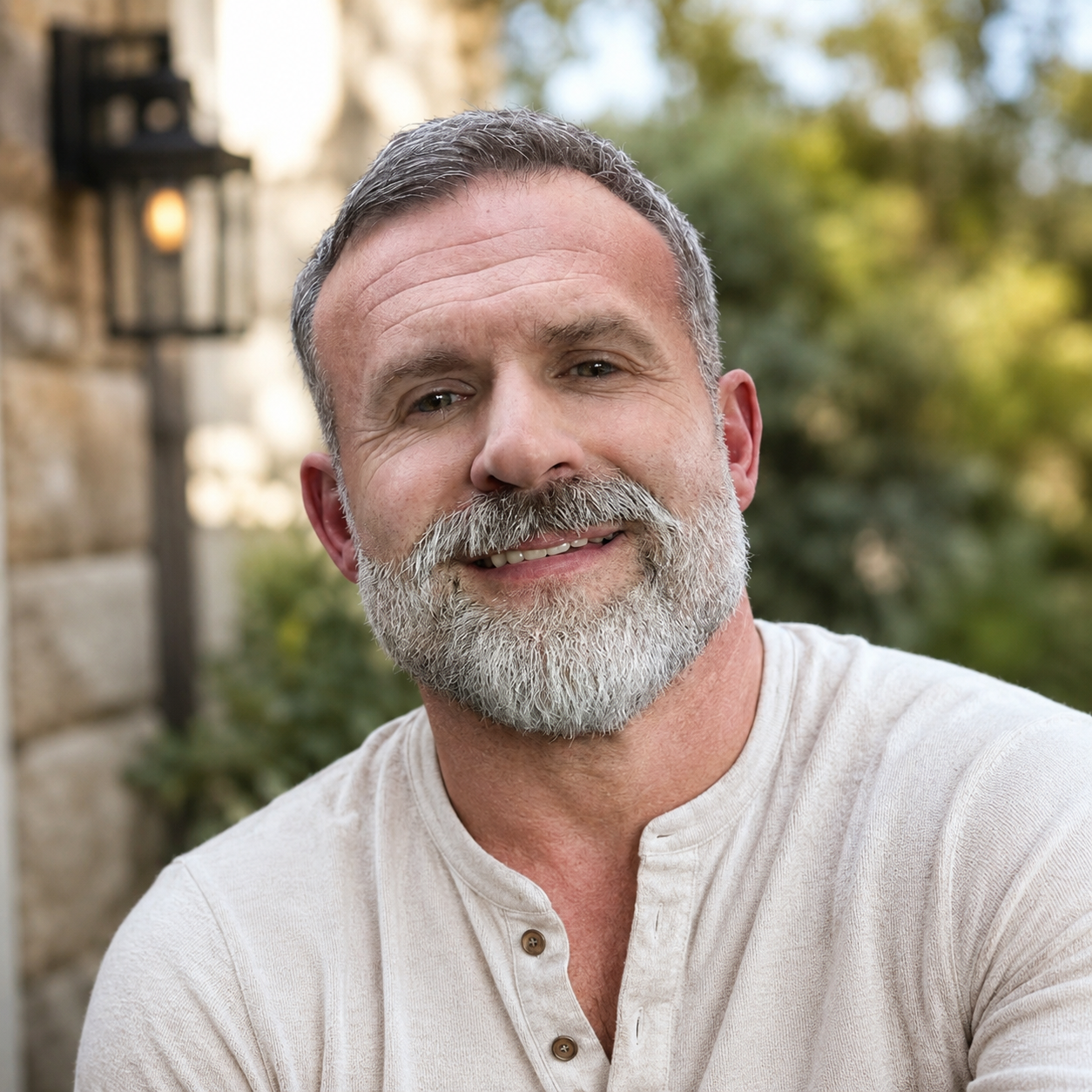
I’m Austin Becker, an advocate for living life with intention and resilience. I write for men who are actively navigating life’s major transitions, tackling the realities of reinvention and finding renewed purpose with grit and honesty. I believe that personal growth doesn’t have a deadline it’s about continuously gearing up for the chapters that matter most.
Through my work, I aim to strip away the clichés of modern manhood, offering practical, no-nonsense insights on health, mindset, and legacy for those who want to move forward with strength and clarity.