
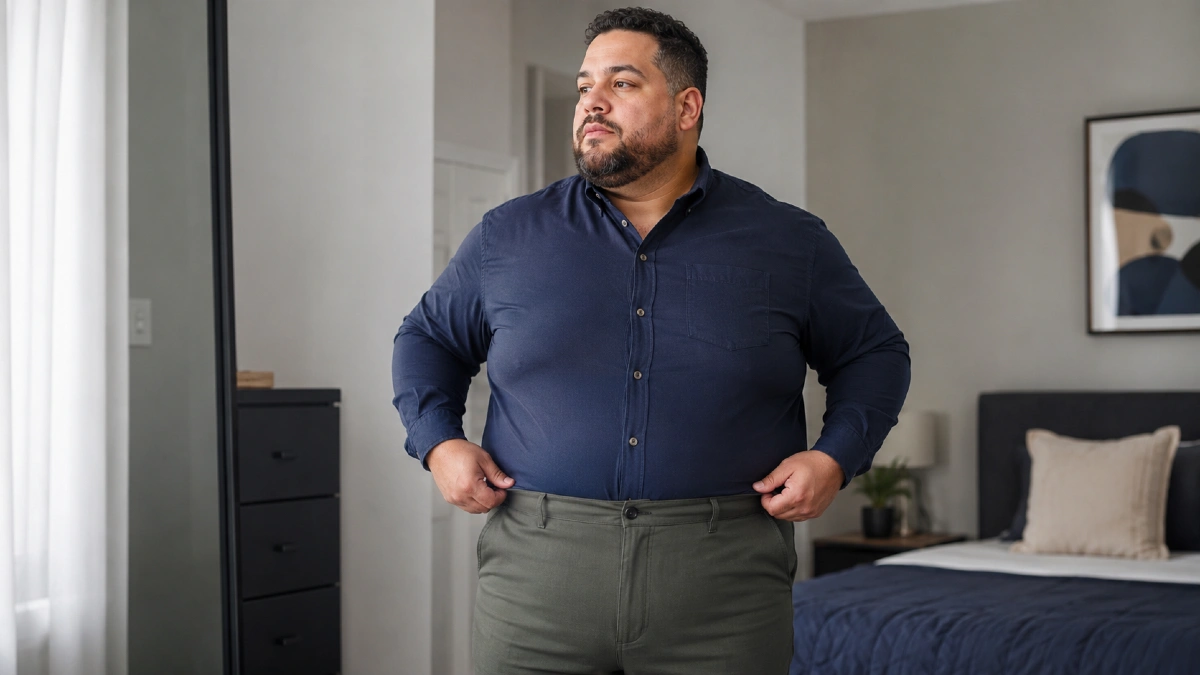
Somewhere between standing up from lunch and walking back through the office, it happens again. Front of the shirt has crept up, belly’s out, and you’re tucking it back down hoping nobody noticed.
Most advice for this problem points you toward buying a longer shirt and most men try that and end up right back here. The actual cause has nothing to do with shirt length alone, and once you understand it, the fix becomes obvious.
Why Your Shirt Front Is Always Shorter Than Your Shirt Back
Your belly doesn’t just add width it pushes the front of your shirt outward, and that single fact explains why no shirt ever seems long enough.
Picture a tent pole. Pushing it into the ground pulls fabric up and outward from the center the canvas rises and the outside edges climb. That same thing happens to the front of your shirt every time you stand up. Fabric that used to point downward now points forward, and the hem has nowhere to go but up.
Here’s what that actually looks like in sequence:
- Shirt lays flat front and back equal in length
- Belly pushes the front fabric several inches outward
- Those forward-pointing inches stop hanging down
- Front hem climbs upward to compensate
- Back hem stays put nothing is pushing it forward
Sizing up doesn’t fix this. A bigger shirt adds fabric at the chest and hips, but your belly still consumes the same amount of front-hem length regardless of size. Same physics. New shirt. Identical problem.
Sizing Up Makes the Hem Circumference Tighter, Not Looser Here’s Why
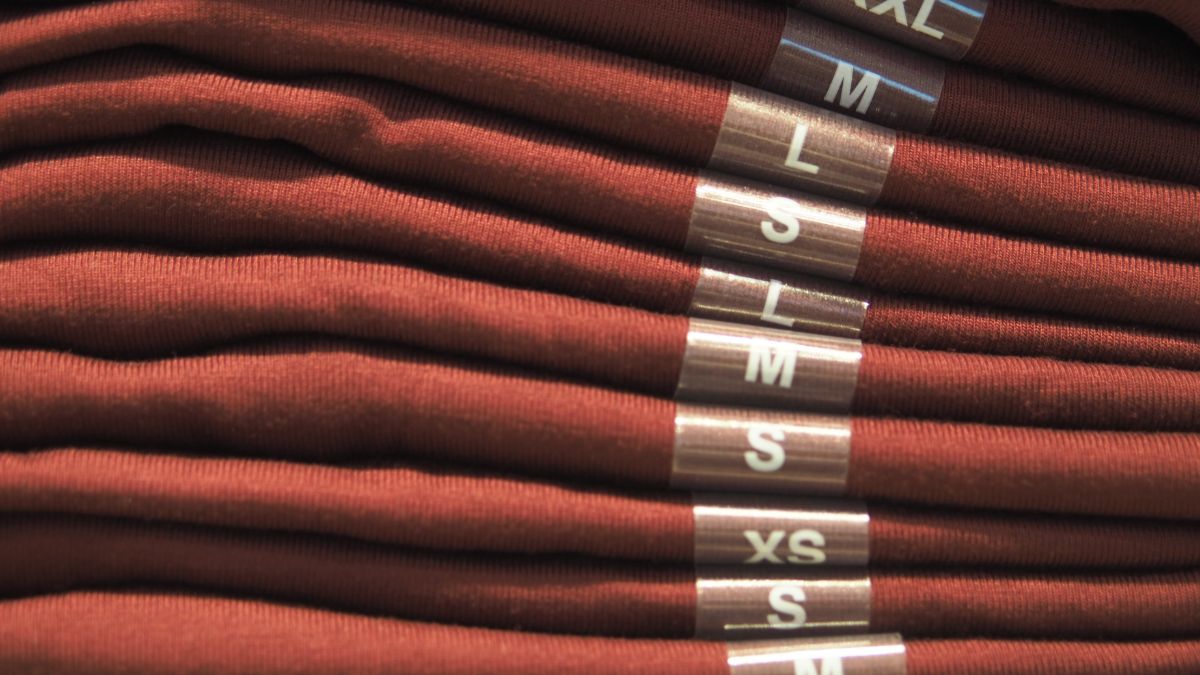
Most men assume a bigger shirt means more coverage more fabric, more length, problem solved. Standard sizing doesn’t actually work that way. When manufacturers scale a shirt up a size, they add width across the chest and shoulders first, then nudge the length by a small amount, sometimes nothing at all.
Here’s what actually changes when you go up one shirt size:
- Chest width: increases
- Shoulder seam: moves outward
- Body length: may gain a centimeter or two often less
- Hem circumference: grows slightly, but in proportion to the chest not to a forward-projecting belly
That last point is the one that gets most men. Shirts are designed assuming your belly and chest sit at roughly the same depth front-to-back. Yours probably don’t.
A belly that pushes forward past your chest line needs significantly more hem circumference than a standard shirt offers at any size and when that hem can’t wrap around your widest point without pulling tight, it gets pushed upward instead.
Tighter hem. More upward pressure. Bigger problem.
Going up a size can actually make this worse, because the extra fabric ends up sitting at your chest and shoulders while the hem stays snug right where the tension is highest.
The Two Numbers You Need to Measure Before Buying Another Shirt
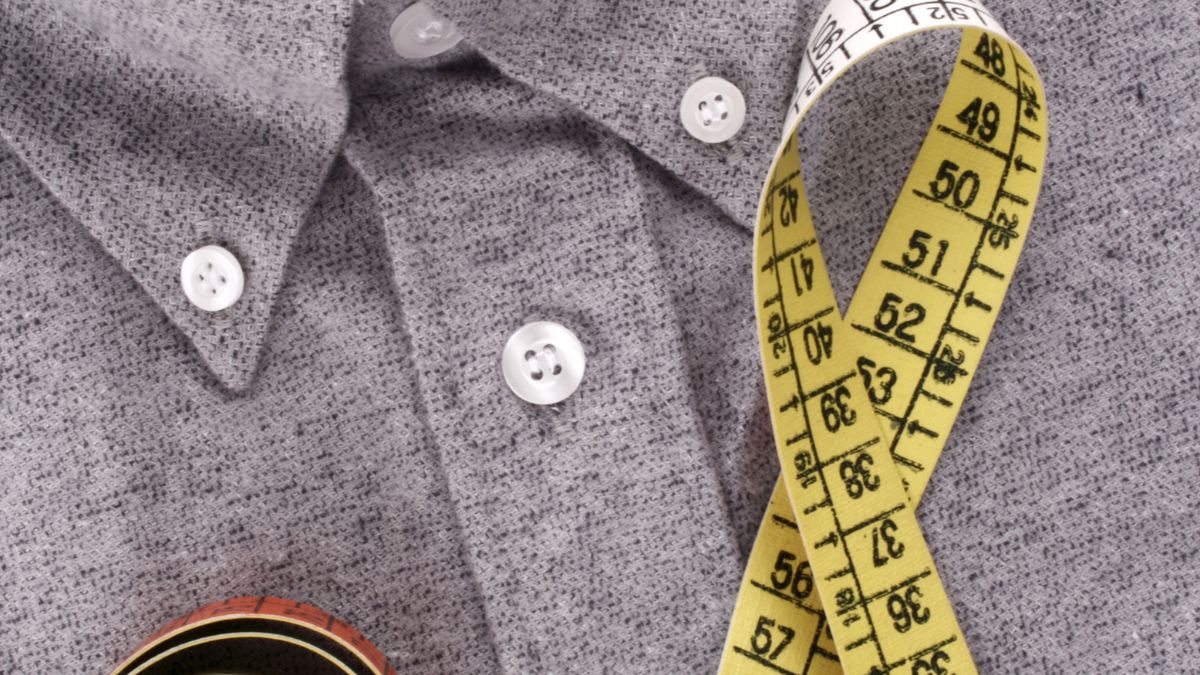
Chest size is printed on every tag. Front length and hem circumference are not and those are the two numbers that actually determine whether a shirt rides up on you, regardless of what brand or size you’re buying.
Front length is measured from the top of your shoulder, down over the front of your belly, to where you want the hem to sit. Most men measure shirt length along the back, where the tape lies flat against the body. That number is almost useless for you. Measuring over the belly gives you the real front distance the one that includes your projection.
Hem circumference is the distance around the bottom edge of the shirt. Fabric that can’t wrap past your widest point without pulling tight will always ride up.
How to take both measurements at home:
- Front length: stand naturally, tape at the shoulder, run it straight down and over your belly to your waistband
- Hem circumference: wrap the tape around your belly at its widest point usually just above the navel then add 4–6 inches of ease
| Measurement | Start point | End point | Add for ease |
|---|---|---|---|
| Front length | Top of shoulder | Waistband (front) | 1–2 inches |
| Hem circumference | Widest belly point | Full wrap | 4–6 inches |
Many brands publish hem width in their size charts as a flat measurement. Double that number to get the circumference then compare it to yours before ordering.
Where Your Pants Sit Is Half the Shirt-Riding Up Problem

Pulling your shirt down all day might actually be a pants problem in disguise. When your waistband sits below your belly which happens naturally with low or standard-rise pants on a heavier frame the front of your torso becomes dramatically longer than the back, measured from shoulder to waistband. Shirts that would cover you fine at a higher rise simply run out of length too soon.
Position matters more than size. Every inch your waistband drops below your belly adds roughly an inch of front-torso coverage your shirt needs length the back of the shirt doesn’t need at all.
| Waistband position | Front torso demand | Likely outcome |
|---|---|---|
| High rise (above belly) | Shortest | Shirt stays down |
| Natural waist (at belly) | Moderate | Manageable |
| Low/standard rise (below belly) | Longest | Shirt rides up |
Raising the waistband even one or two inches reduces how much front length your shirt needs zero new shirts required. Comfort is the usual objection.
How to wear pants higher without the waistband digging in:
- Choose pants with a comfort or adjustable waistband these sit higher without creating pressure across the belly
- Try suspenders they hold pants at exactly the height you set with no belt needed at all
- Avoid low-rise cuts even if the waist measurement fits, the rise controls where the band actually lands on your body
- Skip cinching a belt tight use a looser fit or internal button tab to hold position instead
What to Look for on the Shirt Itself Hem Style, Fabric, and Cut
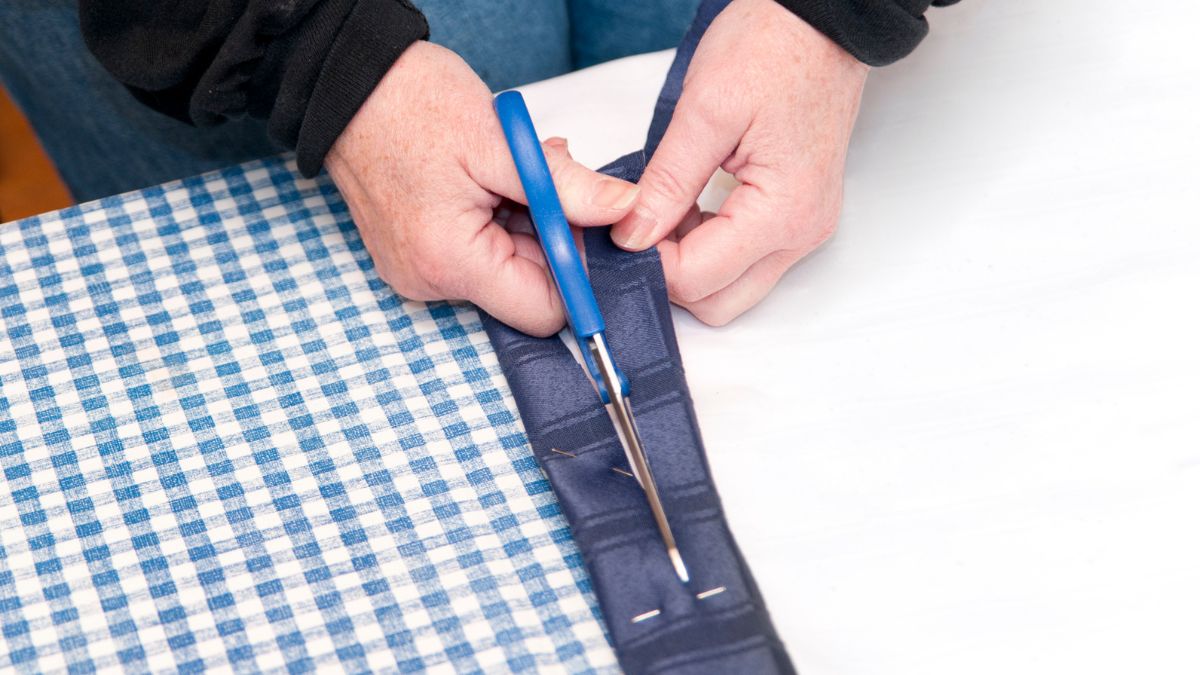
Not all shirts are built the same, and three specific details on any shirt hem style, fabric, and cut will predict whether it stays down before you ever try it on.
Hem style is the first thing to check. A straight hem sits flat all the way around, which means even contact with your waistband and more friction to hold position. A curved shirttail hem dips lower at the back and rises at the sides, creating less fabric coverage at exactly the points where riding up starts.
Fabric weight and texture determine grip. Smooth synthetic blends polyester, rayon, modal slide against smooth waistbands with almost no resistance. Heavier cotton and cotton-linen blends create natural friction and stay put far better.
| Fabric type | Grip level | Riding-up risk |
|---|---|---|
| Heavy cotton / cotton-linen | High | Low |
| Standard cotton jersey | Medium | Medium |
| Polyester / rayon blends | Low | High |
| Smooth modal or bamboo | Low | High |
Cut is where most men get tripped up:
- Big & tall sizing adds both width and vertical length, including front length this is what you want
- Extended sizes (2X, 3X, 4X) often just scale up a standard proportioned shirt more width, minimal added length
- Relaxed fit over athletic fit athletic cuts taper at the hem, reducing the circumference right where you need room most
Seek out big & tall specifically when length is the problem. Extended sizing alone rarely solves it.
How to Wear Shirts Untucked Without Them Riding Up or Looking Sloppy
A longer undershirt tucked into your pants is the most underused fix for untucked shirts and it costs less than $20 to test today. The outer shirt rests against the undershirt, friction holds both layers in place, and the riding-up cycle stops before it starts.
Fabric-on-fabric grip is doing the work here. Your outer shirt isn’t anchored to anything on its own but an undershirt tucked firmly into your waistband gives it something to cling to, even through movement, sitting, and reaching.
What to look for in a base layer:
- Length: must reach at least 4–5 inches below your natural waist when tucked short undershirts defeat the purpose entirely
- Fit: snug enough to stay tucked without bunching, not so tight it shows through
- Fabric: cotton or cotton-blend grips better than slippery synthetics
- Color: match your skin tone or outer shirt color so it stays invisible at the hem
| Undershirt length | Stays tucked through movement | Works as anchor layer |
|---|---|---|
| Standard length | Often not | Unreliable |
| Long / tall length | Yes | Yes |
| Extended length undershirt | Yes | Best option |
Beyond the anchoring effect, this method also makes untucked shirts look more deliberate. When a shirt stays at a consistent hem length throughout the day, it reads as a style choice rather than a shirt struggling to cover what it should. Length consistency is what separates intentional untucked from accidental untucked.
Tall-specific undershirts exist from several brands and are worth searching for by that term specifically.
Shirt Stays Exist and Plus-Size Men Who Tuck In Should Know About Them
Military personnel and police officers have used shirt stays for decades to keep their shirts locked in place through physical activity, long shifts, and formal inspections. Almost nobody in plus-size style content talks about them. That gap is worth closing.
Shirt stays are elastic straps that clip to the bottom of your shirt and attach either to your socks or around your thighs, holding the shirt down under constant tension regardless of how much you move. Tucked stays tucked. Simple mechanism. Surprisingly effective.
Two main types exist, and they suit different situations:
- Leg strap style: loops around the thigh and clips to the shirt hem stays hidden under pants, works well for everyday wear and longer days on your feet
- Sock style: runs down the leg and clips to the sock more secure hold, better for formal occasions or situations where you genuinely cannot afford to come untucked
| Type | Best for | Visibility risk | Hold strength |
|---|---|---|---|
| Leg strap | Everyday, office | Low | Medium–high |
| Sock/stirrup | Formal, events | Very low | High |
Worth using when:
- You tuck in regularly and the undershirt-anchor method isn’t enough
- Formal occasions demand a sharp, stayed look all day
- Physical activity is involved bending, lifting, sitting for hours
Finding the right length matters. Look for adjustable styles that allow you to set the tension without pulling the shirt hem out of shape at the sides.

Hello there! I’m Jesse Joe, the author and editor behind SolganGenius. I’m thrilled you’ve stopped by, and I can’t wait to share with you the essence of what this platform is all about.
I’m a writer, social media enthusiast, and a firm believer in the power of words. I’ve always been fascinated by how a simple phrase or slogan can capture an emotion, convey a message, and even change perspectives. Learn More