
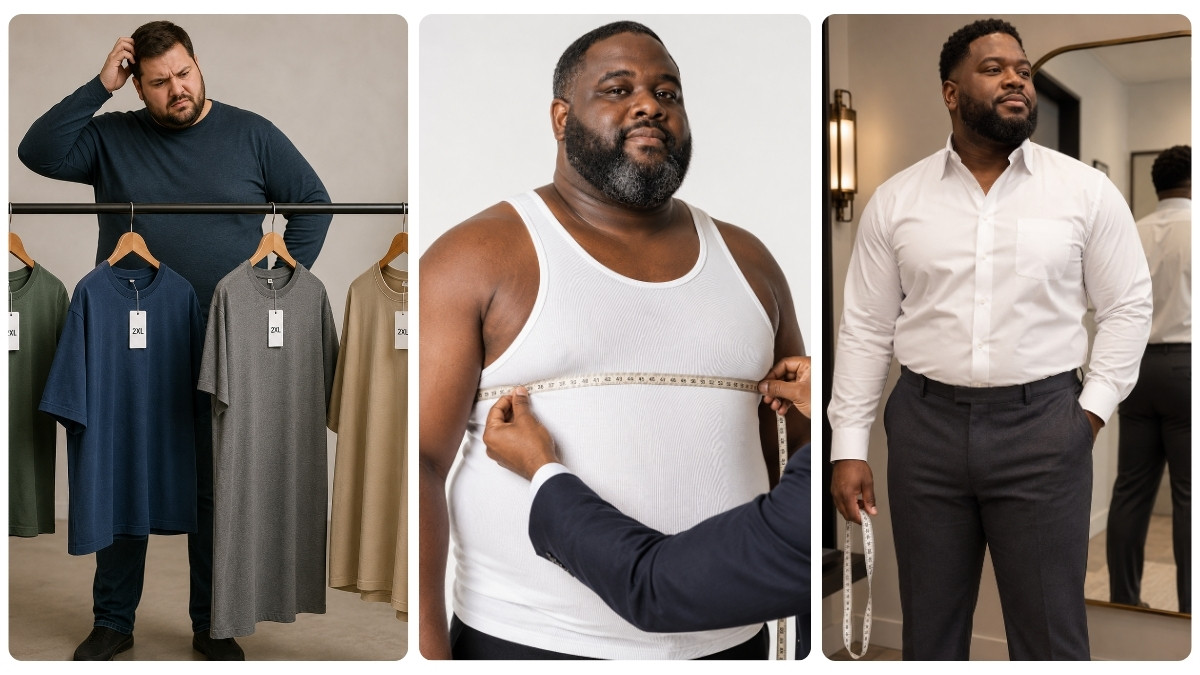
Ordering a shirt in your usual size, waiting a week for it to arrive, and then standing in front of the mirror wondering why it pulls across the chest and barely reaches your waistband. That has happened to almost every bigger guy shopping online. So you size up, and suddenly there is too much fabric everywhere except where you actually needed more room.
Sizing as a plus size man is not random bad luck. Most men are shopping off tag numbers that have nothing to do with how their body is actually built. Getting this right starts with knowing your real measurements, understanding how brands categorize extended sizing, and learning what a proper fit actually looks like on your frame.
This article walks you through each of those steps in order, so the next time you shop, you are making an informed decision instead of taking a guess.
Why the Tag Size Is Lying to You
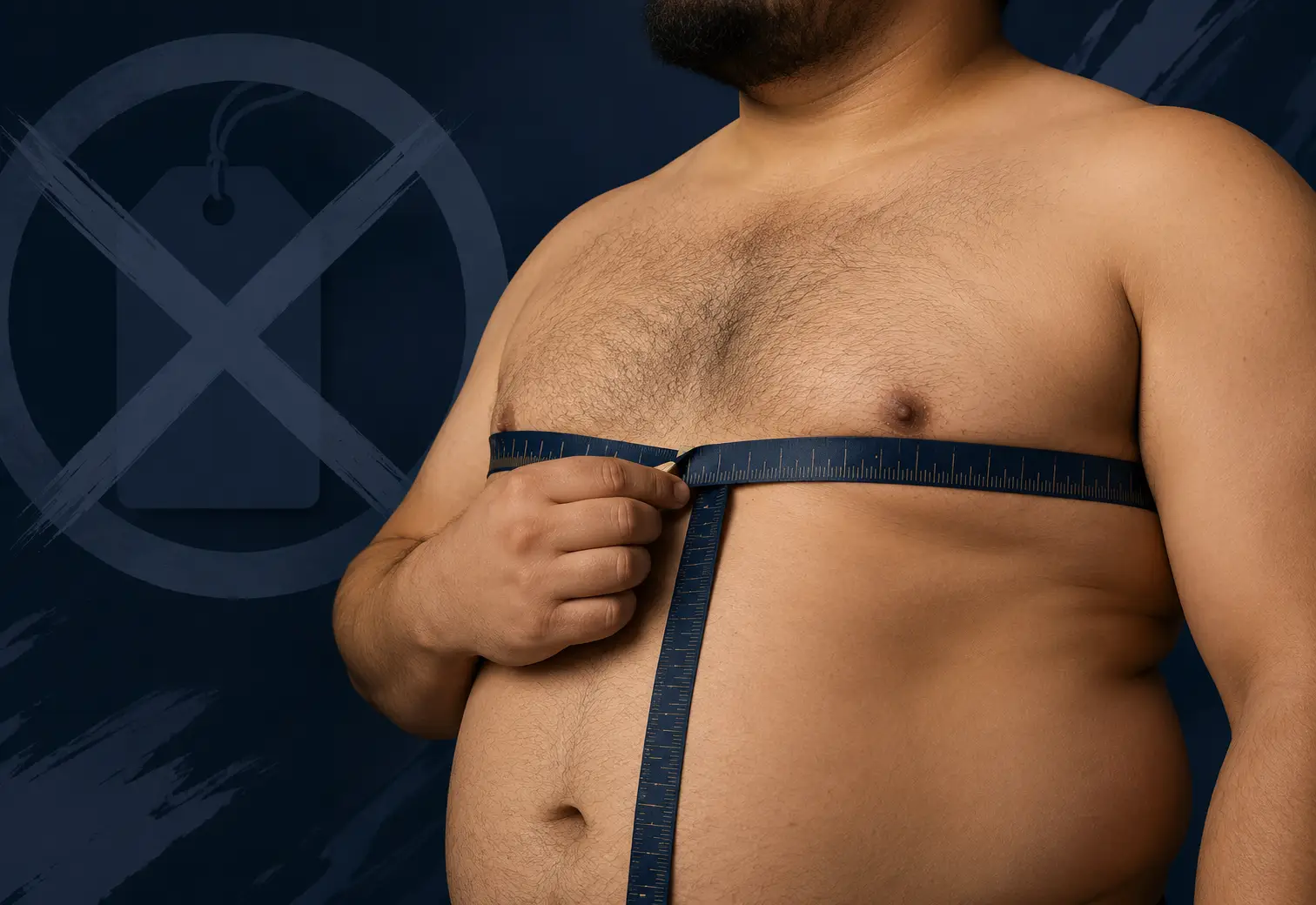
That number on the tag is a marketing decision, not a measurement. Brands have been quietly adjusting garment sizes for decades to make customers feel slimmer than they actually are, so a 2XL from one label can fit completely differently than a 2XL from another. For tuxedos and formal jackets, your tuxedo size might not match your regular clothes size at all.
Shopping by tag alone sets you up to fail. Suit and tuxedo jacket numbers relate to chest size, but not your exact chest measurement. Two inches of difference in how a brand cuts the shoulder can make a jacket look sharp or completely off. Your body stays the same. The tags change every time you switch brands.
The only reliable approach is knowing your actual body measurements and comparing them against each brand’s specific size chart. That single shift, from chasing a number to knowing your inches, is what separates guys who consistently find great fits from guys who keep returning orders.
The Five Measurements You Need Before You Buy Anything
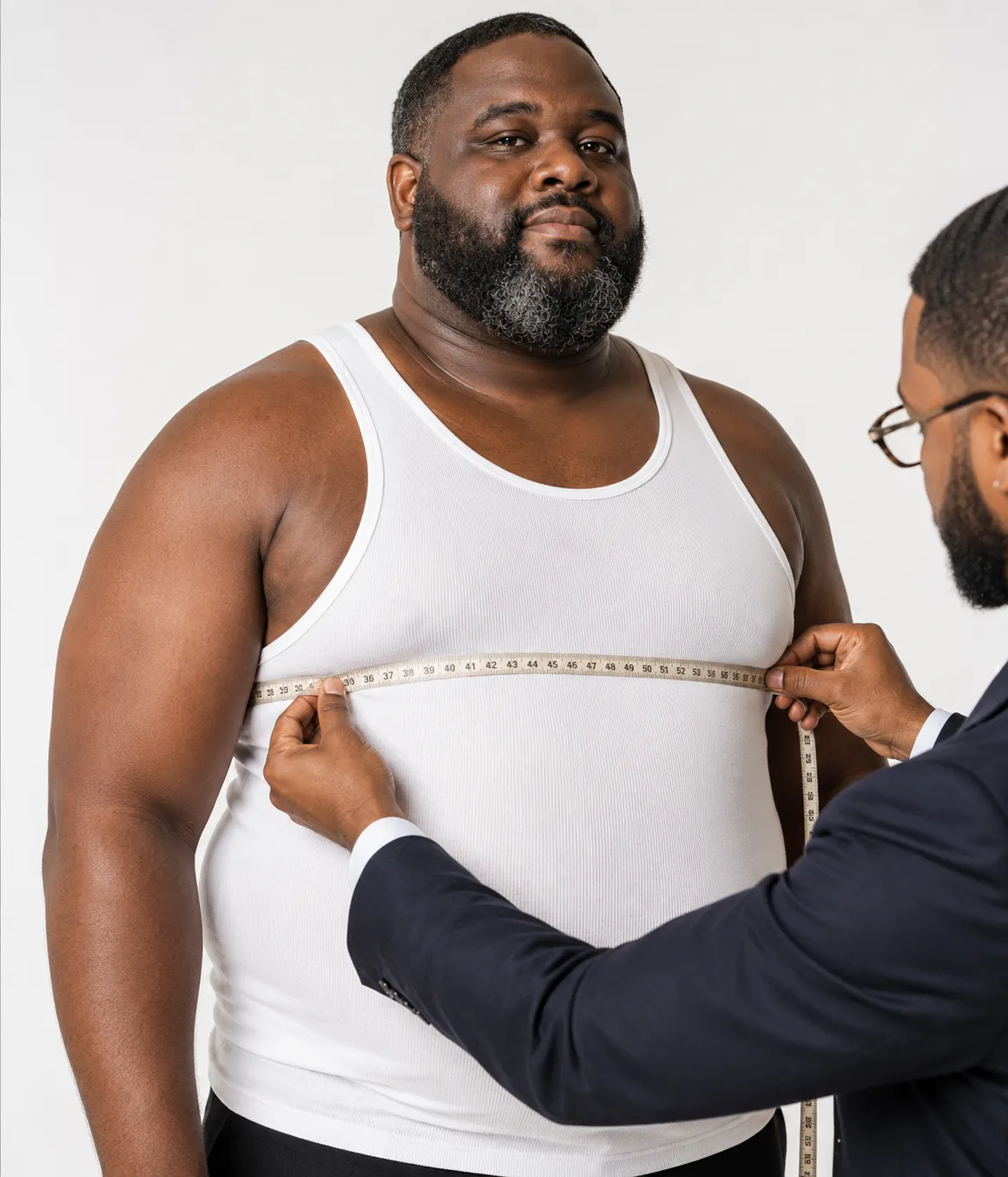
Grab a soft measuring tape before you open a single product page. That one step saves you from buying the wrong tux twice. You need five numbers: neck, chest, true waist, hips/seat, and inseam.
For your neck, wrap the tape just below your Adam’s apple where a collar would sit. Keep one finger between the tape and your skin so you can actually breathe in the shirt. Chest comes next. Pull the tape across the fullest part of your chest, just under your armpits, with your arms relaxed at your sides. Do not pull tight. The tape should lie flat, not dig in.
Your true waist sits about an inch above your belly button, at the narrowest point of your torso. Most men measure too low and end up with trousers that gap at the back.
- Neck: Wrap the tape around the base of your neck, placing two fingers under the tape for breathing room.
- Chest: Measure around the fullest part of your chest, right under your armpits.
- Waist: Measure around your natural waistline (just above the hip bones, where you normally wear your pants).
Know Your Body Shape
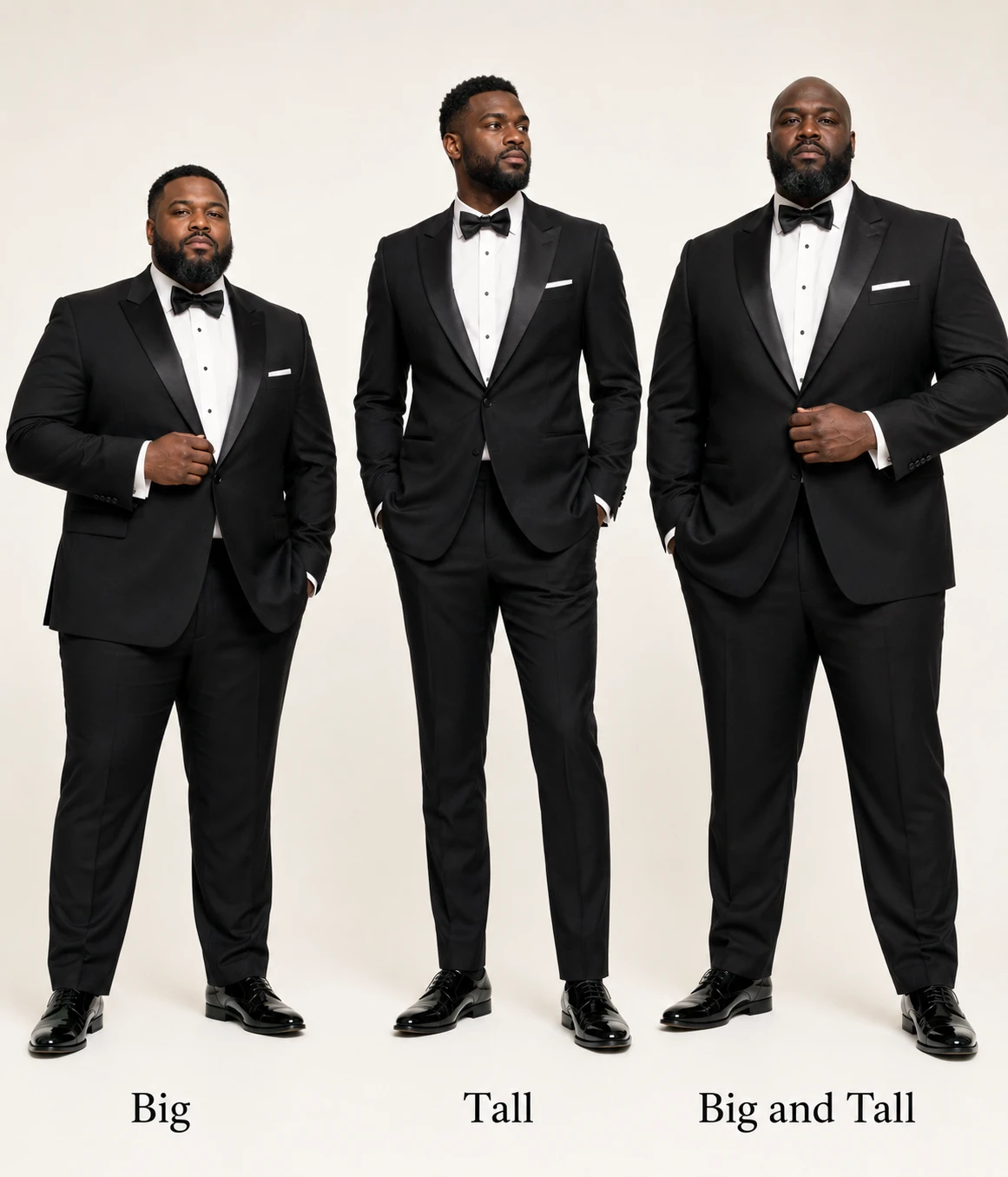
Most men shop the wrong category for years without knowing it. The difference between “big,” “tall,” and “big and tall” is not just a label. Each one solves a different fit problem, and picking the wrong one means a tuxedo that works in one area and falls apart everywhere else.
“Big” sizing is about width. Sizes labeled 2XL, 3XL, and up are cut to give more room through the chest, shoulders, and stomach. If you are broader but stand at average height, this is your category. A tuxedo jacket in big sizing will close across your chest and sit right on your shoulders. The sleeves and torso length stay close to standard.
“Tall” sizing adds length to the torso, arms, and legs to match the proportions of taller men. Tall cuts give you extended sleeve lengths, longer shirt tails that stay tucked in, a deeper trouser rise, and a longer inseam.
If you are around 6’2″ or above without a significantly larger build, tall is your lane. Buying “big” instead means a jacket that fits your chest but piles fabric at your hips and cuts short at the wrists.
- Apple Shape: Carries most weight around the midsection with proportionally slimmer arms and legs. Look for relaxed-fit or classic-fit shirts that offer extra room in the belly without being overly baggy in the sleeves.
- Pear Shape: Narrower shoulders and chest with wider hips and thighs. Focus on well-tailored jackets and tapered or straight-leg pants to balance your silhouette.
- Tall/Big: If you are taller, “Big” sizes offer a wider cut, while “Tall” sizes add extra length to the torso and sleeves.
Compare Against Size Charts
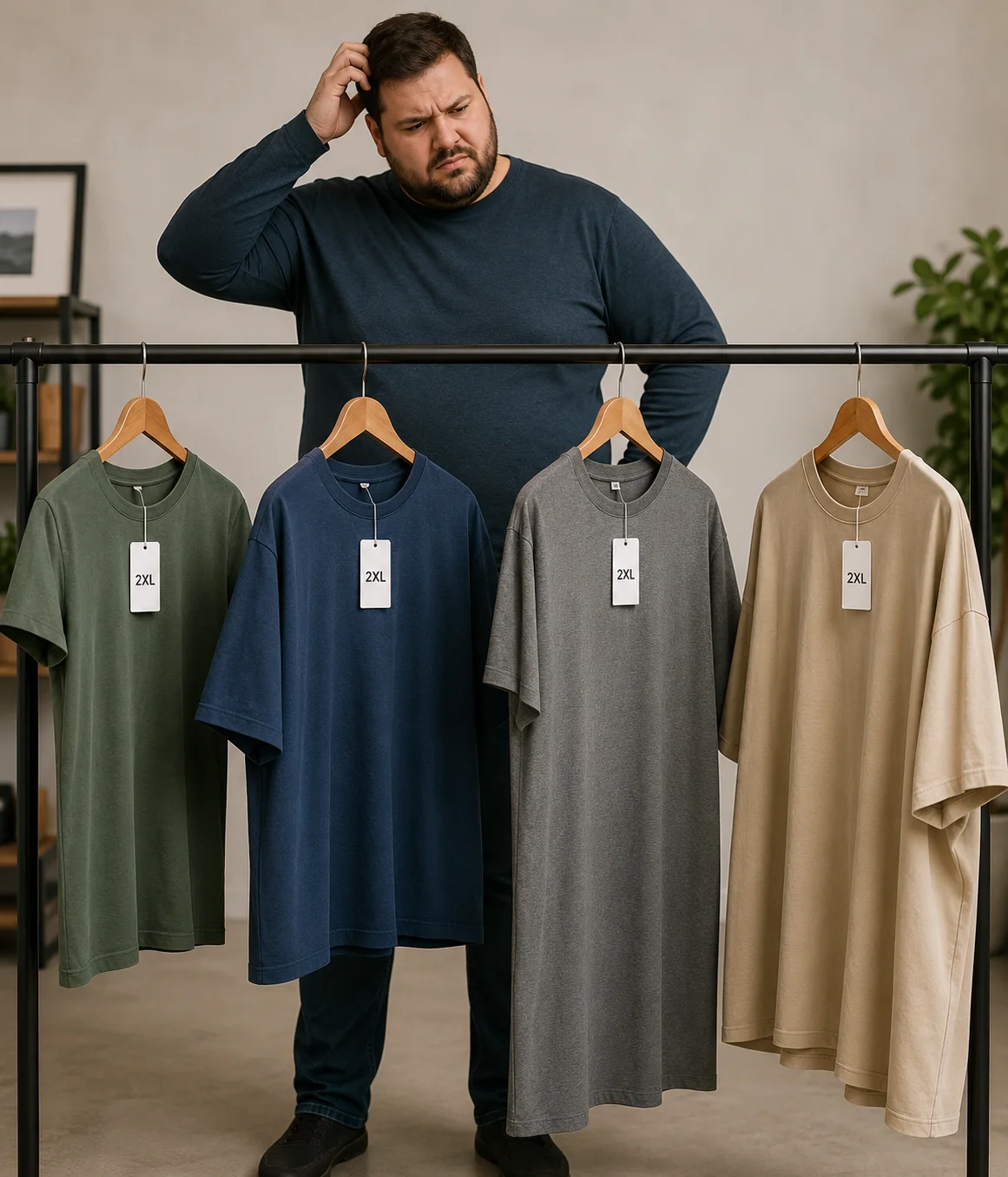
Two types of size charts exist, and confusing them is where most guys go wrong. One lists your body measurements. The other lists the actual dimensions of the garment itself. They are not the same thing, and brands do not always make that clear.
Body measurement charts tell you to match your chest, waist, and seat numbers to a size label. Garment measurement charts list how big the shirt or jacket actually is when it is lying flat.
When a chart shows a flat chest measurement, that number is not the same as your 38-inch chest measurement. Add a few inches of ease to your body number before comparing it to a garment chart, or you will order something that fits the tape but chokes your shoulders.
Ease is the extra room built into a garment so you can move and breathe comfortably. Fitted styles carry less of it. Relaxed cuts carry more. Knowing which type you are looking at changes the size you pick.
Optimize for Fit
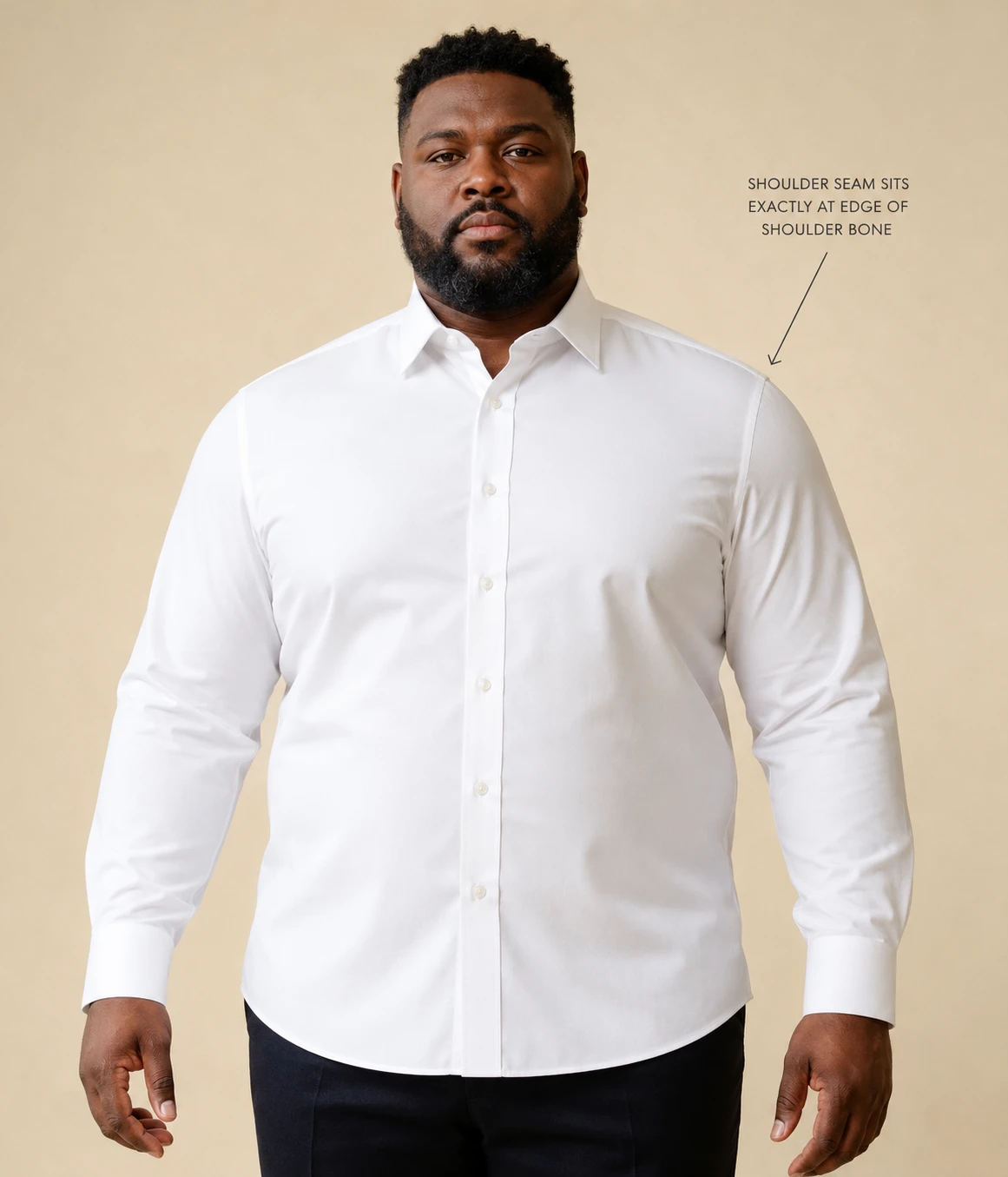
Four checkpoints tell you everything. Shoulder seam, chest ease, shirt tail length, sleeve end point. Check all four in under a minute, and you will know whether a shirt works or goes back on the rack.
Start with the shoulder seam. It should sit right at the edge of your shoulder bone, not sliding down your arm. If it droops past that point, the shirt is too big across the back, and no amount of tucking fixes that.
Chest ease comes next. Button the shirt fully and pinch the fabric at your widest point. You want about two inches of extra fabric on each side. Less than that and you will feel the pull every time you reach forward. More than three inches means the shirt swims on your torso and reads sloppy.
Shirt tail length matters more than most guys realize. A dress shirt worn untucked looks like a mistake. The hem should reach mid-fly when tucked, staying put when you sit or raise your arms. Too short and it escapes the waistband constantly.
How Pants Fit Differently Than Shirts
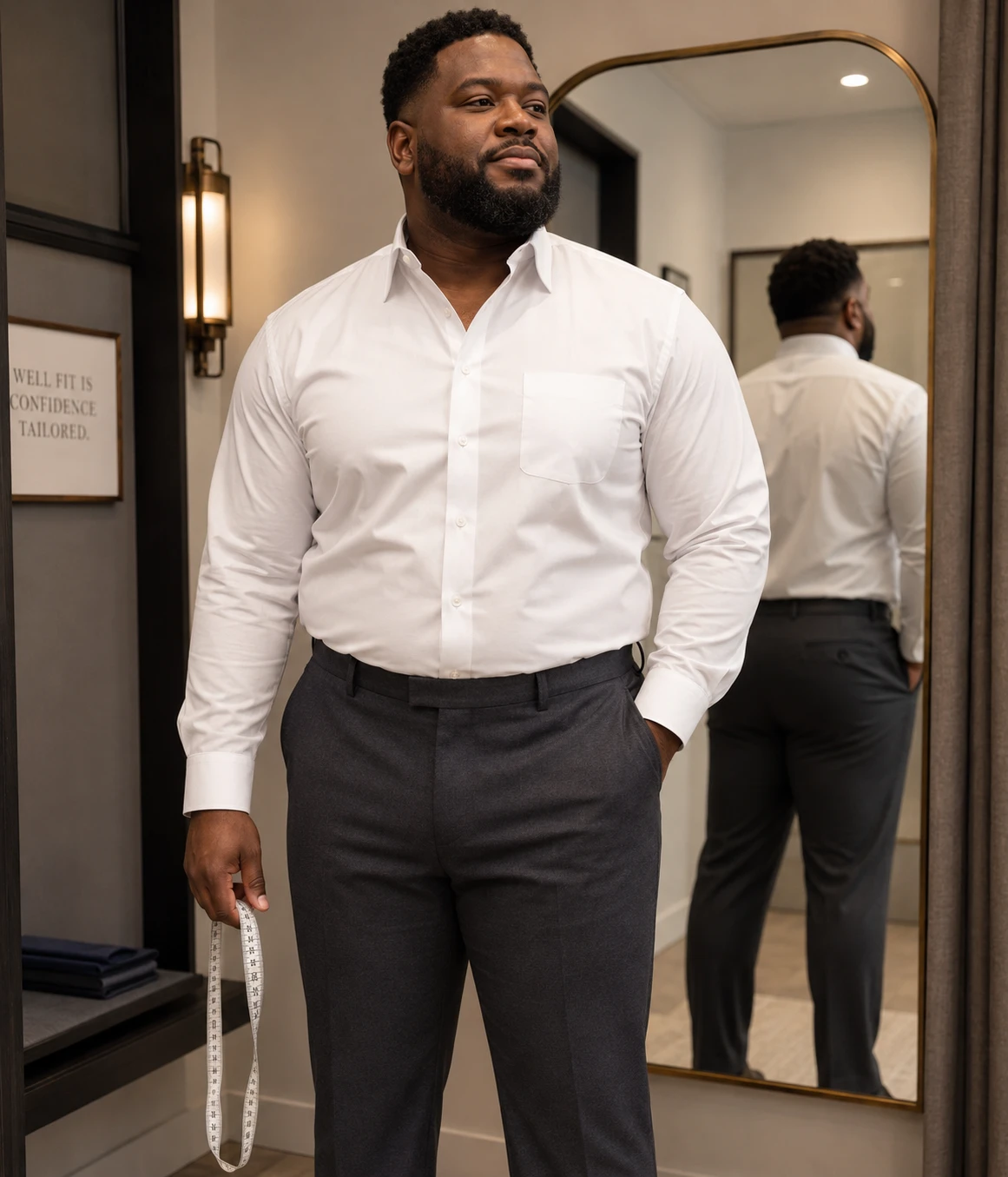
Shirts only need to fit your chest and shoulders. Pants have to work across four separate measurements at the same time: waist, seat, thigh, and inseam. Get one wrong and the whole pair fails, even if the number on the tag is the same size you always buy.
Most plus size men size their pants off the waist alone. That is where the mistake happens. Your seat and thighs carry more fabric demand than your waist does, and standard off-the-rack cuts are built assuming a proportional body that does not match how most bigger guys are shaped.
Pants vs. Shirts: Why Sizing Works Differently
| Fit Factor | Shirts | Pants |
|---|---|---|
| Key measurements | Chest, shoulders | Waist, seat, thigh, inseam |
| Number of fit zones | 2 | 4 |
| Common sizing mistake | Ignoring sleeve length | Sizing only by waist |
| Best fix for plus size | Go by chest, not tag size | Match seat and thigh first |
| Cut that works best | Relaxed through torso | Athletic-tapered or straight-leg |
| Tailoring need | Minimal | Low if cut is right |
| Where it fails most | Pulls across chest/shoulders | Pulls across seat and thigh |
What to Do When Nothing Off the Rack Fits Perfectly
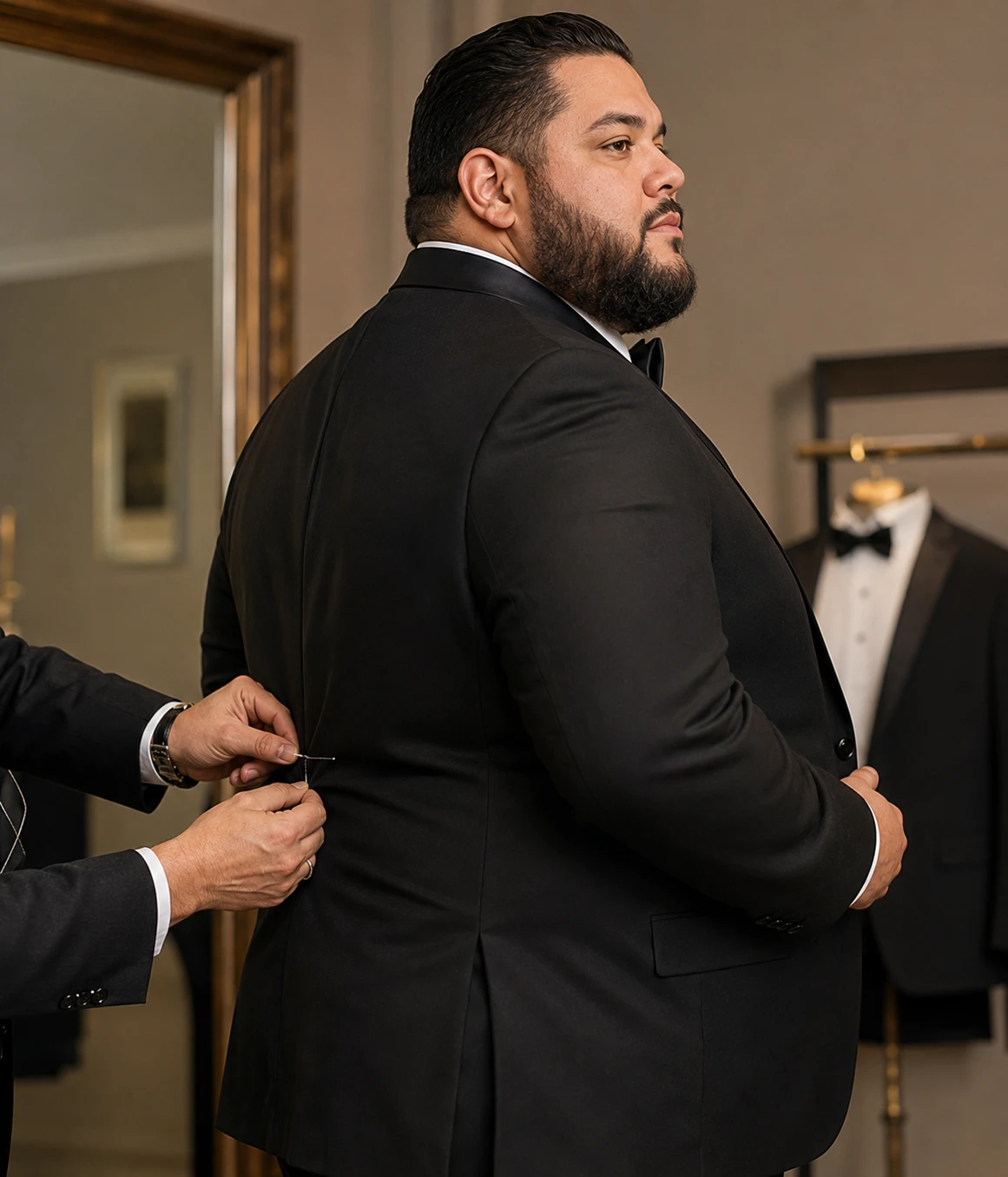
Buy for your biggest measurement first. That single rule solves most off-the-rack problems for plus-size men shopping for a tuxedo.
Shoulders are non-negotiable. Once you force a jacket onto shoulders that are too narrow, nothing else can fix it. Find the jacket where the shoulder seams sit exactly at the edge of your shoulder, then work downward from there.
Everything else is adjustable. A tailor can take in the waist, shorten the sleeves, and hem the trousers for well under $100 at most local shops. Those three alterations turn a decent off-the-rack tuxedo into something that looks made for you. Book the appointment at least two weeks before your event so there is no rush.
Trousers follow the same logic. Buy for your waist or hips, whichever is larger, then have the length hemmed clean. Tuxedo trousers should break just at the top of your shoe, with no bunching.
Where to Shop When Standard Brands Keep Getting Your Size Wrong
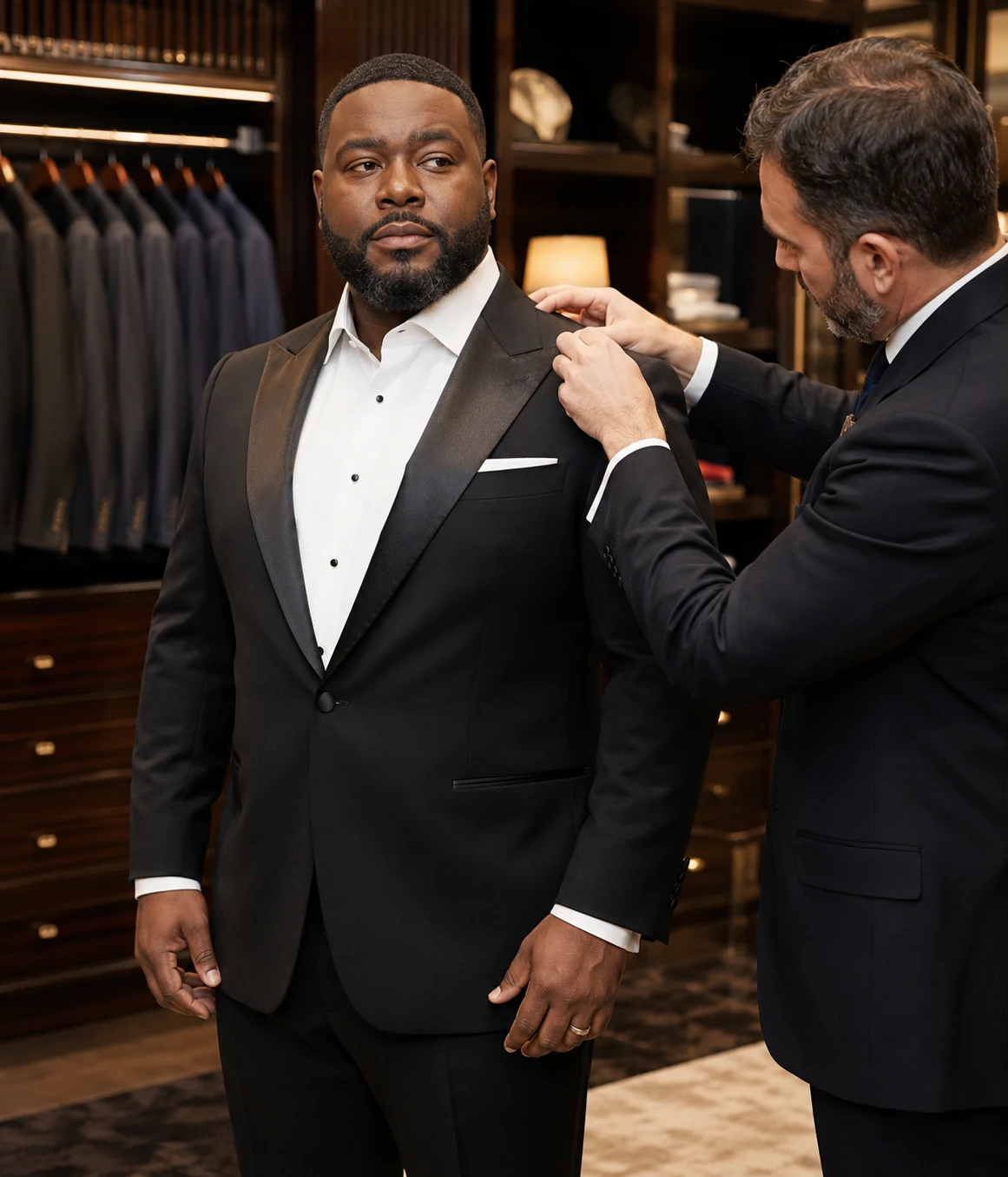
Most formalwear brands still treat big and tall sizing as an afterthought. They take a standard tuxedo pattern and scale it up, which gives you a jacket that fits the chest but bunches at the shoulders and trousers with a waist that works but a rise that does not.
Men’s Wearhouse carries big and tall tuxedos from size 44L through 60XL, with extended sleeve and pant lengths built into the pattern, not added on after. Free in-store alterations are included, which matters at black tie.
Jos. A. Bank sells tuxedo separates in big and tall, letting you choose jacket, pant, and vest sizes independently, so you are not forced into a matched set that only fits one part of your body.
Generation Tux works entirely online. Give them your height, weight, and pant size, and their fit technology handles the rest, with rental sizes reaching up to a 62-inch waist and a 66-inch-long jacket. Rental makes sense if you only need a tuxedo once or twice.
Custom is the cleanest route when nothing off the rack works. Hockerty builds tuxedos to your exact measurements, with options to customize lapel style, lining color, and pocket placement so the finished product reflects your taste, not just your size.
Big vs. Tall vs. Big and Tall: Which Category Fits You?
| Category | Who It’s For | What It Adds | Common Sizes |
|---|---|---|---|
| Big | Men 6’2″ or shorter with a broader chest, fuller waist, or wider shoulders | Extra width in chest, waist, and shoulders | XL to 8X |
| Tall | Men 6’2″ or taller with a longer torso and arms | Extra torso length and sleeve length | LT to 4XLT |
| Big and Tall | Men 6’2″ or taller who also carry extra width | Extra width AND extra length | XLT to 4XLT and beyond |
| Standard Plus | Men under 6’2″ with broader builds needing more room | Scaled-up width with standard proportions | XL to 3XL |

Hello there! I’m Jesse Joe, the author and editor behind SolganGenius. I’m thrilled you’ve stopped by, and I can’t wait to share with you the essence of what this platform is all about.
I’m a writer, social media enthusiast, and a firm believer in the power of words. I’ve always been fascinated by how a simple phrase or slogan can capture an emotion, convey a message, and even change perspectives. Learn More