

Nobody tells you it’s the collar. Most plus size style guides spend all their time on fit, color, and silhouette and completely skip the one thing that’s quietly running everything.
Your neck length controls how your whole upper body reads. Short neck, plus size frame, wrong collar choice and suddenly your head looks like it’s sitting directly on your chest.
Right collar, same body, completely different picture. This isn’t about hiding anything. It’s about knowing exactly which cuts and collar shapes create the visual length you need.
Why Nothing in Your Closet Is Fixing This (And What’s Actually Going On)

Most style advice for bigger guys covers the same ground. That advice isn’t wrong it just doesn’t touch the actual problem.
What those guides are built around:
- Hiding bulk
- Making the body look slimmer overall
- Creating a longer silhouette from chest to foot
Not one of those goals addresses the space between your jawline and your collar and that’s the problem you’re actually dealing with.
Short necks on plus size frames shrink that visible gap fast. Your collar sits high, your chest is wide, and suddenly your head looks like it’s resting directly on your shoulders. Fitting the shirt to your chest doesn’t fix it. Neither does sizing up. The collar itself is either opening that space or closing it and most men have never been told which collars do which.
By the end of this article, you’ll know the specific collar styles that create visible neck length, the ones that quietly make it worse, and the single visual rule that makes every future purchase faster to figure out.
The Mistake Most Plus Size Men With Short Necks Keep Making Without Realizing It

Playing it safe with collars feels logical. If the neck is short, the thinking goes, don’t draw attention to it so men reach for crew necks, band collars, and mock necks that sit close to the throat. That instinct is understandable. It’s also what’s working against you.
What each of those necklines actually does to your proportions:
- Crew necks cut straight across at throat level, removing any visible space between your jaw and your chest
- Band collars wrap the neck like a ring, creating a fabric wall instead of an opening
- Mock necks push material up toward the chin, making your face look like it’s emerging directly from the shirt
- High-rise necklines on sweaters or tees push the shirt’s starting point so far up that your neck essentially disappears into the fabric
Every one of those styles does the same thing: fills in the gap where your neck should visually appear. Less open space between your collar and your jaw makes that distance look shorter not longer. Closing off the neckline doesn’t hide the problem. It announces it.
The goal isn’t to hide your neck. Making it look longer means keeping that space open and visible.
The One Proportion Rule That Governs Every Collar Decision You’ll Ever Make

There is one question worth asking about every collar before you buy it: does this create more visible space between my jaw and my chest, or less? That’s the whole rule. Every good collar choice for a short neck on a plus size frame does the same thing it keeps open space visible between your chin and the top of your shirt. Bad choices fill that space in.
What each side looks like in practice:
Opens the space (works):
- A spread collar that angles outward, showing the shirt front and a clear line downward
- A V-neck that draws the eye straight down from the chin
- An open collar with the top button undone, creating a visible channel between jaw and chest
Closes the space (doesn’t work):
- A collar band sitting flush against the skin with no opening
- A crew neck that starts exactly where your neck ends
- Any neckline where fabric and skin meet without a gap
Plus size frames already carry visual weight across the chest and shoulders. When a collar closes off the neck area, the eye has nowhere to travel so the head and body look merged together. Open vertical space gives the eye a clear path, making the jaw-to-chest distance read as longer than it actually is.
Before buying any collar, find where the neckline ends and where your chin begins. Visible open space between those two points means you’re moving in the right direction. Fabric eating into that gap means put it back on the rack.
The Four Collar Styles That Actually Work for Short Necks — And Exactly Why
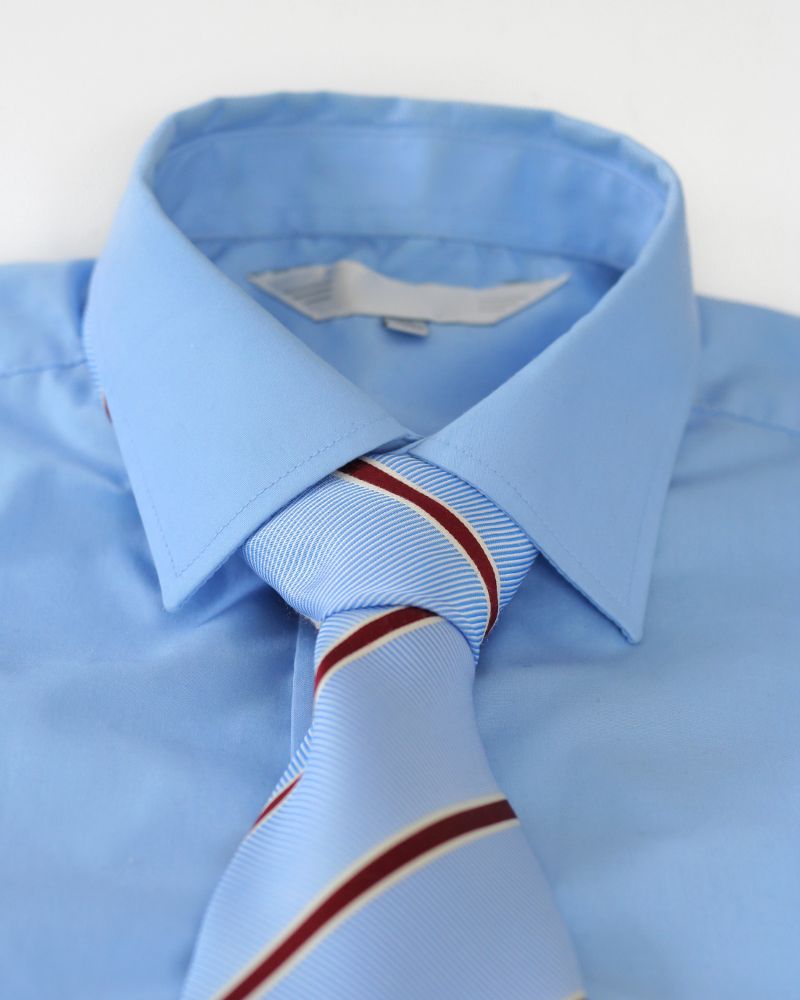
Four collar styles consistently work for short necks on plus size frames. Not because of fashion trends because each one opens the neckline in a specific way that adds visible space between your jaw and your chest. These are the exact terms to search for when you shop.
| Collar Style | What It Looks Like | Why It Works | Search Term |
|---|---|---|---|
| Spread Collar | Points angle outward at 90° or wider | Wide angle creates a V-shape that pulls the eye downward and away from the neck | “spread collar shirt” |
| Cutaway Collar | Points sit nearly horizontal the widest possible spread | Maximum collar opening means the most visible chest space, making the neck read as longest | “cutaway collar shirt” |
| Camp Collar | Lies flat against the shirt with no collar band, worn open | No band means nothing gripping the throat — the open front creates a natural downward channel | “camp collar shirt” |
| Deep V-Neck | V-shaped neckline, no collar, dips toward mid-chest | Pulls the eye straight down from the chin, creating the longest possible visual line | “deep V-neck tee” or “V-neck sweater” |
Even within these four styles, fit still matters. A spread collar on a shirt that pulls tight across the chest will bunch and gap at the throat closing the very space you’re trying to open. Look for shirts where the collar lies flat without bunching, the band doesn’t grip the skin, and the collar points don’t curl upward at the tips.
Collar Band Height Is the Detail That Kills Your Proportions Even When the Style Is Right
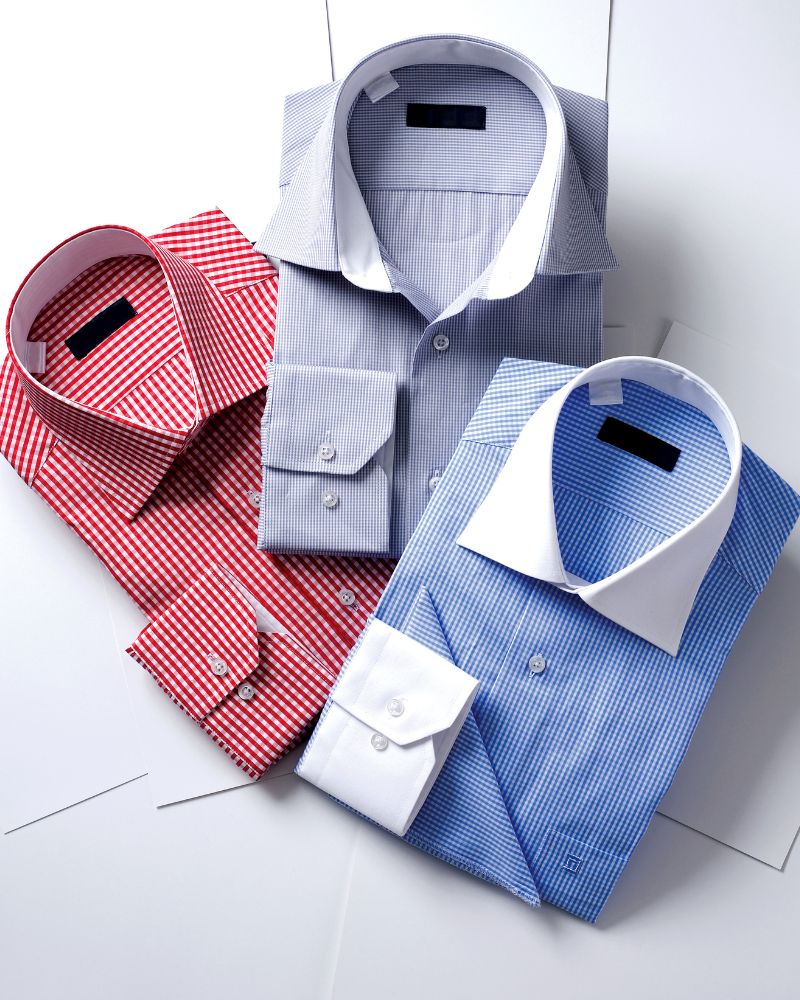
Getting the collar style right is step one. Step two — which almost no one talks about is collar band height. The band is the strip of fabric that wraps around your neck before the collar points begin. Most men never look at it. For short necks on plus size frames, it’s the detail that can quietly ruin an otherwise good collar choice.
How band height breaks down:
- A low band (around 1 inch or less) sits close to the base of the neck, leaving the most skin visible between the band and your jaw
- A standard band (around 1.5 inches) is what most dress shirts default to passable, but not ideal for short necks
- A tall band (1.75 inches or more) climbs up the neck and eats directly into the visible space you’re trying to protect
| Band Height | What It Does to Your Neck | Verdict |
|---|---|---|
| Low (under 1″) | Leaves maximum space visible between band and jaw | Actively look for this |
| Standard (1.25–1.5″) | Neutral — works if collar spread is wide enough | Acceptable with a cutaway collar |
| Tall (1.75″+) | Covers the lower neck, shrinks visible space fast | Avoid completely |
When shopping online, search the shirt’s product specs for “collar band height” or “collar height.” Many brands don’t list it prominently, but dress shirt specialists often do. In a fitting room, button up fully and check where the band ends if it climbs above your Adam’s apple, the band is too tall regardless of how wide the collar spread looks.
The Complete No-Buy List — Collars and Necklines to Remove From Your Rotation
Most of these collars end up in plus size men’s wardrobes for the same reason they feel safe. No fuss, no risk, nothing that draws attention. The problem is that safe and neutral aren’t the same thing. Each one does specific visual damage to a short neck, and knowing exactly what that damage is makes it easier to let them go.
- Crew neck cuts straight across at the base of the throat, leaving zero visible space between your jaw and your chest; your head looks like it’s resting directly on your shirt
- Mock neck pushes fabric up toward the chin, compressing whatever small gap existed even further
- Mandarin or band collar wraps around the neck like a ring with no opening, creating a solid wall of fabric where open space should be
- Turtleneck covers the entire neck and sometimes part of the jaw; the worst offender on this list and not fixable with any other styling choice
- Narrow-point collar the small, tight points on a plus size frame create a pinched V that’s too narrow to open the neckline; makes the collar look like it belongs on a much smaller shirt
Go through your wardrobe with this list in hand. Anything that matches gets moved out not because these aren’t decent clothes in general, but because on your specific frame, they’re actively working against you every time you put them on.
How to Use a Blazer or Jacket to Add Visual Neck Length Instantly
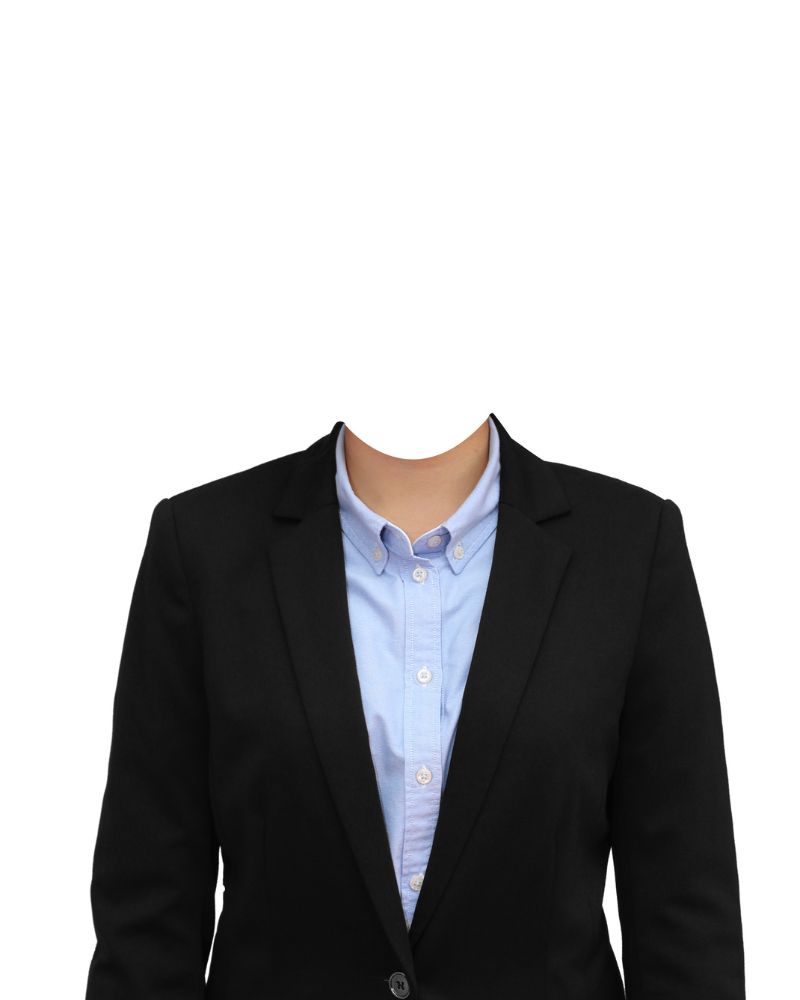
Jackets don’t just add formality. On a plus size frame with a short neck, a well-chosen blazer does something no shirt collar can do on its own it widens the shoulder line, which makes the neck appear longer by comparison. Broader shoulders create a longer-looking neck even before the lapels do anything. Then the lapels do their own work.
What to look for:
- Deep V-opening choose a jacket that buttons at the waist or below, not mid-chest; the longer the V, the more vertical space the eye follows downward
- Wide lapels on a plus size frame, lapels that are 3 to 3.5 inches wide are proportionally correct and open the chest area significantly more than narrow lapels
- Peak lapels over notch lapels peak lapels angle upward and outward toward the shoulders instead of closing in around the neck; notch lapels are fine, but peak lapels create a wider, more dramatic V
- Structured shoulders the jacket’s shoulder seam should sit exactly at the edge of your shoulder bone, not hang over it; that precision creates width that improves the neck-to-shoulder ratio
- Single-button or low two-button stance fewer buttons means the V stays deeper when worn open
Wear the jacket open or with one button closed at most. Buttoning all the way up creates a wall of fabric that closes the V and cancels everything the lapels are doing. One structured blazer worn correctly does more for neck length on a plus size frame than most collar changes will.
Your Fitting Room Checklist: One Test That Tells You If a Collar Is Working
Most men try on a shirt and check whether it buttons across the chest. Neither that nor the overall mirror check tells you if the collar is helping or hurting your neck proportions. There’s one specific thing to look for, and it takes five seconds.
Stand in front of the mirror with the shirt fully buttoned and look at the space between your jawline and the top edge of the collar. That gap visible skin between jaw and fabric is what you’re measuring. Open space means the collar is working. No gap means put it back.
In the fitting room, run through these three checks:
- Jaw-to-collar gap you should see at least a finger’s width of neck between your jaw and where the collar begins; fabric nearly touching your jaw means the neckline is too high
- Collar band grip slide two fingers under the buttoned band; if they don’t fit comfortably, the band sits too high and will eat directly into your neck space
- Collar points they should lie flat against the shirt; curling or floating points mean the collar is too small for the shirt size and will bunch at the throat instead of lying open
Shopping online, find where the collar ends and the jaw begins in the product photo if the collar is already eating that gap on a standard model, it will do more damage on a shorter neck. Check product specs for collar band height: anything under 1.5 inches is worth a try.

Hello there! I’m Jesse Joe, the author and editor behind SolganGenius. I’m thrilled you’ve stopped by, and I can’t wait to share with you the essence of what this platform is all about.
I’m a writer, social media enthusiast, and a firm believer in the power of words. I’ve always been fascinated by how a simple phrase or slogan can capture an emotion, convey a message, and even change perspectives. Learn More