
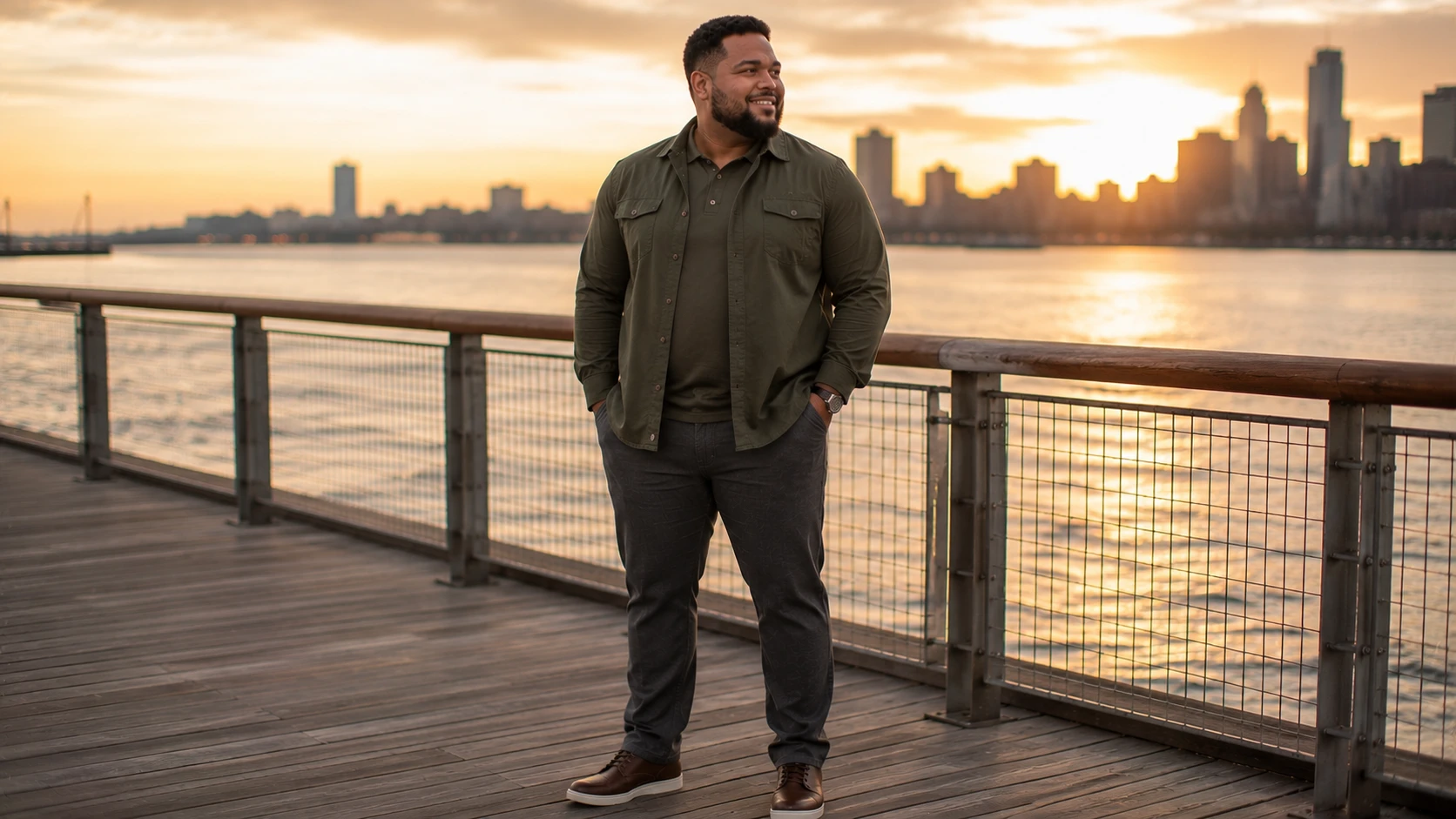
A shirt looks fine in the mirror, then it pulls across the stomach when you sit down. Jeans feel okay at the waist, but the whole outfit still looks wider than you wanted. Some days, getting dressed feels like a fight before you even leave the house.
Real style advice for plus size men should not tell you to hide under baggy clothes or wear black every day. Better dressing is about shape, balance, and small choices that change how your body looks in clothes.
The right shoulder fit can sharpen your frame. A cleaner color line can make you look taller. Pants with the right rise can smooth the midsection instead of squeezing it.
These tricks are simple, wearable, and made for bigger bodies, not runway models. Start with the first one and build from there.
Why “Slimmer” Does Not Mean Hiding Your Body
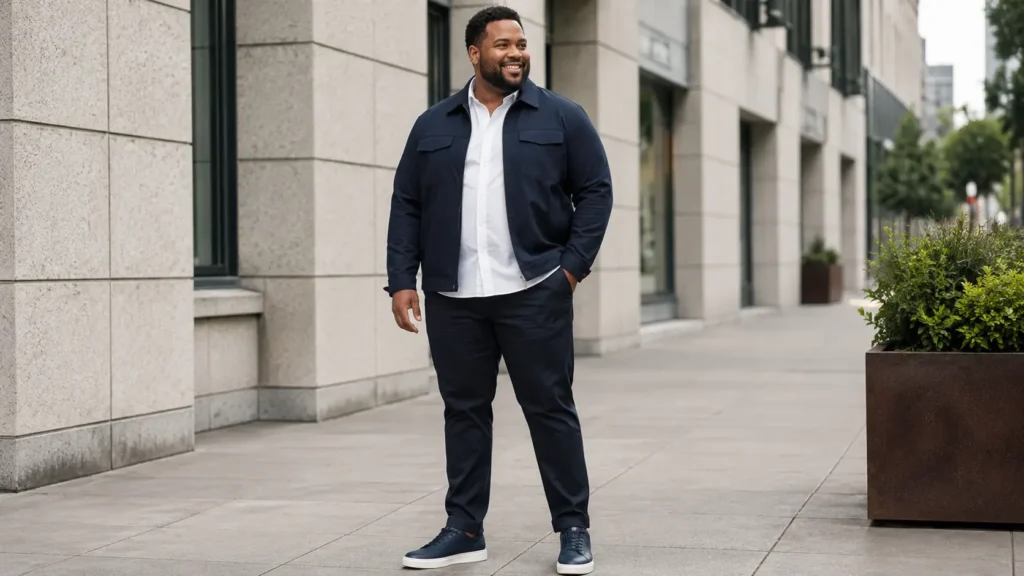
The biggest mistake is trying to shrink yourself with huge clothes. Baggy layers do not hide size. They add more shape where you do not need it.
Slimmer dressing is about control. You want clothes that follow your body without squeezing it, so your shoulders look cleaner, your waist looks calmer, and your whole outfit feels more balanced. A shirt that sits close at the chest and falls straight can do more than an oversized shirt that hangs like a tent.
Dark colors can help, but fit matters more. Good dressing gives your body a clear line from top to bottom, instead of breaking it into wide blocks. Small changes matter. Tucking the right shirt, choosing better pants, and wearing jackets with structure can make you look sharper fast.
Confidence shows when your clothes look chosen, not hidden behind.
Start With Fit: Clothes Should Skim, Not Squeeze or Hang
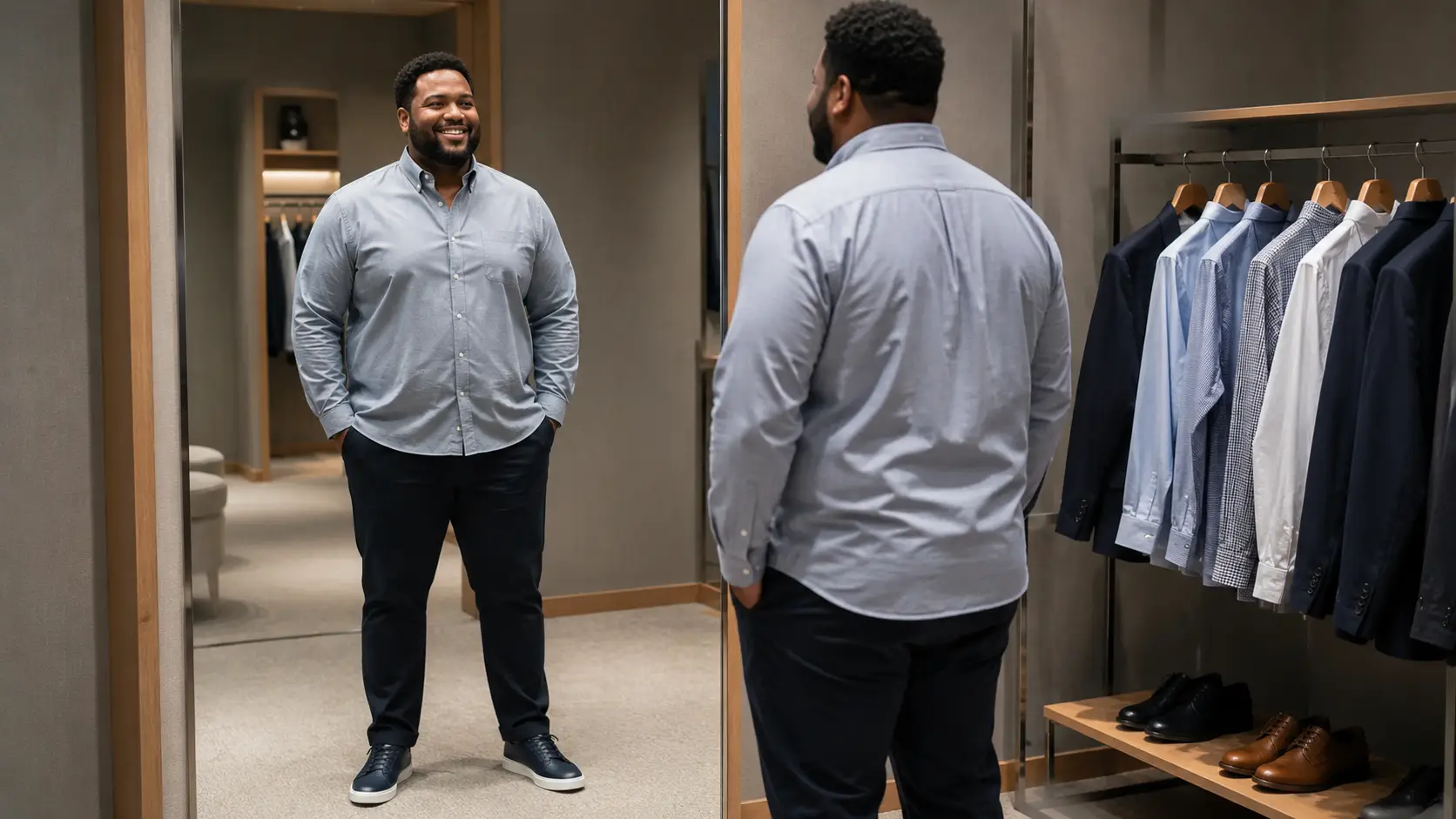
The fastest way to look cleaner is to stop fighting your body with the wrong fit. Tight clothes pull across your stomach, chest, and arms, which makes every line look stressed. Loose clothes do the opposite. They add extra fabric around your sides and make your body look wider than it is.
Skim is the goal.
A good shirt should follow your shape without grabbing it. Your shoulder seams should sit near the edge of your shoulders, not droop down your arms or ride up toward your neck. Sleeves should have enough room to move, but not so much fabric that they puff out. Pants should sit comfortably at your waist and fall straight through the leg without clinging to your thighs.
Small changes matter.
Try sitting, walking, and raising your arms before you buy anything, because clothes that only look good while standing still will bother you all day. Better fit gives you a smoother outline, better posture, and more confidence without needing loud tricks or oversized layers.
Use Dark Colors Where You Carry the Most Weight
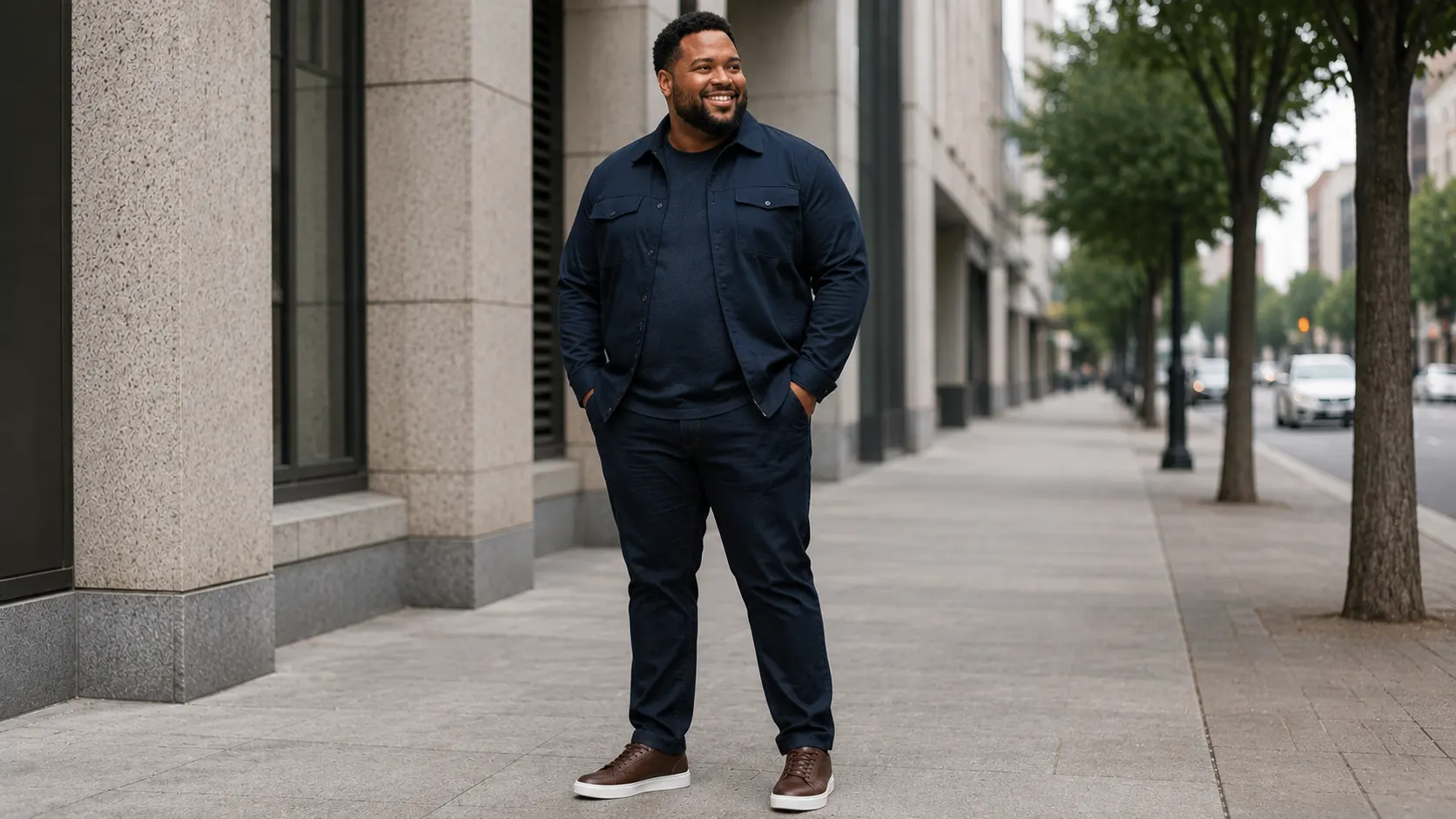
Dark colors are not the only slimming trick. A full outfit in one color family can do more because it keeps the eye moving from your shoulders to your shoes without a hard break at the waist.
Try navy with dark blue jeans. Wear charcoal with black pants. Pair olive with deep green or brown. Simple works.
High contrast can cut your body in half. A white shirt with black pants may look sharp, but it draws a clear line across your middle, which can make your torso look wider. Lower contrast softens that line and gives your body a cleaner shape.
This does not mean every piece must match exactly. Different shades are fine. Texture helps too. You can wear a navy overshirt, a blue tee, dark denim, and brown sneakers without looking flat or boring.
Shoes matter here. Bright white shoes under a dark outfit can stop the eye at your feet. Choose darker sneakers, boots, or loafers when you want the longest look. One color family feels calm. It also looks planned.
| Outfit Color Family | Slimming Example |
|---|---|
| Navy family | Navy jacket, blue shirt, dark jeans |
| Gray family | Charcoal overshirt, heather gray tee, black jeans |
| Brown family | Chocolate jacket, tan tee, dark brown pants |
| Green family | Olive overshirt, sage tee, dark olive chinos |
| Black family | Black bomber, charcoal tee, black pants |
| Denim blue family | Dark denim jacket, navy tee, dark wash jeans |
Keep Your Outfit in One Color Family to Create a Longer Line
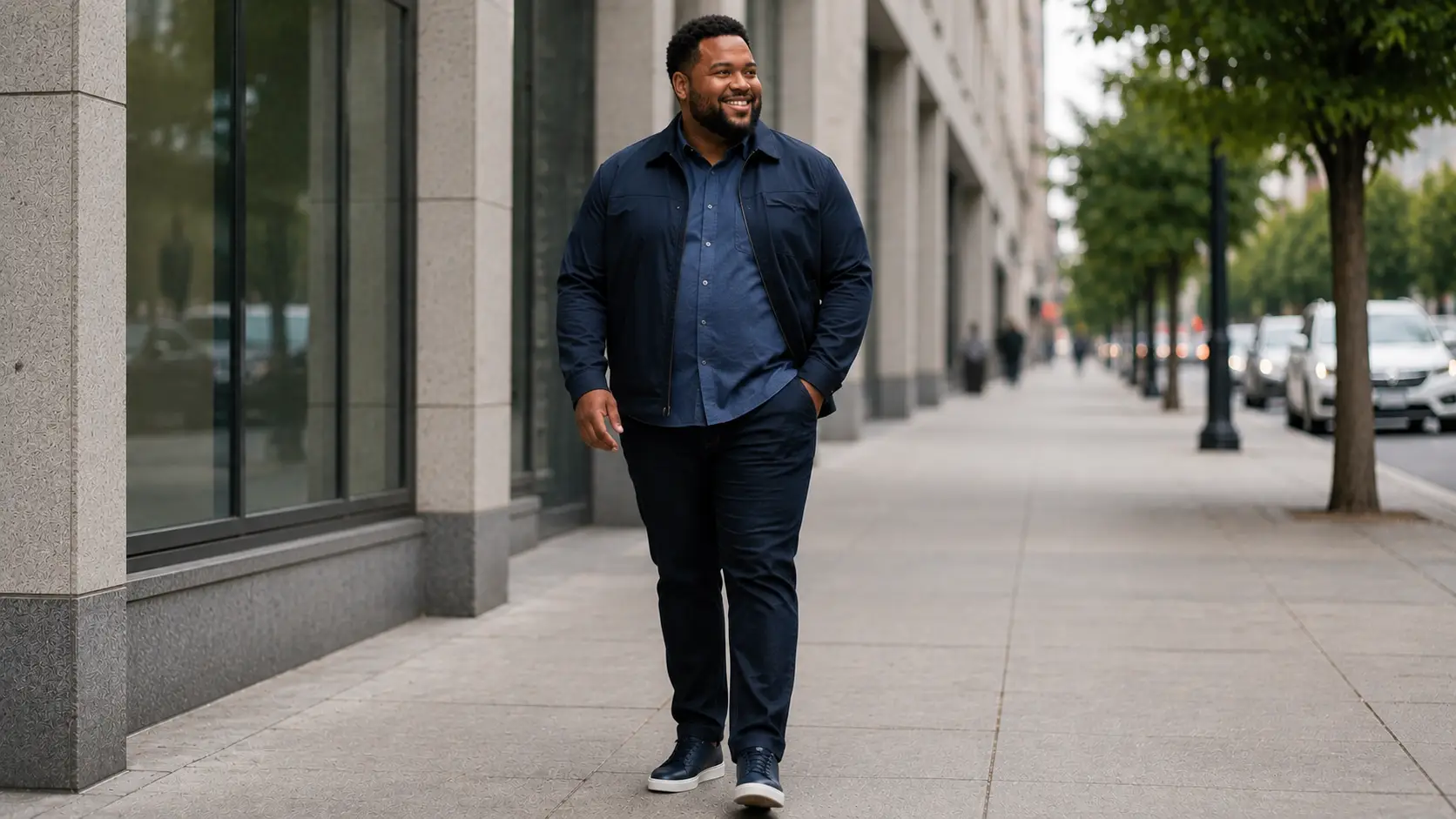
The fastest way to make your body look more balanced is to stop breaking it into separate visual sections. When your shirt, pants, and outer layer stay within the same color family, the eye travels smoothly from top to bottom instead of stopping at your waist.
Think shades, not matches. Navy with dark denim works. Charcoal with black works. Olive with deep brown works. Small color shifts add interest without creating sharp breaks.
Contrast changes everything. A bright white shirt paired with very dark pants creates a strong dividing line across your middle, which draws attention to the widest part of your body. Lower contrast outfits soften that break and create a longer, cleaner shape from head to toe.
Texture keeps the outfit interesting. A navy jacket, blue oxford shirt, and dark jeans can look stylish because the fabrics add depth even when the colors stay close together.
Footwear plays a role too. Bright shoes often pull attention downward and interrupt the visual line, while darker shoes help the outfit flow naturally from top to bottom.
Many men assume monochrome outfits look boring. Different shades of the same color family usually look more polished than a mix of unrelated colors, especially when the goal is a leaner and more streamlined appearance.
Choose Vertical Details That Guide the Eye Up and Down
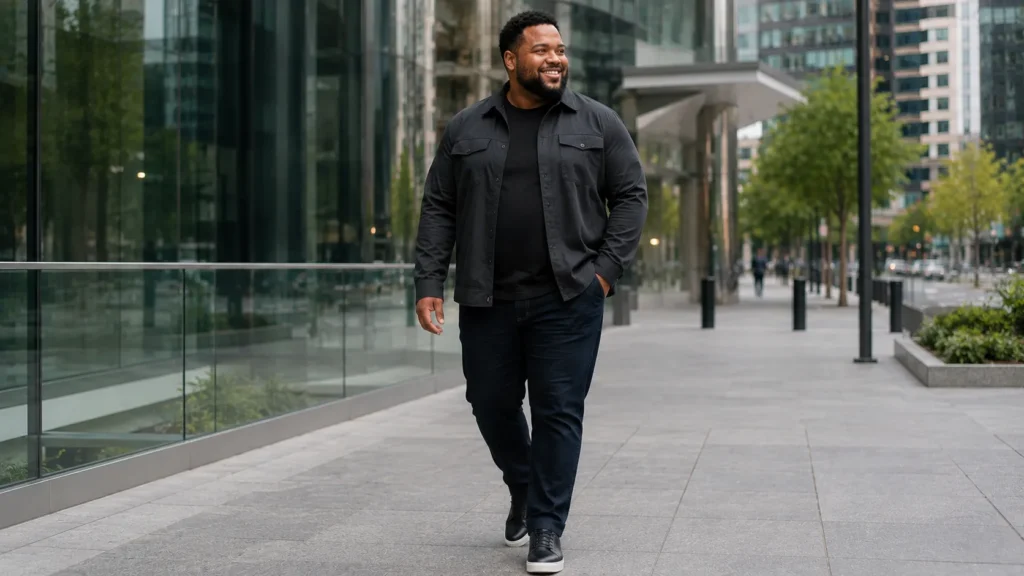
The fastest way to make your body look longer is to give the eye a path to follow. Vertical details do exactly that because they pull attention from top to bottom instead of side to side.
Open overshirts work well. An unbuttoned layer creates two long vertical lines down the front of your body, which can make your frame look cleaner and less boxy.
Vertical stripes help too. Thin stripes usually look more natural than bold ones because they add length without demanding all the attention.
Zip jackets are useful. A centered zipper forms a straight line that guides the eye through the middle of your outfit.
Long seams matter. Jeans with clean leg lines, jackets with vertical panels, and shirts with visible plackets all add structure that encourages the eye to travel up and down. Small details count. Even a row of buttons can help create a stronger vertical effect when the fit is right.
Meanwhile, loud horizontal patterns often do the opposite by pulling attention across the widest part of your body instead of along its length.
Wide chest stripes can emphasize width. Thick bands across the stomach can do the same.
Solid colors, subtle vertical patterns, and open layers usually create a smoother shape because they keep your outfit moving in one direction rather than breaking it into sections. Many men focus only on fit. Direction matters too.
Sometimes a simple open overshirt over a T-shirt changes the look of an outfit more than buying an entirely new wardrobe.
Wear Structured Layers Instead of Thin, Clingy Tops
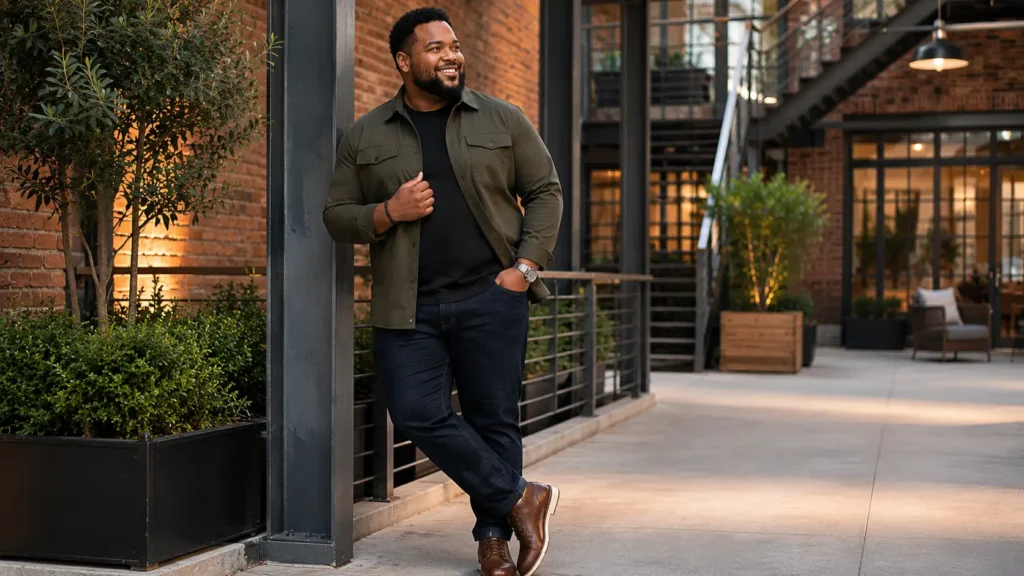
Thin fabric often creates more problems than people expect. A lightweight T-shirt can stick to your stomach, chest, and sides, making those areas stand out instead of blending into the overall outfit.
Structured layers help immediately. An overshirt adds shape around your frame and creates a cleaner outline without feeling heavy.
Denim jackets work especially well. Shirt jackets offer the same benefit while feeling a little lighter for everyday wear. Bombers add balance. Their stronger fabric helps smooth the upper body and can make your shoulders appear more defined.
Blazers do something similar because they hold their shape, create straighter lines, and keep fabric from clinging to the body throughout the day.
Unlike thin tees that follow every curve, structured layers create a small amount of space between your body and the garment, which often produces a neater and more balanced appearance.
Open layers add another advantage. The front edges form vertical lines that naturally guide the eye up and down instead of across your middle.
Meanwhile, wearing only a soft, clingy T-shirt can draw attention to areas you would rather not highlight, even when the shirt technically fits. Many men size up. Better structure usually works better.
Sometimes a simple overshirt over a well-fitting T-shirt changes the entire look of an outfit without adding much bulk at all.
| Shoulder Fit Detail | What to Look For |
|---|---|
| Shoulder seam | Should sit close to the edge of your shoulder, not droop down the arm |
| Sleeve width | Should give room without looking baggy or tight |
| Upper chest | Fabric should lie smooth, not pull across the buttons |
| Jacket structure | Light structure adds shape without adding bulk |
| Armhole fit | Should allow movement without huge extra fabric |
| Shoulder slope | Avoid tops that collapse or sag around the upper body |
Get the Shoulder Fit Right Because It Controls the Whole Frame
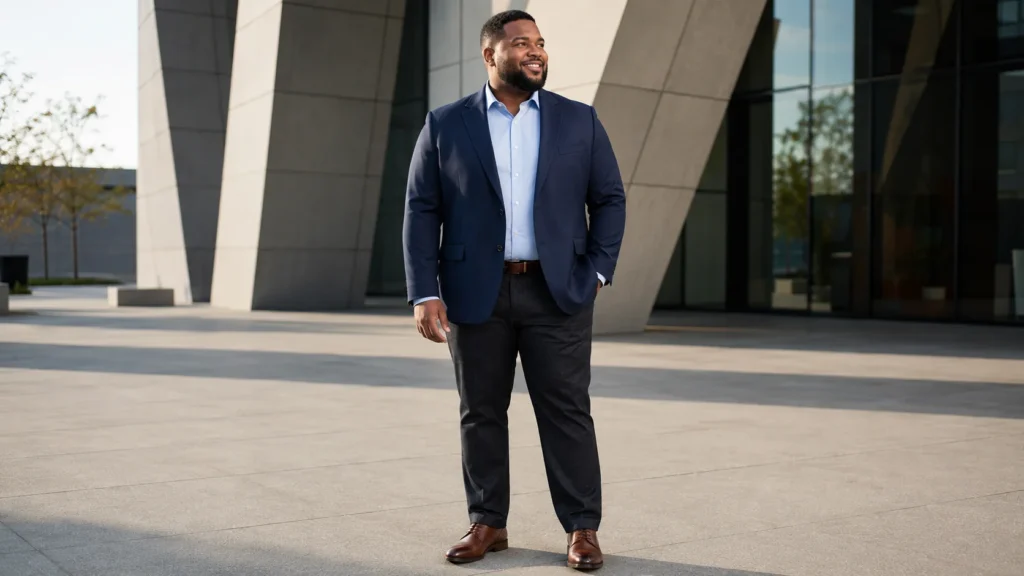
Most men focus on the stomach first. The shoulders usually have a bigger impact on how the entire outfit looks. Start there. When shoulder seams sit at the edge of your shoulders instead of hanging down the arms, your clothes instantly look cleaner and more intentional.
Oversized shoulders create problems. Drooping seams can make the upper body look wider, softer, and less structured than it really is. Proper placement helps. A well-fitted shoulder line creates a stronger frame that gives the rest of the garment a better shape.
Sleeves matter too. Extra-wide sleeves can add visual bulk, while sleeves with a moderate width help maintain a neater outline from shoulder to wrist.
Likewise, jackets, overshirts, and blazers with some structure in the upper body can make your build look more balanced because they create definition without squeezing or restricting movement.
Many plus size men buy larger sizes hoping for comfort, yet oversized shoulders often make clothes appear less polished even when the fit feels roomy elsewhere.
Good shoulder fit looks sharp. Strong structure draws attention upward. Once the shoulders fit correctly, the chest, waist, and sleeves usually fall into place much more naturally.
Pick Pants That Balance Your Midsection, Not Pants That Fight It
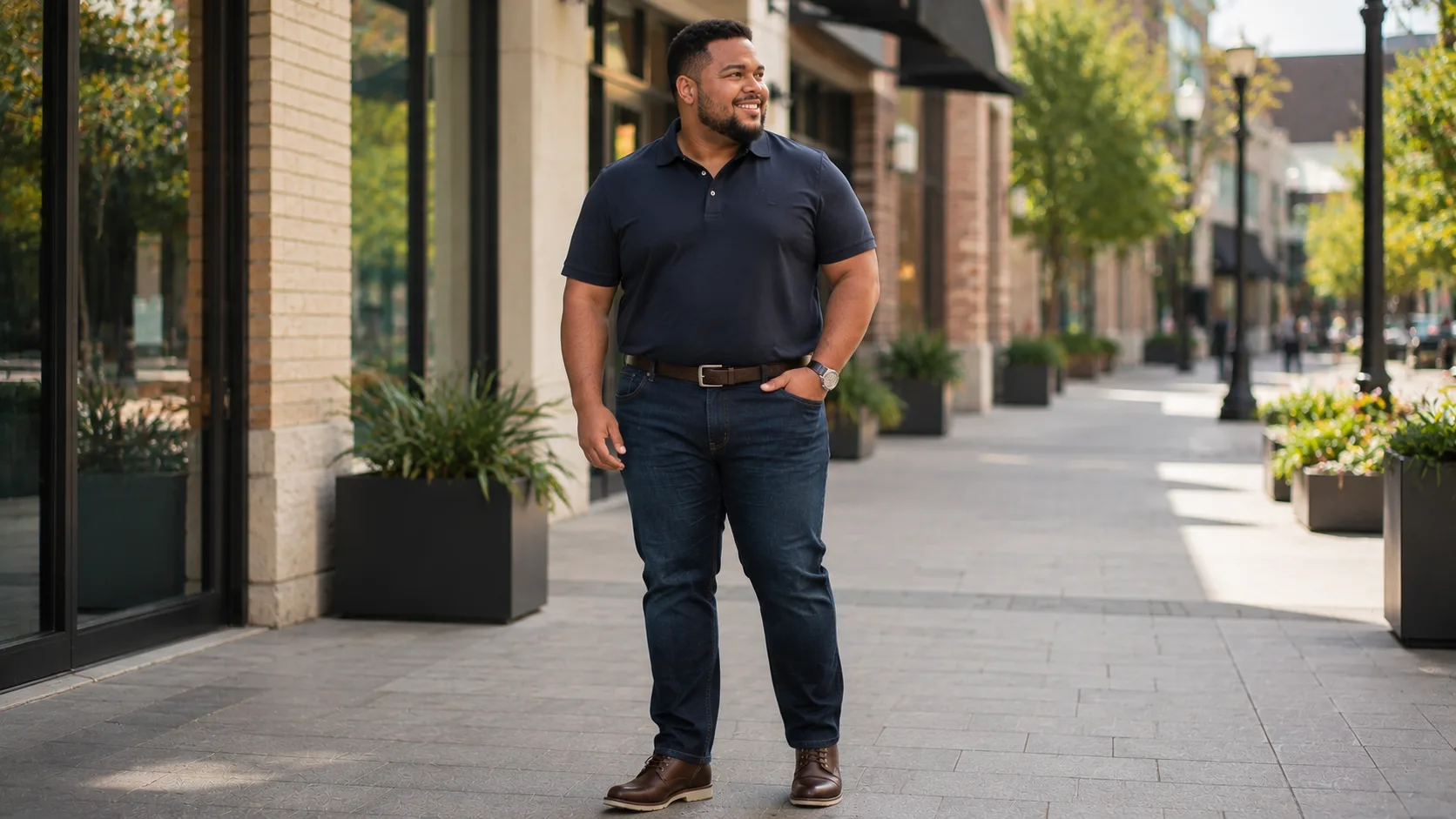
The wrong pants can make your stomach stand out more than your shirt does. Many men focus on tops first, but the shape and fit of your pants play a huge role in how balanced your body looks.
Straight fit pants are usually a safe choice. Relaxed tapers work well too. Both create a cleaner line from the hips to the ankles without squeezing the legs.
Proper rise matters. Pants that sit too low often force the waistband under the belly, which can create extra pulling, bunching, and a stronger contrast between your midsection and lower body.
Comfort helps. A waistband that sits naturally and stays in place usually looks better than one that constantly digs in or slides down throughout the day.
Skinny jeans can be tricky. Tight fabric around the thighs and calves may make the upper body appear larger by comparison, even when the jeans technically fit.
Likewise, very low rise pants often draw attention to the stomach because the waistband cuts across the widest part of the body instead of supporting it. Balanced proportions create a smoother shape. Well fitting pants should follow your body, not fight against it.
Good movement matters. You should be able to sit, walk, and bend comfortably without feeling squeezed or restricted. Many outfits improve instantly when the pants fit the body you have instead of the body you wish you had.
Stop Cutting Your Body in Half With Harsh Belts and Short Tops
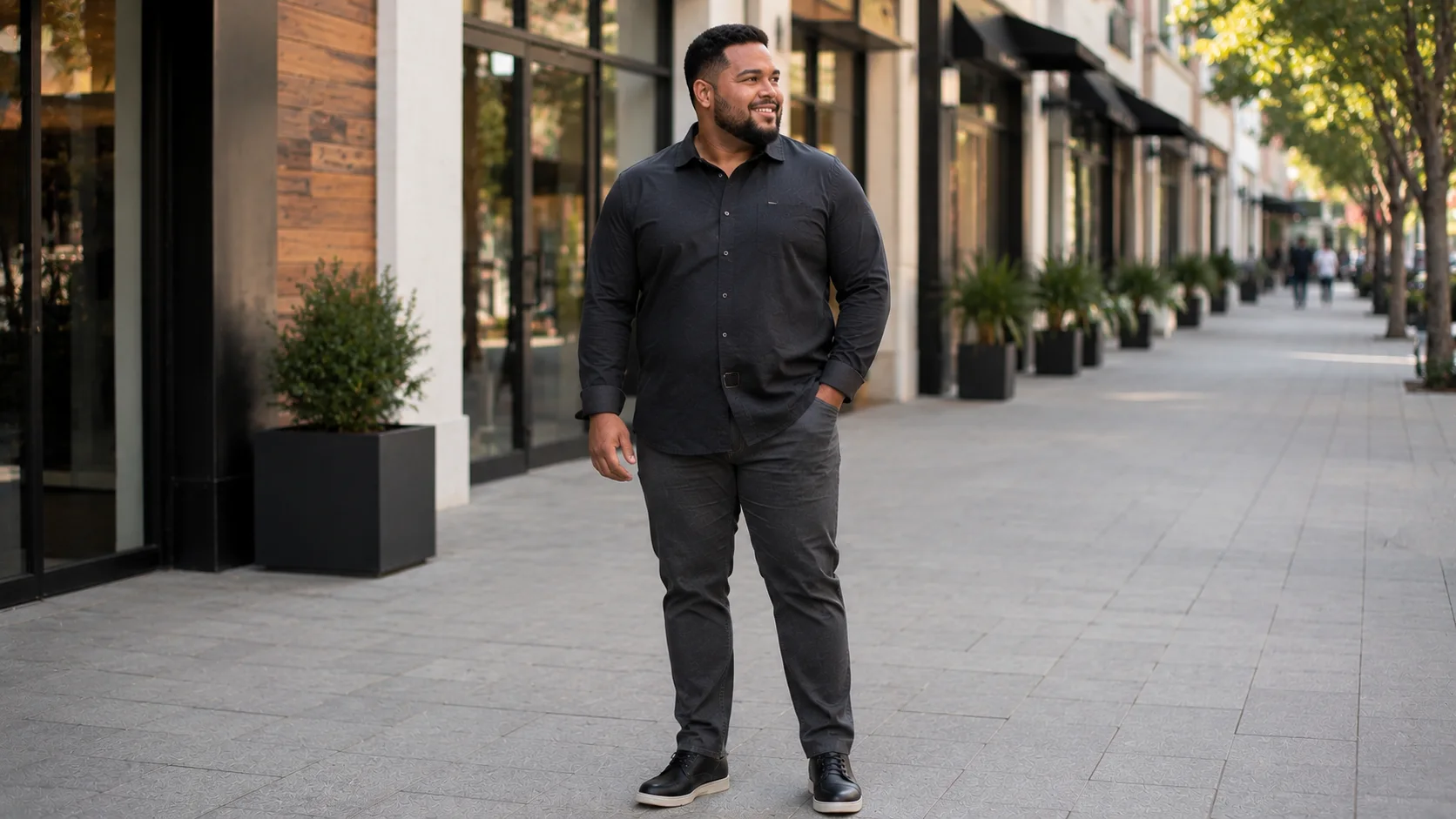
One bright belt can make your waist the center of attention. A strong break between your shirt and pants stops the eye right in the middle of your body instead of letting it move smoothly from top to bottom.
Short shirts often create the same problem. When a shirt ends high on the stomach, it highlights the widest area and makes your torso look shorter. Bright contrast makes it worse. A white shirt, light belt, and dark pants can split your outfit into separate sections rather than one clean shape.
Instead, choose belts that are close in color to your pants. Dark belts with dark jeans usually create a smoother line. Longer shirt lengths help too. The hem should cover the waistband comfortably without hanging far below it.
Likewise, untucked casual shirts, lightweight overshirts, and layered outfits often soften the waist area because they reduce sharp visual breaks and create a more continuous silhouette.
| Style Mistake | Better Swap |
|---|---|
| Bright belt with dark pants | Choose a belt close to your pants color |
| Very short T-shirt | Wear a tee that ends around mid-fly |
| High contrast shirt and pants | Use colors from the same family |
| Tight waistband | Pick pants with a comfortable rise |
| Cropped jacket | Try a jacket that hits near the hip |
| Shirt bunching at the belly | Choose a cleaner drape with less cling |
Use Necklines and Collars to Open Up the Face and Chest
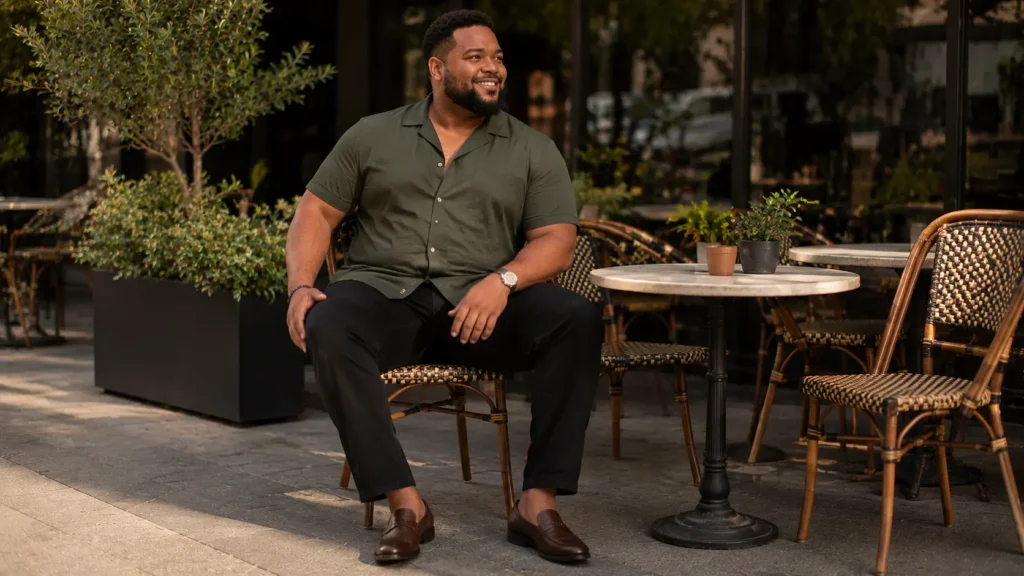
A small neckline change can make your whole upper body look lighter. When fabric sits too high and tight around your neck, your chest can look boxed in.
V-necks help. They create a small downward line that opens the face and chest without showing too much skin. Open collars work well too. Leaving the top one or two buttons undone can soften the neck area and make your outfit feel more relaxed.
Camp collars are useful in warm weather. Their open shape naturally creates space around the chest, especially when the shirt is not too tight.
Polos can also flatter you. Choose one with a firm collar and a placket that sits flat instead of pulling open across the stomach. Button placement matters. If the shirt gaps at the chest or belly, size up or try a different cut.
Avoid tiny neck openings. They make the upper body feel crowded. A little space near the collar can make your outfit look cleaner, easier, and more balanced.
Choose Prints by Scale, Not Just Pattern
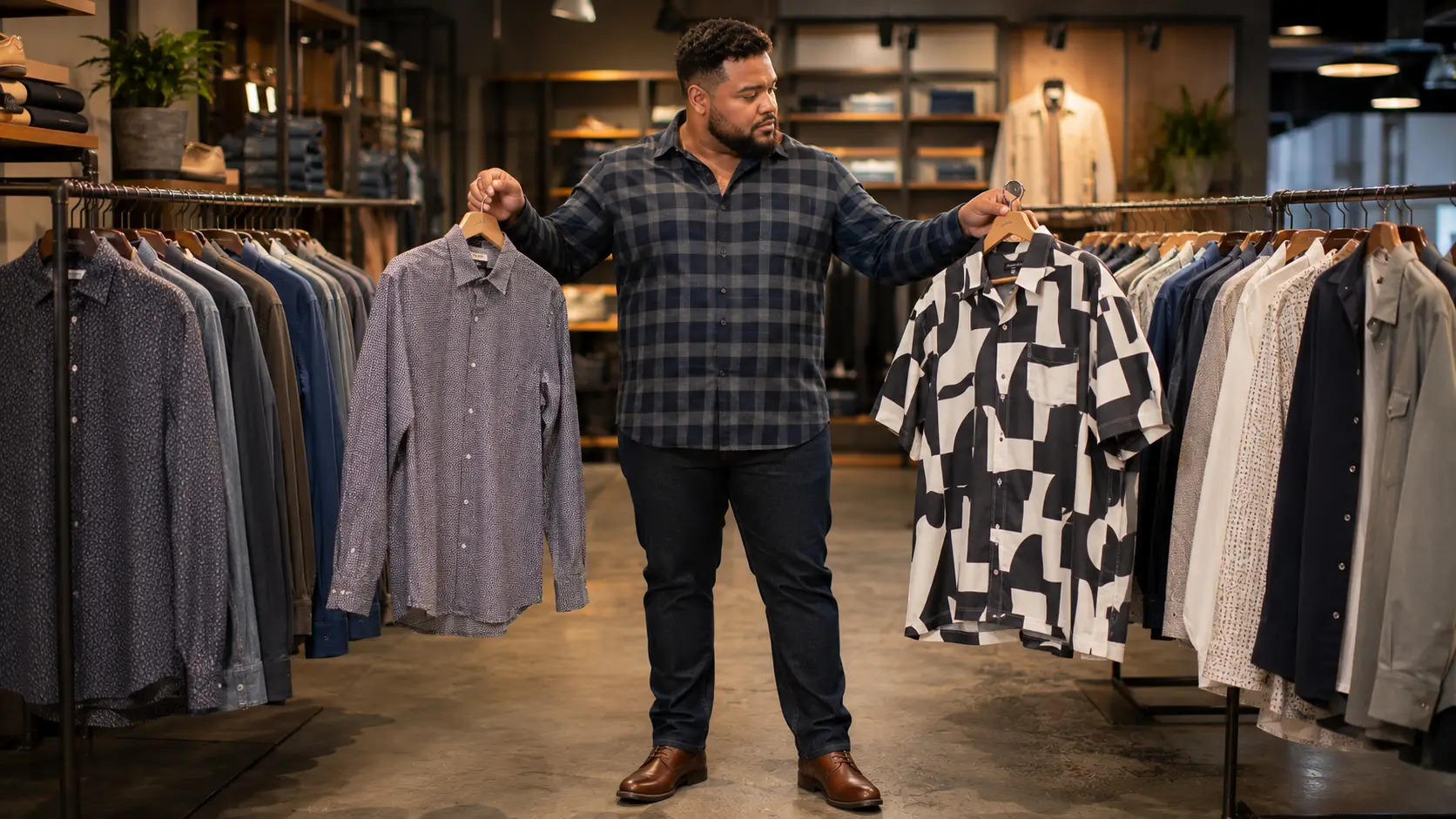
Pattern size matters more than most men realize. A print that looks great on a hanger can look very different once it covers a larger frame.
Tiny patterns often create visual noise. Small checks, micro florals, and packed geometric prints can make a shirt feel busy because the eye struggles to settle in one place. Huge prints bring a different problem. Oversized flowers, large logos, and bold graphics can draw extra attention to areas you may not want to highlight.
Medium scale patterns usually strike the best balance. They have enough presence to add interest without overwhelming your frame or making the outfit feel crowded. Instead, look for moderate plaids, balanced checks, subtle tropical prints, or simple repeating designs that leave some space between the shapes.
Color still matters. Lower contrast patterns tend to look smoother than sharp, high contrast designs spread across a large area. Many bigger men avoid prints completely. The smarter move is choosing prints that fit the scale of your body rather than the scale of the shirt rack.
Make Shoes and Accessories Match Your Build
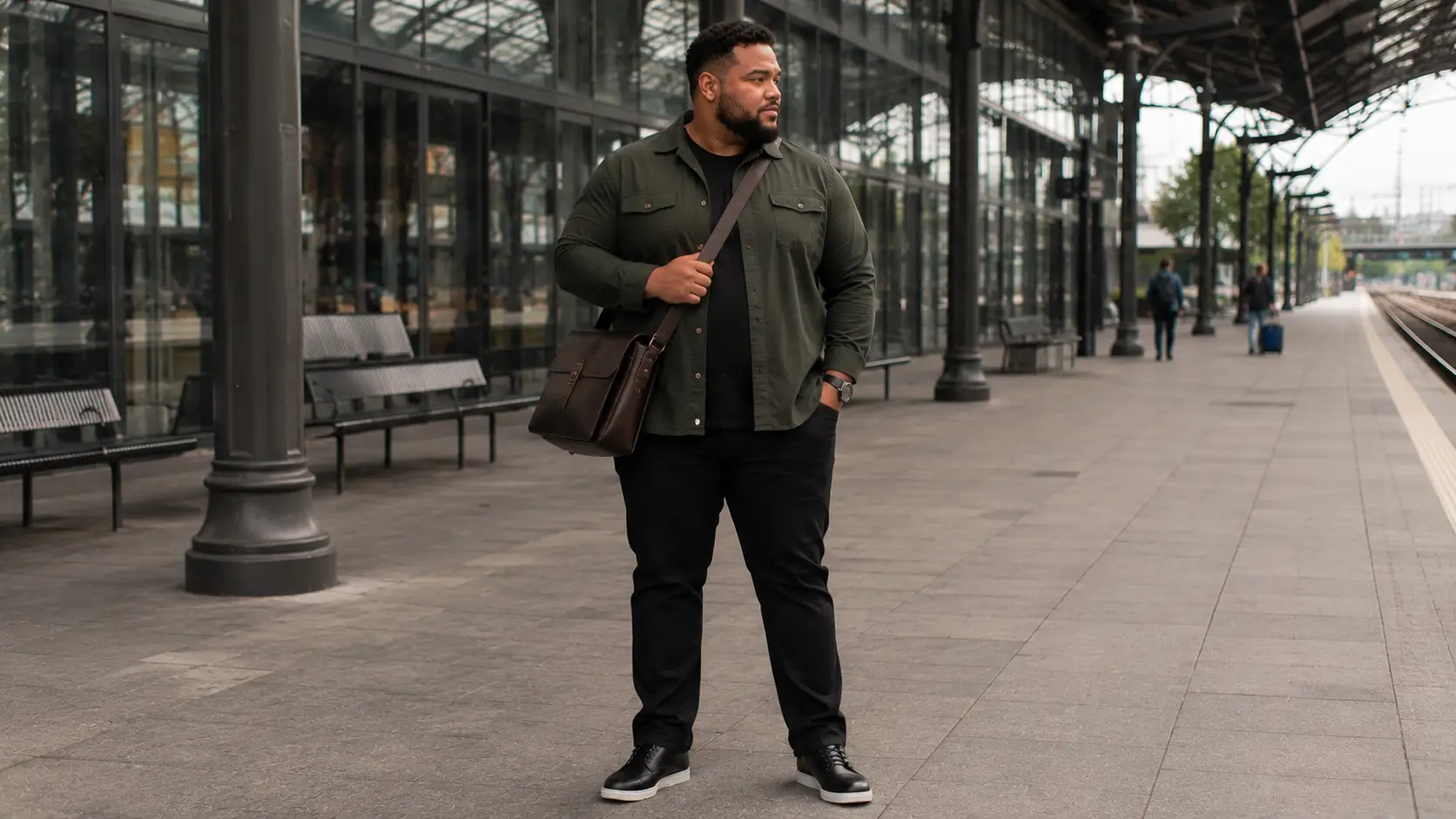
Small accessories can make your body look bigger by contrast. Tiny shoes, thin watches, skinny ties, and small bags often look out of scale on a larger frame.
Choose items with more presence. A medium to chunky sneaker can balance your legs better than a narrow shoe. Boots work well. Clean leather sneakers do too.
Watches should feel strong on your wrist, not lost on it. A slightly wider strap or larger face usually looks more natural than a very slim dress watch.
Ties need balance. Super skinny ties can make your chest and stomach look wider, while a standard width tie sits better with a broader build.
Bags matter as well. A tiny crossbody can pull attention to size contrast, but a medium messenger bag, backpack, or tote feels more even. Proportion is the goal. Your accessories do not need to be huge, just strong enough to match the rest of you.
The Real Answer to “Should I Tuck My Shirt In?”
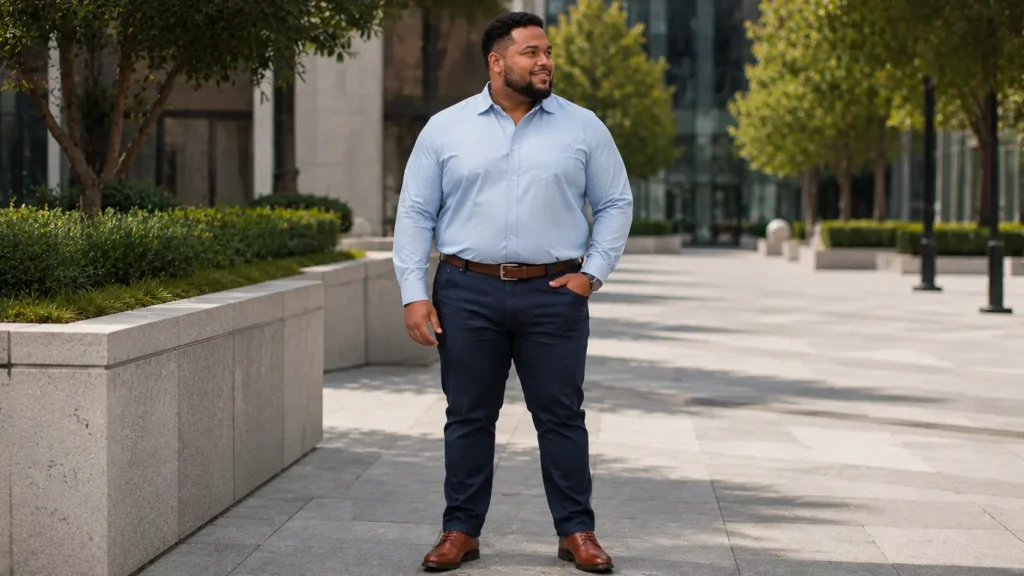
The best choice is not always untucked. Shirt length, body shape, and the type of outfit matter more than a simple rule.
Many plus size men avoid tucking because they think it will draw attention to their stomach. Sometimes the opposite happens, especially when a properly fitted shirt is tucked into pants that sit at the natural waist.
Fit comes first. A shirt that is too tight will pull and bunch no matter how you wear it.
Full tucks usually work best for dress shirts, business casual outfits, and jackets because they create a cleaner line from the chest down through the legs. Untucked shirts can look great too. The key is length.
Ideally, the hem should end around the middle of your zipper area rather than hanging far below it, since extra length can make your legs appear shorter and your body look wider.
Half tucks are trickier. They often work better on slimmer builds and can draw attention to the stomach area if the fabric gathers in the wrong places. Balance matters most. Some outfits look sharper tucked, while others feel more natural untucked.
Instead of asking which option is always right, check which one creates the cleanest shape when you stand naturally in front of a mirror.
Build One Slimmer Looking Outfit Formula You Can Repeat
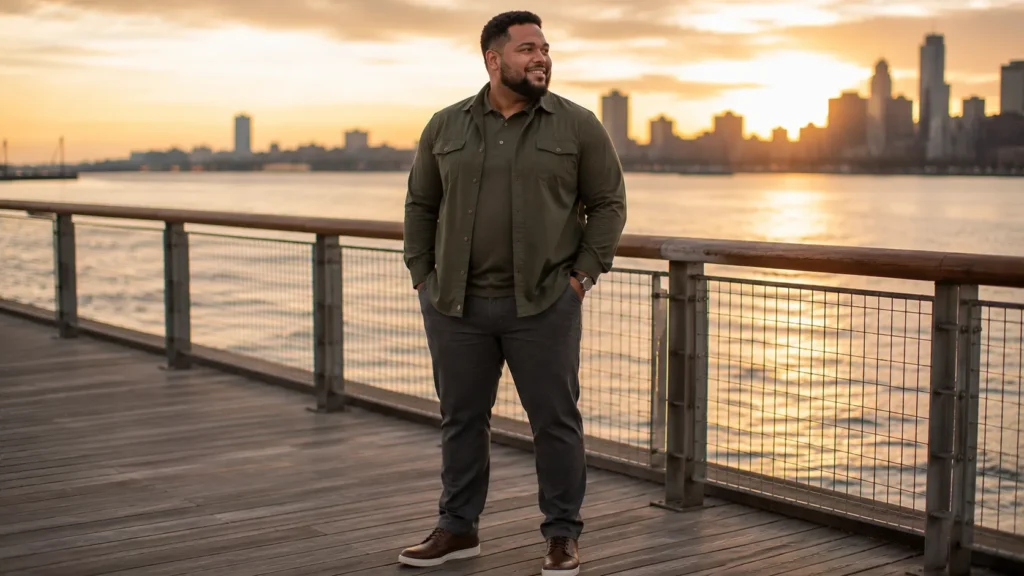
Most men do not need more clothes. They need one outfit formula that works consistently and removes the guesswork every time they get dressed.
Start with a structured layer. An overshirt, shirt jacket, bomber, or casual blazer gives your upper body cleaner lines and more shape. Underneath, wear a simple tee or polo. Choose a fit that follows your body without pulling across the chest or stomach.
Then add straight dark pants. Avoid extra fabric around the ankles, but skip skinny cuts that squeeze the legs and throw off your proportions.
After that, keep the colors close together because lower contrast helps the eye travel smoothly from top to bottom instead of stopping at your waist. Solid shoes finish the look. Dark sneakers, loafers, or boots usually create a cleaner line than bright shoes that grab attention.
Soon this becomes automatic. Getting dressed feels easier. Many stylish plus size men rely on a small group of outfits built around the same structure because it looks balanced, feels comfortable, and works in most everyday situations.
Many plus size men accidentally make their body look shorter and wider by creating a strong break at the waist. This usually happens when the shirt is too short, the belt is too bright, or the top and bottom colors fight each other. The eye stops right in the middle of the body, which makes the stomach area more noticeable.
A smoother outfit works better. When your shirt, belt, and pants feel connected, the body looks longer. The goal is not to hide the waist. The goal is to make the waist look less busy. Small changes like wearing a darker belt, choosing a longer shirt, or matching similar tones can make the whole outfit feel cleaner.
Short tops can also be a problem. A shirt that ends too high can expose the belly line when you move, sit, or lift your arms. A better length usually lands around the middle of the zipper area. It gives coverage without looking sloppy.
Table 1: Common Waistline Mistakes
| Mistake | Why It Adds Bulk |
|---|---|
| Bright belt on dark pants | It creates a hard line across the stomach |
| Shirt ends above the waistband | It makes the belly area more noticeable |
| Big color contrast at the waist | It cuts the body into two short sections |
| Tight tucked shirt | It can pull across the stomach |
| Cropped jacket | It draws attention to the widest area |
Table 2: Better Styling Choices
| Better Choice | Why It Works |
|---|---|
| Match belt with pants | It keeps the waistline smooth |
| Wear mid length shirts | It gives clean coverage |
| Choose similar top and bottom colors | It creates a longer body line |
| Try a relaxed tuck | It looks neat without pulling |
| Pick jackets that hit near the hip | It balances the body shape |

Hello there! I’m Jesse Joe, the author and editor behind SolganGenius. I’m thrilled you’ve stopped by, and I can’t wait to share with you the essence of what this platform is all about.
I’m a writer, social media enthusiast, and a firm believer in the power of words. I’ve always been fascinated by how a simple phrase or slogan can capture an emotion, convey a message, and even change perspectives. Learn More