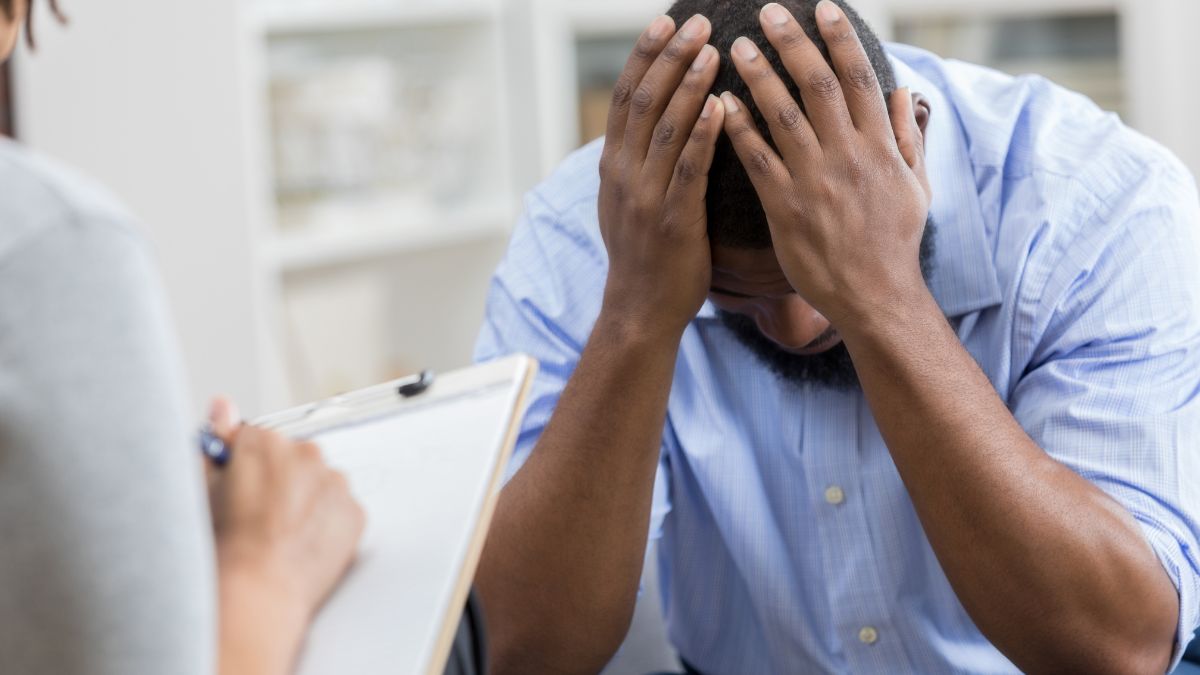
Advice is generic, the language is soft, and somewhere between “practice self-care” and “go for a walk,” you stopped reading because none of it accounted for what it actually feels like to be a bigger man navigating the world. The shame that builds up quietly. The doctor’s appointments you keep putting off. The social events you skip because it just feels easier not to go.
That exhaustion is real. So is the fact that almost nobody talks about it specifically not for men, and definitely not for plus size men, who are caught between two sets of impossible expectations at the same time.
This is not a list of generic wellness tips with your size loosely attached. Every section below speaks directly to the stuff that actually compounds when you are a bigger man and what to do about it.
The Double Bind Nobody Names: Being a Big Man Who’s Also Supposed to Be Fine
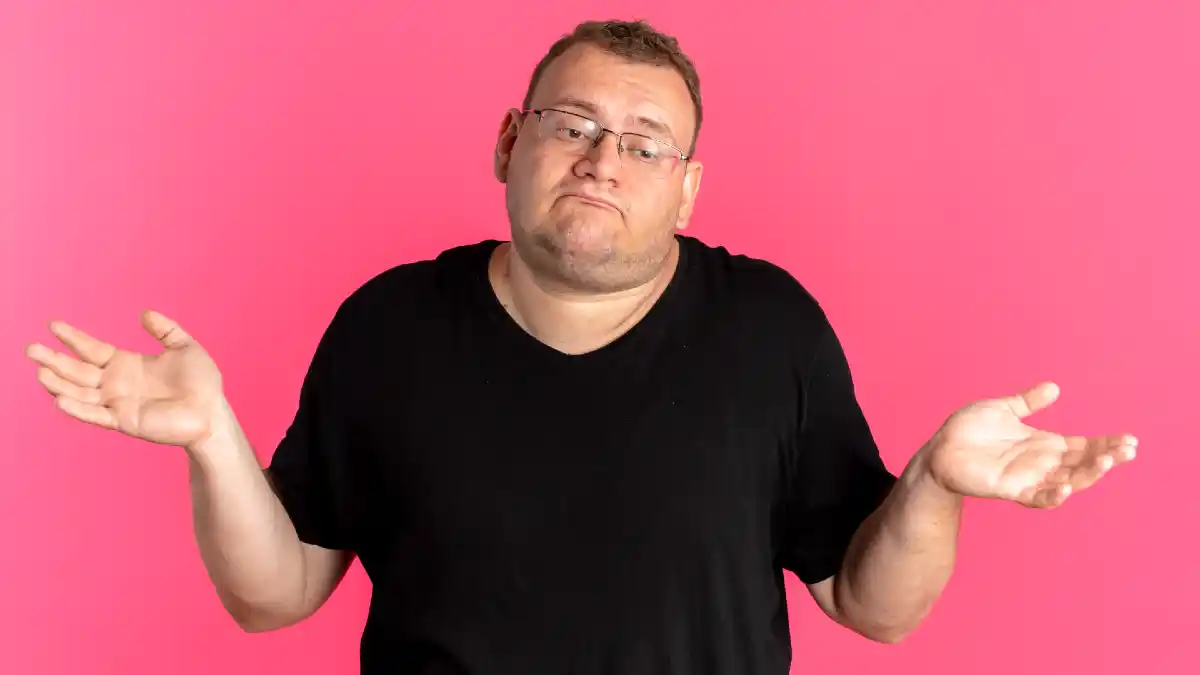
Most men are taught one rule above everything else: handle it yourself. Add a bigger body into that picture, and a second rule gets quietly layered on top your feelings are not the real problem, your weight is. These two messages together create a trap that is genuinely hard to escape.
You end up stuck between two impossibilities:
- Masculine conditioning tells you that struggling emotionally means you are weak
- Fatphobia tells you that your pain is just a side effect of your size fix the body, fix the mind
- The result is that nothing gets addressed, because the emotional stuff feels illegitimate and the body stuff feels too big to tackle
Neither message is true. But when you hear both of them on repeat from culture, from doctors, from people who love you they start to feel like facts.
That silence has a real cost. Men who carry shame about their bodies and have no language for emotional pain are significantly more likely to isolate, avoid medical care, and let small struggles grow into serious ones. Not because they are weak. Because nobody gave them the right tools for this specific situation.
Your Avoidance Isn’t Laziness It’s a Documented Stress Response
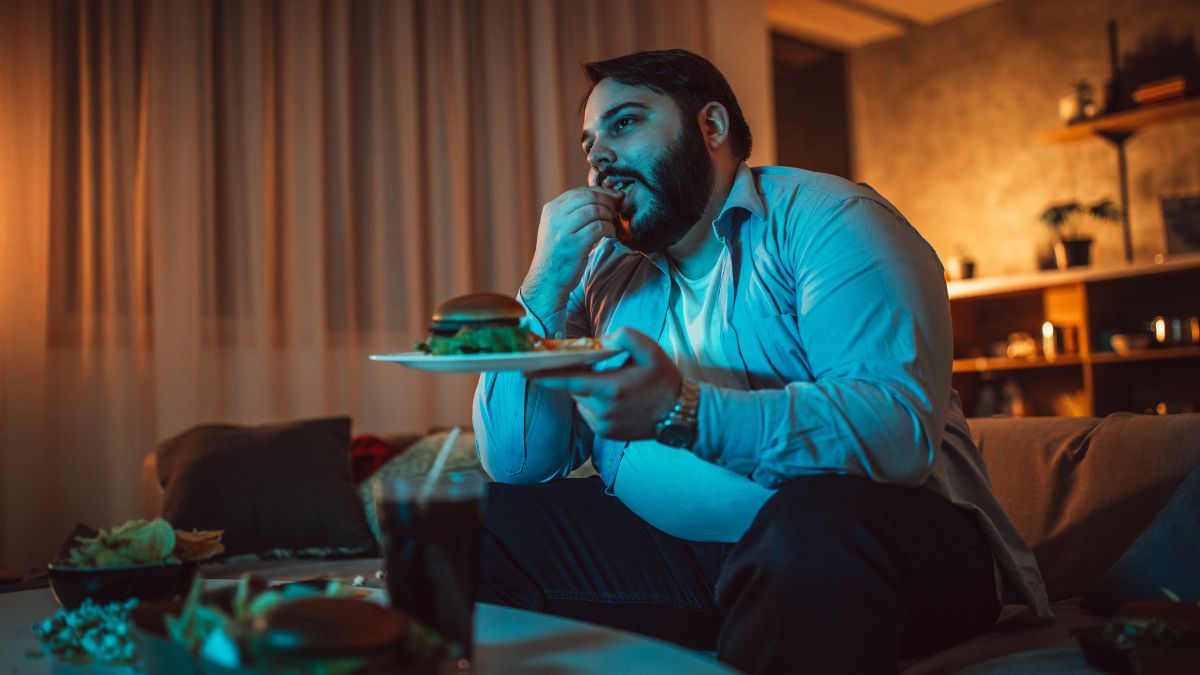
Skipping the gym, canceling plans, avoiding the doctor for years these are not personality flaws. Psychologists call this pattern behavioral restriction, and it is one of the most common ways the human brain responds to repeated shame and judgment.
What it actually looks like in real life:
- Avoiding public spaces like pools, gyms, or beaches because the thought of being watched or judged feels unbearable
- Skipping social events around food restaurants, parties, work lunches to avoid comments or uncomfortable stares
- Putting off medical appointments because past experiences left you feeling lectured instead of helped
- Pulling back from dating or friendships because shame about your body makes closeness feel risky
The brain learns this quickly. One bad experience at the gym becomes a reason to never go back. That becomes a habit. That habit slowly shrinks the size of your life without you even noticing it happening.
Shrinking feels safe. It is not.
Every avoided situation sends your brain a quiet signal that the world outside your comfort zone is dangerous, which makes the anxiety stronger over time not weaker. The avoidance that started as protection becomes the thing keeping you stuck.
Recognizing this pattern in yourself is not about blame. Seeing it clearly is the first step to choosing differently.
Why Generic Mental Health Advice Feels Like It Was Written for Someone Else
“Exercise more.” “Practice self-love.” “Eat better and your mood will improve.” These tips are not wrong exactly they are just written for a person who has never had their body treated as a public problem. For plus size men, that advice carries extra weight that the person giving it never intended.
Why standard mental health content misses the mark:
- “Just exercise” lands differently when gyms have been places of humiliation, not healing
- “Practice self-love” feels hollow when the world around you sends the opposite message every single day
- “Talk to someone” ignores that most therapists have no specific training in weight stigma or what it does to men long-term
- “Eat better” is not neutral advice for someone who has already been lectured about food by every doctor they have ever seen
Most mental health content is built around a general audience, which means weight stigma is never factored in as a variable. The advice assumes a starting point you do not have.
That gap is not your fault. Frustration with generic advice is not resistance to getting help it is a reasonable response to being handed a tool that was never built for your situation.
Real mental health support for plus size men has to account for what it actually feels like to move through the world in a bigger body. Everything from here on out does exactly that.
Medical Trauma Is Real, and Plus Size Men Experience It More Than Anyone Admits

Going to the doctor and leaving feeling worse about yourself than when you walked in that is not just a bad day. Research has consistently shown that larger patients receive different treatment in medical settings, with symptoms more likely to be attributed to weight rather than investigated properly. Over time, that pattern does real psychological damage.
Many plus size men recognize these experiences immediately:
- Going in with a specific complaint — knee pain, fatigue, headaches and being told to lose weight instead of getting an actual diagnosis
- Being weighed without warning at every single appointment, even when it has nothing to do with why you came in
- Leaving appointments feeling ashamed rather than informed, which makes scheduling the next one feel impossible
- Avoiding checkups for years because the anxiety of being judged feels worse than not knowing what is going on with your health
That last point creates a dangerous loop. Avoidance leads to undiagnosed conditions, which leads to health anxiety, which leads to more avoidance.
Breaking that loop starts with one practical shift: before your next appointment, write down your specific symptom and the specific answer you need. Hand it to the doctor at the start. That single move keeps the conversation focused and gives you something to anchor to if the visit starts going sideways.
You deserve actual medical care. Not a lecture.
The Specific Way Masculine Conditioning Makes This Harder for Men Than Women
Body positivity as a movement was built largely by and for plus size women. That is not a criticism it is just a fact that explains why, if you have ever looked for community or language around being a bigger man who is struggling, you probably came up mostly empty.
Plus size women have:
- Visible communities online spaces, influencers, and support groups built specifically around their experience
- Shared language terms and frameworks for naming body shame that have been developed and normalized over decades
- Cultural permission to talk openly about how their bodies affect their confidence, relationships, and mental health
Plus size men have almost none of that infrastructure. What exists instead is a set of silent expectations that are just as damaging:
- Be the funny one use humor to get ahead of any jokes before someone else makes them
- Be the strong one your size should mean power, not vulnerability
- Be unbothered caring about how you look or feel is not something men are supposed to admit out loud
Carrying those roles gets exhausting. The problem is not that you are too sensitive — the problem is that you have been performing a character that leaves no room for an actual human being underneath it.
Seeing that clearly is not weakness. It is just accurate.
How to Find a Therapist Who Won’t Make Your Body the Problem

Not every therapist is a safe choice for a plus size man. A bad match does not just waste your time — it can actively reinforce the shame you came in trying to work through. Knowing what to look for before you book a session changes everything.
When searching, look for these specific signals:
- “Health at Every Size” (HAES) aligned therapists who list this in their profile have specific training in separating body size from personal worth
- “Weight-inclusive” language on their website this signals they will not treat your body as something to fix before your mind can heal
- Experience with men and body image rarer, but worth searching for specifically on therapist directories like Psychology Today
Red flags to watch for in a first session:
- Any comment about your weight that you did not bring up yourself
- Linking your mental health goals directly to weight loss without your prompting
- Suggesting that confidence or anxiety will resolve once your body changes
Therapy is also expensive. That is real. Lower-cost options worth knowing about include community mental health centers, university training clinics, and Open Path Collective, which offers reduced-rate sessions from licensed therapists.
One question you can ask any therapist before committing: “How do you approach working with clients who have complicated relationships with their bodies?” Their answer will tell you almost everything you need to know.
Body Neutrality Over Body Positivity Why the Distinction Matters for Men
Nobody is asking you to love your body. That is the whole point of body neutrality and it is why it actually works for men who find the body positivity movement performative, exhausting, or just not built for them.
The difference is simple but important:
- Body positivity asks you to feel good about how you look to celebrate your body, embrace it, post about it
- Body neutrality asks something much smaller: stop letting your body be the thing that determines your value on any given day
- The goal is not confidence it is indifference, in the healthiest sense of that word
That shift is far more achievable. Most men can work toward “my body is not the most important thing about me” long before they can honestly say “I love my body.”
In practice, body neutrality shows up as thought interruption not affirmations. When the internal voice turns critical, the move is not to replace it with a positive thought. Replacing “I look terrible” with “I look great” feels fake because your brain knows it is fake.
Instead, try redirecting: “What did my body actually do today?” walked somewhere, carried something, kept you alive. That question shifts focus from appearance to function, which is a much easier place for most men to land.
Small redirects. Practiced consistently. That is the whole method.
The One Thing That Compounds Everything and Almost No One Talks About It With Men
Loneliness makes every other item on this list worse. Anxiety gets louder. Shame goes deeper. The avoidance patterns discussed earlier become permanent when there is no social connection pulling you back out and for plus size men, that withdrawal often starts so gradually that you do not notice it happening until you are already isolated.
This is not the general loneliness epidemic. This is specific:
- Pulling back from dating because putting yourself out there feels impossible when you already feel like your body disqualifies you
- Letting friendships fade rather than showing up to events where you might feel physically out of place or visibly different
- Avoiding group activities hiking, sports, swimming, anything physical because the thought of being watched or judged shuts it down before it starts
- Choosing to stay home not because you want to, but because it feels safer than the alternative
Isolation feels like protection. Over time it becomes its own trap.
Every mental health struggle covered in this article the avoidance, the shame, the medical anxiety, the exhaustion of performing the “big jolly guy” role all of it intensifies without human connection to interrupt it.
Re-engagement does not have to be big. This week, text one person you have been avoiding and suggest something low-pressure coffee, a call, anything with no physical performance required.
One text. That is a real starting point.

Hello there! I’m Jesse Joe, the author and editor behind SolganGenius. I’m thrilled you’ve stopped by, and I can’t wait to share with you the essence of what this platform is all about.
I’m a writer, social media enthusiast, and a firm believer in the power of words. I’ve always been fascinated by how a simple phrase or slogan can capture an emotion, convey a message, and even change perspectives. Learn More