

Nobody who actually knows about hair would tell a bigger guy to avoid long hair. Yet somehow that advice keeps getting passed around by barbers, by well-meaning family members, by a culture that has basically one template for how a heavy man is supposed to look.
Short. Neat. Minimal. Take up less space.
That template is wrong. Long hair works on plus size men all the time when it’s the right style, maintained properly, and worn with some actual confidence. The guys who struggle with it aren’t struggling because of their size. They’re struggling because they got bad advice and no real roadmap.
This covers everything you need the styles that work, how to get through the grow-out without quitting, and how to handle everyone who has an opinion about your hair.
The Real Reason You’re Still Asking This Question
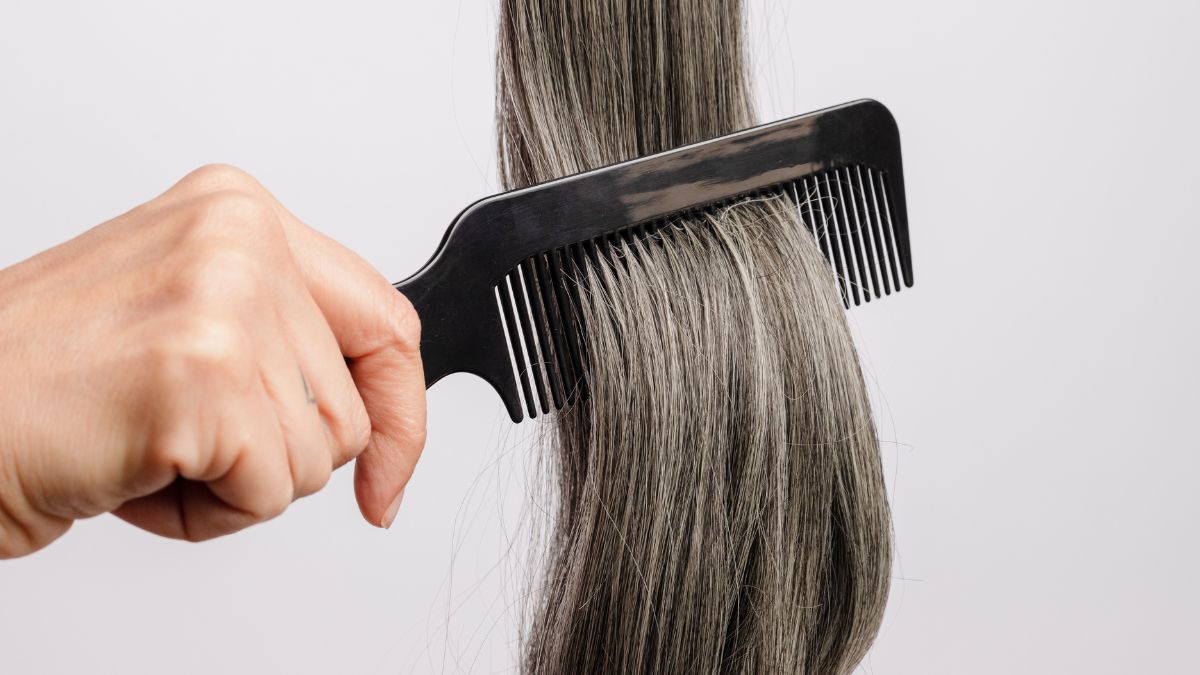
Someone told you long hair wasn’t for you. Maybe it was a barber who said “shorter hair makes bigger guys look cleaner.” Maybe it was a comment from a family member, or just a feeling you picked up from never seeing a guy who looks like you with long hair in a magazine or on TV.
That’s not style advice. That’s a habit disguised as a rule.
Where the myth actually comes from:
- The “clean and minimal” rule barbers often push shorter cuts on bigger guys because it’s a faster, easier style to manage. It benefits them, not necessarily you.
- Hollywood’s narrow template long hair on men gets shown almost exclusively on slim, tall actors. It’s a representation gap, not a style law.
- The “don’t draw attention” instinct a lot of plus size men have been subtly taught to shrink. Shorter hair fits that conditioning. Long hair doesn’t.
None of these are about what actually looks good. They’re about what’s familiar.
The real question was never can you pull off long hair. Bigger guys wear long hair well all the time when it fits their face shape, suits their texture, and gets maintained properly. Those are learnable, fixable things.
You’re still asking because nobody gave you a straight answer built around how you actually look. That’s what this article is for.
What “Works for Your Body Type” Actually Means (And What It Doesn’t)
Most guys hear “dress for your body type” and think it means hide, minimize, and shrink everything down. That thinking carries over to hair. The logic becomes: keep it short, keep it tight, take up less space.
That’s exactly backwards.
Long hair doesn’t make you look bigger. What makes you look bigger is hair that has no shape puffed out at the sides, frizzy at the ends, or just growing outward without direction. The problem was never the length. It was always the structure.
What “works for your body type” actually means in practical terms:
- Volume at the top, not the sides length that falls downward elongates your frame. Hair that pushes outward at ear-level widens it. A style that grows down your neck and back draws the eye vertically, which works in your favor.
- Defined edges matter more than length a clean hairline, a shaped neckline, and controlled ends signal intention. Without them, any length looks unkempt. With them, even a rough, textured style looks deliberate.
- Face shape beats body size every time proportion is about your face, not your weight. A round face benefits from length that hits past the jaw, because it creates a vertical line that balances width. An oval face handles almost any length well.
Proportion isn’t about making yourself look smaller. Done right, long hair adds presence. That’s a completely different goal and a better one.
The 5 Long Hairstyles That Look Best on Plus Size Men
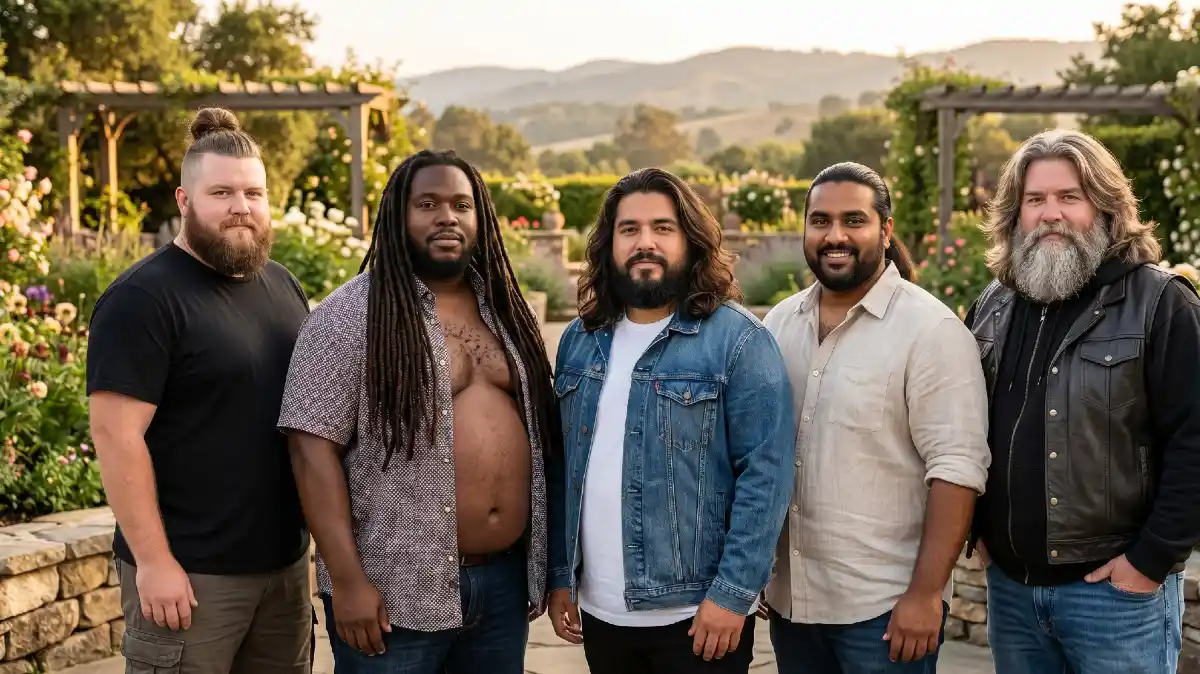
Picking a style isn’t about finding the “safest” option. It’s about matching length, texture, and structure to your specific faceand then committing to it.
Five styles that consistently work well:
- Shoulder-length with a middle or side part Hair that ends at the shoulder creates a clean vertical line without overwhelming your frame. Works best for oval and oblong face shapes. Avoid letting it dry without product undefined ends at this length look unfinished, not relaxed.
- Textured layers with a taper fade Keeping the sides tapered while leaving length on top and through the back adds height and reduces width at the same time. Specifically good for round faces because the fade tightens the sides while the length draws the eye upward.
- Slicked-back long hair Pulling hair straight back off the face elongates your profile and exposes your jawline. Strong jaw? This style makes it the focal point. Use a medium-hold pomade, not gel gel hardens and flakes; pomade stays pliable all day.
- Loose waves or curls worn down Natural texture worn with definition looks intentional. Diffuse-dry instead of air-drying flat, and scrunch in a curl cream while hair is still wet to hold the shape.
- Low bun or half-up style Pulling hair back loosely at the nape keeps your face open and your look clean without cutting length. Tighter buns worn high on the head can add unwanted roundness keep it low and slightly loose instead.
Every one of these works because of structure, not despite the length.
How to Survive the Grow-Out Phase Without Giving Up
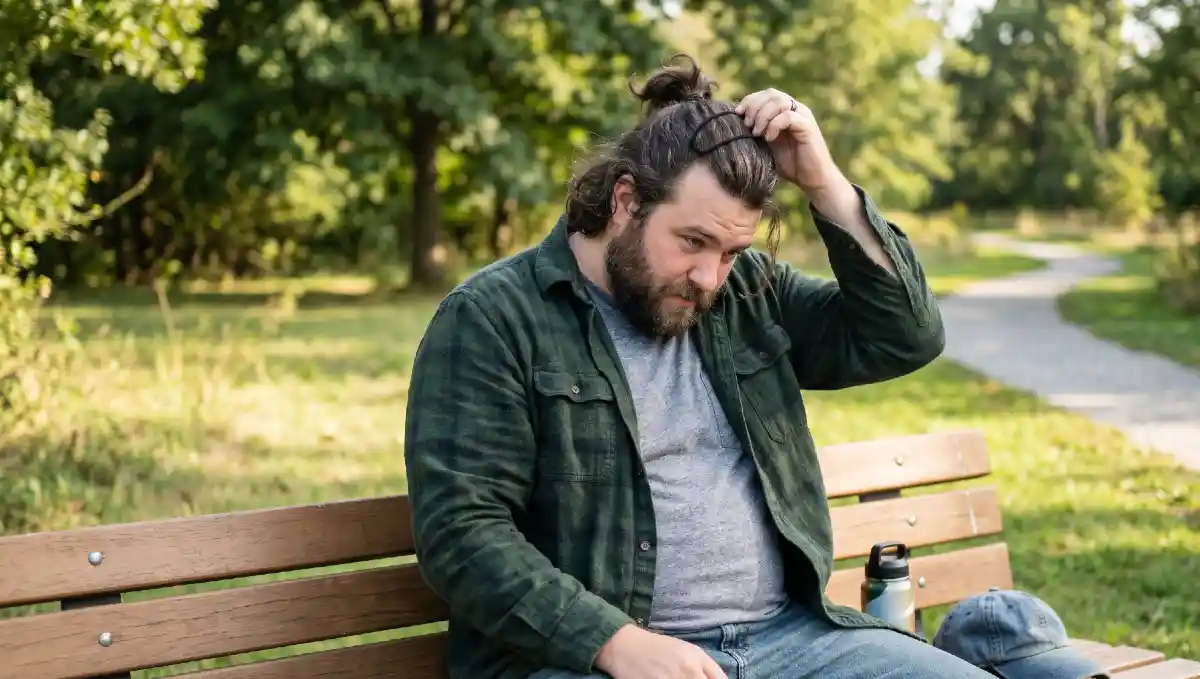
Most men quit during month two or three. Not because long hair doesn’t suit them because nobody told them what to do while it’s getting there. Hair at collar length looks shapeless, sits awkwardly, and doesn’t behave like short or long hair. That phase is temporary. Quitting it is permanent.
What each stage actually looks like and how to bridge it:
- Months 1–2 (short to ear-length) Shape your neckline every 3 weeks. Not the top just the neck. A clean neckline signals intention even when the rest is in transition. This one step separates “growing it out” from “letting himself go.”
- Months 3–4 (the collar phase) This is where most men tap out. Hair hits the collar and flips outward. Fix it by applying a small amount of leave-in conditioner while damp, then combing it downward and letting it dry flat. The flip happens because hair is dry and unguided not because your hair is unruly.
- Months 5–6 (past the collar) Length now works for you instead of against you. Start using a wide-tooth comb instead of a brush to preserve texture and reduce frizz.
Two things make the whole process easier. First, tell your barber exactly what you’re doing a good one will shape around your goal, not cut against it. Second, keep the rest of your appearance sharp during the grow-out. Clean clothes, good grooming elsewhere. When everything else looks intentional, the hair-in-progress reads as a choice, not an accident.
Products and Routines That Make Long Hair Look Intentional, Not Neglected
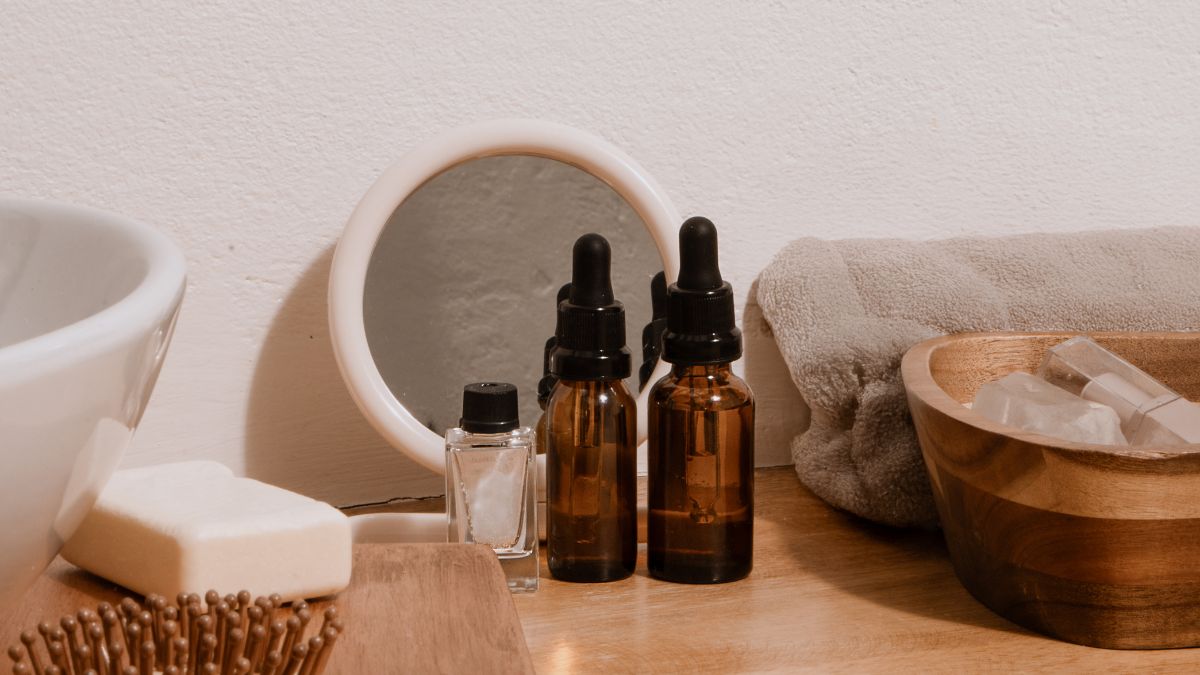
Long hair doesn’t require a 12-step routine. What it does require is the right three or four products used consistently because the difference between well-maintained long hair and neglected long hair is mostly just regularity, not complexity.
Here’s what actually belongs in your routine:
- A sulfate-free shampoo, used 2–3 times a week max Washing daily strips the natural oils that keep longer hair soft and manageable. Sulfate-free formulas clean without drying. Dry, brittle long hair looks unhealthy at any length — this one swap prevents most of that.
- A rinse-out conditioner every wash Apply from mid-shaft to ends, not the scalp. Putting conditioner at the roots weighs hair down and makes it look flat and greasy within hours.
- A leave-in conditioner or hair oil for after the shower One pump of argan or jojoba oil worked through damp ends controls frizz and adds the kind of shine that reads as healthy, not greasy. Use it sparingly a little goes further than you think.
- A medium-hold styling product matched to your texture Straight hair responds well to a light pomade. Wavy or curly hair needs a curl cream or light gel to define without crunch.
Two daily habits matter more than any product. Sleep on a satin pillowcase cotton creates friction that tangles and breaks longer hair overnight. Always detangle starting from the ends and working upward, never root to tip, which snaps hair instead of releasing knots.
Consistency beats perfection here. A simple routine done daily beats an elaborate one done twice a week.
How to Handle the Comments — From Barbers, Family, and Everyone Else

People will say something. Count on it. Most of the time it won’t be mean it’ll just be unsolicited, repetitive, and timed perfectly for when your confidence is already low during the grow-out phase.
Knowing it’s coming makes it easier to brush off.
Where the comments come from, and how to handle each one:
- The barber who “suggests” a trim Some barbers genuinely don’t know how to maintain a grow-out and default to cutting. Others just prefer short cuts. Either way, be direct before they touch your hair: “I’m growing it out — just clean up the neckline and remove any split ends.” Specific instructions leave no room for interpretation.
- Family who says it doesn’t suit you They’re usually reacting to the awkward in-between phase, not your actual goal. “Wait until it’s finished” is a complete answer. You don’t owe anyone a justification for a haircut.
- Friends or coworkers who won’t let it go One calm, unbothered response repeated consistently works better than defending your choice. Try: “Yeah, I’m growing it out” said flatly, with zero elaboration. Boredom kills commentary faster than argument does.
The thing nobody says out loud. Confidence is doing more work than the hair itself. A plus size man wearing long hair with zero apology reads completely differently than one who seems uncertain about it. People take cues from you. Walk in like it was always the plan because it was — and most of the commentary stops within a few weeks.
The Only Thing Standing Between You and Long Hair Is This Decision
You’ve read the advice. You know the styles, the phases, the products, the comebacks for when your barber pushes back. None of that matters until you actually decide not “maybe someday” decide, but today decide.
Most men don’t fail at long hair because it doesn’t suit them. They fail because they never fully committed, so every awkward phase became an easy exit.
Your actual next step, broken into three specific actions:
- Pick one style from the list above right now. Not your favorite in theory. The one that matches your face shape and your hair texture. Write it down if you have to. Vague goals produce vague results; a named style gives you something to grow toward.
- Book a barber appointment this week not to cut, but to tell them your plan. A good barber will shape your current length to support the grow-out instead of working against it. This one conversation changes the whole trajectory.
- Buy a sulfate-free shampoo and a leave-in conditioner before your next wash. Starting the right routine now means your hair arrives at your goal length in better condition. Healthy hair at month six looks intentional. Dry, broken hair at month six looks like a mistake.
Long hair on a plus size man doesn’t need defending, qualifying, or explaining. Plenty of men who look exactly like you are wearing it right now they just decided and didn’t look back.
Your body type was never the obstacle. Indecision was. That’s the one thing actually worth fixing today.

Hello there! I’m Jesse Joe, the author and editor behind SolganGenius. I’m thrilled you’ve stopped by, and I can’t wait to share with you the essence of what this platform is all about.
I’m a writer, social media enthusiast, and a firm believer in the power of words. I’ve always been fascinated by how a simple phrase or slogan can capture an emotion, convey a message, and even change perspectives. Learn More