

Nobody talks about this one. Men spend money on better clothes, better haircuts, better grooming and then walk into the room hunched forward, belly pushed out, chest caved in, and undo all of it in the first three seconds.
Posture isn’t a health lecture. It’s a visual tool. The way you carry your body determines how your silhouette reads before anyone registers your outfit, your face, or your size.
On a bigger frame, this matters even more. A slouch compresses your torso and pushes weight forward. Aligned posture lengthens your vertical line and pulls that same weight back no clothing change required, no weight lost.
The difference is immediate. And unlike most style advice, it costs nothing.
Exactly why it works, how to test where you currently stand, and what to do daily to make it permanent.
The Shame-Slouch Cycle That Most Big Men Don’t Realize They’re In
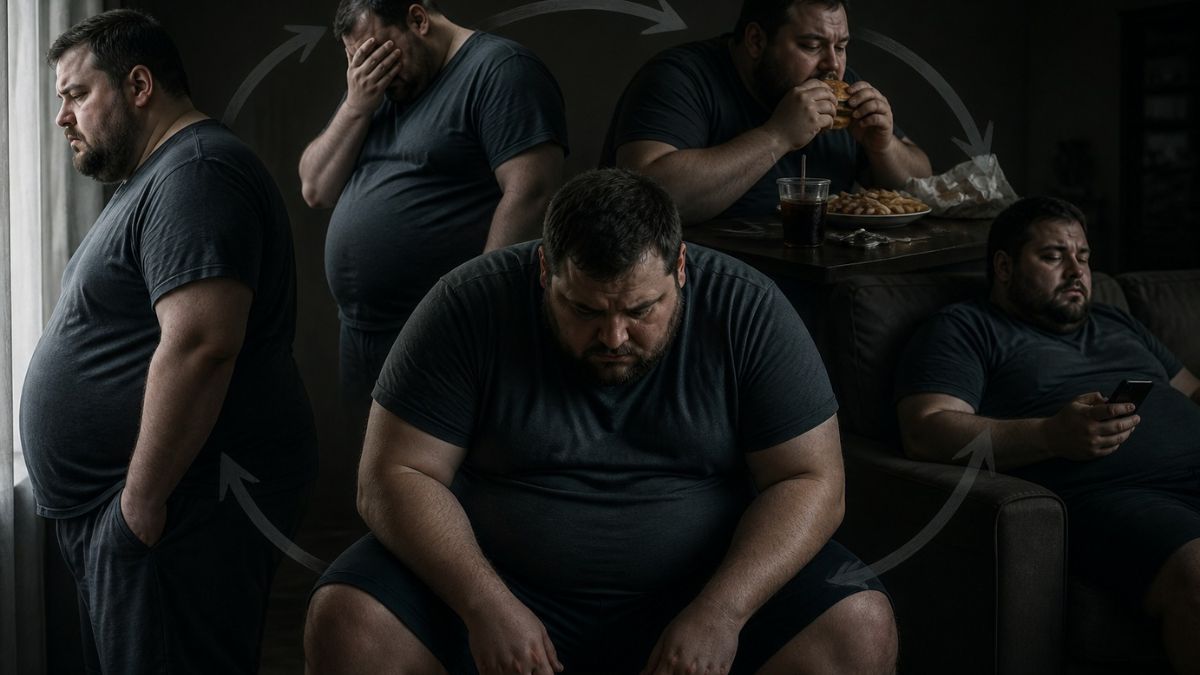
Most men never connect their posture to their emotions but for bigger guys, the two are almost always linked.
At some point, you learned to make yourself smaller. Maybe it was to avoid stares in a crowded room. Maybe it was years of squeezing into seats, apologizing for your size, or feeling like your body was something to hide rather than carry with confidence. Slouching became a habit so automatic you stopped noticing it.
What that habit is actually doing:
- Shame triggers the slouch Your body responds to self-consciousness by caving inward: shoulders forward, chest down, head dropped
- The slouch changes your silhouette Belly pushes out, torso compresses, you look heavier than you are
- Looking worse feeds more shame You avoid mirrors, avoid photos, avoid standing tall which deepens the original feeling
- The cycle repeats Without interrupting it consciously, the pattern hardens into your default posture
This is why willpower alone doesn’t fix it. Telling yourself to “just stand up straight” doesn’t work when the slouch is a deeply wired emotional response, not laziness.
Breaking the cycle starts with one thing: understanding that your posture isn’t a character flaw. It’s a learned protection mechanism your body adopted and anything learned can be unlearned.
The physical fix comes next. But this is why it actually sticks.
What “Good Posture” Actually Looks Like on a Bigger Frame (It’s Not a Military Stance)
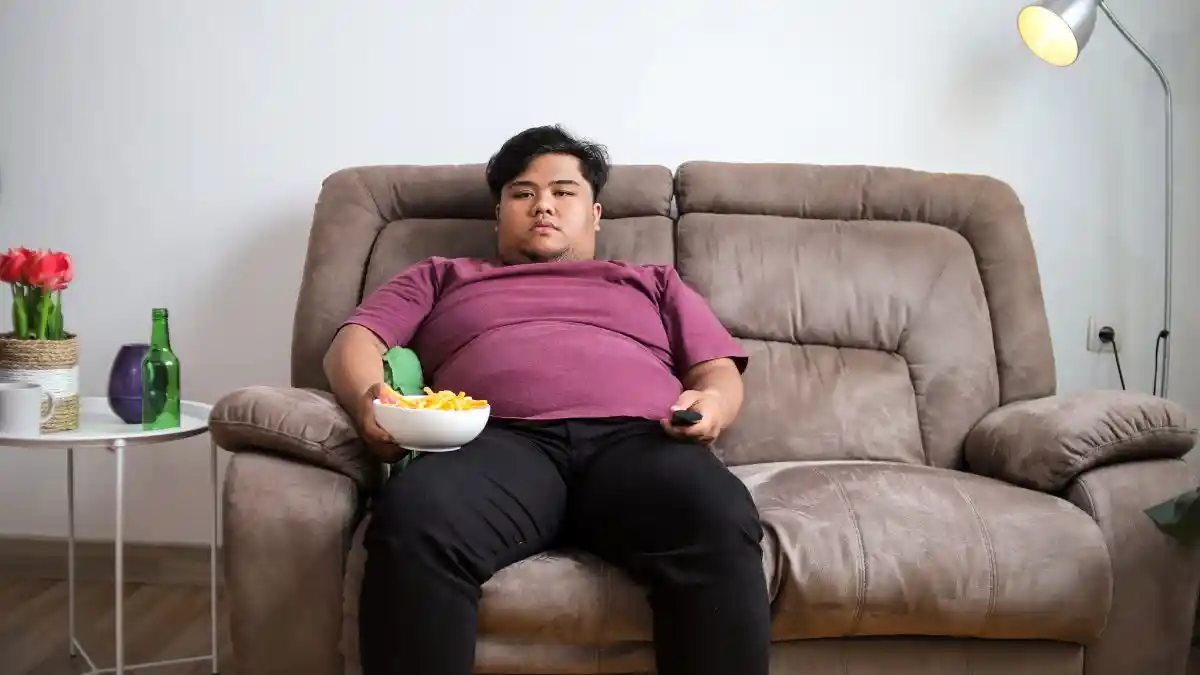
Forcing your shoulders back and sucking in your gut is not good posture. That rigid, chest-puffed stance is exhausting to hold, looks unnatural, and has nothing to do with what aligned posture actually is.
Real posture is stacked, not forced. Your body has a natural alignment that takes almost no effort to maintain once your muscles remember it:
- Head sits directly over your shoulders not jutting forward like you’re reading a screen
- Shoulders sit back and down not pinched together or hiked up toward your ears
- Chest lifts naturally no puffing required, just a gentle rise from the alignment below it
- Hips sit under your torso not tilted forward, which is what pushes the lower belly out
- Knees stay soft never locked, which keeps the whole chain relaxed and stable
On a bigger frame, this alignment does something specific and immediate. When your hips tilt forward and your shoulders cave in, your midsection gets compressed and pushed outward making your belly appear larger than it is. Stacking everything vertically pulls that same midsection back and upward, creating a longer, leaner line through your torso without changing your body at all.
Relaxed is the key word. This stance looks calm and in control the kind of presence that reads as confidence before you say a single word.
The 60-Second Wall Test That Shows You Exactly How Far Off Your Posture Is
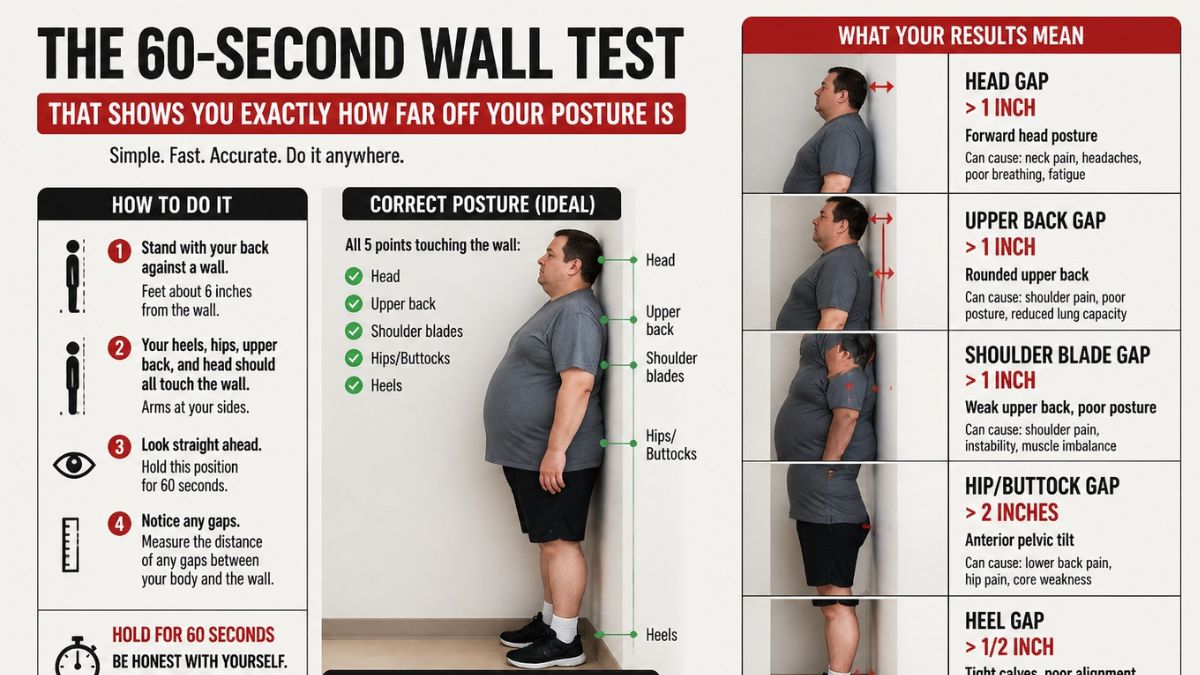
Stop reading and find a wall. This single test will tell you more about your posture in one minute than most men learn in years.
Stand with your back against it heels touching the baseboard, glutes against the wall, upper back flat against the surface, and the back of your head making contact. Now slide one hand into the gap between your lower back and the wall.
What you feel tells you exactly where you stand:
- One hand fits with a small gap (2–3 fingers) This is normal and healthy. Your spine has its natural curve and your alignment is close to where it should be
- Your whole fist fits in the gap Your pelvis is tilting forward, pushing your lower belly out. This is one of the most common reasons bigger men look heavier than they are
- Almost no gap at all Your lower back is flat or reversed, usually from years of heavy slouching. Your hips have tucked under and your upper back has rounded forward to compensate
- Your head won’t touch the wall Forward head position. Your neck and upper back have adapted to years of looking down at screens
Most men discover their head or lower back is the problem sometimes both. Neither result is permanent.
Your body settled into this position gradually, over years of sitting, scrolling, and unconsciously protecting itself. That same gradual process works in reverse.
Three Postural Habits That Are Quietly Wrecking Your Silhouette Every Day
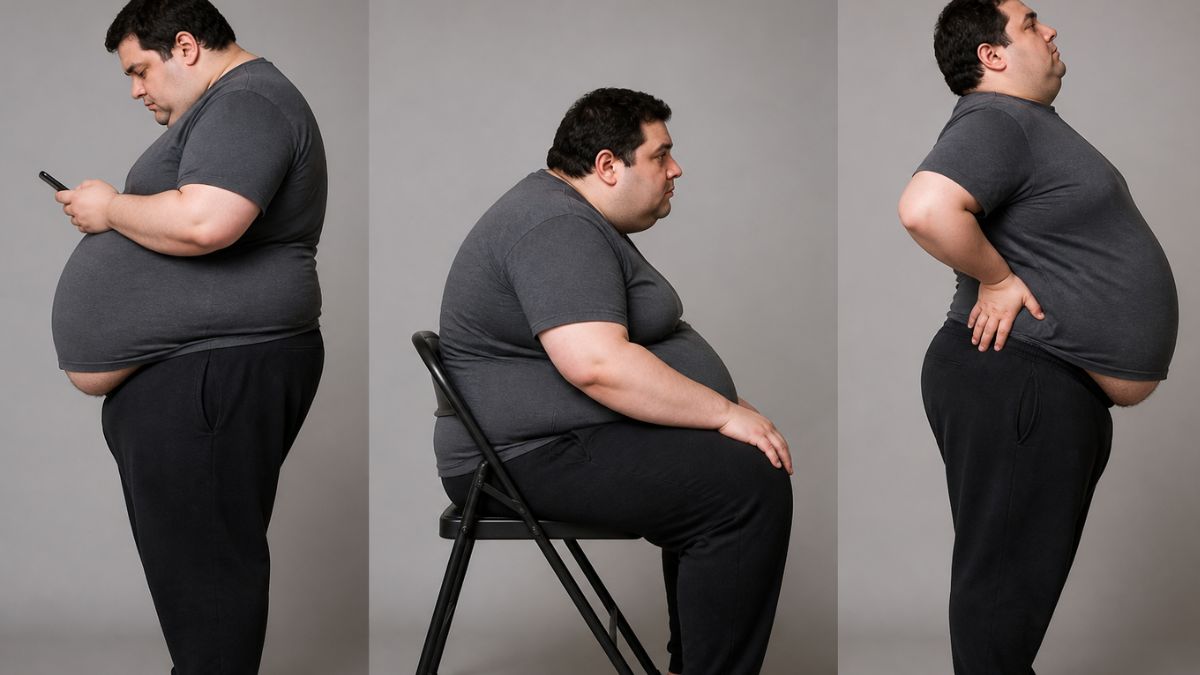
None of these require bad intentions. They just require a modern life a phone, a desk, and a chair. That’s enough to quietly reshape how your body holds itself over months and years.
Each one has a direct, visible effect on how your body looks in clothes:
- Forward Head Position Every inch your head drifts forward of your shoulders adds visible strain to your neck and upper back, rounding the shoulders inward and collapsing the chest. From the side, this makes your entire upper body look hunched and heavy, even if your torso is relatively lean
- Anterior Pelvic Tilt This one surprises people. When your hips tilt forward which happens automatically after hours of sitting your lower back arches and your belly gets pushed outward and downward. Slim men look bloated with this tilt. On a bigger frame, the effect is significantly more dramatic
- Collapsed Chest Desk work trains your chest muscles to stay shortened and tight, pulling your shoulders forward and caving your sternum inward. Clothing drapes poorly on a collapsed chest, and the inward curve makes your midsection appear wider than it actually is
What these three have in common: none of them are permanent structural problems. Each one developed because certain muscles got tight while the opposing muscles went weak and lazy from underuse.
Tight beats lazy every time until you deliberately reverse it.
The 5-Minute Daily Reset That Rewires Your Posture Without a Gym
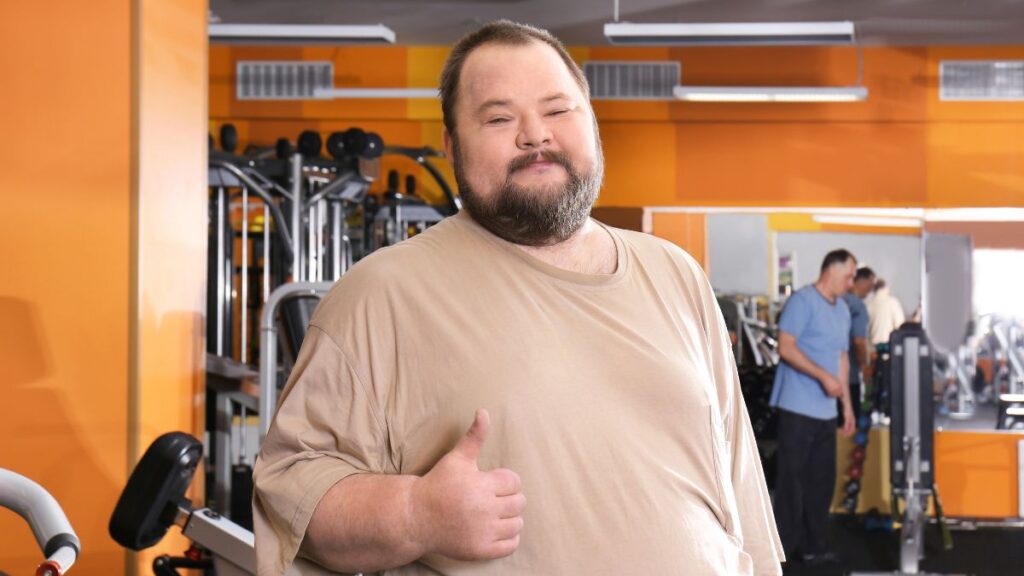
Willpower fades by noon. Muscle memory doesn’t and that’s exactly what this routine builds, four moves at a time.
Do these in sequence, once a day, in any order that fits your morning or evening. No equipment. No gym. No experience needed.
- Chin Tuck 10 reps Sit or stand tall. Without moving your shoulders, gently pull your chin straight back like you’re making a double chin. Hold for 2 seconds, release. This directly counters forward head position and reactivates the deep neck muscles that keep your head stacked over your spine
- Chest Opener Stretch 30 seconds Clasp your hands behind your lower back, squeeze your shoulder blades together gently, and lift your chest toward the ceiling. This stretches the tight chest muscles that pull your shoulders forward and cave your sternum inward
- Hip Flexor Stretch 30 seconds each side Step one foot forward into a half-kneeling position, with your back knee on the floor. Shift your weight forward slowly until you feel a stretch at the front of your back hip. This is the direct fix for anterior pelvic tilt the habit pushing your belly forward
- Wall Angel 10 slow reps Stand against a wall in your test position from earlier. Raise your arms to shoulder height, bent at 90 degrees, and slowly slide them upward like a snow angel while keeping your back, arms, and head touching the wall
Four moves. Five minutes. Done.
Consistency here matters far more than intensity your body changes through repetition, not effort.
How to Lock Good Posture Into the Moments That Matter Most
You don’t need perfect posture all day. You need it in the ten seconds that actually count and a reliable way to trigger it without thinking.
Anchor triggers make this automatic. Each one is a physical cue attached to something you already do, so good posture activates itself exactly when it matters most:
- Before opening any door Drop your shoulders down and back, lift your chest, and walk through. Every entrance becomes a reset. This is the single highest-value trigger because walking into a room is when first impressions form and when most men are least aware of how they’re carrying themselves
- Before a photo is taken Push the tip of your tongue to the roof of your mouth, elongate your neck slightly, and roll your shoulders back. Three seconds. The tongue trick alone defines the jaw and reduces the appearance of a double chin without any obvious effort showing in the image
- When someone taller speaks to you Resist the pull to shrink. Plant your feet hip-width apart, feel the ground under you, and hold your height fully. Shrinking toward someone taller is one of the most common confidence leaks bigger men don’t notice they’re doing
None of these require the daily routine to be perfect first. Start using the triggers today, even if your posture is still a work in progress.
Triggers train your nervous system to associate certain moments with a certain way of holding your body. Do it enough times and the door opens your shoulders drop back on their own.

Hello there! I’m Jesse Joe, the author and editor behind SolganGenius. I’m thrilled you’ve stopped by, and I can’t wait to share with you the essence of what this platform is all about.
I’m a writer, social media enthusiast, and a firm believer in the power of words. I’ve always been fascinated by how a simple phrase or slogan can capture an emotion, convey a message, and even change perspectives. Learn More