
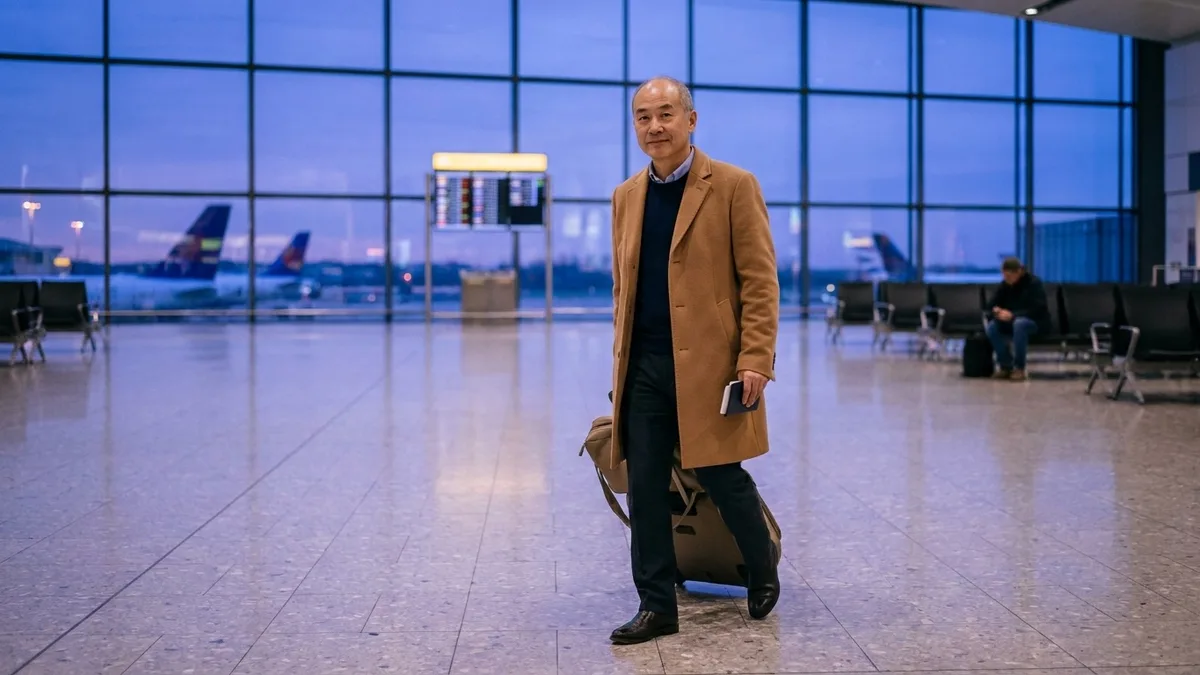
A retired Ohio educator traveled to her granddaughter's wedding last spring, paying $85 in baggage fees she never should have owed. She waited 40 minutes in a security line she could have skipped, then sat in a middle seat for four hours that should never have been her assignment.
Her ticket already covered everything she needed. She simply never learned to ask for it.
The perks below are free, real, and many are required by federal rule. Each one comes with the exact words to say and the moment to say them, so you can stop leaving money and comfort at the gate.
Your Perk Timing at a Glance
1. Airlines stay quiet because these perks are federally required
That Ohio teacher is why this list exists, and her experience reveals a larger truth: carriers never give away anything with a cost attached. United, Delta, American, Southwest — these are corporations guarding profits, not charities, and staying quiet is cheaper than serving you.
Here's what makes it worse. A lot of what follows is required by federal rule, not handed out as goodwill. So when an agent shrugs you off, it may not be a policy you have to accept, it might be a rule being broken.
The whole system runs on one quiet assumption, that you won't ask. So flip it. That is why every perk here comes with exact wording and exact timing, because a vague question gets a vague answer every time.
💡 Tip: Say the magic phrase word for word. It signals you know the policy exists, and that changes how quickly things move.
| Perk | When to ask | What it gets you |
|---|---|---|
| Escort pass | At staffed check-in, 30 min early | Family walks you to the gate |
| Ambulatory assistance | At booking or 48 hrs before | Faster security, ride to gate, early boarding |
| Connection cart | At booking and 48 hrs before | Someone meets you at every layover |
| TSA 75+ screening | At checkpoint, before screening | Shoes on, second scanner pass |
| Senior fare | When booking, by phone | Discount not shown online |
| Special meal | 48 hrs before, manage booking | Low sodium, diabetic, gluten-free, heart-healthy |
| Pre-boarding | Before boarding starts | Board first with companion |
| Seating accommodation | Accessibility desk, 48 hrs before | Aisle seat with movable armrest, extra legroom |
| Gate-check carry-on | At gate before boarding | Free bag check to final destination |
| Seat upgrade window | 20-30 min before boarding | Extra legroom or aisle seat free |
| Medical equipment | At check-in | CPAP, oxygen, insulin cooler fly free |
| Extra baggage allowance | At booking or check-in | Foreign carriers add 10 kg or a free bag |
| Delay compensation | At counter during delay | Meal voucher, hotel, transport |
| Complaint resolution official | When accommodation denied | On-the-spot federal law enforcement |
| Four-moment plan | Booking, airport, gate, disruption | Everything above, in order |
2. A free escort pass gets family to your gate
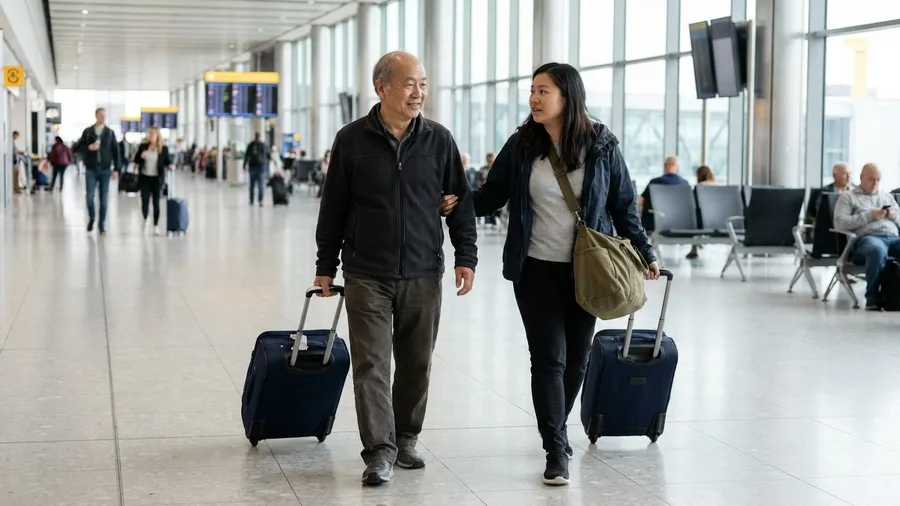
That silence has a practical consequence: it means your daughter or your neighbor can walk you all the way to the gate without buying a plane ticket.
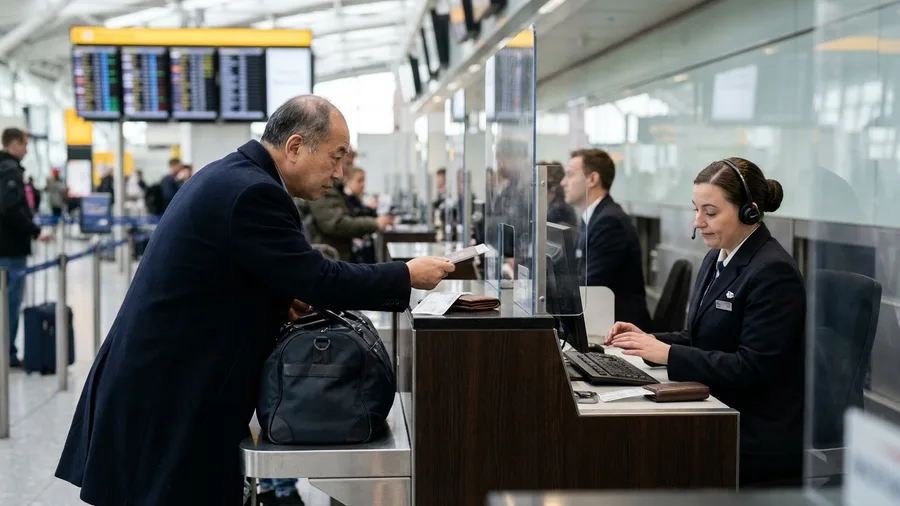
Nearly every large US carrier issues a no-cost gate escort pass, though only at a staffed check-in desk — never a self-serve kiosk. Bring the escort's photo ID, arrive 30 minutes early, and make the request before the curbside goodbyes, since it's up to the counter agent, not a written rule.
The pass gets your escort through security beside you, carrying a bag, and staying at the gate until you board.
Say: "Could you issue an escort pass so my daughter can accompany me to the gate?"
💡 PRO TIP
The counter, not the kiosk
Self-service kiosks cannot issue escort passes. Walk to the staffed desk and ask a person. That single choice is the difference between a goodbye at the curb and a goodbye at the jet bridge.
3. Ambulatory assistance is free at 65, walker or not
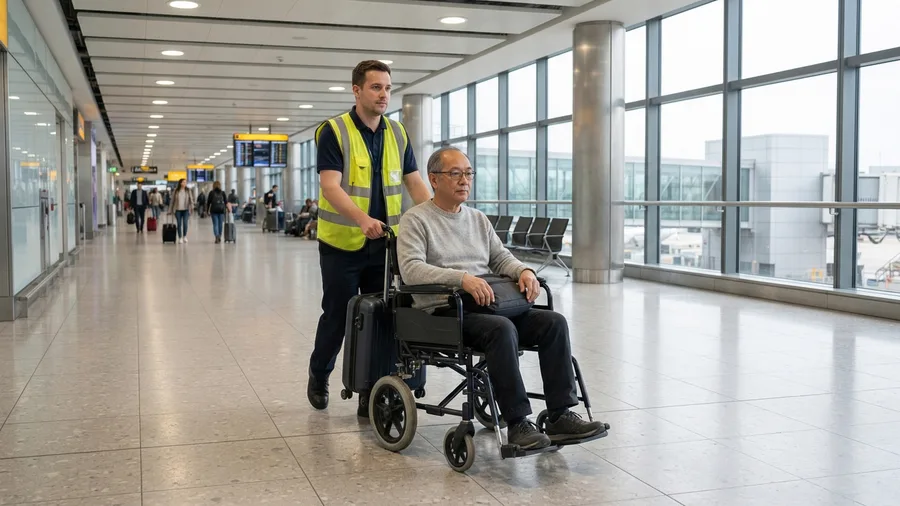
Wheelchair service is federally mandated for anyone 65 or older who finds the terminal hard, and that includes travelers with perfectly working legs.
You can walk fine and still get the ride. Tired legs, heavy bags, and a terminal that stretches three city blocks all qualify at 65 or older, so the myth that this is only for people who cannot walk is the one that costs seniors the most.
Ask when you book, or phone 48 hours in advance. You'll get a quicker security lane, a ride to your gate, help with a carry-on, and boarding ahead of first class and ahead of anyone who paid extra for early boarding.
Say: "Please arrange ambulatory assistance from check-in through to my gate."
4. Connection carts exist only if you reconfirm them
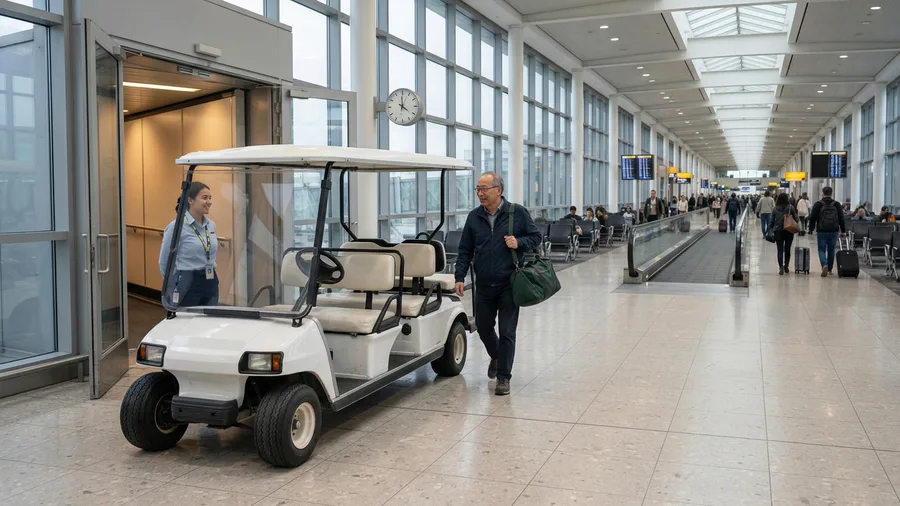
Imagine a 45-minute layover at Dallas/Fort Worth, your first flight pulling into gate D47. With no help arranged in advance, you're sprinting with rolling bags banging your ankles and your heart pounding in ways it shouldn't.
Federal law requires free guided assistance at every connection point. The catch is that the system often fails to carry your request forward, so unconfirmed help is the same as no help at all. Request it at booking, then reconfirm 48 hours before departure.
A 72-year-old from Florida barely made her Atlanta connection because nobody had told her it had to be prearranged.
Say: "Please verify that connection assistance is set up for every layover on my itinerary."
5. TSA's 75+ screening is free but never announced
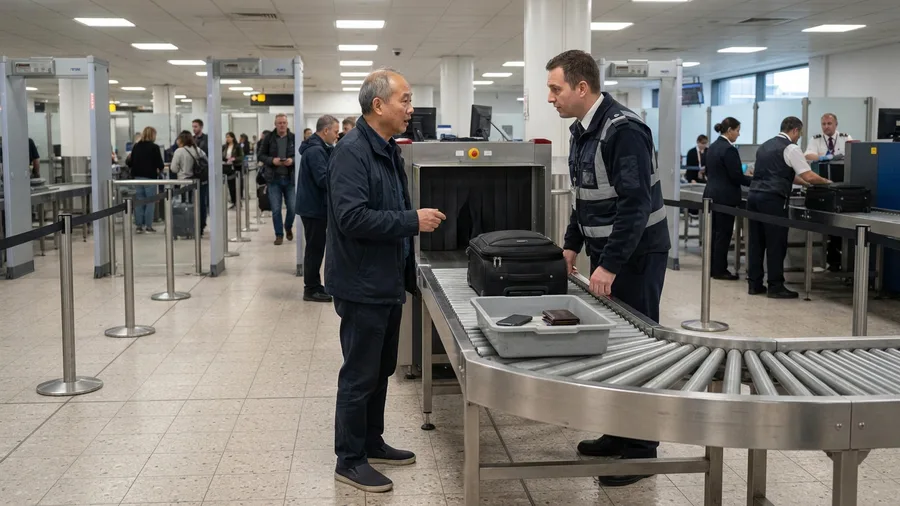
Then comes the moment at the checkpoint, before the scanner, when this one matters.
At 75 or older, TSA provides modified screening with no application, no background check, and none of that $78 enrollment fee. Shoes and light jackets stay on, and an alarm gets a second scanner pass before anyone starts a pat-down.
Officers are not required to announce it, so state your age before screening begins instead of standing there in socks wondering. For extra help, call TSA Cares at 1-855-787-2227 at least 72 hours before departure.
Say: "I'm 75, and I'd like my age noted before screening begins."
The Four Moments to Ask
Reconfirm everything 48 hours before departure.
6. Senior fares exist but booking sites can't see them

Unlike the perks that happen at the airport, this one starts the moment you book, and it is where most seniors lose money without ever knowing it. Sorting by price on a comparison site feels logical. It is also perhaps the costliest mistake a senior traveler can make when buying a ticket, because the algorithm assumes full price and shows full price. It has no idea how old you are.
On United's site, a passenger-type dropdown lets you pick 65+, and senior fares surface. With American and Delta, it takes a reservations agent to bring them up, so a single phone call is all that stands between you and a lower fare. That's it. That's the wall.
Say this: "For passengers 65 and up, is there a senior fare filed on this route that isn't showing online?" Those fare codes exist only on certain routes — that's the catch — so ask before you pay, not afterward.
A quick picture. A round trip booked online at $610 might have a senior fare filed on the same route for $520. The website will never show it to you because it doesn't know to look. One phone call, ten minutes, and the difference is a nice dinner at the other end.
🌱 GROWING TIP
Ask before you pay
Once a ticket is issued, changing to a senior fare can trigger a change fee that eats the discount. Make the call first, then book.
7. Free special meals serve first if ordered ahead
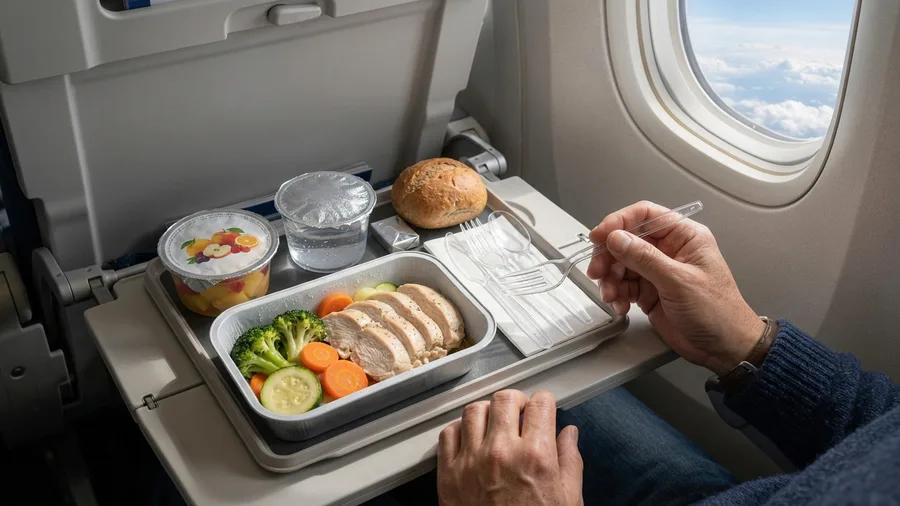
Can you get something that fits your diet without paying for an upgrade? Yes, but only if you order it ahead.
On full-service international flights, airlines load low sodium, diabetic-friendly, gluten-free, and heart-healthy meals for free. Request yours via your booking management page no later than 48 hours prior to departure.
The overlooked advantage is timing. Special meals come off the cart about 20 minutes before regular service reaches the later rows, so while the trolley is still ten rows back, your tray is already down. Check with the gate agent that your meal is on the load sheet, rather than discovering the problem at 35,000 feet.
And it isn't just about the tray. A long-haul switch to the low-sodium meal is really about how you feel when you land.
💡 Tip: Snap a photo of your meal confirmation. If it is missing at the gate, you have proof in your hand.
8. One calm sentence buys pre-boarding, no paperwork
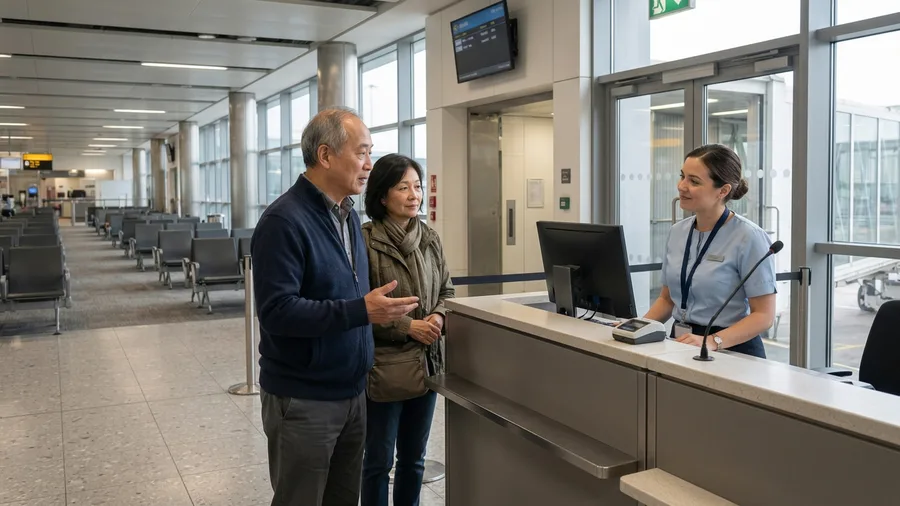
Once you've got the meal sorted, the next step is timing at the gate, and walking up to the desk before boarding begins buys you an unhurried start.
Airlines are legally barred from demanding documentation for pre-boarding. The request is a sentence, not an application, and your companion boards alongside you. Go to the desk while the area is still calm, not during the group rush. No separation, no watching your travel partner disappear while you are still in line.
Say it plainly: "Boarding takes me a bit longer, so I'd like to pre-board, please."
The payoff is real. You get first crack at the bin space, you settle without a rush, and you don't spend the first ten minutes of the flight waiting for the aisle to clear so you can sit down.
Ask vs. Wait
Ask early
- Escort pass at the staffed counter
- Ambulatory assistance at booking
- Special meal 48 hours ahead
- Pre-board before the rush
Wait and lose
- Goodbye at the curb
- Sprint through DFW
- Standard meal only
- Bin space gone
9. Federal rules reserve some seats free of charge
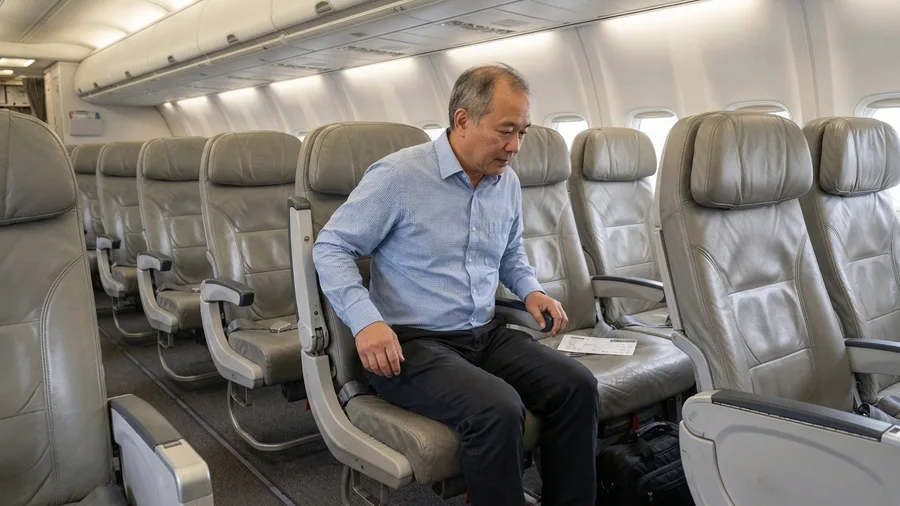
Certain seats on each flight belong to you by law, and carriers are barred from charging a premium-seat fee to reach them. That's not a courtesy; it's a regulation they'd prefer to keep quiet.
Three entitlements worth knowing. If you can't lower yourself over a fixed armrest, you're entitled to an aisle seat with a movable one. Extra legroom if a leg can't bend normally. And a companion assisting you seated beside you free of charge, even on the cheapest fare.
Airlines cannot resell these as paid preferred-seat upgrades. Call the accessibility desk at least 48 hours before departure and describe the physical need, not a diagnosis. "I can't lower into a seat with a fixed armrest" says everything, and frankly it's all they need.
Say: "I need to speak with the accessibility desk about a seating accommodation for my upcoming flight."
Picture a traveler with a stiff hip who booked the cheapest fare. She calls, explains she can't get down into a fixed-armrest seat, and ends up in a movable-armrest aisle seat at no extra cost. Same ticket price, completely different flight.
Claiming a Reserved Seat: The Fine Print
👥 Companion fare
Zero – even on basic economy
🪑 Seat the rule covers
Aisle with movable armrest, not any aisle seat
🚫 Wrong ask
'I'd prefer more room' – preference is not covered
📋 Evidence to have ready
Booking reference and the exact physical limit
📱 Proof at the gate
Seat map showing the seat is free of charge
If refused
Ask for the complaint reference, then raise it with the airline's accessibility team in writing.
10. Volunteering your carry-on at the gate costs nothing
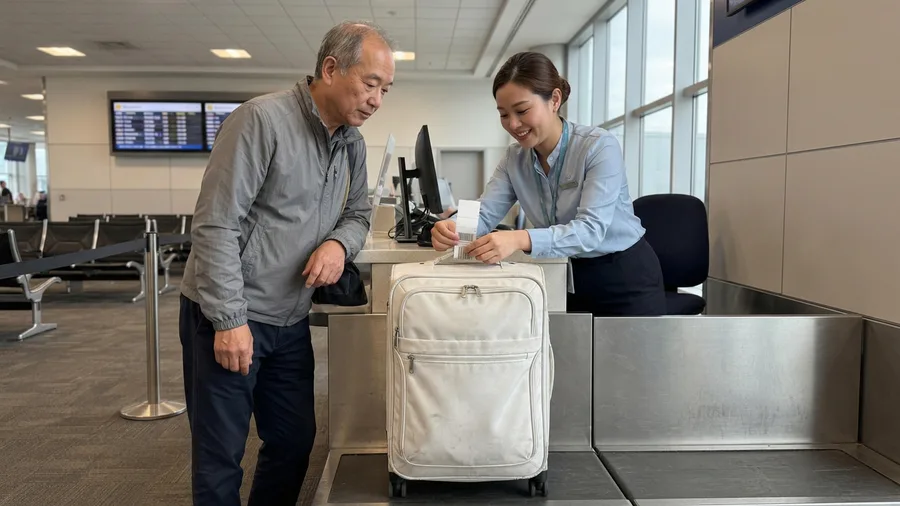
Now for the overhead-bin wrestling match, which is a different problem from the seat itself. On full flights, gate agents need passengers to volunteer carry-ons for free gate-checking, and you can beat the announcement by walking up first.
Hand over your bag before boarding begins. No fee, tagged through to your final destination, and no hoisting it overhead while hoping your shoulder holds up.
Here is the trap the announcement hides. The bag must be tagged to your final city, not the connection, or it lands somewhere you don't. Read the tag before you hand it over, and keep medications and valuables in the personal item under the seat.
Say: "If space is limited, I'd like to gate-check my carry-on and have it tagged to my final destination."
Thirty seconds of talking, and your bag rides free while you walk on with nothing heavier than a tote.
11. Better seats free up 20 minutes before boarding
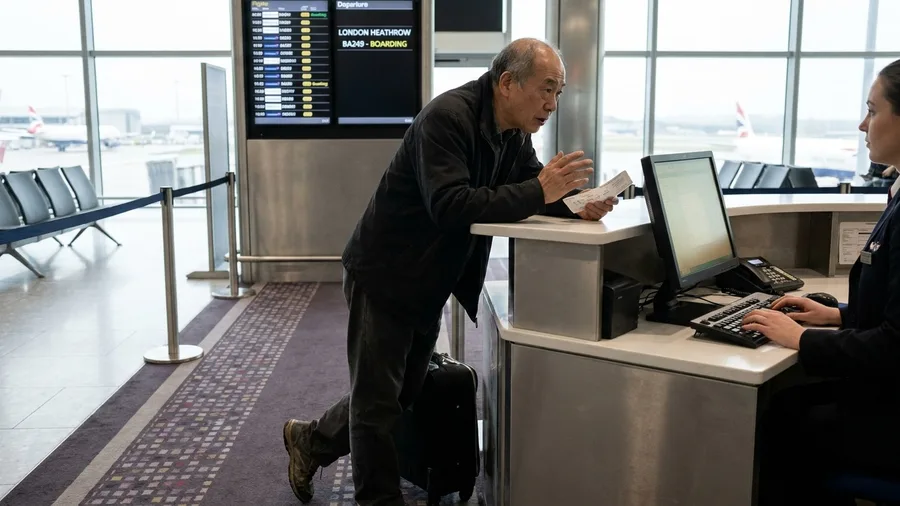
It's 45 minutes before boarding and the gate agent is typing. That is the moment this perk lives or dies, because the seats that open up are the ones nobody claimed when the last flight cancelled.
In the 20 to 30 minutes before boarding, cancellations and missed connections dump exit rows, extra legroom and bulkhead seats back into the system. The agent's screen updates live and they can move you on the spot. Be standing there 45 minutes ahead so you're first in line when the window opens.
A 68-year-old with a bad lower back asked quietly about an aisle seat with extra legroom and was moved to row 12 free after maybe ten seconds of typing. Travelers with assistance or pre-boarding already set up tend to match the profile agents are set up to help. It's a desk habit, not a written policy, so don't expect it to be posted anywhere.
Say this: "I'm a senior traveler. Before boarding, are there any seats with extra legroom or aisle access available?" The worst answer is no, and no costs you nothing but the walk back to your original seat.
Three Costly Mistakes at the Desk
12. Medical gear is fee-free; foreign carriers add bags
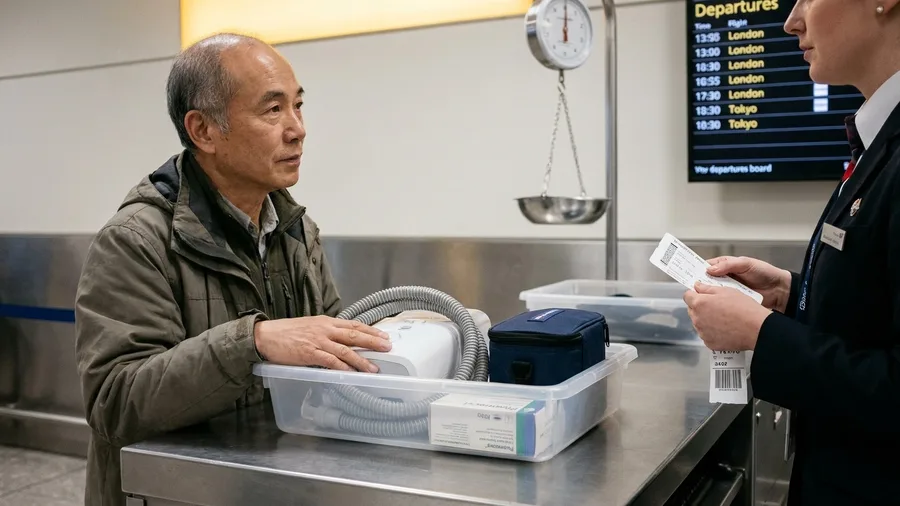
If the bag is holding a CPAP, a portable oxygen concentrator, an insulin cooler, a nebulizer, a wheelchair, a walker or a cane, it should cost you nothing. These items fly free and stay outside both your carry-on and checked limits. At the gate, when someone quotes you $85, answer with five words: "These are medically necessary items." That usually ends it.
There is a paperwork catch, and it is the part people miss. Anything beyond a 10-day supply needs original pharmacy labels or a printed doctor's letter with contact details. A bare pill organizer fails. And declare liquids over 3.4 oz separately before screening so they are not pulled out of your bag with a question.
Then look beyond US carriers. Air India adds 10 kg for passengers 60 and older on international flights. On international routes, Air Europa permits one no-cost bundle under 23 kg for medical equipment and medication, and SAS has a similar rule. Search the airline site for "senior baggage policy" or "special passenger allowance" and get it noted on your reservation.
💡 Tip: That $60 second bag a 69-year-old paid? Her airline's 47-page PDF allowed over-65s one extra free bag. The agent never mentioned it.
13. Controllable delays owe you a meal, hotel, lounge

Picture the counter when the board flips to Cancelled: the line is already out the door, and half the people in it don't know they're owed a hotel. That's the moment to be the one who does.
Three hours or more of controllable delay, meaning mechanical trouble, crew scheduling or maintenance, comes with written commitments. Every major US carrier has filed meal vouchers, overnight hotel and transport with the Department of Transportation and posted them publicly. Since late 2024, cancellations and significant changes also bring automatic cash refunds rather than vouchers if you choose not to rebook.
One couple's Phoenix-to-Boston flight sat five hours for a mechanical issue and then cancelled. They spent $40 on airport food and $180 on a hotel, every dollar recoverable, and claimed none of it. Two lines fix that: "This is a controllable delay. I'd like the meal voucher and hotel your airline committed to on the DOT dashboard." Then, "Are there any lounge accommodation options available for this wait?"
Check tonight whether a travel card you already carry comes with Priority Pass or Lounge Key. Plenty do, and almost nobody uses it.
14. The complaint resolution official can overturn a no
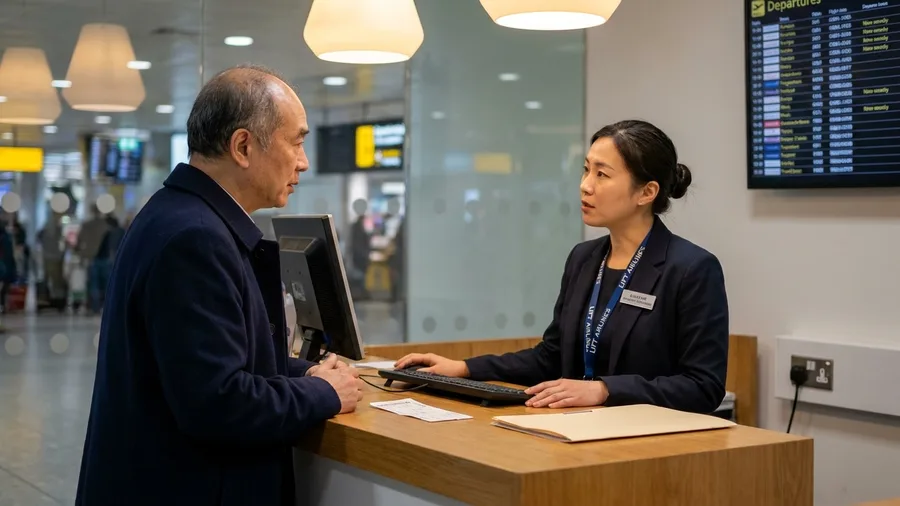
If the counter has already refused an accommodation, you're past the point of asking nicely twice. There's a referee for exactly this, and the airline is counting on you not knowing the name.
Every US airline must have a complaint resolution official at each airport during operating hours. This isn't a customer service supervisor. It's a trained official enforcing federal law in real time, with the power to reverse a denial on the spot.
Save it for accommodation denials only: wheelchair assistance refused, pre-boarding refused, a seating accommodation rejected. Don't burn it on a fare argument. Most agents hear the request a handful of times in an entire career, which is precisely why the phrase changes the room.
Say it plainly: "Please connect me with your complaint resolution official." Then wait.
15. Ask at four moments: booking, airport, gate, disruption
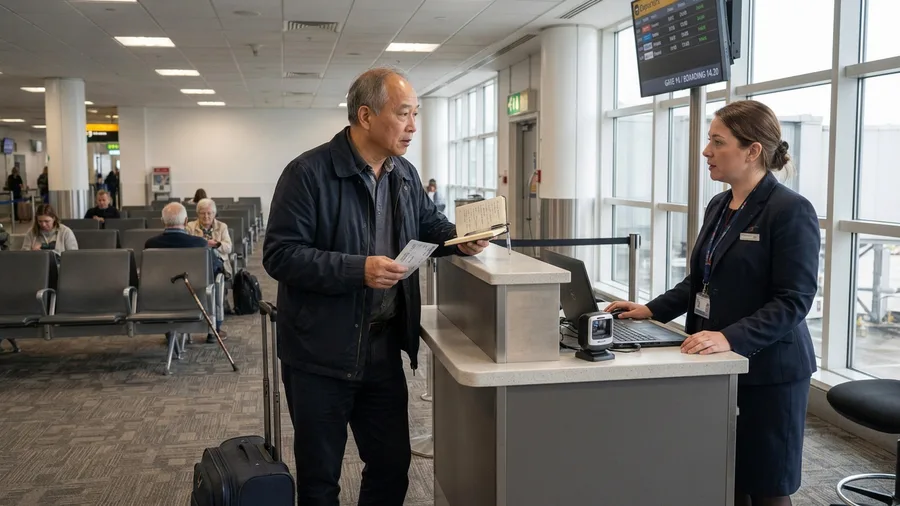
None of this is a trick; it's a sequence. The difference between the teacher who paid and the traveler who arrives prepared is just knowing the order in which to ask.
At booking: request assistance, confirm connection carts at every layover, order the special meal 48 hours out, call the accessibility desk, note medical equipment exemptions and check your card's lounge benefits. At the airport: get the escort pass at the staffed counter, state your age at TSA if you're 75 or older, and arrive with time to spare so you can request pre-boarding before the crowd.
In the 20-to-30-minute window: ask the gate agent about extra legroom or an aisle seat. When things go wrong: the counter for delay compensation, the lounge for a long wait, and the complaint resolution official for any denied accommodation.
When the Agent Says No, Climb the Ladder
So you asked for the aisle seat, or the wheelchair, or the meal, and the agent behind the counter looked at you and said, flatly, that perk does not exist. Now what?
Because here's the thing that most travelers never learn: a no at the counter is not the airline's final answer. It is one person's answer. And there are three more rungs above them.
Climb them in order. Restate the request once, in plain words, so the agent has to acknowledge what you actually asked for. Then ask for a supervisor, politely, by name if you have it. And if you were denied an accommodation the airline is required to provide, ask for the complaint resolution official.
That last one is the phrase most people have never heard. Airlines that fly to or from the U.S. must have one on duty during operating hours, and their job is to resolve disputes on the spot.
Get the refusal on the record before you move a single step. The agent's name. The time. What was said, word for word if you can. Write it down in the moment, because memory fades and a note with a name and a timestamp does not.
If the disruption cost you money, keep every receipt. Food, transport, hotel. An airline that stonewalls you at the counter can still pay up after the trip, but only if you can prove what you spent.
And if the answer is still no, file a complaint with the Department of Transportation. Ask both the airline and DOT what the deadline is for your claim, because the clock is real and it does not wait for you to remember.
One calm sentence at the right counter beats an hour of shouting at the wrong one.
Two Reservations, One Request for a Companion
You can climb the ladder all day and still board alone, and that is why the pair in front of you is worth a look: two reservations, one request.
Maybe your husband books his own ticket. Maybe your daughter does. The question everyone asks is whether you can still go through the airport together, and the answer is yes, with one phone call.
Call each reservation before the day of the flight and ask for a travel-with note linking the two bookings. Not at the gate. Before. At the gate it is too late, the system has already seated you and the agent has a line of forty people behind you.
While you are on the phone, ask the accessibility desk to seat the assisting companion beside you, and have it added to both records. That costs nothing, even on the cheapest fare.
assistance is not a seniors-only benefit. A disabled traveler of any age qualifies. The escort pass, though, is one per traveler, and the escort needs photo ID to get it.
Test the whole thing at boarding. Pre-board together, one sentence each, names linked and seats together. No gate announcement can separate you after that.
Two bookings, one request. It is the cheapest upgrade on the list.
Frequently Asked Questions
Do I need to print anything before I ask for these perks?
For most perks, no. Escort passes, pre-boarding, and seat accommodations are requested in person or by phone. The exception is medication beyond a 10-day supply, which needs original pharmacy labels or a printed doctor's letter with contact details.
Can I still get the senior fare if I already booked?
Call the reservations line before you pay if possible. After a ticket is issued, changing to a senior fare can trigger a change fee that eats the discount, so make the call first.
What if my airline says they don't offer a specific perk?
Restate the request once, ask for a supervisor, then ask for the complaint resolution official if a required accommodation was denied. Get the refusal on record with the agent's name and time.
Does ambulatory assistance mean I have to use a wheelchair the whole time?
No. You can walk and still request it for the distance. Ask for "ambulatory assistance" by name and use it for the parts of the terminal that are too long.
How do I find out if my credit card already includes lounge access?
Check your card's benefits page for Priority Pass or Lounge Key. Many travel cards include it, and cardholders rarely use it. Then show the card at the lounge desk on your next long layover.
The four-part carry-on checklist for your next flight
These perks were built for you. They exist because air travel grows harder past 60, and the regulations recognize it. Carriers simply wagered quietly that you'd never speak up.
Carry this sequence: at booking, request assistance and order the special meal 48 hours out. At the airport, get the escort pass and state your age at TSA if you are 75 or older.
In the 20-to-30-minute gate window, ask about extra legroom or an aisle seat. When things go wrong, go to the counter for delay compensation, inquire about lounge access for a long wait, and request the complaint resolution official for any denied accommodation.
Make the next flight a test run, not another $85 lesson.

Hello there! I’m Jesse Joe, the author and editor behind SolganGenius. I’m thrilled you’ve stopped by, and I can’t wait to share with you the essence of what this platform is all about.
I’m a writer, social media enthusiast, and a firm believer in the power of words. I’ve always been fascinated by how a simple phrase or slogan can capture an emotion, convey a message, and even change perspectives. Learn More