
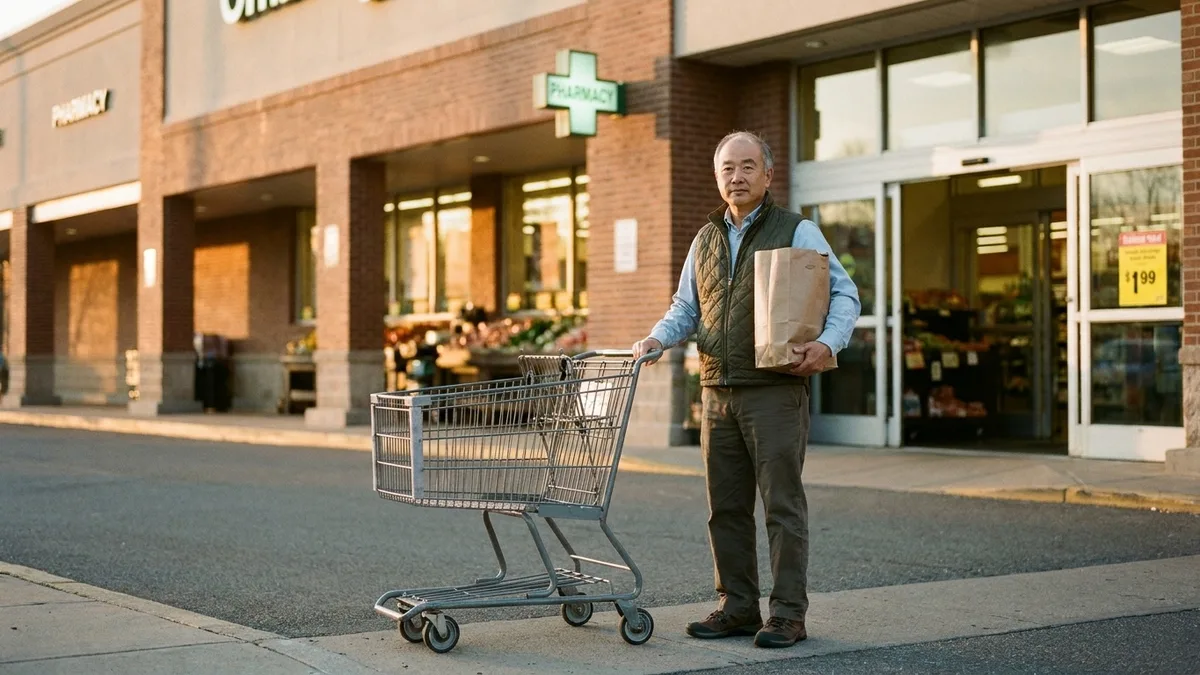
In the 1990s, a gallon of milk cost the same for everyone, every week. No app, no card, no fine print. That kind of shopping still exists, but not at every chain on this list.
We ran ten of the biggest grocery chains through one question: is this store built for a senior? Are the posted prices fair, is anyone on hand to assist, is a pharmacy counter available, and do you leave feeling like a customer or like a suspect? Five failed badly enough to land on the worst side, and five still earn your money.
One chain on the worst list built a secret file on your household income and used it to decide which coupons you see. One on the best side simply posts a fair price and sticks to it. And one store most readers cannot reach will make you angry at every other chain, because it proves what is possible when a grocery company actually tries.
Will your store make the cut? Here is the countdown, plus what to do if you are stuck with one of the bad ones.
| Chain (rank) | Card or app needed to get the shelf price | Pharmacy | Staffed checkout | The catch to price in |
|---|---|---|---|---|
| Dollar General (worst) | No | No | Usually one employee | 33-item basket $201 vs $187.50 at Walmart, about 7% more |
| Kroger (worst) | Yes, for e-coupons | Yes | Some | Income predictor decides which coupons each cardholder sees |
| Walmart (worst) | No, but price matching in app | Yes | Fewer; self-checkout dominant | All 51 health clinics closed in 2024; greeters gone since 2019 |
| Safeway/Food Lion (worst) | Yes, MVP Rewards at Food Lion | Thin at Food Lion | Often understaffed | 2023 frozen vegetable recall in 10 states; $4B dividend attempt |
| Aldi (best) | None | No | Yes | Produce and staffing vary by store |
| H-E-B (best) | None | Yes | Yes | Only in Texas; 400+ locations |
| Costco (best) | $65 annual membership | Yes | Yes | Fee must be cleared by prescription savings |
| Publix (best) | None for regular prices | Yes, discount finder | Yes, with carryout | Higher shelf prices than Aldi |
| Trader Joe's (best) | None | No | All registers staffed | No pharmacy; smaller selection |
| Hannaford (honorable) | Some loyalty prices | Yes | Yes | Only in Northeast markets |
1. Safeway and Food Lion were starved to fund others
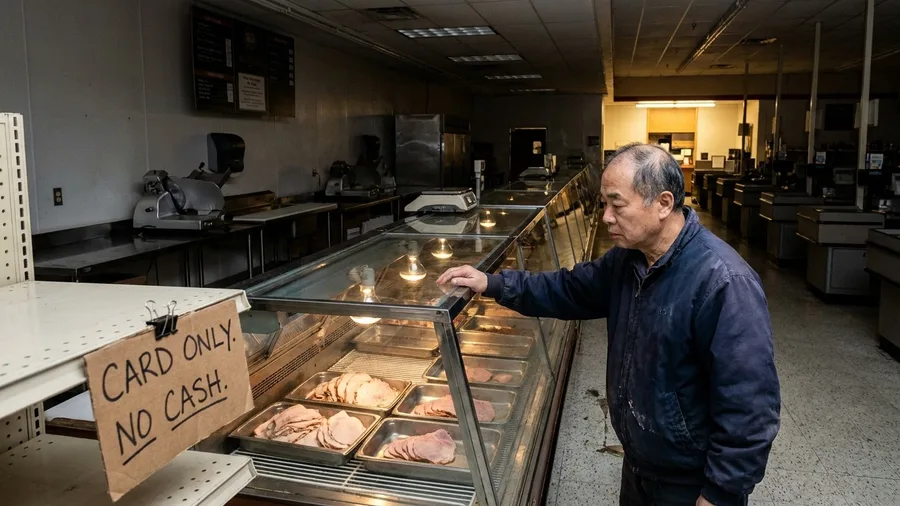
Walk into Food Lion at 5pm on a Tuesday and the whole story is right there in front of you: an empty deli counter, one register open, and a shelf tag that says the sale price is for cardholders only.
The advertised weekly prices are not the price, they are the card price, and that is the first way the money leaves the store. If you moved or changed your phone number, you may be paying a different number than the person behind you in line. The delis sit empty and unstaffed at peak hours, the pharmacy network has shrunk across the rural Southeast, and the safety record is worse than it looks from the parking lot. In August 2023, Food Lion's frozen mixed vegetables and super sweet cut corn were recalled in 10 states for listeria traced to supplier Twin City Foods, and for seniors past 65 listeria ranks among the deadliest foodborne infections.
This is not bad luck, it is a budget line. Food Lion and Hannaford share the same owner, Ahold Delhaize, a $32 billion company headquartered in Amsterdam. Hannaford gets the higher-income markets in Vermont, Maine, New Hampshire and upstate New York, and it gets the investment that comes with them. Food Lion gets Virginia, the Carolinas and Georgia, where older residents on fixed incomes have fewer alternatives. Same boardroom, two standards.
Safeway walked a similar road: Cerberus bought Albertsons in 2015 and folded Safeway in, and deli and pharmacy staffing were cut first and hardest. In 2024 the board voted itself a $4 billion special dividend funded by new borrowing, top law officers in three states filed suit, and a federal judge halted the payout. The unlabeled meat in the case is the same industrial product Walmart sells at a higher shelf price; Aspen Ridge or certified humane is a genuinely different sourcing standard worth paying for. Check the FDA recall list before buying store-brand frozen or prepared items, and verify the card price against the shelf tag before you leave the register.
💡 Tip: At Food Lion, ask the service desk to look up or merge an old MVP account. A working card can be the difference between the sale price and full price.
⚠️ COMMON MISTAKE
Do not trust the flyer price
The advertised price is often the card price. Read the shelf tag itself: it shows the member price, the non-member price and any per-household limit. On some tags the card price is the big number and the regular price is in small type.
2. Walmart engineered your dependency, Kroger prices your income
Start with Walmart, because it shows the pattern clearly. In 2006 the $4 generics changed retirement for a lot of people, and seniors built their whole healthcare routine around that counter. Then the things that came with it disappeared. Greeters were removed in 2019 and the senior discount days were killed with no announcement. Price matching got buried in an app that most shoppers past 60 say they have stopped relying on, and in 2024 all 51 Walmart Health clinics closed across five states, leaving people to rebuild care they had organized their lives around.
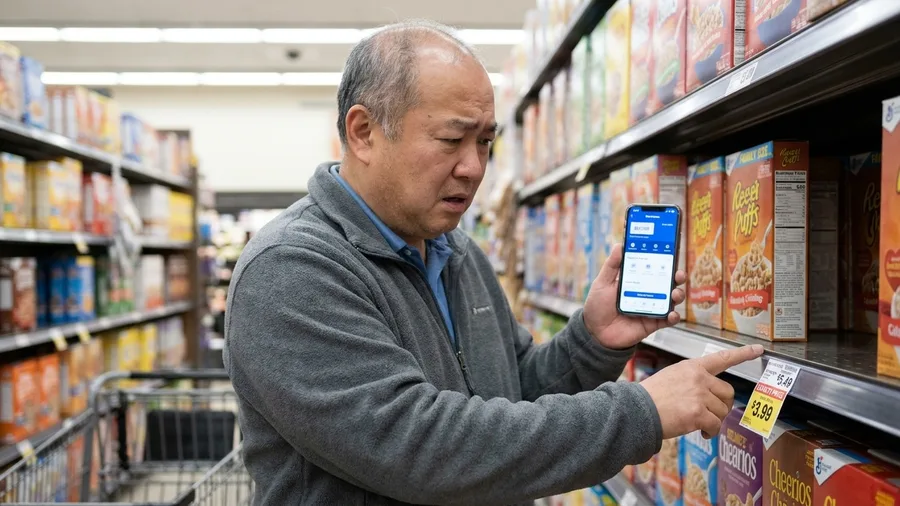
Kroger took the same instinct further. Consumer Reports reported in 2025 that the loyalty program builds a profile on every cardholder from purchase history, visit frequency and payment method, plus something the company calls an income predictor. That profile decides which digital coupons you see, so two shoppers can open the same app on the same day and see different coupons for the same box of cereal, because the algorithm decided one of them can afford the full price. Federal regulators received a complaint from a privacy group calling it surveillance pricing.
The safety record carries a cost too. Kroger's 2025 Home Chef fettuccine recall ran to 17 illnesses, 16 hospitalizations and three deaths. Stick to registers with a cashier, examine the sell-by date on every meat and deli item yourself, and compare the loyalty price against the shelf tag and then against your receipt on every promoted item.
💡 Tip: If you carry a Kroger card, open the app once a week and compare the digital coupon to the shelf tag. If the coupon is missing, ask the service desk why.
3. Dollar General is the worst deal in no-choice towns
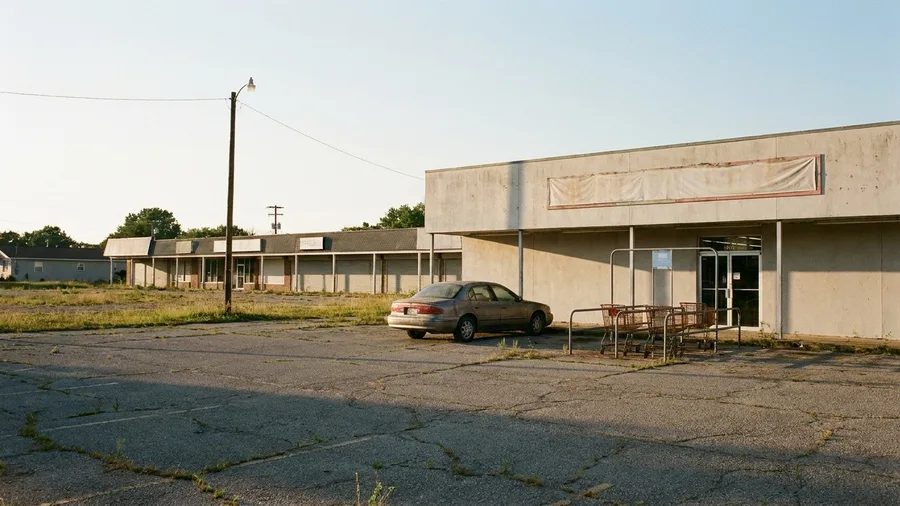
There are upward of 19,000 Dollar General stores across America — a larger footprint than Walmart and McDonald's put together — and that did not happen by accident. The expansion targets towns where the full-service grocery already closed: low vehicle ownership, thin transit, and a high share of older residents on fixed incomes.
The name says dollar, but the prices do not. A 33-item basket priced out at Dollar General came to $201 against $187.50 at Walmart, about 7% more at the chain with dollar on the sign, and there is no pharmacy at all. In some towns it is the only store within 15 miles, which puts the nearest prescription counter somewhere many residents cannot reach. OSHA has cited dollar store chains for blocked exits and for one employee covering an entire store, and if you need a hand reaching the top shelf there is nobody to ask.
If Dollar General is your only option, buy sealed shelf-stable items only. Nothing from the refrigerated, frozen or meat cases, and check the date on everything, canned goods included.
💡 Tip: For heavy items, one monthly run with a neighbor or family member beats paying dollar-store prices for what a supermarket sells cheaper.
🛒 The 15-minute honest shop: what a good chain looks like
Park close
The store is small enough that you are back in your car before the lot gets complicated.
Check the shelf tag
The price on the tag is your price, no card, app or account required.
Ask a staffer
Starting pay is high enough that the person you ask is likely to know the answer and stay.
Pay at a staffed register
Every register has a cashier who scans and bags, and nobody stops you at the exit.
4. All three post honest prices, each with one catch
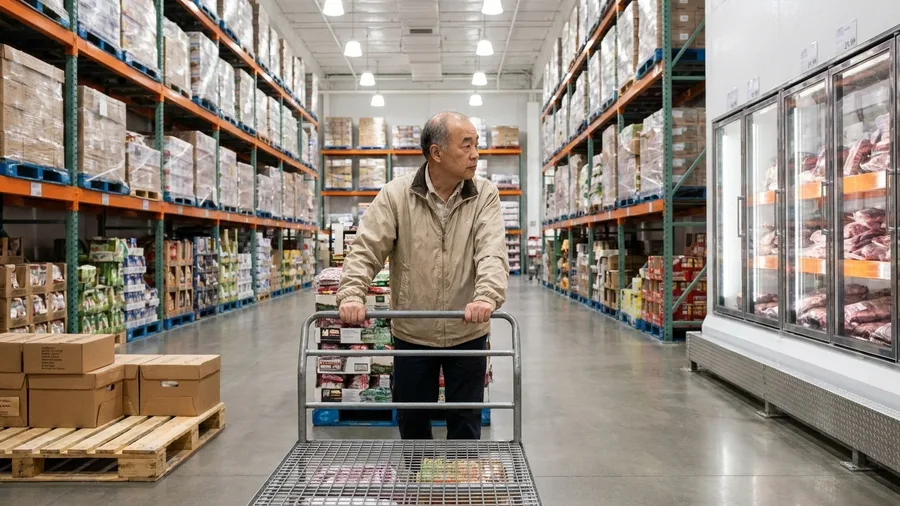
That is a grim picture, but it is not the whole shelf. Three chains still post one honest price and staff the place properly, and each has a catch you need to price in before you switch.
Aldi is the simplest. The store is about 12,000 square feet, small enough for a 15-minute shop, and the shelf price is identical whether you carry a smartphone or a flip phone. Starting pay runs up to $18 an hour against $12 to $15 at most chains, so the person you ask is more likely to know the answer. The catch is produce and staffing that vary from store to store, so trust your own experience over any ranking.
H-E-B is the gold standard. More than 400 locations, all in Texas, 83 out of 100 on the 2026 ACSI, full cases, staff who know where things are, a pharmacy counter that recognizes your face, no app required, and pandemic simulations running since 2005. The catch is simple: almost no reader can shop there.
Costco costs $65 a year, which is a real barrier on a fixed income, but in a 2024 study of 51 common generics it beat every other chain tested, Walmart included, with the best price on 31% of them. It sells choice and prime beef where most supermarkets stop at select, keeps employee turnover at 6% to 8% against an industry near 60%, has wide concrete aisles that take a walker, and does a quick cart scan at the door instead of an interrogation. The catch is the math: $65 is about $5.42 a month, so run your prescription list first.
Match the chain to your situation. Aldi for a small, honest, fast weekly shop, Costco only if the prescription math clears the fee, H-E-B only if you live in Texas.
💡 Tip: Ask each pharmacy whether a membership is required to fill there at all. Then write out every drug, dose and quantity and ask for the cash price without insurance, same list, same day.
Two ways to run a grocery chain
Built for the customer
- One shelf price for everyone, no card or app
- Staffed registers and baggers who carry out
- Employee pay high enough to keep people
- Prescription savings that beat the fee
Built for extraction
- Sale prices that require a loyalty card
- Self-checkout and receipt checks at the exit
- Income predictors that set your coupon offers
- Clinics and greeters removed after loyalty was won
5. Trader Joe's and Publix prove the cuts were chosen
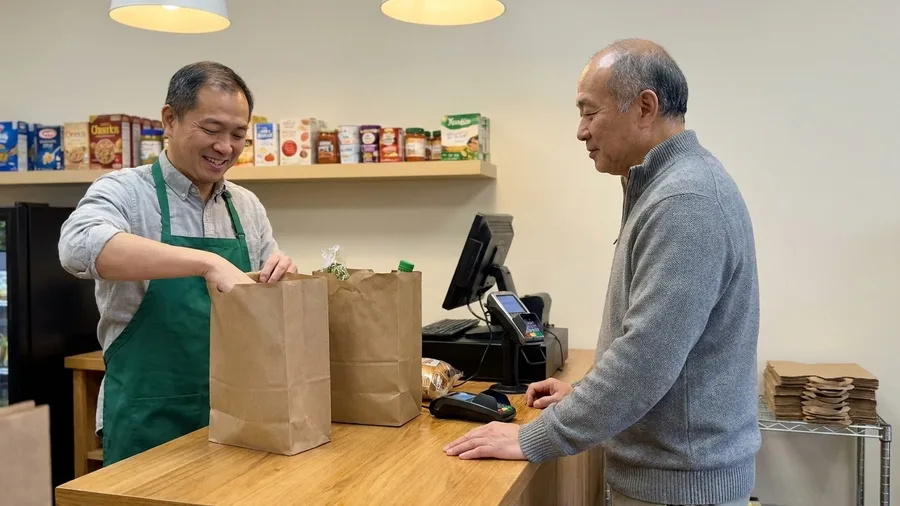
At Publix and Trader Joe's that answer has not changed in decades, and that is exactly the point. Publix bags your groceries and carries them to the car as the default at most stores rather than a premium perk. It is majority employee-owned, its free medication program has filled over 100 million prescriptions and evolved into a discount finder, and in select Alabama, Georgia, Carolina and Tennessee stores shoppers 60 and older get roughly 5% off on certain midweek days. It varies by location, so ask yours.
Trader Joe's gets there from the opposite direction. One shelf price, no card, app or account, and as of 2025 the paper Fearless Flyer still arrives by mail. Stores run 10,000 to 15,000 square feet, a full shop takes about 15 minutes, every register is staffed, there is no self-checkout and no exit receipt check. It scored 86 out of 100 on the 2026 ACSI, the highest of any grocery chain. The one honest note: no pharmacy.
That gap is not a resource problem. Dollar General has the 19,000-store scale to run a pharmacy in every one, Kroger has the data to give every senior its best price without a profiling algorithm, and Safeway could draw on a century of goodwill. The gap is a decision about which customers are worth serving well.
Pick the one chain you will move both your prescriptions and your weekly shop to, and price the move before your next trip.
💡 Tip: Ask your Publix pharmacist directly what is still free or discounted under its prescription program. Some of it still is.
Check the tag before you trust the loyalty card
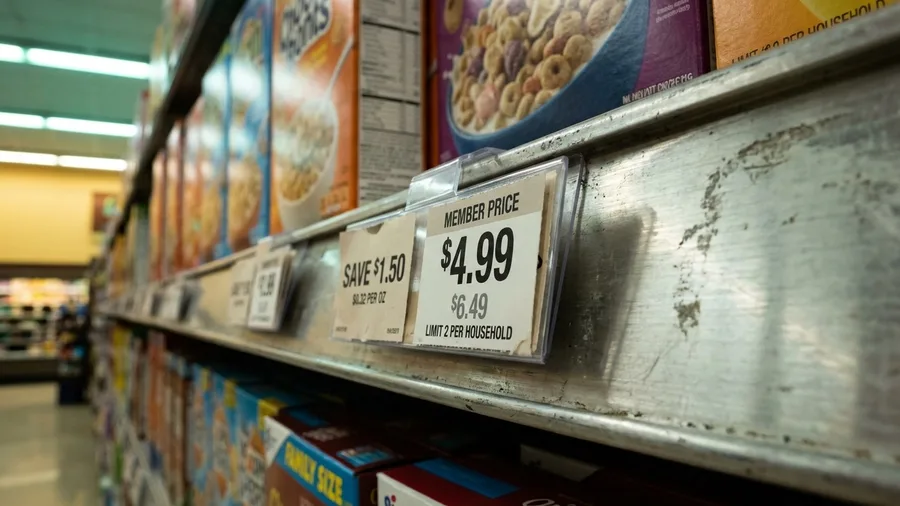
The sale price isn't always the sale price. Walk into Food Lion on a Wednesday and the flyer promises you a deal on chicken, but the deal has a gate in front of it: the MVP Rewards card. So how do you know whether that price needs a card before you're standing at the register with your wallet out?
Read the shelf tag, not the flyer. The card price, the price without the card and any per-household limit are all printed right there on the rail, and on some tags the member price is the big, friendly number while the regular price hides in small type underneath. That small type is the price you actually pay if something's off with your account.
And things go off. A move, a changed phone number, a rewards account that got merged or dropped in some system update, and suddenly you're paying a different price from the person behind you in line for the exact same box of cereal. It isn't that you forgot. It's that the whole setup rewards whoever keeps every account current and quietly charges everyone else more.
On a fixed income, a few dollars here and there per item becomes real money by the end of the month. So bring the card that still works, and if you're not sure it does, stop at the service desk and ask them to look up or merge the old account before you shop. Senior discount days at other chains work the same way, and knowing which stores honor them changes the math. Then check the receipt on every promoted item before you leave the register. Make the tag your first stop, every trip.
Run the prescription math before paying the $65
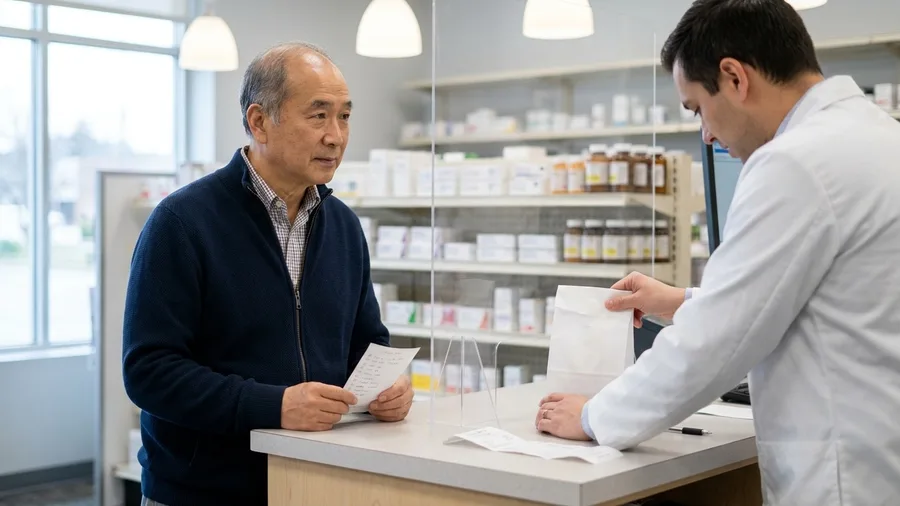
Now flip that card logic around, because with Costco the $65 is real money going out the door up front, and not everyone should hand it over. The question isn't whether Costco is good. It's whether your prescriptions make that $65 back.
Start by writing out every drug, the dose and the quantity, the way you'd hand the list to a doctor. Then take that same list, the same day, to Walmart, to Costco and to Publix, and ask each pharmacy for the cash price without insurance. Same list, same day, so you're comparing like with like.
Here's the arithmetic to hold in your head: $65 works out to about $5.42 a month, so the membership only clears if the gap on your yearly drug list beats that. In a 2024 study of 51 common generics, Costco beat every other chain tested, Walmart included, with the best price on 31% of them. That's a strong starting point, but your list is the only one that matters.
Ask each pharmacy whether a membership is required to fill there at all, and ask the Publix pharmacist what's still free or discounted under its prescription program. If the math doesn't clear, don't join for the groceries. A membership you can't justify at the pharmacy counter is just a $65 fee for the right to buy in bulk.
When one store is all you have, do this
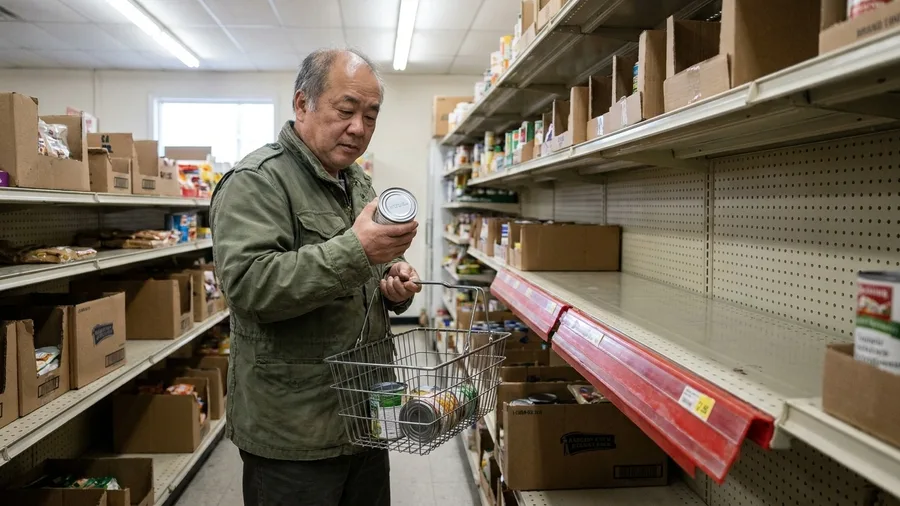
And what if there's no Walmart and no Costco, and the only store in town is the one that charges the most? You still have moves. They're just different moves.
At the store itself, buy sealed shelf-stable items and nothing else. Nothing from the refrigerated case, nothing frozen, nothing from the meat counter, and check the date on everything, including the canned goods. You're not shopping for dinner there. You're buying calories and shelf life, and once you see it that way, the trip gets a lot simpler.
For the rest, call your pharmacy and ask about mail order or 90-day fills, because that alone can cut the number of trips you make. Then call your local senior center or Area Agency on Aging and ask, plainly, what grocery delivery, prescription delivery or rides already run in your county. Cheap habits of retirees who stretch a fixed income often start with the grocery bill, not the pharmacy. Plenty of rural programs exist that nobody hears about until someone asks.
For the heavy items, one monthly run with a neighbor or family member beats paying dollar-store prices for what a supermarket sells cheaper. That 33-item basket ran about 7% more at Dollar General, but the bigger cost is the missing pharmacy and the total lack of help in the aisle. Plan around the store instead of waiting for it to change.
Frequently Asked Questions
How do I know whether that sale price needs a loyalty card before I get to the register?
Read the shelf tag rather than the flyer. The member price, the non-member price and any per-household limit are printed there. On some tags the card price is the big number and the regular price is in small type. If you are unsure, ask a staff member before you put the item in your cart.
Is Costco's $65 membership worth it for someone who mainly needs prescriptions?
Write out every drug, dose and quantity, then ask Walmart, Costco and Publix for the cash price without insurance, same list, same day. Do the arithmetic: $65 is about $5.42 a month, so the membership only clears if the yearly gap on your list beats that. In a 2024 study of 51 common generics, Costco had the lowest price on 31% of them.
What can I do if Dollar General is the only grocery store in my town?
Buy sealed shelf-stable items only, nothing from the refrigerated, frozen or meat cases, and check the date on everything including canned goods. Ask your pharmacy about mail order or 90-day fills, and ask your local senior center or Area Agency on Aging what grocery delivery, prescription delivery or rides already run in your county. For heavy items, one monthly run with a neighbor or family member beats paying dollar-store prices.
Does the loyalty card really change the price I pay?
Yes. At Food Lion, the advertised weekly sale prices require the MVP Rewards card, and at Kroger the card determines which digital coupons you see. If your account is out of date or the app does not show a coupon, you may pay full price while the person behind you pays less.
Which chain is best if I want one honest price without an app?
Trader Joe's and Aldi both post one shelf price with no card, app or account required. Trader Joe's has no pharmacy, so if prescriptions are your priority, Costco or Publix may serve you better. Match the chain to what you need most.
Pick the chain that treats you like a customer
If you live in Texas, H-E-B is the default: full cases, staff who know where things are, and a pharmacy counter that recognizes your face. If the prescription math clears the $65, Costco gives you the lowest prices on a third of common generics plus meat and aisles wide enough for a walker. In the Southeast, Publix bags your groceries and carries them to your car, and its pharmacy program is still worth asking about.
For an honest no-frills weekly shop, Aldi and Trader Joe's post one price for everyone, staff every register, and do not ask you to download anything. Pick the one chain you will move both your prescriptions and your weekly shop to, and price the move before your next trip.
If you are stuck with a store from the bottom five, make three moves before you go back: check the FDA recall list before buying store-brand frozen or prepared items, verify the card price against the shelf tag, and use a staffed register only. The stores that treat you well did so deliberately, choosing to value your business. Keep that in mind the next time you spend your money at one that chose otherwise.

Hello there! I’m Jesse Joe, the author and editor behind SolganGenius. I’m thrilled you’ve stopped by, and I can’t wait to share with you the essence of what this platform is all about.
I’m a writer, social media enthusiast, and a firm believer in the power of words. I’ve always been fascinated by how a simple phrase or slogan can capture an emotion, convey a message, and even change perspectives. Learn More