
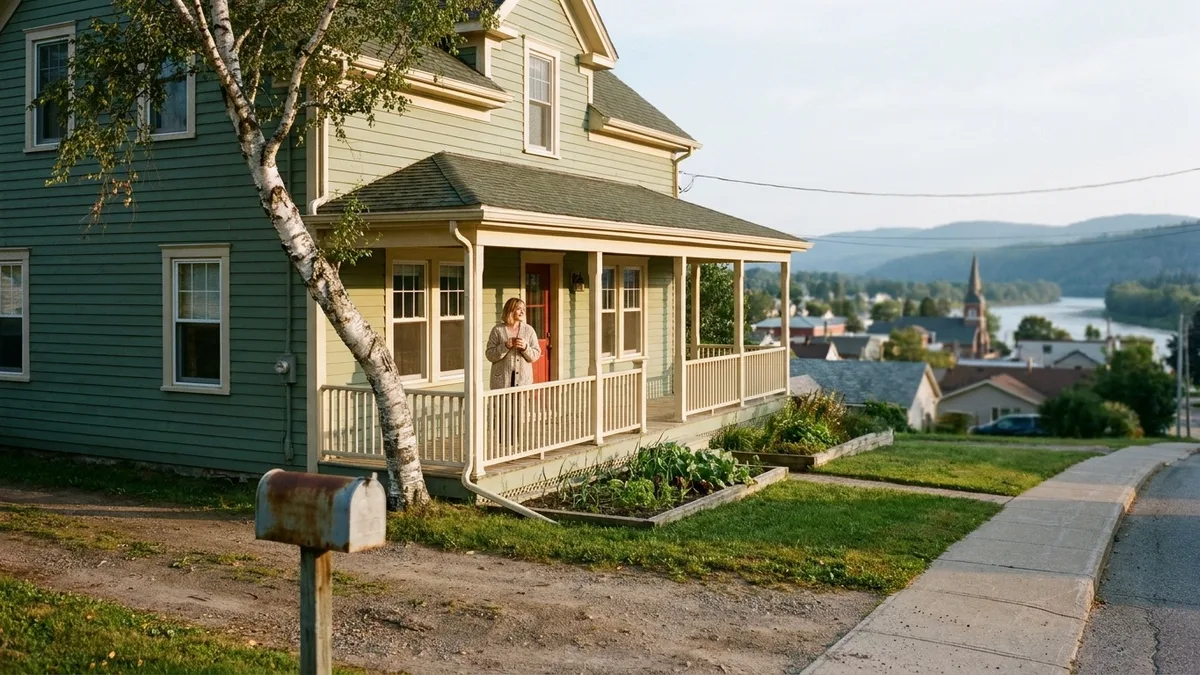
What if a Canadian house costing less than $300,000 could put a hospital within walking distance, and still leave enough in the bank for a February flight south?
That version of retirement exists in this country. It just doesn't exist in the places anyone talks about.
The reason most of these towns stay invisible has nothing to do with the towns. It's that nobody has heard of them. No magazine covers them, no real estate brand is pushing them, and your feed is full of Victoria and Kelowna instead.
Here are ten towns across six provinces with real prices, real hospitals, and the catches spelled out. Every dollar figure is Canadian and illustrative, so check current listings, tax notices and insurance quotes before you budget.
Because every affordable town has a catch. Some have two.
| Town | Province | Typical housing cost | Hospital access | Main catch | Best for |
|---|---|---|---|---|---|
| Miramichi | New Brunswick | Two-bedroom detached rental around $700/month | Miramichi Regional Hospital | Hard winters, spotty rural internet | Lowest-cost renters |
| Goderich | Ontario | Average home near $500,000 | Alexandra Marine and General Hospital | Lake-effect snow, big errands require a drive | Walkable downtown on a $500,000 budget |
| Lacombe | Alberta | Some homes under $300,000 | Lacombe Hospital and Care Centre | Thin rentals, limited entertainment | Buyers who join clubs |
| Owen Sound | Ontario | Average home around $440,000 | Brightshores Health System | Visible social problems, you need a car | Retirees who want to volunteer |
| Ponoka | Alberta | Median listing $309,000 | Ponoka Hospital and Care Centre | Very quiet outside Stampede week | Trails, birds and golf |
| Kings County | Nova Scotia | Prices now merely affordable after recent rises | Valley Regional Hospital in Kentville | Fog and rain, no public transit | Food, wine and walking trails |
| Fredericton | New Brunswick | Three-bedroom under $300,000 | Dr. Everett Chalmers Regional Hospital | Higher property taxes than expected | Culture and walkability |
| Morinville | Alberta | Median home under $300,000 | 20 minutes from Edmonton hospitals | Fast growth, Highway 2 traffic | Small-town life near big-city care |
| Charlottetown | P.E.I. | Among the lowest of any Canadian capital | Queen Elizabeth Hospital | Family doctor shortage | Full commitment to island life |
| Sylvan Lake | Alberta | Moderate by Alberta standards | Red Deer hospital 15 minutes east | Restaurants close in winter | Lake life with year-round neighbours |
1. Miramichi, New Brunswick: Cheap River Town With Hard Winters
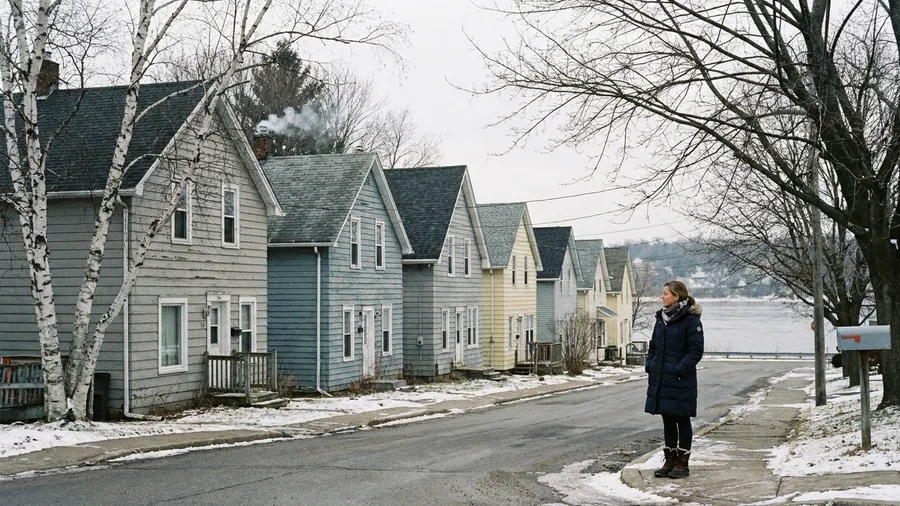
Picture the morning the rent cheque clears and there's still grocery money sitting in the account. That's the moment Miramichi starts making sense to a retiree on a fixed income.
The number is not a typo: two-bedroom detached houses built for military families in the 1940s and '50s rent for around $700 a month, with a front yard, mail delivered to the door, and no maintenance fees. About 18,000 people live here on New Brunswick's east coast, at the point where the Miramichi River meets the Gulf of St. Lawrence, and the town still calls itself part fishing port, part forestry hub. Miramichi Regional Hospital means no hour-long drive for a checkup, the river is famous for Atlantic salmon, and the folk song festival fills the summer.
Then January arrives. Heavy snow, wind straight off the gulf, and temperatures that test how serious you were about peaceful living. Jobs are thin, rural internet can be spotty, and the airport sits in Moncton, about 115 km or 90 minutes south.
This one is for a renter or a very low fixed-income retiree who wants the cheapest housing in Eastern Canada and will trade city services for a working river town. Before committing, ask a local property manager what those military-era houses actually cost to heat through a New Brunswick winter, because the rent is only half the monthly picture.
💡 Tip: Ask the landlord to put the no-maintenance-fee arrangement in writing before you sign anything.
2. Goderich, Ontario: Octagonal Downtown at a Fixed-Income Price
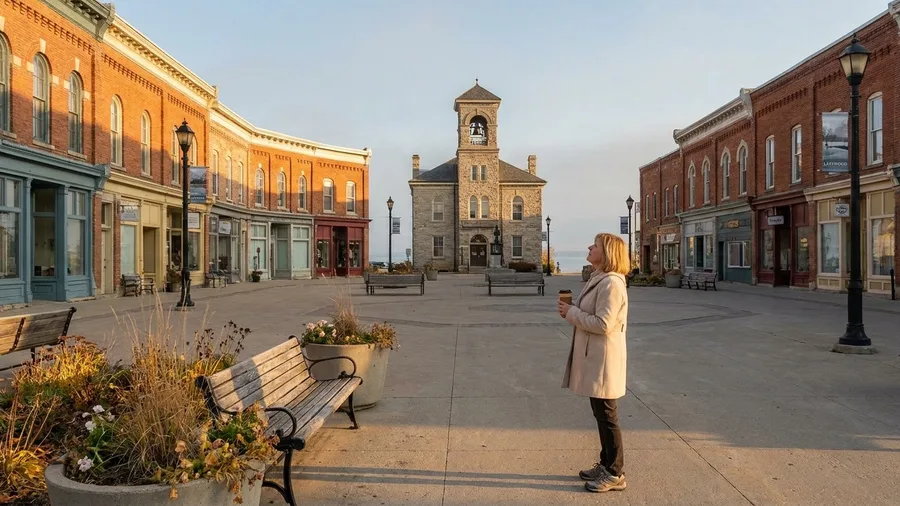
Which is why $500,000, eye-watering anywhere else in Ontario, starts to look like a bargain once you stand in the middle of Goderich's town square.
The town occupies the Lake Huron shoreline, and its eight-sided downtown, laid out in the 1820s, still works as the commercial heart, more than 140 businesses packed into it. Population is around 7,500, and the average home hovers near $500,000 while the provincial average pushes $800,000. For a walkable downtown, a genuinely good beach and sunsets over a Great Lake, that gap is doing real work. Alexandra Marine and General Hospital is right in town, and London's teaching hospitals sit about an hour and a half east.
Here's what the listing photos don't show: weather off the lake leaves Goderich chillier with more snow than communities only 30 km away. And because the town is genuinely small, a Costco run or a specialist appointment means a drive to London or Kitchener.
Run the real budget example. A $500,000 purchase with a modest down payment leaves a manageable mortgage or none at all if you're coming from a Toronto sale, but add property tax, a car, and a snowblower, and the fixed-income math sharpens quickly. That fits a retiree with a $500,000 ceiling who wants walkability, a beach and a small-town downtown, plus a car for the big errands.
3. Lacombe, Alberta: Historic Small Town With Thin Rentals
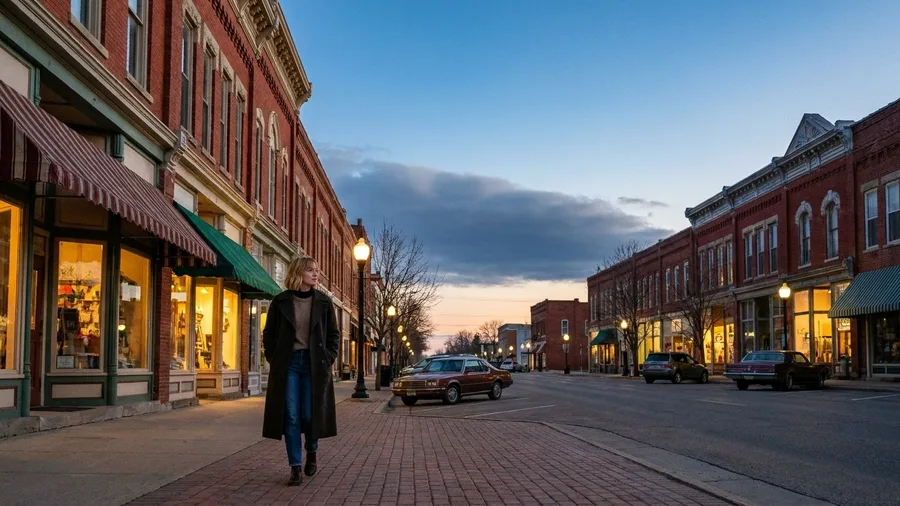
If the numbers above only work for renters, Lacombe is where a buyer with a smaller budget should look: some listings come in under $300,000, and you still get a real town with a hospital down the street.
About 13,000 people live here on Highway 2, 20 minutes south of Red Deer and 90 minutes north of Edmonton. The Edwardian downtown holds several designated provincial historic buildings, independent shops and local cafes, and the Lacombe Hospital and Care Centre handles emergency, acute and continuing care, with Red Deer Regional a short drive for anything more complex. Alberta's lack of a provincial sales tax softens daily costs more than most people expect.
The catch is subtler than a harsh winter. Entertainment is limited, the social life is tight-knit, and that's wonderful if you join clubs and isolating if you don't. The rental market is thin, so treat this as a buyer's town and pull up current listings before you fall for the photos.
Come as a buyer who will actually show up at events, sign up for a club or two in the first month, and you'll be fine.
⚠️ COMMON MISTAKE
Don't confuse a cheap house with a cheap year
Run the property tax notice, home insurance and heating costs before you fall for a listing price. In New Brunswick and small Alberta municipalities, those three lines can erase a big chunk of what the cheaper home saved you.
4. Owen Sound, Ontario: Undervalued, Struggling, and Participatory
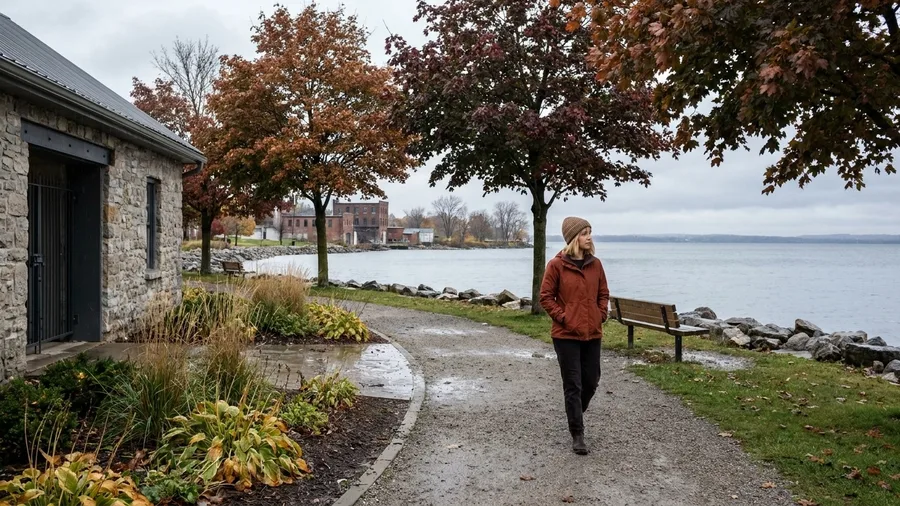
Where Goderich polishes its postcard, Owen Sound doesn't hide its problems, and that honesty is exactly why it's still affordable. Average homes sit around $440,000, roughly half of greater Toronto, for a town of about 22,000 with over 40 hectares of trails and gardens at Harrison Park, the Tom Thomson Art Gallery and Brightshores Health System for hospital care without a two-hour drive.
The opioid crisis, shrinking manufacturing and brain drain are visible on the main street. Median household income runs below the provincial average, Georgian Bay winters are punishing, public transit is minimal and broadband outside the core is unreliable.
So it suits a retiree who wants to join and volunteer, not one who wants to be entertained. The Active Lifestyle Senior Center is a good place to start asking who needs help. Keep the car.
Compared to what? A $3,000-a-month one-bedroom in the city, or five more years of working because the housing market won't let you stop?
— What every catch on this list gets measured against
5. Ponoka, Alberta: $309,000 Farming Town With Quiet Tradeoffs
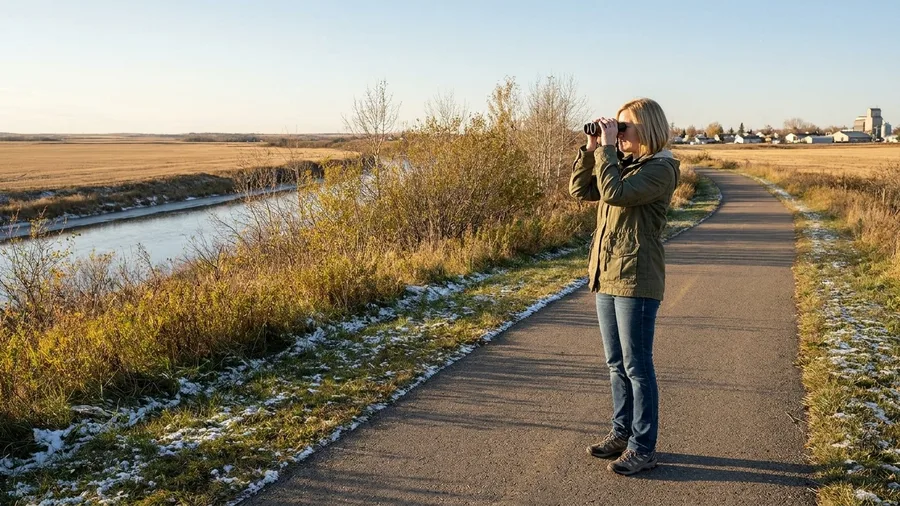
In Ponoka it buys a house, two golf courses, and a trail system birders drive hours to reach.
The median listing sits at $309,000 in this central Alberta town midway between Edmonton and Calgary, with farmland stretching to the horizon all around. Wolf Creek and the Ponoka course are both well regarded, the downtown has been restored, and the Battle River Valley Trail winds along the east bank with waterfowl, songbirds and raptors overhead. The Ponoka Hospital and Care Centre covers general needs and Red Deer Regional is about 30 minutes north. Crime is low and groceries and fuel track below big-city averages.
Outside the Stampede, which has run since 1936, the town is very quiet. Culture and dining are limited, rural properties may still rely on satellite internet, and small-municipality property taxes surprise newcomers who assume a low price means low tax across the board.
A quick worked example makes it concrete: a $309,000 purchase with 20 percent down leaves a mortgage many pensions can carry, but pull the actual tax notice from the town office before you commit, because the mill rate, not the listing price, sets that bill.
This suits a low-key retiree who wants birds, trails and golf, and who already knows whether they'd enjoy everyone at the hardware store knowing their name within a month.
💡 Tip: Ask the seller for two years of property tax notices, not one. The reassessment year is the one that stings.
6. Kings County, Nova Scotia: Wine-Valley Bargain That Is Fading
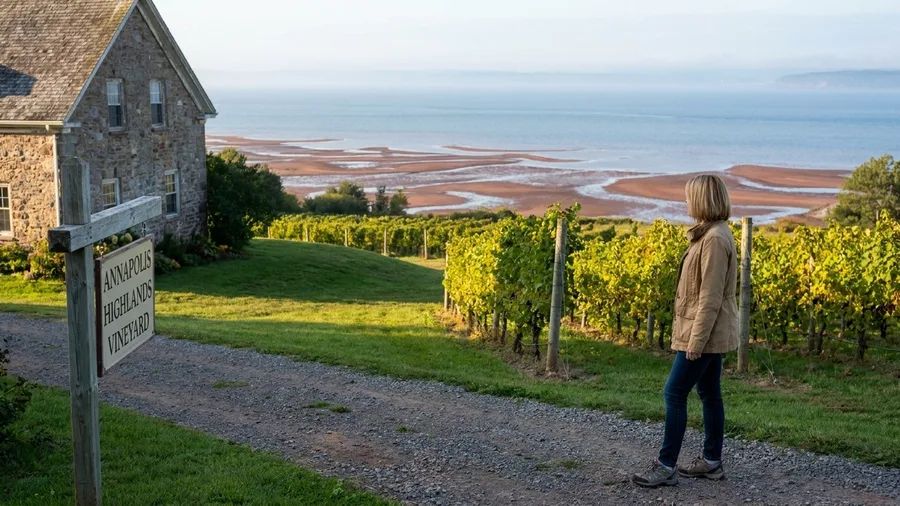
Kings County is the other side of the same coin: still cheaper than the city you're leaving, but no longer the steal it was five years ago. The Annapolis Valley has a way of getting into people's plans.
Kings County isn't one town. It's a cluster, Wolfville, Kentville, Berwick and Canning, stitched together by orchards, vineyards and the highest tides on earth pushing against the Bay of Fundy shore. Wolfville's Acadia University keeps lectures and cultural events flowing, Kentville has Valley Regional Hospital, and the Harvest Moon Trail connects the communities on foot or by bike.
Here's the catch, and it's the same one that made this valley famous: retirees from Ontario and Western Canada have been selling high and buying here for years, and that turned a steal into something merely affordable. Winters are damp rather than bitter, but fog and rain can be relentless, specialists usually mean a drive to Halifax about an hour east, and public transit outside Halifax is essentially nonexistent. Come with a car, a taste for local wine and food, and no need for fast specialist access.
💡 PRO TIP
Rent one winter month first
A February stay tells you more about a town than any summer viewing. You'll learn how the roads get cleared, how early restaurants close, and whether the quiet is peaceful or lonely.
7. Fredericton, New Brunswick: Culture and Walkability on a Budget
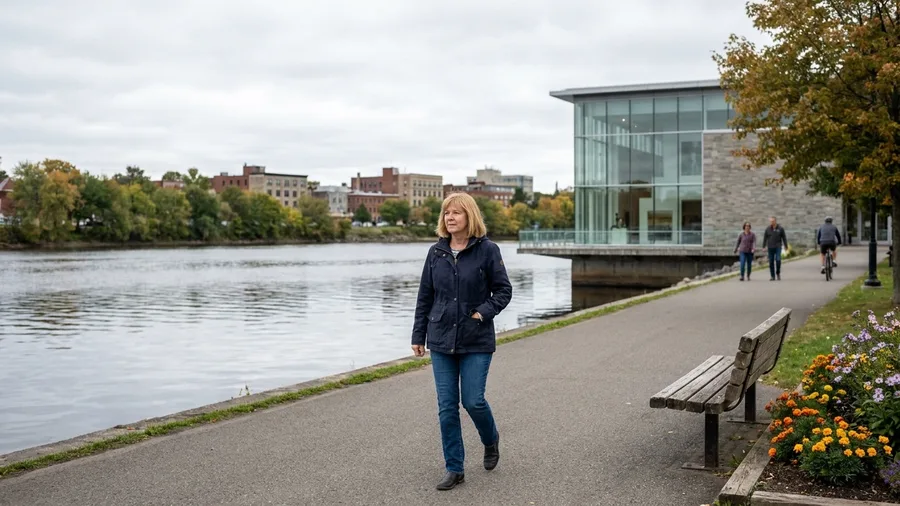
New Brunswick answers it twice on this list, and Fredericton is the sharper answer.
Prices for homes here land near half the figure for Canada overall, and a well-maintained three-bedroom can be had for under $300,000. The Beaverbrook Art Gallery, the Harvest Music Festival and a riverfront trail along the Saint John River give it more cultural weight than most towns its size, while the Dr. Everett Chalmers Regional Hospital anchors care and provincial programs target seniors housing and assisted living.
It's a government town deep down: public administration, higher education and the armed forces keep it running, which means stability but a thin private sector. Restaurants close early, nightlife is limited, and New Brunswick property taxes are higher than many newcomers expect. Run the tax bill against your savings before you fall for the price tag, because a cheaper house with a heavier tax notice can eat the difference. The airport is small too, routing you through Montreal or Toronto.
This suits a retiree who wants walkable culture, low crime and an affordable house, and doesn't need nightlife or spontaneous major-airport travel.
Fredericton by the numbers
🏠 Housing vs national average
Roughly half the national benchmark
🧾 Property tax rule of thumb
Apply the provincial rate to your assessed value before you offer
✈️ Airport reality
One connection via Montreal or Toronto for most major routes
🏥 Layering care
Hospital on site; upper-tier care means travel
🚶 Skip it if
You want late dinners, live music past 10 and one-hop flights
Watch for
A lower purchase price can still lose to a heavier annual tax notice; compare the two totals side by side.
8. Morinville, Alberta: Small-Town Life Near Edmonton Hospitals

Picture the moment it matters: it's a Tuesday, you need a specialist, and you're looking at a wait instead of a drive. That's the fear that keeps a lot of retirees in the city, and Morinville quietly answers it.
Twenty minutes north of Edmonton in Sturgeon County, this town of about 10,000 has a median home under $300,000, and the full Edmonton hospital and specialist network sits a short drive away. The Morinville Leisure Centre runs senior-specific classes, there are walking trails and a stocked trout pond, and the curling rink becomes the social hub from October through March. The Musée Morinville keeps the town's Francophone history alive.
The catch is growth. New subdivisions are changing the character, people who have been here a while will tell you the place feels different now, and Highway 2 commuter traffic can make you wonder if you left the city at all. Cultural infrastructure is modest, so don't come expecting a scene. This suits a retiree who wants a house under $300,000 and small-town community without giving up Edmonton medical care.
9. Charlottetown, P.E.I.: Capital Services With Island Commitment
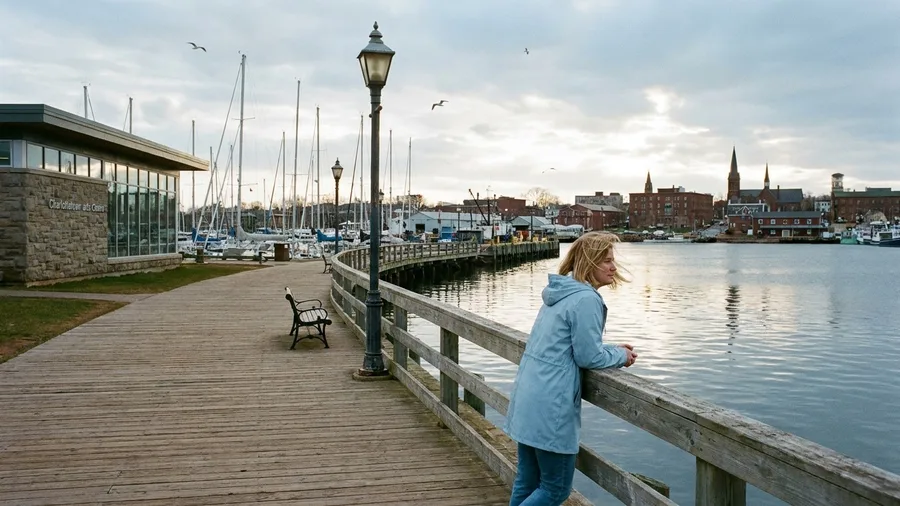
Charlottetown is the smallest provincial capital in Canada, around 40,000 people, and that means the whole machinery of government, hospitals and courts sits in a city that takes 15 minutes to cross by car.
Housing costs rank near the bottom among Canadian capitals, property taxes stay relatively light, and crime is barely a factor. Queen Elizabeth Hospital covers routine care, the Confederation Centre runs year-round programming, and the waterfront boardwalk is one of the nicest in Atlantic Canada. Leave the island and the Confederation Bridge charges a $20 toll over its 12.9 km.
But P.E.I. has a well-documented doctor shortage. Finding a family physician can take years, specialists often mean Halifax or Moncton, and winter storms can close the bridge entirely. The Lands Protection Act is the clause most guides skip: unless you've spent 12 of the past 24 months living on the island, you need government approval to buy more than 5 acres or more than 165 ft of shorefront.
This is for someone ready to commit fully to island life, not test a half-measure.
10. Sylvan Lake, Alberta: Lake Town With a Winter Contraction
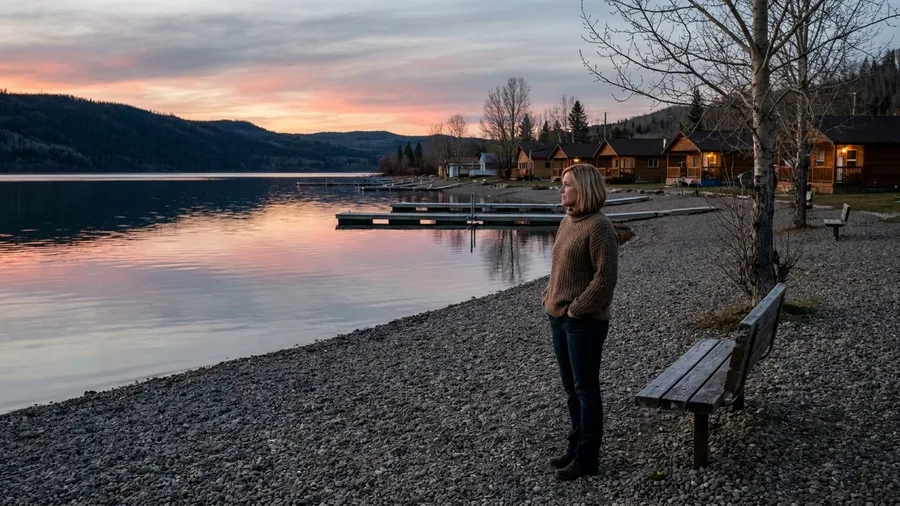
That's the question Sylvan Lake asks you to answer before you buy, and it's the honest test of every town on this list.
More than a million visitors arrive at the lake each year, but about 18,000 people live here year-round. Prices are moderate by Alberta standards, the waterfront and trail systems have seen real investment, and the Sylvan Lake Community Health Centre handles primary care. Red Deer's hospital and full specialist network are 15 minutes east on Highway 11, the single biggest advantage for retirees who worry about medical access.
In January the restaurants that are packed in July cut hours or close, the beach sits under ice, and the town's energy contracts. Lakeside insurance can run higher than expected, and growth debates keep asking whether Sylvan Lake is becoming a Red Deer suburb. Budget the insurance quote before you fall for a waterfront address.
And that's the wider lesson: Canada's retirement conversation stays fixed on Victoria, Kelowna, Niagara-on-the-Lake and maybe Canmore, while a $3,000-a-month one-bedroom city apartment, or delaying retirement by five years, makes these overlooked towns look remarkably rational. Compared to what? That's the question every catch on this list is measured against, doctor shortages, winter, thin transit and all.
Check Doctor Waitlists Before You Commit

Here's the trap that catches people after they've already signed: they checked that the town has a hospital, felt reassured, and stopped asking questions. But an emergency room and a family doctor are two different things.
A hospital handles the broken wrist and the chest pain. A family doctor handles the blood pressure refill, the referral, the slow stuff that keeps you out of the emergency room in the first place. Move somewhere with a great hospital and no family doctor, and you've solved the dramatic problem while inheriting the daily one.
Charlottetown is the honest warning here. Queen Elizabeth Hospital covers routine care well enough, but the family-doctor shortage on the Island is well documented, and it doesn't politely resolve itself because you're newly retired and charming.
Kings County, Fredericton and Sylvan Lake all deserve the same scrutiny before you fall for the price tag. So here's the action: contact the provincial health authority or the doctor registry for that specific town and ask, in writing, two things. How long is the waitlist running right now, and are any walk-in clinics in the area accepting new patients?
In writing matters. You want a dated answer you can look at again in six months, not a friendly voice on the phone telling you it's usually fine. Then map the specialist trips while you're at it. Halifax from Kings County, Moncton from Miramichi, London from Goderich, Red Deer or Edmonton from the Alberta towns.
Ask yourself how often you'd realistically make that drive. Twice a year is a nice outing. Every six weeks in February is a different calculation entirely. Get those answers before you make an offer, because after the offer, they're just problems you own.
The retirement math, two ways
What the listing shows
- $309,000 median listing in Ponoka
- Under $300,000 three-bedroom in Fredericton
- Around $700 a month rent in Miramichi
- No provincial sales tax in Alberta
What the photos don't show
- Property taxes higher than expected in New Brunswick
- Lakeside insurance premiums in Sylvan Lake
- Winter heating and snow clearing
- A family doctor wait measured in years
Frequently Asked Questions
Which town on this list is cheapest for a renter?
Miramichi. A two-bedroom detached house from the old military neighbourhood rents for around $700 a month with a yard and no maintenance fees. It's the lowest housing cost here, but the winters are hard and rural internet can be spotty.
Can I buy under $300,000 near a hospital?
Yes, in a few places. Lacombe and Morinville in Alberta have listings under $300,000 with local or nearby hospital care, and Fredericton has three-bedroom homes under $300,000 near the Dr. Everett Chalmers Regional Hospital. Check current listings before you budget.
Do I need a car in these towns?
In most of them, yes. Kings County and Owen Sound have minimal or no public transit, and Goderich requires a drive for big errands. Fredericton's downtown is walkable, but you'll still want a vehicle beyond the core.
What is the Lands Protection Act in P.E.I.?
It restricts non-resident land ownership. If you haven't lived on the island for 12 of the last 24 months, you need government approval to buy more than 5 acres or more than 165 ft of shorefront. It's actively enforced, so understand it before you browse listings.
How much does it cost to leave Prince Edward Island?
The Confederation Bridge is 12.9 km, and the toll is $20, collected when you leave the island. The bridge can also close during winter storms, so build that into your travel plans.
Which of These Ten Towns Fits Your Retirement Budget?
The cheapest renter is Miramichi. The under-$300,000 buyer who wants hospitals close by should look at Fredericton, Lacombe or Morinville. Culture and walkability point to Fredericton and Goderich, food and wine to Kings County, island commitment to Charlottetown, and lake life to Sylvan Lake.
Every one of them comes with the same recurring catches: doctor shortages, hard winters, limited transit, thin job markets, seasonal isolation. None of these towns is perfect. They're real, they're livable, and most are sitting there hoping someone will turn up and pay attention.
Before you make an offer, rent a winter month and call the provincial doctor registry. Two months of homework beats five years of regret.

Hello there! I’m Jesse Joe, the author and editor behind SolganGenius. I’m thrilled you’ve stopped by, and I can’t wait to share with you the essence of what this platform is all about.
I’m a writer, social media enthusiast, and a firm believer in the power of words. I’ve always been fascinated by how a simple phrase or slogan can capture an emotion, convey a message, and even change perspectives. Learn More