

Somewhere online right now, two people are arguing about the magic retirement number. One says a million is plenty, the other swears you need three, and the brother-in-law who dabbles in crypto has a number that doesn't repeat on this planet. In the middle of all that noise sits the figure that keeps coming back: $2 million, the line between technically enough and actually comfortable. So let's test that claim properly. Not the daydream of a mojito in hand aboard a yacht, but the reality of weighing store-brand against premium coffee in the grocery aisle.
Here's the good news, right up front. A $2 million portfolio, invested and drawn down at 4% a year, pays $80,000 annually. After federal tax you're spending somewhere around $70,000, which is about $5,833 a month. Is that rich? No. Is it a life that works in most of the country? Absolutely.
By the end of this you'll know what the tax bill takes, what a normal month costs line by line, and the three or four decisions that swing the outcome more than anything else. You'll also know who this number comfortably covers and who needs a bigger pot or a cheaper map.
$2 Million Only Works When It's Invested
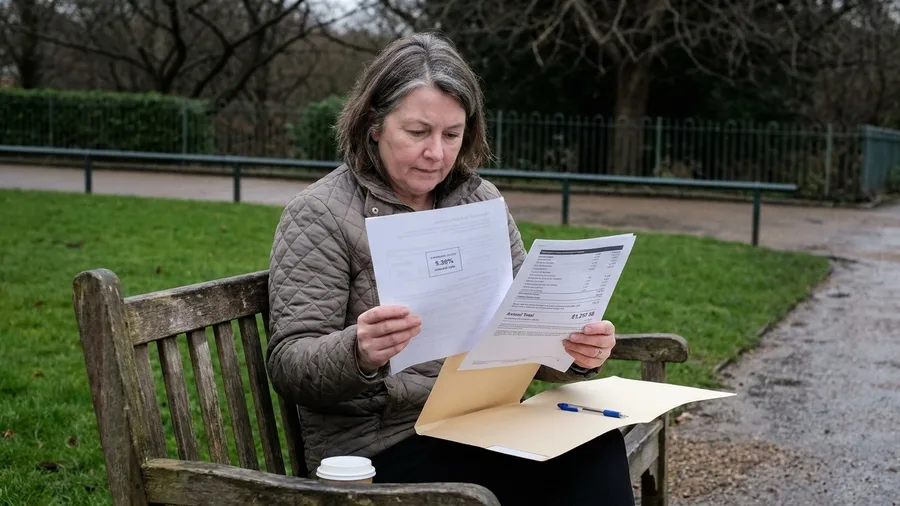
The $80,000-a-year math only works if the money is actually working. That's the assumption hiding under every comfortable retirement number you've ever read.
Park $2 million in a savings account at 0.01% and you earn about $200 a year in interest. Two hundred dollars. That doesn't cover a week of groceries, let alone a retirement. Same $2 million, completely different life.
Put it in a diversified mix of index funds, some bonds and possibly some real estate exposure, and the 4% rule supports $80,000 a year. The rule comes from historical research on how much a portfolio could be drawn down over 30 years without running dry in most past periods. And 4% of $2 million is exactly $80,000. The arithmetic is that simple, which is probably why people trust it more than they should.
Here's the catch, because there always is one. The 4% rule is a rule of thumb, not a guarantee. It holds when the order of returns goes reasonably your way, and it gets shaky when a bad market shows up in your first few years of drawing. That's why the sequence-of-returns question matters so much later in this piece.
So be honest with yourself about where the money sits right now. If it's in cash, or parked in one stock you've held since 1998 because it's been good to you, nothing else here survives. The whole plan rests on this one decision first.
Three Tax Buckets Decide What You Keep
Which account your money sits in decides how much of it you actually keep. Most people arrive at retirement with $2 million spread across three buckets, and the way you draw from each one can mean the difference between $80,000 and roughly $68,000 staying in your pocket.
Bucket one is the 401(k) and traditional IRA, usually the biggest chunk. Contributions go in pre-tax, the employer match goes in pre-tax, and every dollar of growth compounds for decades untaxed. Lovely while it lasts. The catch is that retirement is when the IRS finally shows up to collect. Withdrawals count as ordinary income, which can trigger federal tax, state tax, and even lost tax credits you were counting on.
Bucket two is the Roth IRA and Roth 401(k). You pay tax going in, then the money grows and comes out completely tax-free. None. Zero. That gives you a lever to shape your taxable income year by year, pulling more from Roth in the years you want to stay under a threshold.
Bucket three is the taxable brokerage account, where investments held over a year are taxed at 0%, 15% or 20% instead of ordinary income rates. Draw from all three on purpose and you keep thousands more.
The hard part is that most people show up with almost everything in bucket one. That's a conversation to have before retirement, not after, because some of these doors close.
💡 PRO TIP
Know Your Bucket Split Before You Retire
Pull up your accounts and write down three numbers: total tax-deferred, total Roth, total taxable. If almost everything sits in bucket one, you have time to fix that before retirement, not after.
After Taxes, $80,000 Spends Like About $70,000

What you actually get to spend is roughly $70,000 a year, or about $5,833 a month, once the tax bill is paid.
$80,000 withdrawn from a traditional account typically lands as $68,000 to $72,000 after federal tax. Round it to $70,000 and the math stays clean for everything that follows.
Now, what is $5,833 a month? It's genuinely comfortable in most parts of the country. It is not first-class flights, Michelin-star dinners every weekend, or the version of retirement that shows up in glossy ads of couples laughing on a sailboat. Comfortable is the honest word. Luxurious is not.
That figure assumes a fairly ordinary tax situation and a withdrawal from a traditional account. Pull more from Roth accounts and the number lands higher, so the exact amount is your tax situation talking, not a fixed law.
Keep $5,833 in your head, because every spending line in this piece is measured against it. The monthly budget, the healthcare wildcard, the regional differences, all of it starts here.
A Normal Month Fits With Room Left Over
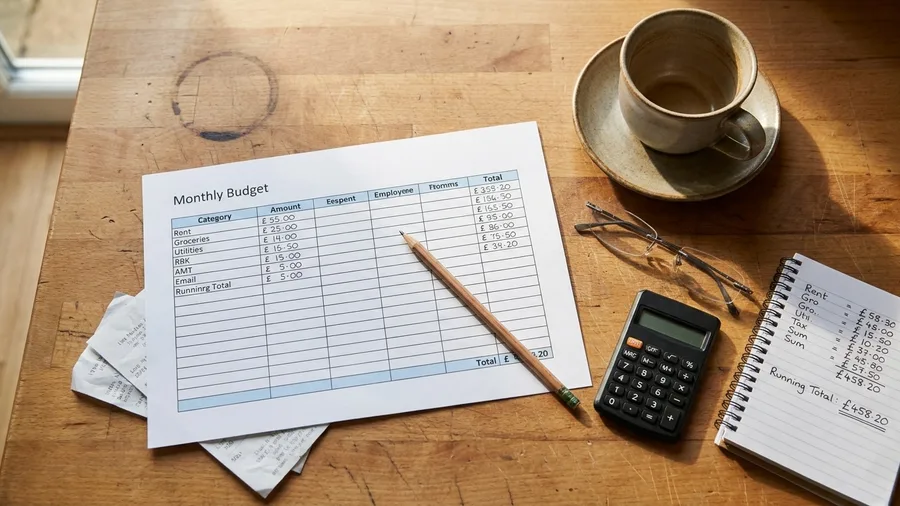
An ordinary retired month adds up to $4,200 to $5,700 across seven lines, against $5,833 coming in. That gap is your breathing room.
Housing runs $1,200 to $1,500, but that only works if the house is paid off. This is property taxes, insurance and maintenance, not a mortgage. Food costs $600 to $800 for groceries plus a reasonable amount of eating out. You're retired, not on a prison ration.
Healthcare is $800 to $1,200, and it's the line that surprises people most. Transportation takes $400 to $600. Travel and leisure gets $600 to $800 for road trips, visits to the grandkids, and perhaps a cruise that feels like a proper splurge. Utilities and subscriptions run $300 to $400, because yes, you will have too many streaming services.
Then $300 for the miscellaneous buffer, which exists for exactly one reason. The water heater does not care that you're retired.
Put it side by side and the picture is clear: a low month runs $4,200, a high month $5,700, and income is $5,833. The leftover is small on a bad month and decent on a good one. That's what a $2 million retirement feels like in real life.
| Monthly line item | Low | High |
|---|---|---|
| Housing (taxes, insurance, maintenance) | $1,200 | $1,500 |
| Food (groceries plus dining out) | $600 | $800 |
| Healthcare | $800 | $1,200 |
| Transportation | $400 | $600 |
| Travel and leisure | $600 | $800 |
| Utilities and subscriptions | $300 | $400 |
| Miscellaneous buffer | $300 | $300 |
| Total out | $4,200 | $5,700 |
Retirement Deletes Several Workday Expenses

You stop paying for four things the day you stop working, and that quietly widens the gap between what comes in and what goes out.
Retirement contributions end, obviously. Payroll taxes end, which is a real chunk of every paycheck you've been quietly handing over for decades. Work clothes and commuting go, and so do the lunches you bought because your boss scheduled a 12:30 meeting that could have been an email.
Here's the thing though: none of these were ever in the $4,200-to-$5,700 budget. That budget was written for a non-working life from the start. So the effect isn't extra money landing in your checking account. It's more slack in the plan, more room before the buffer gets touched.
Before you trust anyone's rule of thumb about how much you'll save, go through a month of your own statements and add up commuting, parking, gas, coffee and bought lunches. The total is usually higher than people guess.
Then watch for the replacements, because they creep in fast. More daytime spending, more travel, more subscriptions. Retirement has a way of filling the hours with new things to pay for, and the four savings you just found can vanish into them without you noticing.
Social Security Timing Shrinks What You Withdraw

Claim at 62 and you lock in a permanently smaller check. Wait until 67 – full retirement age for most people born after 1960 – and you get the whole thing. Push past 67 and the benefit climbs about 8% a year until you hit 70.
Here's how that plays out with $2 million in the tank. Say you're 65 and you draw $60,000 to $65,000 for a couple of years instead of the full $80,000. Once you hit 67, Social Security delivers roughly $24,000 a year, about $2,000 a month arriving like clockwork. From that point the portfolio only covers the gap, and withdrawals drop to $40,000 to $50,000.
That one shift can stretch the money from 30 years of runway to 40 or 50.
And if you're married, two benefit checks change the picture again. Suddenly $2 million doesn't look merely comfortable – it looks genuinely secure, with a government-backed income floor holding up the spending while the portfolio does the rest.
One thing before you build a plan around any of this: crack open your own Social Security statement and use your real number. The $24,000 figure here is an example, and your benefit depends on your earnings history. None of it runs on autopilot.
How Much the Big Risks Can Hurt
Ranked from manageable to plan-breaking
- A stream of subscriptions and daytime spending: Easy to trim, but it eats the $300 buffer first
- Private health insurance before 65: The $800-$1,200 line can blow past its range
- Inflation at 3% over 24 years: Halves your purchasing power if you sit in cash
- A 40% market drop in year one: $2 million becomes $1.2 million while you sell shares
The First Two Years Carry the Most Risk

A 40% market drop in your first year of retirement can knock $2 million down to about $1.2 million while you're still pulling $80,000 out. That's sequence-of-returns risk, and it's the thing that genuinely keeps planners up at night. You're forced to sell shares at the worst possible moment, and the damage doesn't fully heal even when the market recovers.
The fix is simple and boring.
Park enough in a high-yield savings account to cover one or two years of living expenses, so you never sell investments into a downturn. At this spending level, that's roughly $70,000 to $140,000 set aside. When stocks are ugly, you spend from savings and leave the portfolio alone to recover on its own schedule.
Here's the honest part: the 4% rule already builds bad sequences into the historical math. So the cash buffer is really there for your behaviour, not your spreadsheet. Living through a crash while drawing income is stressful, and stressed people sell. The buffer keeps you from being one of them.
Refill it after a strong market year, and don't treat it as a second portfolio to fiddle with. It's a shock absorber, not an investment.
Healthcare Is the Wildcard, Especially Before 65
Before 65 you pay full private health insurance premiums out of your own pocket, because Medicare doesn't start until then. That single fact makes healthcare the biggest wildcard in American retirement planning. Full stop.
Your $800 to $1,200 line in the monthly budget is the one most likely to blow past its range in early retirement. A marketplace plan for a couple in their early sixties can easily run well past the top of it, and that's before a single copay. Budget generously here – embarrassingly generously. If you think $1,200 is enough, price a plan and then leave yourself air.
Keep any excess in the buffer rather than rolling it into spending. Unspent healthcare money should carry into next year, not into a nicer rental car.
Before you set a retirement date, get a real marketplace quote for your age, your state and your household size. Those three inputs drive the price, and a guess is not a plan.
Inflation Quietly Halves Your $80,000

At 3% inflation – historically a pretty normal clip – your purchasing power shrinks by about half in roughly 24 years. So the $80,000 you pull today needs to be about $160,000 by then just to buy the same basket of groceries, rent and gas.
That's the quiet problem with a fixed withdrawal. The number on your statement doesn't shrink, but what it buys does. And if you're retiring at 60, that 24-year window lands squarely in your mid-eighties, exactly when healthcare and help around the house tend to get more expensive.
Which means you can't just pile everything into bonds on day one. That was decent advice when retirements ran 15 years. For someone who could live another 30, you still need growth – mostly stocks – balanced with enough stability that you sleep through the down years.
Keep the cash buffer in place so short-term wobbles don't force your hand, and let the rest stay invested. Social Security is inflation-adjusted, by the way, which is another reason the claiming decision carries so much weight.
Where You Live Decides Whether It's Enough

It's enough in most of the country and tight in a handful of expensive cities. In Manhattan, a one-bedroom can run $4,000 a month – nearly all of your $5,833 budget gone to rent, before you eat. San Francisco and New York City squeeze $80,000 hard.
Now move the same money to Asheville, North Carolina, or Boise, Idaho, or Sarasota, Florida, or honestly most of the middle and southeastern United States. There, $80,000 a year goes a long way. You can own a nice home, eat out regularly, take a few trips a year and still sleep soundly.
And a paid-off house is the single biggest swing in the whole plan, saving $1,500 to $3,000 a month compared with carrying a mortgage or rent.
The honest verdict: $2 million is comfortable, secure, meaningful money for a wide range of Americans. It's not never-worry-again money.
Which brings up the classic year-one mistake. Don't retire and immediately buy a boat and a vacation condo in the same twelve months. We all know someone who did, and we all know how that story ends.
Where $2 Million Feels Comfortable vs. Tight
Comfortable
- Budget lands near $4,200-$5,700 against roughly $5,833 after tax
- Paid-off house frees $1,500-$3,000 a month before you touch the portfolio
- Run the math on $70,000-$140,000 cash parked for year-one sequence risk
- Budget the 3% inflation creep: $80,000 needs to reach $160,000 in about 24 years
Tight
- Manhattan rent of $4,000 leaves about $1,833 for everything else
- Claiming Social Security at 62 cuts the check permanently – waiting to 70 adds about 8% a year
- Pull more than $80,000 and a 40% year-one drop turns $2 million into about $1.2 million
- Long-held taxable gains can be taxed at 0%, 15% or 20% – the account mix moves the net number
Building to $2 Million Is Boring and It Works

If you're not at $2 million yet, the recipe for getting there is about as exciting as watching paint dry, and that is exactly why it works. You put money into a 401(k), an IRA and a Roth IRA, you buy low-fee index funds, and you don't try to beat the market.
Seriously, don't try.
The record on stock picking is not kind. Most people who attempt it end up paying more in fees and landing behind the plain old index, which means the clever move and the boring move are the same move. So push your savings rate as far as you can without making yourself miserable, automate it, and then leave it alone.
Now the timelines, because this is where the math gets fun. Put $2,000 a month at 8% starting at age 30 and you land at $2 million around 57. Start the same $2,000 a month at 25, and you're there around 52.
Five years of extra time bought you five years of earlier retirement, plus a few more on top.
That 8% is an assumption, not a promise. It reflects the long-run track record of the US stock market, and returns come in lumpy decades, not smooth lines. A lower average return pushes those finish dates later, sometimes by years, so build some flex into your plan.
The takeaway is simple. Time is the one advantage nobody can buy back, and it is the one most people throw away by waiting.
Your State Takes Its Own Cut
Federal tax is only half the bill, and the other half gets charged by the state you call home. Traditional 401(k) and IRA withdrawals generally count as state income too, while Roth withdrawals and long-held brokerage gains usually get treated differently, so the mix of where your money sits has a real effect on your state tab.
This is where the country splits into two camps. Some states tax retirement income heavily, and others exempt part or all of it. The thing you'll hear most often, "so-and-so state has no income tax," tells you almost nothing about whether your retirement dollars escape the state's other taxes, though.
The only reliable answer comes from your own state's revenue department. Look at the rules there rather than trusting a rate you heard from a friend of a friend.
Here is the method. Take your $80,000 withdrawal, apply your state's specific rules, and see whether the $5,833 monthly figure still holds or a line in the budget needs cutting.
Then run the relocation test properly. If you're thinking about a move, run the whole budget under the destination state's tax rules, not just its housing costs, because a cheap house in a high-take state can cost more than an expensive one somewhere friendlier to retirees.
⚠️ COMMON MISTAKE
Don't Compare States on Housing Alone
A cheaper house in a state that taxes retirement income heavily can cost you more than the move saves. Tax rules first, then the rent.
The Tax Bill Returns in Your Seventies

Required minimum distributions are the reason your tax bill can come back in your seventies, years after you thought you had it all figured out. At some point, traditional accounts demand withdrawals that count as ordinary income whether you need the money or not.
The starting age depends on your birth year, and it has shifted in recent years, so confirm yours with the IRS rather than guessing from something you read in passing.
The tool for heading this off is a Roth conversion: moving money from the tax-deferred bucket into the Roth bucket in a year when your taxable income is low. You pay tax now, and then future growth and withdrawals come out clean.
There's a catch, and it's a real one. A conversion raises this year's taxable income, which can affect income-linked costs like Medicare premiums and tax credits. Run the year's full numbers before converting a dollar, because it's easy to trip a threshold that costs more than the conversion saves.
Timing is the other piece. If you retire at 62 and don't claim Social Security until 70, those gap years are often the cheapest window you'll ever have to convert. Low income, small tax bill, clean house.
Miss that window and the RMDs show up anyway. Better to meet them on your own terms.
Renters and Singles Have Less Slack
The $1,200 to $1,500 housing line in a normal retired budget assumes a home you own, paying property taxes, insurance and maintenance. If you rent, that same line becomes $1,500 to $3,000 a month, and the budget stops fitting.
That is the whole problem in one sentence.
Single retirees get squeezed the same way. You get one benefit check instead of the two-check example the budget was built around, so the gap the portfolio has to cover grows and the cushion underneath it shrinks. Pull your own Social Security estimate from your online account rather than assuming you'll land near the example.
Three fixes do most of the work: a larger portfolio, a cheaper location, or a later claim date. The later claim date usually does the most per dollar, because waiting adds roughly 8% a year to your benefit, and that raise arrives indexed for life.
To be fair to the numbers, this doesn't apply to everyone. The homeowner with a spouse and two checks is exactly the household the $5,833 monthly budget was written for.
If you're renting and single, you're playing a tighter game and you should plan like it.
Which Levers Actually Fix the Gap
What $2 Million Really Buys Is Control

The real payoff of $2 million isn't a yacht or a villa in the brochure. It's control: control over your time, your mornings, your decisions.
Waking up because you want to, not because an alarm says so. No Sunday evening countdown to Monday. Embracing what matters and declining what doesn't, with no boss or calendar to check with first.
You've seen the fantasy version sold online, the one with the sailboat and the infinity pool and the smug caption. This isn't that, and honestly that version isn't what anyone actually wants. What they want is a Tuesday they own.
And the control isn't abstract, because the numbers behind it are concrete. $5,833 a month, a paid-off house and a Social Security check are what make those mornings possible. Take any leg of that stool away and the whole thing gets shakier.
It isn't freedom from anxiety, and anyone who tells you otherwise is selling something. The worrying doesn't vanish. But the planning is what buys the calm, and once it's done, you can stop doing the math on the back of an envelope at two in the morning.
That's the trade. Less drama, more Tuesday.
The Version of Retirement You're Actually In
There are two versions of this retirement, and yours is the one you actually built, not the one in the brochure. The first version is a paid-off homeowner with a spouse and two Social Security checks coming in. That's the household the $5,833 monthly budget was written for, and on that math $2 million covers it comfortably.
The second version is a renter or a single retiree living on one check, and here the same portfolio has noticeably less slack. Housing that was $1,200-$1,500 with a paid-off mortgage becomes a full rent payment, and the second benefit never shows up. That version usually needs a bigger portfolio, a cheaper map, or a later claim date, and often all three at once.
Neither version is a failure. They just cost different amounts to run, and pretending otherwise is how budgets quietly break in year three.
So do the one thing that settles it this month. Pull your own Social Security estimate from ssa.gov, then get a real health insurance quote for your age, your state and your household. Those two numbers will tell you more about which version you're in than any rule of thumb ever will, including mine.
Frequently Asked Questions
Can I retire on $2 million at 62?
Yes, but the math is tighter than at 67. Claiming Social Security at 62 permanently reduces your benefit, and you'll pay full private health insurance premiums until Medicare starts at 65. The $80,000 withdrawal can work, but budget the healthcare line generously and keep a year or two of spending in cash.
How long will $2 million last in retirement?
At a 4% withdrawal rate, historically the money has lasted 30 years in most periods. With Social Security covering $24,000 a year and withdrawals dropping to $40,000 to $50,000, that stretch can reach 40 or 50 years. The order of returns in your first few years matters more than the average.
Is $80,000 a year enough to live on in retirement?
In most of the country, yes. The $4,200 to $5,700 monthly budget fits inside the roughly $5,833 you get after tax. It gets tight in Manhattan, San Francisco and other high-cost cities, where housing alone can eat the whole budget.
Should I pay off my mortgage before retiring?
If you can, yes. A paid-off house saves $1,500 to $3,000 a month, and the housing line in this budget assumes no mortgage or rent. That single move changes the entire trajectory of what $2 million can do.
What is sequence-of-returns risk and how do I protect against it?
It's the risk of a market drop right when you start withdrawing. A 40% drop in year one takes $2 million to about $1.2 million while you're selling shares at low prices. Hold one to two years of living expenses, roughly $70,000 to $140,000 here, in a high-yield savings account so you never sell in a downturn.
What $2 Million Actually Covers
Two versions of this retirement exist, and $2 million covers one of them comfortably: the paid-off homeowner with a spouse and two Social Security checks. If that's you, the budget works, with room left over for the water heater.
The renter or the single retiree with one check needs a bigger portfolio, a cheaper map, or a later claim date. Often all three. That's not a failure, it's just different arithmetic.
Either way, the same two numbers decide it. Pull your own Social Security estimate and get a real health insurance quote for your age and state. Until you have those, everything else is a guess.
Two Numbers to Pull This Week
Log into your Social Security account for your real benefit estimate, then get a marketplace health insurance quote for your age and state. The plan gets real the moment those numbers are in front of you.

Hello there! I’m Jesse Joe, the author and editor behind SolganGenius. I’m thrilled you’ve stopped by, and I can’t wait to share with you the essence of what this platform is all about.
I’m a writer, social media enthusiast, and a firm believer in the power of words. I’ve always been fascinated by how a simple phrase or slogan can capture an emotion, convey a message, and even change perspectives. Learn More