
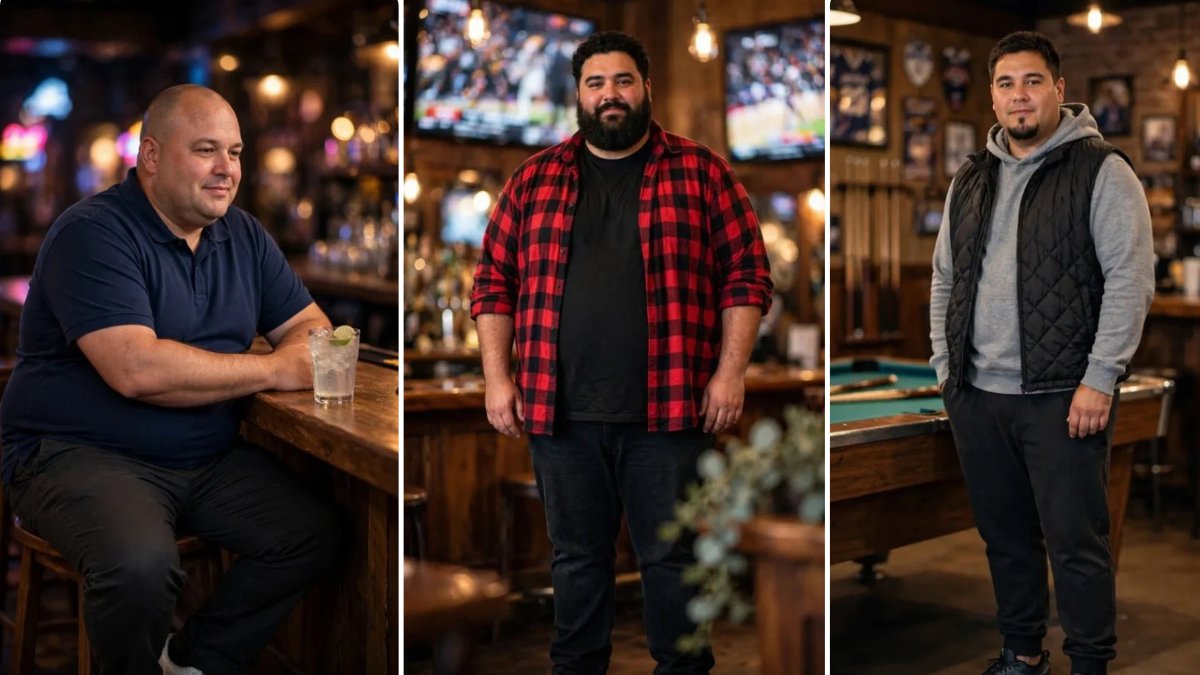
Walking into a loud, energetic sports bar requires serious confidence. Your clothes should feel like a well-tailored living room—structured but completely relaxed. Heavy cottons ground the foundation. Crisp dark denim adds necessary architecture. Soft flannels move with the action without losing their shape.
Dressing a larger frame relies on the exact same principles as designing a spacious house. Proportion and intelligent layering dictate the entire mood. Swapping that baggy, oversized jersey for fitted jackets changes how people respond to you. These combinations work brilliantly for casual weekend playoffs or upscale draft nights.
Build Your Base Smart Layering Tricks for Broader Frames
Good design always starts with a solid foundation. Treating your base t-shirt like the anchor wall of a room sets the tone for everything else you put on. Darker, heavier fabrics hide wrinkles and provide structural support without clinging.
Adding an unbuttoned overshirt or chore coat creates strong vertical lines. That visual trick naturally breaks up the width of the torso. Guys carrying extra weight in the midsection benefit heavily from this specific styling technique.
1. The Classic Flannel Frame
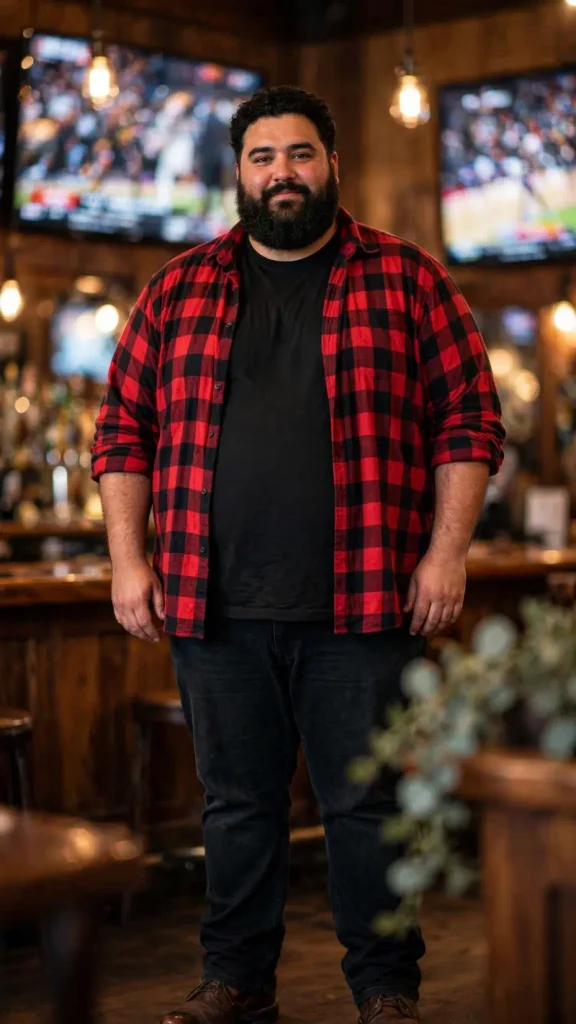
Heavy red and black buffalo plaid acts as a sturdy exterior over a dark cotton base. Warm overhead bar lighting highlights the crisp structure of the open collar and rolled sleeves.
Treat an open flannel like architectural framing to define your shoulders and chest.
Wearing an unbuttoned overshirt introduces strong vertical lines down the center of your body. Dark base colors visually push the torso backward to let the outer layer command the room.
2. The Dark Monochromatic Anchor

A deep navy polo shirt creates a smooth, uncluttered surface against the rich wood grain of the bar counter. Warm ambient lighting highlights the structured collar and softly fitted shoulders.
Matching your shirt and pants works exactly like painting a room one continuous dark color to expand the space.
Tonal dressing eliminates harsh horizontal lines across your midsection. Pushing deep blues and charcoals together builds an unbroken visual flow that leans out a wider frame. Keep this highly versatile combination ready for upscale sports lounges or evening dinner reservations.
3. The Quilted Vest Strategy
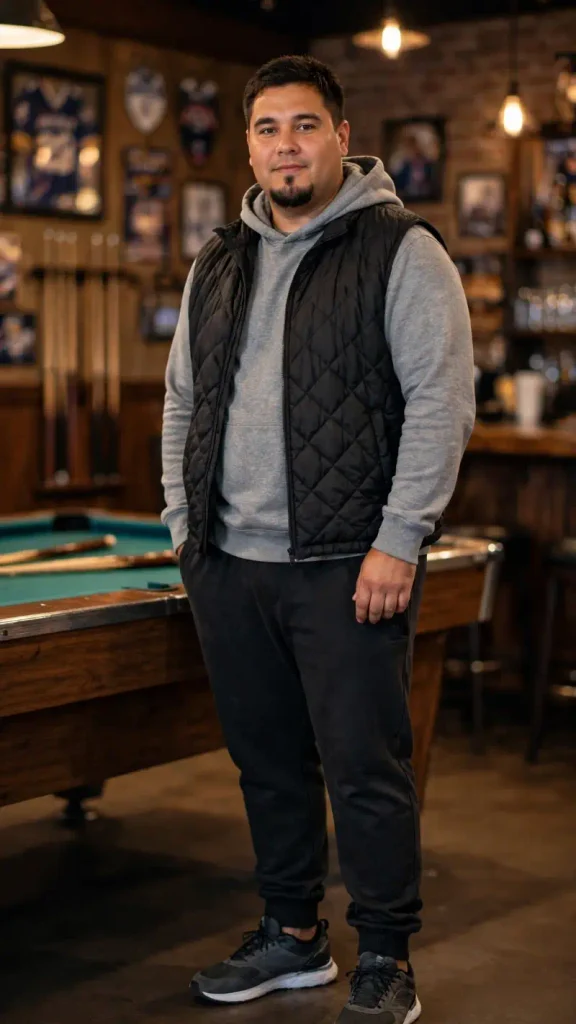
A plush grey hoodie offers a soft, comfortable foundation under a crisp, diamond-stitched black vest. Warm overhead lighting catches the structured nylon fabric, highlighting the heavy contrast against the relaxed cotton fleece. Dark cuffed joggers drop cleanly to athletic sneakers with a sharp white midsole to anchor the bottom half.
Layering a structured vest over soft fleece works like mixing textiles in a living room—it builds visual interest without adding heavy bulk.
Keeping your arms free allows for unrestricted movement around the pool table. Quilted materials introduce necessary texture without making the upper body feel cluttered or overstuffed.
Why This Works
Element 1: The dark vest acts as a strong focal wall, drawing the eye inward to visually narrow the torso.
Element 2: A lighter grey hood brightens the face while keeping the overall palette grounded.
Element 3: Tapered ankle cuffs prevent fabric from pooling on the floor, keeping the lower body looking intentional and clean.
4. The Earth Tone Bomber Layer
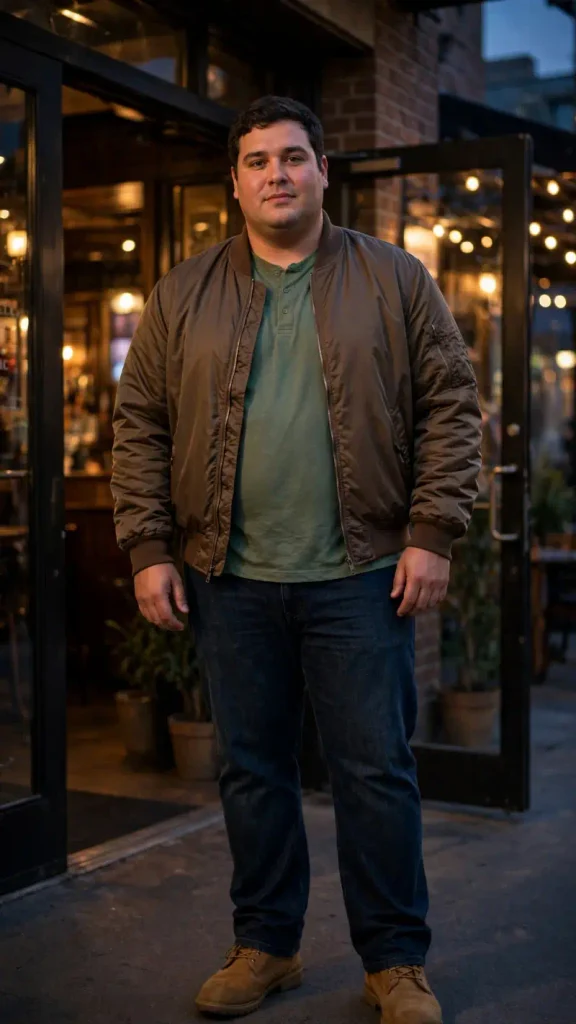
A smooth brown bomber jacket builds a durable outer layer over a muted green henley shirt. Warm evening light catches the slight sheen of the jacket fabric while the cotton base remains completely matte.
Pairing natural earth tones mimics the grounding effect of bringing warm wood furniture into a cold industrial space.
Deep greens and rich browns instantly make a large frame feel more approachable. The bomber cut adds essential shoulder width while leaving plenty of breathing room around the waist.
5. The Slick Green Bomber Layer
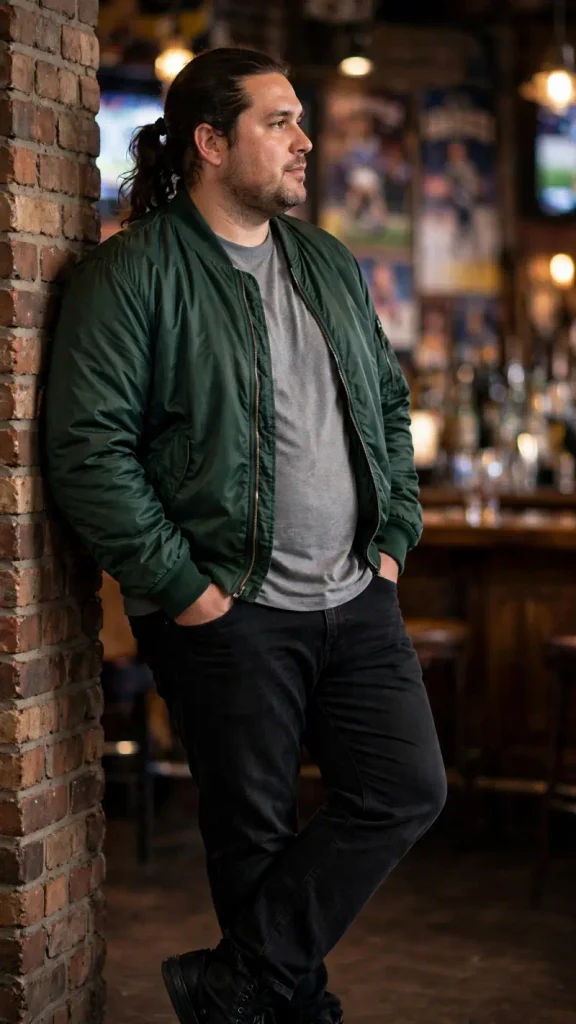
A slick forest green bomber jacket throws a cool sheen next to the rough brick wall. Soft matte grey cotton sits underneath to absorb the warm ambient lighting. Deep black denim finishes the lower half with clean, dark lines.
Contrasting a shiny outer layer with a matte base functions exactly like hanging a gloss-framed mirror on a flat painted wall.
Leaving the jacket unzipped builds a framing effect that naturally squares off soft shoulders. Sticking to a strict three-color formula keeps the overall visual weight balanced.
Quick Styling Tips
- Budget version: Swap a high-end nylon flight jacket for a thrifted synthetic windbreaker in a solid dark tone.
- Renter tip: Test this high-contrast texture rule without permanent wardrobe changes by throwing a borrowed glossy jacket over your favorite old t-shirt.
- Pro move: Tailor the hem of the black denim so it barely brushes the top of your boots to avoid sloppy fabric pooling at the ankles.
6. The Rich Quarter Zip Approach
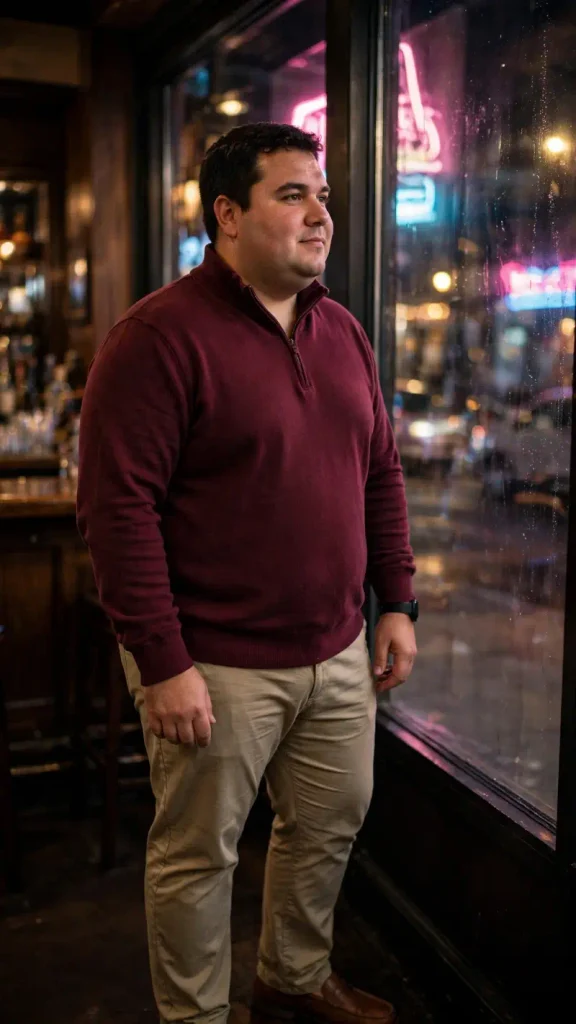
A plush burgundy quarter-zip sweater acts as a bold focal point against the glowing neon window lights. Crisp khaki trousers offer a light, structured contrast to the heavy knit top. Smooth brown leather loafers complete the foundation with a polished, grounded finish.
Using a quarter-zip collar works exactly like adding wainscoting to a plain wall—it introduces immediate architectural interest.
Controlling the zipper height allows you to adjust the neckline to flatter a broader face. Lighter trousers draw the eye downward to balance out a heavy chest or broad shoulders.
7. The Vibrant Accent Layer
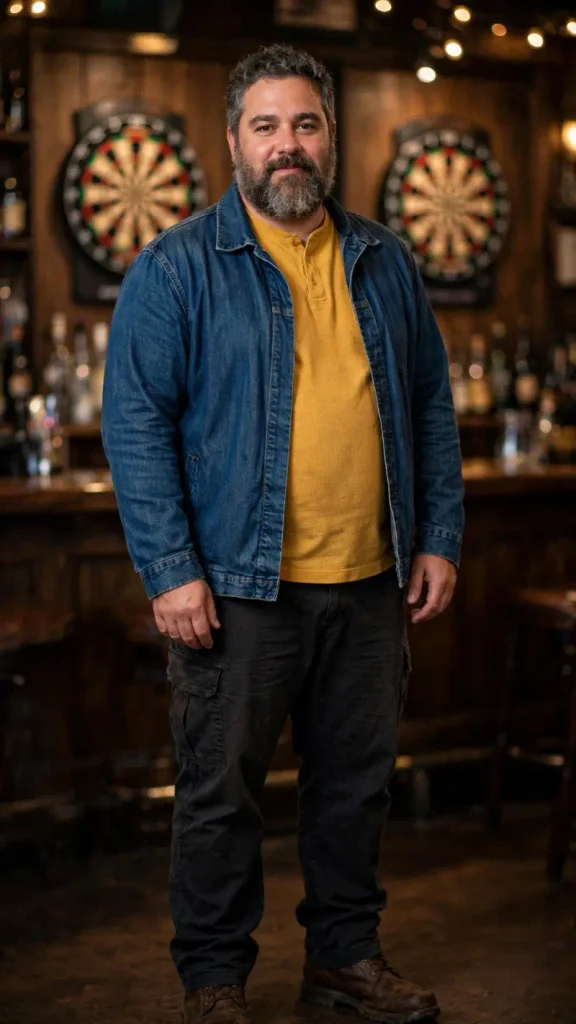
Crisp blue denim provides a structured, durable shell over a soft mustard yellow henley. Warm ambient bar lighting catches the bright woven cotton to create an immediate focal point.
Adding one bright color under a heavy jacket works exactly like placing a vivid throw pillow on a dark leather sofa.
Strong contrasting colors break up the visual weight of a broad chest. Denim jackets naturally construct sharp shoulder lines while the bright interior draws the eye straight down the center.
Why This Works
Element 1: The rigid denim fabric builds necessary architectural structure across soft shoulders.
Element 2: A vibrant mustard base layer brings warmth to the face without widening the overall silhouette.
Element 3: Dark utility pants push the visual focus upward toward the chest and face.
8. The Structured Leather Anchor
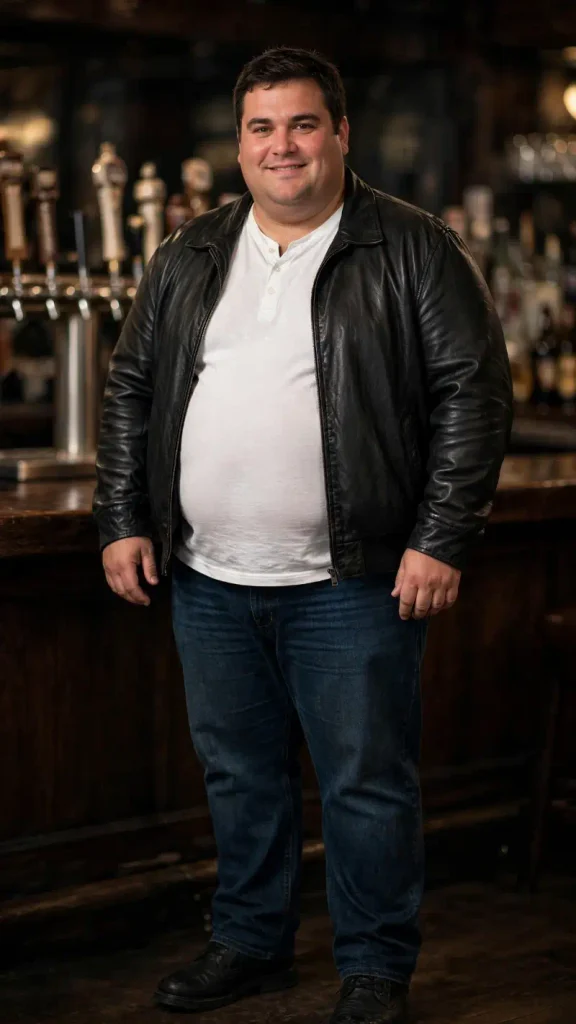
A heavy black leather jacket builds a solid, structured frame around a crisp white henley. Warm bar lights catch the subtle sheen of the smooth leather surface. Classic blue jeans and sturdy black shoes finish the lower half to ground the entire look.
Layering heavy leather over light cotton works just like framing a bright window with dark architectural trim—it builds sharp, deliberate contrast.
Leaving the dark jacket unzipped splits the bright white base layer to visually narrow the torso. Thick outerwear materials naturally drape over the body and eliminate unwanted clinging.
9. The Structured Utility Framework
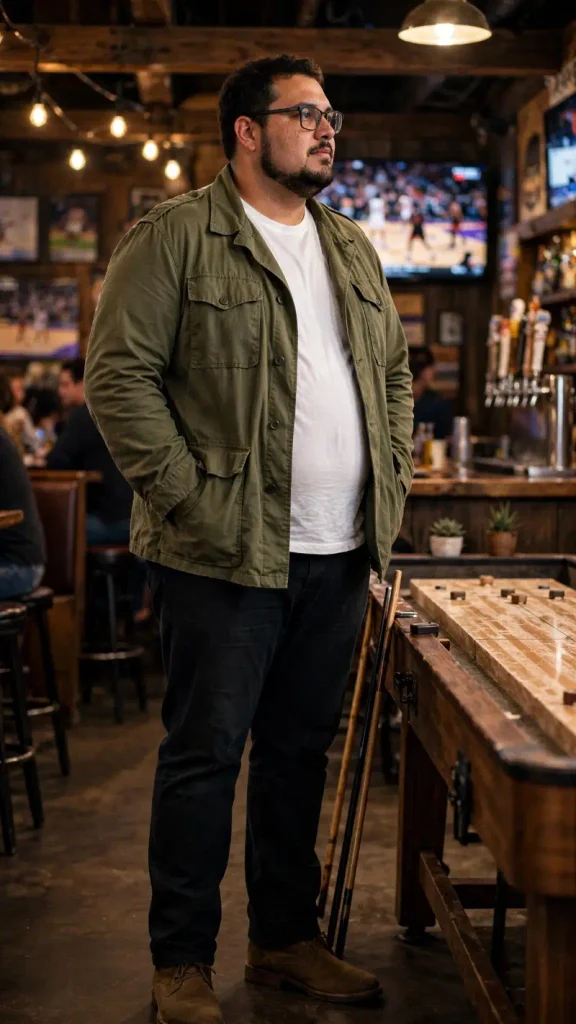
An olive green utility jacket provides a rugged, structured outer shell over a crisp white cotton tee. Warm pendant lighting highlights the heavy canvas texture and the functional front pockets.
Treating a multi-pocket field jacket like built-in room cabinetry adds immediate architectural structure to your frame.
Heavy cotton fabrics naturally hold their shape instead of clinging to the body. Leaving the outerwear unbuttoned creates a sharp vertical line that breaks up a wider midsection. Wear this highly textured combination for casual shuffleboard matches or relaxed afternoon drafts.
Why This Works
Element 1: Rigid olive canvas builds necessary bulk across the shoulders to balance out the overall silhouette.
Element 2: Symmetrical chest pockets pull the visual focus upward toward the face.
Element 3: The bright white base layer cuts through the dark outer tones to keep the color palette fresh.
10. The Layered Contrast Strategy
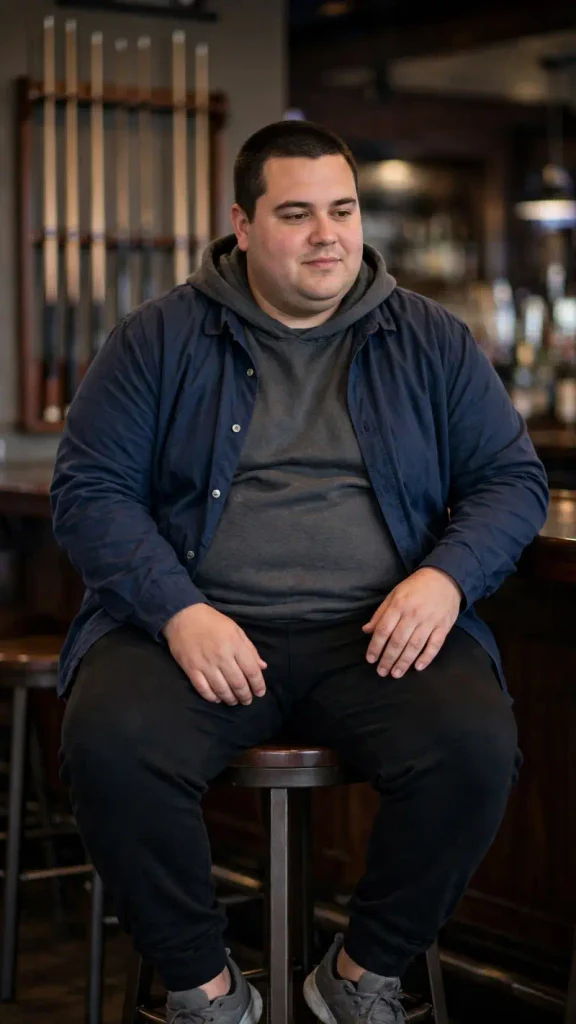
A crisp navy overshirt provides structural framing around a soft dark grey hoodie. Warm ambient light catches the smooth cotton blend against the plush fleece interior. Solid black trousers run straight down to thick grey sneakers anchored on the wooden bar stool.
Layering a collared overshirt across a hoodie acts just like framing a soft canvas with dark wood—it brings immediate definition to the foundation.
Mixing sharp collars with relaxed fleece builds an outfit that handles both comfort and presentation. Keeping the outer layer unbuttoned creates vertical lines that naturally slice through heavier midsections.
Quick Styling Tips
- Budget version: Repurpose a heavyweight work shirt you already own to act as the rigid outer shell.
- Renter tip: Borrow a thick button-up to test this heavy architectural contrast before buying new outerwear.
- Pro move: Tuck the hoodie strings out of sight to keep the visual focus entirely on the clean layered collars.
11. The Corduroy Texture Formula
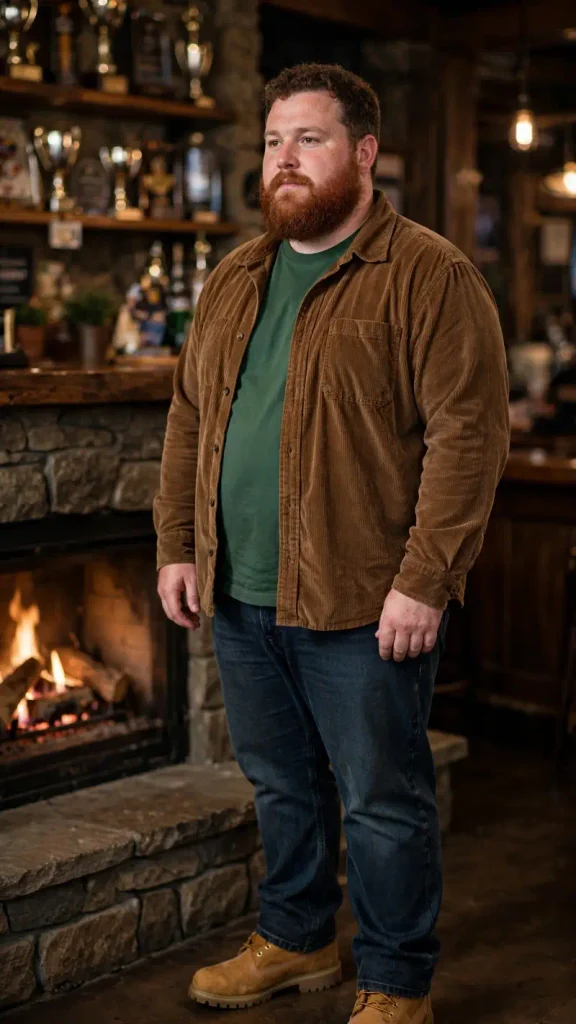
Thick brown corduroy introduces heavy, tactile ridges over a smooth forest green cotton base layer. Warm firelight from the hearth highlights the rugged texture of the unbuttoned overshirt.
Pairing ridged corduroy with flat cotton works exactly like placing a heavily woven rug on a smooth hardwood floor—it builds instant tactile warmth.
Earthy color palettes naturally soften a larger physical presence without losing masculine structure. Wearing vertical ribs naturally draws the eye up and down to subtly lengthen the torso.
12. The Midnight Tonal Strategy
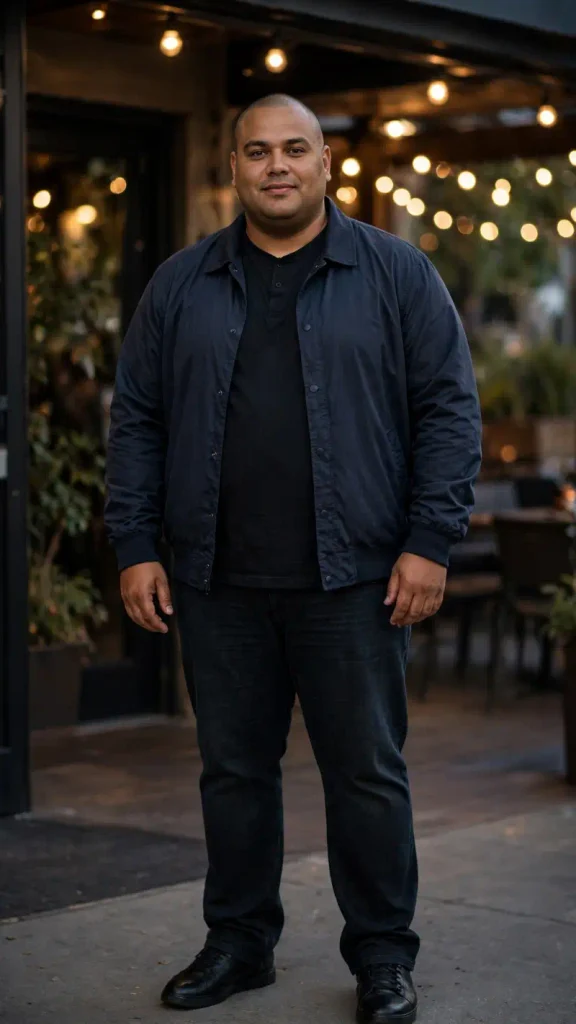
A crisp navy snap-button jacket forms a clean outer shell over a soft black henley. Warm overhead string lights highlight the smooth, matte finish of the lightweight outerwear. Solid black denim flows directly into matching leather sneakers to create an uninterrupted lower half.
Pairing closely related dark tones functions exactly like painting a ceiling and walls the same deep color—it blurs boundaries to expand the visual space.
Keeping your color palette strictly dark eliminates any harsh horizontal breaks across your frame. Unbuttoning the top layer allows the black base to act as a receding visual anchor.
Why This Works
Element 1: The structured collar of the navy jacket frames the face while adding necessary width to the shoulders.
Element 2: Subtle neck buttons break up the solid black base layer without requiring noisy patterns.
Element 3: Matching dark jeans with dark leather sneakers builds a heavy, continuous foundation that visually lengthens the legs.
13. The Geometric Plaid Contrast

A heavy grey and black plaid flannel builds a structured outer shell over a crisp white cotton t-shirt. Ambient bar lighting highlights the crisp matte fabrics against the colorful blur of background arcade cabinets.
Using a high-contrast geometric pattern operates exactly like installing a graphic tile backsplash—it immediately commands attention and anchors the space.
Muted greys soften a broader physical presence while maintaining clear architectural lines. Leaving the thick overshirt unbuttoned establishes a stark white vertical column right down the center of the chest.
14. The Terracotta Texture Layer
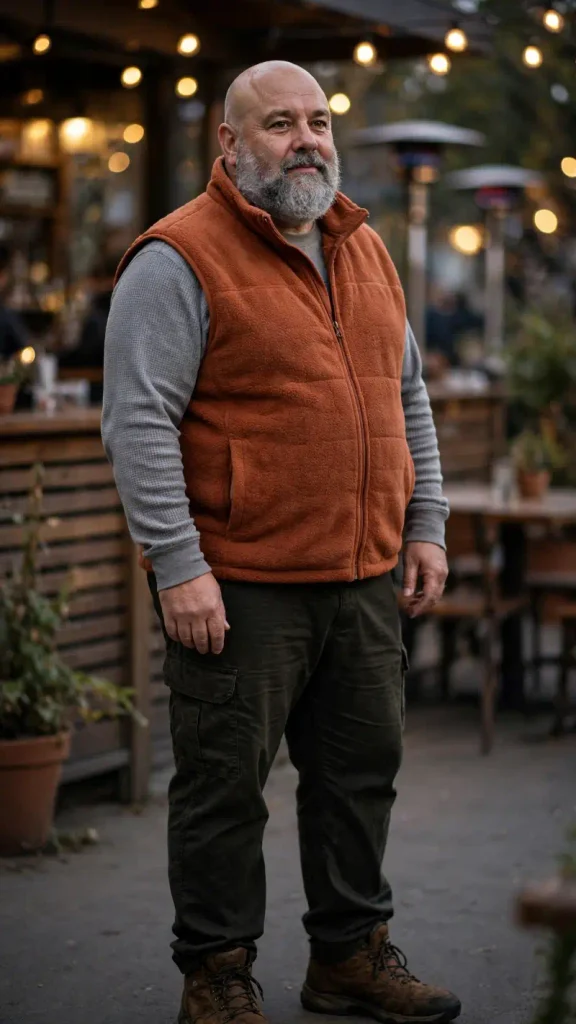
A plush rust-orange fleece vest builds a solid core over a soft grey waffle-knit thermal. Warm patio string lights catch the deep, earthy tones of the thick outerwear. Dark olive cargo pants and heavily treaded brown boots ground the look with rugged, durable utility.
Treating a bright fleece vest like a textured terracotta accent wall instantly warms up a cold, neutral space.
Zipping a thick fleece vest constructs a solid core while leaving the breathable thermal layer exposed along the arms. Earthy color combinations naturally flatter a wider frame without relying on heavy, dark blacks.
Quick Styling Tips
- Budget version: Find a vintage high-pile fleece vest at a local thrift shop to capture this rugged texture for less.
- Renter tip: Test this bold color block without permanent wardrobe changes by borrowing a brightly colored outer layer for a single evening.
- Pro move: Match the leather tones in your heavy boots directly to the warm undertones of the vest to visually bookend the entire outfit.
15. The Camel Corduroy Anchor
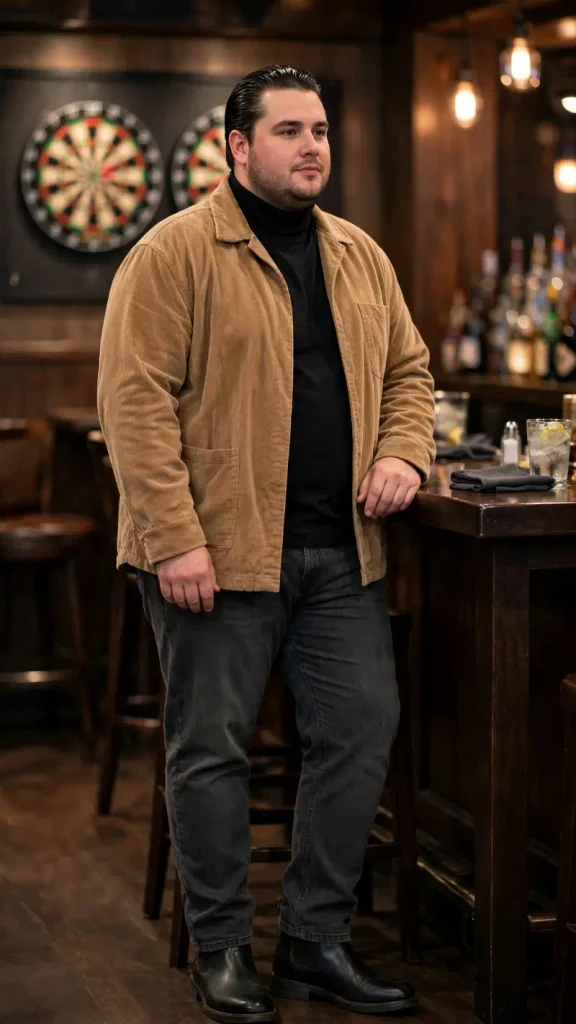
A thick camel corduroy chore jacket adds soft, ribbed texture over a sleek black turtleneck. Warm overhead bulbs illuminate the rich, earthy tan fabric against the dark dartboard wall.
Layering a bright camel jacket over a dark base works exactly like placing a light, textured armchair against a charcoal accent wall.
Keeping the inner column entirely black visually pushes the midsection backward. The structured outer layer frames the shoulders and brings necessary warmth to the face. Rely on this highly polished combination for upscale cocktail bars or evening dinner reservations.
Quick Styling Tips
- Budget version: Swap a premium suede jacket for a thrifted tan denim piece to build the exact same color contrast.
- Renter tip: Test this high-neck silhouette by borrowing a dark mock-neck shirt before buying thick winter turtlenecks.
- Pro move: Match the smooth finish of the leather Chelsea boots directly to a black leather belt to keep the dark foundation completely uniform.
16. The Rich Suede Foundation
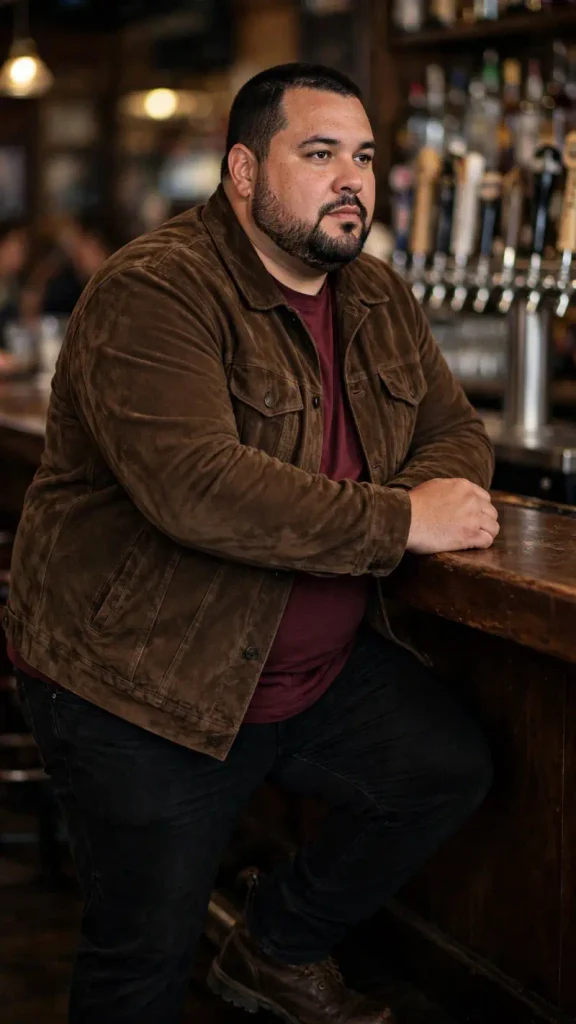
A thick brown suede jacket creates a plush, structured shell over a deep maroon t-shirt. Warm bar lighting highlights the soft, brushed texture of the outerwear resting heavily against the wooden counter.
Pairing soft suede with rich jewel tones works exactly like adding velvet upholstery to a dark mahogany room—it introduces immediate tactile luxury.
Heavy brushed leathers offer excellent shoulder structure while draping easily over a larger midsection. The deep burgundy base layer brings color to the face without relying on loud, distracting graphics.
17. The Sturdy Blue Canvas

A sturdy blue over shirt provides a soft, structured layer over a crisp grey cotton tee. Warm pendant lights highlight the relaxed drape of the unbuttoned fabric next to the wooden foosball table.
Using a mid-weight overshirt as a top layer works exactly like throwing a woven blanket over a structured sofa—it softens the room while maintaining essential shape.
Dual chest pockets pull the visual focus directly toward the shoulders and face. Leaving the dark blue layer open creates a light grey vertical column that naturally breaks up a wider midsection.
18. The Quilted Olive Framework
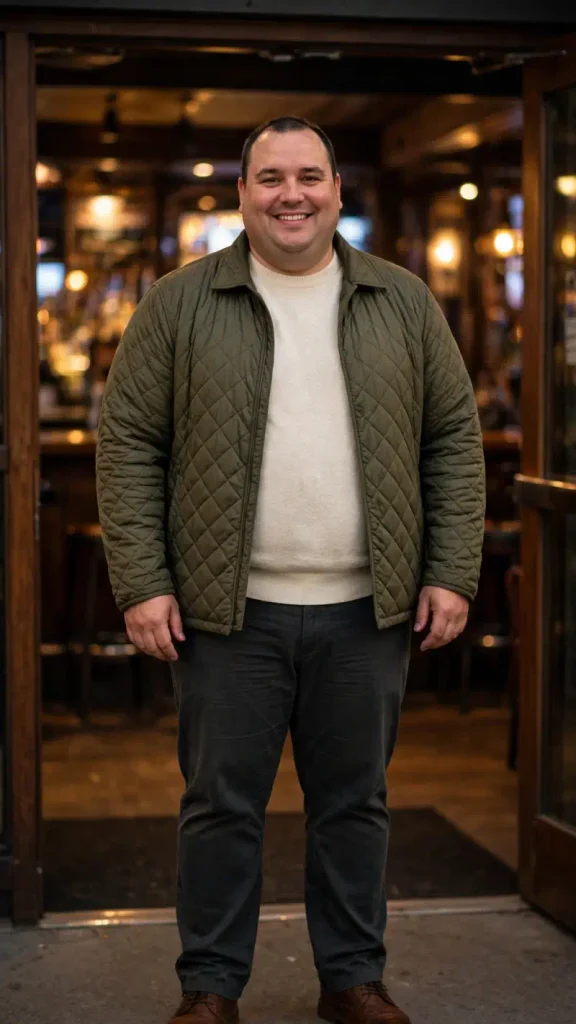
An olive green quilted jacket builds a highly textured outer shell over a soft cream sweater. Warm entryway lighting catches the diamond-stitched fabric standing out against the dark bar interior.
Using diamond-stitched outerwear works exactly like adding a tufted leather ottoman to a plain room—it instantly upgrades the texture without taking up extra space.
Quilted jackets offer excellent insulation without adding unnecessary bulky padding to your frame. The bright cream base layer naturally draws the eye inward to visually narrow a wider chest.
Why This Works
Element 1: The rigid quilted fabric constructs strong shoulder lines to balance out a heavier midsection.
Element 2: A bright neutral crewneck illuminates the face while acting as a clean central column.
Element 3: Dark charcoal trousers push the visual weight downward to keep the entire outfit grounded and stable.
